
| Catalog No | Package | Original Price | Price | Inventory | Quantity | Operating |
|---|---|---|---|---|---|---|
| BP0149-20mg | 20mg | $20.00 | Sign in |
|


Synonym name: Barbaloin A
Catalogue No.: BP0149
Cas No.: 1415-73-2
Formula: C21H22O9
Mol Weight: 418.398
Botanical Source: various Aloe spp.
Purity: 95%~99%
Analysis Method: HPLC-DAD or/and HPLC-ELSD
Identification Method: Mass, NMR
Packing: Brown vial or HDPE plastic bottle
Can be supplied from milligrams to grams.
For Reference Standard and R&D, Not for Human Use Directly.
Inquire for bulk scale.
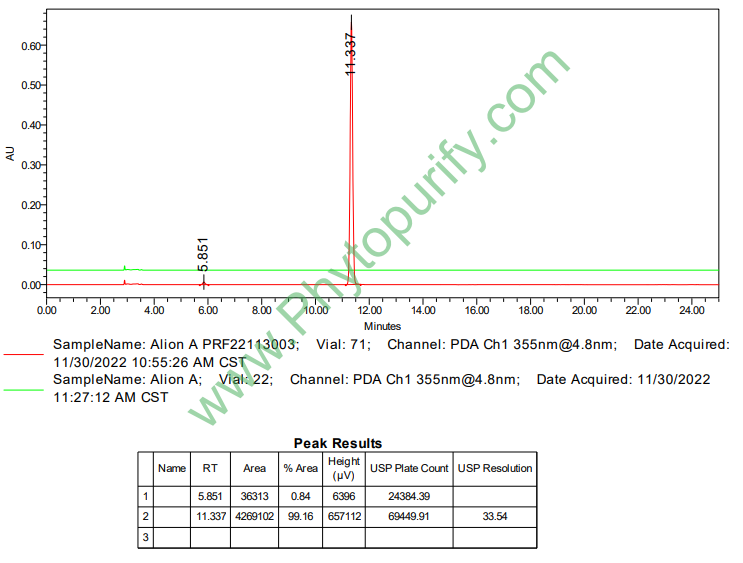
HPLC of Aloin A
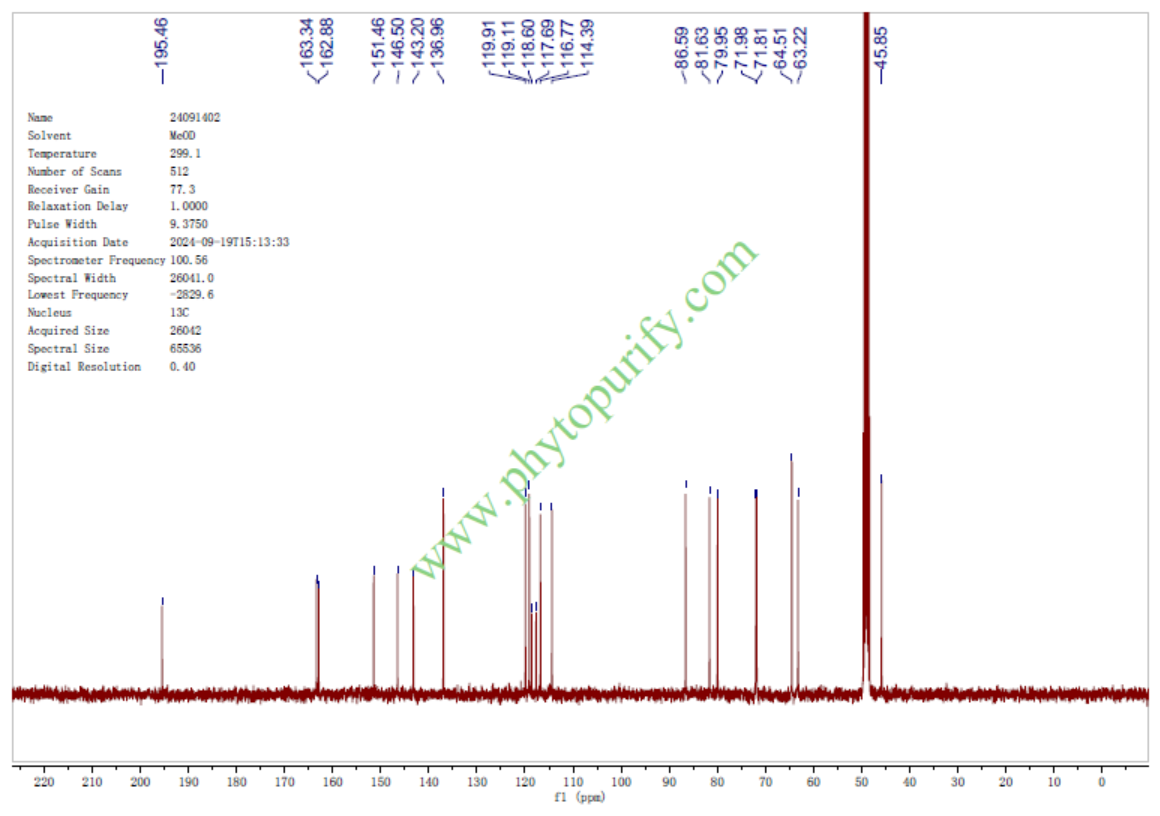
NMR of Aloin A
Storage conditions:Short-term storage at 2~8℃, long-term storage at -20 ~ -80℃
167.9100
.0754
.0642
2.7873
.7013
.5187
Low
74.7349
4.1730
Yes
No
No
No
Yes
No
1.2
Yes
No
Yes
No
Natural products, as an important treasure trove for drug discovery and development, play an irreplaceable role in the history of human disease prevention and treatment. Among them, anthraquinone compounds have attracted much attention due to their wide range of biological activities. Aloin A, also known as Barbaloin-A, is a typical C-glucose anthraquinone derivative with a CAS number of 1415-73-2. It mainly comes from the leaf juice of plants in the lily family and the aloe genus, and is one of the main active ingredients of aloe emodin glycosides. Traditionally, aloe vera has been widely used due to its laxative, anti-inflammatory, and wound healing promoting effects, and aloin A is considered one of its key pharmacological substances. In recent years, with the deepening of modern pharmacological research, the biological activity spectrum of aloin A has far exceeded traditional understanding. Its roles in anti-tumor, anti-inflammatory, neuroprotective, regulating bone metabolism, and potential treatment of metabolic diseases such as hyperglycemia have been gradually revealed. This article aims to systematically review the chemical properties, plant sources, pharmacological activities, mechanisms of action, medicinal properties, and clinical application prospects of aloin A, in order to provide comprehensive scientific references for the in-depth development and transformation research of this natural product.
The chemical name of aloin A is (9S) -10- β - D-glucopyranosyl-1,8-dihydroxy-3- (hydroxymethyl) -9 (10H) - anthrone, with a molecular formula of C21H22O9 and a molecular weight of 418.3980. Its structural core is a 9,10-dihydroanthracene-9-one (anthrone) skeleton, which is directly connected to a β - D-glucopyranose group through a C-C bond at the C-10 position. Therefore, it is classified as a C-glycosyl compound, which is different from the common O-glycosidic bond, making it more stable for acid hydrolysis and enzymatic hydrolysis. The structure contains multiple phenolic hydroxyl groups (1,8-dihydroxy) and one hydroxymethyl group, and these polar groups determine some of its physicochemical properties.
From the perspective of pharmacological parameters, the theoretical lipid water partition coefficient (LogP) of aloin A is approximately 0.0754, indicating its strong hydrophilicity. Its topological polar surface area (TPSA) is as high as 167.91 Å ², mainly attributed to the abundant hydroxyl and carbonyl groups in the molecule. The predicted value of water solubility is 2.7873 mg/mL, which belongs to the soluble range. These data collectively indicate that aloin A has good water solubility, but may affect its transmembrane permeability. The predicted blood-brain barrier permeability is "low", indicating that there may be obstacles for the prototype drug to enter the central nervous system. In the preliminary safety assessment, the risk of hERG channel inhibition is "no", indicating a low potential risk of arrhythmia; The Ames test value is 1.2, indicating a low risk of mutagenicity in this model, but it needs to be comprehensively judged based on more experimental data. Overall, aloin A is a natural product with high polarity and good water solubility, and its pharmacological optimization may require attention to its bioavailability.
Aloe vera glycoside A is mainly present in the yellow latex layer (emodin layer) under the leaf flesh and epidermis of various plants in the lily family, such as Aloe barbadensis Miller and Aloe ferox Mill. There are significant differences in the content of aloin A among different varieties, origins, harvest seasons, and plant parts of aloe vera.
The traditional extraction method is mainly based on solvent extraction. Due to the high polarity of aloin A, water, methanol, ethanol, or their aqueous solutions are commonly used as extraction solvents. For example, the alcohol extraction method assisted by heating reflux or ultrasound can effectively extract. In order to obtain higher purity of aloin A, further separation and purification of the crude extract is often necessary. Column chromatography technology is the mainstream method, often using silica gel, macroporous adsorption resin (such as D101, AB-8) or polyamide as the stationary phase, and gradient elution with different ratios of chloroform methanol, ethyl acetate methanol and other solvent systems. In addition, modern separation techniques such as high-speed countercurrent chromatography (HSCCC) and preparative high-performance liquid chromatography (Prep HPLC) have also been applied to the preparation of aloe vera glycoside A monomers due to their high efficiency and speed. During the extraction process, attention should be paid to avoiding light and low temperatures to prevent oxidation and degradation.
A large number of in vitro and in vivo studies have revealed the diverse pharmacological activities of aloin A, providing a basis for its multi-target application.
Anti inflammatory and gastrointestinal protective effects Aloe vera glycoside A is one of the key components of aloe vera that exert anti-inflammatory effects. Research has shown that aloe vera components (including aloin) can significantly improve intestinal inflammation in a dextran sulfate sodium (DSS) - induced ulcerative colitis rat model, alleviate colon tissue damage, and reduce pro-inflammatory cytokine levels. This provides an experimental basis for its application in the treatment of inflammatory bowel disease.
Antitumor and pro apoptotic activity Aloe vera glycoside A exhibits significant anti proliferative and apoptosis inducing effects. In HeLa S3 cervical cancer cells, the IC50 value is 97 micromoles, which can induce cell cycle arrest in the S phase and significantly increase the apoptosis rate to 24%. Its anti-tumor mechanism involves activation of mitochondrial pathways, triggering of Caspase cascade reactions, and dysregulation of cell cycle regulatory proteins.
Neuroprotective effect In the traumatic brain injury (TBI) model, aloin A exhibits a protective effect. It can alleviate brain edema, reduce damage to the blood-brain barrier, and improve neurological deficits. The mechanism may be related to the inhibition of oxidative stress and inflammatory response.
Promoting osteogenic differentiation and anti osteoporosis potential Aloe vera glycoside A can induce the differentiation of pre osteoblast MC3T3-E1 into osteoblasts. It activates the MAPK signaling pathway, thereby regulating the Wnt and Bmp signaling pathways and upregulating the expression of osteogenic related genes. As an early marker of osteogenic differentiation, the activity of alkaline phosphatase (ALP) is significantly enhanced by aloin A, indicating its potential value in the prevention and treatment of osteoporosis.
Skin whitening effect Aloe vera glycoside A has been proven to have the ability to inhibit tyrosinase activity. Tyrosinase is the rate limiting enzyme in melanin biosynthesis, therefore aloin A can be used as a skin whitening agent to treat hyperpigmentation and has been applied as an additive in cosmetics.
Iron chelation activity As a derivative of anthraquinone, aloin A has the ability to chelate iron ions. This characteristic may be related to its antioxidant and induction of iron death in tumor cells.
Potential hypoglycemic activity Although there are relatively few studies directly targeting the hypoglycemic effects of aloin A, based on its structural analogues and network pharmacology analysis, there are potential interactions between it and multiple targets associated with hyperglycemia, suggesting its potential research value in regulating glucose metabolism.
The pharmacological effects of aloin A are achieved by intervening in multiple signaling pathways and molecular targets, reflecting the multi-target nature of natural products.
Antitumor mechanism Aloe vera glycoside A induces cell apoptosis through endogenous (mitochondrial) and exogenous (death receptor) pathways. It can downregulate Bcl-2 and upregulate Bax, leading to a decrease in mitochondrial membrane potential, release of cytochrome C, and activation of Caspase-9 and Caspase-3. At the same time, it can also cause dysregulation of cell cycle proteins (such as Cyclin A and CDK2) expression, leading to S phase arrest. Its iron chelation properties may also participate in anti-tumor effects by inducing iron death or producing reactive oxygen species (ROS).
Osteogenic differentiation mechanism In MC3T3-E1 cells, aloin A positively regulates the classical Wnt/β - catenin pathway and BMP/Smad pathway by activating the p38 MAPK and ERK1/2 signaling pathways. This leads to upregulation of downstream osteogenic key transcription factors Runx2 and Osterix, ultimately promoting ALP activity, osteocalcin secretion, and mineralization nodule formation.
Potential targets associated with hyperglycemia Bioinformatics analysis suggests that aloin A may exert regulatory effects by acting on multiple targets related to glucose metabolism and insulin resistance. These potential targets include:
Anti inflammatory mechanism It involves the inhibition of classic inflammatory signaling pathways such as NF - κ B and MAPK, thereby reducing the production of pro-inflammatory mediators such as TNF - α, IL-1 β, IL-6, etc.
Although aloin A has a wide range of pharmacological activities, its pharmacological properties, especially pharmacokinetic properties, are the key considerations for its clinical application.
Existing data indicates that aloin A has acceptable water solubility, but its high polarity and TPSA may result in low oral bioavailability. Its blood-brain barrier permeability is predicted to be low, which seems contradictory to the research on its central nervous system protection. This may suggest that its protective effect is mainly achieved through indirect mechanisms such as peripheral anti-inflammatory and antioxidant effects, or that its active metabolites play a role. HERG inhibition negative is a favorable safety signal.
The pharmacokinetic studies of aloin A are relatively limited. It is known that after oral administration of aloe vera glycosides, their C-glycosidic bonds can be slowly hydrolyzed or reduced under the action of gut microbiota, generating free anthraquinone metabolites such as aloe emodin, which may be the main executors of their laxative effects. The prototype drug and its metabolites are mainly excreted through the kidneys and bile. Its pharmacokinetic behavior may exhibit dose-dependent and individual differences. Future research needs to systematically elucidate the absorption, distribution, metabolism, and excretion (ADME) process of aloin A in the body, clarify its true pharmacological substance form (prototype or metabolite), and evaluate its potential drug drug interaction risks.
The diverse pharmacological activities of aloin A have depicted broad prospects for its application in multiple therapeutic fields.
The challenges faced mainly include low bioavailability, further precise elucidation of target and mechanism of action, and strict evaluation of potential long-term toxicity (especially the intestinal neurotoxicity and carcinogenic controversies of anthraquinone components). Future research directions should focus on: ① improving its pharmacokinetic properties through structural modifications or novel drug delivery systems (such as nanoparticles, liposomes, prodrugs); ② Accurately draw the protein interaction map using chemical biology methods (such as molecular probes); ③ Conduct high-quality preclinical safety evaluations and standardized clinical trials to confirm their effectiveness and safety.
Aloe vera glycoside A, as a natural C-glycosylated anthraquinone compound with a long history of application, is constantly being re recognized and explored for its modern pharmacological value. From traditional methods of diarrhea and anti-inflammatory to modern methods of anti-tumor, neuroprotective, bone formation promoting, and metabolic regulation, the diverse biological activities of natural products demonstrate their unique advantages as a source of multi-target therapeutic strategies for complex diseases. Despite facing challenges in drug formulation, with the in-depth analysis of the molecular mechanism of action of aloin A, rational modification of medicinal chemistry, and the application of new drug delivery technologies, it is expected to overcome these bottlenecks. Systematic and in-depth basic and translational research will promote the transformation of aloin A from a traditional plant component to a modern drug with clear clinical indications, contributing new strength to human health.
