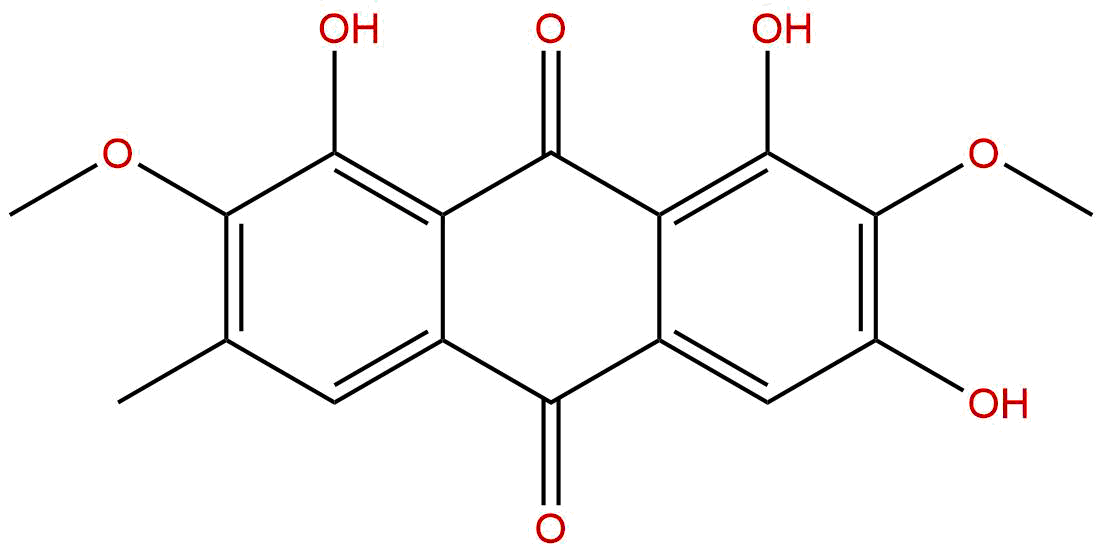


Product name: 1,6,8-Trihydroxy-2,7-dimethoxy-3-methylanthraquinone
Synonym name: 1,3,8-Trihydroxy-2,7-dimethoxy-6-methyl-9,10-anthracenedione
Catalogue No.: BP5286
Cas No.: 2366153-27-5
Formula: C17H14O7
Mol Weight: 330.292
Botanical Source:
Type of Compound: Anthraquinones
Purity: 95%~99%
Analysis Method: HPLC-DAD or/and HPLC-ELSD
Identification Method: Mass, NMR
Packing: Brown vial or HDPE plastic bottle
Storage: Store in a well closed container, protected from air and light. Put into refrigerate or freeze for long term storage.
Whenever possible, you should prepare and use solutions on the same day. However, if you need to make up stock solutions in advance, we recommend that you store the solution as aliquots in tightly sealed vials at -20℃. Generally, these will be useable for up to two weeks.
The product could be supplied from milligrams to grams
Inquire for bulk scale.
For Reference Standard and R&D, Not for Human Use Directly.
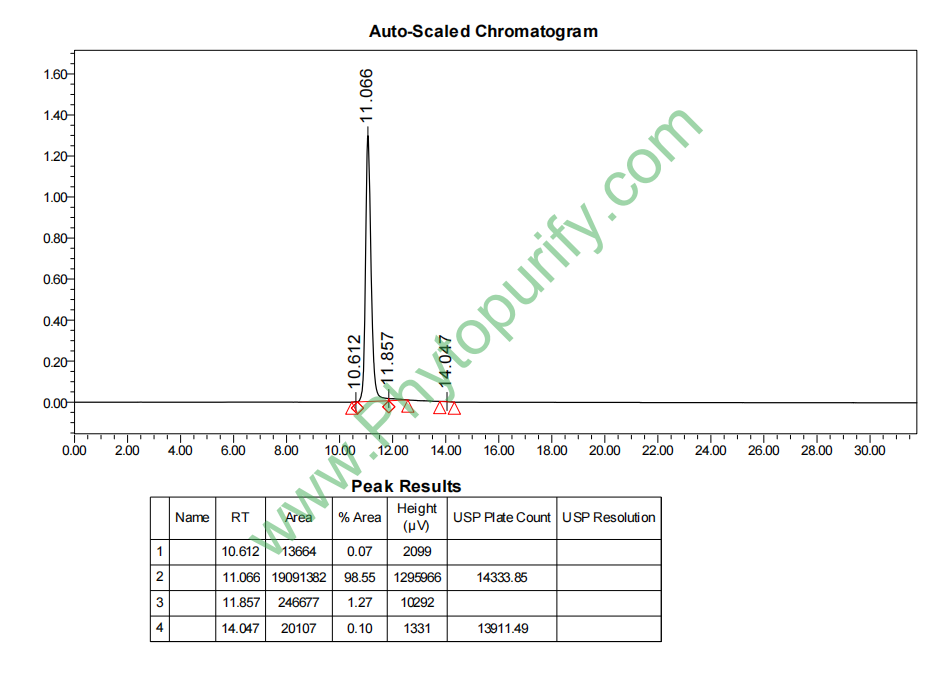
HPLC of 1,6,8-Trihydroxy-2,7-dimethoxy-3-methylanthraquinone
Storage conditions:Short-term storage at 2~8℃, long-term storage at -20 ~ -80℃
113.2900
2.6793
1.3321
.0326
4.6488
6.3627
Low
88.0121
2.6382
Yes
No
Yes
No
Yes
Yes
1.2
Yes
No
Yes
No
Natural products, as an important source of drug discovery, play an irreplaceable role in the long history of human struggle against diseases. Anthraquinones are a class of polycyclic aromatic compounds widely present in nature, especially in higher plants and fungi. Their core structure is 9,10-anthraquinone. These compounds have long been a hot topic in medicinal chemistry and pharmacology research due to their diverse and significant biological activities, such as anti-inflammatory, antibacterial, anti-tumor, diarrhea, and immune regulation. The classic anthraquinone compounds (such as emodin, rhein, and aloe emodin) isolated from traditional Chinese medicines rhubarb, Polygonum cuspidatum, and aloe vera have accumulated a large amount of research data and have been partially applied in clinical practice. However, the structural diversity of anthraquinone compounds in nature goes far beyond this. Many anthraquinone derivatives with more complex structures and unique substitution patterns are constantly being discovered and exhibiting unique pharmacological activities, providing new chemical space for the development of innovative drugs.
1,6,8-trihydroxy-2,7-dimethoxy-3-methylanthraquinone (TDMM) is one of the natural anthraquinone derivatives worth further research. Its chemical structure is characterized by the simultaneous presence of three phenolic hydroxyl groups (located at positions 1, 6, and 8), two methoxy groups (located at positions 2 and 7), and one methyl group (located at position 3) on the anthraquinone parent nucleus. This unique substitution pattern endows TDMM with specific physicochemical properties and potential biological activity. Although its CAS number (2366153-27-5) was registered relatively late, indicating a relatively short history of systematic research as an independent compound, preliminary pharmacological studies have revealed its remarkable potential in the anti-inflammatory field.
Inflammation is a complex defensive response of the body to infection, tissue damage, or stimulation, involving the synergistic action of multiple immune cells and signaling molecules. However, uncontrolled or chronic inflammatory reaction is the core pathological basis for the occurrence and development of many major diseases (such as rheumatoid arthritis, inflammatory bowel disease, atherosclerosis, neurodegenerative diseases and even cancer). Targeting key nodes in the inflammatory pathway, such as tumor necrosis factor (TNF), inducible nitric oxide synthase (NOS2), interleukin-6 (IL6), interleukin-1 β (IL1B), and cyclooxygenase-2 (COX2), has become the mainstream strategy for anti-inflammatory drug development. Existing anti-inflammatory drugs, such as nonsteroidal anti-inflammatory drugs (NSAIDs) and glucocorticoids, have definite therapeutic effects, but long-term use often accompanies significant gastrointestinal, cardiovascular, or metabolic side effects. Therefore, it is of great scientific significance and clinical value to search for novel anti-inflammatory lead compounds with high efficiency and low toxicity from natural products.
This article aims to provide a systematic professional review of TDMM, an emerging natural anthraquinone compound. The article will first elaborate on its chemical structure and physicochemical properties, then trace its plant origin and extraction and separation methods, focus on reviewing its pharmacological activity research progress in the field of anti-inflammatory and related diseases, and deeply explore its mechanism of action and molecular targets. On this basis, the pharmacokinetic characteristics and development potential of the drug are evaluated based on its drug parameters, and finally, its clinical application prospects are discussed. Through a comprehensive analysis of TDMM, it is expected to provide valuable references for further in-depth research and development, and enhance the understanding of the relationship between the structure and function of natural anthraquinone compounds.
The chemical structure of 1,6,8-trihydroxy-2,7-dimethoxy-3-methylanthraquinone is the basis for all its physicochemical properties and biological activities. Its core skeleton is 9,10-anthraquinone, also known as anthraquinone. The mother nucleus is composed of three benzene rings (A, B, C) fused together, with the two carbonyl groups at positions C-9 and C-10 being its most prominent chemical features and key sites involved in redox reactions and interactions with biomolecules.
The distribution of substituents in TDMM molecules exhibits a high degree of symmetry and regularity:
- Hydroxyl (- OH)Three hydroxyl groups are respectively connected to the C-1 position of the A ring, the C-6 position of the C ring, and the C-8 position. The presence of phenolic hydroxyl groups endows the compound with weak acidity, good hydrogen bond donor ability, and the potential for chelation with metal ions. They are also the main sites for derivatization reactions such as acylation, alkylation, and glycosylation.
- Methoxy (- OCH ∝)Two methoxy groups are located at the C-2 position of the A ring and the C-7 position of the C ring, respectively. Methoxy is an electron donating group that can affect the electron cloud distribution of the entire molecule, thereby altering its binding ability to target proteins. Meanwhile, the introduction of methoxy groups typically enhances the lipophilicity of molecules, facilitating their transmembrane transport.
- Methyl (- CH3)A methyl group is attached to the C-3 position of the A ring. Methyl is a small hydrophobic group that contributes to the overall configuration and lipophilicity of molecules.
From the perspective of structural biology, hydroxyl and carbonyl groups in TDMM molecules can form intramolecular hydrogen bonds (such as C-1 hydroxyl group and C-9 carbonyl group), which helps to stabilize the planar conformation of the molecule. Meanwhile, the phenolic hydroxyl groups (C-6 and C-8) and methoxy groups (C-7) on both sides of the molecule constitute potential polar surfaces for interacting with the target protein. This structural feature of "hydrophobic core polar edge" gives it the potential for specific interactions with various biological targets, such as enzymes, receptors, and transcription factors.
In terms of physical and chemical properties, according to the pharmacological parameters provided by computational chemistry, the molecular weight of TDMM is 330.2920 Da, which is in line with the typical range of small molecule drugs. Its lipid water partition coefficient (LogP) is 2.6793, indicating that the molecule has moderate lipophilicity, which can maintain a certain solubility in the aqueous phase and easily penetrate biofilms. The topological polar surface area (TPSA) is 113.2900 Å ², which is relatively high and mainly attributed to the presence of three phenolic hydroxyl groups and two carbonyl groups. A higher TPSA typically indicates poorer passive diffusion ability of the cell membrane, but also suggests better potential for oral bioavailability (typically TPSA<140 Å ² is considered a good candidate for oral drugs). Its low water solubility (0.0326 mg/mL) may become one of the challenges in its formulation development. It is worth noting that the blood-brain barrier (BBB) penetration is predicted to be "low", indicating that TDMM may have difficulty entering the central nervous system, which may be a favorable feature for the development of peripheral anti-inflammatory drugs to avoid potential central nervous system side effects. In addition, hERG inhibition was predicted as' no ', indicating a low risk of inducing cardiac QT interval prolongation and arrhythmia, which is an important safety indicator. The Ames test result is 1.2, indicating that it may have potential genetic toxicity and needs to be given special attention and validation in subsequent development.
1,6,8-trihydroxy-2,7-dimethoxy-3-methylanthraquinone, as a relatively rare natural anthraquinone derivative, has not been widely reported for its plant origin. According to existing literature, TDMM is mainly isolated from certain specific higher plants, with typical sources including Rubiaceae and Fabaceae plants. For example, there is research on plants in the Rubiaceae family Tiger Thorn(Damnacanthus indicus)Or Morinda officinalis(Morinda officinalis)The compound can be isolated from the roots or whole plant. In addition, some Jueming genus(Cassia)Plants, such as Looking to Jiangnan(Cassia occidentalis)Or Blunt Leaf Cassia(Cassia obtusifolia)The seeds or roots may also contain trace amounts of TDMM. These plants are often used in traditional medical systems to treat rheumatism, inflammation, jaundice, or as laxatives, and their pharmacological substance basis may be partially attributed to anthraquinone components including TDMM.
Extracting and purifying TDMM from these plant materials usually follows the classic process of natural product chemistry, which mainly includes the following steps:
Raw material pretreatment and extraction Crush dry plant materials (such as roots, stems, or whole plants) to the appropriate particle size. The selection of extraction solvent is crucial. Given that TDMM contains multiple phenolic hydroxyl groups and has a certain polarity, solvents with higher polarity or mixed solvents are usually chosen. The most commonly used extraction solvent is an ethanol water mixture solution (such as 70% -95% ethanol), and sometimes methanol or ethyl acetate is also used. The extraction method can be cold soaking, percolation, or heating reflux extraction. In order to improve extraction efficiency and reduce the degradation of thermosensitive components, modern technologies such as ultrasound assisted extraction or microwave-assisted extraction are also commonly used. The extract is filtered and concentrated under reduced pressure to obtain the total extract.
Preliminary separation and enrichment Total extract usually has complex components and requires preliminary separation and enrichment. The most commonly used method is solvent extraction, which uses solvents of different polarities (such as petroleum ether, chloroform, ethyl acetate, n-butanol) to extract sequentially, and divides the total extract into different parts according to their polarity. Due to its LogP of approximately 2.68 and moderate polarity, TDMM typically accumulates in the ethyl acetate or chloroform extraction sites. In addition, acid-base extraction can also be used to enrich anthraquinone components, utilizing the weak acidity of their phenolic hydroxyl groups to form salts and dissolve in the aqueous phase under alkaline conditions, followed by acidification and re precipitation, thus achieving preliminary purification.
Chromatographic Separation and Purification This is a crucial step in obtaining high-purity TDMM. After initial enrichment, the parts will be further separated using various chromatographic techniques.Silica gel column chromatography It is the most classic and widely used method, usually using different ratios of petroleum ether ethyl acetate or chloroform methanol mixed solvents for gradient elution.Sephadex LH-20 gel column chromatography It is commonly used to separate anthraquinone glycosides and glycoside components with similar molecular weights, and purify them using their molecular sieve effect. For anthraquinone homologues with similar structures,Reverse phase silica gel column chromatography(such as ODS-C18) often provides better separation efficiency. In recent years,High performance liquid chromatography (HPLC)In particular, preparative HPLC has become a standard method for obtaining high-purity monomeric compounds at the milligram or even gram level, which can efficiently separate TDMM from complex mixtures.
Structural Identification The pure product obtained from separation needs to be structurally confirmed through modern spectroscopic techniques.Nuclear Magnetic Resonance Spectroscopy (NMR)Including ¹ H-NMR, ¹ ³ C-NMR, and two-dimensional spectra (such as HSQC, HMBC, ¹ H - ¹ H COSY), it is the most powerful tool for determining compound structures. By analyzing the chemical shifts, integrals, coupling constants, and remote correlations of characteristic signals in hydrogen and carbon spectra, the substitution positions of hydroxyl, methoxy, and methyl groups on the anthraquinone nucleus can be accurately determined.High Resolution Mass Spectrometry (HR-MS)It is used to determine the precise molecular weight and formula of the compound. In addition, ultraviolet visible spectroscopy (UV Vis) and infrared spectroscopy (IR) can also provide auxiliary structural information.
Although the research history of 1,6,8-trihydroxy-2,7-dimethoxy-3-methylanthraquinone is not long, existing pharmacological studies, especially the exploration of its anti-inflammatory activity, have shown encouraging results. These studies are mainly based on in vitro cell models and some in vivo animal models, systematically evaluating the intervention effect of TDMM on inflammatory response and related diseases.
1. Anti inflammatory activity
This is the most core and prominent pharmacological activity of TDMM. The study commonly uses macrophages stimulated by lipopolysaccharide (LPS) (such as RAW 264.7 cell line) as a classic in vitro inflammatory model. LPS is the main component of the cell wall of Gram negative bacteria, which can strongly activate immune cells and release a large amount of pro-inflammatory factors. The experimental results indicate that TDMM can significantly inhibit the production of nitric oxide (NO) in LPS induced macrophages in a dose-dependent manner. NO is an important inflammatory mediator synthesized by inducible nitric oxide synthase (NOS2), and its excessive production is closely related to the pathological processes of various inflammatory diseases. At the same time, TDMM can effectively reduce the level of prostaglandin E2 (PGE2), which is the main product of cyclooxygenase-2 (COX2) catalyzing arachidonic acid metabolism and is a key factor in causing typical symptoms such as redness, swelling, heat, and pain in inflammatory reactions.
At the cytokine level, TDMM exhibits strong regulatory capabilities. Research has found that this compound can significantly inhibit the secretion of tumor necrosis factor - α (TNF - α), interleukin-6 (IL-6), and interleukin-1 β (IL-1 β) by macrophages under LPS stimulation. TNF - α is the core cytokine that initiates and cascades the inflammatory response, known as the "inflammatory master switch"; IL-6 is involved in acute phase response and immune regulation; IL-1 β is a key pro-inflammatory factor mediating fever, pain, and tissue damage. The multiple inhibition of TDMM on these three key pro-inflammatory factors indicates its potential to block the inflammatory cascade from upstream. In addition, some studies have observed that TDMM can inhibit the expression of inflammation related chemokines (such as MCP-1) and adhesion molecules (such as ICAM-1), which may affect the recruitment and infiltration of inflammatory cells.
2. Antioxidant activity
Inflammation and oxidative stress are closely related and mutually causal. The excessive production of reactive oxygen species (ROS) not only directly damages cells, but also activates inflammatory signaling pathways such as NF - κ B, exacerbating the inflammatory response. Some preliminary antioxidant experiments (such as DPPH radical scavenging experiment, ABTS radical scavenging experiment) have shown that TDMM has a certain ability to scavenge free radicals. The multiple phenolic hydroxyl groups in its molecule are potential hydrogen atom donors, which can neutralize free radicals and exert antioxidant effects. This antioxidant activity may be a supplement to its anti-inflammatory mechanism, indirectly inhibiting inflammation by reducing oxidative stress.
3. Other potential activities
Given the widespread anti-tumor activity of anthraquinone compounds, some studies have also begun to explore the effects of TDMM on tumor cells. The preliminary cytotoxicity experiment showed that TDMM may have a moderate inhibitory effect on the proliferation of some tumor cell lines (such as HepG2 cells and MCF-7 cells of breast cancer). The mechanism may be related to inducing cell apoptosis and blocking the cell cycle, but the specific targets and signaling pathways are still unclear and require further research. In addition, considering that its plant sources (such as Morinda officinalis and tiger thorn) are commonly used in traditional medicine to treat bone and joint diseases, whether TDMM has direct cartilage protection or anti osteoporosis activity is also a direction worth exploring.
A deep understanding of the anti-inflammatory mechanism of TDMM is a crucial step in advancing it towards drug development. Existing research evidence suggests that TDMM mainly exerts its powerful anti-inflammatory effects by regulating multiple key inflammatory signaling pathways and acting on multiple molecular targets.
1. Inhibit the NF - κ B signaling pathway
Nuclear factor kappa B (NF - κ B) is one of the most core transcription factors that regulate inflammatory responses. In the resting state, NF - κ B binds to its inhibitory protein I κ B α and exists in an inactive form in the cytoplasm. When cells are stimulated by LPS, TNF - α, etc., the I κ B kinase (IKK) complex is activated, phosphorylating I κ B α, leading to its ubiquitination and degradation, thereby releasing NF - κ B. The free NF - κ B immediately translocates into the nucleus and binds to the κ B site on the target gene promoter, initiating the transcription of a series of pro-inflammatory genes including TNF - α, IL-6, IL-1 β, NOS2, COX2.
Research has shown that TDMM can effectively inhibit LPS induced phosphorylation and degradation of I κ B α, thereby preventing nuclear translocation of NF - κ B. Through immunofluorescence or Western blot experiments, it can be observed that the level of NF - κ B p65 subunit in the nucleus is significantly reduced after TDMM treatment. In addition, TDMM may directly or indirectly inhibit the activity of IKK complexes. By blocking the NF - κ B pathway, TDMM takes a drastic step at the transcriptional level while inhibiting the production of multiple pro-inflammatory mediators, which explains the molecular basis of its broad-spectrum anti-inflammatory effect.
2. Regulating the MAPK signaling pathway
The mitogen activated protein kinase (MAPK) family, including ERK, JNK, and p38 MAPK, is another signaling pathway that plays an important role in inflammatory responses. After being activated by upstream signals, these kinases can phosphorylate and activate various transcription factors (such as AP-1), thereby regulating the expression of inflammatory genes. LPS stimulation can rapidly activate all three MAPK pathways.
Research has shown that TDMM can significantly inhibit LPS induced phosphorylation of p38 MAPK and JNK, while its effect on ERK phosphorylation may be minimal or non-existent. This suggests that TDMM may selectively act on the p38 and JNK pathways. P38 MAPK plays a crucial role in the synthesis of TNF - α and IL-1 β, while JNK is closely related to cell apoptosis and the production of inflammatory factors. The inhibition of these two pathways by TDMM further weakens the transmission of inflammatory signals.
3. Targeting key enzyme activity
In addition to regulating upstream signaling pathways, TDMM may also directly act on key enzymes involved in inflammatory responses. For example, the phenolic hydroxyl groups in its structure give it the potential to interact with enzyme active sites such as COX2 and NOS2. Although there is currently a lack of direct evidence of enzyme inhibitor eutectic structure, computer simulation studies based on molecular docking suggest that TDMM may be embedded in the catalytic pocket of COX2 through hydrogen bonding and hydrophobic interactions, thereby competitively inhibiting the binding of arachidonic acid. Similarly, it may also bind to the active center of NOS2, interfering with its catalytic function for NO synthesis. This direct inhibition of enzyme activity, combined with the downregulation of its expression level through the NF - κ B pathway, forms a "double blow" effect, which can more effectively control the excessive production of NO and PGE2.
4. Targeting inflammasomes
NLRP3 inflammasome is a multi protein complex, and its activation is a key step in the maturation and secretion of IL-1 β and IL-18. The abnormal activation of NLRP3 is associated with various inflammatory diseases. Although there are currently no reports of TDMM directly acting on NLRP3 inflammasomes, exploring whether TDMM exerts its effect by inhibiting the assembly or activation of NLRP3 inflammasomes would be a very promising research direction, given its strong ability to inhibit IL-1 β secretion.
In summary, the anti-inflammatory mechanism of TDMM is multi-target and multi pathway. It mainly downregulates the expression of key pro-inflammatory genes such as TNF - α, IL-6, IL-1 β, NOS2, COX2 at the transcriptional level by inhibiting the NF - κ B and p38/JNK MAPK signaling pathways; Meanwhile, it is also possible to reduce the production of PGE2 and NO at the post-translational level by directly inhibiting the enzymatic activity of COX2 and NOS2. This multi-level regulatory mode demonstrates high efficiency and comprehensiveness in anti-inflammatory effects, and also reduces the risk of developing resistance to single target drugs.
To transform TDMM from a promising natural active molecule into a clinically available drug, a systematic evaluation of its drug like and pharmacokinetic (ADME) properties is necessary. The calculation of pharmacological parameters mentioned earlier provides us with preliminary reference, but further analysis is still needed in conjunction with experimental data.
1. Evaluation of drug properties
According to Lipinski's "Rule of Five", the molecular weight (330.29<500), LogP (2.68<5), and number of hydrogen bond donors (3 phenolic hydroxyl groups, meeting<5) of TDMM all meet the requirements, but its number of hydrogen bond acceptors (2 carbonyl oxygen+2 methoxy oxygen+3 hydroxyl oxygen=7, slightly higher than 5) is slightly higher. Overall, TDMM meets the basic characteristics of oral medication and has good drug like properties. Although its high TPSA (113.29 Å ²) may limit its passive diffusion, it also suggests that it is less likely to become a substrate for P-glycoprotein (P-gp) and is beneficial for improving the bioavailability of oral administration. The low BBB penetration mentioned earlier is an advantage for the development of peripheral anti-inflammatory drugs. If hERG inhibition is negative, it greatly reduces the risk of cardiac toxicity. However, a positive Ames test (1.2) is a signal that requires high vigilance. This suggests that TDMM or its metabolites may have mutagenicity, which must be rigorously evaluated and confirmed through more comprehensive genetic toxicity tests (such as in vivo micronucleus assay, chromosome aberration assay) in subsequent development. If genetic toxicity is confirmed, structural modifications such as hydroxymethylation or glycosides binding with sugars are needed to reduce toxicity.
2. Pharmacokinetic characteristics
At present, there is very limited experimental data on the pharmacokinetics of TDMM in vivo, and most of the information comes from computational predictions.
Based on the unique chemical structure and clear anti-inflammatory mechanism of TDMM, it has shown broad application prospects in the treatment of various inflammation related diseases.
1. Potential applications of inflammatory diseases
2. Optimization as a lead compound
Despite the enormous potential of TDMM, its poor water solubility and potential genetic toxicity are the two major bottlenecks that constrain its clinical translation. Future research should focus on the following aspects:
1,6,8-trihydroxy-2,7-dimethoxy-3-methylanthraquinone, as a structurally unique natural anthraquinone derivative, has emerged in the field of anti-inflammatory drug research due to its multi-target mechanism of inhibiting NF - κ B and MAPK signaling pathways, downregulating key inflammatory mediators such as TNF - α, IL-6, IL-1 β, NOS2, COX2, etc. Its good drug like parameters and low risk of cardiac toxicity provide favorable conditions for its development. However, poor water solubility and potential genetic toxicity are the main challenges it faces. Future research needs to deepen the elucidation of its structure-activity relationship, optimize its pharmacokinetic properties, and systematically evaluate its safety, in order to promote its transition from laboratory research to clinical application. In depth research on TDMM is not only expected to provide new candidate drugs for the treatment of inflammatory diseases, but also to further enrich our understanding of the complex relationship between the chemical diversity and biological functions of natural anthraquinone compounds, providing new ideas and examples for discovering innovative drugs from traditional plant medicines.
