| Catalog No | Package | Original Price | Price | Inventory | Quantity | Operating |
|---|---|---|---|---|---|---|
| BP4736-5mg | 5mg | $196.00 | Sign in |
|


Storage conditions:Short-term storage at 2~8℃, long-term storage at -20 ~ -80℃
3-Hydroxymorindone, CAS number 80368-74-7, is a typical anthraquinone natural product widely found in plants of the Rubiaceae family, especially in the Euphorbia genus. As a natural pigment, 3-hydroxyquercetin not only plays important physiological functions in plants, but also has attracted widespread attention in the field of pharmacology in recent years due to its unique chemical structure and biological activity. Its potential application value in the treatment of osteoporosis and other diseases has become a research hotspot. Osteoporosis is a metabolic bone disease characterized by reduced bone mass and microstructural damage to bone tissue, which seriously affects the quality of life and healthy lifespan of the elderly population. Traditional treatment methods have certain side effects and drug resistance issues, while natural products have become an important source for developing new anti osteoporosis drugs due to their multi-target regulation and low toxicity side effects.
This article provides a systematic review of the chemical structure and physicochemical properties, plant sources, and extraction methods of 3-hydroxyquercetin. It delves into its pharmacological activity and mechanism of action, with a focus on analyzing its molecular targets and signaling pathway regulation in the treatment of osteoporosis. Combined with drug parameters and pharmacokinetic characteristics, it evaluates its clinical application prospects, aiming to provide theoretical basis and scientific guidance for subsequent drug development and clinical research.
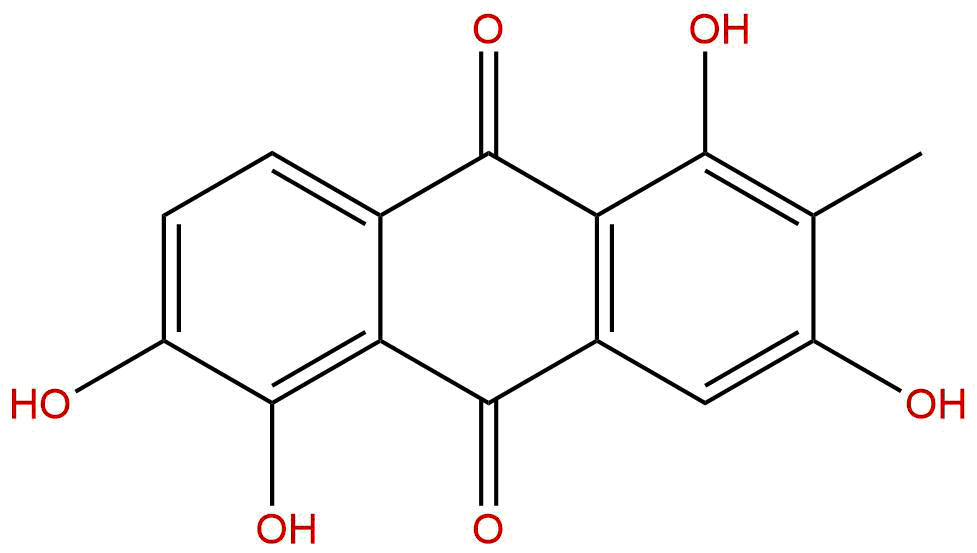
3-Hydroxyquercetin belongs to the anthraquinone group, with a molecular formula of C15H10O6 and a molecular weight of 286.2390. Its basic skeleton is an anthraquinone ring system, which contains multiple hydroxyl functional groups in its structure. The presence of a hydroxyl group at position 3 endows it with strong hydrophilicity and biological activity. The specific characteristics of its chemical structure include two aromatic rings connected by a quinone structure, and the hydroxyl group on the quinone ring can participate in hydrogen bonding, affecting its solubility and binding ability with biomolecules.
In terms of physical and chemical properties, the LogP value of 3-hydroxyquercetin is 2.3375, indicating its moderate lipid solubility, which is beneficial for cell membrane penetration and in vivo distribution. The polar surface area (TPSA) is 115.0600, indicating that it has certain polar groups that contribute to stable binding with the target protein. The low water solubility (0.0986 mg/mL) limits its solubility in the aqueous phase, but its bioavailability can be improved through formulation technology. The low permeability of the blood-brain barrier indicates that it mainly acts on peripheral tissues, reducing the risk of central nervous system side effects. The hERG channel inhibition experiment showed a negative result, indicating a low risk of cardiac toxicity. The Ames test value is 1.8, indicating a low risk of genotoxicity and a good safety basis.
3-Hydroxyquercetin is mainly found in the roots and rhizomes of plants in the Rubiaceae family, especially in the Morinda spp. genus. Traditional Chinese medicinal herbs such as Morinda officinalis are important natural sources of this compound. The content of 3-hydroxyquercetin in plants is greatly affected by growth environment, harvesting time, and processing methods.
The extraction method mainly adopts organic solvent extraction combined with chromatographic separation technology. Common extraction solvents include ethanol, methanol, and their aqueous solutions, as they can effectively dissolve anthraquinone compounds. The extraction process generally includes crushing plant materials, extraction, filtration concentration, liquid-liquid distribution, and column chromatography purification. High performance liquid chromatography (HPLC) and mass spectrometry (MS) techniques are widely used for qualitative and quantitative analysis of 3-hydroxyquercetin in extracts. In addition, the application of ultrasound assisted extraction and microwave-assisted extraction technologies has improved extraction efficiency and purity, reduced solvent usage and extraction time.
The pharmacological activity research of 3-hydroxyquercetin mainly focuses on anti osteoporosis, anti-inflammatory, antioxidant, and anti-tumor aspects. Among them, the anti osteoporosis effect is particularly prominent, involving multiple regulations of bone metabolism.
The pathogenesis of osteoporosis is complex, involving an imbalance between bone formation and bone resorption. 3-hydroxyquercetin regulates bone metabolism related factors through multiple targets, promoting bone formation and inhibiting bone resorption, thereby improving bone density and strength. In vitro cell experiments have shown that 3-hydroxyquercetin can promote the proliferation and differentiation of osteoblasts (such as osteoblasts and osteoblasts), while inhibiting the differentiation and activity of osteoclasts. Animal model studies further confirm its significant effect on bone density recovery and bone microstructure improvement in osteoporotic rats.
The occurrence of osteoporosis is closely related to chronic inflammation and oxidative stress. 3-hydroxyquercetin exhibits good anti-inflammatory activity, can downregulate the expression of inflammatory factors such as TNF - α and IL-6, and alleviate inflammatory damage to bone tissue. Its antioxidant capacity protects bone cells from oxidative damage and further promotes bone metabolism balance by clearing free radicals and increasing endogenous antioxidant enzyme activity.
Some studies have shown that 3-hydroxyquercetin has certain anti-tumor activity, which may be achieved by inducing tumor cell apoptosis and inhibiting proliferation. In addition, its protective effects on the cardiovascular and nervous systems are still in the preliminary exploration stage, but further research is needed.
The mechanism of action of 3-hydroxyquercetin in anti osteoporosis involves multiple key molecular targets and signaling pathways, reflecting its multi-target and multi pathway regulation characteristics.
3-hydroxyquercetin achieves comprehensive regulation of bone cell function by regulating signaling pathways such as Wnt/β - catenin, RANK/RANKL/OPG, MAPK, and NF - κ B. It activates the Wnt/β - catenin pathway to promote osteoblast differentiation and bone formation; Inhibit RANKL mediated osteoclast activation and reduce bone resorption; At the same time, by inhibiting NF - κ B signaling and reducing the release of inflammatory mediators, bone tissue is protected from inflammatory damage.
The molecular weight of 3-hydroxyquercetin is 286.2390, which conforms to the Lipinski rule for medicinal chemical properties. The LogP value of 2.3375 indicates that it has moderate lipid solubility, which is beneficial for cell membrane permeation. The TPSA is 115.0600, indicating that it has good polarity characteristics and is helpful for binding to protein targets. Low water solubility (0.0986 mg/mL) may limit oral bioavailability, but it can be improved through techniques such as nano formulations and solid dispersions. Low blood-brain barrier permeability reduces the risk of central nervous system side effects. No hERG channel inhibition indicates a low risk of cardiac toxicity. The Ames test results show that the risk of genotoxicity is relatively low and the safety is good.
At present, there is limited systematic pharmacokinetic research on 3-hydroxyquercetin. Preliminary in vivo experiments indicate that its oral absorption is slow, and its bioavailability is limited by solubility and first pass effect. The distribution in the body is mainly concentrated in bone tissue and liver, and metabolism is mainly carried out through the liver enzyme system. The metabolites are not yet fully understood. The main excretion pathways are through the kidneys and bile. In the future, systematic pharmacokinetic and toxicological studies need to be conducted to clarify its in vivo behavior and safe dose range.
3-hydroxyquercetin, as a natural anthraquinone compound, has shown great potential for application in the field of anti osteoporosis. The mechanism of multi-target regulation of bone metabolism is in line with the current needs of osteoporosis treatment, especially suitable for long-term medication and preventive treatment. In the future, it can be used as a single active ingredient to develop new bone protective drugs, or combined with other drugs to enhance efficacy and reduce side effects.
In addition, the multiple pharmacological activities of 3-hydroxyquercetin, such as anti-inflammatory and antioxidant effects, provide a theoretical basis for its application in bone related diseases such as osteoarthritis and rheumatoid arthritis. With the advancement of formulation technology, the issues of water solubility and bioavailability are expected to be resolved, promoting its clinical translation.
Future research should focus on the following aspects:
1. Systematic pharmacokinetic and toxicological evaluation to ensure safety and effective dose range;
2. Structural optimization and derivative design to enhance activity and drug properties;
3. Multi center, large sample clinical trials to verify its clinical efficacy and safety;
4. Study the mechanism of combination therapy and explore its synergistic effect with existing anti osteoporosis drugs;
5. Development of new formulations to enhance oral bioavailability and patient compliance.
3-hydroxyquercetin, as a natural anthraquinone compound with unique structure and multiple biological activities, has shown significant pharmacological potential in the treatment of osteoporosis and related bone metabolism diseases. It promotes bone formation and inhibits bone resorption by regulating multiple key targets and signaling pathways, and has both anti-inflammatory and antioxidant effects, with good pharmacological and safety basis. Although clinical research is still in its infancy, with the continuous improvement of pharmacokinetics, toxicology, and formulation technology, 3-hydroxyquercetin is expected to become an important candidate for the new generation of natural bone protective drugs. Future interdisciplinary collaborative research will further reveal its mechanism of action, promote its clinical application, and bring new treatment options for osteoporosis patients.
