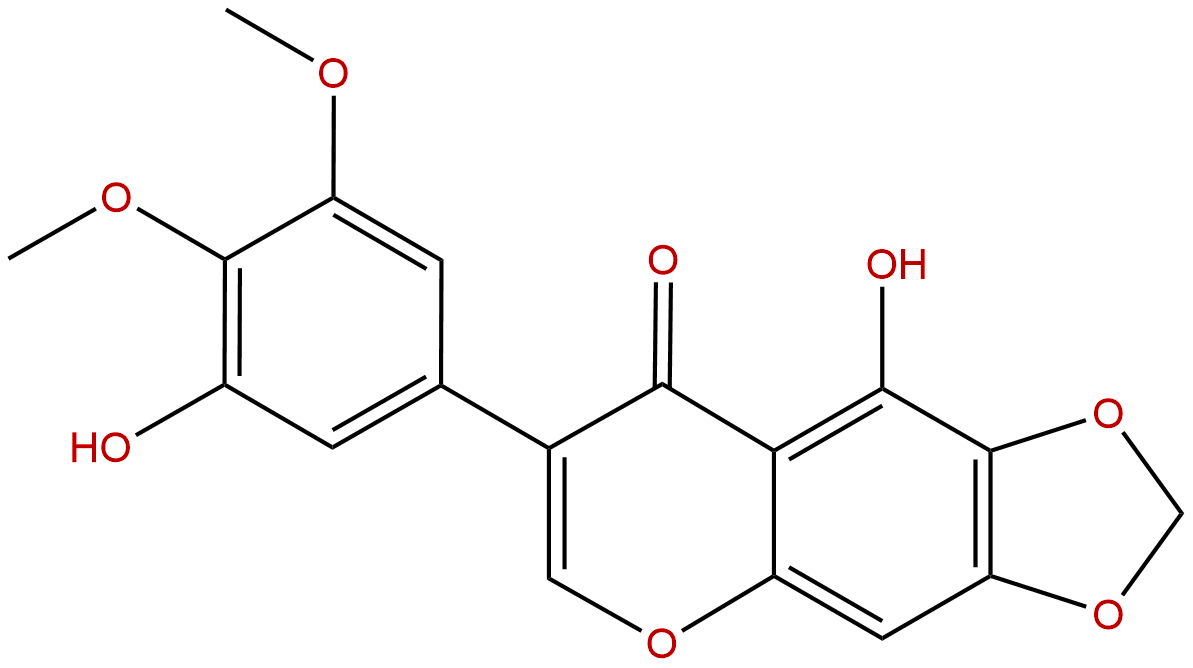


Product name: Dichotomitin
Synonym name:
Catalogue No.: BP3121
Cas No.: 88509-91-5
Formula: C18H14O8
Mol Weight: 358.302
Botanical Source:
Physical Description:
Type of Compound: Miscellaneous
Purity: 95%~99%
Analysis Method: HPLC-DAD or/and HPLC-ELSD
Identification Method: Mass, NMR
Packing: Brown vial or HDPE plastic bottle
The product could be supplied from milligrams to grams. Inquire for bulk scale.
We provide solution to improve the water-solubility of compounds, thereby facilitating the variety of activity tests and clinic uses.
For Reference Standard and R&D, Not for Human Use Directly.
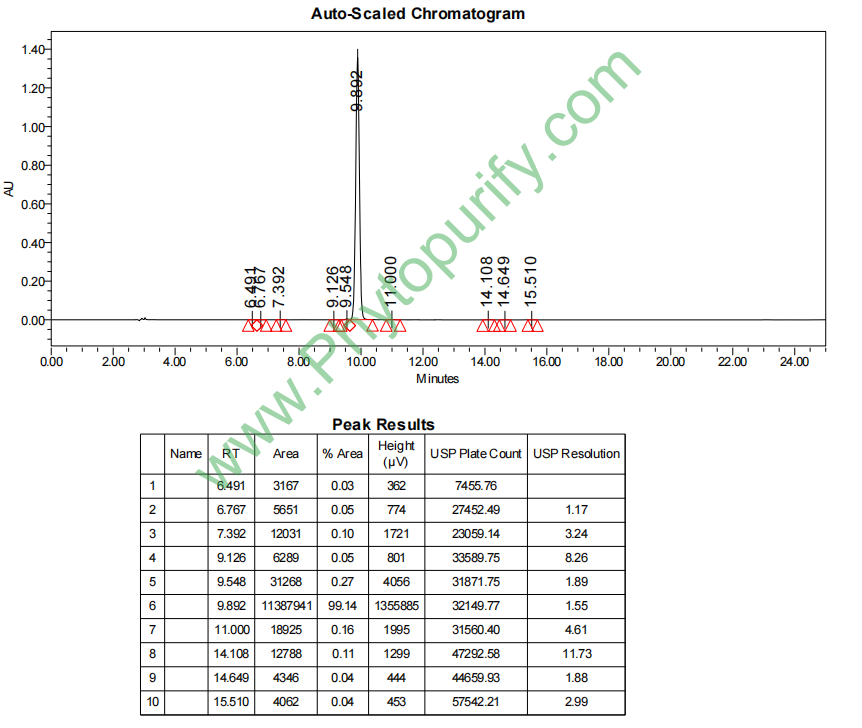
HPLC of Dichotomitin
Storage conditions:Short-term storage at 2~8℃, long-term storage at -20 ~ -80℃
107.5900
1.8208
1.6524
.0182
4.1994
37.9520
Low
89.3850
2.7875
Yes
No
Yes
No
Yes
Yes
1.8
No
No
No
No
Dichotemitin, also known as 5,3 '- dihydroxy-4', 5 '- dimethoxy-6,7-methylenedioxyflavone, is a traditional medicinal plant derived from Dichotemitin Leopard flower Natural isoflavone compounds isolated from the rhizomes of Iris domestica, formerly known as Belamcanda chinensis. Its CAS number is 88509-91-5, molecular formula is C18H14O8, and molecular weight is 358.30 g/mol. As a member of the isoflavone family, berberine has attracted the attention of natural product chemistry and pharmacology researchers in recent years due to its unique chemical structure and potential biological activity. Especially, existing research data points to its relationship with Herpes simplex virus (HSV)The interaction of multiple related targets suggests that they may have significant antiviral potential. This article will provide a systematic professional popularization of this natural compound from its chemical essence, plant origin, pharmacological mechanism, medicinal evaluation, and research prospects.
The chemical structure of berberine is based on the flavonoid core, and its SMILES is expressed as:COc1cc(-c2coc3cc4c(c(O)c3c2=O)OCO4)cc(O)c1OCThis structure reveals its core features: a benzopyranone (chromone) skeleton, connected to a benzene ring (B ring), and having multiple oxygen-containing substituents on the A and B rings. Specifically, its structure includes 6,7-methylenedioxy(forming a five membered ring structure)4 ', 5' - dimethoxy and 5,3 '- dihydroxy These abundant oxygen-containing functional groups not only determine their polarity, but also often serve as key pharmacophores for their interactions with biological targets.
Analyzing its physicochemical properties from the parameters of drug properties:
- Molecular weight (MW):358.30 g/mol, Far below 500 Da, it meets the basic requirements of small molecule drugs.
- Lipid water partition coefficient (LogP/LogD)LogP is 1.82 and LogD is 1.65, indicating that the compound has moderate lipophilicity, neither too hydrophilic (unfavorable for transmembrane) nor too lipophilic (which may lead to poor solubility or non-specific binding), suggesting that it may have good membrane permeability.
- Topological Polarity Surface Area (TPSA)Up to 107.59 Å ², mainly due to the presence of multiple polar groups such as hydroxyl, methoxy, and methylenedioxy in its molecules. Higher TPSA is usually associated with lower passive diffusion ability of cell membranes, which may affect their oral absorption and blood-brain barrier (BBB) penetration.
- Water solubility The value is 0.0182 (unit not specified, usually on the order of mg/mL or mol/L), combined with its LogP and TPSA, indicating that berberine belongs to a poorly water-soluble compound, which may be one of the challenges that need to be overcome in its pharmaceutical development.
- Caco-2 permeability The value is 37.95 (usually measured in units of 10 ⁻⁶ cm/s), indicating that it has Moderate to good intestinal epithelial cell permeability It suggests that there may be some absorption potential after oral administration.
These physical and chemical properties together outline the basic outline of Bai Shegan Su as a natural small molecule with moderate polarity, some lipid solubility but limited water solubility, and decent intestinal permeability.
Bai Shegan mainly comes from plants in the Iridaceae family Leopard flower Iris domestica, commonly known as Blackberry Lily. Shegan has a long history of medicinal use in China, and its dried rhizomes are the authentic source of the traditional Chinese medicinal herb "Shegan". First recorded in the "Shennong Bencao Jing", it is classified as a inferior product and has the effects of clearing heat and detoxifying, dispelling phlegm and clearing throat, dispersing nodules and reducing swelling. Commonly used in clinical practice for treatment Swelling and pain in the throat, excessive phlegm, coughing and wheezing, and toxic abscesses and sores Waiting for symptoms. Modern pharmacological research has confirmed that the extract of Shegan has various activities such as anti-inflammatory, antiviral, antibacterial, cough and asthma relieving.
As one of the characteristic isoflavone components in Shegan, Bai Shegan Su is an important component of the material basis for its pharmacological effects. Starting from the traditional efficacy of "clearing heat and detoxifying", combined with the anti HSV virus activity discovered in modern research, it is indicated that there is a certain scientific correlation between the biological activity of Bai Shegan and traditional applications, that is, its antiviral effect may be one of the modern pharmacological interpretations of Bai Shegan in treating sore throat caused by "heat toxicity".
The existing data clearly indicates that Bai Shegan Su has anti Herpes simplex virus (HSV)The potential and mechanism of action may involve interference with multiple key proteins in the viral lifecycle. The target information provided includes five HSV virus proteins:ICP27, gD, UL39, UL23, and ICP4 These targets are not human proteins, but proteins encoded by the virus itself that are crucial for its replication and pathogenicity. Below is a detailed analysis:
Comprehensive analysis of the mechanism of action:
Bai Shegan Su can simultaneously act on these five targets, suggesting that it may be a Multi target, multi link Anti HSV inhibitors. Its function may cover multiple key steps in the lifecycle of the virus:
- Invasion phase By interfering with gD, the virus is prevented from entering cells.
- Gene expression and regulation process By inhibiting ICP4 and ICP27, the normal transcription of viral genes and the hijacking process of host cells are disrupted.
- Genome replication process By inhibiting UL39 (which affects DNA synthesis materials) and potentially interfering with UL23 related pathways, the synthesis of viral DNA is hindered.
This multi-target mode of action has potential advantages over single target drugs (such as acyclovir, which mainly targets DNA polymerase): it may be more difficult to induce viral resistance because the virus needs to mutate multiple targets simultaneously to completely escape drug inhibition. This provides promising lead compounds for the development of new anti HSV drugs, especially those targeting drug-resistant strains.
Based on the provided pharmacological parameters, combined with classic Lipinski's Five Rules Preliminary evaluation of the potential of berberine as a drug based on the Rule of Five (Ro5) and modern drug design concepts:
Lipinski's Five Rules Compliance Analysis:
1. Molecular weight<500 Da:358.30, in accordance with.
2. LogP < 5:1.82, in accordance with.
3. Hydrogen bond donor (HBD) number<5: According to the structure, there are 2 phenolic hydroxyl groups (5-OH and 3 '- OH), and the HBD number is 2, in accordance with.
4. The number of hydrogen bond acceptors (HBAs) is less than 10: there are 8 oxygen atoms (2 hydroxyl oxygen, 2 methoxy oxygen, 1 carbonyl oxygen, 3 methylenedioxy oxygen) in the molecule, all of which can serve as hydrogen bond acceptors. The number of HBAs is 8, in accordance with.
Bai Shegan Su fully complies with Lipinski's five rules, indicating its good oral absorption potential.
Analysis of other key pharmacological parameters:
- Absorption and distribution:
- Caco-2 permeability (37.95)Support its good intestinal absorption potential.
- Effective permeability (Peff: 4.20)Further confirm that its absorption characteristics are still acceptable.
- Blood-brain barrier permeability (BBB permeability: low)This is consistent with a higher TPSA (107.59 Å ²). The high polarity surface area is not conducive to passive diffusion through the tightly packed BBB. Considering that HSV can lurk in the ganglia, the low BBB penetration of drugs for treating herpetic encephalitis or neuropathic pain is a disadvantage and may require structural modifications.
- Plasma protein binding rate (PPB: 89.39%)High means that most of the drugs are bound to proteins in the blood, and the concentration of free drugs is low. This may affect its efficacy and ability to distribute to tissues, but it is also a common characteristic of many drugs, including nonsteroidal anti-inflammatory drugs.
- Metabolism and toxicity:
- AMES test (1.8)This value usually represents the risk of mutagenicity, and the specific threshold needs to refer to laboratory standards. The value of 1.8 suggests that attention may need to be paid to its genetic toxicity risk.
- Chromosomal aberration (present)Clearly indicating that the compound has the potential to induce chromosomal aberrations under testing conditions, this is a Important red warning signal It is a safety hazard that must be evaluated and addressed in preclinical development.
- Phototoxicity (Yes)Reminder: Skin toxicity may occur under light conditions, and special attention should be paid to potential topical preparations (such as treating skin HSV infections).
- Respiratory sensitization (Yes)There is a risk of inducing respiratory allergic reactions.
- HERG inhibition (No)This is a positive signal indicating that it may not have a significant risk of prolonged cardiac QT interval.
- Liver enzyme indicators (Ser_LK, GGT, AST, ALT are all negative)There was no significant increase in liver cell injury markers observed in the test, indicating that the risk of acute liver toxicity may be low.
Comprehensive Assessment:
White Shegan Su Oral absorption potential Good performance in terms of aspects, in line with the basic rules of drug properties. its Multi target antiviral mechanism Has scientific appeal and the potential to address drug resistance. However, its path to becoming a drug faces significant challenges:Poor water solubility May affect the development of formulations;Clear risk of chromosomal aberrations, phototoxicity, and respiratory sensitization Warning constitutes the main obstacle to its safety. High plasma protein binding rate and low BBB penetration can also affect its pharmacokinetic properties. Therefore, Bai Shegan Su is more likely to be an excellent one lead compound It needs to be done through the system structural optimization To overcome these deficiencies, such as improving solubility, reducing toxicity, and adjusting polarity through salt formation, prodrug, structural modification, etc., can we advance towards candidate drugs.
At present, research on Bai She Gan Su is still in progress Pre clinical basic research stage The existing literature mainly focuses on the plant chemical isolation and identification, content determination, and preliminary in vitro pharmacological activity screening (such as anti-inflammatory, antioxidant, antiviral) of it. There is a lack of in-depth and publicly available detailed reports on the mechanism of its anti HSV activity, especially the molecular details of its interaction with specific targets such as ICP4 and gD (such as whether it directly binds, binding sites, inhibition constants, etc.). The target information provided is likely to come from computer simulation predictions (such as molecular docking) or preliminary protein level screening, and requires subsequent biochemical and cellular experiments for verification and mechanism elucidation.
Future research directions:
1. Deepening the mechanism of action Using surface plasmon resonance (SPR), isothermal titration calorimetry (ITC), co crystallization and other techniques, verify and elucidate the direct interaction mode and inhibition mechanism between berberine and various target proteins of HSV.
2. Pharmacodynamic validation in vivo On the basis of confirming activity at the cellular level, advance to animal infection models (such as mouse HSV skin infection model, corneal infection model) to evaluate their in vivo antiviral effect and dose-response.
3. lead optimization Systematically address its toxicity (especially genetic toxicity) and pharmacokinetic defects Structure Activity Relationship (SAR)and Structure toxicity relationship (STR)Research. By using semi synthetic or fully synthetic methods to modify its structure, the aim is to maintain or enhance antiviral activity while significantly reducing toxicity, improving water solubility, and pharmacokinetic properties.
4. Exploration of combination therapy Explore the synergistic effect of the combination therapy of Bai Shegan Su or its derivatives with existing anti HSV drugs (such as acyclovir and ganciclovir), to see if it can reduce their respective dosages and side effects, and overcome drug resistance.
5. Formulation development If its toxicity problem can be solved through structural optimization, new drug delivery technologies such as nano formulations, solid dispersions, and cyclodextrin inclusion complexes can be explored to improve its bioavailability due to its poor water solubility.
Application Prospects:
As a natural anti HSV lead compound with novel structure and unique mechanism of action, Bai Shegan Su has important research value. If its safety bottleneck can be successfully solved through modern medicinal chemistry methods, it is expected to be developed into New anti herpes simplex virus drugs Especially for the treatment of HSV infections resistant to existing nucleoside drugs. In addition, its multi-target action characteristics also deserve to be studied for activity expansion in other viruses, especially other members of the herpesvirus family with similar key proteins, such as CMV and VZV. Even if it ultimately fails to become a systemically administered drug, its low BBB penetration may be considered for development Topical preparations for local use Used to treat skin and mucosal infections caused by HSV (such as herpes labialis and genital herpes), and to avoid some systemic toxicity issues in local applications.
In short, Bai She Gan Su is another vivid case of modernization research in traditional Chinese medicine, which bridges the gap from the traditional experience of "clearing heat and detoxifying" to the modern scientific understanding of "multi-target antiviral". Despite the challenges ahead, its chemical and biological activity value undoubtedly provides a valuable gift from nature for the development of antiviral drugs.
