| Catalog No | Package | Original Price | Price | Inventory | Quantity | Operating |
|---|---|---|---|---|---|---|
| BP3704-20mg | 20mg | $20.00 | Sign in |
|


Storage conditions:Short-term storage at 2~8℃, long-term storage at -20 ~ -80℃
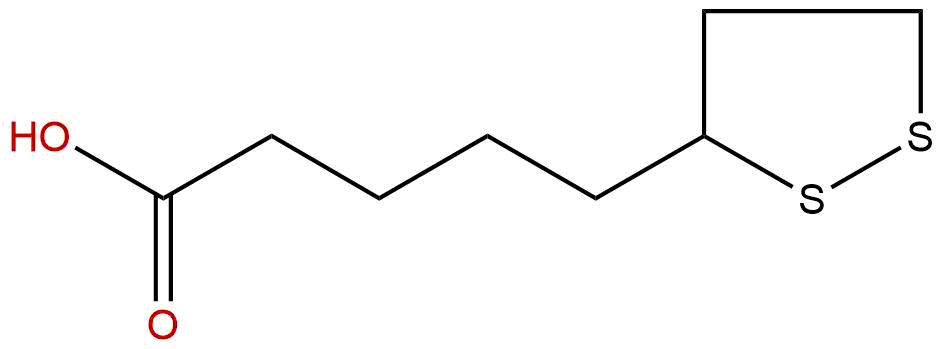
Alpha Lipoic acid (CAS number: 1077-28-7) is a sulfur-containing heterocyclic fatty acid with a 1,2-disulfide cyclopentane group in its structure. As an important coenzyme component in the human body, it is widely present in mitochondria and participates in various metabolic processes. Since its first discovery in the 1950s, lipoic acid has become a hot topic in natural product pharmacology research due to its unique antioxidant properties and multi-target regulatory ability. In recent years, with the in-depth analysis of its molecular mechanism, lipoic acid has shown broad application prospects in antioxidant, anti-inflammatory, neuroprotective, prevention and treatment of diabetes complications and other fields.
This article aims to systematically review the chemical structure and physicochemical properties, plant sources and extraction methods, pharmacological activity and mechanism of action, pharmacological evaluation and pharmacokinetic characteristics of alpha lipoic acid, and explore its future development direction in combination with current clinical application progress, providing theoretical reference for natural product pharmacology research and new drug development.
The chemical name of thioctic acid is 5- (1,2-dithiocyclopentan-3-yl) valeric acid, with the molecular formula C8H14O2S2 and a molecular weight of 206.3320. Its structural feature is the presence of a five membered sulfur-containing heterocyclic ring (1,2-disulfide cyclopentane) and a valeric acid side chain, forming a unique heterocyclic sulfur-containing fatty acid skeleton. The conjugated acid form of alpha lipoic acid is alpha lipoic acid itself, which has strong acidic characteristics.
In terms of physical and chemical properties, the LogP value of alpha lipoic acid is about 2.75, indicating moderate lipophilicity and facilitating membrane penetration. The polar surface area (TPSA) is 37.3 Å ², indicating that its polarity is moderate and contributes to the improvement of bioavailability. The low water solubility (about 0.0295 mg/mL) limits its solubility in the aqueous phase and affects the development of oral formulations. The low blood-brain barrier permeability of alpha lipoic acid suggests that its direct action in the central nervous system may be limited. In terms of safety, lipoic acid does not exhibit hERG channel inhibition and the Ames mutagenicity test results are negative, indicating a low risk of genotoxicity.
Lipoic acid naturally exists in various plant and animal tissues, especially in tissues rich in mitochondria such as green leafy vegetables, liver, heart, and kidney. The main sources of plants include green leafy vegetables such as spinach, cauliflower, peas, etc. These plants exist in a bound form in their bodies, usually covalently bound to proteins, and participate in energy metabolism as coenzymes.
The method of extracting lipoic acid is mainly based on organic solvent extraction and separation purification technology. The traditional extraction steps include:
In recent years, green extraction technologies such as supercritical CO2 extraction and enzyme assisted extraction have gradually been applied to the separation of alpha lipoic acid, improving environmental friendliness and extraction efficiency.
Lipoic acid, as a multifunctional natural product, exhibits a wide range of pharmacological activities, including antioxidant, anti-inflammatory, neuroprotective, and metabolic regulation.
Lipoic acid and its reduced form, dihydrolipoic acid (DHLA), both possess strong free radical scavenging ability, capable of directly scavenging reactive oxygen species (ROS) and reactive nitrogen species (RNS) free radicals. In addition, lipoic acid can enhance the cellular antioxidant defense system and alleviate oxidative stress-related cell damage by regenerating other antioxidants such as vitamin C, vitamin E, and glutathione.
Lipoic acid regulates the nuclear factor kappa B (NF - κ B) signaling pathway, inhibits the expression of pro-inflammatory cytokines such as TNF - α and IL-1 β, and reduces inflammatory response. Its anti-inflammatory activity has been verified in many inflammatory disease models, such as diabetes nephropathy, neuritis, etc.
Lipoic acid can penetrate cell membranes and alleviate damage to nerve cells caused by oxidative stress and mitochondrial dysfunction. It has a significant neuroprotective effect in neurodegenerative diseases such as diabetes neuropathy, multiple sclerosis and Alzheimer's disease.
Lipoic acid, as a mitochondrial coenzyme, participates in energy metabolism, can promote glucose metabolism, improve insulin sensitivity, and assist in the treatment of diabetes and its complications. In addition, lipoic acid also has a regulatory effect on lipid metabolism, demonstrating potential anti obesity and cardiovascular protection effects.
The pharmacological effects of alpha lipoic acid involve multiple signaling pathways and molecular targets, mainly focusing on antioxidant defense and cell protection mechanisms.
Lipoic acid induces the expression of downstream antioxidant enzymes, including superoxide dismutase (SOD1, SOD2), catalase (CAT), glutathione peroxidase (GPX1), and heme oxygenase 1 (HMOX1), by activating the nuclear factor erythroid 2-related factor 2 (NFE2L2/NRF2) signaling pathway. These enzymes work together to clear excess ROS and maintain intracellular redox balance.
In addition, lipoic acid also regulates the activity of matrix metalloproteinases (MMP1, MMP3), participates in extracellular matrix remodeling, and reduces tissue damage and inflammation.
In summary, lipoic acid achieves a wide range of physiological and pharmacological effects through multi-target and multi pathway synergistic effects.
The molecular weight of alpha lipoic acid is 206.33, which conforms to Lipinski's rule. A LogP value of 2.75 indicates that it has good lipid solubility and is conducive to cell membrane penetration. TPSA is 37.3 Å ², with moderate polarity, which facilitates oral absorption. Low water solubility may limit its bioavailability, but it can be improved through formulation technology.
In terms of safety, lipoic acid does not inhibit hERG channels, reducing the risk of cardiac toxicity. Ames test negative, low risk of genotoxicity, meets drug safety requirements.
Lipoic acid is absorbed quickly after oral administration, but its bioavailability is limited by intestinal metabolism and first pass effects. It exists in both free and bound states in plasma, with a short half-life (about 30 minutes to 1 hour), indicating the need for multiple administrations to maintain effective concentrations. Lipoic acid is mainly metabolized by the liver, and its metabolites are excreted by the kidneys.
The blood-brain barrier has a low permeability, which limits its direct action in the central nervous system, but it can still exert neuroprotective effects by regulating the peripheral nervous system and systemic antioxidant status.
Improvements in formulations such as sustained-release formulations and liposome encapsulation are expected to enhance their pharmacokinetic properties and clinical efficacy.
Lipoic acid, as a safe and effective natural antioxidant, has shown potential value in clinical studies of various diseases.
A large number of clinical trials have shown that lipoic acid can improve the insulin sensitivity of diabetes patients, reduce the blood sugar level, and alleviate the symptoms of diabetes neuropathy, such as pain, numbness, and sensory disorders. Its antioxidant and anti-inflammatory effects help to slow down the progress of diabetes nephropathy and retinopathy.
Lipoic acid has shown neuroprotective potential in adjuvant therapy for neurodegenerative diseases such as Alzheimer's disease and multiple sclerosis. It improves neurological function and delays disease progression by reducing oxidative stress and inflammation.
Lipoic acid can improve liver function indicators, regulate lipid metabolism, and alleviate liver inflammation and fibrosis in patients with non-alcoholic fatty liver disease (NAFLD). At the same time, it also has a certain alleviating effect on symptoms such as obesity and hypertension related to metabolic syndrome.
Lipoic acid, as a naturally occurring heterocyclic fatty acid with a unique structure, occupies an important position in the field of natural product pharmacology due to its multi-target antioxidant and metabolic regulatory functions. Its good safety and wide pharmacological activity make it a powerful candidate molecule for treating various chronic diseases. In the future, with the advancement of formulation technology and the deepening of mechanism research, lipoic acid is expected to play a greater role in clinical practice, promoting the innovative development of natural product drugs. Systematic and comprehensive research and clinical validation will be the key to achieving its clinical translation.
