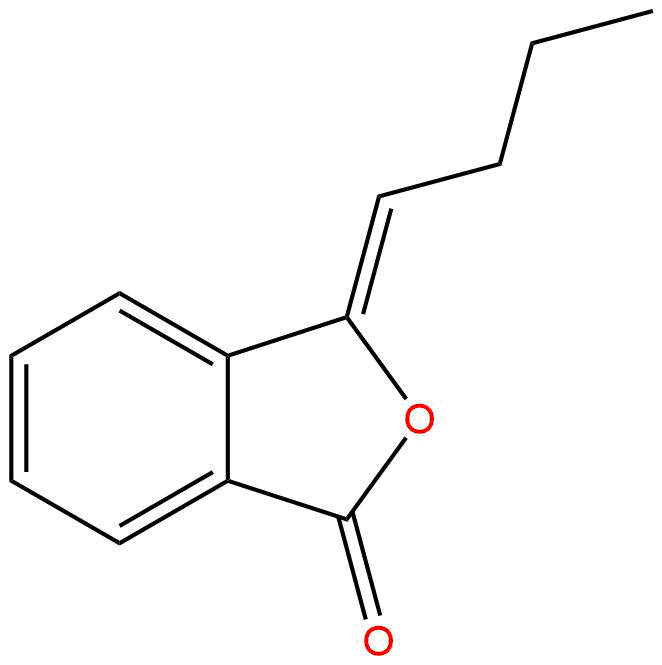


Product name: (Z)-Butylidenephthalide
Synonym name:
Catalogue No.: SBP02864
Cas No.: 72917-31-8
Formula: C12H12O2
Mol Weight: 188.226
Botanical Source:
Physical Description: Oil
Type of Compound: Miscellaneous
Purity: 95%~99%
Analysis Method: HPLC-DAD or/and HPLC-ELSD
Identification Method: Mass, NMR
Packing: Brown vial or HDPE plastic bottle
The product could be supplied from milligrams to grams. Inquire for bulk scale.
We provide solution to improve the water-solubility of compounds, thereby facilitating the variety of activity tests and clinic uses.
For Reference Standard and R&D, Not for Human Use Directly.
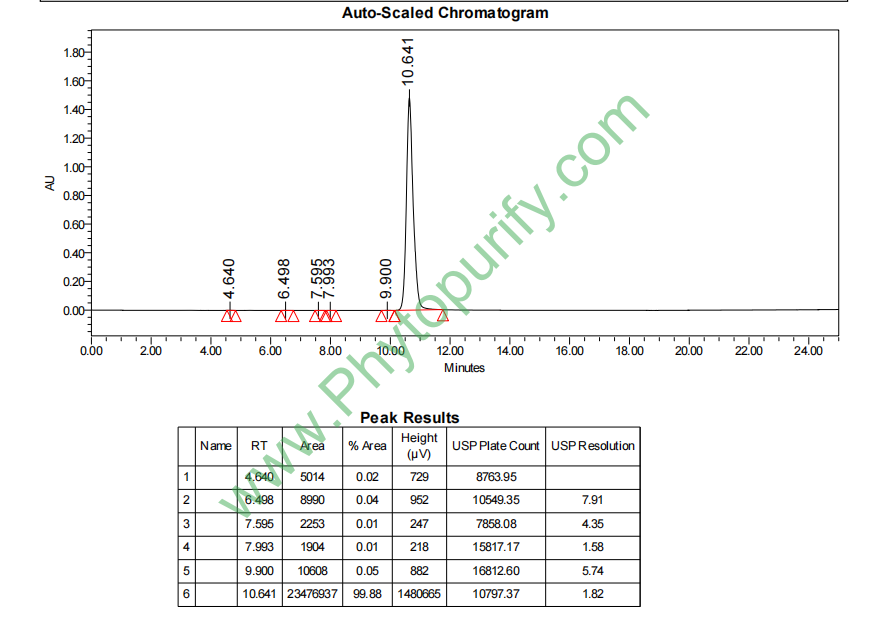
HPLC of (Z)-Butylidenephthalide
Storage conditions:Short-term storage at 2~8℃, long-term storage at -20 ~ -80℃
34.1400
2.9500
2.9500
High
No
No
No
Unknown
No
Unknown
(Z) Butylidenephthalide (CAS number: 72917-31-8) is a natural gamma lactone compound, structurally classified as a derivative of 2-benzofuran-1 (3H) - one. This compound was initially isolated from the traditional Chinese medicinal herb Ligusticum porteri and has received widespread attention in recent years due to its diverse biological activities, especially its hypoglycemic effect. As a natural product, (Z) - n-butenyl phthalide not only displays significant α - glucosidase inhibitory activity, but also involves a variety of disease related molecular targets, including analgesia, type 2 diabetes, Alzheimer's disease, liver fibrosis, tumor and other fields. This article will provide a systematic review of the chemical structure, sources, pharmacological activities, and mechanisms of action of (Z) - n-butenyl phthalein, combined with drug evaluation and pharmacokinetic characteristics, to explore its clinical application potential and future development directions.
(Z) N-Butylphthalide is a natural product with a gamma lactone structure, with a molecular formula of C12H12O2 and a molecular weight of 188.22. Its structural feature is that the 3rd position of the phthalein skeleton is replaced by a butylidene group, forming an (Z) configuration of the vinyl substituent. This compound belongs to 2-benzofuran-1 (3H) - ketones and has a typical lactone ring structure and aromatic ring system, which endows it with good chemical stability and biological activity basis.
In terms of physical and chemical properties, the LogP value of (Z) - n-butenyl phthalein is about 2.95, indicating its moderate lipophilicity, which is beneficial for cell membrane penetration and in vivo distribution. The polar surface area (TPSA) is 34.14 Å ² and the number of hydrogen bond acceptors is 2, indicating that it may achieve high affinity through limited hydrogen bonding when binding to target proteins. Its compact molecular structure and excellent blood-brain barrier penetration ability (high BBB) provide a foundation for its potential application in central nervous system diseases. The existing data does not yet clarify its hepatotoxicity and mutagenicity (Ames test unknown), but it has no cardiotoxicity or hERG channel inhibition effect, indicating that it has certain safety advantages.
(Z) N-butenylphthalide is mainly isolated from Ligusticum porteri, a plant in the Umbelliferae family. Ligusticum plants are widely used in traditional Chinese medicine, especially in promoting blood circulation, removing blood stasis, relieving pain, and anti-inflammatory effects. This compound, as one of the important active ingredients in this genus of plants, bears some pharmacological effects.
The extraction method usually uses solvent extraction combined with chromatographic separation technology. The specific steps include: first, reflux extraction of dried plant roots and stems with ethanol or methanol, concentration, separation by silica gel column chromatography, purification by high performance liquid chromatography (HPLC), and finally obtaining high-purity (Z) - n-butynylphthalide. In recent years, ultrasound assisted extraction and supercritical CO2 extraction technologies have also been applied to improve extraction efficiency and purity, while reducing solvent usage, in line with the concept of green extraction.
(Z) The most well-known pharmacological activity of n-butenyl phthalein is its significant hypoglycemic effect. In vitro experiments have shown that the compound can effectively inhibit alpha glucosidase (EC 3.2.1.20), block the breakdown and absorption of carbohydrates, and delay postprandial blood glucose elevation. In addition, animal model studies have shown that it can regulate the insulin signaling pathway, promote the translocation of glucose transporter 4 (GLUT4, SLC2A4) to the cell membrane, enhance tissue uptake of glucose, and improve insulin resistance.
(Z) N-butenylphthalide also shows potential value in the field of analgesia. Its target involves multiple pain regulation related receptors and enzymes, including opioid receptor subtypes such as TRPV1, CNR1 (cannabinoid receptor 1), OPRD1, OPRM1, OPRK1, as well as prostaglandin synthase PTGS1/PTGS2 and TRPA1. Through multi-target regulation, (Z) - n-butynylphthalide can alleviate inflammatory and neuropathic pain, demonstrating a different mechanism of action from traditional nonsteroidal anti-inflammatory drugs (NSAIDs) and opioid analgesics.
Due to its excellent blood-brain barrier penetration ability, the application of (Z) - n-butynylphthalide in neurological diseases has attracted attention. Research has shown that this compound can inhibit acetylcholinesterase (ACHE) activity, reduce acetylcholine degradation, and improve cognitive function. At the same time, it has a certain inhibitory effect on β - secretase 1 (BACE1), which may slow down the formation of β - amyloid protein. In addition, by regulating the abnormal phosphorylation of NMDA receptors and Tau proteins, (Z) - n-butenyl phthalein exhibits neuroprotective potential.
Liver fibrosis is a common pathological basis for various chronic liver diseases. (Z) N-butenylphthalide inhibits the activation of hepatic stellate cells and excessive deposition of collagen by regulating the signaling pathways of transforming growth factor beta 1 (TGFB1), platelet-derived growth factor receptor beta (PDGFRB), matrix metalloproteinase 2 (MMP2), and nuclear factor kappa B (NFKB1), thereby slowing down the progression of liver fibrosis.
Multiple in vitro and in vivo studies have shown that (Z) - n-butenyl phthalein has inhibitory effects on various tumor cells. Its mechanism involves inhibition of cyclin dependent kinase 1 (CDK1), inducing cell cycle arrest; Regulating Bcl-2 family proteins to promote tumor cell apoptosis; Inhibiting the NF - κ B signaling pathway and reducing the supportive effects of inflammation and tumor microenvironment; And inhibit the epidermal growth factor receptor (EGFR) and MAPK signaling pathways, block tumor cell proliferation and migration.
(Z) The multi-target properties of n-butenyl phthalein are the basis for its multiple pharmacological activities. Its main mechanism of action can be summarized as follows:
BACE1 inhibition: slows down the production of β - amyloid protein and delays the pathological progression of Alzheimer's disease.
Receptor regulatory effect
Cannabinoid receptor CNR1 regulation: involved in neuroprotection and analgesia.
Signal pathway regulation
Insulin signaling pathway activation (INSR, SLC2A4, PRKAA1, PPARG): improves insulin sensitivity and promotes glucose metabolism.
Gene expression regulation
By regulating the expression of related genes, it affects cell proliferation, apoptosis, metabolism, and inflammatory response, demonstrating a wide range of biological effects.
(Z) The pharmacological parameters of n-butenyl phthalein indicate that it has good potential for drug development. Molecular weight 188.22, LogP 2.95,TPSA 34.14, Complies with Lipinski's rules, indicating good oral bioavailability. Its high lipid solubility and low polarity help penetrate cell membranes and blood-brain barriers, making it suitable for treating central nervous system diseases.
In terms of toxicology, there is currently no clear data on liver toxicity and mutagenicity, and further systematic evaluation is needed. No cardiac toxicity or hERG channel inhibition, reducing the risk of cardiovascular adverse reactions.
Pharmacokinetic studies have shown that (Z) - n-butynylphthalide is rapidly absorbed after oral administration and widely distributed in the body, especially at high concentrations in brain tissue. Its metabolic pathway has not been fully elucidated, and it is speculated that it is mainly metabolized through the liver enzyme system. Further research is needed on its metabolites and excretion methods.
(Z) Due to its multi-target and multi mechanism pharmacological activity, n-butenyl phthalein has shown broad clinical application prospects. Its α - glucosidase inhibition in the treatment of type 2 diabetes provides a natural product candidate for the development of new hypoglycemic drugs; The analgesic effect and neuroprotective properties make it promising in the fields of chronic pain and neurodegenerative diseases such as Alzheimer's disease; The anti fibrotic and anti-tumor activities have opened up new directions for the treatment of chronic liver disease and cancer.
Future research should focus on: (1) systematic pharmacokinetic and toxicological evaluation to ensure safety; (2) Thoroughly analyze molecular mechanisms, identify key targets and signaling pathways; (3) Optimize extraction and synthesis processes to improve product purity and yield; (4) Conduct preclinical and clinical trials to verify its efficacy and safety; (5) Develop structurally modified derivatives to enhance activity and selectivity.
In addition, combining modern drug design techniques such as computer-aided drug design (CADD) and multi omics analysis will help accelerate the drug development process of (Z) - n-butenyl phthalein.
(Z) As a natural γ - lactone compound derived from Ligusticum porteri, n-butenyl phthalein has become a hot topic in natural product pharmacology research due to its unique chemical structure and diverse biological activities. It has shown significant potential in lowering blood sugar, relieving pain, neuroprotection, anti liver fibrosis, and anti-tumor effects, reflecting the advantages of natural product multi-target drugs. Although its pharmacokinetics and safety research are not yet fully developed, its good pharmacokinetic parameters have laid the foundation for subsequent development. In the future, through systematic pharmacological mechanism analysis and clinical verification, (Z) - n-butenyl phthalein is expected to become a new natural medicine for the treatment of various diseases, contributing important forces to the field of natural product pharmacology.
