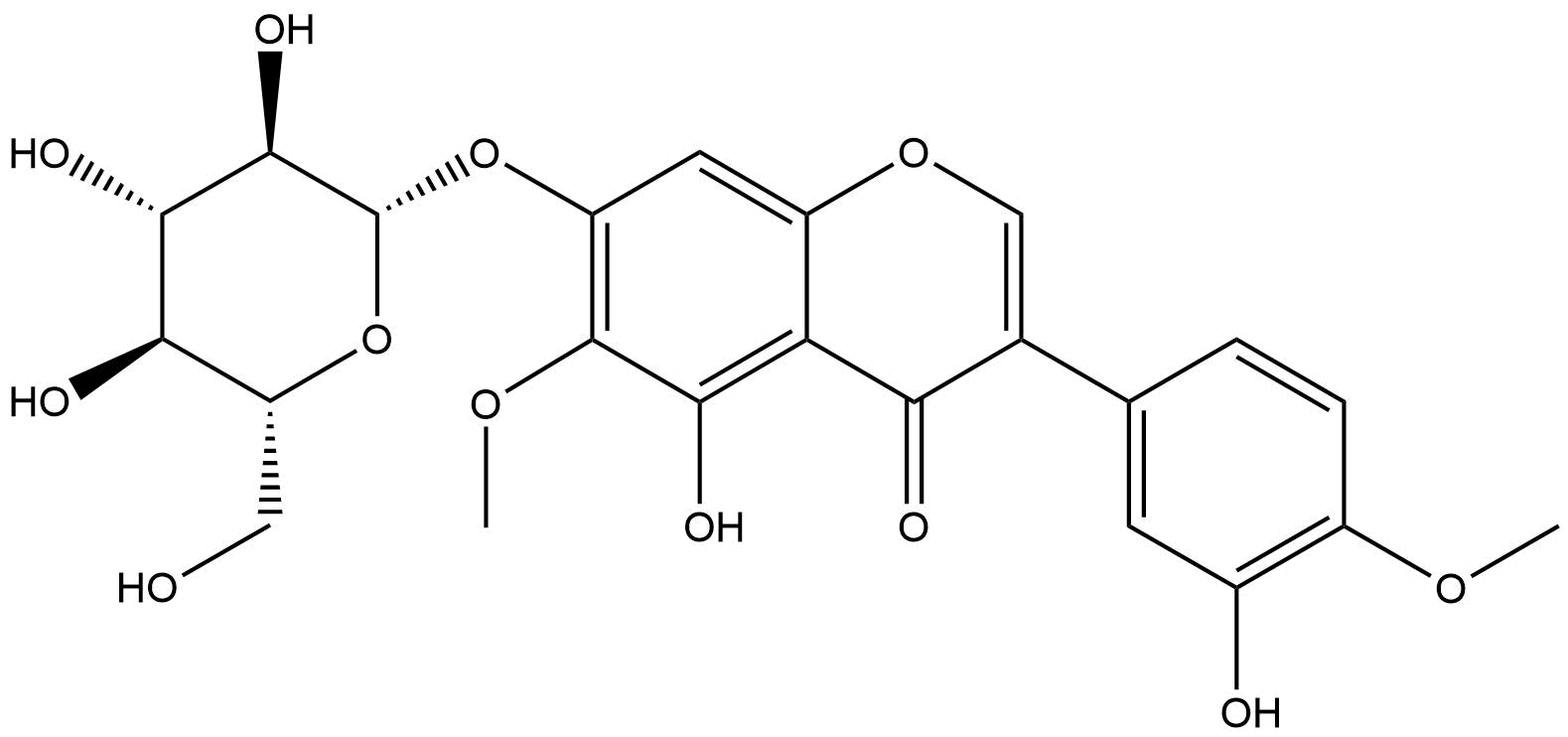


Product name: Iristectorin A
Synonym name:
Catalogue No.: BP4178
Cas No.: 37744-61-9
Formula: C23H24O12
Mol Weight: 492.433
Botanical Source: Belamcanda chinensis (L.)DC.
Physical Description: 射干
Type of Compound: Flavonoids
Purity: 95%~99%
Analysis Method: HPLC-DAD or/and HPLC-ELSD
Identification Method: Mass, NMR
Packing: Brown vial or HDPE plastic bottle
Storage: Store in a well closed container, protected from air and light. Put into refrigerate or freeze for long term storage.
Whenever possible, you should prepare and use solutions on the same day. However, if you need to make up stock solutions in advance, we recommend that you store the solution as aliquots in tightly sealed vials at -20℃. Generally, these will be useable for up to two weeks.
The product could be supplied from milligrams to grams
Inquire for bulk scale.
For Reference Standard and R&D, Not for Human Use Directly.
Storage conditions:Short-term storage at 2~8℃, long-term storage at -20 ~ -80℃
188.5100
.1389
.1080
1.2734
.6795
.4891
Low
81.1678
4.0237
Yes
No
Yes
No
Yes
No
0.6
Yes
No
Yes
No
Iristectin A is a compound derived from the iris plant in the family Iridaceae(Iris tectorum)The natural products obtained from the separation have attracted much attention in recent years due to their significant biological activity. As a natural compound with multiple pharmacological effects, iris glycoside not only shows the potential of anti breast cancer, but also shows good anti-inflammatory activity, involving a variety of inflammation related signaling pathways and molecular targets. The study of irisin in the field of natural product pharmacology helps to deepen our understanding of its mechanism of action and promote its application in new drug development. This article will systematically review the chemical structure and physicochemical properties, plant sources and extraction methods, pharmacological activity and mechanism of action, pharmacological evaluation and pharmacokinetic characteristics of iridoid glycoside, and finally look forward to its clinical application prospects.
The chemical name of Iristectin A is Iristectin A, and its CAS number is 37744-61-9. Its molecular formula is C24H28O11 and its molecular weight is 492.4330. Iris glycoside belongs to the flavonoid class of compounds, which contains multiple hydroxyl and glycosidic groups in its structure, endowing it with high polarity and water solubility. Its LogP value is 0.1389, indicating low lipid solubility and good water solubility (1.2734), which has a certain impact on oral absorption and in vivo distribution. The topological polar surface area (TPSA) is 188.51 Å ², and higher TPSA is usually associated with poorer cell membrane permeability, which may limit its ability to pass through the blood-brain barrier, consistent with its low blood-brain barrier permeability characteristics. In addition, irisin did not exhibit hERG channel inhibitory activity, indicating a low risk of cardiac toxicity. The Ames test result was 0.6, suggesting a low risk of genotoxicity.
In the chemical structure of iridoid glycoside, the core ring of isoflavones binds with multiple hydroxyl and glycosidic groups, endowing it with unique biological activity. The glycoside portion not only increases its water solubility, but may also affect its in vivo metabolic stability and targeting.
Irisin IV is mainly derived from plants of the Iris genus Iris tectorum Separated from the roots and stems.Iris tectorum Widely distributed in East Asia, traditional Chinese medicine is often used for clearing heat and detoxifying, anti-inflammatory and analgesic purposes. Iris glycoside, as one of its important active ingredients, has been systematically studied in recent years.
During the extraction process, ethanol or methanol is often used as the extraction solvent, and crude extracts are obtained through reflux extraction or ultrasound assisted extraction. Subsequently, using multi-step separation and purification techniques such as liquid-liquid distribution, silica gel column chromatography, and reverse phase high performance liquid chromatography (RP-HPLC), high-purity irisin was successfully isolated. The optimization of extraction processes mainly focuses on improving extraction efficiency and purity while maintaining the biological activity of compounds.
In addition, modern extraction techniques such as supercritical CO2 extraction and microwave-assisted extraction have also been attempted to be applied to the extraction of iridoid glycoside, in order to improve yield and reduce solvent usage, and promote its large-scale production.
The pharmacological research of iris glycoside mainly focuses on its anti breast cancer and anti-inflammatory effects. A number of in vitro cell experiments and in vivo animal model studies have shown that iris glycoside has a significant inhibitory effect on breast cancer cells, which can induce apoptosis, block cell cycle, and inhibit the proliferation and migration of tumor cells.
Irisin exerts anti-tumor effects by regulating multiple signaling pathways. Studies have shown that it can inhibit the activation of STAT3 signaling pathway in breast cancer cells, reduce the expression of cell proliferation related proteins, and induce cancer cell apoptosis. In addition, irisin can also affect cell cycle regulatory proteins, block G2/M phase transition, and reduce the proliferation ability of tumor cells.
Irisin A exhibits multi-target regulatory ability in anti-inflammatory effects. Its targets include pro-inflammatory cytokines IL-6, TNF - α, inflammatory signaling molecules STAT3, NFKB1, as well as inflammatory mediator synthases PTGS1 (COX-1), PTGS2 (COX-2), NOS2 (inducible nitric oxide synthase), etc. Irisin A can significantly inhibit the expression and activity of these factors, reducing inflammatory response.
In addition, iridoid glycoside also has a regulatory effect on inflammation related ion channels TRPV1 and TRPA1, which may alleviate neuroinflammation and pain by regulating calcium ion influx. CASP1 (caspase-1) is a key activator of inflammasomes, and the inhibitory effect of irisin on it suggests its potential value in regulating cell apoptosis and inflammatory response.
The multi-target mechanism of action of iridoid glycoside is an important basis for its pharmacological activity. Its main mechanism of action includes:
Inhibit the expression of pro-inflammatory cytokines Irisin significantly reduces the secretion of IL-6 and TNF - α, alleviates the inflammatory microenvironment, and blocks the spread of inflammatory signals.
Blocking the STAT3/NF - κ B signaling pathway STAT3 and NF - κ B are key transcription factors that regulate inflammation and tumor cell survival. Irisin IV inhibits the activation of these two pathways, reduces the expression of pro-inflammatory and anti apoptotic genes, promotes tumor cell apoptosis and inflammation relief.
Inhibit inflammatory enzyme activity PTGS1 and PTGS2 are key enzymes involved in prostaglandin synthesis, participating in inflammatory responses and pain transmission. Irisin IV exerts anti-inflammatory and analgesic effects by inhibiting the activity of these two enzymes, reducing the production of prostaglandins.
Adjusting ion channels TRPV1 and TRPA1 play important roles in inflammation and pain signaling. The regulation of irisin on these two channels helps alleviate neuroinflammation and related pain symptoms.
Inhibition of CASP1 activity CASP1 mediates the activation of inflammasomes and promotes the maturation and release of pro-inflammatory cytokine IL-1 β. Irisin IV inhibits CASP1, which may alleviate inflammatory response and cell pyroptosis process.
In summary, iridoid glycoside exhibits excellent anti-inflammatory and anti-tumor activities through multi-target and multi pathway synergistic regulation, and has high pharmacological value.
The pharmacological evaluation of iridoid glycoside shows that it has certain potential for development. Its molecular weight is 492.4330, slightly higher than the Lipinski rule's recommended standard of below 500, but still close to the reasonable range. The LogP value of 0.1389 indicates that it has strong hydrophilicity, which is beneficial for in vivo dissolution and distribution, but may limit cell membrane permeability, especially with low blood-brain barrier permeability, suggesting limited application in central nervous system diseases.
TPSA can reach up to 188.51 Å ², which is typically associated with poor oral bioavailability. However, for drugs targeting peripheral tissues, appropriate polarity can help improve selectivity and reduce non-specific toxicity.
Iris glycoside did not exhibit hERG channel inhibition, reducing the risk of cardiac toxicity. The Ames test result was 0.6, indicating a low genetic toxicity risk and good safety.
At present, there is limited pharmacokinetic research on irisin, and preliminary data suggests that its oral absorption may be limited. In vivo metabolism is mainly carried out through the liver enzyme system, and the activity and toxicity of metabolites still need further study. In the future, its bioavailability and pharmacokinetic properties need to be improved through structural modifications or drug carrier systems.
Iris, as a natural product with significant anti breast cancer and anti-inflammatory activities, has broad clinical application prospects. Its multi-target regulatory mechanism provides new ideas for the treatment of complex diseases, especially in regulating the tumor microenvironment and managing chronic inflammatory diseases.
Future research should focus on the following directions:
In depth pharmacokinetic and safety evaluation Systematically study the absorption, distribution, metabolism, and excretion characteristics of iridoid glycoside, clarify its in vivo behavior, and provide a basis for clinical dosage form design.
Structural optimization and drug design Improve its membrane permeability and oral bioavailability through chemical modification, or develop nanocarrier systems to enhance drug delivery efficiency.
Molecular biology research on multi-target mechanism of action Using genomics, proteomics and other technologies, reveal the intracellular network of action of irisin and explore potential synergistic targets.
Preclinical and clinical research Conduct systematic animal model validation and early clinical trials to evaluate its efficacy and safety, and promote its clinical translation.
Combination therapy strategy Explore the combined use of iridoid glycoside and existing anticancer or anti-inflammatory drugs, and evaluate its potential for enhancing efficacy and reducing toxicity.
In summary, irisin, as a natural product with good pharmacological activity and safety, has the potential to become a new type of anti-cancer and anti-inflammatory drug, and is worthy of further in-depth research and development.
Irisin A as Iris tectorum With its unique chemical structure and multi-target pharmacological effects, the important active ingredients in the, show significant anti breast cancer and anti-inflammatory activities. Its good safety and pharmacological parameters lay the foundation for subsequent drug development. In the future, through systematic pharmacokinetic research, structural optimization and preclinical validation, it is expected to promote iris glycoside to become a new drug for the treatment of breast cancer and inflammation related diseases. The continuous development of pharmacology of natural products will provide strong support for the in-depth research and clinical application of irisin, and promote the widespread application of natural products in modern medicine.
