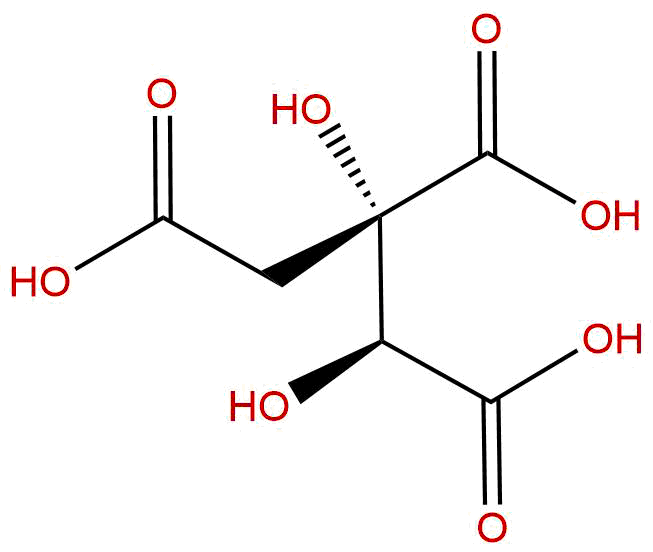


Product name: (-)-Hydroxycitric acid
Synonym name: Garcinia acid; Hydroxycitric acid;(-)-2-Hydroxycitric acid
Catalogue No.: BP2390
Cas No.: 27750-10-3
Formula: C6H8O8
Mol Weight: 208.122
Botanical Source:
Type of Compound: Miscellaneous
Purity: 95%~99%
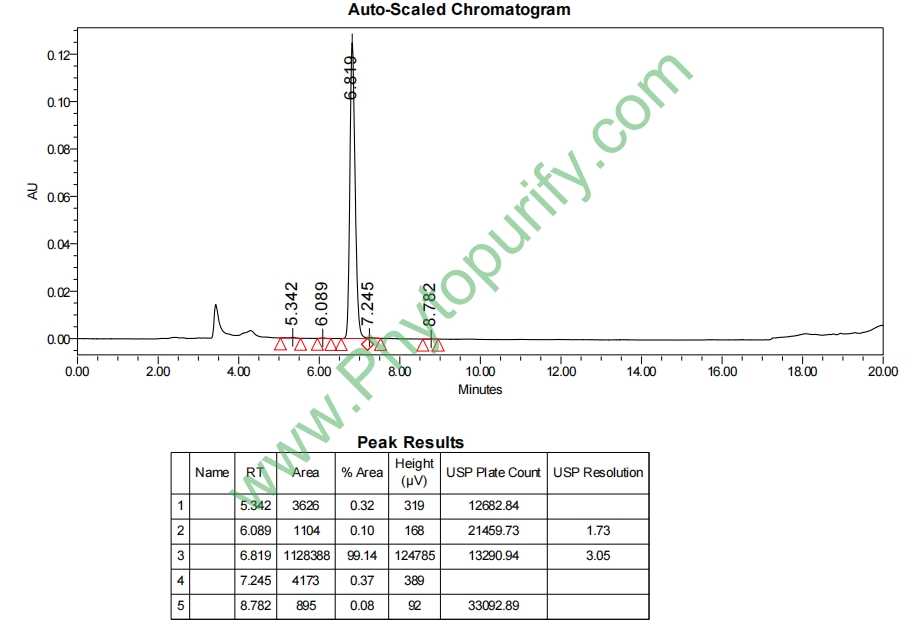
Analysis Method: HPLC-DAD or/and HPLC-ELSD
Identification Method: Mass, NMR
Packing: Brown vial or HDPE plastic bottle
Storage: Store in a well closed container, protected from air and light. Put into refrigerate or freeze for long term storage.
Whenever possible, you should prepare and use solutions on the same day. However, if you need to make up stock solutions in advance, we recommend that you store the solution as aliquots in tightly sealed vials at -20℃. Generally, these will be useable for up to two weeks.
The product could be supplied from milligrams to grams
Inquire for bulk scale.
For Reference Standard and R&D, Not for Human Use Directly.
HPLC of (-)-Hydroxycitric acid
Storage conditions:Short-term storage at 2~8℃, long-term storage at -20 ~ -80℃
152.3600
-1.1996
-2.7720
110.0125
.4168
.5982
Low
30.9513
3.3982
Yes
No
No
No
No
No
0.0
Yes
Yes
Yes
Yes
Globally, obesity and its related metabolic diseases, such as type 2 diabetes, nonalcoholic fatty liver disease, cardiovascular disease, have become a serious public health problem threatening human health. Although lifestyle interventions are the cornerstone of weight control, drug assisted therapy still plays an indispensable role in clinical practice. However, the efficacy and safety bottlenecks of existing anti obesity drugs have prompted researchers to continuously search for new lead compounds from natural products. In this context, hydroxycitric acid (-) - Hydroxycitric acid, HCA), as a natural organic acid derived from the fruits of plants in the genus Tenghuang, has attracted much attention due to its potential anti obesity activity.
Hydroxycitric acid, also known as 1,2-dihydroxypropane-1,2,3-tricarboxylic acid, is a fruit of the vine yellow fruit(Garcinia cambogia)The main active ingredients in the fruit peel. Its unique chemical structure enables it to competitively inhibit adenosine triphosphate citrate lyase (ACL), thereby interfering with the production of acetyl CoA in the cytoplasm and inhibiting de novo synthesis of fatty acids and cholesterol. This core mechanism of action lays the theoretical foundation for HCA in regulating energy metabolism. Since its biochemical function was first isolated and elucidated in the 1970s, HCA has evolved from a simple plant extract to a hot molecule in the fields of nutrition, pharmacology, and metabolic disease research. This article aims to systematically review the chemical and physicochemical properties, plant sources, pharmacological activities, molecular mechanisms, medicinal characteristics, and clinical application prospects of hydroxycitric acid, in order to provide comprehensive scientific basis for the in-depth development and rational application of this natural product.
Hydroxycitric acid (HCA) is a six carbon tricarboxylic acid containing three carboxyl groups and one hydroxyl group, with a molecular formula of C ₆ H ₈ O ₈ and a molecular weight of 208.1220 g/mol. Structurally, HCA is a hydroxyl derivative of citric acid, which introduces a hydroxyl group at the C-2 position (or C-5 position, depending on the numbering scheme) of citric acid. This structural modification endows HCA with unique stereochemical properties. The naturally occurring HCA is mainly (-) - hydroxycitric acid, which has an absolute configuration of (2S, 3S) -2-hydroxy-1,2,3-propanetricarboxylic acid. This specific stereoconfiguration is crucial for its efficient binding with target enzymes such as ACL.
In terms of physical and chemical properties, HCA exhibits a high degree of hydrophilicity. The calculated lipid water partition coefficient (LogP) is -1.1996, indicating that its solubility in the aqueous phase is much higher than that in the lipid phase. This characteristic is closely related to the presence of multiple polar functional groups (three carboxyl groups and one hydroxyl group) in its molecule. The water solubility of HCA is as high as 110.0125 mg/mL, which provides convenience for its dissolution and transport in biological fluids. Its topological polar surface area (TPSA) is 152.3600 Å ², much higher than the commonly believed passive transmembrane absorption threshold (about 140 Å ²), indicating that HCA has limited ability to penetrate cell membranes through passive diffusion. This characteristic is consistent with its lower bioavailability and its main mechanism of action on cytoplasmic enzymes such as ACL. In addition, HCA is relatively stable under acidic conditions, but degradation or lactonization reactions may occur in alkaline environments or high temperatures. Its pKa value is about 2.9-4.1, and it mainly exists in anionic form under physiological pH conditions.
Hydroxycitric acid mainly exists in the genus Garcinia(Garcinia)Among the fruits of plants, there is the vine yellow fruit(Garcinia cambogia Desr., Also known as Garcinia gummi-gutta)The most famous. This plant is native to Southeast Asia and southern India, and its fruit resembles a small pumpkin. The skin is rich in HCA, which can account for 10% -30% of the dry weight of the fruit. In addition, other species of the genus Tenghuang, such as Garcinia indica(Indian rattan) and Garcinia atroviridis It has also been reported to contain HCA, but the content is usually lower than that of Tenghuangguo.
Traditional extraction methods mainly rely on water or alcohol water mixed solvents for extraction. Due to the high water solubility of HCA, hot water extraction is a simple and cost-effective method. However, in order to obtain higher purity HCA, modern industry often adopts the following process: first, the dried rattan peel is crushed, and then extracted by percolation or reflux with ethanol water (such as 70% ethanol) solution. After filtration and concentration, the extract is purified by ion exchange resin (such as strong acidic cation exchange resin) to remove sugars, pigments, and other organic acids. Subsequently, wash with ammonia or sodium hydroxide solution to collect components rich in HCA. Finally, the salt form of HCA (the most common is calcium salt or potassium salt) is obtained by adjusting the pH value, crystallization or spray drying to increase its stability and storage convenience. In recent years, green technologies such as supercritical fluid extraction, microwave-assisted extraction, and enzyme assisted extraction have also been explored to improve the extraction efficiency and purity of HCA. However, large-scale applications still rely mainly on traditional solvent extraction combined with resin purification.
The pharmacological activity research of hydroxycitric acid mainly focuses on its effects on energy metabolism and weight regulation, while its potential other biological activities are gradually being revealed.
1. Anti obesity and lipid-lowering effects
This is the core pharmacological activity of HCA. Numerous animal experiments and clinical studies have confirmed that HCA can significantly suppress appetite, reduce food intake, lower body weight and fat content. Its mechanism of action mainly stems from the inhibition of fatty acid and cholesterol synthesis. By blocking ACL, HCA reduces the availability of acetyl CoA in the cytoplasm, thereby inhibiting the de novo synthesis of fatty acids catalyzed by fatty acid synthase (FASN). Meanwhile, the reduction of acetyl CoA also lowers the substrate supply for cholesterol synthesis. In addition, HCA has been found to increase glycogen synthesis in the liver and muscles, and promote beta oxidation of fatty acids, thereby improving overall energy balance. Some studies also suggest that HCA may affect central appetite regulation by regulating serotonin (5-hydroxytryptamine) levels, although this mechanism is still controversial.
2. Improve sugar metabolism
Given the close association between obesity and insulin resistance, the impact of HCA on glucose metabolism has also received attention. Research has shown that HCA can improve high-fat diet induced insulin resistance, reduce fasting blood glucose and insulin levels. The mechanism may be related to inhibiting hepatic gluconeogenesis and increasing the uptake and utilization of glucose by peripheral tissues such as skeletal muscle. HCA helps restore insulin sensitivity in non fat tissues such as liver and muscle by reducing ectopic deposition of lipids.
3. Anti inflammatory and antioxidant effects
Some studies suggest that HCA has certain anti-inflammatory and antioxidant potential. In vitro and in vivo models, HCA can reduce the levels of pro-inflammatory cytokines (such as TNF - α, IL-6) and decrease the production of oxidative stress markers (such as malondialdehyde). These effects may be partially attributed to their indirect anti-inflammatory effects by improving metabolic disorders, or they may be related to their ability to directly scavenge free radicals or regulate antioxidant enzyme activity.
4. Other potential activities
The preliminary study also explored the role of HCA in anti-tumor and liver protection. For example, there are reports that HCA can inhibit the proliferation of certain cancer cells, and its mechanism may be related to interfering with the lipid metabolism of tumor cells. In terms of liver protection, HCA has been shown to alleviate hepatic steatosis, inflammation, and fibrosis in non-alcoholic fatty liver disease (NAFLD) models.
The mechanism of action of hydroxycitric acid is multi-layered, involving multiple molecular targets and signaling pathways, with its core being the regulation of energy metabolism.
1. Core target: ATP citrate lyase (ACL)
The most classic and widely accepted mechanism of HCA is as a competitive inhibitor of ACL. ACL is a key enzyme that connects glucose metabolism and lipid synthesis, catalyzing the cleavage of citric acid into acetyl CoA and oxaloacetate. Acetyl CoA is an essential precursor for de novo synthesis of fatty acids and cholesterol. HCA is structurally similar to citric acid and can compete with citric acid for the active site of ACL, effectively inhibiting the activity of the enzyme. This inhibition leads to a decrease in the cytoplasmic acetyl CoA pool, which in turn downregulates the activity of downstream lipid synthases such as fatty acid synthase (FASN) and hydroxymethylglutaryl-CoA reductase (HMGCR), ultimately inhibiting the synthesis of fatty acids and cholesterol.
2. Regulation of lipid metabolism related targets
The regulation of HCA on lipid metabolism is not limited to ACL. Research has shown that HCA can downregulate the expression of various lipid synthesis related genes, such as FASN、SREBF1(Sterol regulatory element binding protein 1, SREBP-1c) and PPARG(Peroxisome proliferator activated receptor gamma, PPAR gamma). SREBP-1c is the main transcription factor for lipid synthesis, and HCA may reduce the transcription of target genes such as FASN by decreasing its activity. PPAR γ is a key regulatory factor for adipocyte differentiation and lipid storage, and the inhibition of its expression by HCA helps to reduce adipogenesis. In addition, HCA can upregulate genes related to fatty acid oxidation, such as UCP1(uncoupling protein 1) and ADRB3(β 3-adrenergic receptors), thereby promoting energy expenditure. UCP1 generates heat through uncoupling of the respiratory chain in brown adipose tissue, while activation of ADRB3 can stimulate fat breakdown and heat production.
3. Regulation of appetite and energy balance
The inhibition of appetite by HCA may involve two pathways: central and peripheral. The peripheral pathway is mainly related to its inhibition of hepatic gluconeogenesis and promotion of glycogen synthesis, leading to a decrease in hepatic glucose output and subsequently affecting satiety signals. In terms of central pathways, there is a hypothesis that HCA may suppress appetite by affecting neurotransmitters in the hypothalamus, particularly increasing the availability of serotonin (5-HT). However, due to the difficulty of HCA passing through the blood-brain barrier, direct evidence for this mechanism is not yet sufficient. In addition, HCA can regulate hormones and factors related to energy balance, such as reducing LEP(leptin) and ADIPOQ The level of adiponectin and its impact POMC These changes are involved in the fine regulation of energy intake and consumption.
4. Effects on insulin signaling pathway
The mechanism by which HCA improves insulin resistance is related to its reduction of lipid ectopic deposition and inhibition of inflammation. By inhibiting lipid synthesis in the liver and muscles, HCA reduces the accumulation of lipid intermediates such as diacylglycerol (DAG) and ceramides, which are key factors in activating serine kinases such as protein kinase C (PKC), interfering with insulin receptor substrate (IRS) phosphorylation, and leading to insulin resistance. Meanwhile, the anti-inflammatory effect of HCA also helps to restore the normal transmission of the insulin signaling pathway.
A systematic evaluation of HCA based on the modern drug development evaluation system can help understand its potential and limitations as a drug or functional ingredient.
1. Physical and chemical properties and drug like properties
The molecular weight of HCA (208.12 Da) meets the Lipinski rule, which requires a molecular weight of less than 500. However, its LogP is -1.1996, much lower than 5, and its TPSA is as high as 152.36 Å ², much higher than 140 Å ². These indicators strongly suggest its strong water solubility but extremely poor lipid solubility, leading to its low passive transmembrane absorption ability. This explains why the oral bioavailability of HCA is generally low. Although its high water solubility is beneficial for dissolution in the gastrointestinal tract, it is difficult to pass through the lipid bilayer of small intestinal epithelial cells. Therefore, HCA is typically administered in salt form (such as calcium salts) and may rely on specific transporters (such as monocarboxylic acid transporters, MCTs) for absorption.
2. Pharmacokinetic characteristics
After oral administration of HCA, its absorption is rapid but incomplete. The peak plasma time (Tmax) is usually 1-2 hours. Due to its high polarity, HCA has a small distribution volume in the body and is mainly distributed in the extracellular fluid. Its plasma protein binding rate is relatively low. Importantly, HCA is not easily able to cross the blood-brain barrier, which limits its direct effects on the central nervous system but also reduces the risk of central neurotoxicity. HCA has a low degree of metabolism in the body and is mainly excreted in its original form through the kidneys. Its half-life (t ²) is relatively short, about 2-4 hours, which requires frequent administration to maintain effective blood drug concentration.
3. Safety evaluation
The overall safety of HCA is good. Within the recommended dosage range (usually 500-1500 mg per day), adverse reactions are mild, mainly including gastrointestinal discomfort (such as bloating, diarrhea, nausea). During long-term or high-dose use, a very small number of cases have reported hepatotoxicity and serotonin toxicity (such as when used in combination with antidepressants), but the causal relationship is not yet clear. The key toxicological evaluation indicators show that HCA has no inhibitory activity on hERG potassium channels (hERG inhibition: No), indicating a very low risk of inducing QT interval prolongation in the heart. The Ames test result is 0.0, indicating no significant genotoxicity or mutagenicity. These data provide important safety support for HCA as a dietary supplement or potential drug.
4. Formulation strategy
Given the low bioavailability of HCA, developing new formulations to improve its absorption and efficacy is currently a research hotspot. New delivery systems such as liposomes, nanoparticles, and phospholipid complexes have been explored to enhance the oral bioavailability of HCA. In addition, the combination with piperine (a known bioavailability enhancer) has also been shown to significantly increase the blood concentration of HCA. Developing prodrugs or structural analogues of HCA to improve its lipid solubility and membrane permeability is also an important direction for future pharmaceutical chemistry research.
Hydroxycitric acid has broad application prospects in the fields of anti obesity and metabolic health, but it also faces many challenges.
1. Application as a dietary supplement
Currently, HCA is widely sold globally as a dietary supplement for weight loss, typically in the form of extract from Garcinia Cambogia. A large number of clinical studies and meta-analyses have shown that compared to placebo, HCA can bring statistically significant weight loss and body fat reduction, but the effect is usually mild (e.g., an additional 1-2 kilograms of weight loss within 12 weeks). The individual differences in its efficacy may be influenced by factors such as genetic background, gut microbiota, dietary structure, and lifestyle. Therefore, HCA is more suitable as an adjunct to lifestyle interventions (diet control and exercise) rather than an independent weight loss medication.
2. Potential in the management of metabolic diseases
In addition to simple weight loss, HCA has the potential to improve insulin resistance, dyslipidemia, and non-alcoholic fatty liver disease (NAFLD), making it a part of the management plan for metabolic syndrome. In particular, it improves NAFLD by inhibiting liver lipid synthesis and promoting fatty acid oxidation, providing a new approach for this disease that lacks effective therapeutic drugs. Future research requires higher quality and longer duration clinical trials to validate its efficacy and safety in NAFLD patients.
3. Challenges and Future Directions Faced
Despite its promising prospects, the clinical translation of HCA still faces significant obstacles. The primary issue is its low bioavailability. How to achieve efficient and stable oral delivery through pharmaceutical methods or structural modifications is the key to determining whether it can be upgraded from a "supplement" to a "drug". Secondly, although the mechanism of action of HCA has been partially elucidated, further research is needed on its complex regulatory network in the human body, particularly its long-term effects on gut microbiota, bile acid metabolism, and energy consumption. In addition, regarding its long-term safety, especially its potential impact on the liver and serotonin system, larger and longer-term post market monitoring is needed.
Future research directions should focus on: (1) developing highly bioavailable HCA formulations or prodrugs; (2) Using omics techniques such as metabolomics and metagenomics to reveal the molecular profile of HCA action; (3) Conduct rigorously designed randomized controlled clinical trials with sufficient sample size to clarify their efficacy and safety in different populations (such as different BMI and metabolic status); (4) Explore the synergistic effects of HCA with other natural products such as green tea extract, resveratrol, or existing drugs.
Hydroxycitric acid, as a natural tricarboxylic acid derived from Tenghuang fruit, has demonstrated unique value in the fields of anti obesity and metabolic regulation due to its unique mechanism of inhibiting ATP citrate lyase. Its clear biochemical targets, good safety record, and mild weight loss effects make it one of the best-selling weight loss supplements worldwide. However, its extremely low bioavailability, limited clinical efficacy, and complex yet to be fully elucidated action network also constitute the main obstacles to its transition from a "supplement" to a "drug". Future research needs to fully explore the therapeutic potential of this natural product based on a deep understanding of its molecular pharmacological mechanisms, utilizing advanced formulation techniques and rigorous clinical evaluation systems. For researchers and clinical doctors, objectively understanding the advantages and limitations of HCA and scientifically integrating it into comprehensive management strategies for obesity and related metabolic diseases will be the direction of future efforts.
