Introduction/Overview
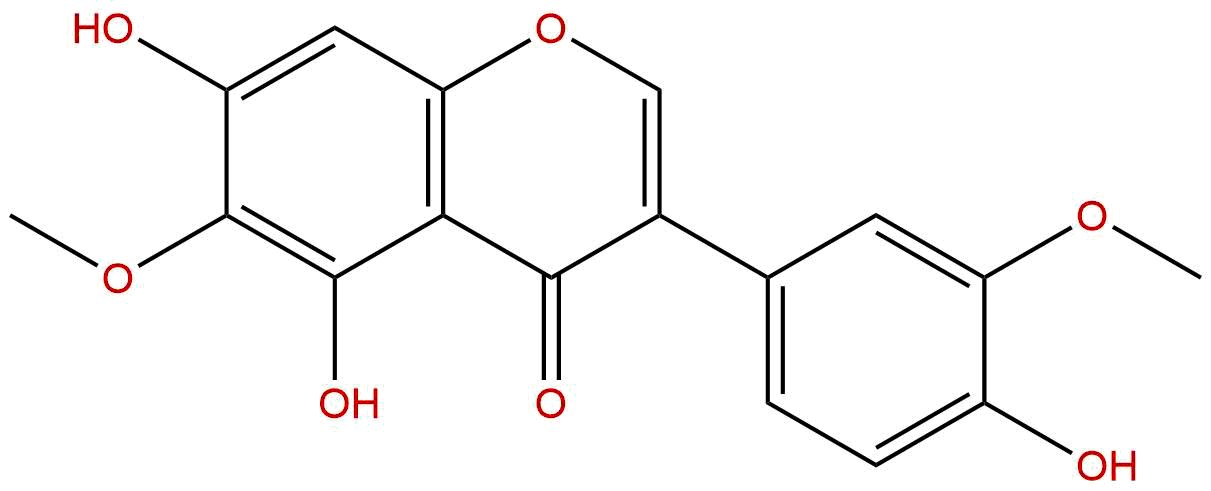
Iristectorigenin A, CAS number 39012-01-6, is a natural flavonoid compound isolated from the rhizome of B. chinensis, a plant in the Iridaceae family. As an important member of the isoflavone family, irisin has attracted much attention due to its significant antioxidant activity. In recent years, as the core role of oxidative stress in the pathogenesis of various diseases has been widely recognized, active ingredients with antioxidant functions in natural products have become a hot topic in drug development. Irisin, with its unique chemical structure and excellent biological activity, has demonstrated potential pharmacological value in various aspects such as antioxidant, anti-inflammatory, and anti-tumor.
This article aims to provide a systematic review of the chemical structure and physicochemical properties, plant sources and extraction methods, pharmacological activities, and mechanisms of action of irisin. The focus is on exploring its interactions with various antioxidant related molecular targets, evaluating its drug development potential based on pharmacological parameters, and looking forward to its prospects in clinical applications, providing theoretical basis and reference for further in-depth research and clinical translation.
Chemical structure and physicochemical properties
Irisin belongs to the class of isoflavones, with a molecular formula of C19H18O6 and a molecular weight of 330.2920. Its structural feature is a typical isoflavone skeleton, containing multiple hydroxyl and methoxy substituents, which endow it with excellent free radical scavenging ability. The conjugated system between the benzene ring and the core structure of isoflavones in the molecular structure of iridoid helps to delocalize its electron cloud and enhance its antioxidant properties.
In terms of physicochemical properties, the LogP value of irisin is 2.0528, indicating its moderate lipid solubility, which is beneficial for membrane penetration and bioavailability. Its topological polar surface area (TPSA) is 109.3600, indicating that the molecule has a certain polarity that facilitates binding with enzymes and receptors. Low water solubility (0.0212 mg/mL) suggests limited solubility in the aqueous phase, which may affect oral absorption. The low permeability of the blood-brain barrier indicates limited distribution in the central nervous system. The hERG channel inhibition experiment result was negative, indicating a low risk of cardiac toxicity from irisin. The Ames test value is 1.2, indicating a low risk of genotoxicity and a good safety basis.
In summary, the chemical structure and physicochemical properties of irisin provide the basis for its pharmacological activity, and also suggest that optimization of its water solubility and bioavailability is needed in drug formulation design and administration method selection.
Plant sources and extraction methods
Irisin mainly comes from the rhizomes of B. chinensis, a plant in the Iris genus. B. As a traditional Chinese medicinal herb, Chinensis has always been used to treat various diseases, and its roots and stems are rich in various isoflavone compounds. The separation of irisin usually relies on modern chromatographic techniques, combined with traditional extraction processes to achieve efficient purification.
Common extraction methods include:
-
Solvent extraction Using ethanol or methanol as extraction solvents and assisted by reflux or ultrasound extraction can effectively dissolve isoflavone components. After concentration, the extraction solution is subjected to liquid-liquid distribution to remove impurities.
-
Column chromatography separation Using silica gel or C18 reverse phase column for separation and purification, high-purity irisin was obtained through gradient elution. High performance liquid chromatography (HPLC) technology is widely used for purity detection and quantitative analysis.
-
Modern assistive technology Ultrasonic assisted extraction, microwave-assisted extraction, and other methods can improve extraction efficiency, shorten extraction time, reduce solvent usage, and maintain the stability of active ingredients.
The optimization of extraction process is of great significance for improving the yield and purity of irisin, and also laying the foundation for its large-scale production and medicinal development.
Pharmacological activity research
The pharmacological activity of irisin mainly focuses on its antioxidant function. Numerous in vitro and in vivo studies have shown that irisin can effectively scavenge free radicals, alleviate oxidative stress damage, and thus play a protective role in cells and tissues.
antioxidant activity
Irisin directly captures reactive oxygen species (ROS) and reactive nitrogen species (RNS) free radicals, reduces intracellular oxidant levels, and protects cell membrane lipids and DNA from oxidative damage. In addition, irisin can regulate the expression and activity of endogenous antioxidant enzymes, enhancing the body's own antioxidant defense system.
anti-inflammatory effect
Oxidative stress is closely related to inflammatory response. Research has shown that irisin can inhibit the release of inflammatory mediators, alleviate inflammatory reactions, and exhibit certain anti-inflammatory effects. This provides theoretical support for its application in chronic inflammation related diseases.
Other potential activities
Some studies have also reported that irisin has anti-tumor and neuroprotective activities, and may exert its effects through regulating mechanisms such as cell apoptosis and signal transduction pathways. However, relevant research is still in its preliminary stage and further in-depth exploration is needed.
Mechanism of action and molecular targets
The antioxidant effect of irisin involves multiple molecular targets, mainly including:
- Tyrosinase (TYR)Participate in melanin synthesis and regulate cellular redox status.
- Matrix metalloproteinases 1 and 3 (MMP1, MMP3)Regulating extracellular matrix degradation, participating in tissue repair and inflammatory response.
- Nuclear factor erythroid 2-related factor 2 (NFE2L2/NRF2)As a key antioxidant response transcription factor, it regulates the expression of various antioxidant enzyme genes.
- Superoxide dismutase 1 and 2 (SOD1, SOD2)Catalytic dismutation reaction of superoxide anion radicals to reduce oxidative pressure.
- Catalase (CAT)Decompose hydrogen peroxide to prevent its toxic effects on cells.
- Glutathione peroxidase 1 (GPX1)Reduce harmful peroxides and protect cells from oxidative damage.
- Heme Oxygenase 1 (HMOX1)By degrading hemoglobin to produce antioxidant products, it participates in cell protection.
Irisin activates the NRF2 signaling pathway, promotes the expression of downstream antioxidant enzymes, and enhances the antioxidant capacity of cells. In addition, its regulation of MMPs helps to alleviate tissue damage and inflammation, and enhance tissue repair ability. The regulation of enzymes such as SOD, CAT, and GPX1 further consolidates their role in clearing free radicals and maintaining cellular redox balance.
The multi-target nature of these mechanisms of action enables irisin to exhibit broad therapeutic potential in complex oxidative stress-related pathological states.
Evaluation of drug properties and pharmacokinetics
The pharmacological parameters of irisin provide important reference for its drug development.
- Molecular weight (330.2920)Complies with Lipinski's rules and is beneficial for oral absorption.
- LogP value (2.0528)Displaying moderate lipid solubility is beneficial for cell membrane penetration and in vivo distribution.
- TPSA(109.3600)It suggests that it has a certain polarity, which helps to form stable binding with target proteins.
- Low water solubility (0.0212 mg/mL)It may limit its oral bioavailability and require improvement of solubility through pharmaceutical means such as nanocarriers, solid dispersions, etc.
- Low permeability of blood-brain barrier This indicates that its application in the central nervous system is limited, but it also reduces the risk of central neurotoxicity.
- HERG channel inhibition experiment negative It shows a low risk of cardiac toxicity and good safety.
- The Ames test value is 1.2 The risk of genotoxicity is low and meets safety requirements.
At present, there is limited pharmacokinetic research on irisin, and preliminary data suggests that its metabolism in vivo is mainly carried out through the liver enzyme system, with a certain first pass effect. In the future, it is necessary to conduct in-depth research on its absorption, distribution, metabolism, and excretion (ADME) characteristics, clarify its in vivo behavior and dose-response relationship, and provide scientific basis for clinical applications.
Clinical application prospects and prospects
Irisin, as a natural flavonoid with significant antioxidant activity, has broad clinical application potential. Oxidative stress plays a central role in cardiovascular disease, neurodegenerative disease, diabetes and its complications, chronic inflammatory diseases and other pathological states. Iris lutein is expected to become an adjuvant or preventive drug for these diseases by regulating the antioxidant system through multiple targets.
The specific application prospects include:
- Cardiovascular protection By scavenging free radicals, it can reduce vascular endothelial damage and prevent atherosclerosis and myocardial ischemia-reperfusion injury.
- neuroprotection Although the blood-brain barrier has low permeability, it may indirectly slow down the progression of neurodegenerative diseases through peripheral antioxidant effects.
- Anti inflammatory and immune regulation Regulating inflammatory response and reducing chronic inflammation related tissue damage.
- Antitumor adjuvant therapy By regulating the redox state, it affects the proliferation and apoptosis of tumor cells.
However, the clinical translation of irisin still faces certain challenges, mainly including limited bioavailability due to low water solubility, unclear pharmacokinetic properties, and a lack of systematic clinical safety and efficacy data. Future research should focus on:
- Pharmaceutical improvement to enhance solubility and bioavailability.
- Pharmacokinetic and toxicological evaluation of the system.
- Multi center, large sample clinical trials were conducted to validate its efficacy and safety.
- Explore its potential for combined use with other drugs.
In addition, based on modern molecular biology and computational pharmacology techniques, in-depth analysis of the action network and signaling pathway of irisin will help discover its new therapeutic targets and indications.
Conclusion
Irisin, as a natural isoflavone derived from B. chinensis, has shown significant research value in the field of natural product pharmacology due to its unique chemical structure and significant antioxidant activity. It regulates the antioxidant enzyme system through multiple targets, reduces oxidative stress damage, and has a wide range of pharmacological activities and a good safety foundation. Although there are still some shortcomings in pharmacokinetics and clinical applications, with the continuous advancement of extraction and purification technology, pharmaceutical improvement, and systematic pharmacological research, irisin is expected to become a new natural medicine for the prevention and treatment of antioxidant related diseases.
In the future, combined with modern drug development concepts, in-depth research on the mechanism, drug design, and clinical translation of iridoid will open up broader prospects for its application in disease treatment.