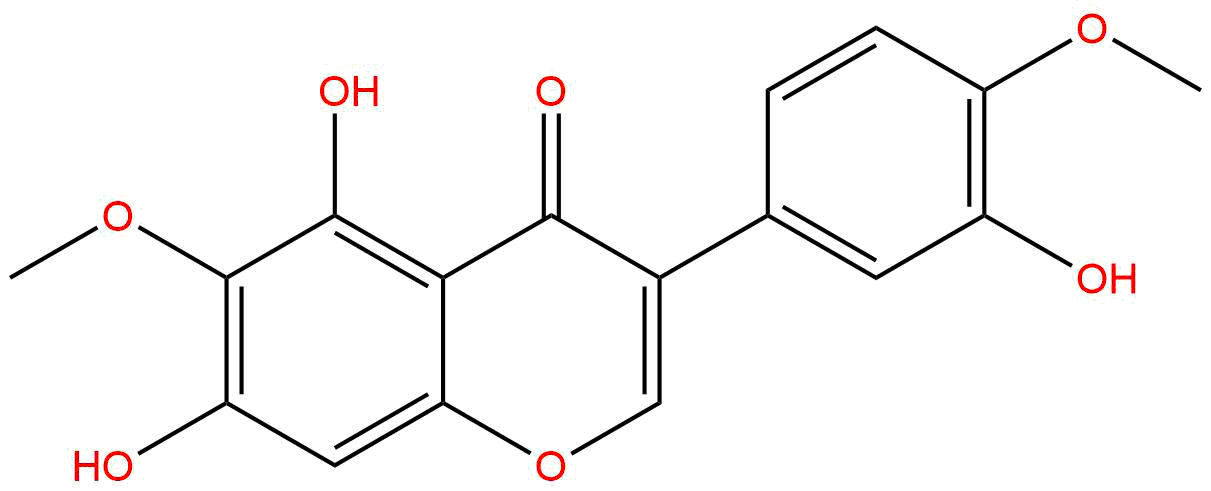


Product name: Iristectorigenin B
Synonym name:
Catalogue No.: BP4181
Cas No.: 86849-77-6
Formula: C17H14O7
Mol Weight: 330.292
Botanical Source:
Type of Compound:
Purity: 95%~99%
Analysis Method: HPLC-DAD or/and HPLC-ELSD
Identification Method: Mass, NMR
Packing: Brown vial or HDPE plastic bottle
Storage: Store in a well closed container, protected from air and light. Put into refrigerate or freeze for long term storage.
Whenever possible, you should prepare and use solutions on the same day. However, if you need to make up stock solutions in advance, we recommend that you store the solution as aliquots in tightly sealed vials at -20℃. Generally, these will be useable for up to two weeks.
The product could be supplied from milligrams to grams
Inquire for bulk scale.
For Reference Standard and R&D, Not for Human Use Directly.
Storage conditions:Short-term storage at 2~8℃, long-term storage at -20 ~ -80℃
109.3600
2.0492
1.7369
.0174
4.7797
37.3598
Low
90.9978
2.5267
Yes
No
Yes
No
Yes
Yes
1.2
No
No
No
No
Iristectorigenin B is a natural flavonoid compound derived from plants in the Iridaceae family, which has received widespread attention in recent years due to its unique biological activity and potential medicinal value. As a regulator of liver X receptor (LXR), irisin can significantly activate the transcriptional activity of LXR - α and LXR - β, thereby regulating various physiological processes such as lipid metabolism, inflammatory response, and oxidative stress. As an important member of the nuclear receptor superfamily, LXR plays a core role in cholesterol metabolism, fatty acid synthesis and inflammatory regulation. Its activator is considered as a potential drug target for treating atherosclerosis, metabolic syndrome and related chronic inflammatory diseases. Irisin exhibits excellent antioxidant and anti-inflammatory activities by regulating the LXR signaling pathway, providing an important research foundation for natural product pharmacology and new drug development.
This article aims to systematically review the chemical structure and physicochemical properties, plant sources, and extraction methods of iridoid, deeply analyze its pharmacological activity and mechanism of action, evaluate its pharmacological properties and pharmacokinetic characteristics, and explore its clinical application prospects and future research directions. By integrating existing literature, it is expected to provide theoretical support and practical guidance for the pharmacological research and drug development of this compound.
Iristectorigenin B, CAS number 86849-77-6, is a typical isoflavone compound with the molecular formula C20H18O5 and a molecular weight of 330.2920. Its chemical structure contains a typical flavonoid skeleton with multiple hydroxyl and methoxy substituents, endowing it with certain polarity and biological activity. The topological polar surface area (TPSA) of iridoid is 109.36 Å ², indicating its moderate polarity and favorable binding with biomolecules.
In terms of physical and chemical properties, the LogP value of irisin is 2.0492, indicating its moderate lipid solubility, which ensures the penetration ability of the cell membrane and avoids the decrease in bioavailability caused by excessive lipid solubility. Its water solubility is relatively low (0.0174 mg/mL), indicating limited solubility in the aqueous phase, which may require formulation optimization to improve bioavailability. In addition, irisin exhibits lower blood-brain barrier penetration ability, reducing the risk of central nervous system side effects. The negative result of hERG channel inhibition experiment indicates a low risk of cardiac toxicity. The Ames mutagenicity test value is 1.2, indicating a low risk of genotoxicity and good safety.
In summary, the physicochemical properties of irisin are suitable for further pharmacological research and drug development, especially in regulating nuclear receptor related signaling pathways.
Irisin mainly exists in plants of the Iridaceae family, especially in the rhizomes and aboveground parts of the Iris spp. Iris plants are widely distributed in temperate regions, and some Iris plants in traditional Chinese medicine are used to treat diseases such as inflammation, liver disease, and metabolic disorders, providing a botanical basis for the pharmacological activity research of irisin.
The common methods for extracting iridoid include solvent extraction, column chromatography separation, and high-performance liquid chromatography (HPLC) purification. Generally, ethanol or methanol is used as the extraction solvent, and the extraction efficiency is improved by reflux extraction or ultrasound assisted extraction. After concentration, the extract was separated and purified using silica gel column chromatography or reverse phase C18 column, and its purity and structure were confirmed by combining HPLC and mass spectrometry techniques. In recent years, the application of supercritical fluid extraction and membrane separation technology has gradually improved the extraction efficiency and purity of irisin.
In addition, differences in plant sources, harvesting time, and processing techniques all have an impact on the content and quality of irisin. The establishment of standardized extraction processes is of great significance for ensuring its pharmacological activity and clinical application.
Irisin, as an LXR regulator, exhibits various pharmacological activities, mainly including antioxidant, anti-inflammatory, regulation of lipid metabolism, and potential anti-tumor effects.
Irisin can significantly activate the NFE2L2/NRF2 signaling pathway, induce the expression of downstream antioxidant enzymes such as superoxide dismutase (SOD1, SOD2), catalase (CAT), glutathione peroxidase (GPX1), and heme oxygenase-1 (HMOX1), thereby enhancing the antioxidant defense ability of cells. In vitro cell models have shown that irisin can reduce the generation of reactive oxygen species (ROS) and inhibit cell damage caused by oxidative stress. Its regulatory effect on matrix metalloproteinases (MMP1, MMP3) helps alleviate tissue inflammation and fibrosis processes.
By activating LXR - α and LXR - β, irisin promotes the expression of cholesterol efflux and fatty acid synthesis genes, regulating lipid homeostasis. Studies on animal models have shown that iris emodin can reduce plasma cholesterol levels, alleviate atherosclerosis, and show potential cardiovascular protection.
LXR activators have been proven to have anti-inflammatory effects, and irisin inhibits the expression of inflammatory factors and reduces inflammation by regulating the LXR signaling pathway. Its regulation of macrophages and other immune cells helps alleviate chronic inflammation related diseases.
Some studies suggest that iridoid may have anti-tumor activity by regulating the cell cycle and inducing apoptosis, but the relevant mechanisms still need further clarification.
The main mechanism of action of irisin is focused on the regulation of the liver X receptor (LXR) signaling pathway. LXR includes two subtypes: LXR - α is mainly expressed in the liver, adipose tissue, and intestine, while LXR - β is widely distributed in various tissues. Irisin, as an agonist of LXR, can bind to the ligand binding domain of LXR receptors, induce conformational changes, promote binding with nuclear receptor co activators, and enhance the transcriptional activity of target genes.
Activated LXR regulates the expression of multiple target genes related to lipid metabolism, cholesterol transport, and anti-inflammatory effects, such as ABCA1, ABCG1 (cholesterol efflux related genes), SREBP-1c (fatty acid synthesis regulatory factor), and various antioxidant enzyme genes. Irisin can enhance the NFE2L2/NRF2 signaling pathway, promote the expression of antioxidant enzymes, and alleviate oxidative stress damage. In addition, its regulation of matrix metalloproteinases (MMP1, MMP3) and tyrosinase (TYR) helps maintain the integrity of the extracellular matrix and regulate cellular function.
The low blood-brain barrier permeability of iridoid indicates that its effect is mainly limited to peripheral tissues, reducing the possibility of central nervous system side effects. It does not inhibit hERG channels, reducing the risk of cardiac toxicity and further supporting its potential as a safer LXR agonist.
The pharmacological evaluation of iridoid shows that it has good potential for drug development. The molecular weight of 330.2920 conforms to Lipinski's rule, and the LogP value of 2.0492 is moderate, indicating its good membrane permeability. The TPSA is 109.36, slightly higher than the ideal range, but still within an acceptable range, indicating that its polarity is moderate and beneficial for binding to the target.
Low water solubility (0.0174 mg/mL) is a major challenge for its drug development, which may limit its oral bioavailability. For this purpose, its solubility and stability can be improved through pharmaceutical methods such as nanocarriers, liposomes, or solid dispersions.
In terms of pharmacokinetics, irisin exhibits low blood-brain barrier penetration and reduces central nervous system adverse reactions. The metabolic pathways in the body have not been fully elucidated, and it is speculated that they are mainly metabolized through the liver enzyme system. In the future, further pharmacokinetic and metabolic studies are needed to clarify their absorption, distribution, metabolism, and excretion (ADME) characteristics.
In terms of safety, irisin did not exhibit hERG channel inhibition, and Ames test results showed that its genotoxicity risk was low, indicating preliminary good safety.
Irisin, as an LXR agonist, has shown broad clinical application prospects in regulating lipid metabolism, antioxidant and anti-inflammatory properties. Its potential indications include:
Future research should focus on the pharmacokinetic optimization, formulation development, and preclinical safety evaluation of iridoid. In addition, combining modern molecular biology techniques to deeply analyze its mechanism of action and target network can help discover new indications and combination therapy strategies.
In the process of clinical translation, it is necessary to overcome the limitations of poor water solubility and low bioavailability, and explore efficient formulations and administration routes. At the same time, conducting systematic clinical trials to verify its efficacy and safety, and promoting its transition from laboratory to clinical application.
Irisin, as a natural flavonoid LXR agonist, has shown significant potential in antioxidant, anti-inflammatory, and lipid metabolism regulation due to its unique chemical structure and multi-target pharmacological activity. Its good safety and pharmacological parameters have laid the foundation for the development of new drugs. In the future, through in-depth pharmacological mechanism research, pharmacokinetic optimization, and preclinical evaluation, iridoid is expected to become an important candidate drug for the treatment of metabolic diseases and chronic inflammatory diseases.
In summary, iridoid not only enriches the research content of natural product pharmacology, but also provides new ideas and directions for the development of nuclear receptor modulators. Continuous basic and applied research will promote its widespread application in modern medicine, benefiting more patients.
