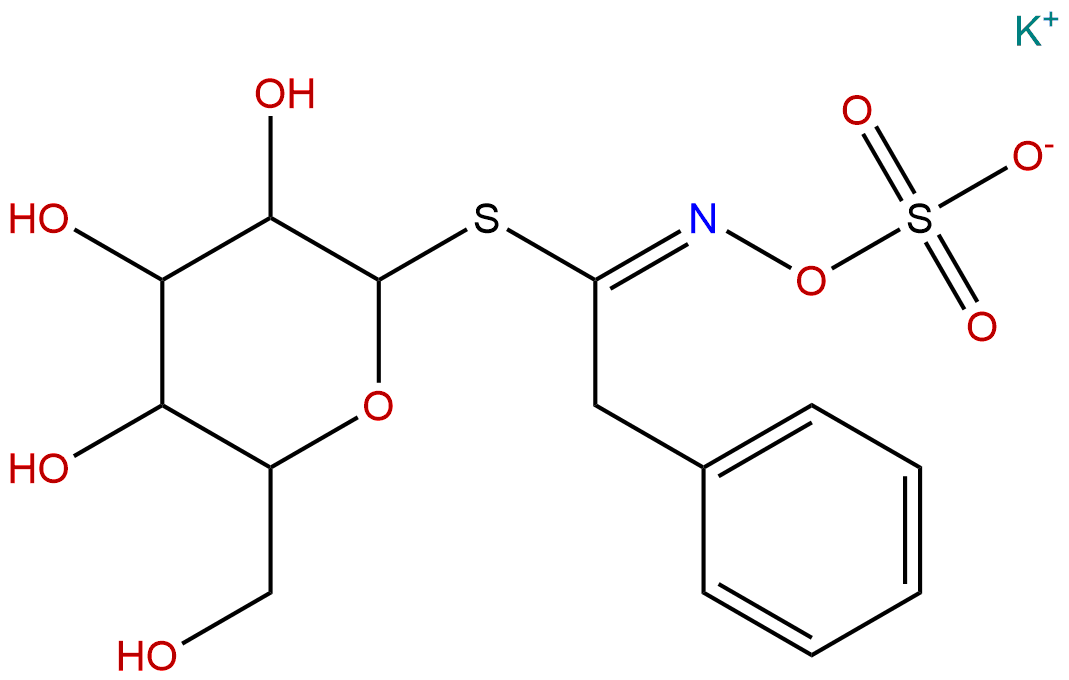


Product name: Glucotropaeolin potassium salt
Synonym name: Glucotropaeolin; Benzyl glucosinolate; 499-26-3(free base)
Catalogue No.: BP1821
Cas No.: 5115-71-9
Formula: C14H18KNO9S2
Mol Weight: 447.514
Botanical Source:
Physical Description: Powder
Type of Compound: Miscellaneous
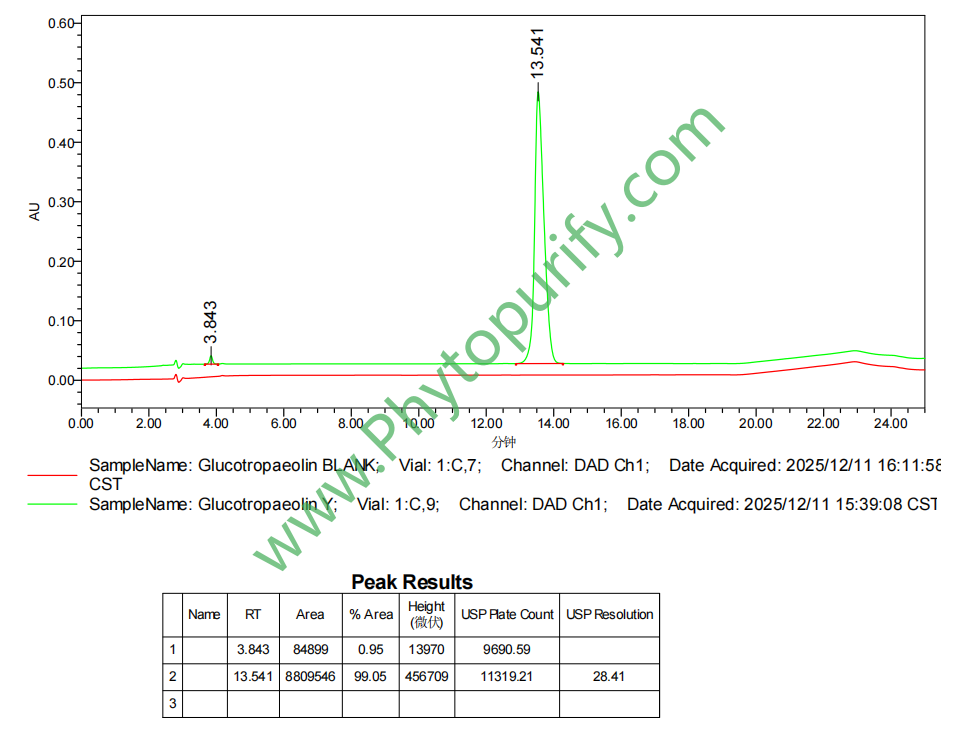
Purity: 95%~99%
Analysis Method: HPLC-DAD or/and HPLC-ELSD
Identification Method: Mass, NMR
Packing: Brown vial or HDPE plastic bottle
The product could be supplied from milligrams to grams. Inquire for bulk scale.
We provide solution to improve the water-solubility of compounds, thereby facilitating the variety of activity tests and clinic uses.
For Reference Standard and R&D, Not for Human Use Directly.
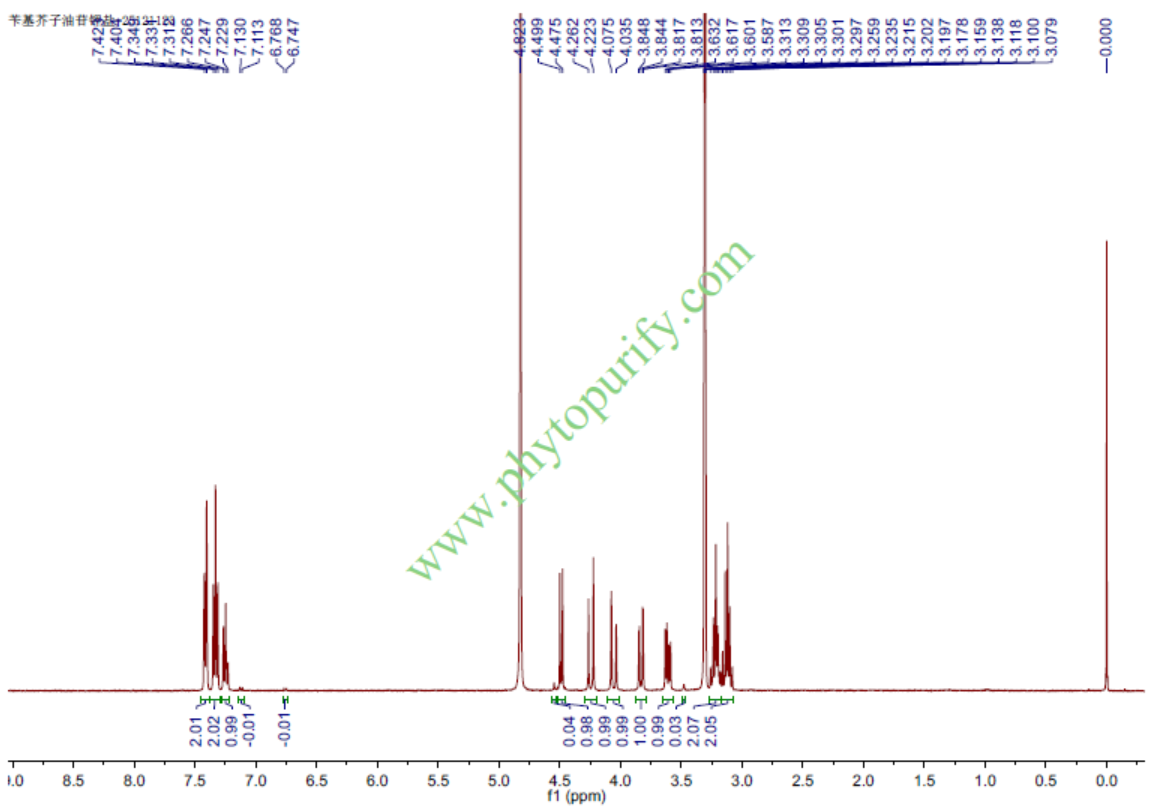
HNMR of Glucotropaeolin potassium salt
HPLC of Glucotropaeolin potassium salt
Storage conditions:Short-term storage at 2~8℃, long-term storage at -20 ~ -80℃
166.1100
-.4112
-1.3486
9.9471
.4104
.1627
Low
59.9482
4.4590
Yes
No
No
No
No
No
0.9
Yes
No
Yes
No
In the broad field of natural product chemistry and pharmacology research, glucosinolates, as a class of sulfur-containing secondary metabolites widely present in cruciferous plants, have long been of great concern. These compounds are not only key components of plant defense systems, but their hydrolysis products, isothiocyanates (ITCs), have been shown to have a wide range of biological activities, especially in the field of cancer chemoprevention, demonstrating enormous potential. Glucotropaeolin potassium salt, as a stable potassium salt form of benzyl glucosinolates in the glucosinolate family, is a key bridge connecting their plant precursors and active metabolites. Its CAS number is 5115-71-9, molecular formula is C ₁₄ H ₁₈ KNO ₉ S ₂, and molecular weight is 409.4380. Compared with unstable free glucosinolates, its potassium salt form has better chemical stability and water solubility, providing convenience for pharmacological research.
In recent years, with the deepening understanding of the concept of "food medicine homology" and the development of precision nutrition, research on benzyl glucosinolates and their metabolites, benzyl isothiocyanate (BITC), derived from common vegetables such as mustard greens, celery, and broccoli seedlings, has become increasingly in-depth. A large number of in vitro and in vivo studies have shown that this compound and its metabolites exhibit multi-target and multi pathway effects in anti-inflammatory, antibacterial, antioxidant, and especially anti-tumor aspects. Its mechanism of action involves inducing cell cycle arrest, promoting apoptosis, inhibiting angiogenesis, regulating epigenetic modifications, and regulating key signaling pathways such as Nrf2/ARE, NF - κ B, MAPK, etc. Therefore, a systematic review of the chemical characteristics, sources, pharmacological activities, mechanisms of action, and medicinal properties of benzyl glucosinolate potassium salt is of great scientific significance for further exploring its medicinal value and promoting the development of related functional foods or drug lead compounds. This article aims to comprehensively review the research progress of benzyl glucosinolate potassium salt and provide prospects for its clinical application.
The chemical structure of benzyl glucosinolate potassium salt consists of a β - D-thioglucosyl group, a sulfoxime group (- C (=NOSO ∝⁻)), and a benzyl side chain (R -) connected by a sulfur atom, with the cation being potassium ion (K ⁺). Its core structure is a typical feature of glucosinolates: a glucose group connected by a sulfur atom and an oxime sulfonate, with the side chain R being benzyl (- CH ₂ C ₆ H ₅). This unique structure is the material basis for its biological activity.
In terms of physical and chemical properties, the compound is a white to off white crystalline powder. Its molecular weight is 409.4380. The calculated logarithm of the lipid water partition coefficient (LogP) is approximately -0.4112, indicating that the molecule has moderate lipophilicity but overall leans towards hydrophilicity. Its topological polar surface area (TPSA) is as high as 166.1100 Å ², mainly attributed to the numerous oxygen atoms, sulfonic acid groups, and sugar ring structures in the molecule, indicating its strong ability to form hydrogen bonds and high polarity. Consistent with this, its water solubility prediction value is good (about 9.95 mg/mL), and it is easily soluble in polar solvents such as water and methanol, while its solubility is lower in low polarity organic solvents. This good water solubility provides favorable conditions for its absorption and distribution in organisms, but it may also affect the efficiency of its transmembrane passive diffusion.
The potassium salt of benzyl glucosinolate itself is relatively stable, but its biological activity is highly dependent on the hydrolysis of myrosinase. When plant cells are intact, glucosinolates and myrosinase are in a spatially isolated state. When plant tissues are damaged (such as cutting, chewing) or through the action of gut microbiota, the compound can be hydrolyzed, glucosylated, undergo Lossen rearrangement to generate unstable intermediates, and ultimately mainly converted into highly reactive benzyl isothiocyanate (BITC). BITC is a key effector molecule that exerts most pharmacological activities, with a small molecular weight and high LogP value, making it easy to penetrate cell membranes. Therefore, benzyl glucosinolate potassium salt can be regarded as a natural prodrug, whose physicochemical properties determine its storage and delivery characteristics, while the properties of BITC are directly related to its intracellular biological effects.
The distribution of benzyl glucosinolates is relatively concentrated in nature, mainly found in various plants of the Brassicaceae family. Among them, the plant sources with relatively rich content include:
1. Golden Lotus Plants Especially the Golden Lotus(Tropaeolum majus L.), The content of benzyl glucosinolates in its seeds and leaves is relatively high, which is also the origin of its name "Glucotropaeolin".
2. Cruciferous vegetables Many common edible vegetables also contain this ingredient, such as mustard greens(Sinapis alba)Seeds, water celery(Nasturtium officinale)Some varieties of mustard greens and broccoli seedlings. There are significant differences in the content of different plant parts (seeds, leaves, roots) and different growth stages.
Extracting benzyl glucosinolate potassium salt from plant materials requires balancing extraction efficiency, preventing enzymatic hydrolysis, and protecting its chemical integrity. The classic extraction and purification process usually includes the following key steps:
1. Raw material pretreatment and enzyme inactivation Firstly, it is necessary to rapidly inactivate endogenous myrosinase in plant tissues to prevent hydrolysis of the target substance during the extraction process. Common methods include immediately immersing fresh plant materials in boiling water or boiling methanol, or grinding after freeze-drying, and using high-temperature or low pH buffer solutions for subsequent extraction.
2. Solvent extraction The most commonly used extraction solvent is a methanol water mixture system (such as a 70% methanol water solution), sometimes with the addition of a small amount of formic acid to stabilize the sample and inhibit enzyme activity. Ethanol aqueous solution can also be used. Extraction is usually carried out at room temperature or slightly heated, supplemented by ultrasound or stirring to improve efficiency.
3. Separation and purification After filtering and vacuum concentration to remove most of the organic solvents, the crude extract can be purified using various chromatographic techniques.
* Ion exchange chromatography The classic and effective method for separating different glucosinolates is to utilize the sulfonic anion properties of glucosinolates, adsorb them using strong anion exchange resins such as DEAE Sephadex A25, and then perform gradient elution with different concentrations of potassium sulfate or potassium chloride solutions. Benzyl glucosinolate potassium salt can be formed during this process.
* Preparation type high-performance liquid chromatography High purity compounds can be prepared using a reverse phase C18 chromatography column with water methanol or water acetonitrile (often containing small amounts of formic acid or ammonium formate) as the mobile phase.
* Desalination and Crystallization The ion exchange eluent may contain a large amount of salt, which needs to be desalinated by reverse phase solid-phase extraction column or recrystallized using its solubility difference in specific solvents (such as methanol acetone) to obtain high-purity benzyl glucosinolate potassium salt crystals.
Modern extraction techniques such as microwave-assisted extraction and supercritical fluid extraction have also been explored for application, but their core still lies in how to efficiently and non degradable obtain target molecules.
The BITC generated by enzymatic hydrolysis or in vivo metabolism of benzyl glucosinolate potassium salt is the main executor of pharmacological activity. Numerous studies have revealed its multifaceted biological activities.
1. Antitumor activity
This is the pharmacological effect of the compound that has received the most attention. BITC shows selective growth inhibition and cytotoxicity to a variety of cancer cell lines, including lung cancer, breast cancer, prostate cancer, colon cancer, pancreatic cancer, leukemia, etc.
* Inhibition of cell proliferation and induction of cell cycle arrest BITC can block cancer cells in the G2/M or G0/G1 phases of the cell cycle, and its mechanism involves regulating the expression of cell cycle proteins (such as Cyclin B1), cyclin dependent kinases (CDKs), and their inhibitors (such as p21).
* Inducing cell apoptosis BITC can induce cancer cell apoptosis through mitochondrial pathway (endogenous pathway) and death receptor pathway (exogenous pathway). Manifested as a decrease in mitochondrial membrane potential, release of cytochrome c caspase-3、 -8. Activation of -9, upregulation of pro apoptotic protein Bax, and downregulation of anti apoptotic protein Bcl-2.
* Inhibit invasion and metastasis BITC can downregulate the expression of matrix metalloproteinases (MMPs) such as MMP-2 and MMP-9, inhibit epithelial mesenchymal transition (EMT) process, and thus reduce the migration and invasion ability of cancer cells.
* Inhibit angiogenesis In in vitro and in vivo models, BITC can inhibit the expression and secretion of vascular endothelial growth factor (VEGF), hindering the formation of new blood vessels.
2. Anti inflammatory and immune regulatory activity
Chronic inflammation is the soil for various chronic diseases, including cancer. BITC has been shown to inhibit lipopolysaccharide (LPS) or cytokine induced inflammatory responses.
*It can significantly inhibit the expression of inducible nitric oxide synthase (iNOS) and cyclooxygenase-2 (COX-2), reduce the production of inflammatory mediators nitric oxide (NO) and prostaglandin E2 (PGE2).
*Its anti-inflammatory effect is closely related to the regulation of nuclear factor kappa B (NF - κ B) and mitogen activated protein kinase (MAPK) signaling pathways.
3. Antibacterial and antifungal activity
BITC has inhibitory effects on various foodborne pathogens (such as Escherichia coli, Salmonella, Listeria monocytogenes) and fungi. The mechanism may involve disrupting the integrity of microbial cell membranes, interfering with energy metabolism, and reacting with sulfur-containing proteins within the cell. This characteristic makes it potentially valuable for food preservation and combating drug-resistant bacteria.
4. Antioxidant and cell protective activities
At lower concentrations, BITC and its precursors can upregulate the expression of a series of phase II detoxifying enzymes and antioxidant proteins, such as glutathione S-transferase (GST), quinone oxidoreductase 1 (NQO1), heme oxygenase-1 (HO-1), etc., by activating the Nrf2/ARE pathway, thereby enhancing the cell's resistance to oxidative stress and electrophilic agents, and exerting a chemopreventive effect.
5. Other activities
Other studies have reported that BITC has potential activities of anti Helicobacter pylori, anti diabetes, neuroprotection, etc., but related research is still in the preliminary stage.
The mechanism of action of benzyl glucosinolate potassium salt/BITC is complex, involving a multi-target and multi pathway interaction network. Its core lies in the highly electrophilic - N=C=S group in BITC molecules, which can covalently modify nucleophilic groups (such as thiol and amino groups) in biomolecules (especially proteins), thereby affecting their function.
1. Key molecular targets
* tubulin BITC can covalently bind to specific cysteine residues of β - tubulin, disrupting microtubule polymerization and leading to abnormal mitotic spindles, which is one of the important mechanisms causing G2/M phase arrest and cell apoptosis.
* histone deacetylase BITC is an effective inhibitor of HDAC, which can increase histone acetylation levels, alter chromatin structure, activate the expression of tumor suppressor genes, and induce cell differentiation and apoptosis.
* Apoptosis related proteins As mentioned earlier, BITC directly induces apoptosis by affecting the balance of Bcl-2 family proteins and activating the caspase cascade reaction.
* Key molecules in inflammation and survival signaling pathways Like kinases in the IKK/NF - κ B pathway, PI3K/Akt pathway, and MAPK pathway, BITC can inhibit their activity by modifying key cysteine residues on these signaling molecules.
2. Core signaling pathway
* Nrf2/ARE pathway BITC modifies specific cysteine residues on Keap1 protein to dissociate Nrf2 from Keap1 and translocate it into the nucleus, initiating gene transcription driven by antioxidant response elements (ARE), which is the cornerstone of its chemopreventive effect.
* NF - κ B pathway BITC inhibits the phosphorylation and degradation of I κ B α by suppressing IKK activity, thereby suppressing the nuclear translocation of NF - κ B and the transcription of downstream inflammatory factors and anti apoptotic genes.
* MAPK pathway BITC can activate JNK and p38 MAPK (promote apoptosis), while inhibiting the activity of ERK (promote survival). This regulatory imbalance helps promote cell apoptosis.
* Epigenetic regulation In addition to inhibiting HDAC, BITC can also affect the activity of DNA methyltransferase (DNMT), leading to demethylation and reactivation of specific gene promoter regions.
These targets and pathways do not exist in isolation, but form a complex regulatory network. BITC, through its electrophilic properties, acts as a "molecular switch" that simultaneously perturbs multiple nodes, ultimately converging at the biological endpoint of inhibiting proliferation, promoting apoptosis, and suppressing inflammation.
Although BITC exhibits strong activity in vitro, its precursor benzyl glucosinolate potassium salt is a potential drug or functional factor, and its drug liking and in vivo processes are key factors determining its application prospects.
Preliminary evaluation based on computational parameters:
According to the provided pharmacological parameters, the molecular weight is 409.4 (in accordance with the "Five Rules for Drug Types"), the LogP is -0.41 (with strong hydrophilicity, which may affect transmembrane absorption, but is acceptable as a prodrug design), and the TPSA is 166 Å ² (relatively high, indicating that oral bioavailability may be limited). Predicting good water solubility is beneficial for formulation development. The key toxicity prediction shows that the blood-brain barrier has low permeability, which means that its direct effect on the central nervous system is limited, and the side effects may be relatively small; HERG inhibition is' no ', reducing the risk of causing QT interval prolongation in the heart; The predicted value of Ames test is 0.9 (usually<0.9 is considered to have mutagenic risk, which is close to the critical value and needs to be experimentally verified), indicating the need for in-depth genetic toxicity assessment.
Pharmacokinetic characteristics:
There is relatively little research on the pharmacokinetics of benzyl glucosinolate potassium salt itself, with a focus on its active metabolite BITC.
* absorb After oral administration of benzyl glucosinolate, its absorption mainly occurs in the small intestine. It may be partially absorbed through mechanisms such as sodium dependent glucose transporter 1 (SGLT1). But the more important way is to hydrolyze it into BITC through the action of myrosinase like enzymes in the gut microbiota of the colon. BITC is lipophilic and can passively diffuse and absorb.
* distribution BITC is widely distributed in various tissues after absorption, with higher concentrations in organs such as the lungs, liver, kidneys, and prostate. Due to its high reactivity, it mainly exists in the form of metabolites that bind to glutathione (GSH) in the blood.
* Metabolism The metabolism of BITC in the body is very rapid, mainly through two pathways: 1) it binds with glutathione (GSH), sequentially generating glutathione complexes, cysteine glycine complexes, and cysteine complexes (i.e. mercaptoacetate, such as N-acetyl-S - (N-benzylthiocarbamoyl) - L-cysteine), which are its main metabolic pathways; 2) Oxidative metabolism of cytochrome P450 enzyme system. These water-soluble metabolites are excreted through urine.
* excretion BITC and its metabolites are mainly excreted in urine through the kidneys, with a short elimination half-life (usually within a few hours).
Challenges and Strategies:
The high reactivity and rapid metabolism of BITC are the main challenges for its drug development, resulting in short in vivo half-life, low bioavailability, and poor targeting. To improve its efficacy, current research strategies include:
1. Prodrug design Benzyl mustard oil glycoside potassium salt itself is a natural prodrug. Further design and synthesis of more stable and targeted BITC releasing prodrug molecules can be achieved.
2. Nano delivery system Using carriers such as liposomes, polymer nanoparticles, and micelles to encapsulate BITC or its precursors, improving its stability, prolonging circulation time, and achieving passive or active targeting of tumor sites.
3. combination therapy When used in combination with conventional chemotherapy drugs or other natural products, it produces a synergistic effect, reducing their respective doses and toxicity.
Based on its rich pharmacological activity and relatively clear mechanism of action, benzyl glucosinolate potassium salt/BITC has shown promising application prospects in multiple fields, but also faces many challenges.
Potential application directions:
1. Cancer chemoprevention and adjuvant therapy As a dietary supplement or functional food ingredient, used for cancer prevention in high-risk populations such as smokers and those with a family history. In the clinical treatment of tumors, it can be used as a sensitizer for radiotherapy and chemotherapy or as an adjuvant drug to alleviate its side effects, utilizing its multi-target properties to overcome drug resistance.
2. Anti inflammatory treatment Develop natural anti-inflammatory drugs or health supplements for the treatment of chronic inflammatory diseases such as arthritis and colitis.
3. Food Industry and Agriculture Utilizing the antibacterial properties of BITC as a natural food preservative or animal feed additive, reducing the use of chemical preservatives. In agriculture, it can serve as a lead compound for biopesticides.
Current limitations and future research directions:
1. Bioaccumulation and Targeted Delivery This is the core bottleneck of conversion. Future research needs to focus on developing efficient and safe delivery systems, such as intelligent nanomaterials based on tumor microenvironment response (such as pH, enzymes), to increase the concentration of BITC at the lesion site.
2. In depth study on the mechanism of action It is necessary to use proteomics, chemical proteomics and other technologies to systematically identify the direct target protein profile of BITC in cells and draw a more accurate "target pathway effect" network map.
3. Deepening preclinical and clinical research Currently, most research is still at the stage of cell and animal models. It is urgent to conduct Good Laboratory Practice (GLP) toxicology evaluations that comply with regulations, as well as rigorously designed Phase I/II clinical trials to evaluate their safety, tolerability, pharmacokinetics, and initial efficacy in humans.
4. Structural Optimization and Synthetic Biology By chemically modifying the structure of benzyl glucosinolates, balance their stability, water solubility, and metabolic release characteristics. Using synthetic biology methods to efficiently produce this compound in microorganisms, solving the problem of limited plant sources.
5. Personalized medical potential Study the association between BITC efficacy and individual genetic background (such as GST gene polymorphism) and gut microbiota composition, in order to provide a basis for achieving precise nutritional interventions.
As an important natural glucosinolate, benzyl glucosinolate potassium salt has research value not only because it is one of the material bases for the beneficial health effects of cruciferous plants, but also because it represents a class of natural products with "prodrug" characteristics. Its active metabolite BITC covalently modifies multiple key protein targets, interweaving into a complex signaling regulatory network, thereby exerting biological effects on multiple levels such as anti-tumor, anti-inflammatory, and antioxidant effects. Despite facing challenges such as low bioavailability, rapid metabolism, and insufficient targeting on the road to clinical application, these challenges are gradually being overcome with the interdisciplinary integration of nanotechnology, medicinal chemistry, systems biology, and other disciplines. In the future, through in-depth basic research, innovative dosage form design, and rigorous clinical validation, benzyl glucosinolate potassium salt and its derivatives are expected to develop from a "chemical preventive agent on the dining table" into drugs or functional factors with clear clinical application value, contributing the wisdom and power of natural products to human health. Continuous and in-depth research on it will further enrich our understanding of the modern scientific connotation of the ancient concept of "food and medicine share the same origin".
