


Product name: Macamide Impurity 10
Synonym name: (9Z,12Z)-N-(3-Methoxybenzyl)octadeca-9,12-dienamide
Catalogue No.: BP1829
Cas No.: 883715-22-8
Formula: C26H41NO2
Mol Weight: 399.619
Botanical Source:
Physical Description: Viscous Liquid
Type of Compound:
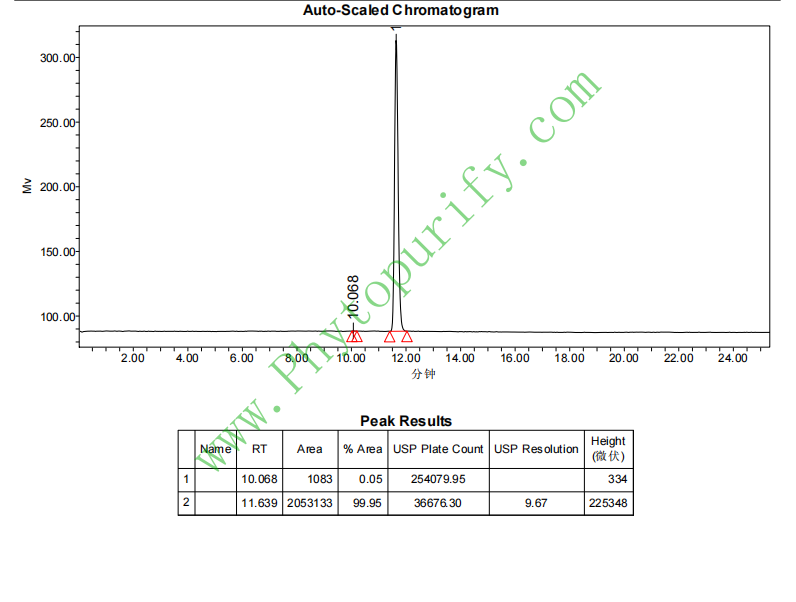
Purity: 95%~99%
Analysis Method: HPLC-DAD or/and HPLC-ELSD
Identification Method: Mass, NMR
Packing: Brown vial or HDPE plastic bottle
The product could be supplied from milligrams to grams. Inquire for bulk scale.
We provide solution to improve the water-solubility of compounds, thereby facilitating the variety of activity tests and clinic uses.
For Reference Standard and R&D, Not for Human Use Directly.
HPLC of Macamide Impurity 10
Storage conditions:Short-term storage at 2~8℃, long-term storage at -20 ~ -80℃
38.3300
7.3458
7.3458
.0011
3.3984
7.5520
High
95.6896
2.2946
No
Yes
Yes
No
No
No
0.0
No
No
No
Yes
In the vast field of natural product chemistry and pharmacology research, maca(Lepidium meyenii)As a traditional medicinal plant in the Andes mountain area, it has attracted much attention in recent years due to its rich bioactive components. Among them, a unique class of nitrogen-containing long-chain fatty acid derivatives, Macamides, is considered to be the key material basis for Macamides to exert various physiological activities. Macamide Impurity 10 (CAS number: 883715-22-8), as a member of the Macamide family, although named as an "impurity", is a compound with a clear structure and unique pharmacological activity. It is composed of 26 carbon atoms, 41 hydrogen atoms, 2 oxygen atoms, and 1 nitrogen atom (molecular formula: C26H41NO2), with a molecular weight of 399.6190 g/mol. Existing research indicates that this compound interacts with multiple targets closely related to neural function, particularly demonstrating potential applications in the field of neuroprotection. This article aims to provide a systematic and professional scientific interpretation of this promising natural small molecule from the aspects of chemical structure, plant origin, pharmacological mechanism, drug evaluation, and research prospects.
The chemical structure of impurity 10 in macamide is the material basis for its biological activity. The SMILES expression is: CCCCC/C=C \ C/C=C \ CCCCCCCC (=O) NCc1cccc (OC) c1. According to the analysis of this expression, its molecular core is composed of a long-chain fatty acyl group and a phenylethylamine derivative connected by an amide bond. Specifically, the molecule contains a highly hydrophobic long carbon chain with two cis double bonds (represented by "/C=C"), which gives the molecule a certain degree of flexibility and specific spatial conformation. The long-chain end is connected to a para methoxyphenylethylamine fragment through an amide bond (- CONH -). The introduction of methoxybenzene ring not only increases the aromaticity of the molecule, but also may affect its interaction with the target through hydrogen bond acceptor interaction.
From the analysis of medicinal parameters, its physicochemical properties are significant:
- Molecular weight (MW):399.62 g/mol, Slightly higher than conventional small molecule drugs (usually<500 Da), but still within an acceptable range.
- Lipid water partition coefficient (LogP/LogD)Up to 7.35, indicating that the compound has extremely strong lipophilicity. This is mainly attributed to its long fatty chain and aromatic ring structure. A high LogP value indicates that it is easy to pass through the lipid bilayer in organisms, but it may also lead to poor water solubility.
- Water solubility Only 0.0011 mg/mL confirms its strong hydrophobicity, which will be one of the main challenges facing its formulation development.
- Topological Polarity Surface Area (TPSA)38.33 Å ², with a relatively low value, mainly due to contributions from amide bonds and methoxy groups. Low TPSA is usually associated with good membrane permeability.
- Caco-2 permeability The predicted value is 7.55 cm/s × 10 ⁻⁶, which belongs to highly permeable compounds and suggests that it may have good intestinal absorption potential.
In summary, Macamide Impurity 10 is a typical long-chain amide natural product with hydrophobicity, low polarity, and good membrane permeability. Its unique three part structure of "long fatty chain amide bond aromatic ring" is key to understanding its biological activity and pharmacokinetic behavior.
The plant source of impurity 10 in macamide is single and clear, originating from the Brassicaceae plant maca(Lepidium meyenii Walp.)。 Maca is native to high-altitude areas of the Andes Mountains in Peru (above 4000 meters), and is a traditional crop with thousands of years of edible and medicinal history, known as the "Peruvian ginseng".
In traditional applications, hypocotyl is dried and used for:
1. Enhance physical strength and combat fatigue Local residents often use it to cope with the harsh environment and heavy labor in high-altitude areas.
2. Improve fertility and sexual function This is the most well-known traditional use of maca, believed to have nourishing effects on both male and female reproductive systems.
3. Improve mental state Used to relieve stress, anxiety, improve mood and memory.
4. Regulate endocrine Used to alleviate symptoms such as menopausal syndrome.
Modern plant chemistry research reveals that maca is rich in various active ingredients, including macanes, macaamides, alkaloids, sterols, and glucosinolates. Among them, macamide is a unique characteristic component of maca and is considered an important material basis for its neural activity, anti fatigue, and enhancing functional effects. As a specific amide component detected in maca extract, maca amide impurity 10, although its content may not be high, its clear structure and potential targeting activity make it a valuable chemical probe for "decoding" the traditional pharmacological basis of maca efficacy from complex natural product systems. The shift in understanding from "impurities" to "active ingredients" reflects the scientific deepening process of modern natural product research from crude extracts to clear monomers, and from traditional experience to molecular mechanisms.
The pharmacological activity research of macamide impurity 10 is currently mainly focused on neuroprotection field The database information shows that the compound is associated with five key targets: MAPK1, SOD2, CREB1, BDNF, and NGF. These targets do not exist in isolation, but form a precise network that synergistically regulates neuronal survival, plasticity, antioxidant defense, and functional maintenance. Below, we will analyze its mechanism of action one by one:
1. Target MAPK1 (mitogen activated protein kinase 1, also known as ERK2):
The MAPK/ERK signaling pathway is one of the most important signaling pathways in cells, involved in regulating cell proliferation, differentiation, survival, and apoptosis. In the nervous system, the activation of ERK is crucial for neuronal survival, synaptic plasticity, and long-term potentiation (LTP, the cellular basis of learning and memory). Macamide impurity 10 may activate downstream pro survival signals by regulating the activity of MAPK1, thereby resisting neuronal apoptosis induced by various stresses such as oxidative stress and ischemia/hypoxia.
2. Target SOD2 (superoxide dismutase 2, mitochondria):
SOD2 is a key antioxidant enzyme located in the mitochondrial matrix, responsible for converting superoxide anion radicals (O ₂⁻·) into hydrogen peroxide (H ₂ O ₂) and oxygen. Mitochondria are the energy factories of cells and the main site for the production of reactive oxygen species (ROS). In neurodegenerative diseases or acute brain injury, mitochondrial dysfunction leads to excessive production of ROS, triggering oxidative stress and damaging neurons. If Makanamide impurity 10 can upregulate or activate SOD2, it will significantly enhance the mitochondrial antioxidant defense ability of neurons, protect mitochondrial function, and alleviate oxidative damage from the root.
3. Target CREB1 (cAMP response element binding protein 1):
CREB is an important nuclear transcription factor. When it is phosphorylated and activated by upstream signals such as the ERK pathway and calcium signaling, it enters the nucleus and binds to the cAMP response element (CRE) of specific genes, initiating gene transcription. In neuroprotection, CREB regulates the expression of a series of "neurotrophic factor" and "anti apoptotic protein" genes, among which the most core is BDNF。
4. Target BDNF (brain-derived neurotrophic factor) and NGF (nerve growth factor):
BDNF and NGF belong to the neurotrophic factor family and are key proteins that maintain neuronal survival, promote neuronal growth, differentiation, and synaptic plasticity. They activate tyrosine kinase receptors (TrkB for BDNF, TrkA for NGF) on the cell membrane, initiating downstream survival signaling pathways including PI3K/Akt and MAPK/ERK. Many patients with neurodegenerative diseases (such as Alzheimer's disease, Parkinson's disease) and depression have decreased levels of neurotrophic factors.
Mechanism integration and neuroprotective pathway hypothesis:
Based on the above target analysis, we can outline the molecular network in which macamide impurity 10 may exert neuroprotective effects:
- Upstream startup Compounds may activate the MAPK1 (ERK2) signaling pathway directly or indirectly.
- Signal integration and amplification Activated ERK can phosphorylate and activate CREB. Meanwhile, compounds may also directly affect the activity of CREB.
- Gene expression regulation Activation of CREB into the nucleus, initiation includes BDNF Transcription and expression of neurotrophic factor genes within.
- Positive feedback and collaborative protection The secreted BDNF acts on the TrkB receptors of neurons in an autocrine or paracrine manner, further strongly activating survival pathways such as PI3K/Akt and MAPK/ERK, forming a self reinforcing positive feedback loop that promotes survival. Meanwhile, the combined action of BDNF and NGF can more comprehensively support the survival and function of different types of neurons.
- Antioxidant defense: Compound pairs SOD2 The regulatory effect of mitochondria, independently or synergistically with the aforementioned pathways, enhances their antioxidant capacity, clears excess ROS, and provides a stable intracellular environment for neurons.
Therefore, the neuroprotective effect of macamide impurity 10 is likely not through a single target, but through Multi target collaboration At the same time, enhance the neurons'Intrinsic survival signal (ERK-CREB-BDNF axis)and Antioxidant Defense Capability (SOD2)To achieve. This multi-channel and networked mode of action is precisely the characteristic of many natural products exerting therapeutic advantages in complex systemic diseases, such as neurodegenerative diseases.
It is not enough for a compound to only have biological activity, it must also possess the "drug like" or "drug like" properties to become a drug. We conducted a systematic evaluation of Marcamide Impurity 10 using Lipinski's Rule of Five (Ro5) and other key parameters
1. Lipinski's Five Rules Compliance Analysis:
- Rule 1: Molecular weight MW<500 Da:399.62 Da,Comply with。
- Rule 2: Lipid water partition coefficient LogP<5:7.35,seriously non-compliant This is the most prominent pharmaceutical weakness of the compound, as its extremely high lipophilicity can lead to poor water solubility, strong tissue accumulation tendency, and potential metabolic stability issues.
- Rule 3: Number of hydrogen bond donors (HBD)<5 Only the amide bond NH in the molecule provides one HBD,Comply with。
- Rule 4: The number of hydrogen bond acceptors (HBA) is less than 10 C=O for amide bond, O for methoxy group, a total of 3 HBAs,Comply with。
- Rule 5: Number of rotatable keys Long fat chains and connecting bonds bring a large number of rotatable bonds, which may affect oral bioavailability, but this is a supplementary reminder and not a mandatory violation.
Conclusion: Macamide impurity 10 Violation of a key rule in Lipinski regarding LogP It belongs to the category of "non pharmaceutical" compounds. This usually means that it is difficult to develop it as an oral medication.
2. In depth interpretation of other key pharmacological parameters:
- Blood-brain barrier permeability (BBB)Predicted as' high '. This is completely consistent with its high LogP and low TPSA physical and chemical properties, and is its Candidate molecules for the treatment of central nervous system diseases The biggest advantage. It can effectively penetrate the BBB and reach an effective concentration in the central nervous system.
- Plasma protein binding rate (PPB)Up to 95.69%. High PPB can reduce the concentration of free drugs in the blood, which may affect the speed and intensity of drug efficacy, while prolonging the half-life. This is related to its high lipophilicity.
- Absorption and penetration The predicted values of high Caco-2 permeability and effective permeability (Peff) indicate good intestinal absorption potential, but poor water solubility (0.0011 mg/mL) will become the rate limiting step for oral absorption, which may require advanced formulation technologies such as nanocrystals, liposomes, and solid dispersions to improve dissolution.
- Toxicity warning:
- Genotoxicity The Ames test and chromosomal aberration test predicted negative results, indicating no direct genetic toxicity risk, which is an important safety benefit.
- cardiotoxicity HERG inhibition is predicted as' no ', reducing the risk of causing fatal arrhythmias (long QT syndrome).
- Hepatotoxicity Ser_LT prediction is "yes", indicating a potential impact on liver function (marked by elevated alanine aminotransferase ALT) and requiring close attention in preclinical studies.
- allergenicity Skin sensitization (Skid_Sens) and respiratory sensitization (Resp_Sens) are predicted to be positive, which may be caused by the binding of active groups (such as amide bonds and unsaturated bonds) in their structures with proteins to form new antigens, which is a side effect that needs to be monitored in drug development.
Comprehensive Assessment:
Macamide impurity 10 is a typical lead compound that exhibits both activity and challenge. Its core advantage lies in its clear Multi target neuroprotective activity and Excellent central nervous system targeting ability (high BBB permeability)However, it Extreme lipophilicity (high LogP) This has led to a series of challenges in drug formation, such as poor water solubility, high plasma protein binding rate, potential liver toxicity, and sensitization. It does not comply with the classic Lipinski rule and is difficult to develop directly as an oral medication. Future research directions may include: 1)structural optimization By means of medicinal chemistry, while retaining the core pharmacophore, polar groups are appropriately introduced to reduce LogP, improve solubility and safety; 2)Innovative formulations Develop nano formulations or prodrug strategies suitable for central nervous system administration based on its existing structure; 3)As a pharmacological probe Used for in-depth research on the neuroprotective mechanism and related signaling pathway network of maca.
At present, there is relatively little independent and systematic scientific research literature on impurity 10 of macamide. It is more commonly mentioned and studied as a component in maca extracts or maca amide mixtures. The existing target and activity information is likely to come from computer-aided prediction (such as molecular docking, network pharmacology) or inference based on maca total extract/related analog studies. Therefore, most of the pharmacological mechanisms and pharmacological data of this compound are still under investigation Prediction and Hypothesis Stage Urgent need for follow-up experimental verification。
Research status:
1. Basic research level It is necessary to conduct in vitro cell experiments (such as neuronal oxidative stress models, apoptosis models) and in vivo animal models (such as cerebral ischemia-reperfusion injury, Alzheimer's disease models) to directly verify its neuroprotective effects, and use molecular biology techniques (Western Blot, PCR, immunofluorescence, etc.) to confirm its specific regulatory effects on targets such as MAPK1, SOD2, CREB1, BDNF, NGF, etc.
2. Chemical and pharmacokinetic aspects It is necessary to complete comprehensive characterization of its physical and chemical properties, in vitro and in vivo metabolic stability studies, pharmacokinetic (absorption, distribution, metabolism, excretion) profile drawing, especially focusing on its brain tissue distribution concentration and liver toxicity risk.
Application Prospects:
Despite facing challenges in drug formation, impurity 10 of macamide still indicates clear and valuable research directions:
- New neuroprotective lead compounds Its unique structural framework and multi-target mechanism of action provide insights for designing therapies Ischemic stroke, Alzheimer's disease, Parkinson's disease, vascular dementia and depression New drugs for central nervous system diseases provide valuable chemical starting points. Through reasonable structural modification, it is expected to improve its physicochemical properties and safety while maintaining central targeting.
- Explaining the 'key' to the traditional efficacy of maca As one of the active ingredients with a clear structure in maca, in-depth research on it helps to scientifically explain the modern pharmacological basis of maca's traditional cognitive and brain enhancing effects such as anti fatigue, anti stress, and memory enhancement at the molecular level.
- Quality control markers for nutritional supplements and functional foods With the popularity of maca products in the global market, maca amide impurity 10, together with other maca amides, can be used as an important chemical marker to evaluate the quality, authenticity, and biological activity of maca raw materials and their products.
In short, the impurity 10 of macamide reveals the depth and complexity of the natural product treasure trove from one aspect. It reminds us that in the development of natural medicines, "impurities" may not necessarily be useless, but rather hidden treasures of activity. The exploration path from prediction to validation, from lead compounds to candidate drugs, is a microcosm of modern research on natural products, full of challenges and also harbors hope for providing new solutions for unmet clinical needs such as neurodegenerative diseases. Future research requires close collaboration among multiple disciplines such as pharmacology, medicinal chemistry, and pharmacy to transform the molecular potential derived from ancient plants into tangible results that benefit human health.
