Introduction/Overview
Natural products have always been an important source of drug discovery and development, particularly demonstrating unique advantages in the fields of anti infection, anti-inflammatory, and immune regulation. Among numerous biologically active natural products, glucosinolates (GSLs) and their hydrolysis products isothiocyanates (ITCs) have attracted much attention due to their broad pharmacological activities. Sinalbin potassium salt, also known as 4-hydroxybenzylthioglucoside potassium salt, is a plant in the Brassicaceae family, especially white mustard(Sinapis alba L. The most abundant content of glucosinolates in seeds. Unlike the common myrosin in mustard seeds, the main product produced by the hydrolysis of potassium glucosinolate by myrosinase is 4-hydroxybenzyl isothiocyanate. This product has unique chemical stability and low irritation, making it a popular choice in traditional medicine and modern pharmacology research.
In traditional medicine, Semen Sinapis Albae, as a commonly used traditional Chinese medicine, has the effects of warming the lungs, eliminating phlegm, promoting qi circulation, dispersing nodules, and relieving pain. It is commonly used to treat conditions such as cold phlegm wheezing cough, chest and rib distension pain, and joint numbness. Modern pharmacological research has gradually revealed the mechanism of action of its active ingredient, potassium glucosinolate, and its hydrolysis products. In recent years, with the deepening understanding of the pathophysiology of respiratory tract infection (RTI), especially the emphasis on the Toll like receptor (TLR) signaling pathway and downstream inflammatory cytokine network regulation in innate immune response, potassium salt of baicalin has shown great research value in the prevention and treatment of respiratory tract infections and related complications due to its significant anti-inflammatory, immune regulatory, and potential antiviral activities. This article aims to systematically review the chemical structure, plant origin, pharmacological activity, molecular mechanism, and medicinal characteristics of potassium glucosinolate, in order to provide scientific basis for the further development and clinical translation of this natural product.
Chemical structure and physicochemical properties
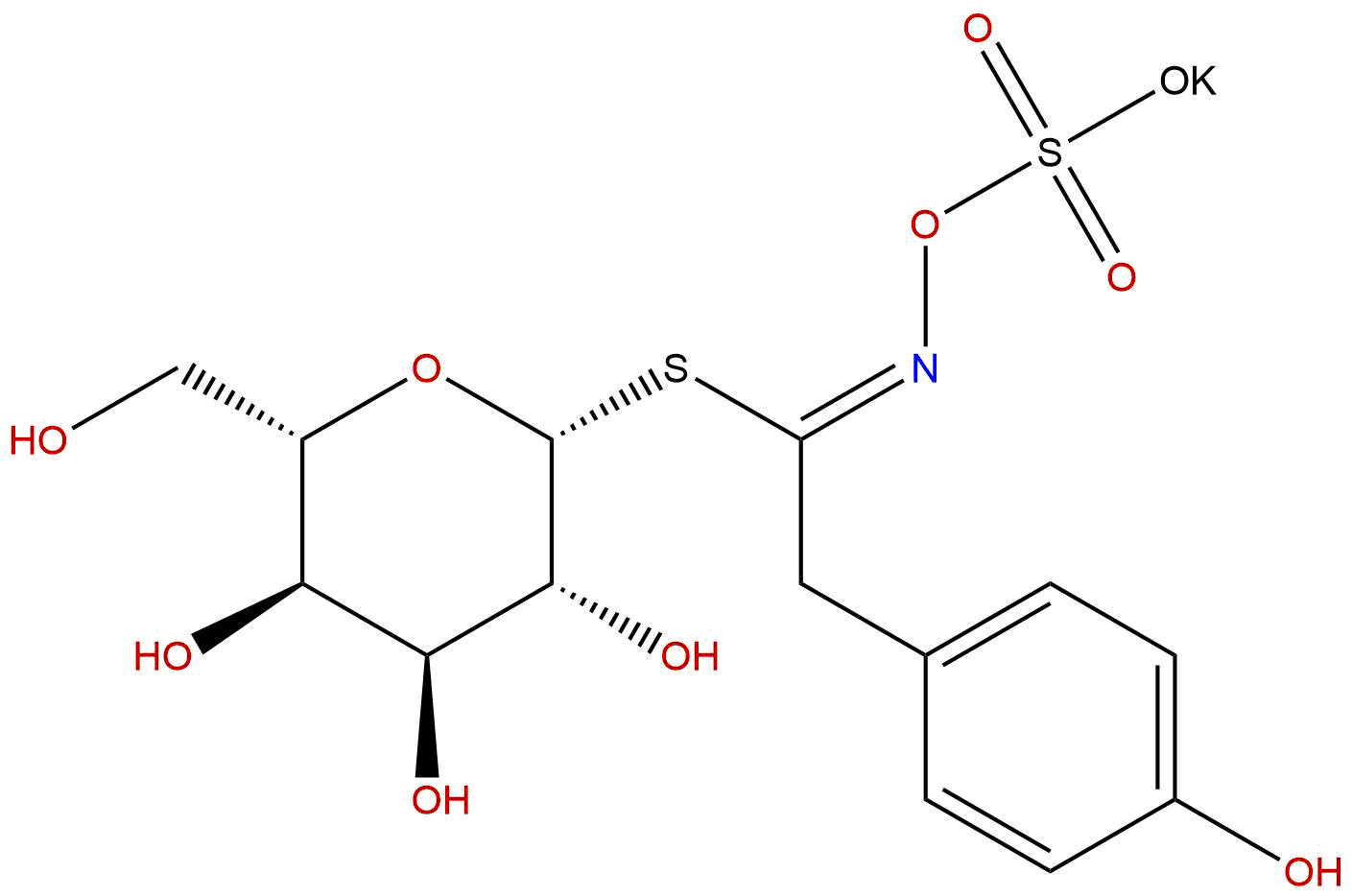
Potassium glucosinolate belongs to the glucosinolate family, and its core structure consists of a β - D-glucosinolate group, a sulfoxime group, and a side chain (R group) derived from amino acids. In the potassium salt of glucosinolate, its side chain is 4-hydroxybenzyl. Its complete chemical name is 1-S - [(E) -1- [(4-hydroxyphenyl) methyl] - N - (sulfonyloxy) methoxy] -1-thio - β - D-glucopyranoside potassium salt.
From the perspective of physical and chemical properties, potassium glucosinolate (molecular weight: 425.44 g/mol) is a highly polar compound. The calculated LogP value is -0.8358, indicating that its hydrophilicity is much stronger than its lipophilicity, which is closely related to the presence of multiple hydroxyl and sulfonic acid groups (in the form of potassium salts) in its molecular structure. The high polarity endows the compound with excellent water solubility (calculated water solubility value of 7.4550 mg/mL), which lays the foundation for its absorption and distribution in organisms. The topologically polar surface area (TPSA) is as high as 186.34 Å ², further confirming its strong polarity characteristics. A high TPSA value usually means that compounds are difficult to passively diffuse through the cell membrane, and their transmembrane transport may depend on specific transport proteins or endocytosis. In addition, high polarity also indicates that its ability to penetrate the blood-brain barrier (BBB) is extremely low (predicted as "low"), which to some extent limits its application in central nervous system diseases. However, for the treatment of peripheral tissue diseases (such as respiratory tract diseases), it may be an advantageous feature that can reduce central side effects. This compound typically exists in the form of white or off white crystalline powder at room temperature, with relatively stable properties. However, it rapidly hydrolyzes when exposed to endogenous myrosinase or heated under acidic or alkaline conditions.
Plant sources and extraction methods
Potassium salt of mustard glycoside is mainly found in Brassicaceae plants, among which mustard glycoside(Sinapis alba L. Dry and mature seeds are its most classic and abundant source. In addition, in horseradish(Armoracia rusticana)Water celery(Nasturtium officinale)And some cabbage(Brassica oleracea)It has also been found in varieties, but the content is much lower than that of mustard seeds. The content of potassium glucosinolate in white mustard seeds usually accounts for 2% -5% of the dry weight of the seeds, and is the main compound that determines its medicinal value and spicy flavor.
The method of extracting potassium salt of glucosinolate from mustard seed is mainly based on its water solubility characteristics. Traditional extraction processes typically use water or alcohol water mixed solvents. The specific process is as follows: First, crush the mustard seed to destroy its seed structure, but pay attention to controlling the temperature (usually below 60 ℃) to avoid excessive activation of endogenous mustard enzymes leading to hydrolysis. Subsequently, hot water or 50% -70% ethanol solution is used for reflux extraction or percolation extraction. After filtration and vacuum concentration, the extract is purified by adding a large amount of ethanol for precipitation or using macroporous adsorption resin (such as D101 type), taking advantage of the low solubility of potassium glucosinolate in ethanol. After sample loading, impurities such as polysaccharides and proteins are first removed by washing with water, and then eluted with different concentrations of ethanol gradient to collect components rich in potassium sinapine. Finally, high-purity products are obtained through recrystallization or preparative high-performance liquid chromatography (Prep HPLC). In recent years, in order to maintain its natural activity and improve efficiency, some green extraction techniques such as microwave-assisted extraction (MAE) and ultrasound assisted extraction (UAE) have also been successfully applied, which can significantly shorten extraction time and improve yield.
Pharmacological activity research
1. Anti inflammatory and immune regulatory activity
Potassium salt of glucosinolate and its hydrolyzed product 4-hydroxybenzyl isothiocyanate exhibit significant anti-inflammatory activity in both in vivo and in vitro models. Research has shown that this compound can inhibit the production of nitric oxide (NO), prostaglandin E2 (PGE2), and various pro-inflammatory cytokines in macrophages (such as RAW264.7 cells) stimulated by lipopolysaccharide (LPS). In respiratory infection models, its anti-inflammatory effect is particularly prominent. By inhibiting the activation of the nuclear factor kappa B (NF - κ B) signaling pathway, potassium glucosinolate can effectively reduce the expression of key inflammatory factors such as tumor necrosis factor - α (TNF - α), interleukin-6 (IL-6), and interleukin-1 β (IL-1 β). In addition, it can regulate the secretion of chemokines such as CXCL10 and CXCL8 (IL-8), thereby affecting the chemotaxis and infiltration of immune cells and reducing airway inflammation.
2. Antibacterial and antiviral activity
Although the hydrolysis product of potassium glucosinolate itself has broad-spectrum antibacterial activity, its direct antiviral potential, especially for respiratory viruses, has attracted widespread attention in recent years. Research has shown that potassium glucosinolate can inhibit the replication of influenza virus and respiratory syncytial virus (RSV) by interfering with the process of virus adsorption or entry into host cells. The mechanism may be related to downregulating the expression of viral receptors or co receptors on the surface of host cells. In addition, by regulating the host immune response, such as inducing the production of interferon (IFN), antiviral effects can also be indirectly exerted.
3. Regulating the secretion of respiratory mucus
Respiratory tract infections are often accompanied by high secretion of airway mucus, and MUC5AC is the main secreted mucin in the airway. Its overexpression is an important factor leading to airway obstruction and worsening of infection. Potassium sinapine has been shown to significantly inhibit the expression of MUC5AC mRNA and protein levels in airway epithelial cells induced by inflammatory stimuli such as LPS or IL-13. This effect is closely related to its inhibition of NF - κ B and MAPK signaling pathways, indicating that the compound has potential application value in alleviating cough and sputum symptoms caused by respiratory infections.
4. Antioxidant and Cellular Protective Effects
Potassium glucosinolate and its metabolites can activate the nuclear factor E2 related factor 2 (Nrf2) signaling pathway, induce the expression of a series of antioxidant enzymes such as heme oxygenase-1 HO-1 and quinone oxidoreductase NQO1, thereby enhancing the ability of cells to resist oxidative stress. In the process of respiratory tract infection, oxidative stress is an important link leading to tissue damage. The antioxidant activity of potassium glucosinolate helps to protect the integrity of the airway epithelial barrier and reduce pathological damage.
Mechanism of action and molecular targets
The pharmacological mechanism of potassium sinapine is multi-target and multi pathway, and its core lies in the precise regulation of the inflammatory signaling network. According to the provided target information, its main mechanism of action can be summarized as follows:
1. Regulation of TLR signaling pathway
TLR4 and TLR2 are key pattern recognition receptors for recognizing pathogen associated molecular patterns (PAMPs). In respiratory infections, LPS from Gram negative bacteria activates TLR4, while peptidoglycans from Gram positive bacteria activate TLR2. Potassium sinapine can directly or indirectly interfere with the binding of TLR4/TLR2 to its ligands, or inhibit the recruitment of downstream adaptor proteins such as MyD88. By blocking the transmission of TLR signals into the cell, the initiation of inflammatory cascade reactions can be inhibited at the source.
2. Inhibit NF - κ B transcriptional activity
NFKB1 (encoding p50 protein) is a core member of the NF - κ B family. In the resting state, NF - κ B binds to I κ B protein and exists in the cytoplasm. After TLR activation, phosphorylation by a series of kinases (such as IKK complex) leads to the degradation of I κ B, releasing NF - κ B into the nucleus and initiating target gene transcription. Potassium sinapine has been shown to inhibit the phosphorylation and degradation of I κ B, thereby preventing the nuclear translocation of NF - κ B. This directly led to a significant decrease in the transcriptional activity of its downstream target genes, including TNF, IL6, IL1B, CXCL8, ICAM1, and MUC5AC.
3. Regulating cytokine and adhesion molecule networks
- TNF、IL6、IL1B These are the core cytokines in the inflammatory response. TNF - α is a key initiating factor in early inflammatory response; IL-6 is involved in acute phase response and T cell differentiation; IL-1 β mediates fever and inflammation amplification. Potassium sinapine effectively suppresses inflammatory storms by inhibiting NF - κ B and downregulating the expression of these three cytokines.
- CXCL10 and CXCL8 CXCL10 is a Th1 chemokine that primarily recruits activated T cells and NK cells; CXCL8 (IL-8) is a potent neutrophil chemokine. Overrecruitment of neutrophils can lead to tissue damage in respiratory infections. Potassium glucosinolate downregulates these two chemokines, which helps balance immune cell infiltration and reduce inflammatory damage.
- ICAM1 Intercellular adhesion molecule-1 (ICAM-1) is a necessary molecule for immune cells to adhere to and migrate to the site of inflammation with vascular endothelial cells. Potassium sinapine can inhibit the expression of ICAM-1, reduce the infiltration of inflammatory cells into airway tissue, and thus alleviate inflammation and edema of the airway wall.
In summary, the potassium salt of sinapine achieves systematic regulation of respiratory infection inflammation response through the core signaling axis of "TLR4/TLR2 → NF - κ B → inflammatory factors/chemokines/adhesion molecules/mucins".
Evaluation of drug properties and pharmacokinetics
Based on computational predictions and preliminary experimental data, evaluate the pharmacological properties of potassium sinapine:
1. Analysis of drug properties
- molecular weight:425.44 Da, Meets the requirements of Lipinski's five rules (<500 Da).
- Fat water partition coefficient LogP is -0.84, with excellent water solubility (7.46 mg/mL). High water solubility is beneficial for formulation development (such as oral and inhalation formulations), but low fat solubility may limit its passive transmembrane absorption.
- Topological polarity surface area The TPSA is 186.34 Å ², which is much higher than the recommended upper limit of 140 Å ² for oral drugs, indicating that its oral bioavailability may be low and intestinal absorption mainly relies on active transport.
2. Safety evaluation
- HERG inhibition The predicted result is' no ', indicating a low risk of causing QT interval prolongation and tip twisting ventricular tachycardia, and a low risk of cardiac toxicity.
- Ames test The predicted result is 0.9 (usually considered negative if<0.5, weakly positive or suspicious if 0.5-0.9). This value is close to the critical value, indicating that it may have potential genetic toxicity risks and requires more rigorous validation in actual experiments. However, considering its long history of use as a traditional food ingredient, the actual risk may be lower.
3. Pharmacokinetic characteristics
- absorb Due to high polarity and high TPSA, passive absorption after oral administration is poor. It is speculated that it may be actively absorbed through glucose transporters (such as SGLT1) or monocarboxylic acid transporters (MCTs) in the intestine. In addition, the gut microbiota may metabolize it into a more easily absorbable form of isothiocyanate.
- distribution Good water solubility, mainly distributed in extracellular fluid. The low penetration ability of the blood-brain barrier indicates a small exposure to the central nervous system and good safety.
- Metabolism In the body, potassium glucosinolate may undergo two metabolic pathways: one is hydrolyzed by myrosinase in gut microbiota or tissues to produce 4-hydroxybenzyl isothiocyanate; The second is to be excreted directly through phase II metabolism (such as glucuronidation or sulfation).
- excretion Mainly excreted in the form of its original form or metabolic products through the kidneys (urine) and bile (feces).
Overall, potassium sinapine has a good safety profile (low cardiac toxicity), but its oral bioavailability is the main development bottleneck. Developing it into inhalation formulations, transdermal patches, or enhancing its oral absorption through nanotechnology is an important direction for future formulation research.
Clinical application prospects and prospects
Based on its unique pharmacological activity and safety characteristics, potassium sinapine has shown broad clinical application prospects in the following fields:
1. Treatment of respiratory infections and their complications
This is the most promising application area for potassium glucosinolate. Its multi-target mechanism of action allows it to directly inhibit viruses/bacteria, and effectively suppress excessive inflammatory reactions by regulating the TLR-NF - κ B pathway, reducing airway mucus secretion and relieving symptoms such as cough, sputum production, and difficulty breathing. Especially for the "cytokine storm" that occurs in the later stages of viral respiratory infections such as influenza and COVID-19, potassium sinapine may become an ideal adjuvant therapy drug. The developed inhalation solution or nasal spray can directly act on the focus, increase the local drug concentration and reduce the systemic exposure.
2. Chronic inflammatory airway disease
Given its strong anti-inflammatory and mucus regulating effects, potassium sinapine also has potential for long-term management of chronic obstructive pulmonary disease (COPD) and bronchial asthma. By inhibiting airway remodeling and mucinous gland hyperplasia, disease progression may be delayed.
3. Natural preservatives and immune enhancers
As a natural component of cruciferous plants, potassium glucosinolate or its hydrolyzed products can be used as natural food preservatives. Meanwhile, as a dietary supplement, moderate intake may help regulate gut microbiota and enhance the body's immunity to respiratory infections.
prospect
Despite the bright prospects, the clinical translation of potassium glucosinolate still faces challenges. Future research should focus on:
1. Pharmacokinetic optimization Develop novel drug delivery systems (such as liposomes, polymer nanoparticles) to improve their oral bioavailability or achieve targeted delivery to the lungs.
2. In depth mechanism research Using a gene knockout animal model, further clarify its specific regulatory nodes on the TLR4/TLR2 signaling pathway in vivo, as well as its interaction with other signaling pathways such as Nrf2 and MAPK.
3. Re evaluation of safety Conduct a systematic in vitro and in vivo genetic toxicity study based on the predicted results of Ames test, and clarify its safety window.
4. Clinical trial design Conduct rigorous randomized, double-blind, placebo-controlled clinical trials to validate its efficacy and safety in patients with acute respiratory infections, particularly targeting specific pathogens such as RSV and influenza virus.
Conclusion
As the main active ingredient of traditional Chinese medicine Bai Xi Zi, potassium salt of Bai Xi Zi glycoside is moving from empirical medicine to evidence-based medicine. Its chemical structure is clear, its physical and chemical properties are unique, and it has excellent water solubility and low blood-brain barrier penetration. Modern pharmacological research has revealed that it exerts multiple pharmacological effects by regulating the TLR4/TLR2 NF - κ B signaling axis, thereby inhibiting a series of inflammation and mucus related targets such as TNF, IL6, IL1B, CXCL8, ICAM1, and MUC5AC, thereby exerting anti-inflammatory, antiviral, immune regulating, and mucus secretion inhibiting effects. The drug efficacy evaluation shows that it has a good safety basis, but its oral bioavailability is its main weakness. In the future, by using pharmaceutical methods to overcome this bottleneck and conducting in-depth clinical research, potassium glucosinolate is expected to be developed into a new natural medicine for the treatment of respiratory infections and related inflammatory diseases, making new contributions to human health.