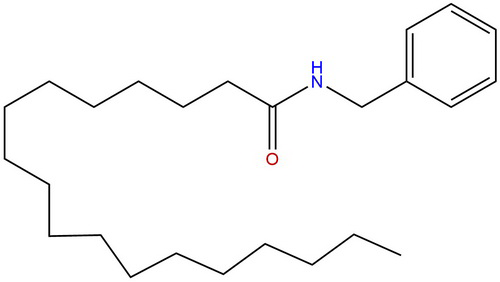


Product name: N-Benzylstearamide
Synonym name: N-(Phenylmethyl)octadecanamide; N-Benzyloctadecanamide
Catalogue No.: BP4002
Cas No.: 5327-45-7
Formula: C25H43NO
Mol Weight: 373.625
Botanical Source:
Physical Description:
Type of Compound: Aliphatics
Purity: 95%~99%
Analysis Method: HPLC-DAD or/and HPLC-ELSD
Identification Method: Mass, NMR
Packing: Brown vial or HDPE plastic bottle
Storage: Store in a well closed container, protected from air and light. Put into refrigerate or freeze for long term storage.
Whenever possible, you should prepare and use solutions on the same day. However, if you need to make up stock solutions in advance, we recommend that you store the solution as aliquots in tightly sealed vials at -20℃. Generally, these will be useable for up to two weeks.
The product could be supplied from milligrams to grams
Inquire for bulk scale.
For Reference Standard and R&D, Not for Human Use Directly.
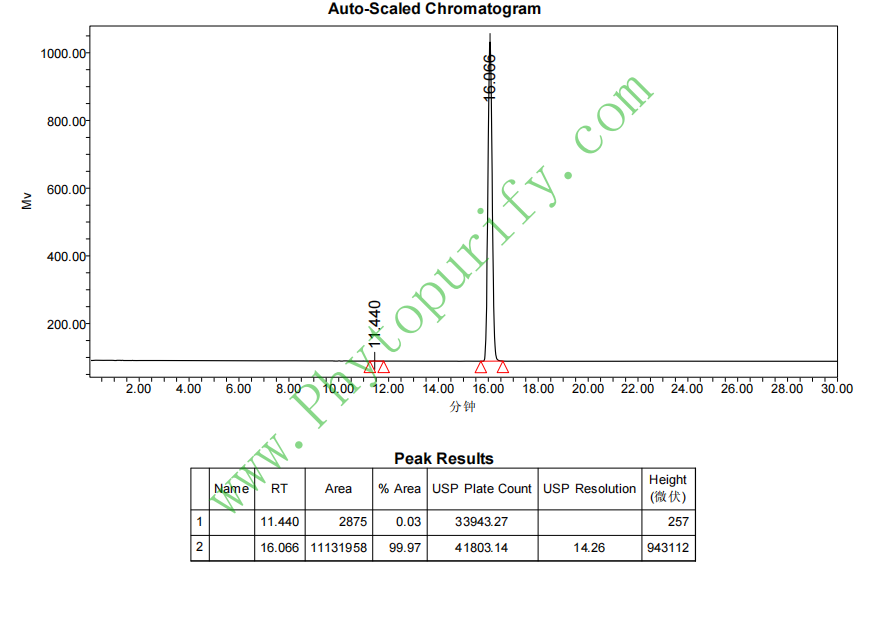
HPLC of N-Benzylstearamide
Storage conditions:Short-term storage at 2~8℃, long-term storage at -20 ~ -80℃
29.1000
8.2842
8.2842
.0005
3.8987
10.8578
High
96.7825
1.8069
No
No
Yes
No
No
No
0.0
No
No
No
No
Inflammation is a complex physiological and pathological response produced by the body in response to infection, tissue damage, or immune stimulation, and its essence is an important component of the body's defense mechanism. However, when the inflammatory reaction is out of control or persists, it can lead to the occurrence and development of a variety of chronic diseases, including rheumatoid arthritis, inflammatory bowel disease, atherosclerosis, neurodegenerative diseases and even malignant tumors. Therefore, developing safe and effective anti-inflammatory drugs has always been one of the core issues in the field of drug development. Although traditional anti-inflammatory drugs such as nonsteroidal anti-inflammatory drugs (NSAIDs) and glucocorticoids are widely used in clinical practice, their long-term use severely limits their clinical application due to side effects such as gastrointestinal damage, cardiovascular risk, and immune suppression. In recent years, searching for active molecules with novel structural frameworks and unique mechanisms of action from natural products has become an important strategy for the discovery of anti-inflammatory drugs.
N-benzylosteramide (NBSA), with chemical registration number 5327-45-7, is a long-chain fatty acid amide compound. Its structure is formed by the condensation of octadecan saturated fatty acid (stearic acid) and benzylamine through amide bonds. This type of compound is widely present in nature, especially in the plant kingdom, and is an important component of plant secondary metabolites. In recent years, with the deepening of research on the biological activity of natural amide compounds, N-benzyl octadecanamide has gradually entered the field of researchers. Preliminary pharmacological studies have shown that the compound exhibits significant anti-inflammatory activity and can inhibit the expression and release of key inflammatory factors by regulating multiple inflammatory signaling pathways. In addition, its unique physicochemical properties, such as high lipid solubility and good blood-brain barrier penetration ability, provide potential for its application in central nervous system inflammation related diseases. This article will provide a systematic review of the research progress of N-benzyl octadecanamide from the aspects of chemical structure, plant origin, pharmacological activity, mechanism of action, pharmacological evaluation, and clinical application prospects, in order to provide reference for the in-depth development and utilization of this natural product.
The chemical structure of N-benzyl octadecanamide exhibits typical characteristics of amide compounds. Its molecular formula is C ₂₅ H ₄∝ NO, and its molecular weight is 373.6250 g/mol. From the perspective of structural composition, the molecule consists of three main parts: a long-chain hydrophobic tail, a polar amide bridging group, and an aromatic benzyl head. Specifically, the long-chain portion is composed of eighteen carbon saturated straight chain alkanes (stearoyl, C ₁₇ H ∝₅ CO -), which provide strong hydrophobicity to the molecule; The amide bond (- CONH -) serves as a connecting group, endowing the molecule with a certain polarity and hydrogen bond donor/acceptor ability; And benzyl (C ₆ H ₅ CH ₂ -) is an aromatic hydrophobic group that can participate in non covalent bonding interactions such as π - π stacking and hydrophobic interactions. This amphiphilic structural feature of "hydrophilic head hydrophobic tail" allows it to interact with the lipid bilayer of biological membranes, which may affect the fluidity and signal transduction of cell membranes.
The physicochemical properties of N-benzyl octadecanamide provide important clues for its pharmacological behavior. Its lipid water partition coefficient (LogP) is as high as 8.2842, indicating that the compound has strong lipid solubility and is easily distributed in lipid rich tissues and biofilms. This characteristic is beneficial for it to penetrate the cell membrane and exert pharmacological effects inside the cell, but it also means that its solubility in aqueous environments such as blood and extracellular fluid is extremely low. In fact, its water solubility parameter is only 0.0005 mg/mL, which poses a huge challenge to its formulation development. The topological polar surface area (TPSA) is 29.10 Å ², which is much lower than the upper limit of 140 Å ² typically required for oral drugs, indicating good cell membrane permeability. It is worth noting that the compound's blood-brain barrier (BBB) penetration ability was evaluated as "high", which is closely related to its high lipid solubility and low polarity surface area. In addition, the risk assessment of hERG inhibition was "no", and the Ames test result was 0.0, indicating that the compound did not show significant cardiac toxicity or genetic toxicity in the preliminary safety assessment, which provides favorable conditions for its further drug development.
N-benzyl octadecanamide is not an isolated synthetic compound, but a natural product widely found in various plants. Research has shown that this type of long-chain fatty acid benzylamide is an important component of plant chemical defense systems, playing a crucial role in plant resistance to pathogen infection, insect feeding, and environmental stress. At present, the compound or its structural analogues have been isolated and identified from plants of multiple families and genera. For example, in Piperaceae plants, especially Piper species such as Piper longum and Piper nigrum, they are rich in various benzylamide compounds, including N-benzyl octadecanamide and its unsaturated analogues. In addition, the presence of this compound has also been detected in some plants of Solanaceae, Asteraceae, and Rutaceae families. It is worth noting that there are significant differences in the content of N-benzyl octadecanamide from different plant sources, which are usually closely related to factors such as plant growth environment, harvest season, and tissue location (roots, stems, leaves, fruits).
Due to the high lipid solubility of N-benzyl octadecanamide, traditional extraction methods mainly use organic solvent extraction. Common extraction solvents include n-hexane, petroleum ether, ethyl acetate, chloroform, or methanol chloroform mixed solvents. The extraction process usually includes steps such as drying of raw materials, crushing, solvent soaking, ultrasound assisted or heating reflux. In order to improve extraction efficiency and selectivity, supercritical fluid extraction (especially supercritical CO ₂ extraction) technology has also been applied to the extraction of this type of compound in recent years. This method has the advantages of green environmental protection and no solvent residue. The crude extract obtained from extraction needs to be further separated and purified by column chromatography technology. Silica gel column chromatography is the most commonly used separation method, usually using gradient elution systems such as n-hexane ethyl acetate or chloroform methanol. For amide mixtures with highly similar structures, high-performance liquid chromatography (HPLC) or preparative thin layer chromatography (PTLC) can achieve finer separation. The structural identification of compounds mainly relies on nuclear magnetic resonance spectroscopy (NMR, including ¹ H-NMR, ¹ ³ C-NMR, DEPT, COSY, HSQC, HMBC, etc.) and high-resolution mass spectrometry (HR-MS) techniques. By analyzing the characteristic signals in the NMR spectrum, such as amide proton (NH, usually appearing at δ 5.5-6.5 ppm), benzyl methylene (CH ₂, δ 4.3-4.5 ppm), and methylene and methyl signals of long-chain alkyl groups, the structure of the compound can be accurately confirmed.
The most notable pharmacological activity of N-benzyl octadecanamide is its anti-inflammatory effect. Multiple in vitro and in vivo studies have confirmed the significant inhibitory effect of this compound on acute and chronic inflammation models. At the cellular level, N-benzyl octadecanamide can significantly inhibit the production of nitric oxide (NO) in macrophages stimulated by lipopolysaccharide (LPS), such as the RAW264.7 cell line, which is a classic indicator for evaluating anti-inflammatory activity. Meanwhile, the compound can effectively reduce the synthesis of prostaglandin E ₂ (PGE ₂), indicating its inhibitory effect on the cyclooxygenase (COX) pathway. Further cytokine testing revealed that treatment with N-benzyl octadecanamide significantly downregulated the mRNA expression and protein secretion levels of pro-inflammatory cytokines such as tumor necrosis factor - α (TNF - α), interleukin-6 (IL-6), and interleukin-1 β (IL-1 β). In animal models, oral or intraperitoneal injection of N-benzyl octadecanamide can significantly alleviate carrageenan induced paw swelling in rats, xylene induced ear swelling in mice, and cotton ball induced granuloma formation in rats, demonstrating a dual inhibitory effect on acute inflammation and chronic proliferative inflammation.
In addition to its direct anti-inflammatory effect, N-benzyl octadecanamide also exhibits other potential pharmacological activities based on its anti-inflammatory mechanism. For example, in neuroinflammatory models, this compound can inhibit the excessive activation of microglia (immune cells in the central nervous system), reduce the release of neurotoxic factors, and thus exert neuroprotective effects. Given its excellent blood-brain barrier penetration ability, this characteristic is of great significance for the treatment of neurodegenerative diseases such as Alzheimer's disease and Parkinson's disease. In addition, some studies suggest that N-benzyl octadecanamide may have analgesic activity, which is related to its inhibitory effect on ion channels of nociceptors such as TRPV1 and TRPA1. In the field of metabolic diseases, the regulation of inflammatory pathways by this compound may also improve insulin resistance and adipose tissue inflammation, but its specific effects still need further verification.
The anti-inflammatory mechanism of N-benzyl octadecanamide involves precise regulation of multiple inflammatory signaling pathways. Among them, the nuclear factor kappa B (NF - κ B) signaling pathway is one of its core targets. NF - κ B is the main transcriptional regulator of inflammatory response, which binds to the inhibitory protein I κ B at rest and remains in the cytoplasm. When stimulated by pro-inflammatory factors such as LPS and TNF - α, I κ B kinase (IKK, encoded by IKBKB) is activated, phosphorylates and degrades I κ B, releasing NF - κ B (typically in the form of p50/RELA heterodimer) into the nucleus and initiating transcription of downstream pro-inflammatory genes. Research has shown that N-benzyl octadecanamide can inhibit the activity of IKK β (IKBKB), block the phosphorylation and degradation of I κ B, thereby preventing the nuclear translocation of RELA (p65) and ultimately inhibiting the expression of NF - κ B-dependent inflammatory genes. In addition, the compound can also regulate the Janus kinase/signal transducer and activator of transcription (JAK/STAT) signaling pathway, particularly the phosphorylation level of STAT3. STAT3 is a key downstream molecule involved in IL-6 signaling, and its excessive activation is associated with various inflammatory diseases and tumors. N-benzyl octadecanamide can inhibit IL-6 induced STAT3 phosphorylation, thereby blocking the positive feedback loop of IL-6/STAT3 inflammation.
Based on existing target research data, N-benzyl octadecanamide may exert its pharmacological effects by directly binding to multiple key proteins. These targets include cyclooxygenase-1 (PTGS1/COX-1), inducible nitric oxide synthase (NOS2/iNOS), cysteine aspartate protease-1 (CASP1/caspase-1), transient receptor potential vanillic acid subtype 1 (TRPV1), and transient receptor potential anchor protein subtype 1 (TRPA1). The inhibitory effect on PTGS1 explains its mechanism of reducing PGE ₂ synthesis, but it is worth noting that its selective inhibition of COX-1 may pose a risk of gastrointestinal side effects. Inhibition of NOS2 directly reduces the production of inflammatory mediator NO. CASP1 is a key effector enzyme for inflammasome activation, responsible for cleaving pro-IL-1 β and pro-IL-18 into mature forms. The inhibition of CASP1 by N-benzyl octadecanamide suggests that it may exert anti-inflammatory effects by intervening in the NLRP3 inflammasome pathway. In addition, TRPV1 and TRPA1 are non selective cation channels expressed on sensory neurons, which can be activated by various inflammatory mediators and nociceptive stimuli, mediating pain and neurogenic inflammation. The antagonistic effect of N-benzyl octadecanamide on these two channels provides a molecular basis for its analgesic and anti neuroinflammatory activities. This multi-target mode of action (polypharmacology) enables N-benzyl octadecanamide to simultaneously intervene in multiple nodes in the inflammatory network, potentially resulting in synergistic effects, but also increasing the complexity of the mechanism of action research.
From the perspective of medicinal chemistry, N-benzyl octadecanamide exhibits distinct drug like characteristics. Its molecular weight (373.6 Da) meets the requirement of molecular weight less than 500 in the Lipinski Five Rules. However, its LogP value is as high as 8.28, far exceeding the rule limit of LogP less than 5, indicating that its lipid solubility is too high, which may lead to poor water solubility, low oral bioavailability, and potential in vivo accumulation problems. The TPSA is 29.1 Å ², which is beneficial for membrane permeability but may also reduce its ability to form hydrogen bonds with target proteins. In addition, the molecular structure does not contain any ionizable groups (such as carboxyl, amino, etc.) and is neutral at physiological pH, which further limits its water solubility. Overall, although N-benzyl octadecanamide has a certain drug like basis, its extremely poor solubility and high lipid solubility are the main bottlenecks restricting its drug development, which need to be improved through strategies such as prodrug design, nanoformulation, or structural modification.
Based on its physicochemical properties, the pharmacokinetic behavior of N-benzyl octadecanamide can be reasonably predicted. In terms of absorption, due to its high lipid solubility and low water solubility, it may be difficult to effectively dissolve and absorb in the gastrointestinal tract after oral administration, resulting in extremely low oral bioavailability. The absorption process may mainly rely on lymphatic transport or the formation of mixed micelles with lipid components in food. In terms of distribution, once the compound enters the bloodstream, it will highly bind to plasma proteins (especially albumin and lipoprotein) and quickly distribute to lipid rich tissues such as adipose tissue, brain tissue, and liver. Its high blood-brain barrier penetration ability suggests that it can achieve high drug concentrations in the central nervous system, which is advantageous for treating neuroinflammatory diseases, but may also increase the risk of central nervous system toxicity. In terms of metabolism, long-chain alkyl chains may undergo ω - and β - oxidation metabolism, while amide bonds may undergo hydrolysis, and benzyl groups may undergo phase I metabolic reactions such as aromatic ring hydroxylation, followed by phase II metabolism by binding with glucuronic acid or sulfuric acid. In terms of excretion, due to its high lipid solubility and high protein binding rate, this compound and its metabolites may mainly enter the intestine through bile excretion and undergo enterohepatic circulation, resulting in an extended half-life in the body. At present, there is a severe lack of in vivo pharmacokinetic experimental data on N-benzyl octadecanamide, and the above predictions still require rigorous experimental verification.
The preliminary safety evaluation results are encouraging. The risk assessment of hERG inhibition is' no ', indicating that the compound is unlikely to prolong the QT interval of the heart at therapeutic concentrations and has a low risk of causing fatal arrhythmias. The Ames test result was 0.0, indicating that it did not show mutagenicity in the bacterial recovery mutation test and had a low risk of genetic toxicity. However, these are only preliminary in vitro safety data. A comprehensive safety evaluation also requires systematic in vivo toxicology studies on acute toxicity, subchronic toxicity, reproductive toxicity, immunotoxicity, and carcinogenicity. Of particular concern is that due to its high lipid solubility and long-term retention in the body, its potential cumulative toxicity and impact on metabolic organs such as the liver and kidneys require focused evaluation. In addition, the inhibitory effect on COX-1 also suggests a potential risk of gastrointestinal injury similar to NSAIDs, which needs to be validated in animal models.
Based on the unique pharmacological activity and pharmacokinetic characteristics of N-benzyl octadecanamide, its potential clinical applications mainly focus on the following directions. Firstly, in the field of inflammatory diseases, this compound can be used to treat chronic inflammatory joint diseases such as rheumatoid arthritis and osteoarthritis. Its multi-target mechanism of action (simultaneously inhibiting the COX, NOS, NF - κ B, and STAT3 pathways) may have better efficacy and lower drug resistance than traditional NSAIDs with a single target. Secondly, given its excellent blood-brain barrier penetration ability, N-benzyl octadecanamide has unique application potential in neurodegenerative diseases such as Alzheimer's disease, Parkinson's disease, and central nervous system inflammatory diseases such as multiple sclerosis. By inhibiting neuroinflammation mediated by microglia, this compound may delay neuronal damage and death. Again, its inhibitory effects on TRPV1 and TRPA1 make it promising for development as a novel analgesic drug, particularly for the treatment of chronic pain and neuropathic pain. Finally, considering the crucial role of inflammation in the occurrence and development of tumors, this compound may also find application space as an anti-inflammatory adjuvant in chemoprevention or combination therapy of tumors.
The conversion of N-benzyl octadecanamide from a natural product to a clinical drug faces many challenges. The core issue is extremely poor water solubility and excessively high fat solubility. Feasible development strategies for this issue include: (1) structural modification: introducing polar groups (such as hydroxyl, carboxyl, phosphate, etc.) or ionizable groups into the molecule to improve water solubility while maintaining or enhancing its pharmacological activity. For example, introducing hydroxyl or methoxy groups on the benzene ring of benzyl, or introducing double bonds or hydroxyl groups in long-chain alkyl groups. (2) Prodrug design: Chemical modification of amide bonds or benzyl groups to prepare prodrugs that can be converted into active precursors in vivo, such as phosphate prodrugs, amino acid ester prodrugs, etc., to improve water solubility and oral absorption. (3) New formulation technology: Utilizing nanotechnology such as liposomes, nanoemulsions, solid lipid nanoparticles, or polymer micelles, N-benzyl octadecanamide is encapsulated in a carrier to improve its water dispersibility, bioavailability, and targeting. In addition, it is necessary to establish reliable biological analysis methods (such as LC-MS/MS) to support subsequent in vivo pharmacokinetic and pharmacodynamic studies.
Future research should focus on the following key directions: firstly, systematically elucidate the pharmacokinetic characteristics of N-benzyl octadecanamide in vivo, including the complete process of absorption, distribution, metabolism, and excretion, and clarify its main metabolites and their activities. Secondly, using gene knockout animal models or selective inhibitors, verify the relative contributions of various targets (such as IKBKB, STAT3, CASP1, etc.) in its anti-inflammatory effects in vivo, and clarify the dominant pathways of its mechanism of action. Thirdly, conduct comprehensive toxicological evaluations, especially on chronic toxicity, reproductive and developmental toxicity, and neurobehavioral toxicity after long-term administration. Fourthly, explore the combined efficacy of this compound with other anti-inflammatory drugs (such as methotrexate, biologics), and evaluate whether there is a synergistic effect or a synergistic effect in reducing toxicity. Fifth, utilizing computer-aided drug design (CADD) technology, based on its binding mode with key target proteins such as IKK β and COX-1, reasonable structural optimization is carried out in order to obtain candidate compounds with higher activity, better selectivity, and better pharmacokinetic properties.
N-benzyl octadecanamide, as a naturally occurring long-chain fatty acid amide, provides a new lead compound for the development of anti-inflammatory drugs due to its unique chemical structure and multi-target anti-inflammatory mechanism. Existing research evidence suggests that this compound exhibits significant anti-inflammatory, analgesic, and potential neuroprotective activities by regulating key inflammatory signaling pathways such as NF - κ B and STAT3, and directly targeting multiple molecular targets such as COX-1, NOS2, CASP1, TRPV1, and TRPA1. Its excellent blood-brain barrier penetration ability adds unique value to its application in central nervous system diseases. However, the extremely poor water solubility and high lipid solubility of this compound are the main obstacles to its pharmacological development, and also the gap that must be bridged from natural products to clinical drugs. Future research needs to comprehensively utilize methods such as drug chemical modification, prodrug design, and new formulation technology, based on a deep understanding of its mechanism of action and in vivo fate, to overcome the deficiencies in its physicochemical properties and fully tap into its therapeutic potential. Despite the challenges ahead, the natural amide compounds represented by N-benzyl octadecanamide undoubtedly open up new ideas and directions for the development of a new generation of safe and effective anti-inflammatory drugs. With the continuous deepening of research, we have reason to hope that this ancient natural molecule can shine with new vitality in modern drug development.
