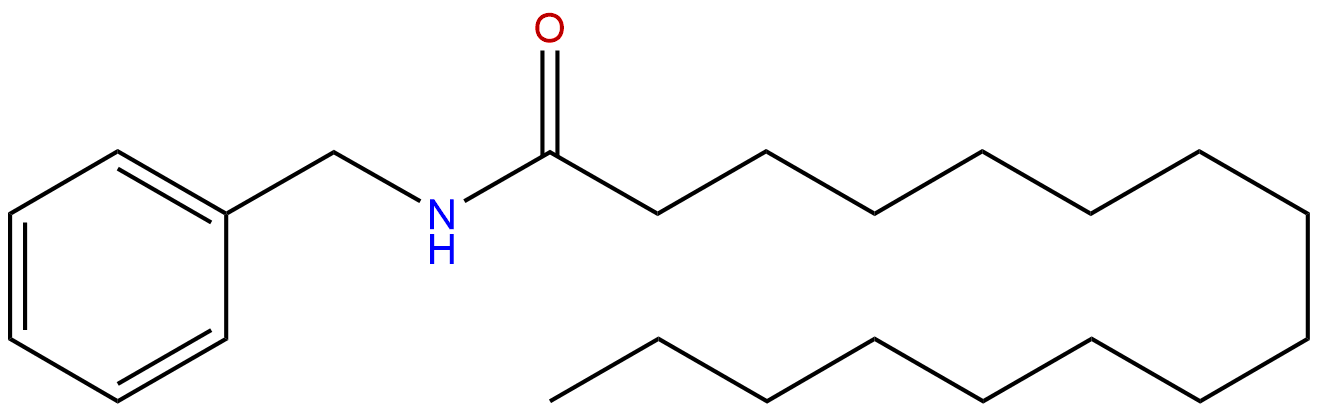


Product name: Macamide B
Synonym name: N-benzylpalmitamide; Macamide Impurity 1; N-Benzylhexadecanamide
Catalogue No.: BP1820
Cas No.: 74058-71-2
Formula: C23H39NO
Mol Weight: 345.571
Botanical Source: Lepidium meyenii (maca)
Physical Description: Powder
Type of Compound: Alkaloids
Purity: 95%~99%
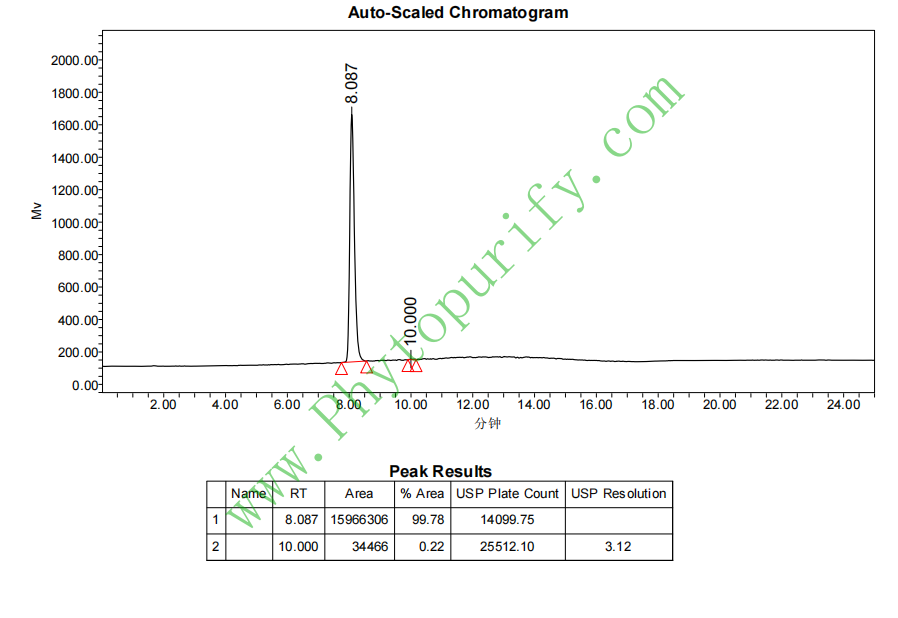
Analysis Method: HPLC-DAD or/and HPLC-ELSD
Identification Method: Mass, NMR
Packing: Brown vial or HDPE plastic bottle
The product could be supplied from milligrams to grams. Inquire for bulk scale.
We provide solution to improve the water-solubility of compounds, thereby facilitating the variety of activity tests and clinic uses.
For Reference Standard and R&D, Not for Human Use Directly.
HPLC of Macamide B
Storage conditions:Short-term storage at 2~8℃, long-term storage at -20 ~ -80℃
29.1000
7.4372
7.4372
.0009
3.9860
11.5871
High
96.5160
1.7351
No
No
Yes
No
No
No
0.0
No
No
No
No
Macamide B, also known as N-benzylhexadecanamide, is a unique natural fatty acid amide with a CAS number of 74058-71-2. This compound is one of the representative members of a class of characteristic bioactive components in Lepidium meyenii Walp. - macamides. Maca, commonly known as "Peruvian ginseng", is a cruciferous plant that grows in high-altitude areas of the Andes Mountains. For thousands of years, it has been used by local residents as a traditional medicinal and edible resource to enhance energy, improve fertility, and relieve stress. The discovery of macamide B provides key molecular clues for interpreting the traditional efficacy of maca from a modern pharmacological perspective.
From a chemical perspective, macamide B is a secondary amide formed by connecting long-chain fatty acids (hexadecanoic acid, also known as palmitic acid) with aromatic amines (benzylamine) through amide bonds. This unique structure distinguishes it from common fatty acids or simple alkaloids, endowing it with special biological activity. Current research indicates that macamide B is a moderate inhibitor of fatty acid amide hydrolase (FAAH). FAAH is a key degradation enzyme in the endocannabinoid system (ECS), responsible for hydrolyzing endocannabinoids such as arachidonic acid ethanolamine (AEA). Therefore, by inhibiting FAAH, macacamide B can indirectly increase the levels of "pleasure molecules" such as AEA in the body, thereby exerting multiple physiological effects such as neuroprotection, emotion regulation, anti fatigue, and affecting reproductive endocrine. Of particular note is that the database information shows its relationship with sexual dysfunction This disease is related and acts on multiple related targets, making it an ideal model compound for studying the mechanism of natural product improvement in sexual function. This article will provide a systematic and professional popular science interpretation of macamide B from its chemical structure, plant origin, pharmacological mechanism, medicinal properties, and research prospects.
The molecular formula of macamide B is C23H39NO, with a molecular weight of 345.5710 g/mol. Its SMILES expression is CCCCCCCCCCCCC (=O) NCc1ccccc1, which clearly describes its structural features: a straight chain alkyl group consisting of 16 carbon atoms (hexadecyl, derived from palmitic acid), connected to a benzyl group (- CH2-C6H5, derived from benzylamine) through an amide bond (- CONH -). This structure combines lipophilic long fatty chains with polar amide bonds and benzene rings.
The physicochemical properties parameters have a decisive impact on its biological activity and pharmacokinetic behavior:
- Lipid water partition coefficient (LogP/LogD)Up to 7.4372. This indicates that macamide B has extremely strong lipophilicity, is highly soluble in lipids and non-polar solvents, and has extremely low solubility in water (water_stolubility is only 0.0009 mg/mL). A high LogP value means that the compound is easily able to cross cell membranes in vivo, but it may also make it difficult to diffuse in water and accumulate in adipose tissue.
- Topological Polarity Surface Area (TPSA)TPSA is a parameter that measures the size of a molecule's polar surface area and is closely related to membrane permeability. The TPSA value of macamide B is relatively small, mainly contributed by the nitrogen and oxygen atoms in the amide bond. The combination of low TPSA and high LogP indicates its excellent membrane penetration ability.
- Blood-brain barrier (BBB) penetrability The database is clearly marked as' high '. This is completely consistent with its high lipophilicity and low TPSA characteristics, indicating that macacamide B can effectively enter the central nervous system from the bloodstream, providing a structural basis for its central nervous system related activities such as neuroprotection and emotion regulation.
- Plasma protein binding rate (PPB)Up to 96.5160%. The extremely high plasma protein binding rate is a common feature of many highly lipophilic compounds. This will affect its free drug concentration, distribution volume, and clearance rate, which may result in a longer duration of efficacy, but may also affect its onset rate and require a higher total dosage to achieve effective free concentration.
These physical and chemical properties together outline the basic profile of macamide B as a natural small molecule with high lipophilicity, easy penetration of biological barriers (especially the blood-brain barrier), but extremely poor water solubility.
Macamide B The only known plant source is Lepidium meyenii Walp It belongs to the Brassicaceae family. Maca originated from the harsh plateau environment above 4000 meters in the Andes Mountains of Peru and was an important crop domesticated and utilized before the Inca civilization. Its swollen rhizome is the main edible and medicinal part, which can be divided into various types such as black, red, yellow, etc. according to color.
The traditional application of maca in the Andean region has a history of over 2000 years. Local residents use it as a food source to supplement energy, and also as a "functional food" or herb for:
1. Enhance physical strength and endurance Used to cope with heavy labor in high-altitude hypoxic environments.
2. Improving fertility Traditionally used to increase the reproductive capacity of humans and livestock, it is known as the 'Andean Viagra'.
3. Regulating endocrine function and improving sexual function Used to relieve stress, increase libido, and improve sexual dysfunction.
4. Relieve menopausal symptoms Used to improve emotional fluctuations, hot flashes, etc.
These traditional effects have long lacked modern scientific explanations. Until the end of the 20th century and the beginning of the 21st century, with the deepening of plant chemistry and pharmacology research, scientists isolated and identified a series of unique compounds from macanes, including macaenes and macamides.Macamide compounds are considered to be characteristic components formed by the reaction of inherent glucosinolate derivatives (benzyl glucosinolates) of maca with fatty acids during the drying and processing of maca, under the action of enzymes or high temperatures The content is very low in fresh maca. Macamide B is a typical representative of this type of epigenetic metabolite. Its discovery links the traditional aphrodisiac and anti fatigue effects of maca with the modern neuroscience target of regulating the endocannabinoid system, providing molecular level evidence for the concept of "medicinal food homology".
Macamide B has a wide range of pharmacological activities, and its core mechanism of action is related to Inhibition of fatty acid amide hydrolase (FAAH)Closely related. FAAH is the main enzyme that degrades endogenous cannabinoid AEA. Inhibition of FAAH can lead to an increase in AEA levels, thereby enhancing the activity of the endocannabinoid system (ECS). ECS plays a key role in regulating pain, emotions, memory, appetite, and reproductive function. Based on this, macacamide B is defined as a neuroprotective agent and FAAH inhibitor.
The target information provided by the database (AR, ADRA1A, PDE5A, NOS3, PRKG1) further revealed their potential involvement in regulation sexual function Multi pathway synergistic mechanism. These targets are highly correlated with the treatment of sexual dysfunction, especially male erectile dysfunction (ED):
Integrated explanation of mechanism of action:
Macamide B may improve sexual function through a multi-target, multi-level network. its The core and initial stages may be achieved by inhibiting FAAH and increasing AEA levels AEA itself has the functions of vasodilation, anti anxiety, and regulating neurotransmitter release, which can create good physical and mental conditions for sexual activity. Meanwhile, the elevation of AEA may affect other signaling pathways related to sexual function through the yet to be fully elucidated mechanism of cross-talk.
On this basis, macamide B may Directly or indirectly regulate the key targets mentioned above May mildly inhibit PDE5A and protect cGMP; May promote NOS3 activity and increase NO production; May affect the AR pathway by regulating neuroendocrine factors; It may also regulate ADRA1A to reduce adverse vasoconstriction. Ultimately, these effects converge on the activation of PRKG1 and the relaxation of smooth muscle in the corpus cavernosum, thereby improving erectile function.
In addition, its neuroprotective and anti fatigue effects (through FAAH inhibition and ECS regulation) also have positive implications for improving sexual dysfunction caused by stress, anxiety, and fatigue. Therefore, the action of macamide B reflects the characteristics of multi-component, multi-target, and systemic regulation of natural products. Compared with traditional single target synthetic drugs, it may have better overall regulatory advantages and fewer side effects.
Based on the provided pharmacokinetic parameters, we can use standards such as Lipinski's Rule of Five to preliminarily evaluate the potential of macacamide B as an oral medication:
Conclusion Macamide B seriously violates the Lipinski rule regarding LogP (should be ≤ 5). This directly leads to its extremely low water solubility and high lipophilicity.
Analysis of other key parameters:
- Absorption and penetration Caco-2 cells have high permeability (11.5871) and effective permeability coefficient (Peff: 3.9860) values, combined with their high BBB penetration, indicating that once dissolved, their transmembrane passive diffusion ability is very strong. But poor water solubility is the limiting step for oral absorption.
- distribution High BBB penetration (analyzed) and extremely high plasma protein binding rate (96.5%) indicate central targeting of its distribution, but low free drug concentration.
- Metabolism and toxicity The Ames test (0.0) and chromosome aberration test results were negative, indicating that it has no genetic toxicity. HERG inhibition is' no ', reducing the risk of causing QT interval prolongation in the heart. But respiratory sensitization (Resp_Sens) is marked as "yes", which is a safety signal that needs to be vigilant. Serum markers related to liver toxicity (ALT, AST, etc.) were all negative, indicating a low risk of basic liver cell toxicity.
- Synthetic accessibility The SyneAccessibility value is 1.7351, indicating that its chemical synthesis route is relatively simple and easy to obtain.
Comprehensive evaluation of drug properties:
Macamide B is a lead compound with clear and interesting multi-target pharmacological activity, but its The development of oral medications faces significant challenges The main bottleneck lies in its Excessive lipophilicity (LogP) and poor water solubility This can lead to low oral bioavailability, difficulty in formulation, the possible need for large amounts of solubilizers, and the risk of tissue accumulation. Its respiratory sensitization also needs to be evaluated in the early stages of development.
The future direction of pharmaceutical chemistry optimization is very clear:By modifying its structure and retaining its core pharmacophores (amide bonds and necessary aromatic rings), introducing polar groups (such as hydroxyl, carboxyl, amino), shortening the fatty chain, or introducing unsaturated bonds, the LogP value can be significantly reduced (with the goal of reducing it to below 5), and water solubility can be improved Meanwhile, in vitro activity testing is conducted to ensure that its multi-target inhibitory activity is not severely weakened. Developing it into prodrugs or special formulations (such as liposomes, nanoparticles) is also a feasible strategy.
Research status:
At present, research on macacamide B is still in progress Preclinical stage A large amount of research has focused on the following aspects:
1. Separation identification and content analysis A method for extracting, separating, and quantitatively analyzing macamide B from maca has been established, and its content changes under different varieties and processing methods of maca have been clarified.
2. In vitro pharmacological activity study Confirmed its FAAH inhibitory activity, neuroprotective effects (such as protective effects in oxidative stress or beta amyloid induced neuronal injury models), and potential effects on some sexual function related targets (such as PDE5).
3. Preliminary exploration of in vivo pharmacodynamics A few animal studies have shown that macamide rich macamide extracts or partially purified components can improve sexual behavior, anti fatigue, and anti depression in animal models. However, strict in vivo pharmacological and pharmacokinetic studies on macamide B monomers are still lacking.
4. Discussion on the mechanism of action The research mainly focuses on its regulation of ECS as a FAAH inhibitor, and further research is needed on how it affects the specific molecular mechanisms of multiple targets such as AR, NOS, PDE, and whether there is synergy between these pathways.
Application Prospects:
1. As a lead compound for drug development Although its pharmacological properties are flawed, the unique structure and multi-target properties of macacamide B make it an excellent lead compound template. Through rational drug chemical modification, it is expected to develop new small molecule drugs with better pharmacokinetic properties for the treatment of mild to moderate ED, sexual dysfunction accompanied by anxiety or fatigue, and even neurodegenerative diseases (through neuroprotective effects).
2. As a biomarker and quality control ingredient for functional foods and dietary supplements Macamide B is a characteristic functional ingredient of maca. In the development of future Maca related health products, it can serve as a key quality marker (Q-Marker) for product quality control, standardization, and scientific support for efficacy claims. The content of macamide B may become one of the important indicators for measuring the quality of macamide products.
3. Explain the modern scientific connotation of the theory of "medicine and food sharing the same origin"The in-depth study of macamide B is a bridge connecting the traditional edible and medicinal experience of macamide with modern molecular pharmacology. It helps to showcase the rationality and value of traditional herbal science to the world through specific compounds and clear target pathways, promoting the modernization and internationalization of natural products.
In short, macacamide B is a modern scientific treasure contained in ancient Andean plants. It reveals the wisdom of natural products regulating complex physiological functions through multi-target synergistic effects. Despite the challenges it faces as a direct drug, whether as a starting point for drug development or as the core of functional food science, macacamide B will continue to attract the attention of researchers and demonstrate broad application potential in the field of big health. Future research needs to focus on its in-depth mechanism of action mapping, structural optimization, and clinical efficacy verification based on evidence-based medicine.
