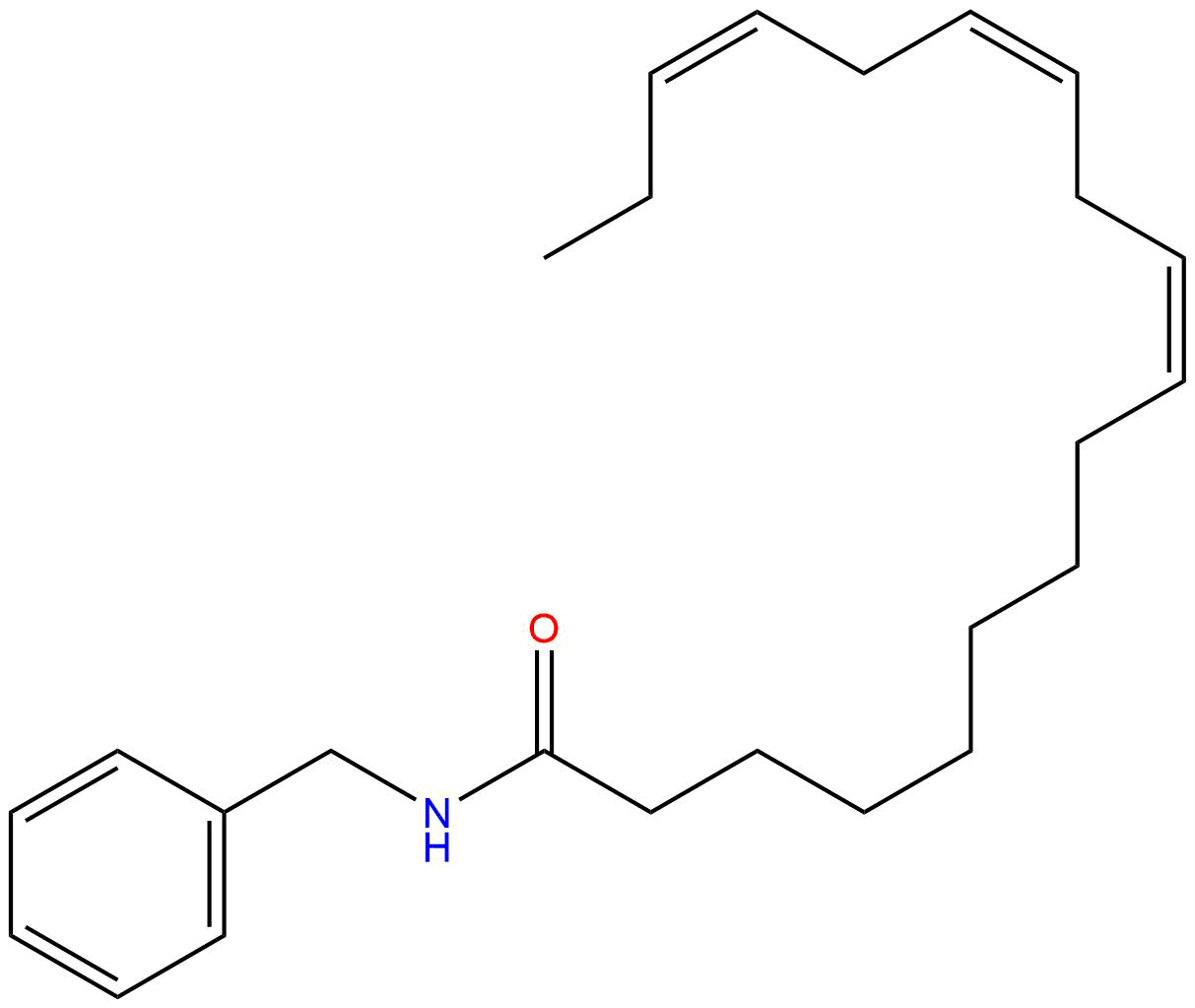


Product name: N-Benzyllinolenamide
Synonym name: N-benzyl-9Z,12Z,15Z-octadecatrienamide
Catalogue No.: SBP04343
Cas No.: 883715-18-2
Formula: C25H37NO
Mol Weight: 367.577
Botanical Source:
Physical Description:
Type of Compound: Aliphatics
Purity: 95%~99%
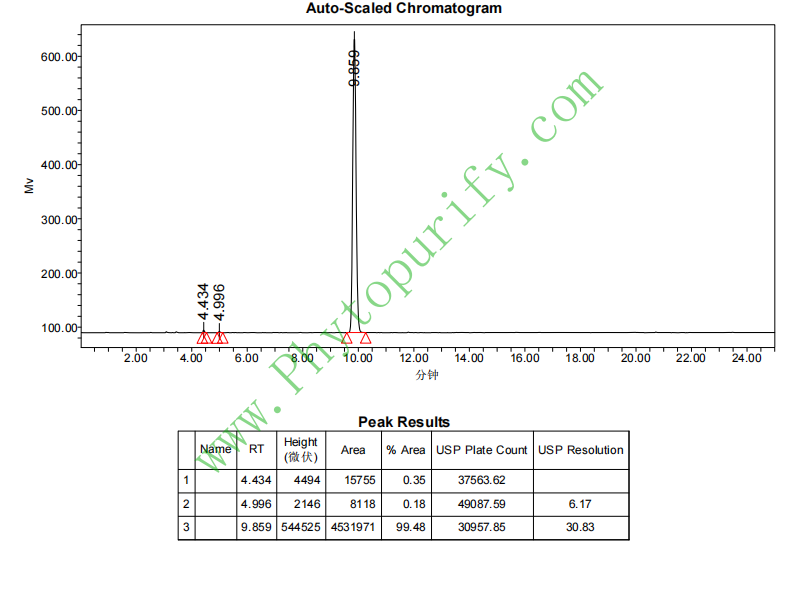
Analysis Method: HPLC-DAD or/and HPLC-ELSD
Identification Method: Mass, NMR
Packing: Brown vial or HDPE plastic bottle
Storage: Store in a well closed container, protected from air and light. Put into refrigerate or freeze for long term storage.
Whenever possible, you should prepare and use solutions on the same day. However, if you need to make up stock solutions in advance, we recommend that you store the solution as aliquots in tightly sealed vials at -20℃. Generally, these will be useable for up to two weeks.
The product could be supplied from milligrams to grams
Inquire for bulk scale.
For Reference Standard and R&D, Not for Human Use Directly.
HPLC of N-Benzyllinolenamide
Storage conditions:Short-term storage at 2~8℃, long-term storage at -20 ~ -80℃
29.1000
6.6097
6.6109
.0013
4.5906
6.2339
High
94.7032
2.4140
No
Yes
Yes
No
No
No
0.0
No
Yes
Yes
Yes
N-benzyl - (9Z, 12Z, 15Z) - octadecanetrimenamide (hereinafter referred to as "the compound") is a traditional medicinal plant derived from maca(Lepidium meyenii)The bioactive fatty amides obtained from the separation belong to the macamides family. Its CAS number is 883715-18-2, molecular formula is C25H37NO, and molecular weight is 367.5770 g/mol. This compound was initially discovered for its activity as a fatty amide hydrolase (FAAH) inhibitor, with an IC50 value of 41.8 μ M, suggesting its potential in regulating the endogenous cannabinoid system. However, further research reveals that its pharmacological effects go far beyond this. Modern pharmacological studies have shown that this compound exhibits significant anti-inflammatory activity by acting on multiple key inflammation related targets, such as TNF, PTGS2 (COX-2), IL6, IL1B, and NFKBIA. This multi-target mode of action makes it an interesting molecule for studying potential therapeutic strategies for inflammation related diseases such as arthritis, neuroinflammation, metabolic inflammation, etc. This article will provide a systematic and professional interpretation of this natural product from the aspects of its chemical structure, plant origin, pharmacological mechanism, medicinal evaluation, and research prospects.
The chemical structure of this compound consists of two core components: a fatty acyl chain derived from alpha linolenic acid ((9Z, 12Z, 15Z) - octadecanoic acid), and a benzylamine group connected by an amide bond. The SMILES string (CC/C=C \ C/C=C \ C/C=C \ CCCCCCC (=O) NCc1ccccc1) accurately describes its stereochemistry: there are three cis (Z) double bonds on the fatty chain, located at the 9th, 12th, and 15th carbon atoms, which are typical features of omega-3 polyunsaturated fatty acids. The introduction of benzyl significantly altered the polarity and biological activity of the parent fatty acids.
According to the analysis of drug parameters, its molecular weight (MW) is 367.58 g/mol, which meets the requirement of "molecular weight less than 500" in Lipinski's five rules. The calculated lipid water partition coefficient (LogP) is 6.61, indicating that the compound has a high degree of lipophilicity. This is consistent with its characteristic of containing long fatty chains and aromatic rings in its structure, but also indicates extremely low water solubility (with a water solubility parameter of 0.0013 mg/mL). High lipophilicity is usually beneficial for compounds to penetrate cell membranes, but it may also bring challenges in terms of metabolic stability, oral absorption, and formulation. The topologically polar surface area (TPSA) is 29.10 Å ², which is a relatively small value, further supporting its good membrane permeability. The permeability data (6.23 × 10 ⁻⁶ cm/s) and effective permeability (Peff, 4.59) of Caco-2 cells both indicate that it has tall The intestinal absorption potential. Of particular note is that its blood-brain barrier (BBB) penetrability is predicted to be tall This provides an important chemical basis for its potential application in central nervous system inflammatory diseases such as Alzheimer's disease and neuroinflammation associated with multiple sclerosis. However, a plasma protein binding rate (PPB) of up to 94.7% may affect its in vivo free drug concentration and efficacy.
The only known natural source of this compound is maca(Lepidium meyenii)A Brassicaceae plant native to high-altitude areas (3500-4500 meters) in the Andes Mountains of Peru. The underground swollen rhizome of maca has been used by local residents as food and medicine for thousands of years, earning it the reputation of "Peruvian ginseng". In traditional medicine, maca is used to enhance physical strength, endurance, fertility, improve sexual function, and relieve stress, anxiety, and fatigue. Modern scientific research has confirmed that maca extract has various activities such as anti fatigue, improving sexual function, regulating endocrine, antioxidant, and neuroprotective effects.
Macamide compounds are a class of characteristic and biologically active secondary metabolites in maca. They are not directly synthesized by plants, but rather formed through non enzymatic amination reactions between the benzyl glucosinolates unique to maca and coexisting free fatty acids such as linoleic acid and linolenic acid during drying, storage, or processing. Therefore, this compound, N-benzyl - α - linolenic acid amide, is one of the characteristic components produced by maca under specific processing conditions. Its content is closely related to the variety, origin, and processing technology of maca. This unique pathway of generation also explains why macamide is a chemical marker that distinguishes macamide from other cruciferous plants and may be the material basis for some of its traditional functions.
The pharmacological activity research of this compound mainly focuses on its anti-inflammatory effect, and its mechanism of action involves the regulation of key nodes in multiple inflammatory signaling pathways. The existing target information points to its multi-target action characteristics:
1. Inhibition of fatty amide hydrolase (FAAH):
As a FAAH inhibitor (IC50=41.8 μ M), this compound can slow down the degradation of endogenous cannabinoids (such as arachidonic acid ethanolamine, AEA), thereby increasing the level of the "happiness molecule" AEA in the body. AEA exerts anti-inflammatory, analgesic, neuroprotective effects by activating cannabinoid CB1 and CB2 receptors. CB2 receptors are highly expressed on immune cells, and their activation can inhibit the release of pro-inflammatory cytokines. Therefore, FAAH inhibition may be one of the initial stages of its anti-inflammatory effect.
2. Regulation of core inflammatory targets:
The database information shows that this compound acts on five targets closely related to inflammation, namely TNF, IL6, IL1B, PTGS2, and NFKBIA. This forms a clear anti-inflammatory network:
* TNF、IL-6、IL-1βThey are key pro-inflammatory cytokines that play a central role in both acute phase responses and chronic inflammation. Excessive levels of these cytokines are associated with various diseases such as rheumatoid arthritis, inflammatory bowel disease, sepsis, etc. This compound may inhibit the production or release of these cytokines through upstream signaling pathways.
* PTGS2 (cyclooxygenase-2)This is a key inducible enzyme in prostaglandin biosynthesis, strongly induced at the site of inflammation, responsible for producing pro-inflammatory prostaglandins (such as PGE2). Non steroidal anti-inflammatory drugs (such as celecoxib) exert anti-inflammatory and analgesic effects by selectively inhibiting COX-2. The effect of this compound on PTGS2 suggests that it may have a partial mechanism similar to NSAIDs.
* NFKBIA(IκBα)This is the core inhibitory protein of the nuclear factor kappa B (NF - κ B) signaling pathway. NF - κ B is the master switch that regulates the expression of numerous inflammatory genes, including TNF, IL6, IL1B, and PTGS2. In the resting state, NF - κ B binds to I κ B α and is confined in the cytoplasm. Inflammatory stimulation leads to phosphorylation and degradation of I κ B α, allowing NF - κ B to enter the nucleus and initiate gene transcription. This compound acts on NFKBIA, which may mean that it can stabilize I κ B α, prevent its degradation, and thus inhibit the activation of the NF - κ B pathway from the source. This provides a reasonable mechanism explanation for its downregulation of all pro-inflammatory factors and enzymes mentioned above.
Hypothesis of mechanism of action integration:
Overall, the anti-inflammatory mechanism of this compound may be a multi-level synergistic process. Firstly, by inhibiting FAAH and increasing endogenous cannabinoid levels, the CB2 receptor is indirectly activated, resulting in a preliminary "soothing" effect on immune cells. Secondly, more directly and crucially, it may stabilize I κ B α and strongly inhibit the activation of NF - κ B, the inflammatory center, thereby systematically reducing the expression of downstream pro-inflammatory cytokines (TNF, IL-6, IL-1 β) and inflammatory mediator synthase (COX-2). This multi-target strategy, which addresses both the symptoms (inhibiting downstream mediators) and the root cause (blocking upstream centers), theoretically may have better anti-inflammatory efficacy and lower resistance risk than single target inhibitors, especially for complex chronic inflammatory diseases.
Based on the provided pharmacokinetic parameters, we evaluate the potential of this compound as a lead drug compound by combining the Lipinski Rule of Five and drug development experience
1. Compliance analysis (Lipinski's Five Rules):
*Molecular weight (MW): 367.58<500, Comply with。
* LogP:6.61 > 5, not conform to(Usually requires LogP<5). This is the main weakness in the pharmacological properties of this compound.
*Number of hydrogen bond donors (HBD): Structurally, there is only one NH on the amide bond, with 1<5, Comply with。
*The number of hydrogen bond acceptors (HBA) is 2<10, consisting of one carbonyl oxygen and one nitrogen atom on the amide bond, Comply with。
*Number of rotatable bonds: There are many rotatable bonds in a molecule, but they are usually not used as an absolute exclusion criterion.
Conclusion This compound violates the rule of "LogP ≤ 5" and belongs to the "drug like" boundary compound. High LogP is its most prominent issue.
2. In depth interpretation of parameters and risk assessment:
* Absorption and distribution High LogP and low TPSA endow it with excellent membrane permeability, which tall Caco-2 permeability tall Confirmed in BBB penetration prediction. This means that the compound may be easily absorbed after oral administration and can enter the central nervous system to exert its effects. This is a significant advantage of it as a central anti-inflammatory drug.
* Metabolism and toxicity:
* Plasma protein binding rate (PPB)The binding rate of 94.7% is extremely high, which may result in low levels of free drug concentration in the body, requiring higher dosages to achieve effective concentrations, and may also affect pharmacokinetic properties.
* Genotoxicity The AMES test (0.0) and chromosomal aberration data (none) preliminarily suggest no mutagenic risk, which is a positive signal in terms of safety.
* cardiotoxicity HERG inhibition is' no ', reducing the risk of causing QT interval prolongation in the heart.
* Hepatotoxicity Serum biomarkers suggest that they may have an impact on the liver (Ser_GGT, AST, ALT are "yes"), and need to be closely monitored in subsequent studies.
* allergenicity The risk warning for skin sensitization (Skid_Sens) and respiratory sensitization (Resp_Sens) is "yes", which may pose challenges in formulation development or clinical application.
* Water solubility The extremely low water solubility (0.0013 mg/mL) is another major challenge that will seriously affect the bioavailability of its oral formulations, often requiring the use of advanced formulation technologies such as nanocrystals, liposomes, cyclodextrin inclusion, etc. to improve.
Overall evaluation of drug efficacy:
This compound is a compound with Clarify multi-target anti-inflammatory pharmacological activity and Excellent brain penetration potential Natural lead compounds. However, it Extremely high lipophilicity (LogP), extremely low water solubility, and high plasma protein binding rate The three main obstacles that constitute its conversion to drugs. It does not comply with the classic Lipinski rule, suggesting that its oral bioavailability may be poor. Future structural optimization work should focus on preserving the core pharmacophore and brain permeability by introducing polar groups, shortening fatty chains, or modifying benzyl groups,Reduce LogP (target value between 3-5),Improve water solubility, and Optimize pharmacokinetic properties Meanwhile, its potential hepatotoxicity and sensitization also need to be fully evaluated in preclinical studies.
At present, research on N-benzyl - (9Z, 12Z, 15Z) - octadecatriamide is still ongoing Early preclinical stage Most research focuses on its isolation and identification, preliminary activity screening (such as FAAH inhibition), and multi-target prediction based on database mining. The detailed mechanism research on its anti-inflammatory effect, such as verifying its specific effects on the NF - κ B pathway and downstream factors in cell and animal models, still needs to be further explored. The specific contribution ratio of it in the anti-inflammatory effect of maca extract as a whole also needs to be clarified.
Future research directions and application prospects include:
In summary, N-benzyl - (9Z, 12Z, 15Z) - octadecatriamide is a unique anti-inflammatory lead compound discovered from traditional medicinal and edible plants. Despite facing challenges in drug development, its clear multi-target anti-inflammatory mechanism and ability to penetrate the blood-brain barrier make it of significant exploratory value in the field of new drug research and development for inflammation related diseases, especially neuroinflammatory diseases. By optimizing and validating it through modern medicinal chemistry and pharmacology methods, it is expected to transform the wisdom of this ancient plant into a new weapon of modern medicine.
