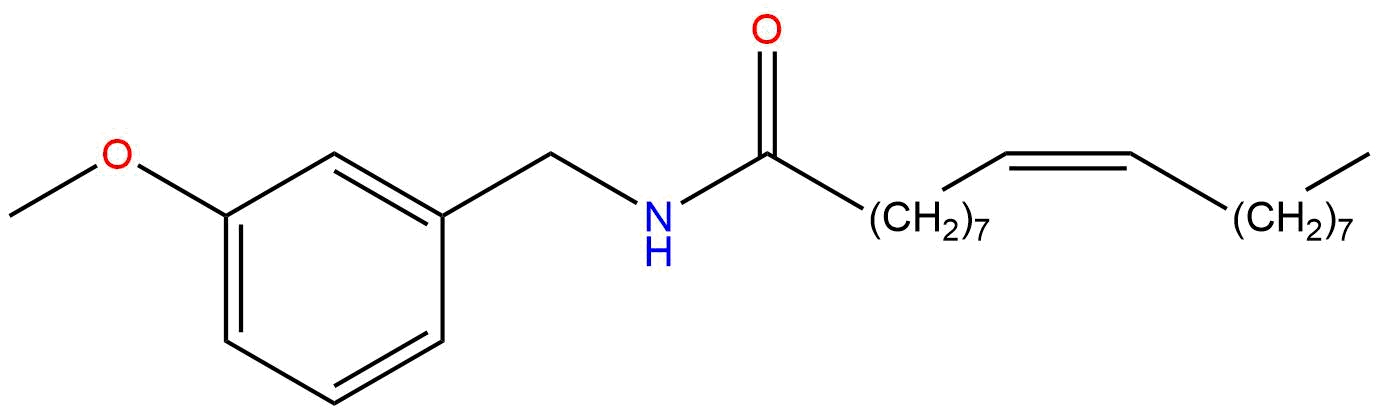


Product name: Macamide Impurity 2
Synonym name: N-Benzyloleamide
Catalogue No.: BP1827
Cas No.: 883715-21-7
Formula: C26H43NO2
Mol Weight: 401.63
Botanical Source:
Physical Description: Oil
Type of Compound: Alkaloids
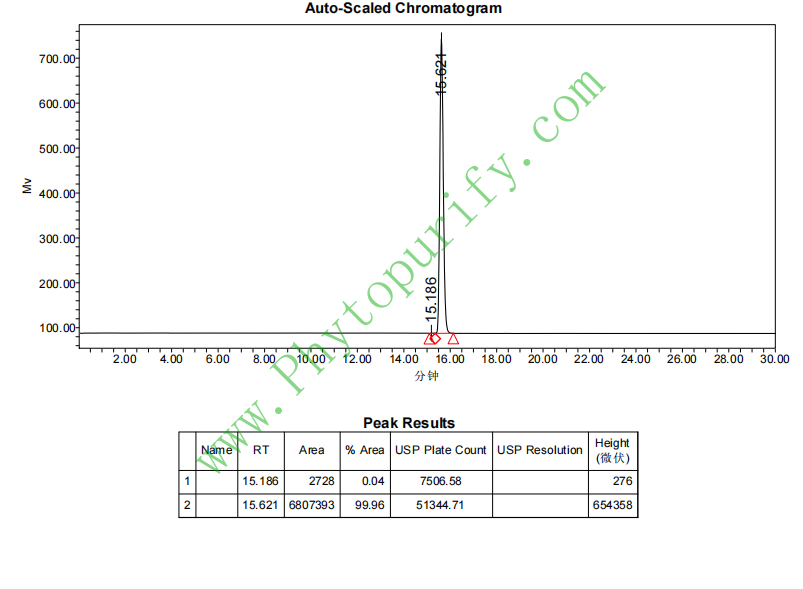
Purity: 95%~99%
Analysis Method: HPLC-DAD or/and HPLC-ELSD
Identification Method: Mass, NMR
Packing: Brown vial or HDPE plastic bottle
The product could be supplied from milligrams to grams. Inquire for bulk scale.
We provide solution to improve the water-solubility of compounds, thereby facilitating the variety of activity tests and clinic uses.
For Reference Standard and R&D, Not for Human Use Directly.
HPLC of Macamide Impurity 2
Storage conditions:Short-term storage at 2~8℃, long-term storage at -20 ~ -80℃
38.3300
7.8103
7.8103
.0008
3.3556
7.0066
High
95.5696
2.1193
No
Yes
Yes
No
No
No
0.0
No
No
No
No
Macamide Impurity 2 (CAS number: 883715-21-7) is a natural product isolated and identified from the traditional medicinal plant Lepidium meyenii. As a member of the Macamides family, a characteristic active ingredient in maca, this compound, although named "impurity", is increasingly receiving attention in modern natural product chemistry and pharmacology research as an important component of the Macamides bioactive substance spectrum. Macamide is a type of compound unique to maca, formed by the binding of benzylamine and long-chain fatty acids through amide bonds. It is considered one of the key substance bases for maca to exert various physiological activities. The discovery and study of impurity 2 in macamide not only help clarify the material basis of the traditional efficacy of macamide, but also provide clues for the development of new drug lead compounds derived from natural products. The current research has preliminarily revealed its potential pharmacological activity related to sexual function regulation, and points to multiple key biological targets, making it a chemical entity worthy of further exploration.
The molecular formula of Macamide Impurity 2 is C26H43NO2, with a molecular weight of 401.63 g/mol. The SMILES structural formula (CCCCCCCC/C=C \ CCCCCCCC (=O) NCc1cccc (OC) c1) clearly depicts its molecular skeleton: a long-chain unsaturated fatty acid is connected to a methoxy substituted benzylamine fragment through an amide bond. Specifically, the structure consists of an eighteen carbon fatty chain (containing a trans double bond, represented by "/C=C"), whose terminal carboxyl group forms an amide bond with the amino group of 4-methoxybenzylamine (4-methoxybenzylamine).
From the analysis of medicinal parameters, its physicochemical properties exhibit typical lipophilic characteristics:
- LogP/LogD (7.81)This value is significantly higher than 5, indicating that the compound has extremely strong lipophilicity. This is mainly attributed to its long alkyl chain structure, which results in a much higher distribution of molecules in the oil phase than in the water phase.
- TPSA (38.33 Ų)The topologically polar surface area is relatively low, mainly due to the contribution of amide bonds and methoxy groups, which facilitates passive diffusion across membranes.
- Water solubility (0.0008 mg/mL)One of the main challenges that need to be overcome in formulation development is its extremely low water solubility, which is consistent with a high LogP value.
- Molecular weight (401.63)Slightly higher than the upper limit of conventional small molecule drugs (usually<500 Da), but still within an acceptable range.
This chemical structure of "long tail" and "polar head" may give it advantages in biofilm permeation and binding with hydrophobic protein pockets.
The only known plant source of Macamide Impurity 2 is maca(Lepidium meyenii Walp.), Also known as Peruvian ginseng, it belongs to the Brassicaceae family and the Brassicaceae genus. Maca is native to high-altitude areas of the Andes Mountains in South America (mainly distributed in Peru) and is a traditional plant with a history of over a thousand years of consumption and medicinal use.
During the Inca civilization, maca was used as a tonic to enhance physical strength, endurance, and fertility. Traditionally, locals cook or sun dry its roots and stems before consuming them, which are used to improve low libido, relieve fatigue, enhance fertility, and to treat menopausal syndrome and anemia in women. These traditional effects, especially those related to "enhancing male potency" and "promoting fertility", provide a clear direction for modern scientific research on the active ingredients of maca. Macamide compounds are characteristic components generated by the enzymatic and non enzymatic reactions (such as Strecker degradation) of precursor substances (such as benzyl glucosinolates and fatty acids) during the processing and storage of Maca dried rhizomes. They are considered one of the "signature" active substances of Maca and are closely related to its traditional efficacy.
According to the existing database information, impurity 2 of macamide is Sexual function regulation This disease/physiological process is related and may exert its potential effects by acting on the following five key targets:
Integrated analysis of mechanism of action:
Macamide impurity 2 may regulate sexual function through a multi-target, synergistic network. Its function may begin with its impact on ESR1 and AR Regulating sexual desire and gonadal function at the level of hormones. Meanwhile, it may directly inhibit PDE5A, or through upward adjustment NOS3 To increase NO production and jointly enhance intracellular cGMP levels. Elevated cGMP activates PRKG1 Ultimately, it leads to the relaxation of smooth muscle in the corpus cavernosum, promoting erection. This multi-target characteristic of simultaneously acting on hormone receptors, key enzymes, and signaling pathway nodes is consistent with the traditional image of maca as a "holistic regulation" tonic, which may bring different action characteristics from single target drugs, but also increases the complexity of its mechanism of action research.
Based on the provided pharmacological parameters and in combination with classic standards such as the "Lipinski Rule of Five," we have conducted a preliminary evaluation of the pharmacological potential of Marcamide Impurity 2
Lipinski Five Rule Compliance:
Analysis of other key parameters:
Comprehensive Assessment Macamide impurity 2 is a natural product lead compound with clear multi-target pharmacological activity. Its advantages lie in excellent membrane permeability and absorption, as well as preliminary prediction of good safety (no genetic toxicity and cardiac toxicity alerts). However, it Excessive lipophilicity (LogP>7) and extremely low water solubility It is the main bottleneck hindering its drug development, which may lead to unsatisfactory pharmacokinetic properties (such as large distribution volume, slow clearance), difficulty in formulation, and low oral bioavailability. Future structural optimization should focus on Reduce LogP value and improve water solubility For example, by shortening the fatty chain, introducing polar groups, or preparing prodrugs, the pharmacological activity can be maintained while improving its drug like properties.
At present, there is relatively limited independent and in-depth research literature on "Macamide Impurity 2". It is mainly mentioned as a member of the macamide compound family in the overall chemical composition analysis and activity screening research of maca. The existing data mainly comes from computational prediction and database correlation analysis. The specific in vitro and in vivo activity data, as well as the binding affinity and mode of action (excitation/antagonism/inhibition) of the above targets, still need to be validated and elucidated through systematic biological experiments.
Research status The research is still in the early stages of discovery and target prediction. The work that needs to be carried out includes: 1) large-scale preparation or synthesis of the compound to meet research needs; 2) Conduct comprehensive in vitro activity screening to confirm its true strength and selectivity towards targets such as ESR1, AR, and PDE5A; 3) Evaluate its in vivo efficacy and preliminary pharmacokinetic characteristics in appropriate animal models, such as sexual dysfunction models.
Application Prospects:
1. As the material basis for elucidating the pharmacological effects of maca In depth study of macamide impurity 2 can help explain the scientific basis for macamide's traditional use in enhancing sexual function, anti fatigue and other effects at the molecular level.
2. As a lead compound for multi-target drug development Its unique multi-target action characteristics provide a new chemical starting point for the development of new drugs for the treatment of complex functional disorders, especially those involving multiple factors such as hormones, nerves, and blood vessels. Compared with existing single target PDE5 inhibitors, it may have a more comprehensive regulatory effect or be applicable to a wider population.
3. Structural optimization and derivative development Using it as the parent nucleus, systematic drug chemical modification is carried out to optimize its solubility, pharmacokinetic properties, and target selectivity, which is expected to obtain candidate drugs with better drug properties.
4. Functional food or dietary supplement ingredients On the basis of clarifying its safety and efficacy, high-purity macacamide impurity 2 or its enriched extract can be used as an active ingredient in high-end functional foods or dietary supplements.
In summary, Macamide Impurity 2 is an interesting molecule that connects traditional medicinal wisdom with modern drug discovery. Despite facing challenges in drug development, the multi-target mechanism of action revealed by it provides new ideas for the treatment of related diseases. Future research requires a close integration of experimental science and computational prediction, gradually transforming this "potential" active molecule into "real" scientific cognition and application value.
