Introduction/Overview
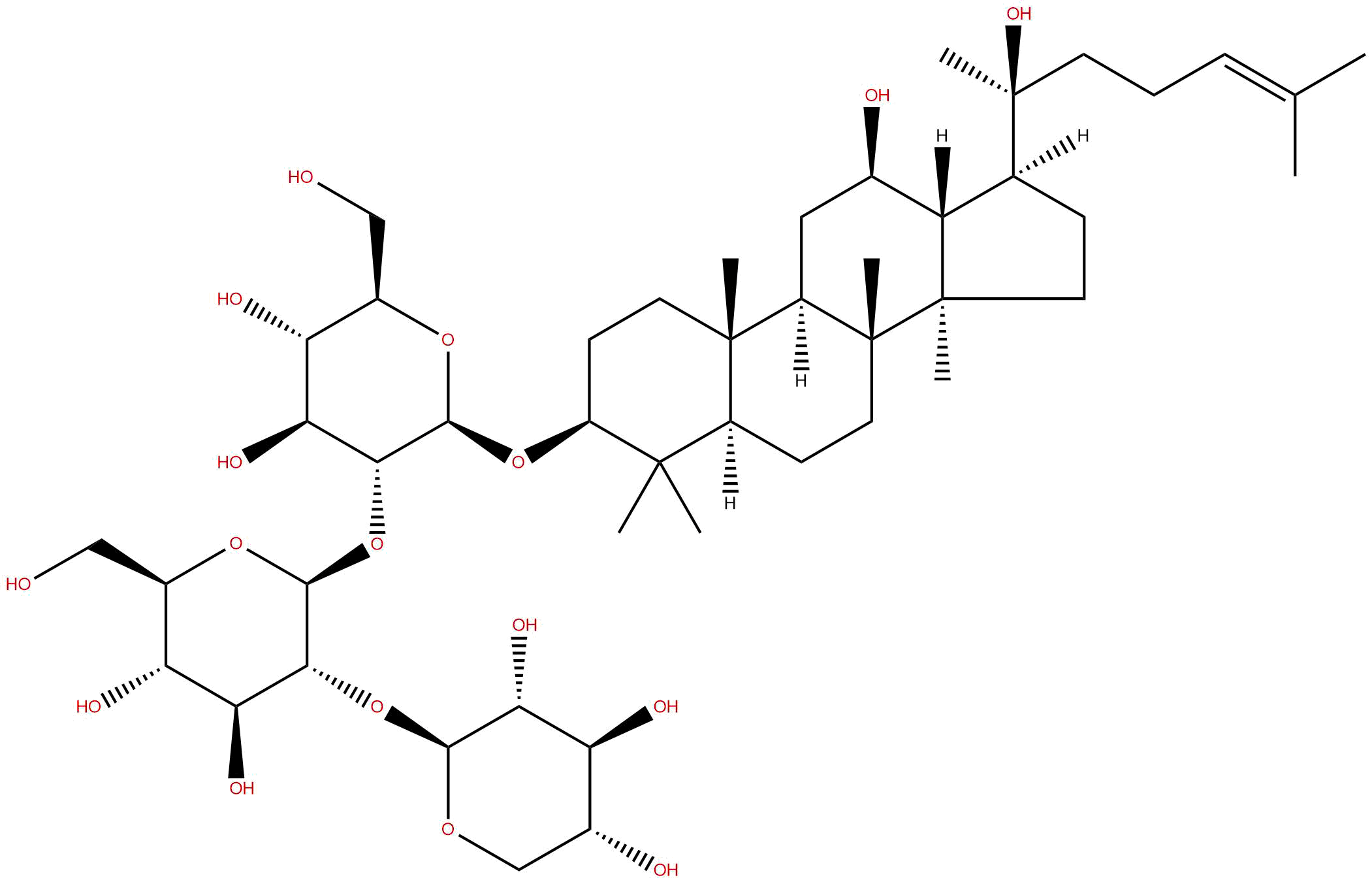
Notoginsenoside ST4 (CAS number: 155683-02-6) is an important natural saponin product isolated from the traditional Chinese medicine Panax notoginseng. As one of the multiple active ingredients in Sanqi, Sanqi saponin ST4 has received widespread attention due to its significant anti thrombotic effect. Thrombosis is a key pathological process in various cardiovascular and cerebrovascular diseases, such as coronary heart disease, stroke, deep vein thrombosis, etc. The development of safe and effective antithrombotic drugs is of great significance for the prevention and treatment of related diseases. In recent years, with the in-depth study of the pharmacological activity and mechanism of action of Panax notoginseng saponin ST4, its value as a potential antithrombotic drug has gradually become prominent.
This article provides a systematic review of the chemical structure and physicochemical properties, plant sources and extraction methods, pharmacological activity and mechanism of action, pharmacological evaluation and pharmacokinetic characteristics of Panax notoginseng saponin ST4, and looks forward to its clinical application prospects, providing theoretical basis and reference for subsequent related research and drug development.
Chemical structure and physicochemical properties
Sanqi saponin ST4 belongs to the ginsenoside family, a tetracyclic triterpenoid saponin with a molecular formula of C48H82O18 and a molecular weight of 917.14. Its structural characteristics include the connection of a tetracyclic triterpenoid nucleus with multiple sugar residues, forming a typical saponin skeleton. The LogP value of this compound is 2.4946, indicating moderate lipid solubility that facilitates membrane penetration, but low water solubility of approximately 0.0738 mg/mL, suggesting limited solubility in aqueous phase. The polar surface area (TPSA) is 277.91 Å ², indicating a high molecular polarity that may affect the permeability and pharmacokinetic behavior of its biofilm.
In addition, the blood-brain barrier permeability of Sanqi saponin ST4 is low, indicating its limited distribution in the central nervous system, which is beneficial for reducing the risk of central nervous system toxicity. The negative result of hERG channel inhibition experiment indicates a low risk of cardiac toxicity. The Ames test result is 0, indicating that the compound has no significant mutagenicity and good safety.
Plant sources and extraction methods
Sanqi saponin ST4 mainly exists in the roots and processed products of Panax notoginseng. Sanqi, as a traditional Chinese medicinal herb, has a long history and is widely used in clinical fields such as hemostasis, promoting blood circulation, and removing blood stasis. Panax notoginseng saponin ST4, as one of the multiple saponin components in Panax notoginseng, has a relatively low content and a complex extraction and purification process.
Common extraction methods include:
- Solvent extraction Extract Sanqi powder by reflux using ethanol or methanol aqueous solution, and dissolve saponin components using polar solvents.
- Liquid liquid distribution By distributing solvents of different polarities, lipid soluble impurities are removed and saponins are enriched.
- Column chromatography separation Using silica gel, C18 reverse phase column or resin column for fractional purification, combined with gradient elution to achieve separation and purification of Panax notoginseng saponin ST4.
- High performance liquid chromatography (HPLC)As a key technology for qualitative, quantitative, and purity detection, HPLC can also be used to prepare high-purity Panax notoginseng saponins ST4.
In recent years, the application of new technologies such as ultrasound assisted extraction and microwave-assisted extraction has improved extraction efficiency and purity, laying the foundation for industrial production.
Pharmacological activity research
The pharmacological activity research of Panax notoginseng saponin ST4 mainly focuses on its anti thrombotic effect and related cardiovascular and cerebrovascular protective effects. Multiple in vitro and in vivo experiments have shown that Sanqi saponin ST4 can effectively inhibit platelet aggregation, reduce blood viscosity, improve microcirculation, and significantly reduce the risk of thrombosis.
-
Antiplatelet aggregation
Sanqi saponin ST4 inhibits platelet surface receptors and signaling pathways, reduces ADP, collagen induced platelet activation and aggregation, and decreases the initial steps of thrombosis formation.
-
Anticoagulant effect
This compound can regulate the activity of coagulation factors, delay clotting time, inhibit thrombin production, and exert anticoagulant function.
-
Improve blood rheology
Sanqi saponin ST4 can reduce blood viscosity, improve blood flow, promote blood circulation, and alleviate endothelial damage.
-
Anti inflammatory and antioxidant effects
By inhibiting the release of inflammatory factors and oxidative stress response, Sanqi saponin ST4 protects vascular endothelial cells and prevents the pro-inflammatory environment of thrombosis formation.
Mechanism of action and molecular targets
The antithrombotic effect of Panax notoginseng saponin ST4 involves multiple molecular targets and signaling pathways, mainly including:
-
PTGS1 (cyclooxygenase-1)
PTGS1 is a key enzyme in platelets that synthesizes thromboxane A2 (TXA2), which promotes platelet aggregation and vasoconstriction. Sanqi saponin ST4 inhibits PTGS1 activity, reduces TXA2 production, and suppresses platelet aggregation.
-
Coagulation factor F2 (thrombin) F7、F9、F10
These coagulation factors play a central role in the coagulation cascade reaction. Sanqi saponin ST4 regulates the expression and activity of these factors, delays the coagulation process, and reduces thrombus formation.
-
Platelet membrane receptors ITGA2B (integrin α IIb) and ITGB3 (integrin β 3)
The integrin α IIb β 3 composed of ITGA2B and ITGB3 is a key receptor for platelet aggregation, mediating the binding of fibrinogen to platelets. Sanqi saponin ST4 inhibits the expression or function of this receptor, blocking platelet aggregation.
-
P2RY12 (ADP receptor)
P2RY12 is an important receptor for platelet activation, and Sanqi saponin ST4 blocks ADP mediated platelet activation signals by antagonizing this receptor.
-
TBXA2R (thromboxane A2 receptor)
This receptor mediates the platelet activation of TXA2. Sanqi saponin ST4 inhibits TBXA2R signaling, further reducing platelet aggregation.
-
SERPINC1 (Antithrombin III)
As a natural anticoagulant factor, SERPINC1 regulates thrombin activity. Sanqi saponin ST4 promotes SERPINC1 function and enhances anticoagulant effect.
In summary, Sanqi saponin ST4 exerts a synergistic effect through multiple targets and pathways, systematically inhibiting platelet aggregation and coagulation processes, and exerting antithrombotic effects.
Evaluation of drug properties and pharmacokinetics
The pharmacological parameters of Panax notoginseng saponin ST4 show that it has certain potential for drug development:
-
Molecular weight and physicochemical properties
The molecular weight of 917.14 is relatively large and may affect oral bioavailability. The LogP value of 2.49 is moderate and favorable for membrane penetration, but high TPSA (277.91 Å ²) suggests strong polarity and may limit membrane permeability.
-
Water solubility
Low water solubility (0.0738 mg/mL) poses a challenge for formulation development, requiring improved solubility and absorption through formulation technology.
-
Blood-brain barrier permeability
Low permeability reduces the risk of central nervous system side effects and is suitable for treating peripheral vascular diseases.
-
safety indicator
HERG channel inhibition is negative, indicating a low risk of cardiac toxicity. The Ames test is negative, indicating no mutagenicity and good safety.
-
pharmacokinetics
At present, there are relatively few systematic pharmacokinetic studies on Sanqi saponin ST4. Preliminary data suggests that its oral absorption is limited, and its metabolism in the body may involve liver enzymes, with a moderate half-life. Further research on absorption, distribution, metabolism, and excretion (ADME) is needed in the future to optimize the dosing regimen.
Clinical application prospects and prospects
Given the significant antithrombotic activity and good safety of Panax notoginseng saponins ST4, its application prospects in the prevention and treatment of cardiovascular and cerebrovascular diseases are broad. Currently, Panax notoginseng and its saponins have been widely used in clinical adjuvant therapy for blood stasis related diseases. Panax notoginseng saponin ST4, as a key active ingredient, is expected to become a candidate molecule for novel antithrombotic drugs.
The key directions for future clinical applications include:
-
Development of antithrombotic drugs
Based on the multi-target antithrombotic mechanism of Sanqi saponin ST4, develop oral or injectable new drugs to meet the clinical demand for safe and effective antithrombotic drugs.
-
Combination therapy strategy
Exploring synergistic effects with existing antiplatelet or anticoagulant drugs to reduce monotherapy dosage and side effects.
-
Indications expansion
In addition to traditional cardiovascular and cerebrovascular diseases, explore its potential applications in the fields of vascular complications of diabetes, chronic inflammation and microcirculation disorders.
-
Innovation in formulation and drug delivery technology
Develop new formulations such as nanocarriers and solid dispersions to improve bioavailability and efficacy in response to poor water solubility and oral absorption limitations.
-
Clinical trial validation
Conduct systematic preclinical and clinical studies to evaluate the efficacy, safety, and pharmacokinetics of Panax notoginseng saponins ST4, and promote its clinical translation.
Conclusion
Panax notoginseng saponin ST4, as an important active ingredient in Panax notoginseng, exhibits excellent pharmacological activity and safety due to its unique chemical structure and multi-target antithrombotic mechanism. Although research on its pharmacokinetics and clinical applications is still in its infancy, its potential in the prevention and treatment of cardiovascular and cerebrovascular diseases cannot be ignored. In the future, by combining modern medicinal chemistry, pharmacology, and pharmaceutical technology, in-depth systematic research will be conducted to provide a solid foundation for the drug development and clinical application of Panax notoginseng saponin ST4, and to promote the innovative application of natural products in modern medicine.