Introduction/Overview
Liver fibrosis is a pathological process of excessive deposition and abnormal repair of extracellular matrix in the liver after various chronic liver injuries, such as viral hepatitis, alcoholic liver disease, non-alcoholic fatty liver disease, etc. It is a key link in the development of cirrhosis and even liver cancer. At present, there is a lack of efficient and specific anti liver fibrosis drugs in clinical practice, and the development of new therapeutic drugs has important clinical significance. Natural products have always been an important source of drug discovery due to their structural diversity and rich biological activity. 14,15 β - Dihydroxyklaineanone (DHK) is a unique diterpenoid compound isolated from traditional medicinal plants, with a CAS number of 137359-82-1. In recent years, pharmacological studies have revealed that it exhibits significant multi-target and multi pathway activity in anti liver fibrosis, involving multiple key targets such as AMPK, BCL2, TLR4, STAT3, MMPs, etc., making it a highly promising candidate drug molecule for anti liver fibrosis. This article aims to systematically review the chemical structure, plant origin, pharmacological activity, mechanism of action, and pharmacological properties of DHK, and to explore its clinical application prospects.
Chemical structure and physicochemical properties
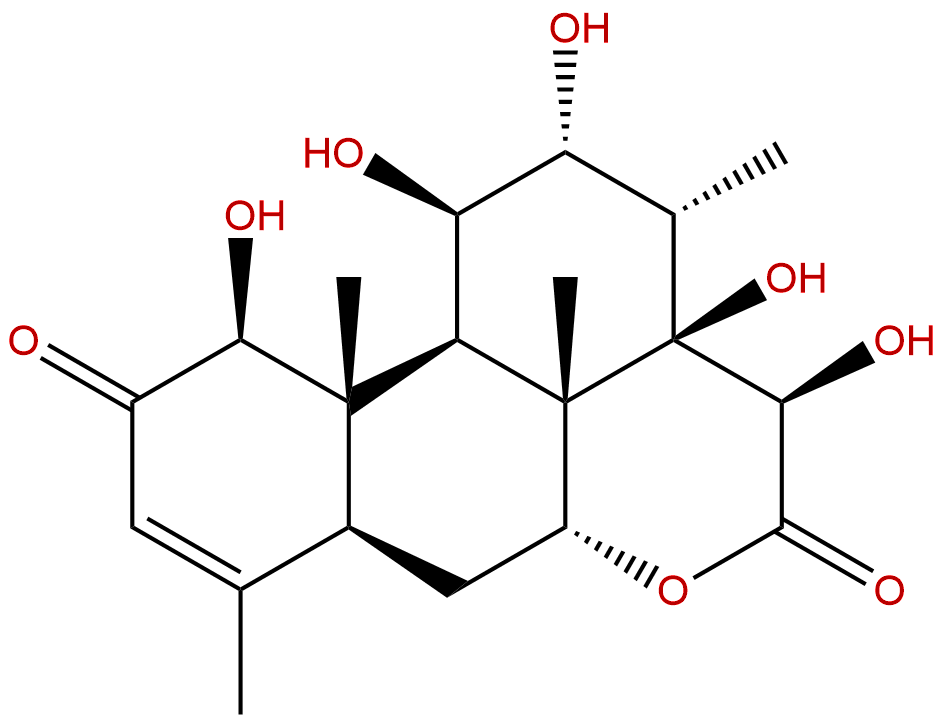
14,15 β - dihydroxyclinonone is a highly oxidized rosin alkane type diterpenoid compound. Its core skeleton is a tricyclic diterpene structure, with two hydroxyl groups connected at positions C-14 and C-15, with the hydroxyl group at position C-15 being in the beta configuration. This structural feature is crucial for its biological activity. The molecular formula is C20H28O8 and the molecular weight is 396.4360. The multiple oxygen-containing functional groups (hydroxyl, carbonyl) in its chemical structure determine its unique physicochemical properties.
According to the provided pharmacological parameters, the logarithmic (LogP) value of the lipid water partition coefficient of DHK is -0.2048, indicating that the compound has a hydrophilic tendency, which is consistent with the presence of multiple polar hydroxyl groups in its structure. The topologically polar surface area (TPSA) is as high as 144.52 Å ², further confirming its strong polarity characteristics, which can affect its transmembrane permeability. The water solubility value is 3.7114 (usually measured in mg/mL or log mol/L, indicating moderate or good solubility), suggesting that it may have good potential for formulation development. However, higher polarity and TPSA also lead to a predicted "low" blood-brain barrier permeability, which may actually reduce the potential risk of central nervous system side effects for drugs that primarily act on peripheral organs such as the liver. In addition, preliminary toxicity predictions indicate that the hERG inhibition risk is "no" and the Ames test (mutagenicity) risk is 0.0, suggesting that it may have a good cardiac safety and genotoxicity safety window, but these conclusions need to be rigorously validated through experiments.
Plant sources and extraction methods
DHK is mainly isolated from Meliaceae plants, especially Klaineanthus gaboniae(Former name)Klaineanone Named after this) and related species of plants. These plants are often used in traditional medicine to treat inflammatory diseases, providing clues for discovering their anti fibrotic activity.
Its extraction and separation usually follow the conventional process of natural product chemistry. Firstly, dry and crush specific parts of the plant, such as bark, root bark, or leaves. Then, medium polarity solvents such as methanol, ethanol, or acetone are used for cold soaking or heated reflux extraction to fully dissolve polar components including DHK. The crude extract was obtained by vacuum concentration of the extraction solution. Subsequently, various chromatographic techniques were comprehensively used for separation and purification, such as silica gel column chromatography (using gradient elution with chloroform methanol or petroleum ether ethyl acetate), reverse phase silica gel column chromatography (using C18 material, using methanol water system elution), and high performance liquid chromatography (HPLC). Through techniques such as nuclear magnetic resonance (NMR, including 1H-NMR, 13C-NMR, 2D-NMR), mass spectrometry (MS), and X-ray single crystal diffraction, its planar structure and stereoconfiguration were finally identified, confirming it as 14,15 β - dihydroxy clavulanone. At present, there are few reports on its total synthesis route, and the main source still relies on plant extraction. Therefore, sustainable plant resources or the development of synthetic biology methods (such as microbial heterologous synthesis) are issues that need to be considered for future large-scale supply.
Pharmacological activity research
The core pharmacological activity of DHK focuses on anti liver fibrosis, and its effects have been confirmed in various in vitro and in vivo models.
In vitro research DHK can significantly inhibit HSC activation, proliferation, and migration induced by factors such as transforming growth factor - β 1 (TGF - β 1), platelet-derived growth factor (PDGF), or lipopolysaccharide (LPS) in models of hepatic stellate cells (HSCs) - key effector cells for liver fibrosis formation, such as human LX-2 cells or rat HSC-T6 cells. Activated HSCs will synthesize a large amount of collagen (mainly type I and III collagen), and DHK treatment can dose dependently downregulate the expression of these collagen proteins. In addition, DHK can alleviate oxidative stress and inflammatory response in liver cell injury models, providing protection for the initial stage of liver fibrosis.
In vivo research In animal models, DHK exhibits clear anti fibrotic efficacy. For example, in a mouse or rat model of liver fibrosis induced by carbon tetrachloride (CCl4), intraperitoneal injection or gavage of DHK can significantly alleviate pathological damage to liver tissue, reduce liver hydroxyproline (a characteristic amino acid of collagen) content, and improve serum liver function indicators such as ALT and AST. In the bile duct ligation (BDL) induced cholestatic liver fibrosis model, DHK also showed inhibitory effects on fibrosis. These in vivo data collectively indicate that DHK can effectively intervene in the progression of liver fibrosis caused by different etiologies.
In addition to its direct anti fibrotic effect, DHK may also exert liver protective effects through its anti-inflammatory and antioxidant activities, which complement the anti fibrotic process.
Mechanism of action and molecular targets
The anti fibrotic effect of DHK is not achieved through a single target, but through a complex network involving key targets and signaling pathways as follows:
-
AMPK (PRKAA1) pathway activation AMPK is a core regulator of cellular energy metabolism, and its activation has multiple benefits such as anti fibrosis, anti-inflammatory, and antioxidant effects. Research has shown that DHK can activate the AMPK signaling pathway. The activation of AMPK can inhibit the expression of downstream pro fibrotic mediators such as TGF - β 1 and CTGF; On the other hand, activated HSCs can be induced to undergo autophagy or apoptosis by inhibiting pathways such as mammalian rapamycin target protein (mTOR), thereby promoting their clearance.
-
Regulating apoptosis related protein BCL2 and STAT3 DHK can downregulate the expression of anti apoptotic protein BCL2 and inhibit the phosphorylation and activation of signal transduction and transcription activator 3 (STAT3). STAT3 is an important driving factor for the survival and proliferation of HSCs. Inhibition of STAT3 signaling can synergistically downregulate BCL2, promote activated HSC apoptosis, and reduce the source of fibrotic cells.
-
Inhibition of TLR4/NF - κ B inflammatory pathway Toll like receptor 4 (TLR4) is a key receptor that recognizes damage associated molecular patterns (DAMPs) and initiates inflammatory responses. DHK has been shown to inhibit TLR4 signaling, thereby blocking the activation of nuclear factor kappa B (NF - κ B). This leads to a reduction in the production of various pro-inflammatory cytokines downstream, such as TNF - α, IL-1 β, IL-6, thereby alleviating the inflammatory microenvironment of the liver, and chronic inflammation is the core factor driving the sustained progression of fibrosis.
-
Regulating extracellular matrix metabolism - MMP1, MMP2 and RECQL DHK exhibits a bidirectional effect on the regulation of matrix metalloproteinases (MMPs). It can upregulate the expression of MMP1 (collagenase-1, which mainly degrades type I and III collagen) and promote the degradation of deposited collagen; Meanwhile, it may inhibit the excessive activation of MMP2 (gelatinase A), which is involved in basement membrane disruption and HSC activation in the early stages of fibrosis. In addition, studies suggest that DHK may interact with RECQL (a DNA helicase), a protein involved in DNA repair and cell cycle regulation. Its mechanism may be related to the inhibition of HSC proliferation, but the specific pathway remains to be elucidated.
-
Activate NRF2 (NFE2L2) antioxidant pathway DHK can promote nuclear translocation of nuclear factor E2 related factor 2 (NRF2). NRF2 is a key transcription factor of antioxidant response element (ARE), and its activation can upregulate the expression of a series of phase II detoxifying enzymes and antioxidant proteins (such as HO-1, NQO1, GCLC), thereby enhancing the ability of liver cells and HSCs to resist oxidative stress, reducing oxidative damage induced liver cell death and HSC activation.
-
Inhibition of NLRP3 inflammasome/CASP1 pathway DHK may reduce the activation of caspase-1 (CASP1) by inhibiting the assembly and activation of NLRP3 inflammasomes. Activated CASP1 cleaves pro-IL-1 β and pro-IL-18 into mature forms, triggering a strong inflammatory response. Inhibiting this pathway helps control liver necrosis and inflammation.
-
Regulating PKC (PRKCA) signaling The protein kinase C (PKC) family, especially classic subtypes such as PKC α, is involved in regulating HSC proliferation and collagen synthesis. DHK may inhibit downstream pro fibrotic signals by interfering with the activity or expression of PKC alpha (PRKCA).
In summary, DHK synergistically activates protective pathways such as AMPK and NRF2, and inhibits multiple pro fibrotic, pro-inflammatory, and pro survival pathways such as TLR4/NF - κ B, STAT3, and PKC, forming a multi-target, networked mechanism of action. This is the molecular basis for its effective fight against the complex pathological process of liver fibrosis.
Evaluation of drug properties and pharmacokinetics
Based on computational predictions and preliminary research, a preliminary evaluation of the pharmacological properties of DHK is conducted
Advantage:
- Security potential The prediction of no hERG inhibition and Ames mutagenicity risk provides a good preliminary impression of its safety.
- solubility Good water solubility is beneficial for the development of oral formulations (such as tablets and capsules), which may improve bioavailability.
- Target specificity Its multi-target effect originates from the regulation of key signaling nodes, rather than non selective kinase inhibition, which may bring more balanced efficacy and safety.
Challenges and unknowns:
- Permeability and oral bioavailability A higher TPSA and polarity may result in average intestinal permeability, and oral absorption may be limited. Its' low 'blood-brain barrier permeability is not a major concern here. It is necessary to experimentally determine its absolute oral bioavailability in models such as rats or dogs.
- Metabolic stability There are multiple hydroxyl groups in the structure, which may lead to II phase metabolic binding reactions (such as glucuronidation and sulfation), resulting in significant first pass effects and short half lives. It is necessary to study its metabolic stability in liver microsomes or liver cells and identify its main metabolites.
- Pharmacokinetic (PK) study At present, the publicly available PK research data (such as absorption, distribution, metabolism, excretion, i.e. ADME) may not be complete. It is necessary to clarify its plasma protein binding rate, tissue distribution (especially accumulation in the liver), major metabolic enzymes, and excretion pathways.
- Formulation technology To improve its potential absorption and stability issues, advanced formulation technologies such as nanocrystals, liposomes, phospholipid complexes, or prodrug strategies may be required.
Clinical application prospects and prospects
DHK, as a multi-target natural product for anti liver fibrosis, has broad clinical application prospects, but solid research is still needed for its transformation.
Potential application directions:
1. Anti fibrotic therapy for chronic liver disease: It can be used as an auxiliary or first-line anti fibrosis drug for chronic liver diseases such as hepatitis B, hepatitis C (on the basis of anti-virus), nonalcoholic steatohepatitis (NASH), alcoholic liver disease, etc., aiming to delay or reverse liver fibrosis, prevent liver cirrhosis decompensation and liver cancer.
2. combination therapy Given its unique mechanism of action, DHK may be used in combination with existing anti-inflammatory drugs (such as glycyrrhizic acid preparations), antioxidants, or new drugs targeting specific pathways to produce synergistic effects and improve therapeutic efficacy.
3. Expansion of fibrosis related diseases The anti-inflammatory, antioxidant, and regulation of extracellular matrix components in its mechanism of action may also have potential applications in organ fibrosis diseases such as pulmonary fibrosis and renal fibrosis, which is worth exploring.
Future research focus:
1. In depth pharmacodynamic and PK/PD research Validate therapeutic efficacy in animal models closer to human diseases, such as NASH-HCC mouse models, and conduct systematic pharmacokinetic pharmacodynamic (PK/PD) studies to provide a basis for dosing regimen design.
2. Deepening the mechanism of action Using chemical biology methods such as affinity fishing and proteomics to search for its direct target proteins and more accurately elucidate its starting molecules.
3. Security system evaluation Complete standardized preclinical safety evaluation (GLP toxicology study), including acute toxicity, chronic toxicity, reproductive toxicity, etc.
4. Structural optimization and derivative development Based on its pharmacophore, reasonable structural modifications are carried out with the aim of improving its metabolic stability, oral bioavailability, and target selectivity, and developing derivatives with better drug properties.
5. Raw material supply guarantee Explore sustainable pathways for large-scale acquisition, including plant cultivation, cell culture, or chemical/biosynthetic methods.
Conclusion
14,15 β - dihydroxyclorenone is a diterpenoid compound with significant anti liver fibrosis activity discovered from traditional medicinal plants. Its unique chemical structure endows it with multi-target pharmacological properties, enabling it to synergistically combat liver fibrosis by regulating multiple key signaling pathways such as AMPK, STAT3, TLR4/NF - κ B, NRF2, and inhibiting HSC activation, promoting HSC apoptosis, reducing inflammation and oxidative stress, and promoting collagen degradation. Although there are challenges in its pharmacological properties such as oral absorption and metabolic stability that require further research, computational predictions show that it has a good safety and solubility basis. In the future, through systematic pharmacology, pharmacokinetics, and toxicology research, combined with possible drug chemistry optimization and advanced formulation technology applications, DHK is expected to develop into a new, multi-target, naturally derived anti liver fibrosis drug, providing new options for clinical treatment of this refractory pathological process. Its research paradigm also provides useful reference for discovering network regulated drugs targeting complex diseases from the treasure trove of traditional medicine.