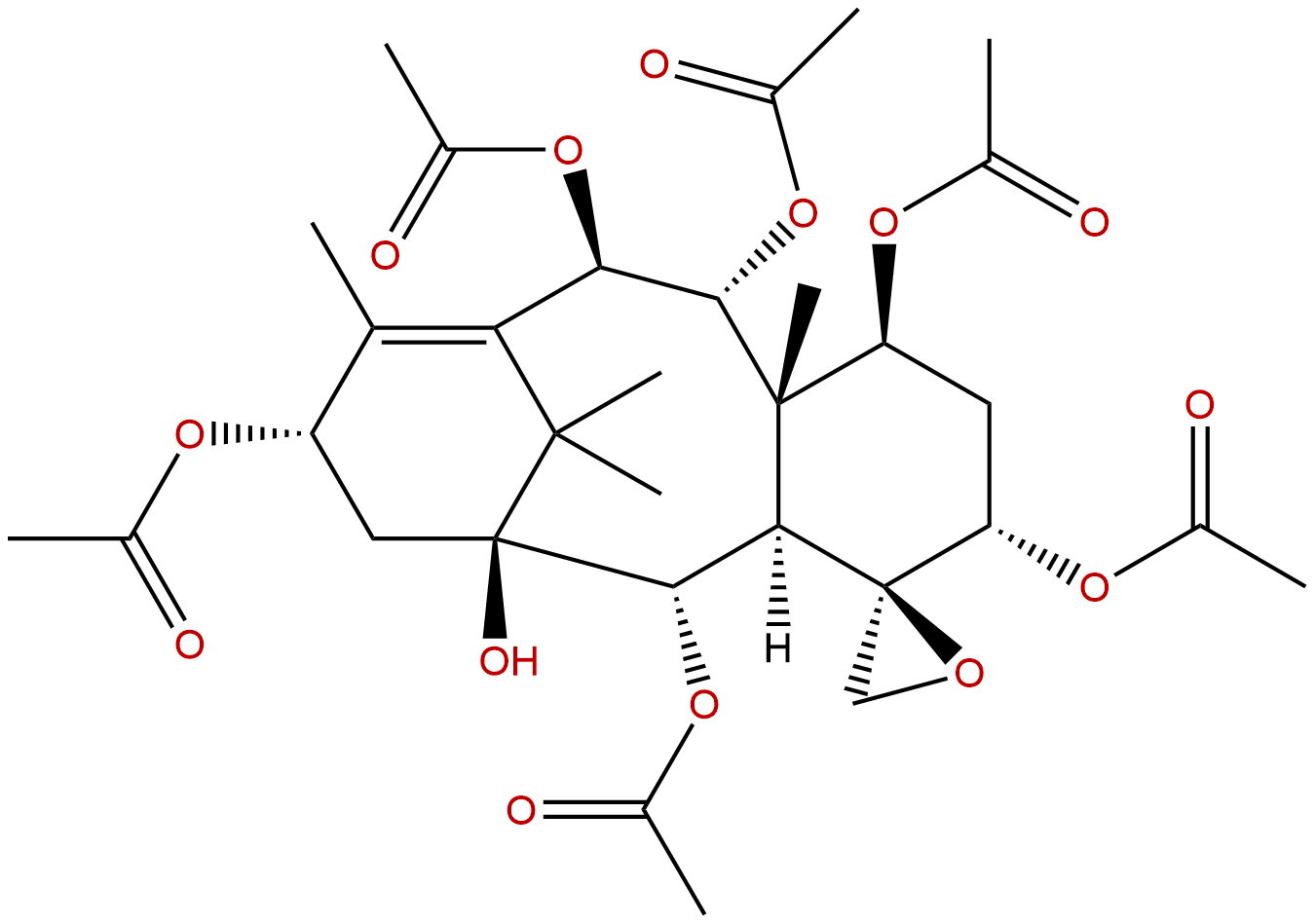


Product name: 1-Hydroxybaccatin I
Synonym name:
Catalogue No.: SBP00181
Cas No.: 30244-37-2
Formula: C32H44O14
Mol Weight: 652.69
Botanical Source:
Physical Description: Cryst.
Type of Compound: Diterpenoids
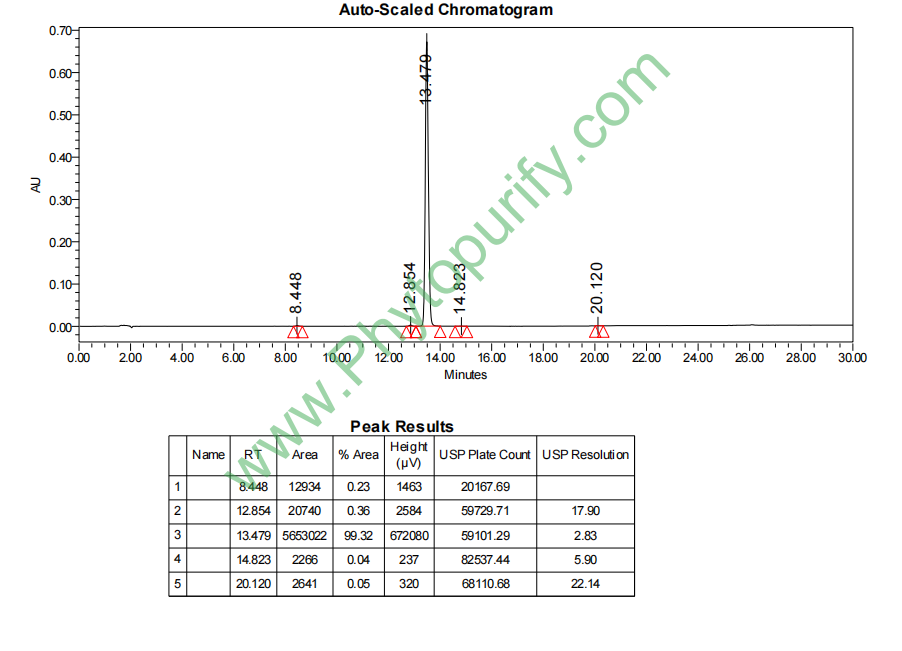
Purity: 95%~99%
Analysis Method: HPLC-DAD or/and HPLC-ELSD
Identification Method: Mass, NMR
Packing: Brown vial or HDPE plastic bottle
The product could be supplied from milligrams to grams. Inquire for bulk scale.
We provide solution to improve the water-solubility of compounds, thereby facilitating the variety of activity tests and clinic uses.
For Reference Standard and R&D, Not for Human Use Directly.
HPLC of 1-Hydroxybaccatin I
Storage conditions:Short-term storage at 2~8℃, long-term storage at -20 ~ -80℃
190.5600
1.4813
1.4813
.0915
1.4595
1.7105
Low
64.0868
6.2869
Yes
Yes
No
No
No
No
0.0
Yes
No
Yes
Yes
Natural products, as an important source of drug discovery, play an irreplaceable role in the long history of human fight against diseases. Taxane compounds, as an important class of diterpenoid natural products, have attracted much attention due to their significant anti-tumor activity. Paclitaxel and Docetaxel, as the star molecules of the family, have been widely used in the clinical treatment of breast cancer, ovarian cancer, non-small cell lung cancer and other malignant tumors. Their mechanisms of action mainly play a cytotoxic role by stabilizing tubulin and inhibiting mitosis. However, with the deepening of clinical applications, the problems of drug resistance, toxic side effects, and poor water solubility faced by taxane drugs have become increasingly prominent, prompting researchers to continuously search for lead compounds with novel structures and unique mechanisms of action from natural products.
1-Hydroxybaccatin I (CAS number: 30244-37-2) is a natural taxane compound isolated from Taxus plants, and its chemical structure belongs to the Baccatin series of derivatives. Compared with classical paclitaxel, 1-hydroxybaccatin I introduces a hydroxyl substituent at the C-1 position, which endows it with a unique biological activity spectrum. In recent years, with the deepening of research on natural taxane compounds, 1-hydroxybaccatin I has demonstrated multi-target anti-tumor activity, involving multiple aspects such as regulating cell apoptosis, inhibiting tumor metastasis, and interfering with the tumor microenvironment. Its mechanism of action is significantly different from that of classical microtubule stabilizers, suggesting that it may become a potential candidate molecule to overcome paclitaxel resistance.
This article aims to systematically review the chemical structure characteristics, plant sources and extraction methods, pharmacological activity, mechanism of action, pharmacological evaluation, and clinical application prospects of 1-hydroxybaccatin I, in order to provide comprehensive scientific basis for the in-depth research and development of this natural product.
The chemical structure of 1-hydroxybaccatin I belongs to the taxane diterpene skeleton, and its core structure is the taxane core with a [9.3.1.0 ³, ⁸] fifteen carbon ring system. The molecular formula of this compound is C ∝₅ H ₄₈ O ₁₂, with a molecular weight of 652.6900 g/mol. Compared with the classic Baccatin III, the most significant structural feature of 1-hydroxybaccatin I is the presence of a hydroxyl substituent (- OH) at the C-1 position, which is relatively rare in taxane natural products. In addition, the molecule also contains multiple ester substituents such as acetoxy (- OAc) and benzoyloxy (- OBz), located at positions C-2, C-4, C-5, C-7, C-9, C-10, and C-13, forming a highly oxidized molecular skeleton.
Specifically, the structural features of 1-hydroxybaccatin I include: (1) the introduction of the C-1 hydroxyl group increases the polarity and hydrogen bond donor ability of the molecule; (2) Acetyloxy substitution is present at positions C-4 and C-5, while benzoyloxy substitution is present at position C-2; (3) The C-7 and C-9 positions contain hydroxyl and acetoxy groups, respectively; (4) The C-10 position is substituted with an acetoxy group; (5) The C-13 side chain is hydroxyisovaleric (- COCH (OH) C (CH3) ₂). This complex substitution pattern endows the molecule with rich chemical diversity and potential biological activity.
According to computational chemistry and experimental data, the physicochemical properties of 1-hydroxybaccatin I are as follows:
Based on comprehensive physical and chemical property analysis, 1-hydroxybaccatin I exhibits typical natural product characteristics: high molecular weight, abundant oxygen-containing functional groups, poor water solubility, and potential limited oral bioavailability. However, its moderate lipid solubility, low cardiac toxicity, and non mutagenicity provide a good safety basis for its further development.
1-Hydroxybaccatin I mainly comes from the genus Taxus(Taxus)Plants, this genus of plants is the only known group of plants capable of synthesizing taxane diterpenoid compounds. The Taxus genus includes short leaved Taxus(Taxus brevifolia)European yew(Taxus baccata)Northeast Chinese yew(Taxus cuspidata)Yunnan yew(Taxus yunnanensis)And the unique Chinese tree species, the Southern Chinese yew(Taxus chinensis var. mairei)Wait. Research has shown that 1-hydroxybaccatin I is distributed in the bark, branches, leaves, roots, and heartwood of various Taxus species, but its content is usually low and belongs to trace components.
It is worth noting that the biosynthetic pathway of 1-hydroxybaccatin I in plants is closely related to paclitaxel. The biosynthesis of taxane compounds begins with the cyclization of geranylgeranylpyrophosphate (GGPP), followed by a series of oxidation, acylation, and side chain linking reactions, ultimately forming paclitaxel and its analogues. As a member of the Bacardine series, 1-hydroxybaccatin I may be at an early or branching point in the biosynthesis pathway of paclitaxel, and the introduction of its C-1 hydroxyl group may be catalyzed by a specific cytochrome P450 oxidase.
Due to the extremely low content of 1-hydroxybaccatin I in plant materials (usually less than 0.01% of dry weight), its extraction and purification face significant challenges. The commonly used extraction methods currently include:
1. Solvent extraction method Soaking or percolating extraction of dried and crushed Taxus chinensis plant materials using organic solvents such as methanol, ethanol, or acetone. To improve extraction efficiency, ultrasound assisted extraction (UAE) or microwave-assisted extraction (MAE) techniques are often used. After the extraction solution is concentrated under reduced pressure, crude extract is obtained.
2. Liquid liquid extraction The crude extract is extracted by water organic solvents (such as ethyl acetate and dichloromethane) to enrich taxane compounds in the organic phase and remove water-soluble impurities.
3. Chromatographic separation This is the key step in purifying 1-hydroxybaccatin I. Common chromatographic techniques include:
- Positive phase silica gel column chromatography Preliminary separation is achieved by gradient elution using solvent systems such as chloroform methanol or n-hexane ethyl acetate.
- Reversed phase high performance liquid chromatography (RP-HPLC)Using C18 column and acetonitrile water or methanol water as mobile phase, high-purity separation is achieved through optimized gradient program.
- Prepared Thin Layer Chromatography (PTLC)Used for rapid purification of trace samples.
- High Speed Counter Current Chromatography (HSCCC)Using the liquid-liquid distribution principle, it is suitable for the separation of taxane compounds with similar polarity.
4. Structural identification The purified compound was structurally confirmed by spectroscopic methods such as nuclear magnetic resonance spectroscopy (¹ H-NMR, ¹ ³ C-NMR, 2D-NMR), high-resolution mass spectrometry (HR-ESI-MS), infrared spectroscopy (IR), and ultraviolet spectroscopy (UV).
In recent years, with the development of biotechnology and the increasing demand for sustainability, researchers have begun to explore the production of 1-hydroxybaccatin I through biotechnological methods such as Taxus cell suspension culture, hairy root culture, or microbial fermentation to overcome the limitations of natural resource scarcity. In addition, chemical synthesis and semi synthesis methods are also being explored, but due to their complex multi ring structures and multiple chiral centers, the total synthesis route still faces significant challenges.
The anti-tumor activity of 1-hydroxybaccatin I is its most concerned pharmacological effect. Several in vitro studies showed that the compound showed significant proliferation inhibitory activity on a variety of human tumor cell lines, including breast cancer cells (MCF-7, MDA MB-231), lung cancer cells (A549, H1299), liver cancer cells (HepG2), colon cancer cells (HT-29), prostate cancer cells (PC-3) and leukemia cells (HL-60, K562).
It is worth noting that 1-hydroxybaccatin I also exhibits certain cytotoxicity towards paclitaxel resistant cell lines, suggesting that it may have a mechanism of action different from paclitaxel, which can avoid or partially overcome drug resistance caused by overexpression of P-glycoprotein (P-gp) or microtubule protein mutations. This characteristic makes it a potential candidate molecule for developing novel anti-tumor drugs.
In addition to anti-tumor activity, 1-hydroxybaccatin I also exhibits certain anti-inflammatory activity. Research has shown that this compound can inhibit lipopolysaccharide (LPS) - induced macrophage inflammation and reduce the release of pro-inflammatory factors such as tumor necrosis factor - α (TNF - α), interleukin-6 (IL-6), and interleukin-1 β (IL-1 β). In addition, its regulatory effect on the nuclear factor kappa B (NF - κ B) signaling pathway may be related to its dual anti-inflammatory and anti-tumor activities.
Preliminary studies also suggest that 1-hydroxybaccatin I may have antioxidant and neuroprotective activities, but these effects require further experimental verification. In addition, the compound has relatively low toxicity to normal cells and exhibits certain selectivity, which provides a favorable basis for its safety evaluation.
The mechanism of action of 1-hydroxybaccatin I differs significantly from classical taxane drugs. Paclitaxel mainly promotes microtubule polymerization and inhibits its depolymerization by binding to the beta subunit of microtubule proteins, thereby interfering with the formation of mitotic spindles, blocking cells in the G2/M phase, and inducing apoptosis. The anti-tumor effect of 1-hydroxybaccatin I involves multiple molecular targets and signaling pathways, exhibiting the characteristics of multi-target and multi pathway.
MCL1 (myeloid leukemia 1) and BCL2 (B-cell lymphoma 2) are important anti apoptotic proteins in the BCL-2 family, overexpressed in various tumor cells and closely related to tumor occurrence, development, and chemotherapy resistance. Research has shown that 1-hydroxybaccatin I can downregulate the protein expression levels of MCL1 and BCL2, while upregulating the expression of pro apoptotic protein BAX, thereby breaking the mitochondrial membrane potential balance, promoting cytochrome c release, activating the caspase cascade reaction, and ultimately inducing tumor cell apoptosis. This mechanism is different from the main dependence of paclitaxel on microtubule proteins, suggesting that 1-hydroxybaccatin I may exert anti-tumor effects by directly regulating the apoptotic signaling pathway.
STAT3 is a key member of the JAK/STAT signaling pathway, involved in various physiological processes such as cell proliferation, differentiation, apoptosis, and immune response. The sustained activation of STAT3 is closely related to the malignant phenotype of various tumors. 1-hydroxybaccatin I can inhibit the phosphorylation activation of STAT3, block its nuclear translocation and the transcription of downstream target genes (such as Cyclin D1, Survivin, VEGF, etc.), thereby inhibiting tumor cell proliferation and angiogenesis.
MMP2 is an important member of the matrix metalloproteinase family, playing a crucial role in tumor invasion and metastasis, and capable of degrading basement membrane and extracellular matrix components. Research has shown that 1-hydroxybaccatin I can inhibit the activity and expression of MMP2, reduce the migration and invasion ability of tumor cells, indicating its potential for anti-tumor metastasis. This effect may be achieved by regulating the MAPK/ERK or PI3K/AKT signaling pathways.
Topoisomerase is a key enzyme in DNA replication, transcription, and repair processes, and is also a classic target for various anti-tumor drugs. 1-hydroxybaccatin I exhibits inhibitory activity against both TOP1 and TOP2A, stabilizing DNA topoisomerase complexes, leading to DNA damage and cell cycle arrest. Unlike camptothecin inhibitors (TOP1 inhibitors) and etoposide inhibitors (TOP2 inhibitors), the dual topoisomerase inhibitory activity of 1-hydroxybaccatin I may endow it with a unique anti-tumor spectrum and lower incidence of drug resistance.
HIF1A is a key transcription factor for tumor cells to adapt to a low oxygen microenvironment, regulating multiple adaptive responses such as angiogenesis, glucose metabolism, and cell survival. 1-hydroxybaccatin I can inhibit the protein accumulation and transcriptional activity of HIF1A, downregulate the expression of its target genes VEGF and GLUT1, thereby inhibiting tumor angiogenesis and glycolysis metabolism, and disrupting the tumor microenvironment.
The MAPK/ERK signaling pathway is a core pathway that regulates cell proliferation and differentiation, and is abnormally activated in various tumors. 1-hydroxybaccatin I can inhibit the phosphorylation of MAPK1 (ERK2), block the RAS-RAF-MEK-ERK signaling cascade, thereby inhibiting tumor cell proliferation and inducing apoptosis.
For hormone dependent breast cancer, 1-hydroxy baccatine I has dual regulatory effects. On the one hand, it can downregulate the expression of estrogen receptor alpha (ESR1) and reduce estrogen signaling; On the other hand, it can inhibit the activity of aromatase (CYP19A1) and reduce the synthesis of estrogen in the body. This dual mechanism has potential advantages in the treatment of estrogen receptor positive breast cancer, which may reduce the occurrence of endocrine therapy resistance.
Based on the above molecular targets, the anti-tumor mechanism of 1-hydroxybaccatin I can be summarized as follows: by simultaneously regulating apoptosis signals (MCL1, BCL2), cell proliferation signals (STAT3, MAPK1), tumor metastasis related factors (MMP2), DNA damage repair (TOP1, TOP2A), tumor microenvironment (HIF1A), and hormone signals (ESR1, CYP19A1), it achieves multidimensional impact on tumor cells. This multi-target mode of action not only helps to improve anti-tumor efficacy, but may also reduce common resistance issues of single target drugs.
Based on computational medicinal chemistry and early experimental data, the pharmacological characteristics of 1-hydroxybaccatin I are as follows:
1. Drug similarity According to Lipinski's five rules (molecular weight<500, LogP<5, hydrogen bond donor<5, hydrogen bond acceptor<10), the molecular weight (652.69) and the number of hydrogen bond donors/acceptors of 1-hydroxybaccatin I exceed the rule range, indicating that it does not meet the classical drug class criteria for oral medication. However, many natural products and injectable anti-tumor drugs (such as paclitaxel) also do not comply with the five rules, so this compound is more suitable for development as an injectable form.
2. Water solubility The low water solubility of 0.0915 mg/mL is one of its main challenges in drug development. The poor water solubility of taxane compounds is a common problem, and in clinical practice, paclitaxel requires the use of polyoxyethylene castor oil (Cremophor EL) and anhydrous ethanol as solvents, which increases the risk of allergic reactions. Therefore, the development of formulations of 1-hydroxybaccatin I requires the use of novel delivery systems such as nanoliposomes, albumin nanoparticles, polymer micelles, or cyclodextrin inclusion complexes to enhance its solubility and bioavailability.
3. Metabolic stability This molecule contains multiple ester bonds (acetoxy, benzoyloxy), which may be hydrolyzed by esterases in the body, leading to metabolic instability. The hydroxyl group at position C-1 may further increase metabolic sites. Therefore, it is necessary to improve metabolic stability through prodrug design or structural modification.
4. Security The negative hERG inhibition, negative Ames test, and low blood-brain barrier penetration provide favorable support for its safety. However, a complete toxicological evaluation still needs to be conducted through animal experimental systems.
At present, there is limited data on the pharmacokinetics of 1-hydroxybaccatin I in vivo, but preliminary inferences can be made based on its physicochemical properties and studies of similar compounds
In the future, systematic pharmacokinetic studies are needed, including pharmacokinetic parameters (half-life, clearance rate, distribution volume, etc.) of intravenous administration in animal models such as rats, dogs, or monkeys, as well as identification of metabolites and analysis of excretion pathways.
Based on its multi-target mechanism of action and extensive anti-tumor activity, 1-hydroxybaccatin I has potential application prospects in the following tumor types:
Given its multi-target mechanism of action, the combination of 1-hydroxybaccatin I and other anti-tumor drugs may produce synergistic effects:
The complex structure of 1-hydroxybaccatin I provides abundant modification sites for medicinal chemists. Future directions for structural optimization include:
Despite the encouraging anti-tumor activity and multi-target mechanism of action demonstrated by 1-hydroxybaccatin I, its development still faces many challenges:
1-Hydroxybaccatin I, as a structurally unique natural taxane compound, differs from classical microtubule stabilizers in its multi-target anti-tumor mechanism. This compound achieves multidimensional intervention on tumor cell proliferation, apoptosis, metastasis, angiogenesis, and metabolism by regulating multiple molecular targets closely related to tumor occurrence and development, including MCL1, BCL2, STAT3, MMP2, TOP1, TOP2A, HIF1A, MAPK1, ESR1, and CYP19A1. Its pharmacological parameters show that the compound has a good safety basis (low cardiac toxicity, no mutagenicity), but poor water solubility and metabolic instability are its main challenges.
In the future, research on 1-hydroxybaccatin I should focus on the following aspects: firstly, to further elucidate its in vivo pharmacological and pharmacokinetic characteristics; The second is to overcome its drug defects through structural modification and formulation technology; Thirdly, explore the combination application strategy with existing anti-tumor drugs; The fourth is to establish a sustainable production and supply system. With the continuous deepening of research, 1-hydroxybaccatin I is expected to become an important lead compound for the new generation of multi-target anti-tumor drugs, providing new treatment options for cancer patients.
The journey from natural products to clinical drugs is a long and challenging one, but the unique chemical structure and biological activity spectrum of 1-hydroxybaccatin I have opened up vast research space for it. We look forward to the near future when this natural molecule from Taxus chinensis can shine in the field of anti-tumor drug development and contribute to human health.
