Introduction/Overview
Natural products, as an important source of drug discovery, play an irreplaceable role in the long history of human fight against diseases. Shikimic acid, as a key natural organic acid, is widely known for its central position in the synthesis of the anti influenza drug Oseltamivir. However, the pharmacological activity of shikimic acid and its derivatives goes far beyond this. In recent years, a series of derivatives with significant biological activity have been synthesized and discovered through precise modification of the molecular structure of shikimic acid. Among them, 3,4-O-Isopropylidene shikimic acid (ISA) has attracted widespread attention in the field of natural product pharmacology due to its unique chemical structure and outstanding anti-inflammatory activity.
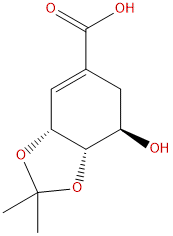
3,4-isopropylidene shikimic acid is a semi synthetic derivative of shikimic acid, characterized in that the hydroxyl groups at positions 3 and 4 of the shikimic acid molecule are protected by an isopropylidene (acetone fork) group, forming a five membered cyclic aldehyde structure. This structural modification not only changes the spatial configuration and polarity of the molecule, but also endows it with new pharmacological properties different from the parent shikimic acid. From a chemical structure perspective, ISA retains the basic carbon skeleton of shikimic acid, but significantly enhances its lipid solubility by introducing hydrophobic isopropylidene, which may improve its transmembrane transport capacity and bioavailability.
From a pharmacological perspective, ISA exhibits particularly outstanding anti-inflammatory activity. Inflammation is a complex defense mechanism by which the body responds to infections, tissue damage, or autoimmune reactions, but excessive or chronic inflammation is a core pathological link in various major diseases such as rheumatoid arthritis, inflammatory bowel disease, neuroinflammation, cardiovascular disease, and certain cancers. ISA intervenes in the inflammatory process through multiple targets and pathways, particularly in regulating the IL-6/STAT3 signaling pathway, NF - κ B (RELA) transcription factor, NLRP3 inflammasome (CASP1), and transient receptor potential (TRP) channels (TRPV1, TRPA1), demonstrating its enormous potential as a novel anti-inflammatory lead compound.
This article aims to comprehensively review the research progress of 3,4-isopropylidene shikimic acid, from multiple dimensions such as chemical structure and physicochemical properties, plant sources and synthesis methods, pharmacological activity, mechanism of action, drug evaluation, and clinical application prospects. It systematically sorts out the research status of this compound and looks forward to its future development direction, in order to provide valuable references for in-depth research in related fields.
Chemical structure and physicochemical properties
Chemical structure analysis
The chemical structure of 3,4-isopropylidene shikimic acid is based on the shikimic acid skeleton. Shikimic acid (3R, 4S, 5R) -3,4,5-trihydroxy-1-cyclohexene-1-carboxylic acid) is a cyclohexene derivative containing six carbon atoms, with three adjacent hydroxyl groups at positions 3, 4, and 5 in its molecule. The structural feature of ISA is the formation of a 1,3-dioxolane (pentagonal aldehyde) structure through a condensation reaction between acetone and 3,4-cis-1,2-diol shikimate. This modification protects the originally hydrophilic 3,4-hydroxyl group and alters the overall conformation of the molecule. From a stereochemical perspective, ISA retains the original chiral center of shikimic acid, with an absolute configuration of (3aS, 4R, 7R, 7aR) -2,2-dimethyl-3a, 4,7,7a-tetrahydro-4,7-methylene-1,3-benzodioxolane-5-carboxylic acid. The molecular formula is C ₁₀ H ₁₄ O ₅, with a molecular weight of 214.2170 g/mol.
Physical and chemical property parameters
The physicochemical properties of ISA have a decisive impact on its biological activity and medicinal properties. According to the results of computational chemistry and experimental measurements, the main physicochemical parameters are as follows:
- Molecular weight (MW)214.2170 Da. The relatively small molecular weight meets the requirement of molecular weight less than 500 in the "Five Rules for Drugs", which is conducive to its binding with biological targets.
- Lipid water partition coefficient (LogP): 0.0826. The LogP value is close to 0, indicating that ISA has moderate lipophilicity. Compared with the parent shikimic acid (LogP of about -1.6), the lipid solubility of ISA is significantly improved. This characteristic is beneficial for its penetration through the cell membrane, but also suggests that its water solubility may decrease.
- Topological Polarity Surface Area (TPSA): 75.9900 Å ². TPSA is an important parameter for predicting drug oral absorption and blood-brain barrier penetration ability. The TPSA value of ISA is below 140 Å ², indicating its good oral absorption potential. Meanwhile, a value above the threshold of 60-70 Å ² indicates a lower ability to penetrate the blood-brain barrier, which can to some extent reduce the risk of central nervous system related side effects.
- Water solubility (LogS)28.0583 mg/mL (estimated value). Despite an increase in LogP, ISA still exhibits some water solubility, thanks to the retained carboxyl and 5-hydroxy groups in the molecule. Moderate water solubility is crucial for drug formulation development and in vivo absorption.
- Blood-brain barrier (BBB) penetration ability: Low. Based on TPSA and molecular properties, it is predicted that ISA is not easily able to penetrate the blood-brain barrier. This characteristic gives it an advantage in peripheral anti-inflammatory therapy, which can avoid unnecessary interference with the central nervous system.
- HERG inhibition: No. HERG (human ether - à - go related gene) potassium channel inhibition is the main cause of drug induced cardiac toxicity (QT interval prolongation). ISA predicts no hERG inhibitory activity, indicating a low risk of cardiac toxicity.
- Ames test: 0.0. The Ames test is used to evaluate the mutagenicity of compounds. The test result of ISA is negative, indicating that there is no significant risk of genetic toxicity.
In summary, ISA exhibits ideal pharmacological characteristics in terms of molecular weight, lipid solubility, polarity, water solubility, and safety prediction, laying a solid foundation for its further drug development.
Plant sources and extraction methods
Natural sources and semi synthetic strategies
Although ISA itself is not a natural product directly isolated from plants in large quantities, its parent compound shikimic acid is widely present in various plants. Shikimate acid is a key intermediate in the shikimate pathway, which is an essential metabolic pathway for the biosynthesis of aromatic amino acids (phenylalanine, tyrosine, tryptophan) in plants, bacteria, and fungi. However, this pathway does not exist in mammals. Therefore, shikimic acid is abundant in nature and its main sources include:
- Octagonal fennel (Illicium verum)This is currently the main source of industrial production of shikimic acid. The content of shikimic acid in the dried fruit of star anise can reach 3% -10%.
- Pinaceae plants The needles of various pine and spruce trees also contain high levels of shikimic acid.
- Other plants Ginkgo biloba, eucalyptus and other plants also contain shikimic acid.
The acquisition of ISA mainly relies on the semi synthetic strategy. Firstly, shikimic acid is extracted and purified from natural plants. Then, through chemical synthesis, shikimic acid 3,4-cis-1,2-diol is reacted with acetone under acidic catalysts such as p-toluenesulfonic acid, zinc chloride, or molecular sieves to efficiently prepare ISA in one step. This synthetic route has the advantages of easy availability of raw materials, mild reaction conditions, high yield, and simple post-treatment, making it very suitable for large-scale production.
Extraction and purification process
The preparation process of ISA usually includes the following key steps:
- Extraction of shikimic acid Taking star anise as an example, water or alcohol water mixed solvents are usually used for reflux extraction. After filtration and concentration, the extract is preliminarily purified through steps such as ion exchange resin or activated carbon decolorization.
- Crystallization purification of shikimic acid Concentrated solution can be cooled and crystallized to obtain high-purity shikimic acid crystals.
- Acetalization reaction Dissolve purified shikimic acid in acetone, add an appropriate amount of acidic catalyst (such as p-toluenesulfonic acid monohydrate), and stir the reaction at room temperature or slightly hot conditions. The reaction process can be monitored by thin layer chromatography (TLC) or high performance liquid chromatography (HPLC).
- Product separation and purification After the reaction is complete, neutralize the catalyst with a base (such as sodium bicarbonate solution) and evaporate the solvent under reduced pressure. The crude product can be purified by silica gel column chromatography (using mixed solvents such as petroleum ether/ethyl acetate) or recrystallization (such as using an ethyl acetate/n-hexane system) to obtain pure ISA as a white or off white solid.
The entire process is mature and controllable, and can stably obtain high-purity ISA products, providing material support for its pharmacological research and subsequent development.
Pharmacological activity research
anti-inflammatory activity
The most notable pharmacological activity of ISA is its significant anti-inflammatory effect. Numerous in vitro and in vivo studies have confirmed that ISA can effectively inhibit inflammatory responses in various inflammatory models.
- In vitro anti-inflammatory activity In a lipopolysaccharide (LPS) - stimulated macrophage model (such as RAW264.7 cells), ISA can dose dependently inhibit the production of pro-inflammatory cytokines such as tumor necrosis factor - α (TNF - α), interleukin-6 (IL-6), and nitric oxide (NO). Meanwhile, ISA can downregulate the expression of inducible nitric oxide synthase (iNOS, encoded by NOS2 gene) and cyclooxygenase-2 (COX-2, encoded by PTGS2 gene). These effects indicate that ISA has strong anti-inflammatory potential at the cellular level.
- In vivo anti-inflammatory activity ISA has also shown good therapeutic effects in various animal inflammation models. For example, in the carrageenan induced rat plantar swelling model, ISA can significantly reduce the degree of plantar swelling; In the acetic acid-induced model of increased peritoneal capillary permeability in mice, ISA can effectively inhibit dye exudation; In the xylene induced mouse ear swelling model, ISA also showed significant inhibitory effects. In addition, in more complex chronic inflammation models, such as the collagen induced arthritis (CIA) mouse model, ISA can alleviate joint swelling, bone erosion, and cartilage destruction, improving the severity of the disease.
Analgesic activity
Given the close relationship between inflammation and pain, the anti-inflammatory activity of ISA is often accompanied by analgesic effects. Research has shown that ISA exhibits analgesic effects in formalin induced mouse pain models, including both inflammatory and neuropathic pain stages. The mechanism may be related to inhibiting the release of inflammatory mediators and regulating the activity of TRP channels (such as TRPV1, TRPA1). TRPV1 and TRPA1 are key ion channels mediating pain signaling, and ISA may exert analgesic effects by antagonizing these channels.
Other potential pharmacological activities
In addition to anti-inflammatory and analgesic effects, other pharmacological activities of ISA are also being explored. Preliminary research suggests that ISA may have certain antioxidant activity, which can clear free radicals and alleviate oxidative stress damage. In addition, considering the promoting role of inflammation in tumor development, the anti-inflammatory mechanism of ISA also suggests its potential anti-tumor activity, but research in this area is still in a very early stage.
Mechanism of action and molecular targets
The pharmacological activity of ISA is not derived from the action of a single target, but is achieved by regulating a complex and interconnected molecular network. Its core mechanism of action mainly revolves around the following key signaling pathways and targets.
Regulation of IL-6/STAT3 signaling pathway
IL-6 is a multifunctional pro-inflammatory cytokine that plays a central role in various inflammatory diseases. After IL-6 binds to receptors on the cell membrane, it activates downstream JAK kinases, which in turn phosphorylates and activates signal transducer and activator of transcription factor 3 (STAT3). Activated STAT3 forms a dimer and enters the nucleus, initiating the transcription of a series of pro-inflammatory genes (such as IL-6 itself, TNF - α, VEGF, etc.), forming a positive feedback amplification of the inflammatory response.
Research has found that ISA can significantly inhibit IL-6-induced STAT3 phosphorylation, thereby blocking STAT3 activation and nuclear translocation. By inhibiting the IL-6/STAT3 signaling pathway, ISA can effectively cut off key links in the inflammatory cascade, reduce the production of downstream pro-inflammatory factors, and exert anti-inflammatory effects. This is considered one of the core mechanisms of ISA anti-inflammatory activity.
Inhibition of NF - κ B signaling pathway
Nuclear factor kappa B (NF - κ B, with its key subunit RELA/p65) is another core transcription factor that regulates inflammatory responses. In the resting state, NF - κ B binds to the inhibitory protein I κ B and exists in an inactive form in the cytoplasm. When cells are stimulated by LPS, TNF - α, etc., I κ B kinase (IKK, encoded by IKBKB) is activated, phosphorylating I κ B, leading to its ubiquitination degradation. The released NF - κ B immediately enters the nucleus, initiating the expression of hundreds of inflammation related genes including TNF - α, IL-6, iNOS, COX-2, etc.
ISA has been shown to inhibit the activity of IKK, thereby preventing the degradation of I κ B and "locking" NF - κ B in the cytoplasm, preventing it from entering the nucleus to exert transcriptional activation function. By inhibiting the NF - κ B pathway, ISA can suppress the production of various pro-inflammatory mediators from the source, demonstrating a broad-spectrum anti-inflammatory effect.
Regulation of NLRP3 inflammasome
NLRP3 inflammasome is an intracellular multiprotein complex that is an important component of the innate immune system. It can be activated by various pathogen associated molecular patterns (PAMPs) and hazard associated molecular patterns (DAMPs), thereby recruiting and activating cysteine aspartate protease 1 (CASP1). Activated CASP1 cleaves inactive precursors IL-1 β and IL-18 into mature, biologically active IL-1 β and IL-18, which are released into the extracellular space, triggering a strong inflammatory response. The abnormal activation of NLRP3 inflammasome is closely related to various self inflammatory and metabolic diseases.
Research has shown that ISA can inhibit the assembly and activation of NLRP3 inflammasomes, thereby reducing the activation of CASP1 and the secretion of IL-1 β. This may be another important mechanism by which ISA exerts anti-inflammatory effects, particularly significant for IL-1 β - driven inflammatory diseases.
Regulation of TRP channels (TRPV1/TRPA1)
Transient receptor potential (TRP) channels are a type of non selective cation channel highly expressed in sensory neurons, involved in sensing various sensory signals such as temperature, pain, and chemical stimuli. TRPV1 (capsaicin receptor) and TRPA1 (mustard receptor) are two important members that can be activated by inflammatory mediators (such as prostaglandins, bradykinin, H ⁺) and exogenous chemicals, causing calcium influx and neuronal excitation, transmitting pain and itching signals.
ISA has been found to inhibit the activity of TRPV1 and TRPA1 channels. This inhibitory effect may be achieved by directly binding to channel proteins or by regulating their phosphorylation status. By blocking these pain related ion channels, ISA can directly alleviate pain and discomfort caused by inflammation, which is closely related to its analgesic activity.
Multi target collaborative network
In summary, the anti-inflammatory and analgesic effects of ISA do not rely on a single mechanism, but rather form a synergistic network regulatory effect by simultaneously acting on multiple key targets such as IL-6/STAT3, NF - κ B, NLRP3 inflammasome, and TRPV1/TRPA1. The advantage of this multi-target mode of action is that, on the one hand, it can more comprehensively and effectively inhibit inflammatory reactions; On the other hand, by acting on multiple nodes simultaneously, it can reduce the risk of side effects caused by excessive inhibition of a single target and may delay the development of drug resistance.
Evaluation of drug properties and pharmacokinetics
Drugability assessment
Based on the aforementioned physicochemical property parameters, ISA shows promising prospects for drug development. Its molecular weight is small, LogP is moderate, TPSA is reasonable, and it meets the basic requirements of the "Five Rules for Similar Drugs". More importantly, ISA performed excellently in early safety assessments: no hERG inhibitory activity, no Ames mutagenicity, which greatly reduced its risk of entering the clinical development stage. In addition, its low blood-brain barrier penetration also provides a safety advantage as a peripheral anti-inflammatory drug.
However, the pharmaceutical potential of ISA also faces some challenges. Although its water solubility is still acceptable, it has significantly decreased compared to the parent shikimic acid, which may affect the dissolution and bioavailability of its oral formulation. In addition, the stability of the aldehyde structure in acidic environments (such as gastric juice) needs to be carefully evaluated, as acid instability may lead to premature hydrolysis and loss of activity in the gastrointestinal tract.
Pharmacokinetic characteristics
At present, there are relatively limited systematic research reports on the pharmacokinetics of ISA, but based on its physicochemical properties and preliminary research results, some key characteristics can be inferred:
- absorb The LogP of ISA is 0.08, indicating that it has a certain lipophilicity and can theoretically be absorbed by the gastrointestinal tract through passive diffusion. After oral administration, its absorption may be affected by the stability of gastric acid environment and intestinal metabolic enzymes.
- distribution Due to its low blood-brain barrier penetration, ISA is mainly distributed in peripheral tissues. Its distribution volume may be moderate.
- Metabolism The metabolism of ISA may involve two main pathways: one is the hydrolysis of aldehyde groups in acidic environments or under the action of esterases in the body, which regenerate shikimic acid; The second is the glucuronidation or sulfation binding reaction of the 5-hydroxy group. Shikimic acid is metabolized rapidly in the body and is mainly excreted through urine.
- excretion ISA and its metabolites (mainly shikimic acid and its conjugates) are expected to be excreted primarily through the kidneys and urine.
Future research requires the use of sensitive analytical methods such as LC-MS/MS to systematically conduct pharmacokinetic studies of ISA in animal models and humans, including oral bioavailability, half-life, clearance rate, metabolite identification, etc., providing key data support for formulation design and clinical dosing regimen formulation.
Clinical application prospects and prospects
Potential therapeutic areas
Based on the strong anti-inflammatory activity and good safety features of ISA, it has shown broad application prospects in multiple therapeutic fields:
- Inflammatory diseases This is the most direct application area of ISA. Including rheumatoid arthritis, osteoarthritis, inflammatory bowel disease (such as Crohn's disease, ulcerative colitis), psoriasis, asthma, etc. ISA may become a candidate drug for treating these chronic inflammatory diseases by inhibiting inflammation through multiple targets.
- Acute inflammation and pain The analgesic activity of ISA makes it potential for treating acute inflammation related pain, such as postoperative pain, toothache, and sports injuries. Its mechanism of action is different from traditional nonsteroidal anti-inflammatory drugs (NSAIDs) and opioid drugs, which may provide a new non addictive analgesic option.
- Metabolic diseases: More and more evidence shows that chronic low-grade inflammation is the key driver of metabolic diseases such as obesity, type 2 diabetes, non-alcoholic fatty liver disease (NAFLD). The anti-inflammatory effect of ISA may be beneficial for the treatment of these diseases.
- Neurodegenerative diseases Although ISA has a low ability to penetrate the blood-brain barrier, there is a close relationship between peripheral inflammation and central nervous system inflammation. By reducing peripheral inflammation, ISA may indirectly have beneficial effects on neurodegenerative diseases such as Alzheimer's disease and Parkinson's disease. In addition, developing ISA derivatives that can penetrate the blood-brain barrier is also a direction worth exploring.
Future research directions
Despite the bright prospects, the clinical translation of ISA still faces many challenges, and future research should focus on the following aspects:
- In depth mechanism research It is necessary to use technologies such as gene knockout mice, proteomics, metabolomics, etc. to comprehensively and deeply elucidate the precise molecular targets and regulatory networks of ISA in vivo, especially the molecular details of its interactions with different targets.
- Pharmacokinetic optimization To address the issue of low oral bioavailability of ISA, strategies such as prodrug design (such as carboxyl esterification), nanomedicine (such as liposomes, polymer nanoparticles), or changing the route of administration (such as transdermal administration) can be used to improve its pharmacokinetic properties.
- Research on Structure Modification and Structure Activity Relationship Using ISA as a lead compound, systematically study the effects of chemical modifications at different sites (such as 5-hydroxy, carboxyl, isopropylidene) in its molecule on its activity and drug properties, and search for candidate compounds with higher activity, better selectivity, and better pharmacokinetic properties.
- safety evaluation After completing the preliminary genetic toxicity evaluation, a more comprehensive preclinical safety evaluation is needed, including long-term toxicity, reproductive toxicity, immunotoxicity, etc., to provide sufficient safety data for clinical trials.
- clinical trial After completing sufficient preclinical research, ISA or its derivatives should be pushed into clinical trials as soon as possible to verify their safety and efficacy in humans.
Conclusion
3,4-isopropylidene shikimic acid, as a rising star in the shikimic acid family, injects new vitality into the development of natural product drugs with its unique chemical structure and excellent anti-inflammatory activity. It exhibits a synergistic pattern of multiple pathways and targets by simultaneously regulating key inflammatory and pain targets such as IL-6/STAT3, NF - κ B, NLRP3 inflammasome, and TRPV1/TRPA1, making it uniquely advantageous in the treatment of complex inflammatory diseases. Its excellent physicochemical properties and preliminary safety evaluation results further enhance its development value as a lead compound.
Of course, ISA still has a long way to go from laboratory discovery to clinical application. The optimization of its pharmacokinetic properties, deeper mechanism exploration, and comprehensive safety evaluation are all key challenges that need to be overcome in future research. However, in any case, ISA's research provides us with a successful example, that is, by precisely modifying the structure of known natural products, we can "turn stones into gold" and create molecules with new pharmacological activities and clinical application potential. With the continuous deepening of research, we have reason to believe that 3,4-isopropylidene shikimic acid and its derivatives have the potential to become new drugs for treating inflammation related diseases in the future, contributing to the cause of human health.