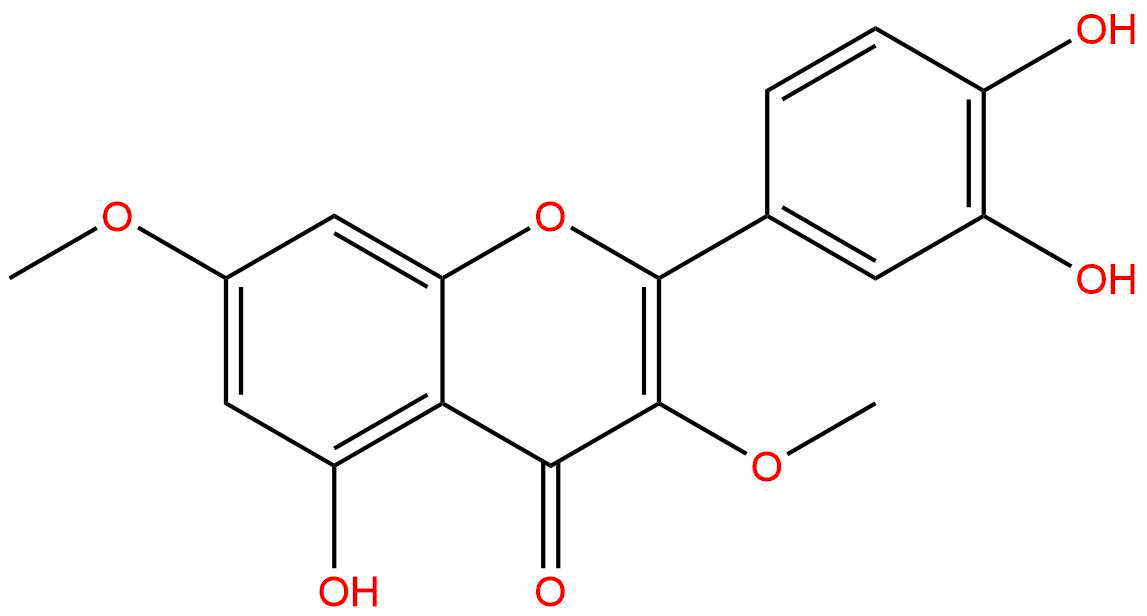


Product name: 3,7-Di-O-methylquercetin
Synonym name:
Catalogue No.: SBP03064
Cas No.: 2068-02-2
Formula: C17H14O7
Mol Weight: 330.292
Botanical Source:
Type of Compound: Flavonoids
Purity: 95%~99%
Analysis Method: HPLC-DAD or/and HPLC-ELSD
Identification Method: Mass, NMR
Packing: Brown vial or HDPE plastic bottle
Storage: Store in a well closed container, protected from air and light. Put into refrigerate or freeze for long term storage.
Whenever possible, you should prepare and use solutions on the same day. However, if you need to make up stock solutions in advance, we recommend that you store the solution as aliquots in tightly sealed vials at -20℃. Generally, these will be useable for up to two weeks.
The product could be supplied from milligrams to grams
Inquire for bulk scale.
For Reference Standard and R&D, Not for Human Use Directly.
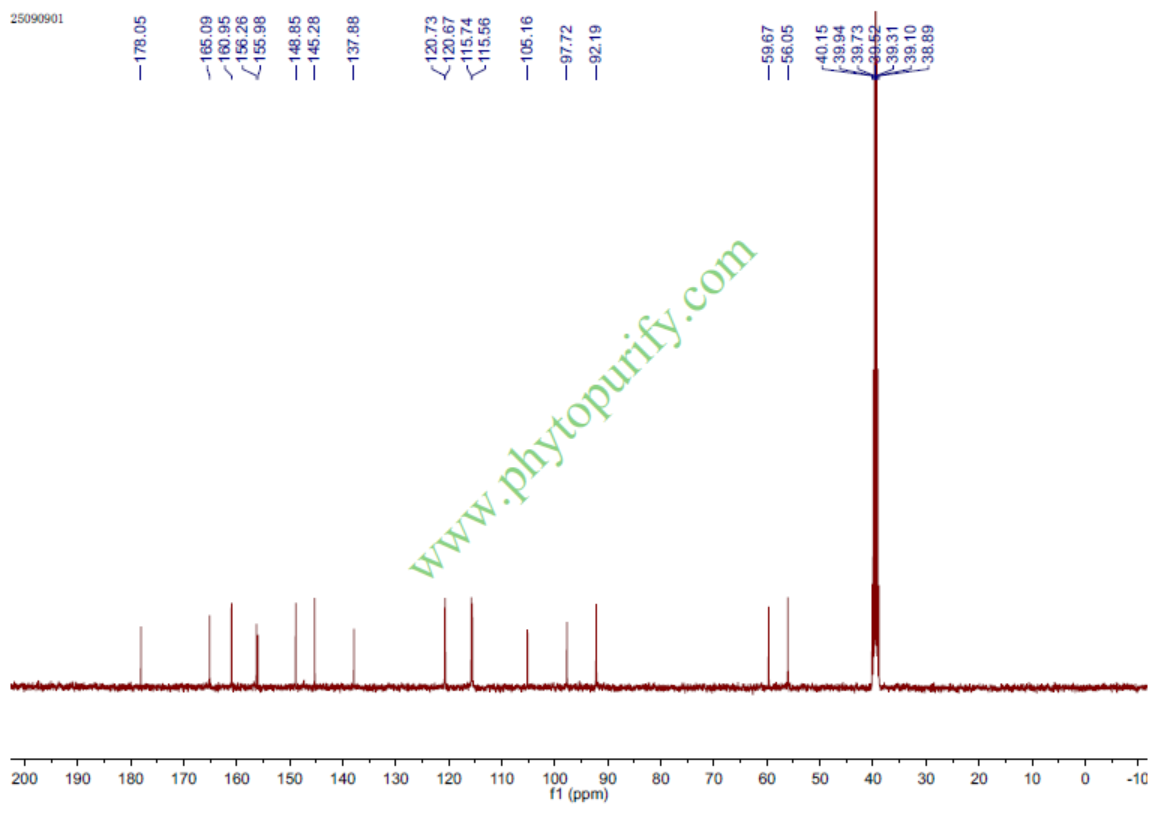
NMR of 3,7-Di-O-methylquercetin
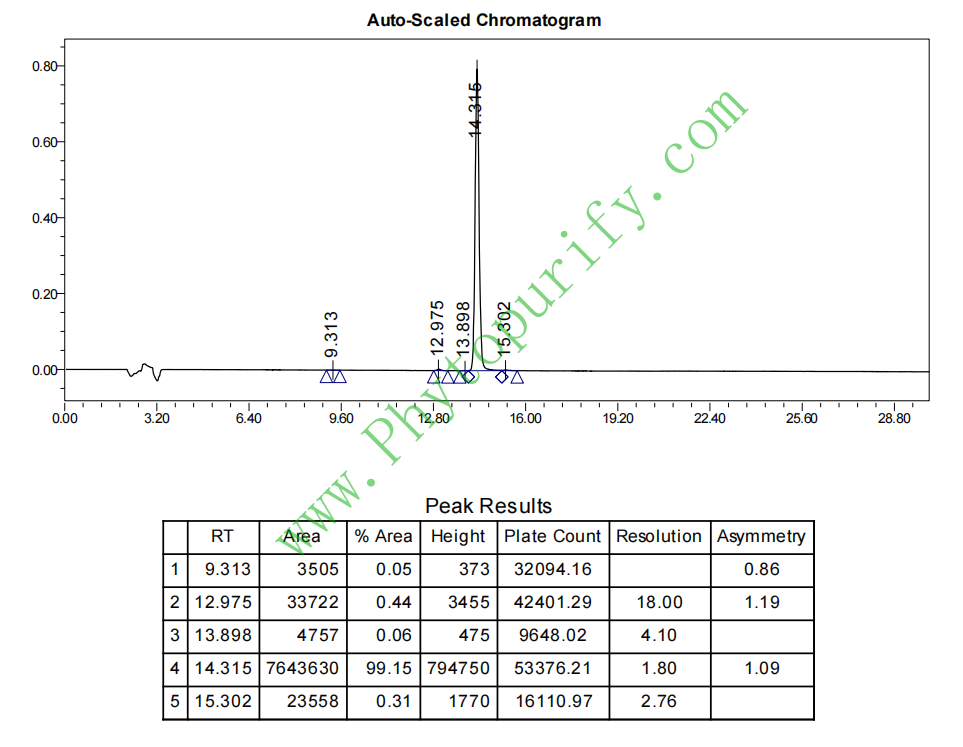
HPLC of 3,7-Di-O-methylquercetin
Storage conditions:Short-term storage at 2~8℃, long-term storage at -20 ~ -80℃
118.0600
1.3200
1.3200
Low
No
No
No
No
No
No
3,7-Di-O-methylquercetin (CAS number: 2068-02-2) is a naturally occurring dimethoxyflavonoid compound, which is a derivative of quercetin after methylation of the hydroxyl groups at positions 3 and 7. As a structural modifier of quercetin, 3,7-di-O-methylquercetin not only retains various biological activities of quercetin, but also exhibits unique pharmacological properties. In recent years, with the in-depth study of the pharmacological mechanism of natural products, this compound has attracted extensive attention due to its remarkable antioxidant, anti-inflammatory, anti diabetes, anti-tumor and neuroprotective effects. This article aims to systematically review the chemical structure, sources, pharmacological activities, mechanisms of action, pharmacological properties, and clinical application potential of 3,7-di-O-methylquercetin, providing theoretical basis and research directions for its further development.
The chemical name of 3,7-di-O-methylquercetin is 3 ', 4', 5-trihydroxy-3,7-dimethoxyflavone, with a molecular formula of C18H16O7 and a molecular weight of 330.29. Its structure is based on the flavonoid skeleton, where the hydroxyl groups at positions 3 and 7 of quercetin are replaced by methyl groups to form two methoxy substituents, retaining the hydroxyl groups at positions 3 ', 4', and 5 '. The methylation modification of this structure increases the hydrophobicity of the molecule (LogP of approximately 1.32) while maintaining a high polar surface area (TPSA of 118.06), achieving a certain balance between cell membrane permeability and water solubility.
In terms of physicochemical properties, 3,7-di-O-methylquercetin exhibits good chemical and thermal stability. Its hydrogen bond acceptor number is 7, indicating its strong hydrogen bonding ability in the binding of biomolecules. The low penetration ability of the blood-brain barrier suggests that its direct action in the central nervous system may be limited, but it can still exert neuroprotective effects by regulating the peripheral nervous and vascular systems. Toxicological evaluation showed that its acute toxicity was low (LD50 of approximately 2000 mg/kg), with no significant liver toxicity, cardiac toxicity, or hERG channel inhibition. Additionally, the Ames mutagenicity test was negative, demonstrating good safety characteristics.
3,7-di-O-methylquercetin is widely present in various plants, especially in plant families rich in quercetin such as Rosaceae, Asteraceae, and Fabaceae. Its natural form is mostly in the free or glycosidic bound state, commonly found in plant leaves, flowers, and fruits. Typical plant sources include Ginkgo biloba leaves, maple leaves, and certain traditional Chinese medicinal herbs such as Scutellaria baicalensis and Melia azedarach.
The extraction method usually uses organic solvent extraction combined with chromatographic separation technology. The commonly used extraction solvents are methanol, ethanol, or ethyl acetate, combined with ultrasound assisted extraction or microwave-assisted extraction to improve extraction efficiency. After concentration, the extract was purified using techniques such as silica gel column chromatography and reverse phase high performance liquid chromatography (RP-HPLC) to obtain high-purity 3,7-di-O-methylquercetin. In recent years, green extraction techniques such as supercritical CO2 extraction and deep eutectic solvent extraction have also been applied to the extraction of this compound, balancing environmental protection and efficiency.
3,7-di-O-methylquercetin, as a polyhydroxyflavonoid compound, exhibits strong antioxidant capacity. In vitro experiments have shown that it can effectively eliminate free radicals, inhibit lipid peroxidation, and protect cells from oxidative stress damage. Its antioxidant effect is mainly achieved by activating the nuclear factor E2 related factor 2 (NFE2L2/NRF2) signaling pathway, inducing the expression of downstream antioxidant enzymes such as superoxide dismutase (SOD1, SOD2), catalase (CAT), glutathione peroxidase (GPX1), and heme oxygenase 1 (HMOX1), enhancing the antioxidant defense ability of cells. In addition, 3,7-di-O-methylquercetin can regulate the activity of matrix metalloproteinases (MMP1, MMP3), slow down the degradation of extracellular matrix, and protect tissue structure.
Inflammation is the common pathological basis of various chronic diseases. 3,7-di-O-methylquercetin exerts anti-inflammatory effects through multi-target regulation. It can inhibit the activation of the nuclear factor kappa B (NFKB1) signaling pathway, reduce the expression of pro-inflammatory factors such as tumor necrosis factor alpha (TNF), cyclooxygenase-2 (PTGS2), and phospholipase A2 (PLA2G2A), and alleviate the inflammatory response. At the same time, the compound also inhibits the mitogen activated protein kinase (MAPK1) pathway, further suppressing the release of inflammatory mediators, demonstrating potential therapeutic value for various inflammatory diseases such as arthritis, inflammatory bowel disease, and respiratory inflammation.
The pathogenesis of diabetes is complex, involving abnormal insulin signaling pathway and glucose metabolism disorder. 3,7-di-O-methylquercetin can enhance insulin receptor (INSR) activity, promote the translocation of glucose transporter 4 (SLC2A4) to the cell membrane, and improve glucose uptake efficiency. At the same time, the compound activates the AMP activated protein kinase (PRKAA1) and protein kinase B (AKT1) signaling pathways, regulates energy metabolism and cell survival, and improves insulin resistance. In addition, its regulatory effect on peroxisome proliferator activated receptor γ (PPARG) contributes to the balance of lipid metabolism and alleviates diabetes related metabolic disorders.
3,7-di-O-methylquercetin exhibits inhibitory effects on proliferation, induction of apoptosis, and inhibition of metastasis in various tumor cells. Its targets include epidermal growth factor receptor (EGFR), vascular endothelial growth factor receptor (KDR), anti apoptotic protein B-cell lymphoma-2 (BCL2), tumor suppressor protein p53 (TP53), and phosphatidylinositol 3-kinase (PIK3CA). By regulating these signaling pathways, 3,7-di-O-methylquercetin can block the growth signals of tumor cells, promote cell cycle arrest and apoptosis, inhibit tumor angiogenesis and metastasis, and demonstrate good anti-tumor potential.
The pathogenesis of neurodegenerative diseases such as Alzheimer's disease and Parkinson's disease is closely related to oxidative stress, inflammation, and abnormal protein aggregation. 3,7-di-O-methylquercetin reduces the accumulation of neurotoxic proteins by regulating the abnormal expression of β - amyloid precursor protein (APP) and Tau protein (MAPT). It activates the NFE2L2 signaling pathway, enhances antioxidant enzyme activity, and reduces oxidative stress damage. At the same time, inhibiting acetylcholinesterase (ACHE) activity, improving neurotransmitter function, and demonstrating a protective effect on cognitive function. Its application prospects in neurodegenerative disease models are broad.
The multi-target mechanism of action of 3,7-di-O-methylquercetin is the basis for its various pharmacological activities. It regulates the intracellular signaling network by directly binding or regulating key enzymes, receptors, and transcription factors.
In addition, 3,7-di-O-methylquercetin, as an inhibitor of EC 1.3.1.22 (3-oxo-5 α - steroid 4-dehydrogenase), may affect steroid metabolism, further regulate the intracellular signaling environment, and enhance its pharmacological effects.
The pharmacological parameters of 3,7-di-O-methylquercetin show that it has good potential for drug development. The molecular weight is moderate (330.29 Da) and the LogP value is 1.32, indicating that it has suitable lipid solubility and is conducive to cell membrane penetration. The TPSA is 118.06, indicating that it has a certain polarity, which is conducive to the balance of water solubility and bioavailability. The number of hydrogen bond receptors is 7, which meets the requirement for drug molecules to bind to target proteins.
Toxicological evaluation shows that the compound has good safety, low acute toxicity, no significant liver or cardiac toxicity, and does not affect hERG channels, reducing the risk of arrhythmia. A negative Ames test indicates no risk of mutagenicity.
In terms of pharmacokinetics, although the blood-brain barrier penetration ability is low, its distribution in peripheral tissues is good, making it suitable for the treatment of inflammation, metabolism, and tumor related diseases. Compared with quercetin, its methylation modification improves metabolic stability and reduces the problem of decreased bioavailability caused by rapid metabolism. However, further in vivo pharmacokinetic studies are needed to clarify the specific absorption, distribution, metabolism, and excretion (ADME) characteristics.
Based on the broad-spectrum pharmacological activity exhibited by 3,7-di-O-methylquercetin in various disease models, its clinical application prospects are broad. The antioxidant and anti-inflammatory effects make it potentially valuable for the treatment of chronic inflammatory diseases, cardiovascular diseases, and metabolic syndrome. Its ability to regulate insulin signaling pathway provides a new idea for adjuvant treatment of diabetes and its complications.
The anti-tumor activity makes it a powerful candidate for adjuvant therapy of tumors, especially showing advantages in inhibiting tumor growth and metastasis. The neuroprotective effect provides new drug resources for the treatment of neurodegenerative diseases such as Alzheimer's disease.
Future research should focus on:
In addition, combining modern drug design technologies such as computer-aided drug design (CADD) and nano drug carrier technology is expected to accelerate the drug development process of 3,7-di-O-methylquercetin.
3,7-di-O-methylquercetin, as a methylated derivative of quercetin, possesses various biological activities and excellent safety features of natural flavonoids. It shows a wide application potential in the fields of antioxidant, anti-inflammatory, anti diabetes, anti-tumor and neuroprotective. Through in-depth research on its mechanism of action and optimization of pharmacokinetic properties, 3,7-di-O-methylquercetin is expected to become an important natural drug candidate for future multi-target disease treatment. With the continuous development of natural product pharmacology and modern drug development technology, the clinical translation prospects of this compound are worth looking forward to.
