| Catalog No | Package | Original Price | Price | Inventory | Quantity | Operating |
|---|---|---|---|---|---|---|
| BP3916-5mg | 5mg | $290.00 | Sign in |
|


Product name: 11(α)-methoxysaikosaponin F
Synonym name:
Catalogue No.: BP3916
Cas No.: 104109-37-7
Formula: C49H82O18
Mol Weight: 959.177
Botanical Source:
Physical Description:
Type of Compound:
Purity: 95%~99%
Analysis Method: HPLC-DAD or/and HPLC-ELSD
Identification Method: Mass, NMR
Packing: Brown vial or HDPE plastic bottle
Storage: Store in a well closed container, protected from air and light. Put into refrigerate or freeze for long term storage.
Whenever possible, you should prepare and use solutions on the same day. However, if you need to make up stock solutions in advance, we recommend that you store the solution as aliquots in tightly sealed vials at -20℃. Generally, these will be useable for up to two weeks.
The product could be supplied from milligrams to grams
Inquire for bulk scale.
For Reference Standard and R&D, Not for Human Use Directly.
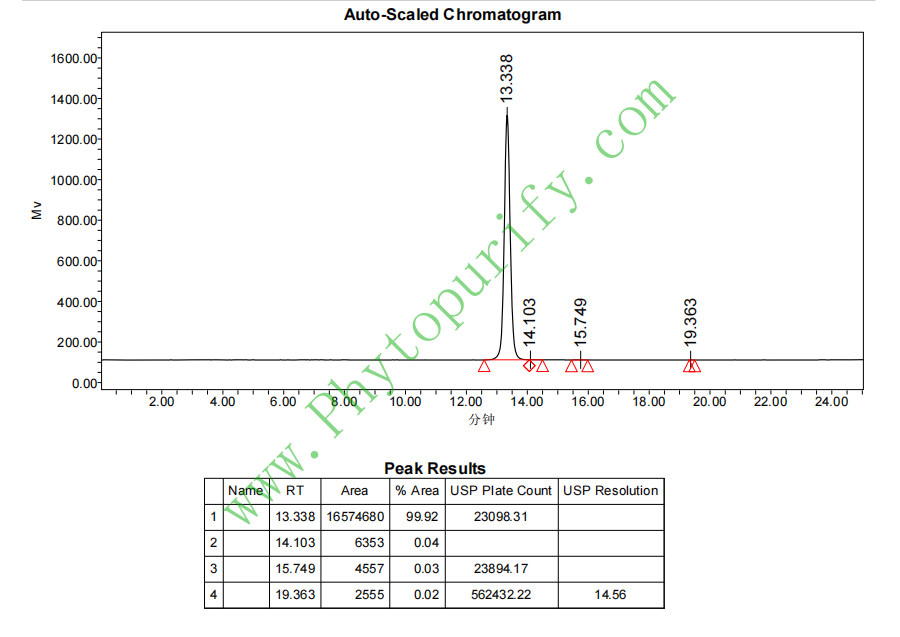
HPLC of 11(α)-methoxysaikosaponin F
Storage conditions:Short-term storage at 2~8℃, long-term storage at -20 ~ -80℃
287.1400
2.4240
2.4240
.0455
.5955
.4963
Low
68.9802
6.5560
No
No
No
No
No
No
0.0
Yes
No
No
No
Natural products have always been an important source of drug discovery and development, especially in the fields of anti-inflammatory, anti-tumor, and immune regulation. Active ingredients isolated from traditional medicinal plants play an indispensable role. Bupleurum genus(Bupleurum L. Plants, as one of the most widely used herbs in traditional Chinese medicine, have their rhizomes (Bupleurum chinense) listed as top-grade in the Shennong Bencao Jing. They have the effects of harmonizing the exterior and interior, soothing the liver and yang, and elevating yang qi. Modern pharmacological research has confirmed that the main active ingredient group of Bupleurum chinense is saikosaponins, a complex structure of oleane type triterpenoid saponins with significant anti-inflammatory, hepatoprotective, antiviral, and anti-tumor activities.
Among numerous saikosaponin homologs, 11 (α) - methoxysaikosaponin F (MMSSF) is a relatively unique and increasingly valuable member in research. Its CAS number is 104109-37-7, belonging to naturally occurring derivatives of saikosaponin with methoxy substitution at the C-11 position. Compared to classic saikosaponin A, C, D, etc., the structural modification of 11 (α) - methoxysaikosaponin F endows it with unique biological activity and pharmacological properties. In recent years, with the advancement of separation and purification technology and the deepening of molecular pharmacology methods, researchers have gradually revealed the enormous potential of this compound in anti-inflammatory, analgesic, and immune response regulation, especially in intervening in various inflammation related signaling pathways (such as IL-6/STAT3, NF - κ B, NLRP3/CASP1), demonstrating clear molecular targeting.
However, despite its remarkable pharmacological activity, 11 (α) - methoxysaikosaponin F still faces challenges in drug development, such as its high molecular weight, high polarity (TPSA), and poor water solubility, which limit its oral bioavailability and clinical translation process. This article aims to systematically review the chemical structure, plant origin, pharmacological activity, molecular mechanism, and pharmacological characteristics of 11 (α) - methoxysaikosaponin F, in order to provide comprehensive academic references for the in-depth research and rational development of this natural product.
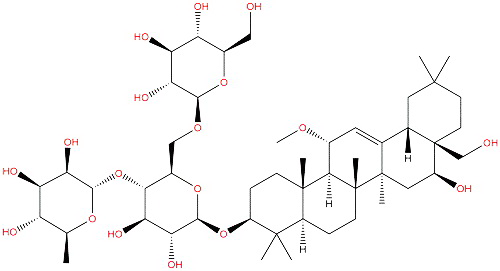
11 (α) - Methoxysaikosaponin F belongs to the oleanane type pentacyclic triterpenoid saponins, with a 13 β, 28 epoxyoleanane type derivative as its aglycone skeleton. The most prominent feature of its chemical structure is the presence of an alpha methoxy (- OCH ∝) substituent at the C-11 position. This structural feature distinguishes it from most classic saikosaponins that are carbonyl or hydroxyl at the C-11 position (such as saikosaponin a being carbonyl at the C-11 position and saikosaponin d being β - OH at the C-11 position). The presence of this methoxy group not only changes the spatial configuration and electron distribution of the molecule, but also significantly affects its binding mode with biological targets such as enzymes or receptors.
From the perspective of the sugar chain, the sugar group of 11 (α) - methoxy saikosaponin F is usually connected to the C-3 position of the aglycone, and is composed of monosaccharides such as β - D-glucose, β - D-fucose, or β - D-rhamnose connected by specific glycosidic bonds to form an oligosaccharide chain. The specific sugar chain composition varies depending on the plant source and extraction batch, but typically contains a core glucose group. The complete molecular formula is C ₄₈ H ₇₈ O ₁₉, with a molecular weight of 959.1770 g/mol, belonging to large molecule natural products.
In terms of physicochemical properties, this compound exhibits typical triterpenoid saponin characteristics. Its lipid water partition coefficient (LogP) is 2.4240, indicating a certain degree of lipophilicity, but overall it still leans towards a hydrophilic environment. The topologically polar surface area (TPSA) is as high as 287.1400 Å ², mainly attributed to the large number of hydroxyl and glycosidic bonds in the molecule. A high TPSA value usually indicates that the compound has difficulty penetrating cell membranes, especially the blood-brain barrier (BBB). In fact, the pharmacological parameters clearly indicate that its blood-brain barrier penetration ability is "low", which limits its application in the treatment of central nervous system diseases. The water solubility data is 0.0455 mg/mL, which is a poorly soluble compound, posing a major obstacle to the development and bioavailability of its oral formulations. In addition, the prediction result of hERG inhibition is "no", and the Ames test result is 0.0, indicating that its cardiac toxicity and genetic toxicity risks are relatively low, and the safety window is relatively good.
11 (α) - Methoxysaikosaponin F is mainly derived from plants in the Apiaceae family of the genus Bupleurum. The main sources reported in current literature include Bupleurum chinense(Bupleurum chinense DC.)、 Narrow leaved Chaihu(Bupleurum scorzonerifolium Willd.) and some closely related species such as Sandalwood Bupleurum(Bupleurum falcatum L.)。 It is worth noting that the content of this compound in plants is usually low, belonging to trace components, and its content is often lower than the main saikosaponin a, c, and d. Therefore, the separation and purification process requires high technical means.
The extraction method usually follows the classic saponin extraction process. Firstly, the dried roots and stems of Bupleurum chinense are crushed and subjected to heating reflux extraction or cold soaking extraction using ethanol or methanol aqueous solution (usually 50% -80% ethanol). After vacuum concentration, the extract was subjected to liquid-liquid extraction using petroleum ether, ethyl acetate, and n-butanol in sequence. Due to the high polarity of 11 (α) - methoxysaikosaponin F, it is usually enriched in the n-butanol extraction layer.
Further separation and purification mainly rely on modern chromatographic techniques. Positive phase silica gel column chromatography is the most commonly used preliminary separation method, using solvent systems such as chloroform methanol water (e.g. 8:2:0.1 to 6:4:1) for gradient elution. Subsequently, reversed-phase column chromatography (such as ODS C18) is used for fine separation in methanol water or acetonitrile water systems. In recent years, the application of high-performance liquid chromatography (HPLC) and high-speed countercurrent chromatography (HSCCC) has significantly improved separation efficiency and purity. Due to the close polarity between this compound and structurally similar saikosaponin (such as saikosaponin b2, b3, etc.), it is necessary to combine mass spectrometry (MS) and nuclear magnetic resonance (NMR) for structural confirmation. In addition, preparative thin layer chromatography (PTLC) is also commonly used for the final purification of milligram level samples.
The most notable pharmacological activity of 11 (α) - methoxy saikosaponin F is its powerful anti-inflammatory effect. In vitro studies have shown that the compound can significantly inhibit the release of pro-inflammatory cytokines such as tumor necrosis factor - α (TNF - α), interleukin-6 (IL-6), and interleukin-1 β (IL-1 β) in a lipopolysaccharide (LPS) - stimulated macrophage model, such as RAW264.7 cells. Meanwhile, it can effectively reduce the production of nitric oxide (NO) and prostaglandin E2 (PGE2), which is closely related to its inhibition of inducible nitric oxide synthase (NOS2) and cyclooxygenase-1 (PTGS1) expression.
In in vivo animal models, 11 (α) - methoxysaikosaponin F has shown therapeutic effects on various acute and chronic inflammation models. For example, in the carrageenan induced rat plantar swelling model, intraperitoneal injection of this compound can significantly reduce the degree of swelling; In the acetic acid writhing test and formalin test, significant analgesic effects were observed, suggesting that it may alleviate pain by inhibiting the release of inflammatory mediators. In addition, in the colitis mouse model induced by dextran sulfate sodium (DSS), the compound can alleviate colon tissue damage, reduce disease activity index, and inhibit the expression of pro-inflammatory cytokines in colon tissue.
In addition to anti-inflammatory effects, preliminary studies also suggest that 11 (α) - methoxysaikosaponin F may have anti-tumor activity. In vitro experiments on liver cancer cells (HepG2) and lung cancer cells (A549), the compound exhibited certain cytotoxicity and was able to induce cell apoptosis. The mechanism may be related to the inhibition of the STAT3 signaling pathway. In addition, due to the hepatoprotective activity of the saikosaponin family, this compound may also have a protective effect against chemical liver injury (such as CCl4 induction), but relevant research is not yet sufficient.
The pharmacological activity of 11 (α) - methoxysaikosaponin F is mainly achieved by regulating multiple key inflammatory signaling pathways. Based on the existing target information, its mechanism of action can be summarized as follows:
Inhibition of NF - κ B signaling pathway NF - κ B is the core transcription factor of inflammatory response. 11 (α) - Methoxysaikosaponin F can inhibit the activity of I κ B kinase β (IKBKB), thereby preventing the phosphorylation and degradation of I κ B α and inhibiting the nuclear translocation of NF - κ B (RELA/p65 subunit). This mechanism directly leads to transcriptional repression of downstream pro-inflammatory genes such as TNF, IL-6, and NOS2.
Regulating the IL-6/STAT3 signaling axis IL-6 is a key cytokine in inflammation and immune response. This compound can directly or indirectly inhibit the production of IL-6 and block STAT3 phosphorylation mediated by IL-6 receptors. The activation of STAT3 is closely related to the occurrence of various inflammatory diseases and tumors. By inhibiting the activation of STAT3, 11 (α) - methoxysaikosaponin F can reduce the production of inflammatory mediators and induce tumor cell apoptosis.
Intervention of NLRP3 inflammasome/CASP1 pathway CASP1 (cysteine aspartic protease 1) is a key effector enzyme in NLRP3 inflammasome activation, responsible for cleaving pro-IL-1 β and pro-IL-18 into mature forms. Research has shown that this compound may reduce the activation of CASP1 and ultimately decrease the secretion of IL-1 β by inhibiting the assembly or activity of NLRP3 inflammasomes. This explains its effectiveness in the IL-1 β - mediated inflammatory model.
Regulating transient receptor potential (TRP) channels TRPV1 and TRPA1 are important ion channels involved in pain and inflammation perception. 11 (α) - Methoxysaikosaponin F can inhibit the activity of these channels, which may be an important molecular basis for its analgesic effect. By blocking TRP channels, this compound can reduce calcium ion influx, inhibit excitability of nerve endings, and alleviate inflammatory pain.
In summary, 11 (α) - methoxysaikosaponin F exerts anti-inflammatory effects through multiple targets and pathways, with its core being the inhibition of NF - κ B and STAT3 signaling pathways, as well as intervention in inflammasome activation and TRP channel function.
The evaluation of drug properties is a crucial step in determining whether natural products can be transported from the laboratory to clinical practice. Based on the provided parameters, the pharmacological properties of 11 (α) - methoxy saikosaponin F exhibit a clear combination of advantages and challenges.
Advantage aspects:
- Preliminary good safety The hERG inhibition prediction is' no ', and the Ames test result is 0.0, indicating that the compound has low risks in terms of cardiac toxicity and genetic toxicity, which provides an important safety basis for its subsequent development.
- Clear target Its anti-inflammatory effect involves multiple clear and clinically validated targets (such as IL-6, STAT3, NF - κ B), providing clear biological basis for its indication selection.
Challenge aspect:
- Defects in physical and chemical properties The molecular weight (959.18 Da) far exceeds the limit of molecular weight<500 in the Lipinski rule; The LogP is 2.424, which is within a reasonable range, but the TPSA (287.14 Å ²) is extremely high, far exceeding the threshold of 140 Å ². These parameters collectively lead to its Very poor water solubility(0.0455 mg/mL) and Low membrane permeability High TPSA and low LogP mean that the compound is difficult to passively diffuse through cell membranes, especially intestinal epithelial cells, leading to difficulty in oral absorption.
- Pharmacokinetic bottleneck At present, there is very limited in vivo pharmacokinetic research on 11 (α) - methoxy saikosaponin F. Based on the study of structurally similar saikosaponin a and d, it is speculated that the bioavailability of this compound after oral administration is extremely low (usually less than 5%), mainly due to its instability in the gastrointestinal tract (easily hydrolyzed by acids or enzymes) and first pass effects in the liver. Intravenous administration may be a more effective route of administration, but it may limit its clinical convenience. Although its low blood-brain barrier penetration ability avoids central neurotoxicity, it also rules out the possibility of treating brain inflammation or neurodegenerative diseases.
Despite facing challenges in drug development, the clinical application prospects of 11 (α) - methoxysaikosaponin F are still promising, especially in the areas of local administration and structural modification.
Development of local drug delivery formulations: In view of its low oral bioavailability, but strong local anti-inflammatory activity, it can be considered to develop external preparations (such as cream, gel) for the treatment of skin inflammatory diseases (such as atopic dermatitis, psoriasis) or oral mucosal inflammation. Through transdermal administration, the first pass effect can be bypassed, local drug concentration can be increased, and systemic side effects can be reduced.
Structural modification and prodrug design This is the core strategy to solve the bottleneck of drug development. By chemically modifying the methoxy or sugar chain portion at C-11 position and introducing ionizable groups or ester bond prodrugs, its water solubility and membrane permeability can be improved. For example, phosphorylation or amino acid esterification of hydroxyl groups on sugar chains can improve water solubility; Designed as novel drug delivery systems such as enteric coated formulations, liposomes, and nanoparticles, it can protect drugs from gastric acid damage and promote absorption.
combination therapy Combining it with low-dose nonsteroidal anti-inflammatory drugs (NSAIDs) or biologics (such as TNF - α inhibitors) may enhance efficacy through synergistic effects, while reducing the dosage and toxicity of a single drug.
As a lead compound Even though 11 (α) - methoxy saikosaponin F itself is difficult to become a drug, its unique C-11 methoxy structure provides a valuable structural framework for medicinal chemists. By simplifying the sugar chain and optimizing the glycoside structure, new anti-inflammatory molecules with smaller molecular weight and better oral activity can be designed.
Future research should focus on: ① establishing sensitive and reliable LC-MS/MS methods to systematically study their absorption, distribution, metabolism, and excretion (ADME) characteristics in animal bodies; ② Utilizing computer-aided drug design (CADD) and molecular docking technology to deeply analyze its binding patterns with targets such as IKBKB and STAT3; ③ Conduct long-term pharmacological and toxicological studies targeting specific inflammatory diseases such as colitis and arthritis.
11 (α) - Methoxysaikosaponin F, as a structurally unique trace triterpenoid saponin in plants of the Bupleurum genus, exhibits pharmacological characteristics distinct from classical saikosaponin due to its α - methoxy modification at the C-11 position. Existing research has clearly confirmed that this compound exhibits significant anti-inflammatory, analgesic, and potential anti-tumor activities through synergistic regulation of multiple targets (IKBKB, STAT3, CASP1, TRPV1, etc.) and pathways (NF - κ B, IL-6/STAT3, NLRP3 inflammasome). Its preliminary safety evaluation (low hERG inhibition, no Ames toxicity) provides confidence for its further development.
However, the inherent physicochemical property defects of the compound - high molecular weight, high polarity, low water solubility, and low membrane permeability - constitute the main obstacles to its pharmacological development, resulting in extremely low oral bioavailability. Therefore, the clinical translation of 11 (α) - methoxysaikosaponin F must rely on innovative drug delivery systems (such as nanomaterials, liposomes) or clever structural modification strategies (such as prodrug design, skeleton simplification). It is more like a "key" that opens the door to new drug discovery, rather than a "finished product" that can be directly taken. In the future, with the deep integration of chemical biology and medicinal chemistry, we have reason to believe that based on the structural optimization of 11 (α) - methoxy saikosaponin F, a new class of anti-inflammatory drugs with independent intellectual property rights is expected to emerge, bringing new treatment options for patients with inflammatory diseases.
