Introduction/Overview
Natural products, as an important source of drug discovery, play an indispensable role in the long history of human struggle against diseases. The isolation and identification of bioactive chemical components from traditional herbs, and elucidation of their pharmacological mechanisms, are important paradigms in modern medicinal chemistry and pharmacology research. Gelsemium elegans(Gelsemium elegans Benth.), As a toxic plant of the genus Gelsemium in the family Malvaceae, it has a long history of application in traditional Chinese medicine and is often used to treat pain, inflammation, and various neurological diseases. However, its significant toxicity also limits its clinical application. The systematic study of the chemical composition of Gelsemine began in the early 20th century, and more than 120 alkaloids have been isolated and identified from it so far. Among them, indole alkaloids represented by gelsemine are its main active and toxic components.
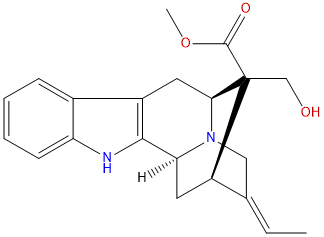
Gelsemine D, also known as (Z) - Akumamidine, is a structurally unique monoterpene indole alkaloid found in Gelsemium. Its CAS number is 113973-31-2. Compared with other major alkaloids in Gelsemium elegans such as Gelsemin A and Gelsemin B, Gelsemin Ding has a unique (Z) - configuration of ethylene side chains in its structure, which may endow it with a unique pharmacological activity spectrum. In recent years, research has gradually revealed that gelsemin not only demonstrates significant potential in the traditional field of pain relief, but also exhibits varying degrees of regulatory effects on various molecular targets related to pain signal transduction, such as transient receptor potential vanillic acid subtype 1 (TRPV1), cannabinoid receptor 1 (CNR1), opioid receptors (OPRM1, OPRD1, OPRK1), prostaglandin endoperoxide synthase 1/2 (PTGS1/2, COX-1/2), and dopamine receptor D2 (DRD2). This multi-target characteristic of action may provide advantages over single target drugs in the treatment of complex diseases, especially chronic pain.
However, research on gelsemin is still in a relatively early stage. The exact in vivo pharmacodynamics, pharmacokinetic characteristics, toxicological safety, and efficient extraction process from plants all require further exploration. This article aims to systematically review the chemical structure, plant origin, pharmacological activity, mechanism of action, medicinal properties, and clinical application prospects of Gelsemium elegans, in order to provide comprehensive scientific references for the subsequent research of this natural product with potential development value.
Chemical structure and physicochemical properties
The chemical structure of Gelsemium elegans belongs to the monoterpene indole alkaloid family, and its core skeleton is composed of a tryptophan unit coupled with a monoterpene unit derived from secologanin. Its system is named (Z) - akumamidine, which reveals its stereochemical relationship with akumamidine. The key structural feature is that the double bond between positions C19-C20 is in the Z configuration (cis), which is in sharp contrast to the E configuration (trans) of this double bond in other common alkaloids in Gelsemine, such as Gelsemine. This configuration difference not only affects the three-dimensional spatial arrangement of molecules, but may also profoundly affect their binding modes with biological targets such as receptors and ion channels, resulting in different pharmacological effects. The molecular formula of Gelsemium elegans is C ₂₁ H ₂₄ N ₂ O3, with a molecular weight of 352.4340 g/mol. Its structure contains an indole ring, a six membered nitrogen-containing heterocyclic ring (C ring), a five membered lactone ring, and a hydroxyl group. The presence of these functional groups provides a structural basis for their formation of hydrogen bonds, hydrophobic interactions, and π - π stacking with target proteins.
In terms of physical and chemical properties, Gelsemium elegans exhibits moderate lipid solubility, with an oil-water partition coefficient (LogP) of 2.1551. This value indicates that the molecule has both lipophilicity and the ability to penetrate biological membranes, while retaining a certain hydrophilicity, which is beneficial for dissolution and transport in aqueous environments. Its topological polar surface area (TPSA) is 65.5600 Å ², which is lower than the threshold for passive diffusion through the blood-brain barrier (approximately 90 Å ²), which is highly consistent with its predicted "high" blood-brain barrier penetration ability. Water solubility is one of the key parameters affecting the oral absorption and in vivo distribution of drugs. The water solubility (expressed in logS) of Gelsemium elegans is 0.0627 mg/mL, which belongs to the category of slight solubility. This means that its solubility in water is poor, which may limit its oral bioavailability. Solubilization techniques such as co solvents, cyclodextrin inclusion, or salt preparation are needed in drug formulation development. In addition, preliminary computer simulation predictions indicate that the inhibitory risk of Gelsemium elegans on hERG potassium ion channels (a key target of cardiac toxicity) is low (hERG inhibition: No), and the Ames test result is negative (0.0), suggesting that it may not have significant genetic toxicity. These preliminary pharmacological evaluation results provide positive signals for the further development of Gelsemium elegans, but strict experimental verification is still needed.
Plant sources and extraction methods
The main source of Gelsemium is the Gelsemium plant in the family Malvaceae(Gelsemium elegans Benth.), This plant is mainly distributed in southern China, Southeast Asia, and India. The entire plant of Gelsemium elegans is toxic, especially the roots and leaves, which have the strongest toxicity. Its toxic components are mainly alkaloids of Gelsemium elegans alkaloids. The content of gelsemin in plants is usually low, far lower than that of major alkaloids such as gelsemin A, which poses a challenge for its large-scale acquisition. Its content is influenced by various factors, including plant growth environment, harvest season, plant parts, and genetic differences. Research has shown that the rhizomes of Gelsemium elegans have the richest variety and content of alkaloids, while the leaves are mainly composed of certain specific alkaloids. Therefore, in order to obtain higher yields of Gelsemium elegans, rhizomes are usually chosen as extraction materials and harvested at appropriate growth stages.
The method of extracting gelsemin is mainly based on the physicochemical properties of alkaloids, which exist in the form of free bases under alkaline conditions and are easily soluble in organic solvents; Under acidic conditions, it forms a salt and is easily soluble in water. The classic extraction process usually includes the following steps:
1. Raw material pretreatment Crush the dried rhizomes of Gelsemium elegans and wet them with alkaline solutions (such as ammonia water or lime water) to free the alkaloids.
2. Solvent extraction Use organic solvents with moderate polarity (such as chloroform, dichloromethane, ethyl acetate, or ethanol) for percolation, reflux, or ultrasound assisted extraction. Considering environmental protection and safety, modern research tends to use ethanol or ethyl acetate.
3. Acid alkali extraction After concentrating the extract, extract it with a dilute acid solution (such as hydrochloric acid or sulfuric acid) to make the alkaloids salt and transfer them to the aqueous phase, thereby separating them from lipophilic impurities. The aqueous phase is neutralized with alkaline solution until alkaline, and then back extracted with organic solvent to obtain the crude extract of total alkaloids.
4. Purification and Separation Due to the coexistence of other structurally similar alkaloids in Gelsemium elegans, the crude extract needs to be separated and purified through a series of chromatographic techniques. Common methods include:
- silica gel column chromatography The most classic method for separating Gelsemium alkaloids is to use solvent systems such as chloroform methanol or petroleum ether acetone with different ratios for gradient elution.
- Preparation type high performance liquid chromatography (Prep HPLC)For components with low content and similar structures, such as the separation of gelsemin and its isomers (such as E-aconitine), Prep-HPLC has the advantages of high resolution and efficiency, and is a key means of obtaining high-purity monomeric compounds.
- High Speed Counter Current Chromatography (HSCCC)As a liquid-liquid distribution chromatography technique, HSCCC avoids irreversible adsorption of samples on solid stationary phases, making it particularly suitable for the separation of alkaloid components and easy to scale up.
In recent years, with the deepening of the concept of green chemistry, some new extraction techniques such as supercritical fluid extraction (SFE), microwave-assisted extraction (MAE), and deep eutectic solvent (DES) extraction have also been attempted to be applied to the extraction of alkaloids from Gelsemium elegans, aiming to improve extraction efficiency, shorten time, and reduce the use of organic solvents. However, the application of these methods in the large-scale preparation of Gelsemium elegans is still in the exploratory stage.
Pharmacological activity research
The pharmacological activity research of Gelsemium elegans mainly focuses on its traditional application in the field of analgesia, and gradually expands to anti-inflammatory, neuroprotective and other aspects.
1. Analgesic activity
This is the pharmacological activity of Gelsemium elegans that has received the most attention. Early research was mainly based on classic pain models such as hot plate method, acetic acid writhing test, and formalin test, which preliminarily confirmed that total alkaloids of Gelsemium and Gelsemium alkaloids have significant analgesic effects. Compared with traditional opioid analgesics such as morphine, gelsemin may have lower addiction and respiratory depression risks while producing analgesic effects, making it a potential candidate molecule for developing new non addictive analgesics. Research has found that gelsemin exhibits dose-dependent analgesic effects in various chronic pain models, such as neuropathic pain (chronic sciatic nerve compression injury model) and inflammatory pain (fully Freund's adjuvant induced arthritis model). Its characteristic of action is relatively mild onset, but the duration of action is long, and no obvious tolerance is observed after repeated administration, which is in sharp contrast to opioid drugs.
2. Anti inflammatory activity
Pain is closely related to inflammation, and many analgesic drugs themselves also have anti-inflammatory effects. Research has shown that Gelsemium elegans can inhibit the release of pro-inflammatory cytokines such as tumor necrosis factor - α (TNF - α), interleukin-6 (IL-6), and interleukin-1 β (IL-1 β) in macrophages induced by lipopolysaccharide (LPS). The mechanism may be related to the inhibition of the activation of nuclear factor kappa B (NF - κ B) and mitogen activated protein kinase (MAPK) signaling pathways. In addition, gelsemin can also inhibit the expression of cyclooxygenase-2 (COX-2) and the synthesis of prostaglandin E2 (PGE2), which is consistent with its effect on PTGS2 targets. These anti-inflammatory activities may be an important basis for their relief of inflammatory pain.
3. Neuroprotective activity
Given the high blood-brain barrier penetration of Gelsemium elegans, its effects on the central nervous system have attracted much attention. Preliminary research has found that gelsemin can reduce cell apoptosis, decrease reactive oxygen species (ROS) levels, and protect mitochondrial membrane potential in a neuronal model of hypoxia/reoxygenation injury in vitro. In vivo, it may show certain improvement effects on neurodegenerative disease models such as Parkinson's disease by regulating targets such as dopamine D2 receptor (DRD2). However, research in this area is not yet in-depth, and the specific mechanisms and potential application value of its neuroprotection need to be further explored.
4. Other activities
There are sporadic reports suggesting that gelsemin may have anti anxiety, sedative, and gastrointestinal motility regulating effects. These activities may be related to their regulation of serotonin transporter (SLC6A4) and dopamine D2 receptor. But overall, these studies are still in a very preliminary stage.
Mechanism of action and molecular targets
The pharmacological effects of Gelsemium elegans are not derived from a single target, but are achieved through the synergistic effects of multiple targets and pathways. The target information it provides clearly reveals its complex molecular mechanism.
1. Opioid receptor system
Gelseminidin exhibits certain affinity or regulatory effects on the μ - opioid receptor (OPRM1), δ - opioid receptor (OPRD1), and κ - opioid receptor (OPRK1). This may be one of the core mechanisms by which it produces analgesic effects. However, unlike classical opioid agonists such as morphine, gelsemin may be a partial or biased agonist, meaning that it has a weaker activation effect on the β - arrestin-2 pathway (mediating respiratory depression, constipation, and tolerance) while activating the G protein signaling pathway (mediating analgesia). This biased signal transduction characteristic is the key hypothesis explaining its strong analgesic effect with minimal side effects. In addition, the excitatory effect on the kappa opioid receptor may be related to its anti-inflammatory and antidepressant like effects.
2. Transient receptor potential (TRP) channel
TRPV1 and TRPA1 are key molecules in pain perception, activated by capsaicin, mustard oil, inflammatory mediators, or nociceptive thermal stimuli, mediating the transmission of pain signals. Gelsemin can inhibit the activation of TRPV1 and TRPA1. This inhibitory effect may be achieved by directly binding to channel proteins or by regulating their upstream signaling molecules, such as protein kinase C and PKA. By blocking these non selective cation channels, gelsemin can effectively reduce the excitability of nociceptors, thereby producing analgesic effects, especially in inflammatory and neuropathic pain.
3. Cannabinoid receptor system
Gelsemin has a regulatory effect on cannabinoid receptor 1 (CNR1, also known as CB1 receptor). CB1 receptors are widely distributed in the central and peripheral nervous systems, and are an important component of the endocannabinoid system, involved in regulating various physiological functions such as pain, emotion, and appetite. Gelseminidin may act as a positive allosteric modulator or partial agonist of CB1 receptors, enhancing the signal transduction of endogenous cannabinoids (such as anandamide), thereby exerting analgesic and anti anxiety effects without producing psychoactive side effects (usually associated with CB1 complete agonists such as Δ 9-THC).
4. Prostaglandin cyclooxygenase system
Gelsemium elegans can inhibit the activity of cyclooxygenase-1 (PTGS1/COX-1) and cyclooxygenase-2 (PTGS2/COX-2). COX-2 is a key enzyme involved in prostaglandin synthesis in inflammatory reactions, and its activity is inhibited, which is the basis for traditional nonsteroidal anti-inflammatory drugs (NSAIDs) to exert anti-inflammatory and analgesic effects. The inhibitory effect of Gelsemium elegans on COX-2 directly explains its anti-inflammatory activity and provides molecular evidence for its relief of inflammatory pain. The inhibitory effect on COX-1 may be related to its potential gastrointestinal side effects, but the specific degree of impact still needs to be evaluated.
5. Monoamine energy system
The regulatory effects of Gelsemin on 5-hydroxytryptamine transporter (SLC6A4) and dopamine D2 receptor (DRD2) suggest that it may affect central monoaminergic neurotransmission. Inhibition of SLC6A4 can increase the concentration of serotonin in the synaptic cleft, which is associated with its potential anti anxiety and anti depressive effects. Regulating DRD2 may affect motor control, reward, and cognitive function, which may be related to its potential in neuroprotection.
In summary, the mechanism of action of Gelsemium elegans is a complex network. It produces synergistic analgesic effects by simultaneously acting on multiple systems closely related to pain and emotion regulation, such as opioids, cannabinoids, TRP channels, prostaglandins, and monoaminergic drugs. It may also avoid the serious side effects of traditional single target drugs through biased signal transduction and target combination effects. This "multi-target low side effect" characteristic makes it an ideal candidate molecule for treating complex diseases such as chronic pain.
Evaluation of drug properties and pharmacokinetics
Based on the provided parameters and existing research, a preliminary evaluation of the pharmacological properties of Gelsemium elegans is conducted.
1. Physical and chemical properties and drug like properties
The molecular weight of Gelsemium elegans (352.43 Da) conforms to the Lipinski Five Rules (MW<500). Its LogP value (2.16) is also within the ideal range (-0.4~5.6), indicating that it has good lipid water distribution balance. The TPSA (65.56 Å ²) is less than 140 Å ², indicating its good oral absorption potential. However, its poor water solubility (0.0627 mg/mL) is the main pharmaceutical defect. This may result in incomplete absorption and low bioavailability after oral administration. Therefore, in drug development, it is necessary to use formulation methods such as solid dispersions, lipid nanoparticles, and salt screening to improve their solubility and dissolution rate.
2. Pharmacokinetic characteristics
At present, there is very limited publicly available data on the pharmacokinetics of Gelsemium elegans in vivo. Based on its physical and chemical properties, it can be inferred that:
- absorb Oral absorption may be poor and irregular, greatly influenced by food. Its high LogP value facilitates passive diffusion through intestinal epithelial cells, but low water solubility is the limiting step.
- distribution Due to its high blood-brain barrier penetration, gelsemin can quickly and widely distribute to the central nervous system, which is a prerequisite for its analgesic and neuroprotective effects. Its apparent distribution volume (Vd) may be relatively large.
- Metabolism As an alkaloid, coumarin is likely to undergo extensive oxidative metabolism mediated by cytochrome P450 enzymes (CYP450) in the liver, such as hydroxylation and N-dealkylation. Its metabolites may have activity or toxicity, requiring detailed metabolite identification and metabolic pathway research. Meanwhile, it is necessary to evaluate its inhibitory or inducing effects on CYP450 enzymes to predict potential drug drug interactions.
- excretion Metabolites and small amounts of prototype drugs may be mainly excreted through bile and kidneys. Its half-life (t1/2) is not yet clear, but it is speculated that it may be shorter due to widespread metabolism.
3. Safety evaluation
The preliminary computer simulation results are encouraging: the risk of hERG inhibition is low (no), and the Ames test is negative (no genotoxicity). However, this cannot replace rigorous experimental toxicology evaluation. The Gelsemium plant itself is highly toxic, and as one of its components, the safety window (the ratio of therapeutic dose to toxic dose) is the key to determining whether it can be used as a medicine. It is necessary to conduct systematic research on acute toxicity, subchronic toxicity, reproductive and developmental toxicity, as well as neurotoxicity (especially the impact on the respiratory center). Given its effect on opioid receptors, it is necessary to focus on evaluating its physical dependence, psychological dependence, and withdrawal symptoms.
4. Drug interactions
Due to its potential impact on CYP450 enzymes and its own metabolism by this enzyme system, there is a risk of drug interactions when used in combination with other drugs (especially drugs that are also metabolized by CYP450, such as warfarin, certain antidepressants, and antiepileptic drugs). In addition, when used in combination with central nervous system inhibitors such as alcohol and benzodiazepines, it may enhance sedative and respiratory inhibitory effects.
Clinical application prospects and prospects
The unique pharmacological characteristics of Gelsemium elegans, including multi-target analgesia, biased opioid receptor activation, TRP channel inhibition, and good central penetration, have opened up prospects for its application in multiple therapeutic fields.
1. Chronic pain treatment
This is the most promising application direction of Gelsemium elegans. Chronic pain (such as neuropathic pain, cancer pain, inflammatory pain) is a clinical challenge, and existing drugs (opioids, NSAIDs, antidepressants, anticonvulsants) have limited efficacy or significant side effects. The multi-target mechanism of action of Gelsemin, especially its potential combination of opioid analgesia, TRP channel blockade, cannabinoid receptor regulation, and anti-inflammatory effects, makes it a promising new type of analgesic with multiple effects. If preclinical studies can confirm its advantages of low addiction, low respiratory depression, and low tolerance, it will have a disruptive impact on the existing pain treatment landscape.
2. Inflammatory diseases
Its anti-inflammatory activity, especially its inhibitory effect on COX-2, makes it suitable for the treatment of rheumatoid arthritis, osteoarthritis, inflammatory bowel disease, etc. Compared with existing COX-2 selective inhibitors such as celecoxib, gelsemin may provide additional analgesic and symptom relief effects by simultaneously acting on other targets such as opioid receptors and TRPV1.
3. Neuropsychiatric disorders
Given its regulatory effects on serotonin transporters and dopamine D2 receptors, as well as its potential neuroprotective activity, gelsemin may have application value in the treatment of depression, anxiety disorders, Parkinson's disease, and even drug addiction. However, the research foundation in this area is very weak, and a large amount of basic research is needed to confirm its effectiveness and safety.
Challenges and future research directions:
- Pharmacokinetic optimization The primary challenge is to address its poor water solubility and low oral bioavailability. Precursor design, nano formulations, liposomes and other technologies are feasible directions.
- Comprehensive toxicological assessment Strict and GLP compliant toxicology studies must be conducted to clarify the safety window, target organ toxicity, and long-term medication risks. Especially to clarify its relationship with the overall toxicity of the Gelsemium plant.
- In depth analysis of the mechanism of action It is necessary to use molecular docking, surface plasmon resonance (SPR), functional experiments (such as G protein and β - arrestin recruitment experiments) and other methods to accurately elucidate its binding patterns and biased signal characteristics with various targets, especially opioid receptors.
- Study on Structure Activity Relationship Using gelsemin as the lead compound, its structure is modified through chemical synthesis or semi synthesis methods in order to obtain derivatives with higher activity, better selectivity, and lower toxicity. For example, modifying the substituents on its (Z) - ethylene side chain or indole ring.
- Large scale preparation Develop efficient, environmentally friendly, and low-cost extraction and purification processes, or explore the use of synthetic biology methods (such as yeast or plant cell culture) to produce gelsemin to meet research and development needs.
Conclusion
Gelsemium, a natural alkaloid derived from the traditional toxic plant Gelsemium, is gradually transforming from a little-known phytochemical component to a lead compound with significant development potential due to its unique (Z) - configuration structure and multi-target pharmacological activity characteristics. Its unique advantages in pain relief, anti-inflammatory, and neuroprotection, especially its potential to avoid serious side effects of traditional opioid drugs, provide new ideas for overcoming the global medical challenge of chronic pain. However, the path from laboratory discovery to clinical application is full of challenges. Its poor water solubility, unclear pharmacokinetic characteristics, and potential toxicity risks are all key scientific issues that urgently need to be addressed. Future research should focus on elucidating its precise molecular mechanisms of action, systematically evaluating its safety and efficacy, and optimizing it using modern medicinal chemistry and formulation methods. The study of Gelsemium elegans is not only an exploration of a natural product, but also a modern scientific interpretation of the ancient wisdom of "fighting poison with poison". We have reason to believe that with the continuous deepening of research, gelsemin or its derivatives have the potential to become a new, safe, and effective class of analgesic and therapeutic drugs in the future, bringing new hope to patients suffering from pain.