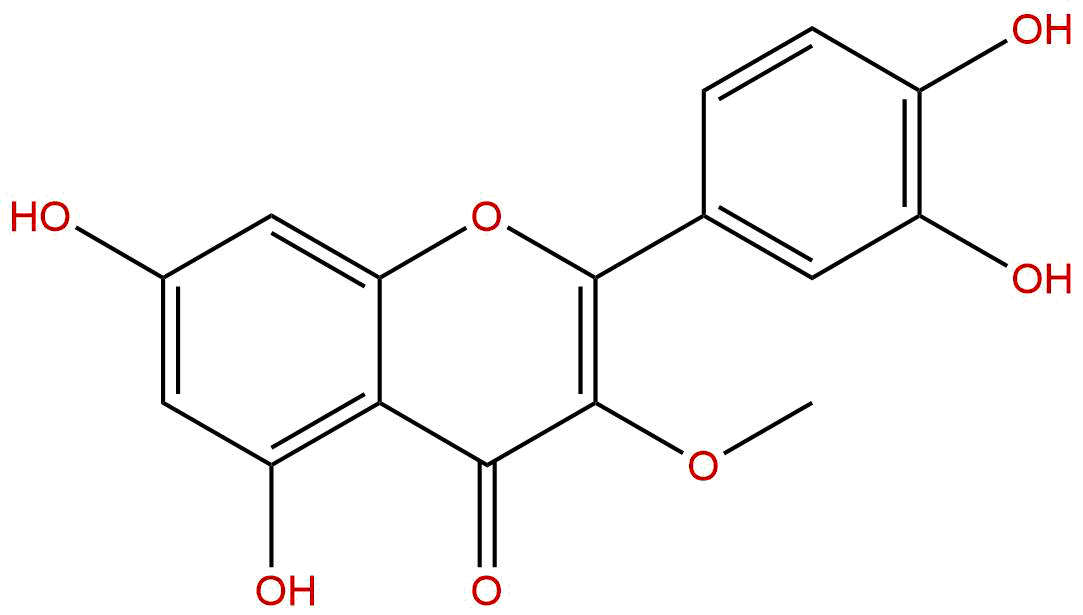


Product name: 3-O-Methylquercetin
Synonym name:
Catalogue No.: SBP00421
Cas No.: 1486-70-0
Formula: C16H12O7
Mol Weight: 316.265
Botanical Source:
Type of Compound: Flavonoids
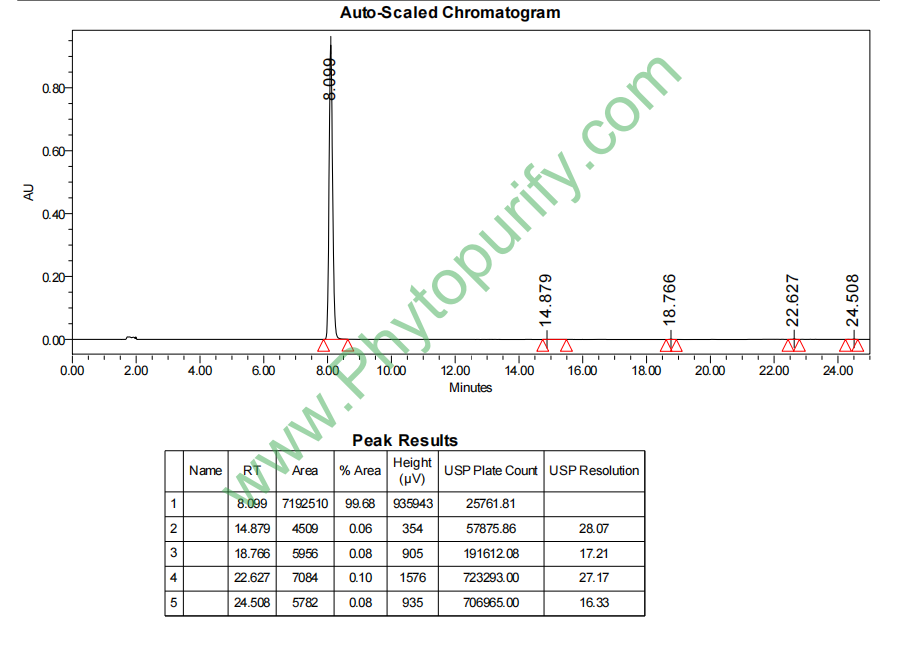
Purity: 95%~99%
Analysis Method: HPLC-DAD or/and HPLC-ELSD
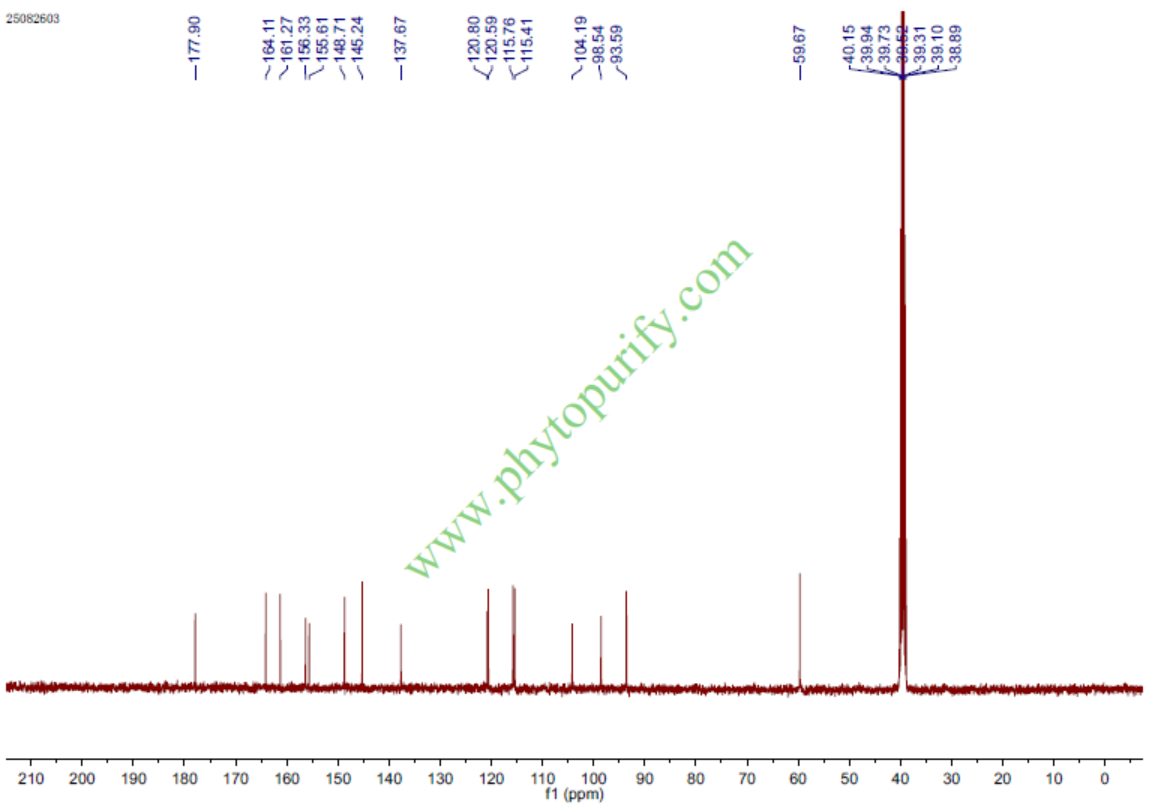
Identification Method: Mass, NMR
Packing: Brown vial or HDPE plastic bottle
Storage: Store in a well closed container, protected from air and light. Put into refrigerate or freeze for long term storage.
Whenever possible, you should prepare and use solutions on the same day. However, if you need to make up stock solutions in advance, we recommend that you store the solution as aliquots in tightly sealed vials at -20℃. Generally, these will be useable for up to two weeks.
The product could be supplied from milligrams to grams
Inquire for bulk scale.
For Reference Standard and R&D, Not for Human Use Directly.
HPLC of 3-O-Methylquercetin
NMR of 3-O-Methylquercetin
Storage conditions:Short-term storage at 2~8℃, long-term storage at -20 ~ -80℃
131.3900
1.8000
1.7000
Low
No
No
No
No
No
No
Natural products, as an important source of drug discovery, play an irreplaceable role in the long history of human struggle against diseases. Flavonoids, as the most widely distributed class of secondary metabolites in nature, have attracted much attention due to their structural diversity and extensive biological activity. Quercetin, as a representative molecule of flavonoids, has been proven to have various pharmacological effects such as antioxidant, anti-inflammatory, antiviral, and anti-tumor properties. However, the metabolic transformation process of quercetin in the body is complex, and its methylated derivatives often exhibit unique pharmacological properties and improved pharmacokinetic characteristics different from the parent compound.
3-O-Methylquercetin (CAS number: 1486-70-0) is a natural derivative of quercetin that undergoes methylation modification at the 3-hydroxyl position. This structural modification not only changes the physicochemical properties of the molecule, but also endows it with a unique biological activity spectrum. Research has shown that 3-O-methylquercetin is a dual inhibitor of cAMP and cGMP phosphodiesterase (PDE), with IC50 values of 13.8 μ M and 14.3 μ M, respectively; As a β - secretase 1 (BACE1) inhibitor with an IC50 of 6.5 μ M, it demonstrates potential value in the treatment of Alzheimer's disease. In addition, the compound also has significant neuroprotective, antiviral, anti-inflammatory, and tracheal relaxant effects, showing broad application prospects in the treatment of inflammatory diseases, asthma, and viral infections.
With the deepening of research on the structure activity relationship of natural products, 3-O-methylquercetin, as an important metabolite of quercetin and a naturally occurring active ingredient, is gradually becoming a hot topic in medicinal chemistry and pharmacology research. This article will provide a systematic review of the compound from the aspects of chemical structure, plant origin, pharmacological activity, mechanism of action, pharmacological evaluation, and clinical application prospects, in order to provide reference for in-depth research in related fields.
The chemical name of 3-O-methylquercetin is 3,5,7,3 ', 4' - pentahydroxyflavone-3-methyl ether, and its parent nucleus structure is a typical 2-phenylchromenone skeleton of flavonoids. Compared with quercetin, 3-O-methylquercetin introduces a methyl group on the C-3 hydroxyl group, which significantly alters the electronic distribution and spatial configuration of the molecule. The molecular formula is C16H12O7 and the molecular weight is 304.2600 Da.
From the perspective of structural characteristics, 3-O-methylquercetin retains the basic structural features of flavonoids: hydroxyl groups are present at positions C-5 and C-7 of ring A, ortho dihydroxy groups are formed at positions C-3 'and C-4' of ring B, double bonds are present at positions C-2 and C-3 of ring C, and carbonyl groups are present at position C-4. This structural feature endows it with excellent metal ion chelating ability and free radical scavenging activity. The methylation modification at the C-3 position eliminates the acidity of the phenolic hydroxyl group, alters the hydrogen bond donor ability of the molecule, and thus affects its interaction mode with biological targets.
The pharmacokinetic parameters calculated based on computer-aided drug design (CADD) method showed that the lipid water partition coefficient (LogP) of 3-O-methylquercetin was 1.8000, indicating its moderate lipophilicity and ability to achieve a good balance between the lipid bilayer and aqueous environment. The topological polar surface area (TPSA) is 131.3900 Å ², which is higher than the recommended upper limit of 140 Å ² for oral medications, indicating the possibility of intestinal absorption disorders. The molecule contains 7 hydrogen bond acceptors, which are typical characteristics of flavonoids.
In terms of ADMET prediction, 3-O-methylquercetin exhibits a lower ability to cross the blood-brain barrier (BBB), which is both a challenge and an opportunity for drug development that requires central nervous system action - for indications of peripheral effects, low BBB permeability can reduce central nervous system side effects; For the treatment of neurodegenerative diseases, it is necessary to improve their brain delivery through structural modifications or formulation techniques. Importantly, the compound did not exhibit hepatotoxicity, cardiotoxicity, hERG inhibitory activity, or positive Ames test results in the predictive model, indicating its good preliminary safety characteristics.
3-O-Methyl Quercetin is widely distributed in nature and mainly exists in various medicinal and edible plants. As a methylated metabolite of quercetin, it often coexists with quercetin and other flavonoids in plant tissues. Currently, plants reported to contain 3-O-methylquercetin include but are not limited to Ginkgo biloba, Hypericum spp., Echinacea purpurea, Allium cepa, Malus domestica, and various Asteraceae plants.
It is worth noting that the content of 3-O-methylquercetin in plants is usually lower than that of quercetin, but its biological activity is often more significant. In certain specific plants, such as onion skins and ginkgo leaves of certain varieties, the content of this compound is relatively high and can serve as a potential natural source. In addition, some traditional medicinal plants such as Scutellaria baicalensis and Forsythia suspensa have also been reported to contain this ingredient.
Common methods for extracting 3-O-methyl quercetin include solvent extraction, ultrasound assisted extraction, microwave-assisted extraction, and supercritical fluid extraction. Traditional solvent extraction methods usually use methanol, ethanol, or methanol water mixed solvents as extraction agents, utilizing the good solubility of flavonoids in alcohol solvents for extraction. Research has shown that a 70% ethanol aqueous solution has a high extraction efficiency for 3-O-methylquercetin at room temperature.
Ultrasonic assisted extraction technology utilizes the cavitation effect of ultrasound to destroy plant cell walls, promote the release of target compounds, significantly shorten extraction time, and improve extraction efficiency. Microwave assisted extraction generates heat through the rapid vibration of polar molecules in a microwave field, accelerating the diffusion process of solutes into solvents. Supercritical CO ₂ extraction, as a green extraction technology, can avoid the problem of residual organic solvents, but it requires the addition of appropriate entrainers (such as ethanol) to improve the extraction efficiency of polar flavonoids.
In terms of separation and purification, traditional column chromatography (such as silica gel column, polyamide column, Sephadex LH-20 gel column) is still the main means of laboratory scale separation. High performance counter current chromatography (HSCCC) and preparative high-performance liquid chromatography (Pre HPLC) are suitable for the preparation of high-purity samples. In recent years, the application of molecular imprinting technology and solid-phase extraction technology has provided new ideas for the selective separation of 3-O-methylquercetin.
Oxidative stress is a common pathological mechanism in the occurrence and development of various diseases, and excessive production of reactive oxygen species (ROS) and reactive nitrogen species (RNS) can lead to lipid peroxidation, protein oxidative damage, and DNA damage. 3-O-methylquercetin, as a flavonoid compound, retains the ortho dihydroxy structure of the quercetin mother nucleus and has the ability to directly scavenge free radicals. Research has shown that this compound can exert antioxidant effects through multiple pathways: directly scavenging superoxide anions, hydroxyl radicals, and peroxynitrite; Chelate transition metal ions (such as Fe ² ⁺, Cu ² ⁺) to inhibit the free radicals generated by Fenton reaction; Activate the endogenous antioxidant defense system.
In terms of neuroprotection, 3-O-methylquercetin has shown the ability to counteract neuronal death caused by oxidative damage. Its neuroprotective mechanism involves multiple levels: by inhibiting mitochondrial dysfunction induced by oxidative stress, reducing the release of cytochrome c and activation of caspase-3; Activate the Nrf2/ARE signaling pathway and upregulate the expression of antioxidant enzymes such as SOD, CAT, GPX, and HO-1; Inhibit neuroinflammatory response and reduce the release of pro-inflammatory cytokines. These findings suggest that 3-O-methylquercetin has potential application value in the treatment of neurodegenerative diseases such as ischemic stroke, Parkinson's disease, and Alzheimer's disease.
Phosphodiesterases (PDEs) are a key enzyme family that catalyze the hydrolysis of cAMP and cGMP, and participate in the regulation of various physiological processes by regulating intracellular nucleotide levels. 3-O-methylquercetin, as a dual inhibitor of cAMP and cGMP-PDE, exhibited moderate inhibitory activity with IC50 values of 13.8 μ M and 14.3 μ M, respectively. This discovery has significant pharmacological implications: cAMP and cGMP act as important second messengers involved in regulating various physiological processes such as vasodilation, bronchial smooth muscle relaxation, platelet aggregation, inflammatory response, and neurotransmitter release.
Compared with quercetin, the PDE inhibitory activity of 3-O-methylquercetin was significantly enhanced, indicating that C-3 methylation modification is crucial for the interaction of this target. Molecular docking studies suggest that methylation modification may alter the binding mode between the molecule and the PDE catalytic domain, enhancing hydrophobic interactions with key amino acid residues. This discovery provides important structure-activity relationship information for the development of novel PDE inhibitors.
β - secretase 1 (BACE1) is a key enzyme in the processing of amyloid precursor protein (APP), and its abnormal increase in activity leads to excessive production of β - amyloid protein (A β), which is a core event in the pathogenesis of Alzheimer's disease. 3-O-methylquercetin, as a BACE1 inhibitor, has an IC50 of 6.5 μ M and exhibits stronger inhibitory activity than quercetin. This discovery makes it a potential candidate compound for treating Alzheimer's disease.
Further mechanistic studies have shown that 3-O-methylquercetin can competitively inhibit its cleavage of APP by binding to the active site of BACE1. Molecular simulation studies have shown that the A and B rings of the compound form hydrogen bonds and π - π stacking interactions with the S1 and S2 sub sites of BACE1, respectively, while the methyl group at C-3 interacts with the hydrophobic residue at the S3 sub site, which may be the structural basis for its superior activity compared to quercetin.
3-O-methylquercetin exhibits strong antiviral activity against various RNA viruses, including poliovirus, coxsackievirus, and human rhinovirus. These viruses belong to the family of small RNA viruses and are important pathogens causing human infectious diseases. The antiviral mechanism may involve multiple steps: directly inhibiting virus adsorption and entry into host cells; Interference with viral RNA replication; Inhibit viral protein synthesis and assembly; Regulating host cell antiviral immune response.
It is worth noting that the antiviral activity of 3-O-methylquercetin may have a synergistic effect with its antioxidant and anti-inflammatory activities. Viral infection is often accompanied by excessive activation of oxidative stress and inflammatory response. This compound can simultaneously inhibit virus replication and alleviate host damage through multi-target action. Against the backdrop of increasingly severe antiviral drug resistance, 3-O-methylquercetin, as a natural multi-target antiviral component, has unique development advantages.
Inflammatory response is the body's protective response to injury and infection, but excessive or persistent inflammation can lead to tissue damage and disease. 3-O-methylquercetin exerts anti-inflammatory effects by inhibiting various inflammatory mediators and signaling pathways. Research has shown that this compound can inhibit the production of NO, PGE2, TNF - α, and IL-6 in macrophages induced by lipopolysaccharide (LPS), and its mechanism involves the inhibition of NF - κ B and MAPK signaling pathways.
In respiratory system diseases, 3-O-methylquercetin exhibits a relaxing effect on tracheal smooth muscle, which is closely related to its PDE inhibitory activity. By inhibiting PDE, increasing intracellular cAMP levels, activating protein kinase A (PKA), and leading to relaxation of tracheal smooth muscle. In addition, the compound can also inhibit airway inflammation, reduce mucus secretion and airway remodeling. These findings provide pharmacological evidence for the application of 3-O-methylquercetin in the treatment of asthma and chronic obstructive pulmonary disease (COPD).
The pharmacological activity spectrum of 3-O-methylquercetin indicates that it is a typical multi-target natural product that exerts comprehensive pharmacological effects by acting on multiple molecular targets and signaling pathways. Based on system pharmacology analysis, the target network of this compound involves multiple functional modules such as antioxidant, anti-inflammatory, antiviral, neuroprotective, and bronchodilator effects.
In the antioxidant module, the main targets include TYR (tyrosinase), MMP1 (matrix metalloproteinase 1), NFE2L2 (nuclear factor E2 related factor 2, i.e. NRF2), SOD1 (superoxide dismutase 1), CAT (catalase), GPX1 (glutathione peroxidase 1), HMOX1 (heme oxygenase 1), MMP3 (matrix metalloproteinase 3), and SOD2 (superoxide dismutase 2). These targets together constitute the endogenous antioxidant defense system, where 3-O-methylquercetin activates the NRF2 transcription factor, upregulates downstream antioxidant enzyme expression, and enhances cellular antioxidant capacity.
3-O-methylquercetin has regulatory effects on multiple key signaling pathways. In the NF - κ B signaling pathway, this compound can inhibit the phosphorylation and degradation of I κ B α, prevent nuclear translocation of NF - κ B, and thus reduce the expression of pro-inflammatory genes. In the MAPK signaling pathway, phosphorylation of ERK, JNK, and p38 can be inhibited, reducing inflammation and cell apoptosis. In the PI3K/Akt signaling pathway, cell survival and metabolism can be affected by regulating the phosphorylation status of Akt.
In addition, the regulation of the cAMP/PKA and cGMP/PKG signaling pathways by 3-O-methylquercetin is the basis for its bronchodilator and vasodilatory effects. By inhibiting PDE activity, increasing intracellular cAMP and cGMP levels, activating downstream protein kinases, and regulating smooth muscle contraction, inflammatory cell activity, and neurotransmitter release.
Comparing the activity differences between quercetin and 3-O-methylquercetin can reveal the impact of C-3 methylation modification on biological activity. In terms of PDE inhibitory activity, 3-O-methylquercetin is significantly superior to quercetin, indicating that methylation of the C-3 hydroxyl group is beneficial for binding to the PDE catalytic domain. In terms of BACE1 inhibitory activity, methylation modification also enhances the inhibitory effect. However, in terms of direct free radical scavenging ability, quercetin may be superior to 3-O-methylquercetin, as methylation of the C-3 hydroxyl group reduces the number of hydrogen atom donors.
These findings suggest that structural modifications of natural products can alter their biological activity spectrum, optimize the activity of specific targets, while potentially weakening other activities. Therefore, in drug development, it is necessary to select appropriate structural modification strategies based on the target indications.
Based on Lipinski's Five Rules and Veber's Rules, the molecular weight of 3-O-methylquercetin is 304.26 Da (<500), with a LogP of 1.80 (<5), 4 hydrogen bond donors (<5), and 7 hydrogen bond acceptors (<10), meeting the basic requirements for oral medication. However, the TPSA is 131.39 Å ², slightly higher than the recommended upper limit of 140 Å ², indicating the possibility of intestinal absorption issues. The number of rotation keys is 1 (<10), which complies with the Veber rule.
In terms of safety prediction, 3-O-methylquercetin did not show liver toxicity, cardiac toxicity, hERG inhibition, or positive results in Ames test, indicating that it has good preliminary safety. However, these predicted results require further experimental validation, especially in long-term toxicity studies and reproductive toxicity studies.
At present, there is relatively limited research on the pharmacokinetics of 3-O-methylquercetin, but its pharmacokinetic characteristics can be inferred based on its structural features and studies of similar compounds. As a flavonoid compound, the absorption of 3-O-methylquercetin in the intestine may be influenced by the efflux of P-glycoprotein (P-gp) and intestinal metabolism. Its methylation modification may improve metabolic stability and reduce first pass effects.
In terms of distribution, low BBB permeability suggests that the compound is mainly distributed in peripheral tissues. In terms of metabolism, it may undergo phase II metabolic reactions, including glucuronidation and sulfation, forming water-soluble complexes that are excreted through urine and bile. The methylation of C-3 position may protect this position from modification by glucuronosyltransferases (UGTs), thereby prolonging the half-life.
Given the potential oral bioavailability issues of 3-O-methylquercetin, a rational formulation strategy is crucial for its clinical application. Nanoformulation technologies such as liposomes, nanoemulsions, and polymer nanoparticles can enhance their solubility and intestinal absorption. Phospholipid complex technology can enhance its lipid solubility and promote transmembrane transport. Cyclodextrin inclusion technology can improve its water solubility and stability. In addition, prodrug design strategies such as introducing phosphate or amino acid groups can improve their pharmacokinetic characteristics.
The BACE1 inhibitory activity and neuroprotective effect of 3-O-methylquercetin make it potentially valuable for the treatment of Alzheimer's disease. However, low BBB permeability is the main challenge it faces. Future research directions include: improving BBB permeability through structural modification; Developing brain targeted delivery systems; Explore synergistic effects with other anti Alzheimer's disease drugs.
Based on its PDE inhibitory activity and tracheal relaxation effect, 3-O-methylquercetin has potential for development in the treatment of asthma and COPD. Compared with existing PDE4 inhibitors such as roflunomide, 3-O-methylquercetin as a natural product may have better safety. Inhalation administration route can increase local drug concentration and reduce systemic side effects.
The broad-spectrum antiviral activity of 3-O-methylquercetin makes it valuable in the development of antiviral drugs. Especially targeting the activity of small RNA viruses, it provides new candidate compounds for the treatment of diseases such as hand, foot, and mouth disease, viral myocarditis, etc. Combination therapy strategies may enhance antiviral efficacy and reduce the development of drug resistance.
The anti-inflammatory activity of 3-O-methylquercetin makes it promising for the treatment of various inflammatory diseases, including inflammatory bowel disease, rheumatoid arthritis, dermatitis, etc. Its multi-target action characteristics may provide better therapeutic effects than single target drugs.
3-O-methylquercetin, as a natural methylated derivative of quercetin, exhibits a unique pharmacological activity spectrum and good medicinal properties. As a dual inhibitor of cAMP/cGMP PDE, BACE1 inhibitor, and a multi-target natural product with antioxidant, anti-inflammatory, antiviral, and neuroprotective effects, it has broad application prospects in the treatment of neurological diseases, respiratory diseases, viral infections, and inflammatory diseases.
However, there are still many challenges in transitioning from natural products to clinical drugs. At present, there is still insufficient research on the pharmacokinetics, toxicology, and preclinical pharmacodynamics of 3-O-methylquercetin, and systematic and in-depth studies are needed. Future research directions should include: elucidating the interaction mechanism between it and its main targets; Optimize its pharmacokinetic characteristics; Develop efficient synthetic or semi synthetic methods; Conduct in vivo pharmacological and safety evaluations of the system.
With the continuous development of natural product chemistry, pharmacology, and medicinal chemistry, 3-O-methylquercetin is expected to become a new candidate drug for treating various diseases. Its multi-target action characteristics are in line with the concept of "multi-target therapy" in modern drug development, providing new ideas for the treatment of complex diseases. I believe that in the near future, with the deepening of research, the medicinal value of 3-O-methylquercetin will be more fully explored and utilized.
