Introduction/Overview
In the field of natural product chemistry and pharmacology research, chalcone compounds have attracted much attention due to their structural diversity and wide range of biological activities. 4-O-Methyllicorice Chalcone (4 '- Hydroxy-2,4-diethoxychalcone, CAS number: 151135-64-7), as a structurally unique methoxylated chalcone, has gradually become a research hotspot in recent years. This compound not only demonstrates the important value of natural products as lead compounds, but also shows potential for drug development due to its significant activity in antioxidant and related disease models. Oxidative stress is the common pathological basis of many chronic diseases, such as neurodegenerative diseases, cardiovascular diseases, complications of diabetes and skin photoaging. Therefore, finding efficient and low toxicity antioxidants is one of the important directions for current drug development. This article aims to systematically review the chemical properties, plant sources, pharmacological activities, mechanisms of action, and medicinal properties of 4-O-methyl licorice chalcone, in order to provide comprehensive scientific references for the in-depth research and potential applications of this compound.
Chemical structure and physicochemical properties
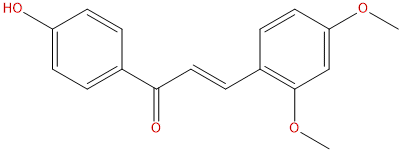
The chemical name of 4-O-methyllicorice chalcone is (2E) -1- (2,4-dimethoxyphenyl) -3- (4-hydroxyphenyl) -2-propen-1-one, with a molecular formula of C17H16O4 and a molecular weight of 284.3110. Its core structure is the chalcone nucleus, consisting of two aromatic rings (A and B) connected by a three carbon α, β - unsaturated ketone bridge. The structural feature of this compound is that the 2nd and 4th positions of the A ring are replaced by methoxy groups (- OCH3), while the 4th position of the B ring is connected to a hydroxyl group (- OH). This specific substitution pattern has a decisive impact on its electronic distribution, spatial conformation, and biological activity.
From the analysis of physical and chemical properties, the lipid water partition coefficient (LogP) of this compound is 3.2876, indicating that it has moderate lipophilicity, which is beneficial for its penetration into cell membranes. The topologically polar surface area (TPSA) is 55.7600 Å ², which is relatively small and further supports its good membrane permeability. Its water solubility is relatively low, about 0.0539 mg/mL, indicating that solubilization strategies may need to be considered in formulation development. It is worth noting that the calculation predicts its blood-brain barrier (BBB) permeability to be "high", which provides an important physical and chemical basis for its application in the treatment of central nervous system oxidative stress-related diseases such as Alzheimer's disease and Parkinson's disease. In addition, preliminary pharmacological risk assessment showed no inhibitory activity on hERG potassium channels (hERG inhibition: No), and the Ames test result was 0.6, indicating a low risk of mutagenicity and a relatively good safety starting point.
Plant sources and extraction methods
4-O-methyl licorice chalcone is mainly isolated from plants of the Glycyrrhiza genus in the legume family, especially species such as Glycyrrhiza pallidiflora Maxim. Licorice plants, as an important component of traditional Chinese medicine, are rich in various active ingredients such as flavonoids, chalcones, and triterpenoid saponins. Among them, chalcones are considered one of the key material bases for their antioxidant and anti-inflammatory activities.
The extraction of this compound from plant materials is usually carried out using organic solvent extraction method. The common process includes crushing dried plant roots and stems, and then extracting them by cold soaking or hot reflux using polar solvents such as methanol, ethanol, or acetone. After vacuum concentration, the crude extract obtained was subjected to gradient extraction using solvents such as petroleum ether, ethyl acetate, and n-butanol. 4-O-methyl licorice chalcone was mainly enriched in the ethyl acetate fraction. Further purification depends on a variety of chromatographic techniques, such as silica gel column chromatography, Sephadex LH-20 gel column chromatography and high performance liquid chromatography (HPLC) preparation. In recent years, green extraction techniques such as ultrasound assisted extraction and microwave-assisted extraction have also been applied to the extraction of such compounds to improve extraction efficiency and reduce solvent consumption. The optimization of extraction and separation processes is crucial for obtaining high-purity compounds for subsequent pharmacological research.
Pharmacological activity research
A large number of in vitro and in vivo studies have confirmed that the core pharmacological activity of 4-O-methyl licorice chalcone is focused on its strong antioxidant effect, which has led to various related biological effects.
1. Direct antioxidant and free radical scavenging activity:
This compound, due to its phenolic hydroxyl and methoxy groups in its structure, can effectively scavenge 1,1-diphenyl-2-trinitrophenylhydrazine (DPPH) and 2,2 '- diazo-bis-3-ethylbenzothiazole-6-sulfonic acid (ABTS) free radicals, and exhibits significant iron ion reduction antioxidant capacity (FRAP). Its α, β - unsaturated ketone structure can serve as a Michael reaction receptor, directly binding to nucleophilic free radicals or harmful biological molecules, which is one of the important mechanisms for its direct antioxidant effect.
2. Cellular protective effect:
Among various cellular oxidative stress models, 4-O-methyl licorice chalcone exhibits excellent cell protective effects. For example, in models of skin fibroblast injury induced by hydrogen peroxide (H2O2) or ultraviolet radiation, this compound can significantly improve cell survival, reduce lactate dehydrogenase (LDH) leakage, and decrease excessive accumulation of reactive oxygen species (ROS) within cells. In neuronal cell lines, it can also counteract oxidative damage induced by glutamate or beta amyloid protein.
3. Protective effect on skin photoaging:
Ultraviolet (UV) radiation is the main environmental factor causing skin photoaging, and its mechanism is closely related to the generation of ROS, upregulation of matrix metalloproteinases (MMPs) expression, and collagen degradation. Research has shown that 4-O-methyllicorice chalcone can effectively inhibit the expression and activity of MMP-1 and MMP-3 in UVB induced human skin fibroblasts, thereby protecting extracellular matrix components such as type I collagen from degradation. Meanwhile, it can also inhibit the activity of tyrosinase (TYR), indicating its potential application value in whitening and improving pigmentation.
4. Anti inflammatory activity:
Oxidative stress is closely linked to inflammatory response. Preliminary studies have shown that this compound can inhibit the excessive production of inflammatory mediators such as nitric oxide (NO) and prostaglandin E2 (PGE2) in a macrophage model stimulated by lipopolysaccharide (LPS). Its anti-inflammatory effect is partially attributed to its antioxidant capacity and regulation of inflammatory signaling pathways such as NF - κ B.
Mechanism of action and molecular targets
The antioxidant and related pharmacological effects of 4-O-methyl licorice chalcone are not achieved through a single pathway, but involve a multi-target and multi pathway network system, with the core being the activation of the cell's own antioxidant defense system.
1. Activate the Nrf2/ARE signaling pathway:
This is the most critical mechanism by which the compound exerts antioxidant effects. Nuclear factor E2 related factor 2 (Nrf2, encoded by NFE2L2 gene) is a core transcription factor that regulates cellular oxidative stress response. In the resting state, Nrf2 binds to the cytoplasmic chaperone protein Keap1 and is ubiquitinated and degraded. 4-O-methyllicorice chalcone may modify key cysteine residues on Keap1 through its Michael reaction receptor properties, promoting the dissociation of Nrf2 from Keap1. Free Nrf2 translocates to the nucleus and binds to antioxidant response elements (ARE), initiating the transcriptional expression of a series of downstream phase II detoxifying enzymes and antioxidant proteins. Research has confirmed that this compound can significantly upregulate SOD1(Superoxide dismutase 1, intracellular copper zinc SOD)SOD2(Mitochondrial manganese SOD)CAT(Catalase)GPX1(Glutathione Peroxidase 1) and HMOX1 Expression of heme oxygenase-1. These enzymes together form a powerful endogenous antioxidant defense network, synergistically clearing ROS such as superoxide anions and hydrogen peroxide, and maintaining cellular redox homeostasis.
2. Inhibition of matrix metalloproteinases (MMPs):
This compound can directly or indirectly inhibit MMP1(Interstitial collagenase) and MMP3 Expression and activity of matrix metalloproteinase-1. The mechanism may include: a) clearing ROS and blocking the MAPK/AP-1 signaling pathway activated by ROS, which is a key pathway for upregulating MMP transcription; b) May directly bind to the active center of MMPs and inhibit their enzymatic activity. This function is the direct molecular basis for its anti skin photoaging and protection of extracellular matrix.
3. Inhibition of Tyrosinase (TYR):
Tyrosinase is the rate limiting enzyme in melanin biosynthesis. 4-O-methyl licorice chalcone may bind to the active site of TYR in a competitive or non competitive manner, inhibiting its catalytic activity and reducing melanin production. This provides a theoretical basis for its use in cosmetics or drugs for skin whitening.
In summary, 4-O-methyl licorice chalcone exerts a "multi-target" mode of action, which not only directly clears free radicals, but also enhances intracellular stress resistance by activating the Nrf2 pathway, while inhibiting harmful protease activity, forming a multi-level and synergistic pharmacological network.
Evaluation of drug properties and pharmacokinetics
Based on its physicochemical parameters and preliminary biological data, the pharmacological properties of 4-O-methyl licorice chalcone were preliminarily evaluated.
Advantage:
1. Moderate molecular weight (284.3)It complies with Lipinski's Rule of Five and has good oral absorption potential.
2. Moderate LogP value (~3.29) And lower TPSA indicates good membrane permeability and bioavailability foundation.
3. Prediction of high blood-brain barrier permeability This provides unique advantages for its treatment of central nervous system diseases.
4. Preliminary safety is good No hERG inhibition warning, Ames test negative, reduced the risk of cardiac toxicity and genetic toxicity.
Challenge:
1. Poor water solubility This is the main pharmaceutical challenge faced during its development process. It may be necessary to improve its solubility and dissolution rate through formulation techniques such as salt formation, formation of inclusion complexes (such as cyclodextrin), nanocrystals, liposomes, or solid dispersions.
2. Metabolic stability unknown The α, β - unsaturated ketones in the chalcone structure are potential metabolic sites that may be metabolized through reduction, cyclization, or binding to glutathione. The metabolic pathways, main metabolites, and activities in its body need to be further studied.
3. Lack of pharmacokinetic data Currently, there are few reports on the systematic pharmacokinetic studies of this compound, such as absorption, distribution, metabolism, and excretion (ADME). Key parameters such as oral bioavailability, plasma protein binding rate, tissue distribution characteristics, and half-life urgently need to be elucidated through animal experiments.
Future research on drug efficacy optimization should focus on: ① improving water solubility and metabolic stability while maintaining activity through prodrug strategies or structural adjustments; ② Conduct systematic preclinical pharmacokinetic and toxicological studies; ③ Develop suitable drug delivery systems (such as transdermal delivery for skin diseases or brain targeted delivery for neurological diseases).
Clinical application prospects and prospects
The multi-target antioxidant properties of 4-O-methyl licorice chalcone have broad prospects for its application in various disease fields.
1. Skin diseases and cosmetics field:
This is the field with the most direct application potential. Based on its multiple effects of inhibiting MMP-1/3, inhibiting tyrosinase, and activating the Nrf2 pathway, this compound can be developed into:
* Anti photoaging and anti wrinkle active ingredients Used to prevent and repair skin damage caused by ultraviolet radiation, and delay the formation of wrinkles.
* Whitening and spot lightening agent As a functional cosmetic ingredient, it is used to improve melasma, post inflammatory pigmentation, and other conditions.
* Skin repair adjuvant drugs Used to assist in the treatment of skin diseases related to oxidative stress, such as atopic dermatitis, psoriasis, etc.
2. Neurodegenerative diseases:
Its high BBB permeability and strong Nrf2 activation ability make it a potential candidate drug for treating neurodegenerative diseases such as Alzheimer's disease, Parkinson's disease, and Huntington's disease. The pathological processes of these diseases all involve mitochondrial dysfunction and oxidative stress. This compound can exert neuroprotective effects through multiple pathways, such as protecting neurons from oxidative damage, inhibiting neuroinflammation, and reducing protein misfolding and aggregation.
3. Complications of metabolic diseases:
The complications of diabetes (such as diabetes nephropathy, retinopathy, neuropathy) are closely related to oxidative stress induced by chronic hyperglycemia. This compound may serve as an adjuvant therapy strategy to delay the progression of complications by reducing oxidative damage.
4. Cardiovascular diseases:
The occurrence and development of atherosclerosis is related to oxidative damage and inflammatory reaction of vascular endothelial cells. The antioxidant and anti-inflammatory activities of this compound may help to protect vascular endothelial function and stabilize atherosclerotic plaque.
Outlook and Challenges:
Despite its broad prospects, there are still many challenges in promoting the clinical application of 4-O-methyl licorice chalcone. Firstly, it is necessary to complete translational studies from cell and animal models to human experiments to confirm its effectiveness and safety in complex human environments. Secondly, it is necessary to address its water solubility and in vivo metabolism issues, and optimize the dosing regimen. Thirdly, as a natural product, its plant sources are limited, and efficient chemical or biological synthesis methods need to be developed to achieve large-scale supply. Finally, in-depth exploration of its synergistic effects with other drugs or therapies may provide new ideas for developing combination therapy plans.
Conclusion
4-O-methyl licorice chalcone, as a natural chalcone compound derived from plants of the licorice genus, has shown significant potential in the fields of antioxidant and related disease prevention and control due to its unique chemical structure and multi-target mechanism of action. Its core value lies in its ability to directly eliminate free radicals and enhance the endogenous defense ability of cells in all aspects by activating the Nrf2 central regulatory switch, while inhibiting harmful enzyme activities such as MMPs and TYR. The current research has laid a solid in vitro and preliminary in vivo foundation for its pharmacological activity, and revealed a good starting point for drug development. However, to transform it from a promising natural active molecule into a true therapeutic drug or functional product, further exploration of its pharmacokinetics, systemic toxicology, pharmacokinetics, and mechanism of action is still necessary. In the future, interdisciplinary collaborative research - combining natural product chemistry, pharmacology, pharmacy, and clinical medicine - will be the key to promoting the application value of 4-O-methyl licorice chalcone. The study of this compound not only provides an excellent lead structure for the development of new antioxidant therapeutic agents, but also once again confirms the eternal charm and scientific value of mining modern drug treasures from traditional medicinal plants.