


Synonym name: 6,7-Dihydroxycoumarin; Aesculetin; Cichorigenin; Esculetol
Catalogue No.: BP0565
Cas No.: 305-01-1
Formula: C9H6O4
Mol Weight: 178.143
Botanical Source: Metab. of infected sweet potato also found in Aesculus, Atropa, Datura, Digitalis and other plants; found in some ferns
Purity: 95%~99%
Analysis Method: HPLC-DAD or/and HPLC-ELSD
Identification Method: Mass, NMR
Packing: Brown vial or HDPE plastic bottle
Can be supplied from milligrams to grams.
For Reference Standard and R&D, Not for Human Use Directly.
Inquire for bulk scale.
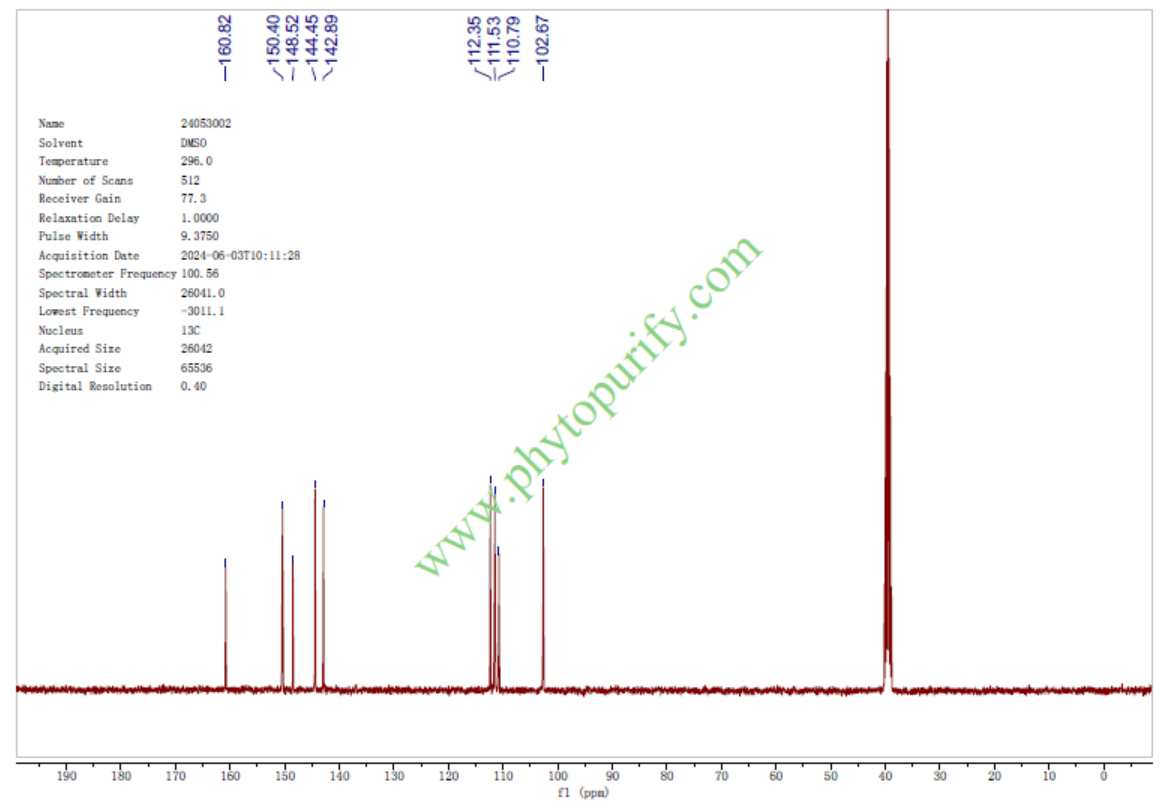
NMR of Esculetin
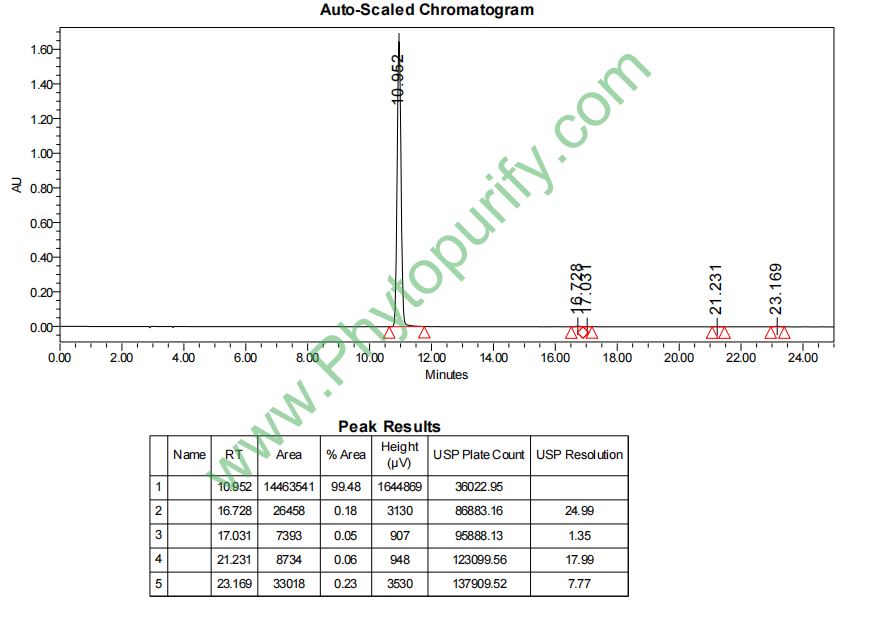
HPLC of Esculetin
Storage conditions:Short-term storage at 2~8℃, long-term storage at -20 ~ -80℃
70.6700
1.2819
1.0722
1.1988
4.4629
14.8092
High
74.0918
2.1797
Yes
Yes
Yes
No
Yes
Yes
0.6
Yes
No
Yes
Yes
Natural products, as an important source of drug discovery and development, play an irreplaceable role in the history of human disease prevention and treatment. Among them, coumarin compounds have attracted much attention due to their wide range of biological activities. Esculetin, also known as 6,7-dihydroxycoumarin, is a typical simple ortho dihydroxy derivative in the coumarin family, with a CAS number of 305-01-1. It was originally derived from the main source of traditional Chinese medicine Qin Pi - the Osmanthus fragrans plant in the Oleaceae family(Fraxinus rhynchophylla)One of the active ingredients isolated from dried bark or bark is also the material basis for the traditional effects of Qinpi, such as clearing heat, drying dampness, astringency, and stopping dysentery. Modern pharmacological research constantly reveals that Qinpi Yi Su not only has significant antioxidant and anti-inflammatory properties, but also demonstrates potential therapeutic value in multiple fields such as anti-tumor, antibacterial, cardiovascular protection, and metabolic disease regulation. Especially its role in inhibiting the phenotype transition of airway smooth muscle cells (ASMCs) induced by platelet-derived growth factor (PDGF), a key link in airway remodeling, provides new ideas for the treatment of chronic airway inflammatory diseases such as asthma and chronic obstructive pulmonary disease (COPD). In addition, its clear spectrum of antibacterial targets also makes it of research significance in addressing bacterial resistance challenges. This article aims to systematically review the chemical properties, plant sources, pharmacological activities, mechanisms of action, medicinal properties, and clinical application prospects of Qinpi Yi Su, in order to provide comprehensive scientific references for the in-depth development and transformation research of this natural product.
Qinpi Yi Su is a simple linear furan coumarin with a chemical structure of 6,7-dihydroxy-2H-1-benzopyran-2-one. Its molecular formula is C9H6O4 and its molecular weight is 178.1430. The benzene ring in the structure is connected to two adjacent phenolic hydroxyl groups (positions 6 and 7), which are the key pharmacophores that exert strong antioxidant activity and act as metal ion chelating agents. The lactone ring (α, β - unsaturated lactone) is another important structural feature associated with various biological activities.
In terms of physical and chemical properties, Qinpi Yi Su is a pale yellow or off white needle shaped crystal or powder. Its calculated lipid water partition coefficient (LogP) is about 1.28, indicating that it has moderate lipophilicity and is conducive to transmembrane transport. The topological polar surface area (TPSA) is 70.67 Å ², reflecting the presence of strong polar regions in the molecule (mainly from two phenolic hydroxyl groups). Its water solubility data is about 1.20 mg/mL, belonging to the range of slightly soluble to soluble, which to some extent limits its absolute bioavailability, but provides a clear direction for its formulation improvement. The phenolic hydroxyl group in the structure of Qinpi Yi Su makes it easy to form salts and increase solubility under alkaline conditions, while also making it prone to metabolic reactions such as oxidation, methylation, and glucuronidation. Its UV absorption characteristics are obvious, usually with maximum absorption peaks at around 254 nm and 344 nm in methanol, which can be used for qualitative and quantitative analysis.
Qinpi Yi Su is relatively widely distributed in nature, but its main and most valuable medicinal source is the authentic original plant of the traditional Chinese medicine Qinpi, including the flower ash willow(Fraxinus rhynchophylla)White wax tree(F. chinensis)Sharp leaved white wax tree(F. szaboana)Dry bark of plants in the Oleaceae family, such as the Quercus genus. In addition, in Asteraceae plants such as chicory(Cichorium intybus)The whole plant of the Rosaceae family, such as wild roses(Rosa multiflora)It has also been detected in fruits and some microbial fermentation products.
Traditionally, solvent extraction is commonly used to extract quercetin from plant materials. The most commonly used solvents include methanol, ethanol, acetone, and their aqueous solutions in different proportions. In order to improve extraction efficiency, modern extraction techniques have been widely applied in its preparation process:
1. Ultrasound assisted extraction Utilizing the cavitation, mechanical, and thermal effects of ultrasound to accelerate solvent penetration and component dissolution, it has the advantages of short time, high efficiency, and low temperature.
2. Microwave assisted extraction Microwaves can selectively heat the internal water of plant cells, causing cell rupture and rapid release of target components into the solvent, which is also highly efficient and energy-saving.
3. Supercritical fluid extraction Supercritical CO ₂ is usually used to change its solubility by adjusting temperature and pressure. This method has high extraction efficiency, no solvent residue, and is suitable for thermosensitive components, but the equipment cost is relatively high.
4. Enzymatic extraction Using cellulases, pectinases, and other enzymes to disrupt the structure of plant cell walls and promote the release of quercetin under mild conditions with strong specificity.
After filtration and concentration, the crude extract needs to be further separated and purified to obtain high-purity quercetin. Conventional purification methods include silica gel column chromatography, polyamide column chromatography, preparative thin-layer chromatography, and high-performance liquid chromatography. Among them, reverse phase high-performance liquid chromatography has become the preferred method for laboratory preparation and content determination due to its high resolution and high degree of automation. In recent years, liquid-liquid distribution chromatography techniques such as high-speed countercurrent chromatography have also shown advantages in the separation and purification of quercetin due to their irreversible adsorption and high recovery rates.
A large number of in vitro and in vivo studies have confirmed that Qinpi Yi Su has diverse pharmacological activities, and its potential for application far exceeds its traditional uses.
1. Antioxidant activity
Qinpi Yi Su is a potent natural antioxidant. Its 6,7-ortho dihydroxy structure can effectively scavenge various reactive oxygen/nitrogen species such as superoxide anions (O ₂⁻ ·), hydroxyl radicals (· OH), peroxynitrite (ONOO ⁻), etc. Its mechanism includes direct quenching of free radicals, inhibition of lipid peroxidation, and upregulation of downstream phase II detoxifying enzymes and antioxidant proteins such as heme oxygenase-1 (HO-1) and quinone oxidoreductase 1 (NQO1) by activating the nuclear factor E2 related factor 2 (Nrf2) signaling pathway, thereby enhancing the endogenous antioxidant defense ability of cells.
2. Anti inflammatory activity
Qinpi Yi Su has shown good inhibitory effects on both acute and chronic inflammation models. It can significantly reduce the levels of tumor necrosis factor - α (TNF - α), interleukin-6 (IL-6), IL-1 β, prostaglandin E2 (PGE2), and nitric oxide (NO) produced by macrophages, epithelial cells, etc. under stimulation by lipopolysaccharides (LPS) or inflammatory factors. Its anti-inflammatory effect is closely related to the inhibition of the activation of nuclear factor kappa B (NF - κ B) and mitogen activated protein kinases (MAPKs) signaling pathways.
3. Antitumor activity
Aesculetin can inhibit the proliferation and induce apoptosis of many tumor cell lines (such as liver cancer, breast cancer, lung cancer, colon cancer, leukemia, etc.). Its anti-tumor mechanisms are diverse, including inducing cell cycle arrest (often in G1/S or G2/M phase), mitochondrial pathway apoptosis, increasing reactive oxygen species levels leading to oxidative stress, inhibiting tumor cell invasion and metastasis (by downregulating matrix metalloproteinases MMPs), and inhibiting angiogenesis. It is worth noting that Qinpi Yi Su has relatively low toxicity to certain normal cells and exhibits a certain degree of selectivity.
4. Antibacterial activity
Qinpi Yi Su has inhibitory effects on various Gram positive bacteria (such as Staphylococcus aureus) and Gram negative bacteria (such as Escherichia coli). Its antibacterial mechanism involves multiple targets, including: inhibiting DNA gyrases (such as GYRA) to interfere with DNA replication; Inhibiting the cell division protein FtsZ and hindering bacterial division; Inhibiting acyl carrier protein reductase (FabI) and interfering with bacterial fatty acid synthesis; And inhibit dihydrofolate reductase (DHFR), affecting folate metabolism. This multi-target characteristic gives it potential advantages in combating drug-resistant bacteria.
5. Effects on the respiratory system
As mentioned earlier, Qinpi Yi Su can effectively inhibit PDGF induced transition of airway smooth muscle cells (ASMCs) from a contractile phenotype to a synthetic/proliferative phenotype, reducing cell proliferation and extracellular matrix secretion. This effect is crucial for inhibiting airway remodeling in asthma and COPD. In addition, its anti-inflammatory and antioxidant effects also help alleviate airway inflammation and oxidative stress.
6. Other activities
Research has also shown that Qinpi Yi Su has various activities such as liver protection, blood glucose lowering, blood lipid regulation, antiplatelet aggregation, and neuroprotection, indicating its potential applications in metabolic syndrome, cardiovascular disease, and neurodegenerative diseases.
The multiple pharmacological activities of Qinpi Yi Su stem from its regulation of multiple key signaling pathways within cells and its interaction with specific molecular targets.
1. Regulation of core signaling pathways
* PI3K/Akt pathway inhibition This is one of the core mechanisms by which Qinpi Yi Su exerts anti proliferative, anti-tumor, and inhibitory effects on ASMC phenotype transition. Qinpi Yi Su can inhibit the activation of phosphatidylinositol 3-kinase (PI3K) and the phosphorylation of downstream protein kinase B (Akt). The activated Akt pathway typically promotes cell survival, proliferation, and metabolism. Qinpi Yi Su inhibits this pathway, leading to the inhibition of downstream effector molecules such as mammalian rapamycin target protein (mTOR), glycogen synthase kinase-3 β (GSK-3 β), NF - κ B, etc., thereby inducing cell cycle arrest and apoptosis.
* MAPK pathway regulation Qinpi Yi Su can inhibit the phosphorylation of extracellular signal regulated kinase (ERK), c-Jun N-terminal kinase (JNK), and p38 MAPK induced by inflammatory stimuli or growth factors, thereby regulating the production of inflammatory factors and cellular stress response.
* Inhibition of NF - κ B pathway Qinpi Yi Su inhibits the transcriptional activity of NF - κ B by blocking the degradation and phosphorylation of I κ B α, or inhibiting the nuclear translocation of p65 subunit, thereby downregulating the expression of a series of pro-inflammatory cytokines and enzymes.
* Nrf2/ARE pathway activation Qinpi Yi Su can dissociate Nrf2 from the cytoplasmic chaperone protein Keap1 and translocate it to the nucleus, bind to antioxidant response elements (ARE), initiate transcription of genes such as HO-1 and NQO1, and enhance the cell's ability to resist oxidative stress.
2. Specific molecular targets (taking antibacterial as an example)
The antibacterial effect of Qinpi Yi Su reflects its multi-target characteristics:
* DNA gyrase (GYRA)Interfering with the regulation of bacterial DNA supercoiled structure and hindering DNA replication.
* Cell division protein FtsZ Inhibit the GTPase activity and polymerization of FtsZ protein, and disrupt the formation of bacterial division loops (Z-loops).
* Enoyl Carrier Protein Reductase (FabI)Inhibit key enzymes in the bacterial fatty acid biosynthesis pathway.
* Dihydrofolate reductase (DHFR)Inhibit folate metabolism and affect bacterial nucleotide synthesis.
* Other resistance related targets For fungi, it may act on lanosterol 14 α - demethylase (ERG11/CYP51A1), affecting ergosterol synthesis; It may also affect the function of the external discharge pump (such as CDR1).
3. Focusing on the mechanism of action in airway diseases
In the PDGF induced phenotype transition model of ASMCs, quercetin downregulates key downstream molecules related to proliferation, migration, and synthesis phenotype, such as cyclin D1 and matrix metalloproteinases, by inhibiting the PI3K/Akt pathway. At the same time, it may upregulate the expression of contractile phenotype markers such as α - smooth muscle actin (α - SMA), thereby stabilizing cells in a contractile phenotype and combating airway remodeling.
Based on the provided parameters and existing research, the preliminary evaluation of the pharmacological properties of Qinpi Yi Su is as follows:
1. Physical and chemical properties and preliminary ADMET properties
* Molecular weight (178.14)Far less than 500, meeting the requirements for molecular weight in the five rules of generic drugs.
* LogP(~1.28)The ideal range of lipid water partition coefficient is usually between 1-3, with 1.28 indicating a good lipophilic hydrophilic balance, which is beneficial for oral absorption and transmembrane transport.
* TPSA(70.67 Ų)It is generally believed that TPSA<140 Å ² is beneficial for better intestinal absorption. The value of 70.67 Å ² indicates good membrane permeability.
* Water solubility (~1.20 mg/mL)Belonging to the "soluble" range, but not highly soluble. This may be a limiting factor for its oral bioavailability.
* Blood-brain barrier permeability (predicted to be high)Its small molecular weight, moderate LogP and TPSA support its potential to have good blood-brain barrier penetration ability, which provides possibilities for its potential application in neuroprotection or central nervous system related diseases.
* HERG inhibition (No)The risk of causing QT interval prolongation and leading to tip twist ventricular tachycardia is low, indicating good cardiovascular safety.
* Ames test (0.6)This value usually refers to the recovery mutation rate, and specific determination needs to refer to laboratory standards (such as whether it is greater than twice the background value). Generally speaking, if the value is close to 1 and does not exceed the positive threshold, it suggests that the risk of mutagenicity may be low, but more genetic toxicity tests need to be combined to make a comprehensive judgment.
2. Pharmacokinetic studies
The pharmacokinetic studies of Qinpi Yi Su are mostly conducted in animal models. After oral administration, Qinpi Yi Su is rapidly but incompletely absorbed in the gastrointestinal tract, and its absolute bioavailability is not high, which is significantly related to its first pass effect. It is widely distributed in the body and can enter various tissues. Metabolism is its main elimination pathway, and the liver is the main metabolic organ. Qinpi Yi Su mainly undergoes glucuronic acid binding and sulfation reactions in the body, generating corresponding complexes, and there are also reports of methylation. The prototype drug and its metabolites are mainly excreted through the kidneys and urine. The half-life of Qinpi Yi Su is relatively short, indicating that frequent administration or the use of sustained-release formulations may be necessary to maintain effective blood drug concentrations. In order to improve its bioavailability, researchers are exploring various strategies, such as preparing phospholipid complexes, cyclodextrin inclusion complexes, nanoparticles, liposomes, and other novel drug delivery systems.
Qinpi Yi Su, as a natural small molecule with multiple targets and functions, has broad clinical application prospects but also faces challenges.
1. Potential application directions
* Chronic airway disease Based on its triple effects of inhibiting ASMC phenotype transition, anti-inflammatory, and antioxidant, Qinpi Yi Su is expected to be developed as a novel drug or adjuvant therapy for the treatment of asthma and COPD, especially for the difficult to treat link of airway remodeling.
* Inflammatory related diseases Can be used as an adjuvant therapy for diseases such as rheumatoid arthritis, inflammatory bowel disease, dermatitis, or as a lead compound for developing new drugs.
* neoadjuvant therapy As a sensitizer or adjuvant for chemotherapy or radiotherapy, utilizing its dual properties of antioxidant (protecting normal cells) and anti-tumor (inhibiting cancer cells), or used to prevent tumor recurrence and metastasis.
* Metabolic diseases It has potential value in diabetes and its complications (such as diabetes nephropathy), non-alcoholic fatty liver disease and other fields.
* Anti drug resistant bacterial infection Its multi-target antibacterial mechanism may help overcome the resistance problem of existing antibiotics and can serve as a lead compound for novel antibacterial agents.
* Neurodegenerative diseases Its excellent BBB permeability, strong antioxidant and anti-inflammatory abilities make it have research potential in the prevention and treatment of diseases such as Alzheimer's disease and Parkinson's disease.
2. Challenges and Prospects Faced
* The issue of bioavailability The low oral bioavailability is the main bottleneck restricting its clinical translation. Future research needs to focus on the development of novel drug delivery systems, such as nanocrystals, self microemulsions, prodrug strategies, etc.
* Deep exploration of the mechanism of action Although it is known to act on multiple pathways, the initial and most direct molecular targets (such as receptors and enzymes) still need further clarification. Technologies such as proteomics and chemical proteomics can help discover new targets of action.
* Structure performance relationship and structural optimization Using Qinpi Yi Su as the parent nucleus, structural modifications such as hydroxyl protection and introduction of other active groups are expected to obtain derivatives with stronger activity, higher selectivity, and better pharmacokinetic properties.
* System preclinical and clinical research Currently, most research is still in the stage of cell and animal experiments. It is necessary to systematically complete the pharmacological, toxicological, and long-term safety evaluations in accordance with new drug development standards, and ultimately advance them to clinical trials to verify their effectiveness and safety in humans.
* Research on the synergistic effect of multiple components Qin Pi Yi Su does not act alone in the traditional Chinese medicine Qin Pi, and often coexists with other coumarin and glycoside components. Studying its synergistic effects with other ingredients is of great significance for elucidating the scientific connotation of traditional Chinese medicine formulas and developing modern compound preparations.
Qinpi Yi Su, a simple coumarin compound derived from the traditional Chinese medicine Qinpi, exhibits remarkable diverse biological activities and clear molecular mechanisms of action due to its unique 6,7-dihydroxy chemical structure. From basic antioxidant and anti-inflammatory effects to anti-tumor, airway remodeling inhibition, and multi-target antibacterial effects targeting specific diseases, its pharmacological spectrum is broad and profound. Although there are challenges in drug development, especially in terms of oral bioavailability, its good drug like parameters, high blood-brain barrier penetration potential, and low cardiovascular risk have laid a solid foundation for its further development. Currently, improving its delivery efficiency through modern pharmaceutical technology, optimizing its structure through medicinal chemistry, and revealing its network pharmacology mechanism through systems biology methods are key factors in promoting the transition of Qinpi Yi Su from the laboratory to clinical practice. Looking ahead to the future, Qinpi Yi Su is not only expected to make breakthroughs in the fields of chronic respiratory diseases, tumor adjuvant therapy, and drug-resistant bacterial infections as a single component drug or lead compound, but also may play a role as a functional ingredient in health products and cosmetics. Continuously deepening the research on Qinpi Yi Su is a vivid practice that connects traditional medical wisdom with modern scientific innovation, and explores the enormous value of natural products.
