Qianjingzi Su L2: A Systematic Review from Euphorbia Plants to Anti tumor Candidate Molecules
Introduction/Overview
Natural products, as an important source of drug discovery, occupy an irreplaceable position in the field of anti-tumor therapy. From paclitaxel to camptothecin, from vinblastine to podophyllotoxin, plant derived diterpenoids continue to attract the attention of medicinal chemists and pharmacologists due to their unique chemical skeletons and diverse biological activities. Among the numerous natural products with anti-tumor activity, the Euphorbiaceae plant Xusuizi comes from the Euphorbiaceae family(Euphorbia lathyris L. Euphorbia factors in seeds have become a research hotspot due to their significant cytotoxicity and unique molecular mechanisms of action.
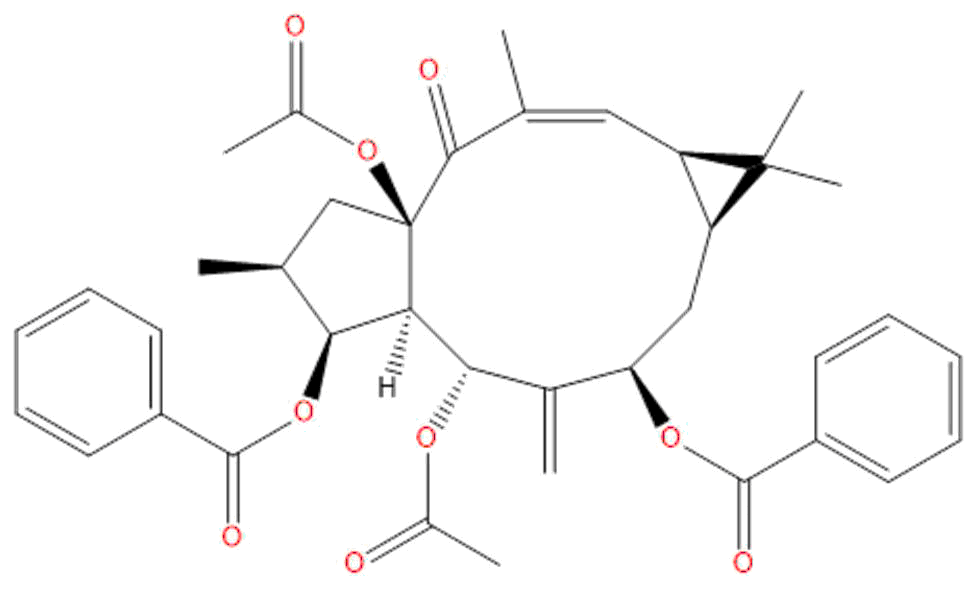
Euphorbia factor L2 (EFL2) is a triterpene diterpenoid isolated from the seeds of Euphorbiaceae, belonging to the characteristic secondary metabolite family of Euphorbiaceae plants. This compound has been identified and reported in recent years, and its chemical structure has typical erythrine skeleton characteristics, including a bicyclic system formed by the combination of a five membered ring and an eleven membered ring, as well as multiple ester substituted groups. Preliminary pharmacological studies have shown that quercetin L2 exhibits strong cytotoxicity against various tumor cell lines, with its mechanism of action involving mitochondrial mediated apoptosis induction and interactions with multiple key tumor related targets.
With the deepening of research on the anti-tumor activity of natural products, quercetin L2 gradually stands out from many diterpenes in the Euphorbiaceae family and becomes a lead compound with potential development value. This article will provide a systematic review of the research progress of quercetin L2 from the aspects of chemical structure, plant origin, pharmacological activity, molecular mechanism, pharmacological evaluation, and clinical application prospects, in order to provide reference for the further development and utilization of this compound.
Chemical structure and physicochemical properties
Chemical structural characteristics
The chemical structure of quercetin L2 belongs to the lathorane diterpenoid type, and its core skeleton is composed of a 5/11 bicyclic system. Specifically, the structure consists of a cyclopentane (five membered ring) and a cycloundecane (eleven membered ring) connected by a parallel configuration, forming a unique stereochemistry. This type of skeleton is more common in Euphorbia plants, but the uniqueness of quercetin L2 lies in its substitution pattern of multiple functional groups.
From the perspective of substituent groups, the L2 molecule of quercetin contains multiple ester functional groups, which are usually formed by the condensation of organic acids such as acetic acid, benzoic acid, or cinnamic acid with hydroxyl groups on the diterpene core. The presence of these ester groups not only increases the structural complexity of the molecule, but also has a significant impact on its biological activity and physicochemical properties. In addition, the molecule may also contain functional groups such as epoxy groups, carbonyl groups, and double bonds, which together determine the chemical reactivity and biological activity of quercetin L2.
Physical and chemical property parameters
According to existing medicinal chemistry data, the key physicochemical parameters of quercetin L2 are as follows:
- molecular weight:642.7450 Da, Belonging to the category of medium molecular weight natural products.
- Lipid water partition coefficient (LogP)5.0183 indicates that the compound has high lipid solubility and tends to be distributed in a lipid environment.
- Polarized surface area (TPSA)The value of 122.2700 Å ² suggests that the molecule has certain polarity characteristics, but overall it is still mainly hydrophobic.
- Water solubility:0.0004 mg/mL, One of the main challenges faced by this compound is its extremely low water solubility, which may affect its bioavailability and formulation development.
- Blood-brain barrier penetrability Evaluated as' high ', it suggests that quercetin L2 may have the ability to penetrate the blood-brain barrier, which is of great significance for its treatment of brain tumors or central nervous system diseases.
- HERG inhibition Negative indicates that the compound has potential advantages in cardiac safety, reducing the risk of QT interval prolongation and arrhythmia.
- Ames test The result is 0.0, indicating that no mutagenicity was observed in the bacterial recovery mutation test, and the preliminary genetic toxicity assessment is negative.
These physicochemical parameters indicate that quercetin L2 has typical natural diterpenoid characteristics: high lipid solubility, low water solubility, good membrane penetration potential, and preliminary safety features. However, its extremely low water solubility also suggests the need for appropriate formulation strategies in subsequent drug development, such as liposomes, nanoparticles, or cyclodextrin inclusion complexes, to improve its solubility and bioavailability.
Plant sources and extraction methods
Plant-based
The main source of Qianjingzi L2 is from plants such as Xusuizi(Euphorbia lathyris L.), Belonging to the Euphorbiaceae family and Euphorbiaceae genus. Xusuizi, also known as Qianjinzi, Xiaobadou, Xusuizi grass, etc., is an annual or biennial herbaceous plant native to the Mediterranean region of Europe and has been naturalized and planted in many parts of the world. In China, Xusuizi is mainly distributed in Hebei, Henan, Shandong, Jiangsu, Zhejiang, Fujian, Sichuan and other places, often growing on slopes, roadsides or wastelands.
The seeds of Xusuizi are used as medicinal herbs in traditional Chinese medicine, known as "thousand gold seeds", which have the effects of dispelling water, reducing swelling, breaking blood, and eliminating symptoms. They are commonly used to treat conditions such as edema, ascites, and accumulation of symptoms. Modern pharmacological studies have shown that the seeds of Polygonatum sibiricum contain abundant diterpenoid compounds, among which Euphorbia factors are the main active ingredients. These compounds have a high content in seeds and are ideal raw materials for the separation and extraction of quercetin L2.
Extraction and Separation Methods
The extraction and separation of quercetin L2 are usually carried out using classical natural product chemistry methods combined with modern chromatographic techniques for systematic separation. A typical extraction process includes the following steps:
1. Raw material pretreatment After crushing the dried seeds of Suizi, they are extracted using organic solvents. Common extraction solvents include petroleum ether, ethyl acetate, methanol, or ethanol. Due to the high lipid solubility of quercetin L2, non-polar or moderately polar solvents such as petroleum ether or ethyl acetate are usually used for extraction.
2. Rough extraction Place the crushed seed powder in a Soxhlet extractor or use cold soaking method, and extract several times with an appropriate amount of solvent at room temperature or heating conditions. Combine the extraction solutions and concentrate under reduced pressure to obtain the crude extract.
3. Preliminary separation The crude extract was preliminarily separated by silica gel column chromatography and eluted using gradient elution systems such as petroleum ether ethyl acetate or chloroform methanol. Collect the fraction containing the target compound based on the results of thin-layer chromatography (TLC) detection.
4. Fine separation Further purify the fraction rich in quercetin L2 obtained through preliminary separation using high-performance liquid chromatography (HPLC) or preparative thin layer chromatography. Usually, a reverse phase C18 column is used for isocratic or gradient elution using acetonitrile water or methanol water systems to obtain high-purity quercetin L2 monomer.
5. Structural identification The purified compound was structurally confirmed by nuclear magnetic resonance spectroscopy (NMR), high-resolution mass spectrometry (HR-MS), infrared spectroscopy (IR), and circular dichroism (CD).
It is worth noting that due to the wide variety of diterpenoid compounds and similar structures in the seeds of Xusui, careful optimization of chromatographic conditions is required during the separation and purification process to achieve effective separation of the target compound from structurally similar compounds. In addition, the application of new separation technologies such as supercritical fluid extraction and high-speed counter current chromatography in recent years has provided new options for the efficient extraction of quercetin L2.
Pharmacological activity research
Cytotoxic activity
The most notable pharmacological activity of quercetin L2 is its strong cytotoxicity against various tumor cell lines. Existing studies have shown that this compound has a significant inhibitory effect on the proliferation of a variety of tumor cells, including breast cancer, lung cancer, liver cancer, colon cancer, prostate cancer and leukemia, and its half inhibitory concentration (IC ≮₀) is usually at the level of nanomolar to micromolar, showing a strong anti-tumor potential.
In specific cytotoxicity studies, eugenol L2 showed a dose-dependent cytotoxicity effect on cell lines such as MCF-7 (breast cancer cells), A549 (lung cancer cells), HepG2 (liver cancer cells), HCT-116 (colon cancer cells) and PC-3 (prostate cancer cells). It is worth noting that quercetin L2 also exhibits certain activity against certain drug-resistant tumor cell lines, suggesting its potential to overcome multidrug resistance.
Induction of cell apoptosis
Mechanism studies have shown that the main way in which quercetin L2 induces tumor cell death is through mitochondrial pathway (endogenous pathway) mediated apoptosis. Specifically manifested as:
-
Mitochondrial membrane potential loss After treatment of tumor cells with quercetin L2, it can lead to a significant decrease in mitochondrial membrane potential (Δ PSI m), which is an early event of mitochondrial pathway apoptosis.
-
cytochrome c release The loss of mitochondrial membrane potential leads to an increase in mitochondrial outer membrane permeability, which promotes the release of cytochrome c from mitochondria into the cytoplasm.
-
Caspase cascade activation The released cytochrome c binds to Apaf-1 to form an apoptotic body, which then activates caspase-9 and downstream executing caspases (such as caspase-3 and caspase-7), ultimately leading to cell apoptosis.
-
Regulation of Bcl-2 family proteins Qianjingzi Su L2 can upregulate the expression of pro apoptotic proteins Bax and Bak, while downregulating the expression of anti apoptotic proteins Bcl-2 and Mcl-1, thereby breaking the pro apoptotic/anti apoptotic balance on the mitochondrial membrane and promoting apoptosis.
Antitumor activity
In addition to in vitro cytotoxicity studies, the in vivo anti-tumor activity of quercetin L2 has also received attention. In xenograft tumor models, quercetin L2 can inhibit tumor growth and prolong the survival of tumor bearing animals. However, current research on its in vivo pharmacodynamics is still relatively limited, and more systematic animal experiments are needed to verify its anti-tumor effect and safety.
Mechanism of action and molecular targets
Multi target action characteristics
The anti-tumor effect of Qianjingzi Su L2 is not mediated by a single target, but involves the synergistic effect of multiple signaling pathways and molecular targets. According to existing research data, this compound interacts with the following key targets:
1. MCL1 and BCL2 MCL1 and BCL2 are important anti apoptotic proteins in the Bcl-2 family, highly expressed in various tumors, and closely related to tumor occurrence, development, and drug resistance. Qianjingzi Su L2 can downregulate the expression levels of MCL1 and BCL2, thereby relieving their inhibition of mitochondrial pathway apoptosis and promoting tumor cell apoptosis.
2. STAT3 Signal transducer and activator of transcription factor 3 (STAT3) is a key member of the JAK/STAT signaling pathway, which is continuously activated in various tumors, promoting cell proliferation and inhibiting apoptosis. Research has shown that quercetin L2 can inhibit the phosphorylation activation of STAT3, block the transcription of downstream target genes, and thus exert anti-tumor effects.
3. MMP2 Matrix metalloproteinase-2 (MMP2) plays an important role in tumor invasion and metastasis. Qianjingzi Su L2 can inhibit the expression and activity of MMP2, which may be related to its anti metastatic effect.
4. TOP1 and TOP2A Topoisomerase I (TOP1) and Topoisomerase II alpha (TOP2A) are key enzymes in DNA replication and transcription processes, and are also targets of various clinical anti-tumor drugs. Qianjingzi L2 may interfere with DNA topology by inhibiting the activity of these enzymes, leading to DNA damage and cell death.
5. HIF1A Hypoxia inducible factor 1 alpha (HIF1A) is a key transcription factor for tumor adaptation to the hypoxic microenvironment, involved in processes such as angiogenesis and metabolic reprogramming. Qianjingzi Su L2 can downregulate the expression of HIF1A and inhibit the tumor adaptive response induced by hypoxia.
6. MAPK1 Mitogen activated protein kinase 1 (MAPK1, also known as ERK2) is an important member of the MAPK/ERK signaling pathway, involved in processes such as cell proliferation and differentiation. The regulation of MAPK1 by quercetin L2 may affect the growth signaling transduction of tumor cells.
7. ESR1 and CYP19A1 Estrogen receptor alpha (ESR1) and aromatase (CYP19A1) are important targets of hormone dependent tumors (such as breast cancer). Qianjingzi Su L2 may exert inhibitory effects on hormone sensitive tumors by regulating these targets and affecting the estrogen signaling pathway.
Signal pathway integration
Qianjingzi Su L2 achieves systematic regulation of tumor cell signaling networks by simultaneously acting on multiple targets. This multi-target mode of action gives it the following advantages:
- synergy Simultaneous inhibition of multiple targets can produce synergistic anti-tumor effects and enhance therapeutic efficacy.
- Reduce drug resistance Single target drugs are prone to developing drug resistance, while multi-target drugs can simultaneously block multiple signaling pathways, reducing the probability of drug resistance.
- Broad spectrum anti-tumor activity Due to the involvement of multiple tumor related targets, quercetin L2 exhibits activity against various types of tumors.
Evaluation of drug properties and pharmacokinetics
Analysis of drug properties parameters
Based on the principles of medicinal chemistry and drug design, a systematic evaluation of the pharmacological properties of quercetin L2 is conducted
1. Drug Evaluation According to Lipinski's "Five Rules", the molecular weight of quercetin L2 (642.75 Da) exceeds 500 Da, the LogP value (5.02) exceeds 5, and the number of hydrogen bond donors and acceptors may also exceed the rule range. Therefore, this compound may face challenges in the development of traditional oral medications and belongs to the category of "rule breaking" compounds. However, this phenomenon is not uncommon for lead compounds derived from natural products, and many successful natural medicines such as paclitaxel and rapamycin also do not comply with the "Five Rules".
2. Solubility issues The extremely low water solubility (0.0004 mg/mL) is the main obstacle to the medicinal properties of quercetin L2. Low solubility not only affects oral absorption, but also poses difficulties for the development of injectable formulations. It is necessary to use prodrug strategies, liposome formulations, nanocrystal technology, or cyclodextrin inclusion methods to improve its solubility.
3. Permeability and distribution High LogP values and high blood-brain barrier permeability suggest that quercetin L2 has good membrane permeability and can enter the interior of cells to exert its effects. Meanwhile, its ability to penetrate the blood-brain barrier gives it a potential advantage in treating brain tumors.
4. Security features HERG inhibition negative (no risk of cardiac toxicity) and Ames test negative (no mutagenicity) are positive signals for the safety of quercetin L2. However, this only represents a preliminary safety assessment and requires systematic toxicological studies, including acute toxicity, chronic toxicity, reproductive toxicity, and immunotoxicity.
Pharmacokinetic characteristics
At present, there is insufficient systematic research on the pharmacokinetics of quercetin L2, but based on its physicochemical properties, it can be inferred that:
- absorb Oral absorption may be poor, mainly limited by low water solubility and high lipid solubility. Intravenous injection may be the preferred route of administration.
- distribution High lipid solubility makes it tend to distribute to lipid rich tissues such as adipose tissue, brain tissue, etc. The high blood-brain barrier penetration suggests that the distribution of the central nervous system may be more significant.
- Metabolism As an ester compound, quercetin L2 may be hydrolyzed by esterases in the body to produce corresponding acid and alcohol metabolites. In addition, the cytochrome P450 enzyme system may also be involved in its oxidative metabolism.
- excretion Due to its large molecular weight and high lipid solubility, quercetin L2 may be mainly excreted through bile and excreted in feces, while renal excretion may be less.
Clinical application prospects and prospects
Potential indications
Based on the multi-target action characteristics and broad-spectrum anti-tumor activity of quercetin L2, its potential indications include:
-
breast cancer: By regulating ESR1, CYP19A1, MCL1, BCL2, STAT3 and other targets, eugenin L2 may be effective for hormone receptor positive and triple negative breast cancer.
-
Lung cancer The activity of A549 and other lung cancer cell lines suggests their potential in the treatment of non-small cell lung cancer.
-
liver cancer The toxic effect on HepG2 cells suggests that it may be used for the treatment of hepatocellular carcinoma.
-
colorectal cancer The activity of HCT-116 and other colon cancer cells supports its application in colorectal cancer.
-
Brain tumor The high blood-brain barrier penetration gives it a unique advantage in the treatment of brain tumors such as gliomas.
-
Drug-resistant tumor The multi-target mode of action may make it effective against tumors resistant to traditional chemotherapy drugs.
Development Strategy and Challenges
The development of Qianjingzi Su L2 as a clinical drug faces the following main challenges:
1. Solubility and formulation Low water solubility is the primary issue that requires the development of appropriate formulation technologies. Nanoformulation technologies such as liposomes, nanoparticles, polymer micelles, and cyclodextrin inclusion complexes may be effective solutions.
2. Pharmacokinetic optimization Improve its pharmacokinetic characteristics through structural modifications (such as prodrug design, introduction of polar groups) while maintaining or enhancing its biological activity.
3. Toxicological evaluation A comprehensive toxicology study is required, including selective toxicity to normal tissues and the safety of long-term medication.
4. Synthesis and scaling up Establish efficient chemical synthesis or semi synthesis routes to meet the demand for compounds in subsequent research and development.
5. Target validation Further clarify the direct target of quercetin L2 and identify its binding protein using chemical biology methods such as affinity chromatography and drug affinity reaction target stability analysis.
Future research directions
-
Research on Structure Activity Relationship By synthesizing a series of derivatives of quercetin L2, systematically studying the relationship between their chemical structure and anti-tumor activity, and searching for lead compounds with stronger activity and higher selectivity.
-
Combination therapy research Explore the synergistic effect of quercetin L2 and commonly used anti-tumor drugs in clinical practice (such as paclitaxel, cisplatin, doxorubicin, etc.), and develop a combination therapy plan.
-
Research on anti metastasis and anti angiogenesis In depth study of the effects of quercetin L2 on tumor metastasis and angiogenesis, and expansion of its anti-tumor spectrum.
-
Immune regulatory effect Explore the effects of quercetin L2 on tumor microenvironment and immune cells, and evaluate its potential for combination with immune checkpoint inhibitors.
-
Other pharmacological activities In addition to anti-tumor activity, it is worth further exploring whether quercetin L2 has other pharmacological activities such as anti-inflammatory, antibacterial, antiviral, etc.
Conclusion
Qianjingzi Su L2, as a erythrosine type diterpenoid compound isolated from the seeds of Phyllanthus tinctorius, exhibits significant cytotoxicity and multi-target anti-tumor mechanisms, demonstrating the potential for development as an anti-tumor lead compound. This compound induces cell apoptosis through the mitochondrial pathway and regulates multiple tumor related targets such as MCL1, BCL2, STAT3, MMP2, TOP1, HIF1A, TOP2A, MAPK1, ESR1, and CYP19A1, forming a unique anti-tumor network.
However, the pharmacological properties of quercetin L2 face challenges such as low water solubility and high lipid solubility, and need to be improved through formulation techniques or structural modifications. At present, research on this compound is still in its early stages, and there is still a long way to go from basic research to clinical translation. In the future, with in-depth research on its pharmacological mechanism, pharmacokinetic characteristics, and toxicological properties, as well as the advancement of structural optimization and formulation development, quercetin L2 is expected to become an important candidate molecule in the field of anti-tumor drug development, bringing new treatment options for cancer patients.
Natural products have always been an inexhaustible source of drug discovery, and the study of quercetin L2 once again confirms this viewpoint. In the context of precision medicine and personalized treatment, delving into the pharmacological activity of natural products, elucidating their mechanisms of action, and optimizing their drug properties will make new contributions to human health.