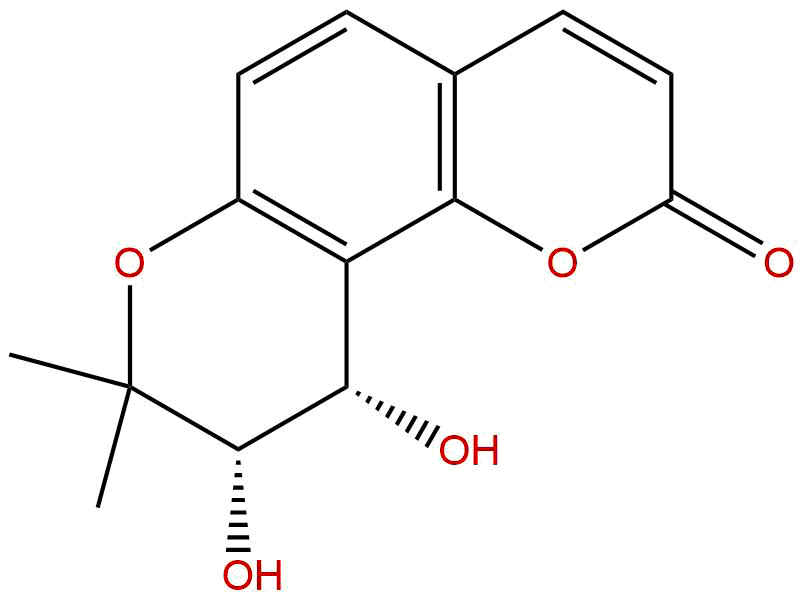


Product name: (-)-cis-Khellactone
Synonym name: cis-(-)-Khellactone
Catalogue No.: BP2331
Cas No.: 54712-23-1
Formula: C14H14O5
Mol Weight: 262.261
Botanical Source:
Type of Compound: Coumarins
Purity: 95%~99%
Analysis Method: HPLC-DAD or/and HPLC-ELSD
Identification Method: Mass, NMR
Packing: Brown vial or HDPE plastic bottle
Storage: Store in a well closed container, protected from air and light. Put into refrigerate or freeze for long term storage.
Whenever possible, you should prepare and use solutions on the same day. However, if you need to make up stock solutions in advance, we recommend that you store the solution as aliquots in tightly sealed vials at -20℃. Generally, these will be useable for up to two weeks.
The product could be supplied from milligrams to grams
Inquire for bulk scale.
For Reference Standard and R&D, Not for Human Use Directly.
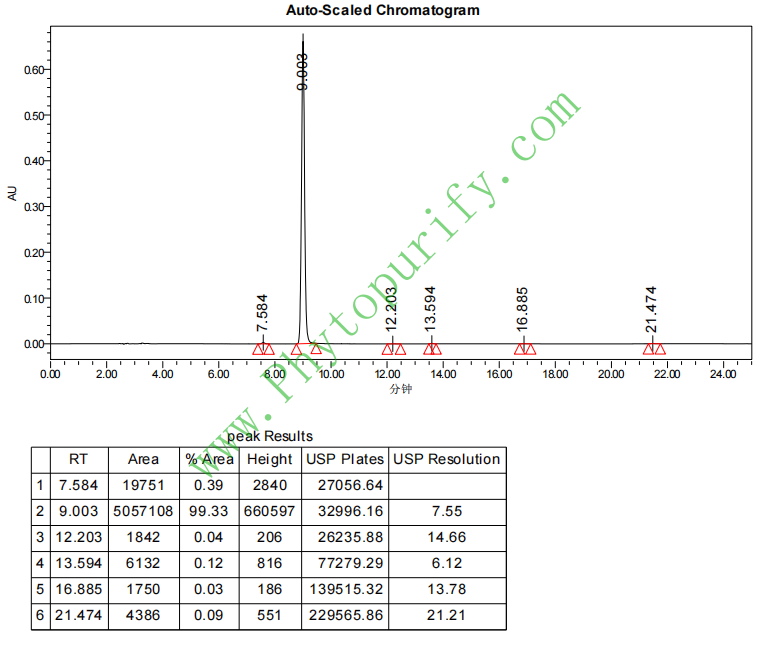
HPLC of (-)-cis-Khellactone
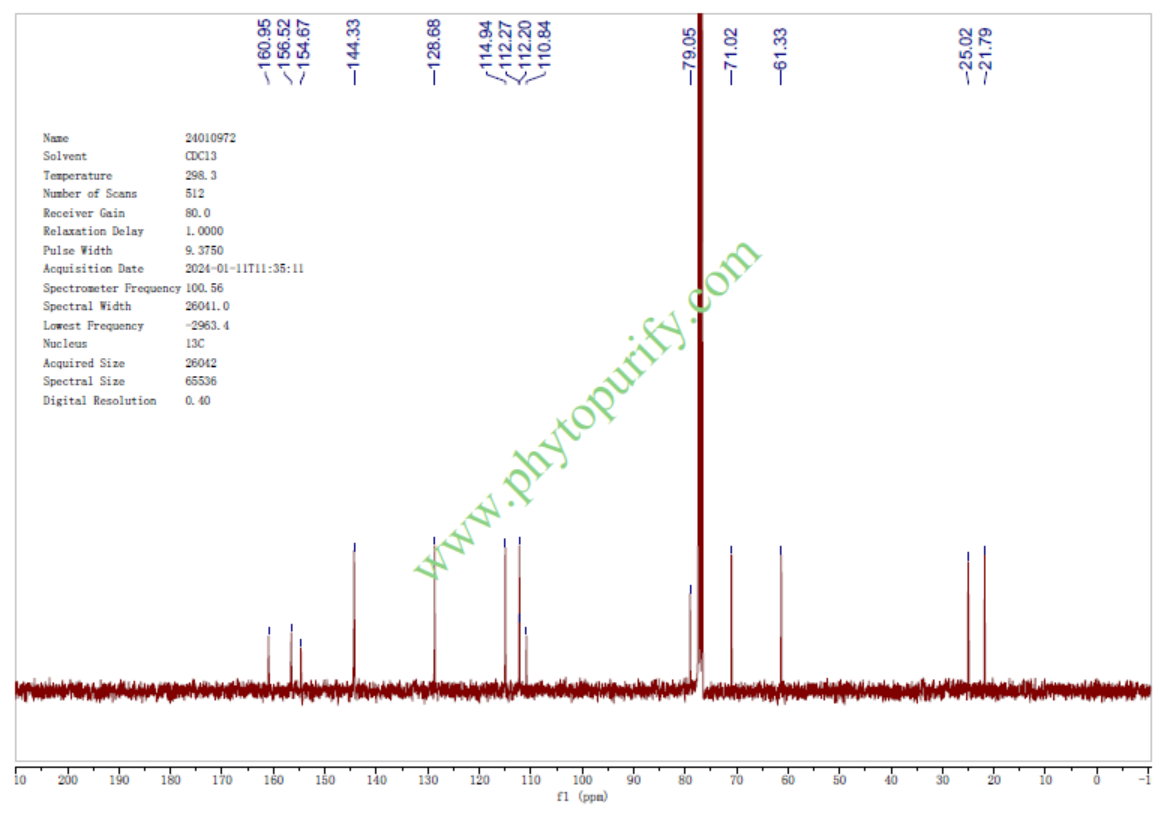
NMR of (-)-cis-Khellactone
Storage conditions:Short-term storage at 2~8℃, long-term storage at -20 ~ -80℃
79.9000
1.2188
1.2190
.3042
1.5120
4.5309
High
67.8189
3.4473
Yes
No
No
No
Yes
Yes
0.9
Yes
No
Yes
Yes
Natural products, as an important source of drug discovery, play an irreplaceable role in the long history of human struggle against diseases. Coumarin compounds, as a class of benzopyranone derivatives widely present in plants, have attracted much attention due to their structural diversity and wide range of biological activities. Among them, (-) - cis chelactone, as a dihydropyranoscoumarin with a unique stereoconfiguration, has shown significant pharmacological potential in anti-inflammatory, anti arthritis, and neuroprotective fields in recent years, gradually becoming one of the hot molecules in natural product pharmacology research.
(-) - Cis - Peucedanone, also known as (9R, 10R) -9,10-dihydro-8,8-dimethyl-2H, 8H-benzo [1,2-b: 3,4-b] - bipyran-2-one-9,10-diol, belongs to the linear dihydropyranocoumarin family. Its chemical structure is composed of a coumarin core fused with a cis configuration of a dihydropyran ring, and the two hydroxyl groups at positions C-9 and C-10 are in a cis relationship. This stereochemical feature is crucial for its biological activity. This compound was originally derived from the Umbelliferae plant, Peucedanum praeruptorum(Peucedanum praeruptorum Dunn's root separation and identification is one of the main active ingredients in the traditional Chinese medicine "Qianhu". Traditional Chinese medicine theory holds that Qianhu has the effects of dispelling wind, clearing heat, reducing qi, and resolving phlegm, while modern pharmacological research has revealed its multiple effects such as anti-inflammatory, antioxidant, anti-tumor, and cardiovascular protection.
With a deeper understanding of the pathological mechanisms of inflammatory diseases, especially rheumatoid arthritis (RA), key inflammatory factors and signaling pathways such as TNF - α, IL-6, IL-1 β, NF - κ B have been identified as important therapeutic targets. (-) - Cis - Baihua Qianhu lactone exhibits unique advantages in the treatment of complex diseases centered around chronic inflammation due to its ability to regulate inflammatory responses through multiple targets and pathways. This article will provide a systematic and in-depth review of (-) - cis - paeoniflorin from multiple dimensions, including chemical structure, plant origin, pharmacological activity, mechanism of action, pharmacological evaluation, and clinical application prospects. The aim is to provide a comprehensive scientific basis for further research and development of this natural product.
The chemical structure of (-) - cis - paeoniflorin is the material basis for its biological activity. Its molecular formula is C ₁₄ H ₁₄ O ₅, and its molecular weight is 262.26 g/mol. The core skeleton consists of a coumarin (2H-1-benzopyran-2-one) parent nucleus and a 2,2-dimethyldihydropyran ring fused at C-7 and C-8 positions. The C-9 and C-10 positions of the dihydropyran ring are each connected to a hydroxyl group (- OH), and these two hydroxyl groups are in the cis configuration, which is one of the (9R, 10R) or (9S, 10S) enantiomers, where the naturally occurring (-) - enantiomer is in the (9R, 10R) configuration. This cis diol structure is the key feature that distinguishes this compound from its trans isomer (such as berberine D), and it is also the structural basis for its specific interactions with biomolecules.
From the perspective of physical and chemical properties, (-) - cis - paeoniflorin is a white or off white crystalline powder with certain hygroscopicity. Its melting point range is usually between 187-190 ℃. In terms of solubility, the compound has good solubility in organic solvents such as methanol, ethanol, and dimethyl sulfoxide (DMSO), but its solubility in water is relatively low (calculated water solubility is 0.3042 mg/mL). This characteristic is consistent with its typical characteristics as a moderately polar natural product, with a LogP value of 1.2188, indicating that it has a certain lipophilicity and is conducive to penetrating biological membranes. It is worth noting that its topological polar surface area (TPSA) is 79.90 Å ², which is lower than the recommended upper limit of 140 Å ² for oral drugs, indicating its good oral absorption potential. In addition, computational predictions indicate that the compound has a high blood-brain barrier (BBB) penetration ability, which provides the possibility for its application in central nervous system diseases.
In terms of stability, (-) - cis - paeoniflorin is relatively stable under acidic conditions, but in strongly alkaline environments, its lactone ring may undergo ring opening reactions, leading to structural degradation. Meanwhile, the phenolic hydroxyl group (coumarin nucleus) and alcohol hydroxyl group in its molecule are sensitive to light and heat, and may undergo oxidation or isomerization when exposed to strong light or high temperature for a long time. Therefore, special attention should be paid to avoiding light, low temperature, and neutral pH environment during extraction, separation, storage, and formulation processes to maintain their chemical integrity.
(-) - Cis - Baihua Peucedanone mainly comes from the Apiaceae genus of Peucedanum(Peucedanum)Plants, among which white flowered Peucedanum(Peucedanum praeruptorum Dunn has the most abundant content. In addition, in the purple flowered Qianhu(Peucedanum decursivum Maxim.)、 Binhai Qianhu(Peucedanum japonicum Thunb.) and certain attributes(Angelica)It has also been found in plants. As a traditional Chinese medicine commonly used in China, Baihua Qianhu's dried roots are included in the Chinese Pharmacopoeia and are mainly distributed in Zhejiang, Hunan, Sichuan, Guizhou and other places. There are significant differences in the content of (-) - cis - gibberellin among different origins, harvesting seasons, and growth years of white flowered Peucedanum. Usually, the content of this component is higher in roots harvested in autumn, and its accumulation increases correspondingly with plant age.
Traditional extraction methods often use solvent impregnation or reflux extraction. Due to the polarity characteristics of (-) - cis - paeoniflorin, ethanol, methanol, or ethyl acetate are often used as extraction solvents. For example, after crushing the dried roots of Peucedanum praeruptorum, extract 2-3 times with 70% -95% ethanol under reflux at 60-80 ℃, combine the extracts, and concentrate under reduced pressure to obtain the extract. However, traditional methods have disadvantages such as long extraction time, high solvent consumption, and low yield of target components.
Modern extraction techniques have been widely used to improve extraction efficiency and purity. Ultrasound assisted extraction (UAE) utilizes the cavitation effect of ultrasound to destroy plant cell walls, accelerate solute diffusion, and significantly improve the extraction rate of (-) - cis - paeoniflorin in a short period of time (usually 30-60 minutes). Microwave assisted extraction (MAE) utilizes the dielectric heating effect of microwaves to rapidly increase the internal temperature of cells, leading to cell rupture and rapid release of target compounds. In addition, supercritical fluid extraction (SFE) technology, especially the use of carbon dioxide as an extractant, has unique advantages in extracting thermosensitive natural products due to its non-toxic, residue free, and low operating temperature. Research has shown that under appropriate pressure (20-30 MPa) and temperature (40-50 ℃), and with the addition of a small amount of ethanol as an entrainer, SFE technology can efficiently and selectively extract (-) - cis - paeoniflorin.
The crude extract after extraction needs to undergo further separation and purification to obtain high-purity (-) - cis - paeoniflorin. Classic separation methods include silica gel column chromatography, ODS reverse phase column chromatography, and preparative high-performance liquid chromatography (Prep HPLC). Due to the structural similarity between (-) - cis - paeoniflorin and its isomers (such as trans - paeoniflorin), conventional silica gel column chromatography often makes it difficult to completely separate them. Therefore, normal phase reverse phase chromatography or high-speed countercurrent chromatography (HSCCC) techniques are often used. HSCCC utilizes the difference in distribution coefficients of solutes in two-phase solvent systems, without the need for solid supports, avoiding irreversible adsorption, and is particularly suitable for the large-scale preparation of (-) - cis - paeoniflorin. In recent years, molecular imprinting technology (MIT) has also been attempted for the specific recognition and enrichment of this compound, demonstrating good selectivity.
The pharmacological activity research of (-) - cis Baihua Qianhu lactone mainly focuses on anti-inflammatory, anti arthritis, antioxidant, neuroprotective, and cardiovascular protection aspects, among which the anti-inflammatory and anti arthritis effects are the most prominent.
Anti inflammatory and anti arthritis activity This is the pharmacological activity of (-) - cis - paeoniflorin that has received the most attention. Multiple in vitro and in vivo experiments have confirmed that this compound can significantly inhibit inflammatory responses induced by lipopolysaccharides (LPS) or tumor necrosis factor alpha (TNF - α). In classic inflammatory cell models such as RAW264.7 macrophages, (-) - cis-s' - paeoniflorin can dose dependently reduce the production of nitric oxide (NO), prostaglandin E2 (PGE2), and various pro-inflammatory cytokines (including TNF - α, IL-6, IL-1 β). In animal models, such as collagen induced arthritis (CIA) mouse models or adjuvant induced arthritis rat models, oral or intraperitoneal injection of (-) - cis - paeoniflorin can significantly reduce joint swelling, lower arthritis index, inhibit synovial tissue proliferation, and soft bone destruction. Histopathological analysis showed that the compound can effectively reduce inflammatory cell infiltration and the formation of vascular opacities, protecting joint structure. In addition, it can also reduce the levels of matrix metalloproteinases (MMP-3, MMP-13) in serum, which are key mediators of articular cartilage degradation.
antioxidant activity The molecular structure of (-) - cis gibberellin contains phenolic hydroxyl groups, which endow it with certain free radical scavenging ability. Research has shown that this compound can scavenge 1,1-diphenyl-2-trinitrophenylhydrazine (DPPH) radicals, hydroxyl radicals (· OH), and superoxide anion radicals (O ₂⁻ ·), and enhance the activity of antioxidant enzymes such as superoxide dismutase (SOD) and glutathione peroxidase (GSH Px) in cells. In the oxidative stress-induced cell damage model, pretreatment with (-) - cis - paeoniflorin can significantly reduce intracellular reactive oxygen species (ROS) levels, alleviate the production of lipid peroxidation product malondialdehyde (MDA), and protect cells from oxidative damage.
Neuroprotective activity Due to its excellent blood-brain barrier penetration, the neuroprotective effect of (-) - cis - paeoniflorin has also attracted the interest of researchers. In cell models of Alzheimer's disease (AD) and Parkinson's disease (PD), this compound can inhibit beta amyloid (A β) - induced neurotoxicity and reduce apoptosis of dopaminergic neurons. The mechanism may be related to inhibiting oxidative stress, reducing neuroinflammation, and regulating autophagy pathways. In addition, in the model of cerebral ischemia-reperfusion injury, (-) - cis - paeoniflorin can reduce the volume of cerebral infarction, improve neurological function scores, and demonstrate potential anti stroke effects.
Cardiovascular protective activity Early studies have also found that (-) - cis - paeoniflorin has vasodilatory effects, which can relax isolated vascular rings pre contracted by high potassium or norepinephrine. This effect may be related to its inhibition of voltage dependent calcium channels and receptor regulated calcium channels. In addition, it can also inhibit the abnormal proliferation and migration of vascular smooth muscle cells, which is of great significance for the prevention and treatment of atherosclerosis and vascular restenosis.
The pharmacological activity of (-) - cis - paeoniflorin is not the result of a single target action, but a networked regulatory mode achieved by regulating multiple signaling pathways and molecular targets. Especially in the field of anti arthritis, its mechanism of action is closely linked to multiple identified disease-related targets.
1. Inhibit the NF - κ B signaling pathway Nuclear factor kappa B (NF - κ B) is the core transcription factor in inflammatory response. In the resting state, NF - κ B binds to its inhibitory protein I κ B and exists in an inactive form in the cytoplasm. When stimulated by inflammation such as TNF - α and IL-1 β, I κ B kinase (IKK) is activated, phosphorylating I κ B, leading to its ubiquitination and degradation. The released NF - κ B (mainly p65/p50 dimer) is then translocated into the nucleus, initiating the transcription of downstream pro-inflammatory genes such as TNF - α, IL-6, IL-1 β, COX-2, iNOS, MMPs, etc. (-) - Cis - Berberine can effectively inhibit the activity of IKK, prevent the phosphorylation and degradation of I κ B α, and thus block the nuclear translocation and transcriptional activity of NF - κ B. This is one of the core mechanisms by which it exerts broad-spectrum anti-inflammatory effects.
2. Regulating the MAPK signaling pathway The mitogen activated protein kinase (MAPK) family, including ERK, JNK, and p38 MAPK, also plays a key role in inflammatory signaling. (-) - Cis - Berberine can inhibit the phosphorylation of p38 MAPK and JNK induced by LPS or TNF - α, while having a relatively small effect on the phosphorylation of ERK. By inhibiting the p38 and JNK pathways, this compound can downregulate the activity of AP-1 (activator protein-1), thereby reducing the expression of matrix degrading enzymes such as MMP-3 and MMP-13, which is directly related to the destruction of articular cartilage.
3. Regulate the production of inflammatory mediators and cytokines As mentioned earlier, (-) - cis - paeoniflorin can directly inhibit the production of key pro-inflammatory cytokines such as TNF - α, IL-6, IL-1 β, etc. These cytokines are not only amplifiers of inflammatory responses, but also core drivers of autoimmune diseases such as RA. In addition, it can inhibit the expression of cyclooxygenase-2 (COX-2/PTGS2) and inducible nitric oxide synthase (iNOS), thereby reducing the production of PGE2 and NO, alleviating inflammation related pain and vascular dilation.
4. Inhibit the activity of matrix metalloproteinases (MMPs)MMP-3 (matrix metalloproteinase-1) and MMP-13 (collagenase-3) are the main enzymes that degrade the extracellular matrix of articular cartilage cells, such as proteoglycans and type II collagen. In RA and osteoarthritis, their expression and activity are significantly elevated. (-) - Cis - Baihua Qianhu lactone downregulates the expression of MMP-3 and MMP-13 at the transcriptional level by inhibiting the NF - κ B and MAPK pathways, thereby protecting articular cartilage from degradation.
5. Targeting NLRP3 inflammasome The latest research suggests that (-) - cis - paeoniflorin may also exert anti-inflammatory effects by inhibiting the assembly and activation of NLRP3 inflammasomes. After activation of NLRP3 inflammasome, it promotes the maturation and secretion of IL-1 β and IL-18 mediated by caspase-1, and induces cell pyroptosis. This compound may inhibit the activation of NLRP3 by interfering with mitochondrial ROS production or potassium ion efflux, thereby cutting off the maturation process of IL-1 β, a key inflammatory factor.
In summary, (-) - cis - paeoniflorin acts on multiple key targets such as TNF, PTGS2, NFKB1, IL6, IL1B, MMP3, MMP13, forming a multi-level regulatory network centered around NF - κ B and MAPK, covering cytokines, inflammatory mediators, and matrix degrading enzymes, thus achieving effective intervention in complex inflammatory diseases such as arthritis.
To promote (-) - cis - paeoniflorin from a natural product candidate molecule to clinical drugs, a systematic evaluation of its drug like and pharmacokinetic (ADME) properties is necessary.
Drugability assessment According to Lipinski's "Rule of Five", the molecular weight (262.26<500), LogP (1.22<5), number of hydrogen bond donors (2 hydroxyl groups<5), and number of hydrogen bond acceptors (5 oxygen atoms<10) of (-) - cis - paeoniflorin all meet the basic requirements for oral medication. Its TPSA is 79.90 Å ², which is lower than 140 Å ², indicating its good oral bioavailability potential. The computer-aided ADMET prediction results are also optimistic: the blood-brain barrier has high penetration, indicating its potential for targeting the central nervous system; The low risk of hERG inhibition (predicted as no) indicates a lower risk of cardiac toxicity; The Ames test predicted a value of 0.9 (usually>0.5 is considered positive), indicating a potential genetic toxicity risk, which needs to be closely monitored and validated in subsequent toxicology studies. Overall, the compound has a good pharmacological basis, but the positive predictive result of Ames test is a signal that needs to be cautious.
Pharmacokinetic characteristics At present, there is insufficient systematic research on the pharmacokinetics of (-) - cis paeoniflorin in vivo, but there are some preliminary data available for reference.
- absorb After oral administration, the compound can be absorbed in the gastrointestinal tract. Its moderate lipophilicity (LogP 1.22) facilitates its passive diffusion through intestinal epithelial cells. However, its low water solubility (0.3042 mg/mL) may become a bottleneck limiting its oral absorption. In addition, as a coumarin compound, it may be affected by the first pass effect of gut microbiota or intestinal wall metabolic enzymes (such as CYP3A4).
- distribution Due to its high blood-brain barrier penetrability, (-) - cis - paeoniflorin may have a higher distribution in brain tissue. Meanwhile, it may also be widely distributed in organs with abundant blood flow such as the liver, kidneys, and lungs. The plasma protein binding rate is yet to be determined.
- Metabolism The metabolism of this compound mainly occurs in the liver. The two hydroxyl groups in its molecule are potential sites for I-phase metabolism, such as glucuronidation and sulfation. In addition, coumarin mother nuclei may also undergo CYP450 enzyme mediated oxidative metabolism, such as 3,4-epoxidation, to generate potentially reactive intermediates. The II binding reaction (such as binding with glucuronic acid, sulfuric acid, or glutathione) is its main detoxification and clearance pathway.
- excretion Metabolites and small amounts of prototype drugs are mainly excreted through urine and bile. Due to its small molecular weight, the prototype drug may also be excreted through glomerular filtration.
Challenges and improvement strategies faced The main challenges in the commercialization of (-) - cis - paeoniflorin are: 1) poor water solubility, which affects oral absorption and bioavailability; 2) Potential genetic toxicity risk (Ames test positive); 3) Metabolic stability may be poor. To address these issues, the following strategies can be adopted: 1)Formulation technology Using techniques such as solid dispersion, liposomes, cyclodextrin inclusion complexes, or nanocrystals to improve its solubility and dissolution rate. 2)Structural modification On the premise of retaining the core pharmacophore, prodrug design (such as phosphate esters, amino acid esters) is carried out on the hydroxyl groups at positions C-9 and C-10 to improve water solubility or targeting. Meanwhile, its potential genetic toxicity can be reduced through structural optimization. 3)route of administration For central nervous system diseases, nasal or transdermal administration can be considered to bypass the blood-brain barrier and first pass effects.
Based on its unique pharmacological activity and preliminary pharmacological evaluation, (-) - cis - paeoniflorin has shown broad clinical application prospects in multiple therapeutic fields.
1. Rheumatoid arthritis (RA) and other inflammatory diseases This is the most promising application direction of (-) - cis - paeoniflorin. Its mechanism of inhibiting inflammation and bone destruction through multiple targets (TNF - α, IL-6, NF - κ B, MMPs) makes it a promising candidate drug for the treatment of RA. Compared with commonly used clinical biologics such as TNF - α inhibitors, small molecule natural products have advantages such as oral administration, low production costs, and low immunogenicity risks. In the future, if the bioavailability problem can be solved through formulation or structural modification, and its long-term efficacy and safety in RA animal models can be verified, it is expected to be developed into a disease modified anti rheumatic drug (DMARD) for the treatment of RA. In addition, its anti-inflammatory activity also suggests its potential application in chronic inflammatory diseases such as osteoarthritis (OA), inflammatory bowel disease (IBD), and psoriasis.
2. Neurodegenerative diseases Due to its excellent blood-brain barrier penetration and neuroprotective activity, (-) - cis-s - paeoniflorin has potential value in the treatment of Alzheimer's disease (AD) and Parkinson's disease (PD). By inhibiting A β aggregation, reducing neuroinflammation and oxidative stress, it may delay disease progression. However, there is still a long way to go from in vitro cell models to in vivo animal models, and finally to clinical trials. It is necessary to establish a suitable AD/PD animal model to verify whether it can improve cognitive function or motor symptoms.
3. Cardiovascular diseases Its vasodilation and anti proliferation of smooth muscle cells have potential applications in the prevention and treatment of hypertension, atherosclerosis and vascular restenosis. In the future, the possibility of using it as an adjuvant therapy drug in combination with existing antihypertensive drugs or statins can be explored.
4. Optimize the structure as a lead compound The unique skeleton of (-) - cis - paeoniflorin provides an excellent lead compound for medicinal chemists. By studying the structure-activity relationship (SAR) of the system, its structure can be modified in order to obtain derivatives with stronger activity, higher selectivity, and better pharmacokinetic properties. For example, esterification or etherification of cis diol groups may alter their lipophilicity and metabolic stability; Introducing different substituents on the coumarin nucleus may regulate its affinity for specific targets.
prospect Despite the promising prospects, the clinical translation of (-) - cis - paeoniflorin still faces many challenges. Firstly, it is necessary to conduct comprehensive and in-depth toxicology research, especially to rigorously evaluate its potential genetic toxicity and the safety of long-term use. Secondly, it is necessary to establish stable, controllable, and scalable extraction and purification processes or total synthesis routes to ensure the stable supply of active pharmaceutical ingredients. Finally, a rigorous clinical trial protocol needs to be designed to validate its efficacy and safety in humans. With the continuous development of systems biology, network pharmacology, and medicinal chemistry, research on (-) - cis - paeoniflorin will become more in-depth, and it is expected to transform it from a promising natural product candidate molecule into a clinical drug that benefits patients.
As a representative active ingredient in traditional Chinese medicine Peucedanum praeruptorum, (-) - cis coumarin occupies an important position in the field of natural product pharmacology due to its unique cis dihydropyran coumarin structure and multi-target pharmacological action mode. This article systematically reviews the chemical structure, physicochemical properties, plant origin, extraction methods, pharmacological activity, mechanism of action, pharmacological evaluation, and clinical application prospects of the compound. Research has shown that (-) - cis - paeoniflorin acts on multiple molecular targets closely related to arthritis, such as TNF - α, IL-6, IL-1 β, COX-2, MMP-3/13, by regulating key signaling pathways such as NF - κ B and MAPK, exhibiting significant anti-inflammatory, anti arthritis, antioxidant, and neuroprotective activities. The preliminary pharmacological evaluation results are relatively positive, but poor water solubility and potential genetic toxicity risks are the main obstacles to its clinical translation.
In the future, research on (-) - cis - paeoniflorin should focus on the following aspects: firstly, to further elucidate its pharmacokinetic characteristics and metabolic pathways in vivo; The second is to overcome the bottleneck of solubility and bioavailability through modern formulation technology or prodrug design; Thirdly, carry out systematic toxicology research, especially to conduct a clear assessment of the mechanisms and risks of its genetic toxicity; The fourth is to use medicinal chemical methods to optimize the structure based on its skeleton and develop a new generation of derivatives. In summary, (-) - cis - paeoniflorin is a natural product molecule with great research and development value. In depth exploration of it not only helps to reveal the scientific connotation of traditional Chinese medicine, but also has the potential to provide new candidate drugs and ideas for the treatment of chronic inflammatory diseases such as arthritis.
