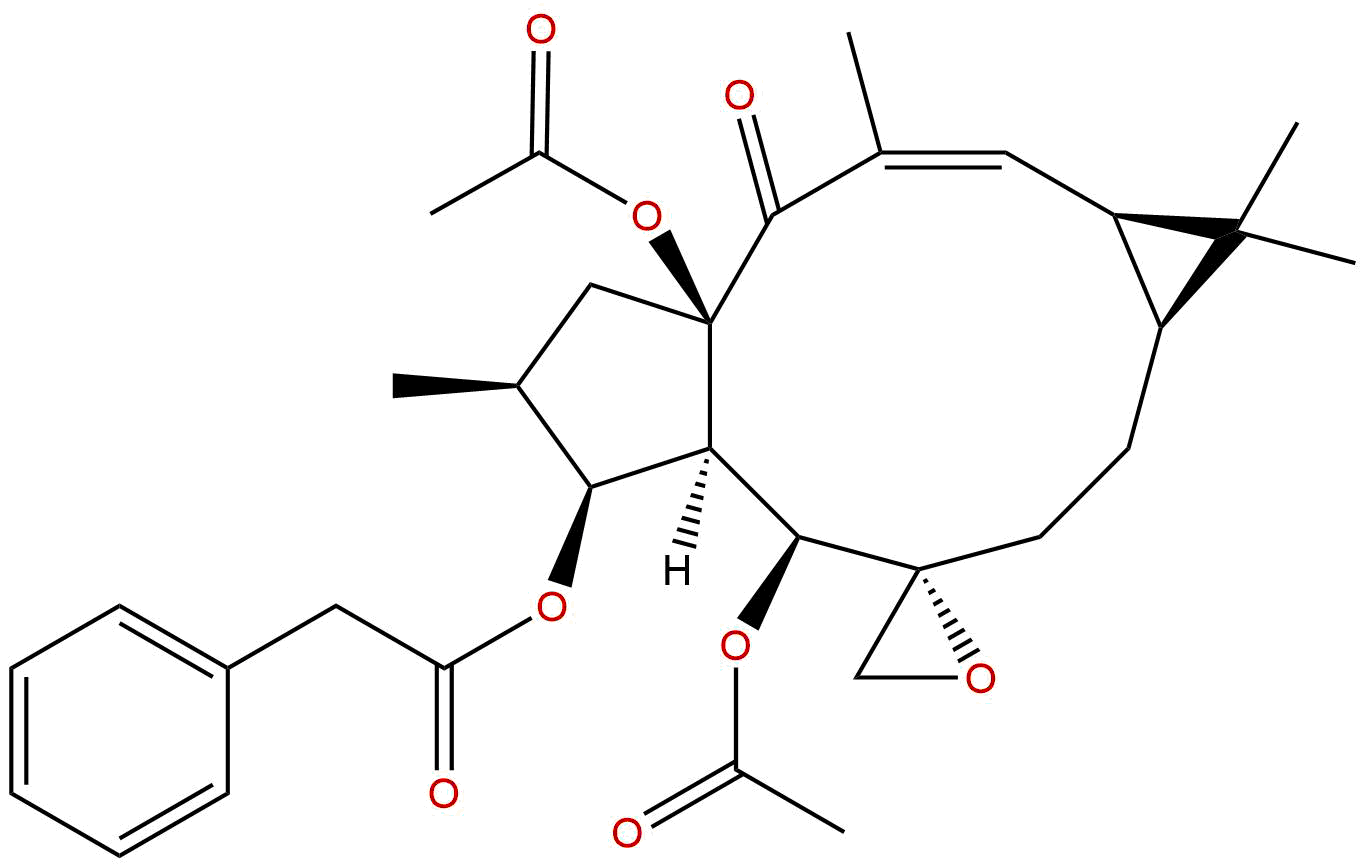


Product name: Euphorbia factor L1
Synonym name:
Catalogue No.: BP3142
Cas No.: 76376-43-7
Formula: C32H40O8
Mol Weight: 552.664
Botanical Source:
Physical Description: Cryst.
Type of Compound: Diterpenoids
Purity: 95%~99%
Analysis Method: HPLC-DAD or/and HPLC-ELSD
Identification Method: Mass, NMR
Packing: Brown vial or HDPE plastic bottle
The product could be supplied from milligrams to grams. Inquire for bulk scale.
We provide solution to improve the water-solubility of compounds, thereby facilitating the variety of activity tests and clinic uses.
For Reference Standard and R&D, Not for Human Use Directly.
Description:
Euphorbia factor L1 inhibits osteoclastogenesis and induces osteoclast apoptosis, it can enhance the ATP hydrolysis activity of ABCB1 stimulated by verapamil. Euphorbia factor L1 inhibits the efflux of ABCB1 in KBv200 and MCF-7/adr cells, does not downregulate their expression either in mRNA or protein level.
References:
Molecules. 2013 Oct 16;18(10):12793-808.
Apoptosis sensitization by Euphorbia factor L1 in ABCB1-mediated multidrug resistant K562/ADR cells.
METHODS AND RESULTS:
In this article, reversal activities of Euphorbia factor L1 (EFL1) against ABCB1-mediated multidrug resistance (MDR) and apoptosis sensitization in K562/ADR cells are reported. EFL1 decreased the IC50 values of anticancer agents in K562/ADR cells over-expressing ABCB1. However, EFL1 did not affect the IC50 values of anticancer agents in sensitive K562 cells. Additionally, EFL1 increased the intracellular accumulation of rhodamine 123 and doxorubicin in K562/ADR cells without affecting their accumulation in K562 cells. Furthermore, EFL1 sensitized the apoptosis triggered by vincristine in K562/ADR cells via mitochondrial pathway, as confirmed by Annexin V-FITC/PI detection and western blot. At the same time, EFL1 did not influence the apoptosis induced by vincristine in K562 cells.
CONCLUSIONS:
Western blot results showed that EFL1 did not affect the phosphorylation level of AKT and ERK in K562 and K562/ADR cells. Finally, EFL1 did not down-regulate protein expression of ABCB1.
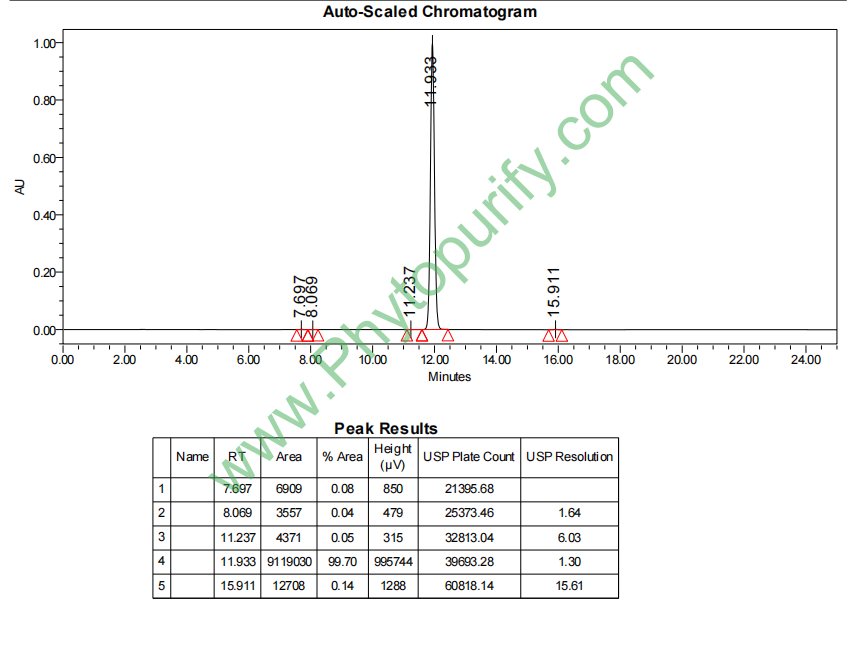
HPLC of Euphorbia factor L1
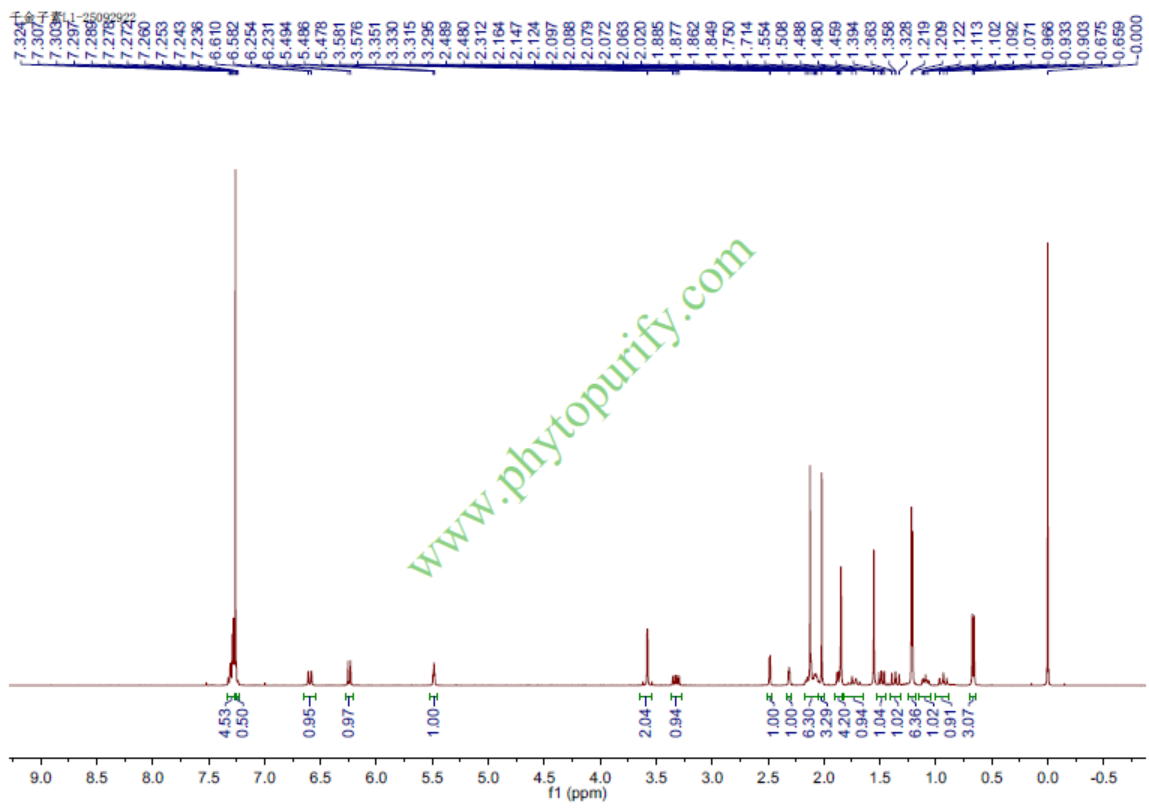
HNMR of Euphorbia factor L1
Storage conditions:Short-term storage at 2~8℃, long-term storage at -20 ~ -80℃
108.5000
4.0135
4.0135
.0034
2.6076
6.8630
High
88.2254
5.7117
No
No
No
No
No
No
0.0
Yes
No
Yes
Yes
Euphorbia factor L1 is a natural diterpenoid compound isolated from the traditional Chinese medicine Croton tiglium, with a CAS number of 76376-43-7. The molecular formula of this compound is C32H40O8, with a molecular weight of 552.6640 g/mol, belonging to the Euphorbia diterpenoid ester family. As a plant of the Euphorbiaceae family, Qianjinzi has long been recorded in traditional Chinese medicine books. It is commonly used to reduce swelling and blood stasis, but its toxicity is strong and it needs to be processed before use. The discovery of Qianjin extract L1 provides important clues for revealing the material basis of Qianjin extract's "attacking poison with poison" treatment for the accumulation of pathological conditions (including tumor diseases in modern medicine).
Modern pharmacological studies have shown that quercetin L1 has multiple biological activities. Early studies have found that it can inhibit osteoclastogenesis and induce osteoclast apoptosis, suggesting its potential in the treatment of bone metabolism diseases such as osteoporosis. What is even more remarkable is its unique role in the field of tumor research: it can enhance the ATP hydrolysis activity of ABCB1 (P-glycoprotein) stimulated by verapamil, while inhibiting the efflux function of ABCB1 in multidrug-resistant cell lines such as KBv200 and MCF-7/adr, without reducing its mRNA or protein expression. This characteristic implies that it may serve as a multidrug resistance reversal agent, enhancing the efficacy of chemotherapy drugs. In addition, bioinformatics analysis suggests that it interacts with multiple key tumor related targets (such as BCL2, TP53, CASP3, BAX, CDKN1A), particularly associated with the treatment of gastric cancer. This article will provide a systematic and professional scientific interpretation of this potential natural product from the aspects of its chemical structure, plant origin, pharmacological mechanism, medicinal evaluation, and research prospects.
The chemical structure of quercetin L1 is complex and belongs to the highly oxidized class of diterpenoid esters. Its SMILES string (CC (=O) O [C @ H] 1 [C @ H] 2 C@@HC@@HC[C@]2(OC(C)=O)C(=O)/C(C)=C[C@@H]2C@H C2 (C) C) reveals its core skeleton and multiple substituents. The structure contains multiple chiral centers (indicated by the @ symbol), indicating that it has a specific stereoconfiguration, which is crucial for its biological activity. The molecule contains one benzoyloxy group (- OC (=O) Cc3ccccc3) and multiple acetoxy groups (- OC (C)=O), which are important pharmacophores and also affect its physicochemical properties.
From the analysis of pharmacological parameters:
- Molecular weight (MW):552.6640 g/mol, Slightly higher than the recommended upper limit of 500 Da in Lipinski's Five Rules, which may pose a challenge for oral absorption.
- Lipid water partition coefficient (LogP/LogD)All values are 4.0135, indicating that the compound has high lipophilicity. This is beneficial for its penetration through the cell membrane, but it may also lead to poor water solubility.
- Water solubility Extremely low, only 0.0034 mg/mL, which confirms its high lipophilicity and is a key issue that needs to be addressed in formulation development.
- Topological Polarity Surface Area (TPSA)108.5 Å ² is higher than the threshold commonly believed to be easy to penetrate cell membranes (below approximately 140 Å ²), but its Caco-2 permeability data (6.8630 × 10 ^ -6 cm/s) and effective permeability (Peff: 2.6076) indicate moderate to good intestinal permeability potential.
- Blood-brain barrier (BBB) penetrability Predicted as' high ', which is consistent with its high lipophilicity, suggesting that it may have central nervous system activity or be able to treat brain related diseases.
Overall, quercetin L1 is a natural molecule of moderate size, high lipophilicity, low water solubility, but with decent membrane permeability. It does not fully comply with the classic Lipinski Five Rules (the "Five Principles of Similar Drugs"), but many successful drugs (especially natural products) also have similar situations, which does not completely negate their development value, but suggests that solubility and molecular weight issues may need to be considered in subsequent optimization.
Qianjin extract L1 is derived from Euphorbiaceae plants Qianjin Gold, scientific name Croton tiglium L. This plant is mainly distributed in southern China, India, Southeast Asia and other places. The dried and mature seeds are the traditional Chinese medicine "Qianjinzi", also known as "Xusuizi".
In traditional Chinese medicine theory, Qianjin gold is warm in nature, pungent in taste, toxic, and belongs to the liver, kidney, and large intestine meridians. Its main function is Dispelling swelling with water, breaking blood and resolving symptoms Commonly used in clinical practice for the treatment of:
1. Swelling and fullness are not conducive to bowel movements Using its strong laxative effect to treat severe edema and ascites.
2. Accumulation of pathological changes and amenorrhea Using its ability to break blood and eliminate symptoms, it can treat conditions such as abdominal masses and amenorrhea that are blocked by blood stasis.
3. Stubborn ringworm and verruca External application has the effect of corroding sores and killing insects.
It is worth noting that traditional medicine has a profound understanding of its toxicity. The Compendium of Materia Medica records that it has a "pungent and warm odor, and is toxic". When using it, it is recommended to remove oil and make a cream (Thousand Gold Seed Cream) to reduce toxicity, and to add more pills and powders. It should not be taken excessively or for a long time. Modern toxicology studies have confirmed that the sesame oil (croton oil) is highly irritating and contains phorbol esters, which are potent cancer promoting agents. However, the various diterpenoid components contained in it (such as quercetin L1) may have anti-tumor activities that are completely different from their carcinogenic effects, reflecting the complexity and "double-edged sword" characteristics of natural products - different components of the same plant may have completely opposite pharmacological/toxicological effects. The targeted isolation and identification of active ingredients such as Qianjingzi extract L1 from Qianjingzi is precisely the idea of modern natural medicinal chemistry to "remove the crude and extract the essence, eliminate the false and preserve the true", aiming to preserve its therapeutic activity while avoiding or reducing its inherent toxicity.
The pharmacological activity research of quercetin L1 mainly focuses on two directions: bone metabolism regulation and anti-tumor/drug resistance reversal. Its mechanism of action involves multiple key cellular signaling pathways and targets.
4.1 Inhibition of osteoclast activity
Research has shown that quercetin L1 can inhibit osteoclastogenesis and induce apoptosis. Osteoclasts are the main cells responsible for bone resorption, and their excessive activation is a key link in diseases such as osteoporosis and rheumatoid arthritis that cause bone destruction. Inducing osteoclast apoptosis and inhibiting its differentiation are important strategies for treating these diseases. Although the current description does not specify its specific target, this activity suggests that quercetin L1 may exert its effects by affecting the cell apoptosis pathway (such as CASP3) or the nuclear factor kappa B receptor activator ligand (RANKL) signaling pathway.
4.2 Mechanisms of anti-tumor and multidrug resistance reversal
This is currently the most widely studied pharmacological activity of quercetin L1, and its mechanism may involve the following aspects:
Regulating multidrug resistance protein ABCB1 (P-glycoprotein)ABCB1 is an ATP binding cassette transporter protein that is highly expressed in various tumor cells and can actively pump chemotherapy drugs out of the cell, leading to multidrug resistance (MDR). The function of Qianjin extract L1 is very unique:
Targeting key tumor related targets Database information suggests that Qianjingzi L1 is associated with multiple core tumor cell fate regulatory targets
Mechanism integration hypothesis Based on the above targets, a reasonable mechanism hypothesis can be constructed: Qianjingzi L1 may activate or stabilize p53 (TP53) in some way, thereby upregulating its downstream targets such as pro apoptotic protein BAX and cell cycle inhibitor p21 (CDKN1A), and may directly or indirectly inhibit anti apoptotic protein BCL2. The increase in the ratio of BAX/BCL2 leads to changes in mitochondrial membrane permeability, the release of cytochrome C, and ultimately the activation of Caspase-3 (CASP3), executing the apoptosis program. Meanwhile, upregulation of p21 leads to cell cycle arrest. These two factors work together to inhibit tumor cell proliferation and induce its death. In addition, it can directly act on ABCB1 protein, inhibit its efflux function, reverse multidrug resistance mediated by this protein, and make tumor cells re sensitive to conventional chemotherapy drugs.
4.3 Association with gastric cancer
Related disease information points Stomach cancer Gastric cancer is a common malignant tumor worldwide, and its occurrence and development involve multiple mechanisms such as p53 mutation, apoptosis escape, and uncontrolled cell cycle. The above-mentioned targets associated with quercetin L1 play important roles in gastric cancer. For example, TP53 has a high mutation rate in gastric cancer; Overexpression of BCL2 is associated with poor prognosis in gastric cancer. Therefore, quercetin L1 theoretically has therapeutic potential for gastric cancer by regulating this network. Its drug resistance reversal characteristics are particularly valuable for the treatment of advanced gastric cancer that is prone to develop chemotherapy resistance (including ABCB1 overexpression). Of course, this requires more cell and animal experimental data to confirm.
Drug efficacy assessment aims to predict the likelihood of a compound developing into a drug. We analyze based on the measured/predicted parameters and general rules of quercetin L1:
Lipinski's Rule of Five:
Analysis of other key parameters:
Comprehensive Assessment As a lead compound, quercetin L1 exhibits unique pharmacological mechanisms (especially drug resistance reversal) and a clear target network. In terms of its medicinal properties Advantage Good membrane permeability, no genetic toxicity, and no risk of cardiac toxicity.Main challenges Due to: 1) high molecular weight and poor water solubility, which affects the development of formulations and oral absorption; 2) The potential liver toxicity predicted is its clinical implications The biggest obstacle 3) A higher plasma protein binding rate may affect drug efficacy. Therefore, it is more likely to serve as an excellent lead compound It is necessary to optimize the structure through medicinal chemical methods (such as simplifying the structure, introducing hydrophilic groups to improve solubility, reducing LogP, removing or modifying pharmacophores that may cause liver toxicity), while maintaining activity and improving drug defects.
Research status:
At present, research on quercetin L1 is still in the early preclinical stage. The existing literature mainly focuses on its isolation and identification, preliminary cellular level activity screening (osteoclasts, drug resistance reversal), and database based target prediction. There is still a lack of comprehensive research on the specific experimental data, detailed in vivo pharmacological evaluation, pharmacokinetic characteristics, and toxicity spectrum (especially liver toxicity) of its anti gastric cancer activity. Its unique mode of action - functionally inhibiting its efflux activity without affecting ABCB1 expression - provides new ideas for the study of multidrug resistance reversal agents.
Application Prospects:
1. As a multidrug resistance reversal agent: It is used in combination with conventional chemotherapy drugs to treat drug-resistant tumors mediated by overexpression of ABCB1, such as gastric cancer, breast cancer, oral cancer, etc. This is its most direct and distinctive development direction.
2. As a candidate anti-tumor drug Further validate its individual efficacy in gastric cancer and other solid tumors, and elucidate the specific mechanism of inducing apoptosis through the p53/BAX/BCL2/Caspase-3 pathway.
3. As a bone disease treatment drug Explore its application value in bone resorption disorders such as osteoporosis and osteoarthritis.
4. lead optimization Given its structural complexity and drug defects, structural modification is an inevitable path. For example, simplifying its large tridentate skeleton while retaining key pharmacophores (such as certain ester bonds) to reduce molecular weight, improve water solubility, eliminate liver toxicity, and thus obtain more valuable derivatives for development.
Challenges and Future Directions:
- In depth mechanism research It is necessary to use techniques such as gene knockout, overexpression, co precipitation, and molecular docking to clarify the direct interaction sites and modes between quercetin L1 and targets such as ABCB1 protein and p53.
- Comprehensive in vivo evaluation Establish an animal model of gastric cancer (especially drug-resistant), evaluate its in vivo efficacy, pharmacokinetics, and toxicity, especially its toxicity to the liver.
- Structure Activity Relationship (SAR) Study Systematically synthesize a series of derivatives or analogues, clarify the contributions of each part of their chemical structure to activity (anti-tumor, drug resistance reversal) and toxicity (hepatotoxicity), and guide rational drug design.
- Formulation development Exploring new drug delivery systems such as nano formulations, liposomes, and cyclodextrin inclusion complexes to improve their bioavailability in response to their low water solubility.
Conclusion:
Qianjingzi Su L1 is a treasure molecule discovered from the traditional toxic Chinese medicine Qianjingzi. It cleverly combines multiple activities such as anti-tumor, inducing apoptosis, and reversing multidrug resistance, and its mechanism of action involves a key tumor regulatory network. Although the path of direct drug development is challenging due to its poor water solubility and potential liver toxicity, it is undoubtedly a highly valuable lead compound and molecular probe. Future research should focus on deepening the understanding of mechanisms, optimizing structures, and assessing risks, so as to transform the natural wisdom endowed by traditional Chinese medicine into a truly modern weapon that can be used in clinical practice, especially in tackling the global challenge of multidrug resistance in tumors, and contribute unique strength.
