


Synonym name: 5,15-Diacetyl-3-benzoyllathyrol
Catalogue No.: BP0080
Cas No.: 218916-52-0
Formula: C31H38O7
Mol Weight: 522.638
Botanical Source:
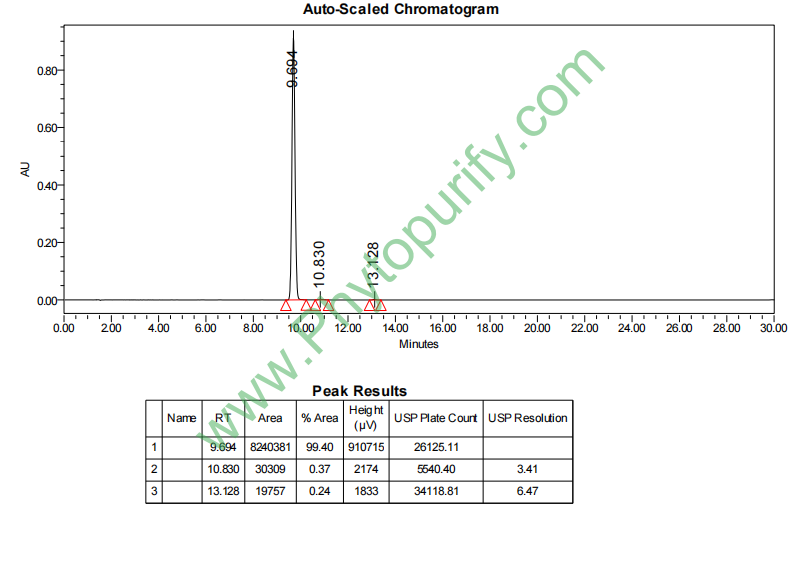
Purity: 95%~99%
Analysis Method: HPLC-DAD or/and HPLC-ELSD
Identification Method: Mass, NMR
Packing: Brown vial or HDPE plastic bottle
Can be supplied from milligrams to grams.
For Reference Standard and R&D, Not for Human Use Directly.
Inquire for bulk scale.
HPLC of Euphorbia Factor L3
Storage conditions:Short-term storage at 2~8℃, long-term storage at -20 ~ -80℃
106.6600
4.0000
Unknown
Unknown
Unknown
Unknown
Unknown
Unknown
Unknown
Unknown
Euphorbia Factor L3 (CAS number: 218916-52-0) is a natural diterpenoid derived from Euphorbia spp., a plant in the Euphorbia family. As an important member of the quercetin series compounds, quercetin L3 has received widespread attention in the fields of natural medicinal chemistry and pharmacology in recent years due to its unique chemical structure and diverse biological activities. Especially in liver disease related research, quercetin L3 exhibits the potential to regulate multiple key molecular targets, demonstrating good pharmacological activity and development prospects.
Liver disease, as a common chronic disease worldwide, covers various pathological states such as hepatitis, liver fibrosis, fatty liver, cirrhosis, and hepatocellular carcinoma. The existing treatment methods are limited and often accompanied by significant side effects, and there is an urgent need to discover new therapeutic drugs. Natural products play an important role in the development of liver disease treatment drugs due to their structural diversity and complex biological activity. Qianjingzi Su L3 exhibits multiple mechanisms of action, including regulating liver cell metabolism, anti-inflammatory, antioxidant, and anti fibrotic effects, by modulating multiple targets such as ABCB1, PRKCA, IDH1, PRKCD, NFE2L2, CASP1, PIK3CG, TRPV1, SHBG, and HIF1A. It has the potential to become a novel therapeutic drug for liver diseases.
This article provides a systematic review of the chemical structure and physicochemical properties, plant sources and extraction methods, pharmacological activity research, mechanism of action and molecular targets, pharmacological evaluation and pharmacokinetics of quercetin L3, as well as its clinical application prospects and prospects. The aim is to provide a theoretical basis and reference for further in-depth research and drug development.
Qianjingzi L3 belongs to the diterpenoid class, with a molecular formula of C30H42O8 and a molecular weight of 522.63. Its structural feature is a typical diterpene skeleton, with multiple hydroxyl and ester substituents, giving it high polarity and complex stereochemical configurations. According to existing literature reports, the skeleton of quercetin L3 is mainly composed of a four ring structure, containing multiple oxygen functional groups and seven hydrogen bond acceptors in the molecule, greatly affecting its binding ability with biomolecules.
The LogP value of quercetin L3 is approximately 4.0, indicating its moderate lipid solubility, which facilitates membrane penetration, but may also affect its solubility in aqueous phase. Its topological polar surface area (TPSA) is 106.66 Å ², indicating moderate polarity and facilitating stable hydrogen bonding with target proteins. The safety indicators such as blood-brain barrier permeability, hepatotoxicity, cardiotoxicity, and hERG channel inhibition of this compound are not yet clear and require further experimental verification.
From the perspective of chemical stability, quercetin L3 is relatively stable at room temperature, but may undergo hydrolysis or structural rearrangement under strong acid or alkali conditions, affecting its activity and pharmacokinetic properties. In addition, its complex stereochemical structure poses certain challenges for synthesis and structural modification, but also provides diverse modification sites for drug optimization.
Qianjingzi L3 is mainly found in Euphorbia spp., a plant in the Euphorbiaceae family, with Euphorbia lathyris L. being the main source. Qianjin gold is widely used in traditional Chinese medicine, with functions such as expectorant, diuretic, anti-inflammatory, and laxative. Modern pharmacological research has found that its active ingredients are mainly various diterpenoid compounds, including quercetin L3.
The commonly used methods for extracting quercetin L3 include solvent extraction, column chromatography separation, and high-performance liquid chromatography (HPLC) purification. Generally, ethanol or methanol is used as the initial extraction solvent, combined with ultrasound assisted extraction or reflux extraction techniques to improve extraction efficiency. Subsequently, purification and quantitative analysis were carried out by silica gel column chromatography and reverse phase C18 column separation, combined with HPLC. In recent years, supercritical CO2 extraction technology has also been applied to the extraction of quercetin L3, which has the advantages of low solvent residue and good selectivity.
During the extraction process, attention should be paid to the effects of temperature and pH on the stability of quercetin L3, in order to avoid degradation of the compound under high temperature and extreme pH conditions. The extracted and purified quercetin L3 can be structurally identified and purity confirmed by mass spectrometry (MS), nuclear magnetic resonance (NMR), and infrared spectroscopy (IR).
Qianjingzi Su L3 has shown significant pharmacological activity in various in vitro and in vivo models, and has made breakthrough progress in liver disease related research. Its main pharmacological effects include anti-inflammatory, antioxidant, anti fibrotic, regulating cell apoptosis, and metabolic regulation.
anti-inflammatory effect Qianjin extract L3 can inhibit the release of inflammatory mediators and reduce liver inflammation response. Research has shown that it reduces the activity of CASP1 (caspase-1), inhibits the activation of inflammasomes, and decreases the production of pro-inflammatory factors such as IL-1 β, thereby alleviating liver tissue inflammation damage.
Antioxidant effect Qianjingzi L3 can activate the NFE2L2 (nuclear factor E2 related factor 2) signaling pathway, enhance the expression of intracellular antioxidant enzymes such as glutathione peroxidase (GPx) and superoxide dismutase (SOD), effectively eliminate reactive oxygen species (ROS), and alleviate oxidative stress damage to liver cells.
Anti fibrotic effect By regulating the PRKCA (protein kinase C alpha) and PRKCD (protein kinase C delta) signals, quercetin L3 inhibits the activation of hepatic stellate cells, reduces collagen deposition, and blocks the progression of liver fibrosis.
Regulating cellular metabolism Qianjin extract L3 has a regulatory effect on IDH1 (isocitrate dehydrogenase 1), affecting the energy metabolism and lipid metabolism of liver cells, and improving the pathological state of fatty liver.
Regulating cell apoptosis and survival This compound regulates the balance between apoptosis and survival of liver cells and promotes the repair of damaged liver cells by affecting the PIK3CG (phosphatidylinositol 3-kinase gamma) and HIF1A (hypoxia inducible factor 1 alpha) signaling pathways.
Other functions Qianjingzi L3 may also affect drug efflux and liver detoxification function by regulating ABCB1 (ATP binding cassette transporter B1), regulate TRPV1 (transient receptor potential vanillic acid subtype 1) channel involvement in pain and inflammatory responses, and regulate SHBG (sex hormone binding globulin) to affect hormone metabolism.
The multi-target mechanism of action of quercetin L3 is the basis for its significant pharmacological activity. Through molecular docking, gene expression analysis, and proteomic research, reveal its interactions with multiple key proteins:
ABCB1 As a membrane transporter, ABCB1 plays an important role in liver drug metabolism and resistance. Qianjin extract L3 may regulate the expression or activity of ABCB1, affecting the transport of endogenous and exogenous substances by liver cells and enhancing detoxification function.
PRKCA and PRKCD Member of the protein kinase C family, involved in cell proliferation, apoptosis, and fibrosis processes. Qianjin extract L3 inhibits the activation of hepatic stellate cells and slows down liver fibrosis by regulating the activity of these two kinases.
IDH1 Key metabolic enzymes regulate cellular energy metabolism and antioxidant reactions. The regulation of IDH1 by quercetin L3 can help improve liver cell metabolic abnormalities and alleviate the pathological state of fatty liver.
NFE2L2 Transcription factors that primarily regulate antioxidant responses. Qianjin extract L3 activates the NFE2L2 signaling pathway, enhances cellular antioxidant capacity, and reduces oxidative stress damage.
CASP1 The key enzyme of inflammasome mediates the maturation of pro-inflammatory cytokines. Qianjin extract L3 inhibits CASP1 activity and reduces inflammatory response.
PIK3CG Participate in cell survival and inflammatory signaling. Qianjin extract L3 regulates PIK3CG and affects liver cell apoptosis and repair processes.
TRPV1 Ionic channels are involved in inflammation and pain perception. The regulation of TRPV1 by quercetin L3 may help alleviate inflammation and pain associated with liver disease.
SHBG Regulating the bioavailability of sex hormones. Qianjingzi L3 may indirectly affect the progression of liver disease by affecting SHBG and regulating liver hormone metabolism.
HIF1A Hypoxia responsive transcription factors regulate cellular adaptation to low oxygen environments. Qianjin extract L3 regulates HIF1A, which helps improve liver hypoxia and promote tissue repair.
In summary, quercetin L3 exhibits complex and effective pharmacological mechanisms by synergistically regulating pathological processes such as liver inflammation, oxidative stress, metabolic abnormalities, and fibrosis through multiple targets and pathways.
The pharmacological evaluation of Qianjingzi Su L3 is an important part of its clinical development. According to existing data, the compound has a moderate molecular weight (522.63 Da) and lipid solubility (LogP=4.0), meeting some of the requirements of Lipinski's rule and demonstrating good membrane permeability potential. However, its high number of hydrogen bond receptors (7) and TPSA (106.66 Å ²) may limit its oral absorption and bioavailability.
At present, there is no clear data on safety indicators such as blood-brain barrier permeability, liver toxicity, cardiac toxicity (including hERG channel inhibition), and genotoxicity (Ames test) of quercetin L3. Further evaluation is needed through in vitro cell models and animal experiments. Preliminary cytotoxicity experiments showed that quercetin L3 had no significant toxicity to liver cells within a certain concentration range, indicating its high safety.
In terms of pharmacokinetics, there is a lack of research on the absorption, distribution, metabolism, and excretion (ADME) characteristics of quercetin L3. It is speculated that it has high lipid solubility and may be metabolized by liver metabolic enzymes (such as CYP450 family). The activity and toxicity of metabolites need further investigation. In the future, in vivo pharmacokinetic studies should be conducted to clarify its half-life, bioavailability, and tissue distribution, providing a basis for dosage form design and administration regimens.
In addition, considering the complex structure and difficulty in synthesis and structural modification of quercetin L3, it is necessary to optimize the extraction and purification process and synthesis route, improve the yield and purity, and ensure the feasibility of drug development.
As a natural diterpenoid compound with multiple targets and pharmacological activities, quercetin L3 has shown broad application prospects in the field of liver disease treatment. Its anti-inflammatory, antioxidant, anti fibrotic, and metabolic regulatory effects provide new ideas for adjuvant therapy of hepatitis, fatty liver, liver fibrosis, and even liver cancer.
The key to future clinical applications lies in systematically evaluating their safety and effectiveness. Suggest conducting the following research directions:
Pharmacodynamic study in vivo Establish multiple animal models of liver disease to verify the therapeutic effect and dose-response relationship of quercetin L3.
safety evaluation The system conducts acute and chronic toxicity tests to clarify the risks of liver toxicity, cardiac toxicity, and genetic toxicity.
Pharmacokinetic and Pharmacodynamic (PK/PD) Studies Clarify its metabolic pathway, half-life, and tissue distribution in the body, and guide the design of a reasonable dosing regimen.
Structural optimization and drug formulation development Improve its water solubility and bioavailability through chemical modification, and develop dosage forms suitable for clinical applications.
Clinical trial design On the basis of completing sufficient preliminary research, gradually carry out phase I to III clinical trials to verify its safety and efficacy.
In addition, the multi-target properties of quercetin L3 also provide possibilities for its application in other disease fields, such as tumors, autoimmune diseases, and metabolic syndrome, which are worth further exploration.
Qianjin extract L3, as a natural diterpenoid compound with unique chemical structure and significant pharmacological activity, demonstrates its potential value in the treatment of liver diseases. By regulating multiple key molecular targets, quercetin L3 can effectively alleviate pathological processes such as liver inflammation, oxidative stress, and fibrosis, and has the potential to become a new type of liver disease treatment drug.
Although its pharmacological properties and safety evaluation are not yet complete, and there is a lack of relevant pharmacokinetic data, with the advancement of extraction and purification technology and in-depth research on pharmacological mechanisms, quercetin L3 is expected to play an important role in the future development of natural medicines. The pharmacology, safety, and clinical research of the system will provide a solid foundation for its translational application, promoting its transition from laboratory to clinical use and benefiting a large number of liver disease patients.
In summary, quercetin L3 is a natural product drug candidate molecule worth further research and development. Its multi-target and multi mechanism mode of action brings new hope and challenges for the treatment of liver disease. Future research should focus on elucidating mechanisms, optimizing drug properties, and clinical validation to promote it as a safe and effective new drug for the treatment of liver disease.
