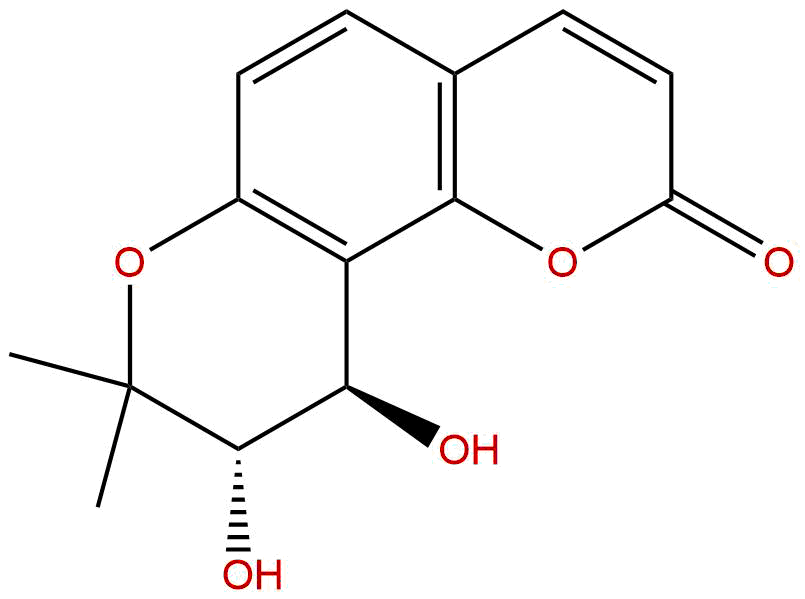


Product name: (+)-trans-Khellactone
Synonym name: trans-(+)-Khellactone
Catalogue No.: BP2330
Cas No.: 20516-17-0
Formula: C14H14O5
Mol Weight: 262.261
Botanical Source:
Type of Compound: Coumarins
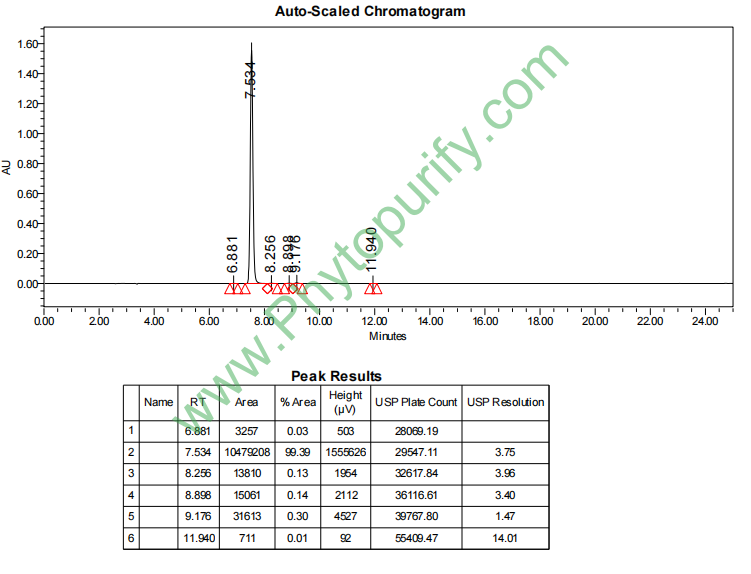
Purity: 95%~99%
Analysis Method: HPLC-DAD or/and HPLC-ELSD
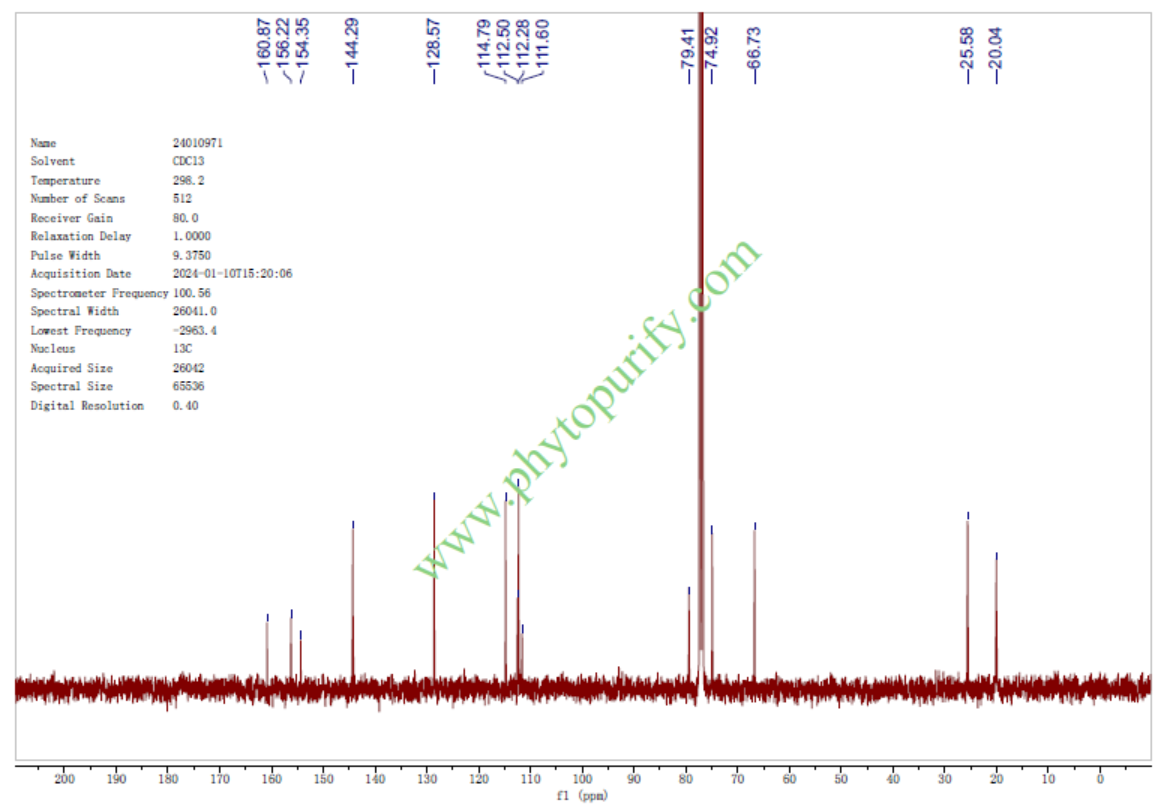
Identification Method: Mass, NMR
Packing: Brown vial or HDPE plastic bottle
Storage: Store in a well closed container, protected from air and light. Put into refrigerate or freeze for long term storage.
Whenever possible, you should prepare and use solutions on the same day. However, if you need to make up stock solutions in advance, we recommend that you store the solution as aliquots in tightly sealed vials at -20℃. Generally, these will be useable for up to two weeks.
The product could be supplied from milligrams to grams
Inquire for bulk scale.
For Reference Standard and R&D, Not for Human Use Directly.
HPLC of (+)-trans-Khellactone
NMR of (+)-trans-Khellactone
Storage conditions:Short-term storage at 2~8℃, long-term storage at -20 ~ -80℃
79.9000
1.2170
1.2169
.2893
1.5383
4.5202
High
67.8189
3.4473
Yes
No
No
No
Yes
Yes
0.9
Yes
No
Yes
Yes
Natural products have always been an important source of drug discovery and development, especially in the field of anti-tumor drugs. Active small molecule compounds isolated from plants provide a large number of lead compounds and candidate drugs for modern medicine. Coumarin compounds, as an important class of natural products, have attracted much attention due to their structural diversity and wide range of biological activities. Among them, (+) - trans chelactone, as a natural product with a unique pyranocoumarin skeleton, has shown remarkable potential in the field of anti-tumor research in recent years.
(+) - Trans-3 ′, 4 ′ - Dihydro-3 ′, 4 ′ - Dihydroxy-2 ′, 2 ′ - Dimethylpyran [5 ′, 6 ′: 7,8] coumarin, a linear dihydropyran coumarin compound. This compound was first derived from the Umbelliferae plant, Peucedanum praeruptorum(Peucedanum praeruptorum Obtained from Dunn, it is one of the main active ingredients of traditional Chinese medicine "Qianhu". In traditional Chinese medicine, Qianhu is widely used to treat respiratory diseases such as cough, phlegm accumulation, chest and rib pain. Modern pharmacological research has revealed its richer biological activities, including anti-inflammatory, antioxidant, antiplatelet aggregation, and anti-tumor effects.
It is worth noting that (+) - trans Peucedanolide shows unique research value in the field of breast cancer treatment. Breast cancer, as the highest incidence of malignant tumors in women in the world, its pathogenesis is complex, involving the abnormal regulation of multiple signal pathways. In recent years, it has been found that this compound can affect the proliferation, apoptosis and drug resistance of breast cancer cells by regulating multiple key signaling pathways such as AMPK, STAT3, NOTCH1. In addition, its regulatory effect on the ABC transporter family also suggests its potential value in reversing multidrug resistance.
This article will provide a systematic review of the research progress of (+) - trans - paeoniflorin from multiple dimensions, including chemical structure, plant origin, pharmacological activity, mechanism of action, pharmacological evaluation, and clinical application prospects, in order to provide reference for the in-depth research and development of this natural product.
The chemical structure of (+) - trans - paeoniflorin exhibits typical linear pyranocoumarin skeleton features. Its core structure is composed of a coumarin parent nucleus (benzo [a] - pyranone) linearly fused with a dihydropyran ring. Specifically, a unique four ring system is formed by connecting a 2,2-dimethyl-3,4-dihydroxy-3,4-dihydropyran ring at the C-7 and C-8 sites of coumarin. This compound contains two chiral centers (C-3 ′ and C-4 ′), and its absolute configuration is (3 ′ S, 4 ′ S), which is the trans configuration. This is also the origin of the "trans" in its name.
From the perspective of stereochemistry, the C-3 'and C-4' hydroxyl groups of (+) - trans - paeoniflorin are in a trans configuration, which has a significant impact on its biological activity. Research has shown that there are significant differences in pharmacological activity between cis isomers (i.e. (-) - cis - paeoniflorin) and trans isomers, indicating that the spatial arrangement of chiral centers is crucial for interactions with target proteins.
According to the results of computational chemistry and experimental measurements, the main physicochemical properties of (+) - trans - paeoniflorin are as follows:
Molecular weight and formula The molecular weight of this compound is 262.2610 Da, and the molecular formula is C ₁₄ H ₁₄ O ₅. This molecular weight is within the ideal range for small molecule drugs, which is beneficial for oral absorption and cell membrane permeability.
Fat water partition coefficient The LogP value is 1.2170, indicating that the compound has moderate lipophilicity. This value ensures that it can pass through the biofilm system while maintaining a certain degree of water solubility, which is beneficial for its distribution and transport in the body.
Polar Surface Area The topological polar surface area (TPSA) is 79.9000 Å ². This value is slightly higher than the recommended range of 60-70 Å ² for oral medications, but still within acceptable limits. The higher TPSA mainly comes from two hydroxyl groups and one lactone group, which may affect its hydrogen bonding interaction with the target protein.
Water solubility The water solubility parameter is 0.2893 mg/mL, which belongs to a slightly soluble compound. This solubility characteristic suggests that solubilization techniques or prodrug strategies may be necessary in formulation development.
Blood-brain barrier permeability The predicted results show that the compound has high blood-brain barrier permeability. This characteristic has potential value for treating central nervous system diseases, but it may also increase the risk of central nervous system toxicity.
Security prediction HERG inhibition prediction is negative, indicating a low risk of the compound causing cardiac QT interval prolongation. The predicted value of Ames test is 0.9, indicating that it may have a slight genetic toxicity risk and needs to be given attention in subsequent development.
The (+) - trans - white flowered gibberellin is mainly derived from the Apiaceae family of the genus Apiaceae(Peucedanum)Plants, among which white flowered Peucedanum(Peucedanum praeruptorum Dunn has the most abundant content. Baihua Qianhu is a commonly used traditional Chinese medicine recorded in the Chinese Pharmacopoeia, mainly distributed in provinces such as Zhejiang, Anhui, Jiangxi, and Hunan. In addition, plants of the same genus, such as Purple flowered Peucedanum(Peucedanum decursivum Maxim.)、 Binhai Qianhu(Peucedanum japonicum Thunb. and others also contain this compound, but the content is usually low.
It is worth noting that the content of (+) - trans - paeoniflorin in plants is influenced by various factors, including growth environment, harvest season, plant parts, etc. Research has shown that the content of Peucedanum praeruptorum is highest in the roots and lower in the stems and leaves; The content of this compound in medicinal herbs harvested in autumn is higher than that in samples harvested in spring. In addition, the content of (+) - trans - paeoniflorin in different regions of Peucedanum praeruptorum can vary several times, which may be related to soil conditions, climatic factors, and genetic variation.
At present, the extraction of (+) - trans - paeoniflorin mainly adopts organic solvent extraction method. Common extraction solvents include ethanol, methanol, ethyl acetate, etc. Among them, 70% -95% ethanol reflux extraction is the most commonly used method, with high extraction efficiency and moderate cost. The extraction process parameters (such as temperature, time, and solid-liquid ratio) have a significant impact on the extraction rate, and optimized processes usually achieve higher extraction efficiency.
The crude extract after extraction needs to undergo further separation and purification steps. Traditional separation methods include silica gel column chromatography, ODS reverse phase column chromatography, preparative high-performance liquid chromatography, etc. Silica gel column chromatography usually uses petroleum ether ethyl acetate or chloroform methanol gradient elution systems to achieve preliminary separation. Subsequently, high-purity (+) - trans - paeoniflorin can be obtained by ODS reverse phase column chromatography or preparative HPLC.
In recent years, some new extraction techniques have also been applied to the separation of this compound, such as supercritical fluid extraction, microwave-assisted extraction, ultrasound assisted extraction, etc. These technologies have the advantages of short extraction time, low solvent consumption, and environmental friendliness, but the equipment cost is high and they have not yet been widely applied in industrial production.
Given the limitations of natural extraction, the study of chemical synthesis methods is of great significance for ensuring the stable supply of (+) - trans - paeoniflorin. At present, multiple synthetic routes have been reported, mainly including the following strategies:
Coumarin parent nucleus construction method Starting from substituted salicylaldehyde, a coumarin ring is constructed through Perkin reaction or Knoevenagel condensation, followed by the introduction of a dihydropyran ring.
Pyran cyclization method Using 7,8-dihydroxycoumarin as raw material, a dihydropyran ring was constructed through cyclization reaction with isopentenyl derivatives.
Asymmetric synthesis method Using chiral catalysts or chiral additives to control the stereochemistry of C-3 'and C-4' positions, achieving selective synthesis of (+) - trans configurations.
However, existing synthetic routes generally suffer from problems such as multiple steps, low overall yield, and difficulty in controlling stereoselectivity, which limit their large-scale applications. Therefore, developing efficient and highly selective synthetic methods remains an important research direction in this field.
Breast cancer is the most deeply studied tumor type of (+) - trans Peucedanolide. In vitro experiments showed that the compound showed significant proliferation inhibition on a variety of breast cancer cell lines (including MCF-7, MDA-MB-231, T-47D, etc.), and the IC ₀ value was generally within the range of 10-50 μ M. It is worth noting that this compound also shows good activity to the three negative breast cancer cell line MDA-MB-231, which provides a basis for its application in the treatment of refractory breast cancer.
Further research found that (+) - trans Peucedanolide could induce apoptosis of breast cancer cells, which was characterized by nuclear concentration, DNA fragmentation, and an increase in the proportion of Annexin V positive cells. At the same time, the compound can also block the cell cycle in the G0/G1 or G2/M phases, and the specific blocking sites may vary depending on the cell type.
In addition to breast cancer, (+) - trans Peucedanolide also showed inhibitory effects on a variety of other tumor cells, including lung cancer (A549, H1299), liver cancer (HepG2, Huh7), colon cancer (HT-29, HCT116), gastric cancer (SGC-7901, MKN-45), etc. These research results indicate that the compound may have broad-spectrum anti-tumor activity, but its strength of action varies depending on the cell type.
(+) - trans - Baihua Qianhulide also exhibits significant anti-inflammatory activity. Research has shown that this compound can inhibit the production of nitric oxide (NO) and prostaglandin E ₂ (PGE ₂) in macrophages induced by lipopolysaccharide (LPS), and its mechanism is related to the inhibition of the expression of inducible nitric oxide synthase (iNOS) and cyclooxygenase-2 (COX-2). In addition, the compound can also reduce the levels of pro-inflammatory cytokines such as TNF - α, IL-6, and IL-1 β.
In terms of antioxidant activity, (+) - trans - paeoniflorin exhibits strong free radical scavenging ability, which can reduce intracellular reactive oxygen species (ROS) levels and increase the activity of superoxide dismutase (SOD) and glutathione peroxidase (GPx). These antioxidant properties may be closely related to their anti-tumor and anti-inflammatory activities.
In addition, (+) - trans - paeoniflorin has been reported to have various pharmacological activities such as anti platelet aggregation, vasodilation, anti fibrosis, and neuroprotection. These diverse biological activities suggest that the compound may have multi-target action characteristics, but also increase the complexity of its mechanism of action research.
AMP activated protein kinase (AMPK) is a key regulator of cell energy metabolism and plays an important role in the occurrence and development of breast cancer. Research has shown that (+) - trans - paeoniflorin can activate the AMPK signaling pathway, manifested by an increase in phosphorylation levels at the Thr172 site of the AMPK α subunit. Activated AMPK further phosphorylates its downstream substrate acetyl CoA carboxylase (ACC), regulating fatty acid oxidation and lipid synthesis.
The activation of AMPK is closely related to the growth inhibition of breast cancer cells. On the one hand, AMPK can inhibit the mTOR signaling pathway, reduce protein synthesis and cell proliferation; On the other hand, AMPK can also activate the p53/p21 pathway and induce cell cycle arrest. It is worth noting that the activation effect of (+) - trans - paeoniflorin on AMPK is weak in normal cells, suggesting that it may have selective anti-tumor effects.
The mechanism of (+) - trans Peucedanolide inducing apoptosis of breast cancer cells involves the regulation of multiple apoptosis related proteins. Research has found that this compound can downregulate the expression of anti apoptotic proteins MCL1 and BCL2, while upregulating the expression of pro apoptotic protein BAX, leading to a decrease in mitochondrial membrane potential and release of cytochrome c. In addition, the compound can activate caspase-9 and caspase-3, ultimately inducing cell apoptosis through the mitochondrial pathway (endogenous pathway).
It is worth noting that MCL1, as an important member of BCL2 family, plays a key role in drug resistance of breast cancer. The downregulation of MCL1 by (+) - trans - paeoniflorin may help overcome certain types of drug resistance.
NOTCH signaling pathway plays an important role in breast cancer stem cell maintenance and tumor progression. Research has shown that (+) - trans - paeoniflorin can inhibit the activation of NOTCH1, manifested by a decrease in the level of NOTCH1 intracellular domain (NICD). This effect may be achieved by inhibiting the activity of gamma secretase or promoting the internalization of NOTCH1 receptors.
The inhibition of NOTCH1 signaling pathway is closely related to the reduction of breast cancer stem cells. The study found that after treatment with (+) - trans Peucedanolide, the proportion of CD44+/CD24 ⁻ stem cell subsets in breast cancer cells was significantly reduced, and the ability to form tumor bulbs was weakened. These results indicate that the compound may exert anti-tumor effects by targeting tumor stem cells.
Signal transducer and activator of transcription factor 3 (STAT3) is continuously activated in various tumors, promoting cell proliferation, survival, and angiogenesis. (+) - Trans - Peucedanol can inhibit the phosphorylation of STAT3 (Tyr705 site), reduce its nuclear translocation and transcriptional activity. The inhibition of STAT3 leads to downregulation of downstream target genes such as Cyclin D1, Survivor, VEGF, thereby inhibiting tumor cell proliferation and angiogenesis.
In addition, there is cross regulation between STAT3 and NOTCH1. Research has found that the inhibitory effect of (+) - trans - paeoniflorin on STAT3 may be partially mediated through the NOTCH1 signaling pathway, suggesting a synergistic effect between these two pathways.
Estrogen receptor β (ESR2/ER β) plays an important role in the regulation of breast cancer. Research has shown that (+) - trans - paeoniflorin can bind to ER β and regulate its transcriptional activity. Unlike classical estrogen receptor modulators, this compound exhibits selective regulatory effects on ER β and may exert partial excitatory/antagonistic dual effects.
The activation of ER β is usually related to the anti proliferation effect, which is consistent with the growth inhibition of (+) - trans Peucedanolide in ER positive breast cancer cells. However, the compound has a weak effect on ER α, suggesting that it may have ER subtype selectivity.
Multidrug resistance is one of the main reasons for chemotherapy failure of breast cancer. Overexpression of ABC transporter family members such as ABCB1 (P-gp) and ABCG2 (BCRP) is an important mechanism leading to multidrug resistance. Research has shown that (+) - trans - paeoniflorin can inhibit the transport activity of ABCB1 and ABCG2, increasing the accumulation of chemotherapy drugs in drug-resistant cells.
Further research has found that the inhibitory effect of this compound on ABC transporters may be achieved through two mechanisms: one is to directly bind to transporters and competitively inhibit drug efflux; The second is to regulate the PKC signaling pathway, affecting the phosphorylation status and membrane localization of transporters. Among them, the regulation of protein kinase C alpha (PRKCA) plays an important role in this process.
Tyrosinase (TYR) is a key enzyme in melanin synthesis and is highly expressed in melanoma. Research has found that (+) - trans - paeoniflorin can inhibit tyrosinase activity and reduce melanin production. This effect may be related to its antioxidant activity, but it may also involve the regulation of tyrosinase gene expression.
According to the Lipinski Five Rules, the molecular weight (262.26 Da) of (+) - trans - paeoniflorin is less than 500 Da, the LogP (1.22) is less than 5, the number of hydrogen bond donors (2 hydroxyl groups) is less than 5, and the number of hydrogen bond acceptors (5 oxygen atoms) is less than 10, meeting the basic requirements for oral medication. Its TPSA is 79.90 Å ², slightly higher than the ideal range of 60-70 Å ², but still within an acceptable range.
However, the water solubility of the compound is poor (0.2893 mg/mL), which may affect its oral bioavailability. In addition, the lactone ring contained in its structure may undergo hydrolysis in vivo, producing ring opening products. This metabolic characteristic needs to be considered in drug design.
At present, there is insufficient research on the pharmacokinetics of (+) - trans - paeoniflorin in vivo. Existing studies have shown that the compound is absorbed quickly after oral administration, but its absolute bioavailability is low, which may be related to first pass metabolism. After intravenous administration, the compound is widely distributed in the body, manifested as a large distribution volume.
In terms of metabolism, (+) - trans - paeoniflorin is mainly metabolized by the liver, involving glucuronic acid binding, sulfate binding, and cytochrome P450 enzyme mediated oxidative metabolism. The main metabolites include hydroxylation products and binding products, and the biological activity of these metabolites still needs further research.
In terms of excretion, the compound and its metabolites are mainly excreted through bile and urine. It is worth noting that due to its high blood-brain barrier permeability, this compound may accumulate in the central nervous system, which may provide opportunities for treating central nervous system diseases and increase the risk of neurotoxicity.
Preliminary safety evaluation shows that (+) - trans - paeoniflorin has low toxicity to normal cells (such as human umbilical vein endothelial cells and human liver cells) in vitro, and exhibits certain selective anti-tumor effects. HERG inhibition prediction is negative, indicating a low risk of cardiac toxicity. However, the Ames test predicted a value of 0.9, suggesting that it may have a slight genetic toxicity risk and further in vivo genetic toxicity testing is needed to confirm.
In animal experiments, the acute toxicity of this compound is low, but long-term toxicity studies are not yet sufficient. In addition, its potential toxicity to the liver and kidneys, immunotoxicity, and reproductive toxicity all require systematic evaluation.
(+) - trans Peucedanolide shows the characteristics of multi target action in the treatment of breast cancer, and can simultaneously regulate multiple key signal pathways such as AMPK, STAT3, NOTCH1, which makes it have unique advantages in overcoming tumor heterogeneity and drug resistance. In particular, its effect on triple negative breast cancer and drug-resistant breast cancer cells provides a basis for its application in the treatment of refractory breast cancer.
However, there are still many challenges in transitioning from natural products to clinical drugs. Firstly, the compound has poor water solubility and low oral bioavailability, requiring the development of appropriate drug delivery systems or prodrug strategies. Secondly, its selective toxicity to normal cells needs further validation to ensure the safety of the treatment window. In addition, although the multi-target action characteristics of this compound are beneficial for improving therapeutic efficacy, they may also increase the risk of off target toxicity.
Based on the structural characteristics of (+) - trans - paeoniflorin, medicinal chemistry optimization can be carried out from the following aspects:
Improve water solubility Introducing polar groups (such as phosphate or amino acid groups) or preparing salts at C-3 'or C-4' positions to improve water solubility.
Improve metabolic stability Modify the lactone ring, such as introducing methyl or fluorine atoms, to reduce the hydrolysis rate.
Improve targeting ability Using prodrug strategy, coupling compounds with tumor targeting ligands (such as folate, RGD peptides) to enhance tumor selectivity.
Simplified structure Retain key pharmacophores, simplify molecular structure, and reduce synthesis difficulty.
Given the multi-target action characteristics of (+) - trans - paeoniflorin, combination therapy may be an effective strategy to improve efficacy and reduce toxicity. For example, when combined with chemotherapy drugs such as paclitaxel and doxorubicin, this compound may increase the sensitivity of drug-resistant cells to chemotherapy drugs by inhibiting the activity of ABC transporters. In addition, the combination with targeted drugs such as tamoxifen and trastuzumab may produce synergistic effects by regulating different signaling pathways.
To solve the problems of poor water solubility and low bioavailability of (+) - trans - paeoniflorin, new drug delivery systems can be developed, such as liposomes, nanoparticles, cyclodextrin inclusion complexes, etc. These delivery systems can not only improve the solubility and stability of drugs, but also achieve targeted delivery and controlled release, enhancing therapeutic efficacy.
In addition to anti-tumor effects, the anti-inflammatory, antioxidant, and neuroprotective activities of (+) - trans - paeoniflorin are also worthy of attention. Given its high blood-brain barrier permeability, this compound may have potential value in the treatment of neurodegenerative diseases such as Alzheimer's disease and Parkinson's disease. In addition, its applications in cardiovascular diseases, metabolic diseases, and other fields are also worth exploring.
As an important active ingredient in traditional Chinese medicine, Peucedanum praeruptorum, (+) - trans - Peucedanum praeruptorum lactone has shown unique value in the field of anti-tumor research. This compound affects the proliferation, apoptosis, drug resistance and stem cell characteristics of breast cancer cells by regulating multiple molecular targets such as AMPK, MCL1, BCL2, NOTCH1, STAT3, ESR2, etc., showing the characteristics of multiple targets and pathways. Its pharmacological evaluation shows that the compound has good drug like properties and preliminary safety, but problems such as poor water solubility and low oral bioavailability still need to be addressed.
The journey from natural products to clinical drugs is a long and challenging one. Although (+) - trans - paeoniflorin has shown remarkable activity in basic research, its clinical translation still faces many obstacles. Future research should focus on the following aspects: in-depth elucidation of its mechanism of action, especially the cross regulatory relationship between different targets; Optimize the chemical properties of drugs and improve drug efficacy; Conduct systematic pharmacokinetic and toxicological studies; Explore rational combination therapy strategies and drug delivery systems.
In summary, (+) - trans - paeoniflorin, as a natural product, deserves further investigation for its anti-tumor activity. With the development of modern pharmaceutical chemistry, pharmacology and pharmaceutical technology, this compound is expected to play an important role in the development of anti-tumor drugs in the future, bringing new treatment options for breast cancer patients.
