Introduction/Overview
As an important treasure trove for drug discovery, natural products continue to provide lead compounds with diverse structures and unique biological activities for human health. Among them, saponin compounds have attracted the attention of pharmacological researchers due to their extensive and significant pharmacological activities, such as anti-inflammatory, anti-tumor, immune regulation, etc. Soyasaponin III (CAS number: 55304-02-4) is a soybean saponin(Glycine max)A class of single chain oleanane triterpenoid saponins with abundant content in their processed products. As one of the main bioactive saponins in soybeans, soybean saponin III is not only the material basis of soybean food functionality, but also has potential medicinal value due to its activities such as inducing apoptosis of Hep-G2 liver cancer cells in vitro studies. In recent years, with a deeper understanding of the core role of the immune system in tumors, autoimmune diseases, and chronic inflammation, the potential of soy saponin III in immune regulation has gradually become a research hotspot. Previous studies have suggested that it may finely regulate immune responses by regulating multiple key immune related targets such as Toll like receptor 4 (TLR4), signal transduction and transcription activator 3 (STAT3), and nuclear factor kappa B (NF - κ B). This article aims to systematically review the chemical properties, plant sources, pharmacological activities, particularly its immunomodulatory effects and molecular mechanisms, of soybean saponin III, and provide a preliminary evaluation of its medicinal properties, in order to provide scientific reference for the deep development and clinical application of this natural product.
Chemical structure and physicochemical properties
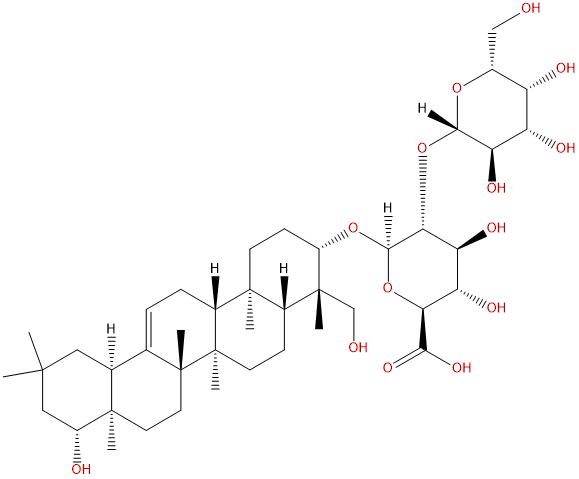
Soybean saponin III belongs to the oleanane type pentacyclic triterpenoid saponin, and its parent nucleus is oleanolic acid. Its chemical structure is characterized by a linear sugar chain attached to the hydroxyl group at position C-3 of oleanolic acid, and is therefore classified as a single chain saponin (or monosaccharide chain saponin). Specifically, this sugar chain is typically composed of glucuronic acid (GlcA), which is the key structure that distinguishes it from other double chain soybean saponins such as soybean saponin I. Its molecular formula is C42H68O15 and its molecular weight is 796.9920.
In terms of physicochemical properties, soybean saponin III exhibits typical characteristics of saponin compounds. The calculated lipid water partition coefficient (LogP) is 2.5183, indicating that the compound has a certain degree of lipophilicity. However, due to the presence of multiple hydrophilic hydroxyl and carboxyl groups in its sugar chain, it still belongs to an amphiphilic molecule as a whole. Its topological polar surface area (TPSA) is as high as 236.0600 Å ², mainly attributed to the abundant oxygen atoms on the sugar chain, indicating strong hydrogen bonding ability of the molecule, but it may also affect its transmembrane permeability. The water solubility data shows that its solubility is about 0.1394 mg/mL, belonging to the category of slightly soluble to poorly soluble, which may become one of the challenges in formulation development in practical applications. In addition, its larger molecular weight and higher polarity also lead to a predicted "low" ability to cross the blood-brain barrier (BBB), suggesting that its main target may be located outside the central nervous system.
Plant sources and extraction methods
Soybean saponin III is mainly derived from the leguminous plant soybean(Glycine max The seeds of (L.) Merr. Soybeans, as an important global food and economic crop, are rich in various bioactive components in their seeds, including isoflavones, saponins, phospholipids, etc. The content of soybean saponins in soybeans varies significantly depending on the variety, growth environment, planting conditions, and seed location (cotyledons, hypocotyls), usually accounting for 0.5% -6.5% of the total dry weight. Soybean saponin III is one of the important components.
The extraction and isolation of soybean saponin III from soybeans typically involves a multi-step process. The classic extraction method begins with organic solvent extraction. Due to the amphiphilic nature of saponins, medium polarity solvents or mixed solvent systems such as methanol, ethanol, or methanol water or ethanol water solutions are often used for heating reflux or ultrasound assisted extraction. After vacuum concentration, the crude extract can be preliminarily purified by utilizing the polarity differences between saponins, glycosides, pigments, and other impurities. For example, using the n-butanol water blending method, saponins tend to accumulate in the n-butanol layer.
After obtaining the crude saponin, further separation and purification are required to obtain the single compound soybean saponin III. Column chromatography is the core method, and silica gel, reverse silica gel (such as C18), macroporous adsorption resin (such as D101, AB-8) or dextran gel (such as Sephadex LH-20) are often used as the stationary phase. The elution system often uses gradient elution methods such as chloroform methanol water and methanol water. High performance liquid chromatography (HPLC), especially preparative or semi preparative HPLC, is a key step in obtaining high-purity soybean saponin III. It is often separated using a reverse phase C18 column with acetonitrile water or methanol water (pH adjusted with a small amount of formic acid or acetic acid) as the mobile phase. Modern extraction techniques such as microwave-assisted extraction and supercritical fluid extraction have also been applied in research aimed at improving extraction efficiency and reducing solvent consumption. The structure of the final product was confirmed by techniques such as mass spectrometry (MS) and nuclear magnetic resonance (NMR, including 1H NMR and 13C NMR).
Pharmacological activity research
A large number of in vitro and partial in vivo studies have shown that soybean saponin III has multiple pharmacological activities, and its core activities can be summarized as follows:
-
Antitumor activity This is one of the earliest activities of soybean saponin III. Research has shown that soybean saponin III can effectively inhibit the proliferation of various tumor cells and induce their apoptosis. For example, in Hep-G2 liver cancer cells, soybean saponin III can activate the caspase cascade through the mitochondrial pathway and death receptor pathway, leading to cell apoptosis. In addition, it also showed birth growth inhibitory effect on colon cancer, breast cancer and other cell lines. Its anti-tumor effect is not limited to direct cytotoxicity, but may also involve inhibiting tumor angiogenesis and metastasis.
-
Immune regulatory activity Immune regulation is the most distinctive pharmacological effect of soybean saponin III and is currently at the forefront of research. Research has shown that soy saponin III has a bidirectional regulatory effect on the immune system. In immunosuppressed or depressed states, it can enhance immune response, such as promoting phagocytic activity of macrophages, stimulating lymphocyte proliferation, and enhancing the cytotoxic effect of natural killer (NK) cells. On the contrary, under excessive immune activation or autoimmune states, it can also exert anti-inflammatory and immunosuppressive effects, such as inhibiting the excessive production of pro-inflammatory cytokines (such as TNF - α, IL-6) and promoting the expression of anti-inflammatory factors (such as IL-10). This "adaptogen like" immune regulatory property makes it potentially valuable in the treatment of chronic inflammation, autoimmune diseases, and as an adjuvant therapy for tumor immunity.
-
Anti inflammatory and antioxidant activity Soy saponin III can significantly inhibit the inflammatory response induced by stimuli such as lipopolysaccharides (LPS). In RAW264.7 macrophage and other models, it can reduce the production of nitric oxide (NO), prostaglandin E2 (PGE2), and various pro-inflammatory mediators. Its anti-inflammatory effect is closely related to the inhibition of key inflammatory signaling pathways. Meanwhile, soybean saponin III also exhibits the ability to scavenge free radicals and inhibit lipid peroxidation, and its antioxidant activity helps alleviate tissue damage related to oxidative stress.
-
Liver protective effect Some studies suggest that soybean saponin III has a protective effect on chemical liver injury (such as caused by carbon tetrachloride and acetaminophen), and its mechanism may be related to anti-inflammatory, antioxidant, and inhibition of liver cell apoptosis.
-
Other activities Preliminary studies have also found that soybean saponin III may have potential activities such as lipid-lowering and antiviral effects, but further evidence is needed.
Mechanism of action and molecular targets
The various pharmacological activities of soybean saponin III, especially its core immunomodulatory and anti-tumor effects, are achieved through interactions with multiple key signaling molecules and pathways within cells. According to existing research, its mechanism of action network mainly revolves around the following core targets and pathways:
-
TLR4/NF - κ B pathway Toll like receptor 4 (TLR4) is a key receptor that recognizes pathogen associated molecular patterns (such as LPS) and initiates innate immune responses. Research has shown that soy saponin III can intervene in TLR4 signaling. In the context of immune activation, it may inhibit the activation of downstream nuclear factor kappa B (NF - κ B, encoded by NFKB1) by interfering with the interaction between TLR4 and its adaptor proteins (such as MyD88). The inhibition of NF - κ B leads to a decrease in transcription of its target genes, such as TNF - α, IL-6, IL-1 β, and other pro-inflammatory cytokines, which is one of the core mechanisms by which it exerts anti-inflammatory effects.
-
JAK/STAT pathway The signal transduction and transcription activator (STAT) family, particularly STAT3, plays a central role in cell proliferation, survival, and immune regulation. In the tumor microenvironment, continuous activation of STAT3 promotes tumor growth and inhibits anti-tumor immunity. Soy saponin III has been shown to inhibit the phosphorylation (activation) of STAT3, thereby blocking the expression of downstream pro survival and proliferation genes, which is closely related to its induction of tumor cell apoptosis. At the same time, its regulation of STAT4 (involved in Th1 cell differentiation) and the production of IL-2 (key factor for T cell growth) and IFN - γ (Th1 type cytokine) also reflects its ability to regulate adaptive immunity, especially T cell subset differentiation.
-
Immune checkpoint and regulatory T cell (Treg) related targets The immunomodulatory effect of soybean saponin III also involves the regulation of the immunosuppressive microenvironment. Research has found that it can affect the expression or function of cytotoxic T lymphocyte associated protein 4 (CTLA4), which is an important immune checkpoint molecule. Inhibiting its function can enhance T cell anti-tumor response. In addition, it can upregulate immunosuppressive factors such as transforming growth factor beta 1 (TGFB1) and interleukin 10 (IL10), and may promote the expression of transcription factor FOXP3, which is the main regulator of regulatory T cell (Treg) development and function. This regulation of Treg may be a mechanism for inhibiting excessive immune responses and maintaining immune tolerance, but it requires careful consideration in the context of anti-tumor therapy.
-
Apoptosis pathway The mechanism by which soy saponin III induces apoptosis in tumor cells involves multiple pathways. In addition to inhibiting STAT3 to promote survival signals, it can also induce a decrease in mitochondrial membrane potential, release cytochrome C, and activate caspase-9 and caspase-3. Meanwhile, it may upregulate the expression of death receptors (such as Fas) and their ligands, activating the caspase-8-mediated exogenous apoptotic pathway.
In summary, soybean saponin III forms a complex regulatory network by acting on multiple targets such as TLR4, STAT3, NFKB1, CTLA4, TGFB1, IL10, FOXP3, IL2, STAT4, IFNG, etc., enabling it to exert multi-target and multi pathway immune regulation and anti-tumor effects from multiple layers such as innate immunity, adaptive immunity, and intracellular apoptosis.
Evaluation of drug properties and pharmacokinetics
Based on the provided pharmacological parameters and existing research, the preliminary evaluation of the pharmacological properties of soybean saponin III is as follows:
Advantage aspects Firstly, its preliminary safety data shows good potential. The Ames test result is 0.0, indicating no mutagenicity in this experimental system. The inhibition of hERG is' no ', indicating a low likelihood of causing QT interval prolongation in the heart (a serious risk of arrhythmia), which is an important positive signal for drug cardiac safety. Secondly, its wide source (soybean) provides a guarantee for sustainable access.
Challenge aspect Its medicinal properties face several significant challenges.One possibility is that oral bioavailability may be low. The molecular weight (796.99) is close to the upper limit of the "Five Rules for Drug Analogy" (500), and the high TPSA (236) and polar sugar chain structure are not conducive to passive transmembrane absorption. As a saponin, it may be hydrolyzed in the gastrointestinal tract or metabolized by gut microbiota, leading to reduced absorption of the prototype drug.The second is the contradiction between solubility and permeability. The moderate LogP value (2.52) and poor water solubility (0.1394 mg/mL) make it both insoluble in water and have limited transmembrane ability, which may belong to Class IV (low solubility and low permeability) in the Biopharmaceutical Classification System (BCS).The third is distribution and metabolism. It is predicted that its blood-brain barrier permeability is low, which limits its therapeutic application for central nervous system diseases, but may also reduce the risk of central nervous system side effects. At present, there is very limited publicly available data on the pharmacokinetic studies of the soybean saponin III system, including absorption, distribution, metabolism, and excretion (ADME). Known saponins are usually poorly absorbed orally and may undergo deglycosylation metabolism in the intestine, with their aglycones or secondary glycosides entering the bloodstream. The key pharmacokinetic parameters such as metabolic pathways, major metabolites, half-life, and protein binding rate in its body urgently need to be further studied.
improvement strategy To improve its medicinal properties, future research can focus on: 1)Structural modification Chemical modification of its sugar chains or glycosides to enhance lipid solubility or stability, and improve membrane permeability. 2)New drug delivery system Develop nano formulations (such as liposomes, polymer nanoparticles), self microemulsions, phospholipid complexes, etc. to improve their solubility, protect them from degradation, and enhance intestinal absorption or targeted delivery. 3)In depth preclinical ADME research Comprehensively evaluate its pharmacokinetic behavior in animal models, providing a basis for dosage form design and administration regimen.
Clinical application prospects and prospects
As a natural product with multi-target and bidirectional immune regulatory properties, soybean saponin III has broad clinical application prospects, but it is also full of challenges.
Potential application directions:
1. Tumor adjuvant therapy and immunotherapy sensitizer Its dual effects of inducing tumor cell apoptosis and regulating the tumor immune microenvironment (such as regulating Tregs and affecting cytokine profiles) make it promising for combination with chemotherapy, radiotherapy, or immune checkpoint inhibitors (such as anti-PD-1/PD-L1 antibodies) to enhance efficacy and reduce toxicity. Especially its potential regulation of targets such as CTLA4 is worth exploring in combination therapy strategies.
2. Autoimmune diseases and chronic inflammatory diseases Such as rheumatoid arthritis, inflammatory bowel disease, systemic lupus erythematosus, etc. It provides new ideas for the treatment of such diseases by inhibiting the anti-inflammatory effects of TLR4/NF - κ B and other pathways, as well as inducing immune tolerance by regulating the TGF - β 1/IL-10/FOXP3 axis.
3. Functional foods and health products Based on its antioxidant, anti-inflammatory, potential liver protective, and immune enhancing effects, high-purity soy saponin III or soy extracts rich in this ingredient can be used as high-end functional food ingredients to regulate sub-health status and enhance immunity.
4. Metabolic diseases: The preliminary hypolipidemic and antioxidant activities suggest that it may have some value in the prevention and treatment of metabolic diseases such as atherosclerosis and non-alcoholic fatty liver, which needs further research to confirm.
Future research prospects:
1. Deep exploration of mechanisms It is necessary to use techniques such as gene knockout, chromatin immunoprecipitation (ChIP), proteomics, etc. to more accurately elucidate the direct molecular mechanism of the interaction between soybean saponin III and the aforementioned targets (such as TLR4, STAT3), whether it binds to receptors or affects kinase activity.
2. Pharmacodynamic validation in vivo At present, research mainly focuses on cell experiments, and there is an urgent need to systematically evaluate the in vivo efficacy and dose-response relationship in suitable animal disease models, such as tumor transplantation models and autoimmune disease models.
3. Optimization of drug formulation system As mentioned earlier, focus on solving the bottleneck of low bioavailability and develop dosage forms suitable for clinical administration through formulation technology and/or structural modification.
4. Security system evaluation Complete comprehensive preclinical toxicology research, including acute toxicity, chronic toxicity, reproductive toxicity, etc., to lay a safe foundation for its clinical translation.
5. Exploration of clinical research After completing sufficient preclinical research, gradually advance human clinical trials to explore its effective dosage, safety, and preliminary efficacy in specific indications.
Conclusion
As an important bioactive triterpenoid saponin in soybeans, soybean saponin III has shown remarkable pharmacological potential in the fields of anti-tumor, immune regulation, anti-inflammatory, etc. due to its unique chemical structure and multi-target action characteristics. The study of its mechanism of action has preliminarily outlined a complex regulatory network involving multiple key immune and inflammatory targets such as TLR4, STAT3, NF - κ B, CTLA4, etc., explaining the molecular basis of its bidirectional immune regulation and induction of apoptosis function. However, its poor solubility and potentially low oral bioavailability are currently the main obstacles to drug conversion. Future research needs to focus on improving its drug properties through modern pharmaceutical and medicinal chemistry methods while delving into its molecular mechanisms, and conducting systematic in vivo efficacy and safety evaluations. With the advancement of these studies, soybean saponin III is expected to transform from a functional food ingredient into an innovative drug lead compound for tumor immunotherapy or autoimmune disease treatment, providing another example for the modern development of natural products.