Sodium Seven Leaf Saponins: Natural Triterpenoid Saponins from European Seven Leaf Tree Seeds to Modern Medicines
1. Overview
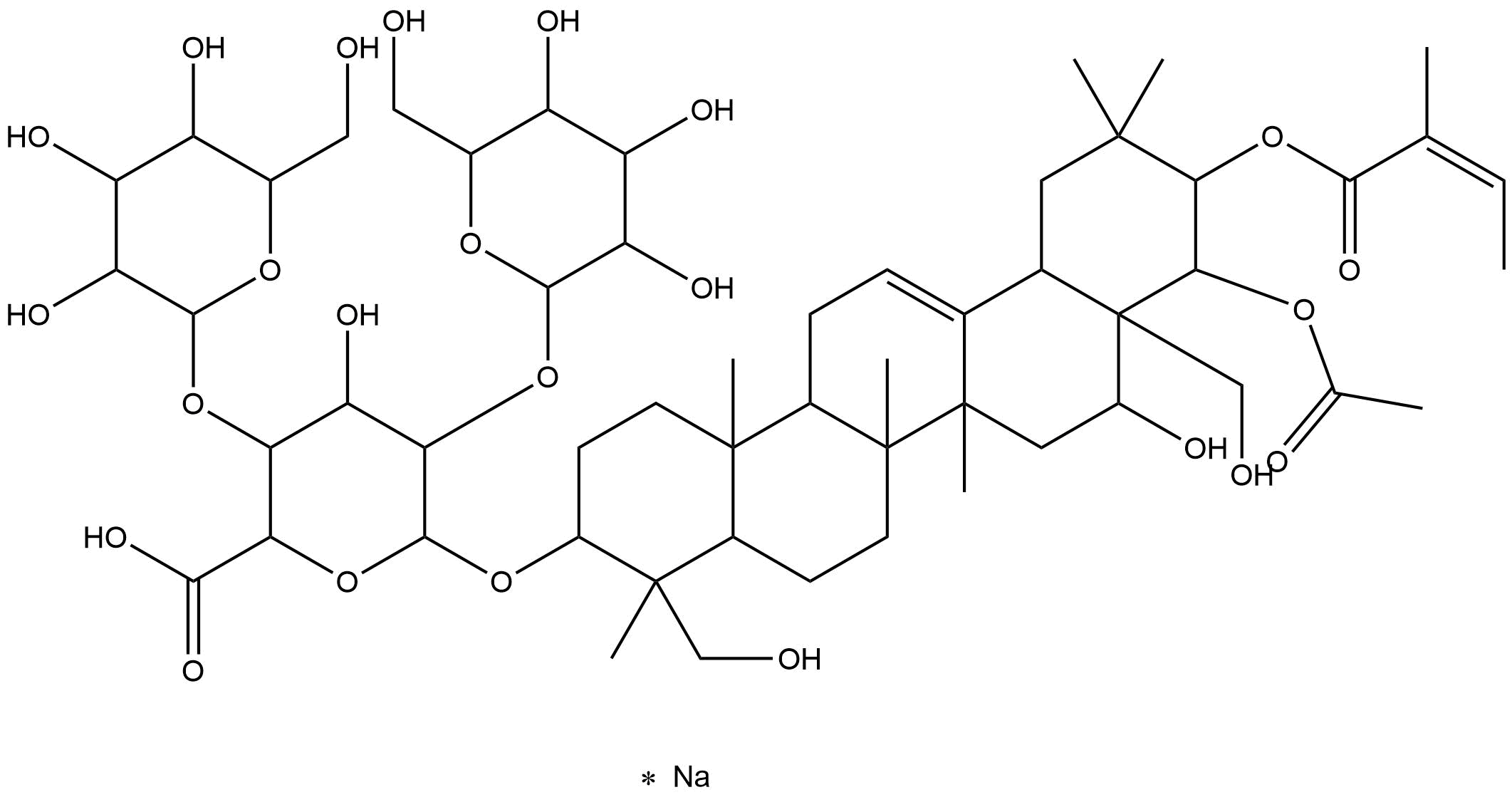
Sodium Aescinate, a type of European seven leaf tree (scientific name:)Aesculus hippocastanum L., The sodium salt of triterpenoid saponins extracted and purified from the seeds of the Chinese plant commonly known as' saluo zi '. Its CAS number is 20977-05-3, molecular formula is C54H84NaO23+, and molecular weight is as high as 1124.2300 g/mol. As a classic natural product derived drug, sodium aescinate is mainly used in clinical practice to treat chronic venous insufficiency and its related symptoms, such as lower limb edema, pain, and heaviness. Its research background is profound. As early as several centuries ago, European folk medicine had already used horse chestnut seeds to treat hemorrhoids and varicose veins. Modern pharmacological research reveals that the core value of sodium aescinate lies in its excellent properties Anti inflammatory, antioxidant, anti edema, and vascular protective activities In recent years, research has further expanded to its inhibitory effect on the growth of liver cancer (through targeting CARMA3/NF - κ B pathway), its promoting effect on wound healing of diabetes, and its protective effect on intestinal ischemia/reperfusion or lung/liver injury caused by organophosphorus pesticides. These findings have transformed it from a traditional vasoactive drug to a research hotspot molecule with multi-target and multi indication potential. This article will comprehensively analyze its chemical nature, sources, mechanisms of action, medicinal properties, and future prospects.
2. Chemical structure and physicochemical properties
Sodium seven leaf saponin is not a single compound, but rather a compound composed ofβ - Seven leaf saponin Sodium salt, a mixture of the main active ingredients. Its chemical structure is complex and belongs to Oleander type pentacyclic triterpenoid saponins The core structural features can be inferred from the provided SMILES string: a highly oxidized triterpenoid glycoside (aescin) connects multiple sugar groups (such as glucose, arabinose, etc.) through glycosidic bonds, forming a highly hydrophilic sugar chain part, and the terminal carboxyl group forms a salt with sodium ions.
Perform physical and chemical property analysis based on the parameters of drug properties:
- Molecular weight (MW)Approximately 1101.24 g/mol, far exceeding conventional small molecule drugs (usually<500 Da), which determines that its pharmacokinetic behavior is more inclined towards macromolecular characteristics.
- Topological Polarity Surface Area (TPSA)Up to 356.81 Å ², indicating the presence of a large number of polar groups (such as hydroxyl, carboxyl, and sugar epoxy atoms) on the molecular surface Excellent water solubility(water_stolubility: 0.2286, units may be mg/mL or mol/L, values indicate solubility) highly correlated.
- Lipid water partition coefficient (LogP/LogD)The calculated LogP is 1.72, but the LogD (distribution coefficient at pH 7.4) is -0.88. LogD is a negative value, clearly indicating that molecules exist in highly ionized or hydrated form under physiological pH conditions,Highly hydrophilic, poorly lipophilic。
- Permeability The Caco-2 cell permeability (Caco2_permeability) is only 0.1932 cm/s × 10 ⁻⁶, which is extremely low and confirms its difficulty in oral absorption. The effective permeability (Peff) of 0.4799 also supports this conclusion. The blood-brain barrier penetrability (BBB-permeability) is "low", indicating difficulty in entering the central nervous system.
Overall, sodium aescinate is a High polarity, high water solubility, low membrane permeability macromolecular triterpenoid saponins These properties determine that its clinical administration route is mainly intravenous injection or topical use, with extremely low oral bioavailability.
3. Plant sources and traditional applications
The direct plant source of sodium aescinate is European Seven Trees In the Chinese traditional medicine system, its seeds are called "Saros seeds". Although the scientific name of the plant source provided is Aesculus chinensis(Chinese Seven Leaf Tree), but the main raw material for modern pharmaceutical industry is still European Seven Leaf Tree(A. hippocastanum)Mainly, both are closely related plants with similar active ingredients.
The European seven tree tree is native to the Balkan Peninsula, and its medicinal history can be traced back to European folk medicine in the 16th century. Traditionally, its seeds, bark, and leaves have been used to treat:
- Venous circulation disorders Such as varicose veins, hemorrhoids, leg ulcers, and edema. This is its most classic application, highly consistent with modern clinical applications.
- Anti inflammatory and analgesic effects Used to relieve joint pain, rheumatic pain, and traumatic swelling.
- Convergence and hemostasis External treatment of wounds and bleeding.
In traditional Chinese medicine theory, Saros seed is warm in nature, sweet in taste, and belongs to the liver and stomach meridians. It has Soothing the liver, regulating qi, harmonizing the stomach and relieving pain Its efficacy is commonly used to treat chest distension, tightness, and epigastric pain. This is consistent with modern research on its anti-inflammatory and microcirculation improving effects.
The key step from traditional experience to modern medicine lies in the clarification and standardized extraction of active ingredients. In the mid-20th century, German scientists successfully isolated seven leaf saponins from the seeds of seven leaf trees and made stable sodium salt preparations, which allowed for standardized production and strict clinical validation, ultimately becoming approved prescription drugs in multiple countries such as Europe and China.
4. Pharmacological activity and mechanism of action
The pharmacological effects of sodium aescinate are extensive, and its core mechanism revolves around Anti inflammatory, vascular protective, and enhanced venous tone Expand and extend to fields such as antioxidant and anti-tumor. The provided target information (MMP9, ICAM1, VCAM1, SELE, TIMP1) provides clear molecular clues for us to understand their mechanism of action.
Core pharmacological activity
- Anti inflammation and anti edema This is the cornerstone of its treatment for venous insufficiency. Sodium aescinate can significantly reduce the permeability of capillaries. When tissues are damaged or venous hypertension occurs, inflammatory mediators (such as histamine, serotonin, bradykinin) are released, causing contraction of capillary endothelial cells, enlargement of gaps, and extravasation of plasma proteins and water to form edema. Sodium Seven Leaf Saponin Stabilize the endothelial cell membrane and lysosome membrane of blood vessels Inhibit the release and action of inflammatory mediators, thereby reducing exudation and promoting tissue fluid reflux.
- Enhanced venous tone and vascular protection Can improve the elasticity and tension of the venous wall, promote venous blood reflux, and reduce venous pressure. Simultaneously possessing antioxidant properties, clearing free radicals, and protecting vascular endothelial cells from oxidative damage.
- Angiogenesis inhibition It can inhibit the proliferation and migration of endothelial cells, reduce the secretion of vascular endothelial growth factor (VEGF), and thus inhibit pathological angiogenesis. This is of great significance for inhibiting tumor growth and certain chronic inflammatory diseases.
Analysis of target based mechanism of action
The action of sodium aescinate is the result of multi-target synergy:
- Regulation of cell adhesion molecules (ICAM1, VCAM1, SELE)Under inflammatory conditions, endothelial cells of blood vessels express high levels of intercellular adhesion molecule-1 (ICAM-1), vascular cell adhesion molecule-1 (VCAM-1), and E-selectin (SELE). These molecules act like hooks, anchoring circulating white blood cells (such as neutrophils and monocytes) and recruiting them to the site of inflammation, exacerbating tissue damage. Sodium Seven Leaf Saponin Downregulate the expression of these adhesion molecules Thus, it inhibits the adhesion and migration of white blood cells and endothelial cells to the outside of blood vessels, reducing inflammation infiltration and tissue damage from the source.
- Balance of extracellular matrix metabolism (MMP9/TIMP1)Matrix metalloproteinase-9 (MMP9) can degrade extracellular matrix (such as type IV collagen), disrupt the integrity of vascular basement membrane, increase vascular permeability, and participate in tissue remodeling. The tissue inhibitor TIMP1 exerts an antagonistic effect. Sodium Seven Leaf Saponin Inhibit the activity or expression of MMP9 At the same time, it may regulate TIMP1 to maintain the stability of extracellular matrix, protect vascular barrier function, and inhibit tumor invasion and metastasis.
- Inhibition of NF - κ B signaling pathway The transcription of many pro-inflammatory factors (adhesion molecules, MMP9) mentioned above is regulated by the nuclear factor kappa B (NF - κ B) pathway. Research has shown that sodium aescinate can interfere with upstream signals such as CARMA3,Inhibition of NF - κ B activation and nuclear translocation Thus, it extensively inhibits inflammatory responses at the transcriptional level. This is also one of the key mechanisms by which it can inhibit the growth of liver cancer.
Association with related diseases: venous insufficiency
Venous dysfunction is a disease in which the valve function of the venous system (especially the deep veins in the lower limbs) is impaired, leading to poor blood return and venous hypertension. Its pathological and physiological core includes:Venous congestion, capillary hypertension, endothelial cell damage, inflammatory response, and leukocyte activation The mechanism of action of sodium aescinate precisely targets this chain:
-Enhance venous tone, promote blood reflux → alleviate venous congestion and high pressure.
-Reduce capillary permeability → alleviate tissue edema caused by venous hypertension.
-Inhibit the release of inflammatory mediators and leukocyte adhesion (via ICAM1/VCAM1/SELE) → alleviate inflammation of the venous wall and surrounding tissues.
-Antioxidant and endothelial cell protection → delay the progression of venous lesions.
Therefore, sodium aescinate can improve the symptoms and pathological basis of venous insufficiency from multiple aspects.
Expanded pharmacological effects
- Organ protection In the intestinal ischemia/reperfusion (I/R) model, it protects against lung injury by inhibiting lipid peroxidation, upregulating anti apoptotic protein Bcl-2, improving the Bcl-2/Bax ratio, and suppressing lung cell apoptosis. It also has a protective effect against liver damage caused by methyl parathion.
- Promote wound healing: In the diabetes rat model, through its anti-inflammatory and antioxidant activities, it can improve the high inflammatory and oxidative stress microenvironment of chronic wounds, and promote granulation tissue formation and epithelization.
- antitumor By inhibiting the NF - κ B pathway and angiogenesis, growth inhibitory activity has been demonstrated in models such as liver cancer.
5. Evaluation of drug properties
From the perspective of medicinal chemistry, especially based on Lipinski's Five Rules Lipinski's Rule of Five (Ro5) is used to evaluate the pharmacological properties of sodium aescinate, and it is found to be a typical "out of the rules" but successful drug case.
Lipinski's Five Rules Compliance Analysis:
1. Molecular weight<500 Da Sodium Aescinate MW~1100,Severe violation。
2. LogP ≤ 5 Calculate LogP as 1.72,Comply with However, LogD is negative, indicating strong hydrophilicity in reality.
3. Hydrogen bond donor (HBD)<5 The structure contains a large number of hydroxyl groups, with far more than 5 HBDs,violate。
4. Hydrogen bond acceptor (HBA)<10 The structure contains a large number of oxygen atoms (sugar and carboxyl groups), with HBA far exceeding 10,violate。
Obviously, sodium aescinate Completely inconsistent Lipinski's Five Rules. Ro5 is mainly used to predict small molecules with good oral absorption, while sodium aescinate is essentially a Natural product derived 'biomacromolecules' or' unconventional 'drugs The key to its successful development lies in:
- Emphasize strengths and avoid weaknesses, choose the appropriate route of administration Due to its good water solubility but poor oral absorption, it is mainly used clinically intravenous injection Administration directly enters the systemic circulation, avoiding the intestinal absorption barrier. There are also topical preparations (such as gel and cream) for local treatment.
- Clear clinical efficacy and safety Long term clinical application has confirmed its efficacy and acceptable safety in specific indications (venous diseases), surpassing predictions based solely on physicochemical parameters.
Interpretation of other pharmacological parameters:
- Plasma protein binding rate (PPB)70.40%, belonging to moderate level combination. This helps to prolong its half-life in the blood, but excessive binding may affect the concentration of free drugs.
- Toxicity warning:
- Ames test/chromosomal aberration: Negative/None, prompt No genetic toxicity risk。
- HERG inhibition No, prompt Low risk of prolonged QT interval in the heart Good cardiovascular safety.
- Respiratory sensitization (Resp_Sens)Yes. This is a potential risk that needs attention, indicating the possibility of inducing allergies or bronchial reactions, and clinical use should be observed.
- Elevated serum enzymes (Ser_SST/ALT/ALK)Partial hints indicate the potential Risk of liver injury This is consistent with some clinical reports of elevated liver enzymes and requires monitoring of liver function.
- Classification of Biopharmaceuticals Based on high solubility (S) and low permeability (P), it can be classified as BCS Class III Medication. The absorption of such drugs is limited by permeability, and intravenous administration is the best choice.
Conclusion The pharmacological evaluation of sodium aescinate indicates that it is not an ideal candidate for oral small molecule drugs, but through rational formulation design (injection, topical), it has been successfully transformed into a drug Safe and effective clinical drugs The case study demonstrates that for natural products, especially complex macromolecular saponins, the Ro5 rule cannot be rigidly applied, but should be comprehensively developed based on their unique pharmacological activity and achievable routes of administration.
6. Research Status and Application Prospects
Research status:
At present, sodium aescinate is used as a prescription drug in Chronic venous insufficiency, trauma, or postoperative edema It has established a solid position in the treatment and is a variety included in the pharmacopoeias of multiple countries including Europe and China. Basic research is constantly deepening and expanding its application boundaries:
1. Deepening mechanism The research focuses on the macroscopic observation of drug efficacy and delves into the microscopic signaling pathways (such as NF - κ B, PI3K/Akt, MAPK) and epigenetic regulation to more accurately elucidate their multi-target action network.
2. Indications expansion Pre clinical studies actively evaluate its effectiveness Acute lung injury/acute respiratory distress syndrome (ALI/ARDS), liver fibrosis, complications of diabetes (wound, kidney disease), arthritis and some solid tumors Potential in adjuvant therapy.
3. Formulation innovation To improve patient compliance and expand application scope, researchers are developing new delivery systems, such as Nanoparticles, liposomes, microspheres, transdermal patches The aim is to increase its local concentration, prolong its duration of action, or explore the possibility of oral administration.
4. Re evaluation of safety Continuously monitor its clinical adverse reactions (such as phlebitis, allergies, and kidney injury risk), and study strategies to reduce toxicity through structural modifications or combination therapy.
Application Prospects:
1. Old medicine for new use Using its clear anti-inflammatory and vascular protective mechanisms, reposition it for the treatment of endothelial dysfunction and chronic low-grade inflammation Modern chronic diseases Factors such as metabolic syndrome related vascular disease and certain neurodegenerative diseases (although BBB penetration is low, they may indirectly benefit through peripheral anti-inflammatory effects) are cost-effective research and development strategies.
2. Structural optimization and derivative development Using its parent nucleus structure as the lead compound Structural modification Intended to enhance activity, reduce toxicity, and improve pharmacokinetic properties (such as increasing oral bioavailability). For example, modifying or simplifying the glycosylation structure may lead to the development of a new generation of small molecule candidate drugs that comply with the "Five Principles of Drug Analogy".
3. combination therapy Exploring the combination application of sodium aescinate with existing standard therapies such as chemotherapy drugs, anti angiogenic drugs, and other anti-inflammatory drugs may produce synergistic effects, reduce their respective dosages and toxic side effects, especially in the fields of tumors and refractory inflammatory diseases, with broad prospects.
4. As a tool molecule Its selective regulatory effect on specific adhesion molecules and proteases makes it suitable for research Vascular Biology and Inflammatory Diseases A valuable tool drug for the pathogenesis.
Summary Seven leaf saponin sodium is a model of successful conversion of natural products into modern medicine. It breaks the constraints of traditional pharmacological rules and stands firm in specific fields with precise clinical efficacy. In the future, with the continuous decryption of its multidimensional pharmacological effects and complex mechanisms, combined with modern drug delivery technology and medicinal chemistry methods, this ancient plant active ingredient is expected to regain new vitality and play a value in a broader field of disease treatment. Its development process also enlightens us that in the research and development of natural product drugs, we should respect their chemical diversity and adopt more flexible and pharmacological based development strategies.