
| Catalog No | Package | Original Price | Price | Inventory | Quantity | Operating |
|---|---|---|---|---|---|---|
| BP0557-20mg | 20mg | $96.00 | Sign in |
|


Product name: Escin IB
Synonym name: Aescin IB
Catalogue No.: BP0557
Cas No.: 26339-90-2
Formula: C55H86O24
Mol Weight: 1131.27
Botanical Source: Aesculi semen
Physical Description:
Type of Compound: Terpenoids
Purity: 95%~99%
Analysis Method: HPLC-DAD or/and HPLC-ELSD
Identification Method: Mass, NMR
Packing: Brown vial or HDPE plastic bottle
Storage: Store in a well closed container, protected from air and light. Put into refrigerate or freeze for long term storage.
Whenever possible, you should prepare and use solutions on the same day. However, if you need to make up stock solutions in advance, we recommend that you store the solution as aliquots in tightly sealed vials at -20℃. Generally, these will be useable for up to two weeks.
The product could be supplied from milligrams to grams
Inquire for bulk scale.
Description:
Escin Ib inhibits gastric emptying, at least in part, mediated by capsaicin-sensitive sensory nerves, to stimulate the synthesis and/or release of dopamine, to act through central dopamine2 receptor, which in turn causes the release of PGs.
References:
Life Sci. 2000;66(23):2233-8.
Possible involvement of 5-HT and 5-HT2 receptors in acceleration of gastrointestinal transit by escin Ib in mice.
METHODS AND RESULTS:
We have reported previously that Escin IB accelerated gastrointestinal transit (GIT) in mice, and that its effect may be mediated by the release of endogenous prostaglandins (PGs) and nitric oxide (NO). In this study, the possible involvement of 5-HT and 5-HT receptors in the GIT acceleration of Escin IB was investigated in mice. The acceleration of GIT by Escin IB (25 or 50 mg/kg, p.o.) was attenuated by pretreatment with ritanserin (0.5-5 mg/kg, s.c., a 5-HT(2A/2C/2B) receptor antagonist), but not with MDL 72222 (1 and 5 mg/kg, s.c.) and metoclopramide (10 mg/kg, s.c.) (5-HT3 receptor antagonists) or tropisetron (1 and 10 mg/kg, s.c., a 5-HT(3/4) receptor antagonist). Furthermore, pretreatment with ketanserin (0.05-5 mg/kg, s.c.), haloperidol (1-5 mg/kg, s.c.) and spiperone (0.5-5 mg/kg, s.c.) (5-HT2A receptor antagonists), as well as a bolus of dl-p-chlorophenylalanine methyl ester (PCPA, 1000 mg/kg, p.o., 1, 6 or 24 h before administration of the sample) (an inhibitor of 5-HT synthesizing enzyme tryptophan hydroxylase) and reserpine (5 mg/kg, p.o.) (a 5-HT depletor), but not 6-hydroxydopamine (80 mg/kg, i.p., a dopamine depletor) or repeated PCPA (300 mg/kg x2, p.o., 72 and 48 h before administration of the sample), also attenuated the effects of Escin IB.
CONCLUSIONS:
It is postulated that Escin IB accelerates GIT, at least in part, by stimulating the synthesis of 5-HT to act through 5-HT2, possibly 5-HT2A receptors, which in turn causes the release of NO and PGs.
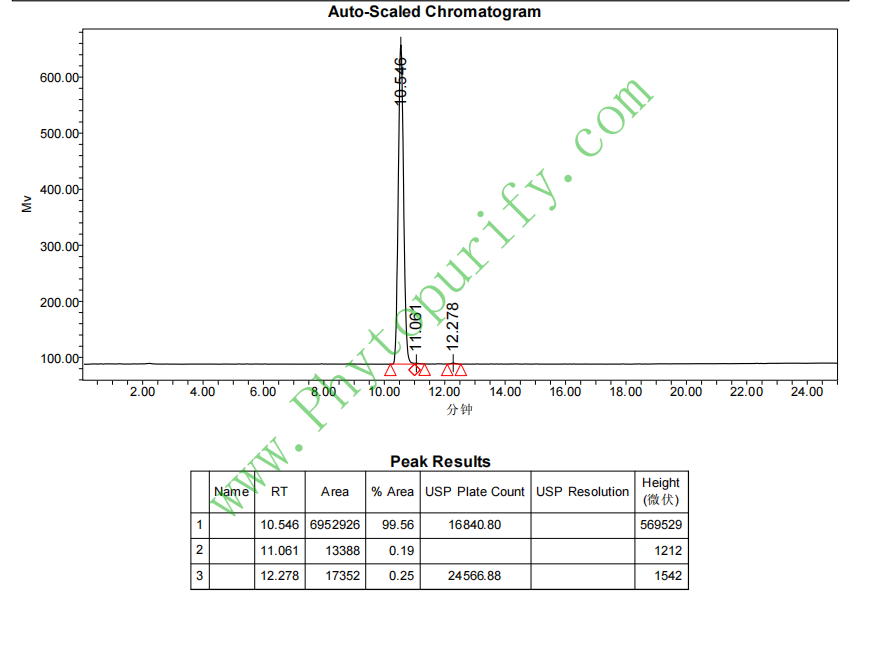
HPLC of Escin IB
Storage conditions:Short-term storage at 2~8℃, long-term storage at -20 ~ -80℃
388.0400
1.2289
-1.2820
.3823
.4702
.1872
Low
73.6869
6.9877
Yes
No
No
No
No
No
0.0
Yes
No
Yes
Yes
Natural products, as an important source of drug discovery, play an irreplaceable role in the history of human disease prevention and treatment. Among them, saponin compounds have always been a hot topic in medicinal chemistry and pharmacology research due to their structural diversity and wide range of biological activities. Seven leaf saponin B (Escin IB, CAS number: 26339-90-2), as a triterpenoid saponin isolated from the seeds of European seven leaf tree (Aesculus hippoastanum L.), is one of the main active ingredients in the complex mixture of seven leaf saponins (Escin). Traditionally, seven leaf saponin extract is commonly used in folk medicine to treat chronic venous insufficiency, edema, and inflammation related diseases. With the advancement of modern separation and identification techniques, the biological characteristics of single component aescin B have been extensively explored. Research has shown that aescin B not only inherits the classic anti-inflammatory, anti edema, and vascular protective activities of aescin extracts, but also exhibits specific inhibitory effects on pancreatic lipase, opening up a new path for its application in obesity and related metabolic diseases. Especially its anti-inflammatory effect exerted through multiple targets and pathways, involving key inflammatory mediators and signaling molecules such as IL-6, STAT3, TNF - α, making it a potential candidate drug for the treatment of chronic inflammatory diseases. This article aims to systematically review the chemical structure, plant origin, pharmacological activity, molecular mechanism of action, pharmacological characteristics, and clinical application prospects of seven leaf saponin B, in order to provide comprehensive academic references for the deep development and transformation research of this natural product.
Seven leaf saponin B belongs to the oleanane type pentacyclic triterpenoid saponin, with a molecular formula of C55H86O24 and a molecular weight of 1131.2690. Its basic skeleton is composed of hydrophobic glycosides (sapogenins) and hydrophilic sugar chains, and this amphiphilic structure is the basis for its surface activity and interaction with biofilms. The aglycone part of Seven Leaf Saponin B is protoescinin, which has acetyl and glycosyl groups connected at multiple sites such as C-3, C-16, C-21, C-22, C-28. Its sugar chain usually contains monosaccharide units such as glucuronic acid, glucose, and xylose, and the type, connection position, and order of these sugar groups are key to its chemical diversity and biological activity differences.
In terms of physical and chemical properties, the lipid water partition coefficient (LogP) of saponin B is 1.2289, indicating that it has a certain degree of lipophilicity, but overall it still leans towards hydrophilicity. Its topological polar surface area (TPSA) is as high as 388.0400 Å ², which is mainly attributed to the abundant hydroxyl and sugar structures in the molecule, leading to its strong ability to form intramolecular and intermolecular hydrogen bonds. Its water solubility value is 0.3823 (usually expressed in log mol/L or similar units, indicating a certain but limited solubility in water), belonging to the category of slightly soluble to poorly soluble, which is a challenge that needs to be overcome in actual formulation development. Based on its large molecular weight, high TPSA, and limited lipid solubility, it is predicted that its ability to cross the blood-brain barrier is low, which to some extent limits its direct effects on central nervous system diseases, but may also reduce the potential risk of neurotoxicity. Preliminary pharmacological screening showed that aescin B had no significant inhibitory effect on hERG potassium channels at conventional test concentrations (hERG inhibition: no), indicating a low risk of causing QT interval prolongation in the heart. In addition, its laboratory Ames test result is 0.0 (usually indicating no mutagenicity in the testing system), providing preliminary support for its genetic toxicity safety.
Seven leaf saponin B mainly comes from the dried and mature seeds of the European seven leaf tree (Aesculus hippoastanum L.) in the seven leaf tree family, commonly known as horse chestnut. Its active ingredients are mainly enriched in the seed coat and endosperm of the seeds. In addition to European seven leaf trees, other plants of the same genus such as Japanese seven leaf trees (Aesculus turbinata) may also contain structural analogues.
Extracting and purifying saponins B from plant materials is a multi-step process. Traditional extraction methods often use solvent extraction:
1. Preprocessing Grind dried chestnuts, usually degreasing (using non-polar solvents such as petroleum ether) to remove oil and improve subsequent extraction efficiency.
2. Rough extraction Extraction is carried out using a medium polarity solvent system, with the most commonly used being methanol water or ethanol water solutions of different concentrations. Heating reflux or ultrasound assisted extraction can improve the yield.
3. Enrichment and Separation The crude extract was subjected to column chromatography using macroporous adsorption resins (such as D101, AB-8, etc.) and eluted using a water ethanol gradient to preliminarily enrich saponin components. Subsequently, more sophisticated chromatographic techniques are required for monomer separation, including but not limited to silica gel column chromatography, reverse phase silica gel (such as C18) column chromatography, as well as high-performance liquid chromatography (HPLC) or preparative liquid chromatography (pre HPLC). Due to its structural similarity with other homologs such as saponins IA and IIA, the separation and purification of saponins B is difficult. Therefore, acetonitrile water or methanol water (with a small amount of formic acid or acetic acid to adjust the pH) is often used as the mobile phase to achieve separation in a reverse phase chromatography system.
4. appraisal The isolated monomer compounds need to be structurally confirmed by methods such as nuclear magnetic resonance (NMR, including 1H-NMR, 13C-NMR, 2D-NMR), mass spectrometry (MS, such as ESI-MS, HR-MS), and chromatography (such as HPLC) compared to standard samples.
Modern extraction techniques such as microwave-assisted extraction and supercritical fluid extraction are also being explored to improve extraction efficiency, reduce solvent consumption, and protect thermally unstable components.
Seven leaf saponin B exhibits diverse pharmacological activities, with research mainly focused on anti-inflammatory, anti edema, vascular protection, and emerging metabolic regulation.
anti-inflammatory activity This is the most core and classic activity of seven leaf saponin B. Numerous in vitro and in vivo experiments have confirmed that aescin B can significantly inhibit various acute and chronic inflammation models. In the rat paw edema model induced by carrageenan or acetic acid, aescin B showed a dose-dependent anti-inflammatory effect. In the lipopolysaccharide (LPS) - stimulated macrophage model (such as RAW264.7), it can effectively inhibit the excessive production of nitric oxide (NO), prostaglandin E2 (PGE2), and various inflammatory cytokines (such as TNF - α, IL-6). Its anti-inflammatory efficacy is comparable to some nonsteroidal anti-inflammatory drugs, but it may exert its effects through a wider range of signaling pathways.
Anti edema and vascular protective activity Seven leaf saponin B can reduce the permeability of capillaries, enhance the tension of blood vessel walls, and promote venous reflux. Its mechanism is related to inhibiting the release of inflammatory mediators, protecting vascular endothelial cells, and reducing fluid and protein extravasation. In clinical practice, a mixture of seven leaf saponins is widely used to treat chronic venous insufficiency, trauma, or postoperative edema, with seven leaf saponin B contributing significantly as the main active ingredient.
Pancreatic lipase inhibition This is a distinctive pharmacological activity of seven leaf saponin B. Pancreatic lipase is a key enzyme that hydrolyzes dietary fat into absorbable fatty acids and monoglycerides in the intestine. Seven leaf saponin B can directly inhibit the activity of this enzyme, thereby reducing the digestion and absorption of fat in food. This effect makes it a potential lead compound for anti obesity and lipid-lowering drugs. Animal experiments have shown that administration of saponins B can alleviate weight gain and dyslipidemia induced by a high-fat diet.
Other activities The study also suggests that aescin B may have antioxidant, anti-tumor (by inducing apoptosis, inhibiting proliferation, etc.), analgesic and other activities, but research in these areas is still in the preliminary stage and requires more evidence to support it.
The anti-inflammatory mechanism of seven leaf saponin B is complex, involving the regulation of multiple key inflammatory signaling pathways and molecular targets, exhibiting multi-target action characteristics:
Inhibition of NF - κ B signaling pathway Nuclear factor kappa B (NF - κ B) is the core transcription factor in inflammatory response. Seven leaf saponin B can inhibit the activity of IKBKB (I κ B kinase β, IKK β), prevent the phosphorylation and degradation of I κ B α, and thus inhibit the translocation of NF - κ B dimers (such as RELA/p65) to the nucleus. This directly leads to the inhibition of transcription of numerous pro-inflammatory genes downstream, such as TNF, IL-6, NOS2, PTGS1/COX-1, etc.
Regulation of STAT3 signaling pathway Signal transducer and activator of transcription factor 3 (STAT3) is another important pro-inflammatory and pro survival pathway. Seven leaf saponin B can inhibit the phosphorylation (activation) of STAT3 induced by cytokines such as IL-6, block its nuclear translocation and binding to DNA, thereby downregulating the expression of related target genes, which is particularly important in chronic inflammation and certain tumor models.
Inhibit inflammasome activation The assembly and activation of inflammasomes (such as NLRP3) can lead to the activation of CASP1 (cysteine protease-1), thereby promoting the maturation and secretion of IL-1 β and IL-18. Research has shown that aescin B can inhibit the activation of NLRP3 inflammasomes, reduce the cleavage of CASP1, and thus alleviate the excessive inflammatory response mediated by inflammasomes.
Regulating pain related ion channels Transient receptor potential vanillic acid subtype 1 (TRPV1) and transient receptor potential anchor protein subtype 1 (TRPA1) are key ion channels involved in the perception of inflammatory pain. Seven leaf saponin B has been shown to regulate the activity of these channels, possibly by directly or indirectly reducing their sensitivity to nociceptive stimuli, which is related to its observed analgesic effect.
Inhibit key inflammatory enzymes Seven leaf saponin B can downregulate the expression or activity of inducible nitric oxide synthase (NOS2/iNOS) and cyclooxygenase-1 (PTGS1/COX-1), thereby reducing the production of inflammatory mediators such as NO and prostaglandins.
Direct inhibition of pancreatic lipase Seven leaf saponin B can act as a competitive or non competitive inhibitor, directly binding to the active site or conformational site of pancreatic lipase, changing its conformation and hindering its binding and catalysis with substrate triglycerides, which is the direct molecular basis of its anti obesity effect.
In summary, aescin B exerts a comprehensive anti-inflammatory effect through an interwoven network of mechanisms, including upstream signaling pathways (IKBKB, STAT3), midstream inflammatory mediator synthases (NOS2, PTGS1), downstream effector molecules (TNF, IL-6), and pain sensing channels (TRPV1, TRPA1), while regulating metabolism through independent mechanisms (inhibition of pancreatic lipase).
Although the pharmacological activity of seven leaf saponin B is clear, its drug likeness faces certain challenges, and its pharmacokinetic (PK) characteristics are relatively complex.
Drugability assessment:
* Advantage The preliminary safety evaluation is good (no hERG inhibition, Ames negative), the target of action is clear, and the activity is significant.
* challenge:
* Solubility and permeability High TPSA and larger molecular weight result in average membrane permeability and limited water solubility, belonging to Class IV (low solubility, low permeability) in the Biopharmaceutical Classification System (BCS). Oral bioavailability may be low.
* chemical stability As a saponin, it may undergo hydrolysis under acidic or enzymatic action (such as intestinal glycosidase), and its activity may change or be lost after losing its glycosylation.
* Metabolism and distribution Predict low blood-brain barrier permeability, mainly distributed in the periphery. As an exogenous substance, it may undergo liver phase I (such as CYP450 enzyme system) and phase II (such as glucuronic acid binding and sulfation) metabolism, and the specific metabolic profile still needs further research.
Pharmacokinetic study:
The pharmacokinetic studies on pure aescin B are relatively limited, and more data comes from aescin mixtures.
* absorb After oral administration, intact aescin B is poorly and irregularly absorbed in the gastrointestinal tract. Some may be hydrolyzed into aglycones or secondary glycosides under the action of gut microbiota and absorbed. Formulation technology, such as micronization, phospholipid complexes, nanoemulsions, solid dispersions, etc., is a key strategy to improve their oral absorption.
* distribution Animal experiments have shown that after intravenous administration, seven leaf saponins are mainly distributed in tissues such as the kidneys, liver, stomach, and spleen, with a certain tendency to accumulate in inflammatory sites. Its plasma protein binding rate is relatively high.
* Metabolism and excretion Seven leaf saponin B is mainly metabolized through hydrolysis and binding reactions in the body. The prototype drug and its metabolites are mainly excreted through the kidneys and bile. Its elimination half-life varies depending on the species and administration method, usually within a few hours.
Therefore, in the future development of seven leaf saponin B as a drug, it is necessary to focus on optimizing its dosage form to improve its bioavailability, and systematically conduct research on human pharmacokinetics and metabolites.
The diverse pharmacological effects of seven leaf saponin B provide broad prospects for its application in multiple disease fields:
Chronic venous disease and edema This is its most direct and mature application direction. Developing high-purity and quality controllable monomers or optimized compound formulations of seven leaf saponin B for the treatment of chronic venous insufficiency, acute attacks of hemorrhoids, trauma, and postoperative edema is expected to achieve more stable and precise therapeutic effects and clearer mechanism of action than existing mixed formulations.
Diseases related to metabolic syndrome Due to its unique pancreatic lipase inhibitory activity, aescin B is an excellent natural lead compound for developing novel anti obesity drugs. It can be structurally modified to enhance inhibitory activity, selectivity, and oral bioavailability, or combined with other drugs with different mechanisms of action (such as appetite suppressants, GLP-1 receptor agonists, etc.) for the treatment of obesity and its complications (such as hyperlipidemia, non-alcoholic fatty liver disease).
Chronic inflammatory diseases Its multi-target anti-inflammatory mechanism is suitable for treating chronic inflammatory diseases such as rheumatoid arthritis, inflammatory bowel disease, asthma, dermatitis, etc. Compared with traditional nonsteroidal anti-inflammatory drugs or biologics, natural product multi-target intervention may have the advantages of more comprehensive regulation and different side effect spectra, but strict clinical trials are needed to verify its effectiveness and safety.
pain management Through the regulation of TRPV1/TRPA1 channels and strong anti-inflammatory effects, aescin B may occupy a place in the management of inflammatory pain and neuropathic pain, especially as an adjuvant or alternative to opioid drugs.
Challenges faced and future research directions:
* Structural optimization and derivative development Reasonable structural modifications should be made to address the shortcomings of its pharmacological properties, such as simplifying sugar chains and modifying glycosides, to improve solubility, permeability, metabolic stability, and oral bioavailability.
* Research on Advanced Delivery Systems Actively developing new formulations such as nanoparticles, liposomes, microemulsions, and transdermal drug delivery systems to overcome absorption and distribution barriers and achieve targeted delivery.
* In depth study on the mechanism of action Using chemical biology methods such as photoaffinity labeled probes and proteomics to identify their direct targets of action; Using systems pharmacology methods to elucidate its "component target pathway disease" network.
* Strict preclinical and clinical evaluation Complete GLP toxicology evaluations that comply with international standards and conduct rigorously designed clinical trials to confirm their efficacy and safety in specific indications.
Seven leaf saponin B, as a natural triterpenoid saponin derived from traditional medicinal plants, has shown great potential for drug development due to its proven multiple pharmacological activities such as anti-inflammatory, anti edema, vascular protection, and pancreatic lipase inhibition, as well as its complex mechanism of acting on multiple targets such as NF - κ B, STAT3, inflammasomes, TRP channels, etc. Although it faces challenges in terms of solubility, permeability, and oral bioavailability, modern pharmaceutical chemistry, pharmacology, and pharmacology techniques provide rich solutions for this. From traditional treatment of venous diseases to emerging metabolic diseases, aescin B is moving from a classic natural product component to a modern drug lead compound with a clear molecular mechanism. In the future, through in-depth interdisciplinary research and technological innovation, seven leaf saponin B is expected to be successfully developed into a new drug for treating chronic inflammation, obesity, and related metabolic syndrome, contributing the wisdom and strength from the natural treasure trove to human health.
