


Product name: Isoescin IB
Synonym name: Escin IVb
Catalogue No.: BP0780
Cas No.: 219944-46-4
Formula: C55H86O24
Mol Weight: 1131.27
Botanical Source: Aesculi semen
Physical Description:
Type of Compound: Terpenoids
Purity: 95%~99%
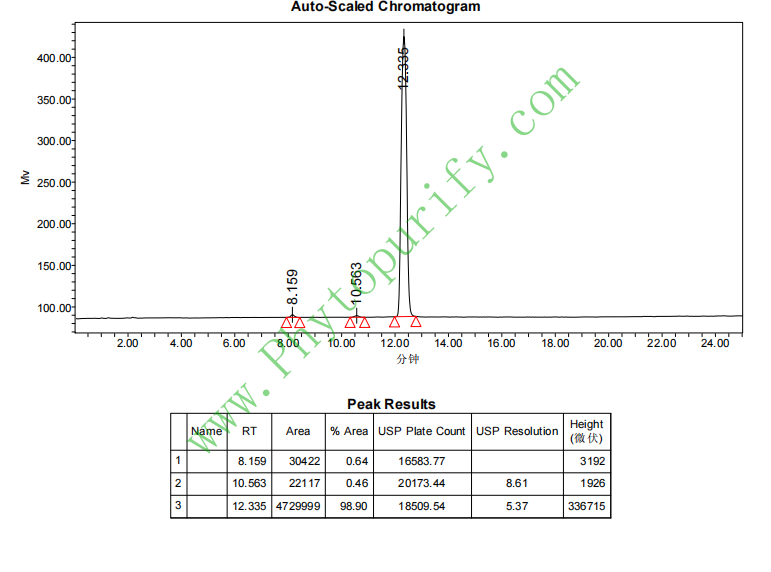
Analysis Method: HPLC-DAD or/and HPLC-ELSD
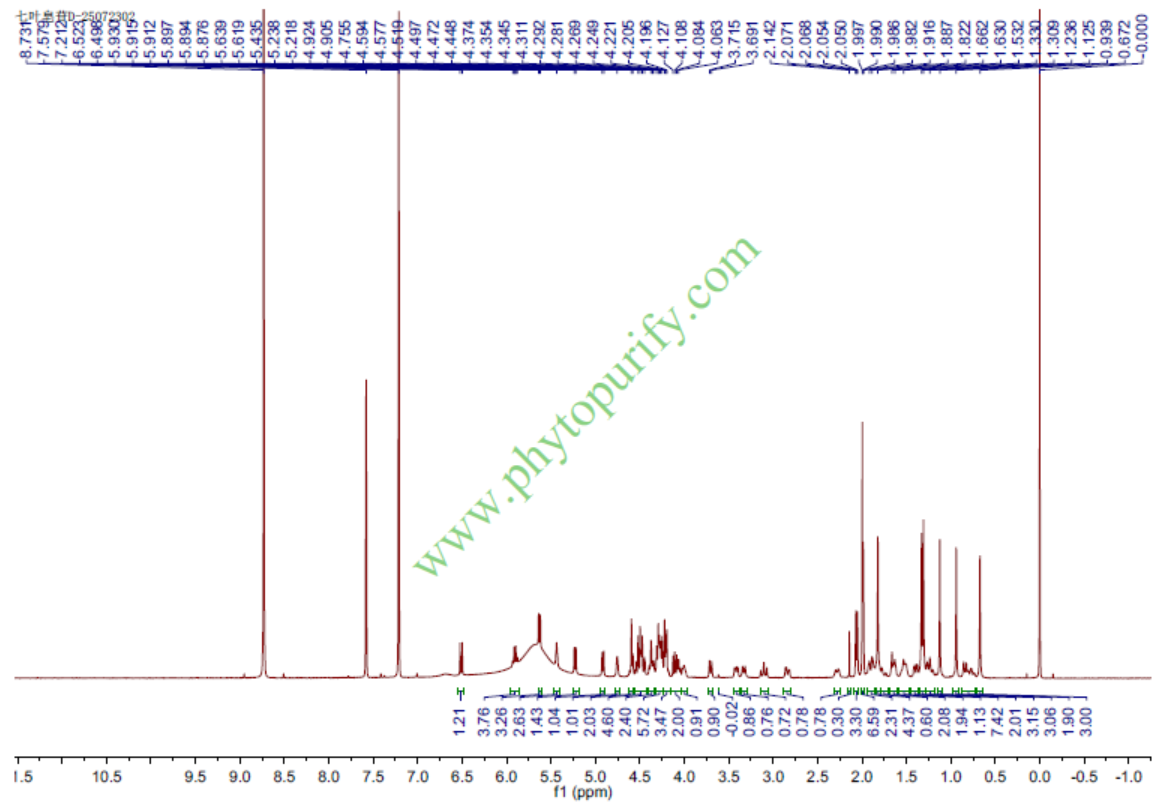
Identification Method: Mass, NMR
Packing: Brown vial or HDPE plastic bottle
Storage: Store in a well closed container, protected from air and light. Put into refrigerate or freeze for long term storage.
Whenever possible, you should prepare and use solutions on the same day. However, if you need to make up stock solutions in advance, we recommend that you store the solution as aliquots in tightly sealed vials at -20℃. Generally, these will be useable for up to two weeks.
The product could be supplied from milligrams to grams
Inquire for bulk scale.
Description:
Isoescin IB is a natural product from Aesculus hippocastanum L.
References:
Adv Pharm Bull. 2015 Nov;5(4):587-91.
Determination of Four Major Saponins in Skin and Endosperm of Seeds of Horse Chestnut (Aesculus Hippocastanum L.) Using High Performance Liquid Chromatography with Positive Confirmation by Thin Layer Chromatography.
To separate and quantify four major saponins in the extracts of the skin and the endosperm of seeds of horse chestnut (Aesculus hippocastanum L.) using ultrasonic solvent extraction followed by a high performance liquid chromatography-diode array detector (HPLC-DAD) with positive confirmation by thin layer chromatography (TLC).
METHODS AND RESULTS:
The saponins: escin Ia, escin Ib, isoescin Ia and Isoescin IB were extracted using ultrasonic extraction method. The optimized extraction conditions were: 70% methanol as extraction solvent, 80 °C as extraction temperature, and the extraction time was achieved in 4 hours. The HPLC conditions used: Zorbax SB-ODS-(150 mm × 2.1 mm, 3 μm) column, acetonitrile and 0.10% phosphoric acid solution (39:61 v/v) as mobile phase, flow rate was 0.5 mL min(-1) at 210 nm and 230 nm detection. The injection volume was 10 μL, and the separation was carried out isothermally at 30 °C in a heated chamber. The results indicated that the developed HPLC method is simple, sensitive and reliable. Moreover, the content of escins in seeds decreased by more than 30% in endosperm and by more than 40% in skin upon storage for two years.
CONCLUSIONS:
This assay can be readily utilized as a quality control method for horse chestnut and other related medicinal plants.
HPLC of Isoescin IB
HNMR of Isoescin IB
Storage conditions:Short-term storage at 2~8℃, long-term storage at -20 ~ -80℃
388.0400
1.3060
-1.1332
.3541
.4799
.1841
Low
72.9314
6.9879
Yes
No
No
No
No
No
0.0
Yes
No
Yes
No
Natural products, as an important source of drug discovery, play an irreplaceable role in the long struggle between humans and diseases. Among them, it comes from the genus Aesculus(Aesculus)The triterpenoid saponins of plants, such as seven leaf saponins (Escin), have been widely used in clinical practice for a long time due to their significant pharmacological activities such as anti-inflammatory, anti edema, and improvement of venous tone, especially in the treatment of chronic venous insufficiency, hemorrhoids, and postoperative edema. Seven leaf saponins are not a single compound, but a complex mixture composed of multiple triterpenoid saponins with similar structures. Their main active ingredients include seven leaf saponins Ia, Ib, IIa, IIb, etc. In recent years, with the advancement of separation and purification technology and the application of activity oriented separation strategies, researchers have identified an active ingredient from a mixture of seven leaf saponins that is isomeric with seven leaf saponin IB (Escin IB) - seven leaf saponin D (Isoescun IB). The discovery of saponin D not only enriches the chemical diversity of the saponin family, but also provides a new entry point for a deeper understanding of its structure-activity relationship and elucidation of its unique pharmacological mechanism of action.
Seven leaf saponin D (CAS number: 219944-46-4), as a differential isomer of seven leaf saponin IB, exhibits only minor stereochemical differences in its chemical structure. However, these differences may lead to significant differences in its biological activity, target affinity, and pharmacokinetic properties. Existing studies have shown that saponins D inherit the powerful anti-inflammatory activity of the saponin family and can regulate inflammatory responses through multi-target and multi pathway pathways. Its target network includes interleukin-6 (IL-6), signal transduction and transcription activator 3 (STAT3), caspase 1 (CASP1), transient receptor potential vanillic acid subtype 1 (TRPV1), nuclear factor kappa B subunit p65 (RELA), prostaglandin endoperoxide synthase 1 (PTGS1, i.e. COX-1), tumor necrosis factor (TNF), transient receptor potential anchor protein subtype 1 (TRPA1), I κ B kinase beta (IKBKB), and inducible nitric oxide. Key inflammatory regulatory factors such as synthase (NOS2). This multi-target mode of action demonstrates unique advantages in the treatment of complex inflammatory diseases.
This article aims to provide a systematic professional review of seven leaf saponin D, starting from its chemical structure and physicochemical properties, tracing its plant origin and extraction methods, exploring its anti-inflammatory and other pharmacological activities and molecular mechanisms of action, and conducting pharmacokinetic evaluations based on its pharmacological parameters. Finally, the clinical application prospects are discussed. By comprehensively reviewing existing research results, this article aims to provide a solid scientific basis for the further development and transformation application of this natural product.
Seven leaf saponin D belongs to the pentacyclic triterpenoid saponin class, and its glycoside skeleton is a β - amyrin type oleanane derivative. Specifically, its glycoside is protoescunin, which contains multiple hydroxyl groups at positions C-3, C-21, C-22, C-24, C-28, providing sites for sugar chain modification. Seven leaf saponin D and seven leaf saponin IB are isomers, and their structural differences lie in the different configurations of the acyl groups connected to positions C-21 or C-22. Usually, the C-21 position of saponin IB is connected to angeloyl, while the C-22 position is connected to acetyl; Seven leaf saponin D may be connected to the acetyl group at position C-21 and the acyl group at position C-22, or there may be differences in the stereoisomerism of the acyl group (such as cis trans isomerism). This subtle stereochemical difference is the structural basis for distinguishing the two and endowing them with different biological activities.
In the sugar chain, the C-3 hydroxyl group of saponin D is usually connected to a disaccharide chain composed of D-glucuronic acid and D-glucose, while the C-28 position is connected to a disaccharide chain composed of D-glucose and L-rhamnose. This complex glycosylation pattern not only increases the hydrophilicity of the molecule, but is also crucial for its interaction with biological targets.
From the perspective of physical and chemical properties, the molecular weight of seven leaf saponin D is 1131.2690 Da, which belongs to the category of macromolecular compounds. Its lipid water partition coefficient (LogP) is 1.3060, indicating a certain degree of lipophilicity, but overall leaning towards hydrophilicity. The topologically polar surface area (TPSA) is as high as 388.0400 Å ², mainly attributed to the large number of hydroxyl, carboxyl (from glucuronic acid), and glycosidic bonds in its molecules. A high TPSA value usually means that the compound is difficult to passively diffuse through the cell membrane, and its transmembrane transport may depend on specific transport proteins or endocytosis. Its water solubility parameter is 0.3541, which belongs to moderate to low solubility, which may affect its oral bioavailability. It is worth noting that the blood-brain barrier (BBB) permeability of saponins D has been evaluated as "low", indicating limited potential for its application in the treatment of central nervous system diseases, but also reducing the risk of central neurotoxicity. In addition, hERG inhibition was predicted as' no ', and the Ames test result was 0.0, indicating a low risk of cardiac and genetic toxicity and good preliminary safety characteristics.
The main plant source of seven leaf saponin D is the Hippocastanaceae family, which belongs to the genus of seven leaf trees(Aesculus)The seeds of plants. Among them, European seven tree trees(Aesculus hippocastanum L. The seeds are the traditional and main raw material for extracting seven leaf saponin compounds. In addition, Chinese seven tree trees(Aesculus chinensis Bunge)、 Yunnan Seven Trees(Aesculus wangii Hu and Tian Shi Li(Aesculus wilsonii The seeds of species such as Rehd also contain abundant seven leaf saponin components. As a trace or minor component in the mixture of seven leaf saponins, the content of seven leaf saponin D is usually lower than that of the main components such as seven leaf saponins Ia and Ib, making its separation and purification challenging.
Traditional extraction methods often use ethanol or methanol for reflux extraction of defatted chestnut seed powder. After concentration, the extract is dispersed with water and then extracted with organic solvents such as n-butanol to obtain crude total saponin extract. However, this crude extract is complex in composition and contains multiple isomers of seven leaf saponins with extremely similar structures. In order to obtain high-purity seven leaf saponin D, modern chromatographic separation techniques must be used.
High performance liquid chromatography (HPLC) is the most effective method for separating seven leaf saponin D. Usually, a reverse phase C18 chromatography column is used, with acetonitrile water or methanol water system as the mobile phase, and an appropriate amount of acidic modifier (such as formic acid, acetic acid or phosphoric acid) is added to suppress the tailing phenomenon of saponins and improve peak shape. Due to the close polarity of saponins D and IB, a gradient elution procedure is required to achieve baseline separation. Preparative HPLC is used for large-scale preparation, and through multiple cycles of injection and fraction collection, high-purity aescin D monomers in milligrams or even grams can be obtained.
In recent years, some new separation techniques have also been applied to the purification of seven leaf saponin D. For example, high-speed countercurrent chromatography (HSCCC) utilizes the difference in distribution coefficients of solutes in immiscible two-phase solvent systems for separation, which has the advantages of large sample size, low solvent consumption, and high recovery rate. It is particularly suitable for the separation of homologues or isomers in natural products. In addition, molecular imprinting technology (MIT) can selectively adsorb and enrich saponins D from complex mixtures by preparing polymers with specific recognition sites, making it a highly promising and efficient separation method. Regardless of the method used, it is ultimately necessary to confirm the structure of the obtained compound through mass spectrometry (MS) and nuclear magnetic resonance spectroscopy (NMR) to confirm that it is saponin D rather than its isomer.
The pharmacological activity research of saponin D mainly focuses on its anti-inflammatory effect, which is consistent with the overall pharmacological characteristics of the saponin family. However, its unique isomer structure also endows it with some specific activities.
1. Anti inflammatory activity: This is the core pharmacological activity of seven leaf saponin D. In vitro cell experiments have shown that saponins D can significantly inhibit the expression of pro-inflammatory factors in various inflammatory cells (such as macrophages, endothelial cells, and synovial fibroblasts) induced by lipopolysaccharides (LPS) or tumor necrosis factor - α (TNF - α). Specifically, it manifests as a decrease in the production of interleukin-6 (IL-6), tumor necrosis factor - α (TNF - α), nitric oxide (NO), and prostaglandin E2 (PGE2). These effects are closely related to their regulation of downstream signaling pathways. In animal models, saponin D also exhibits strong anti-inflammatory and anti edema activities. For example, in the rat paw swelling model induced by carrageenan and the mouse peritoneal capillary permeability increase model induced by acetic acid, saponin D can effectively inhibit inflammatory response, and its effect is comparable or better than the positive control drug.
2. Protective effect on the vascular system: One of the classic uses of seven leaf saponin drugs is to improve venous tone. Although specialized research on saponins D from seven leaves is not yet sufficient, based on their structural similarity, it can be inferred that they have similar activities. It may alleviate edema by regulating the function of endothelial cells, increasing the contractility of venous walls, and reducing the permeability of capillaries. In addition, its inhibitory effect on inflammatory factors also helps to protect vascular endothelium from inflammatory damage and delay the progress of vascular diseases such as atherosclerosis.
3. Other potential activities: Preliminary research suggests that aescin D may also have other pharmacological activities. For example, there are reports that it can inhibit the proliferation of certain tumor cells and induce apoptosis, which may be related to its regulation of signaling pathways closely related to cell proliferation and survival, such as STAT3 and NF - κ B. In addition, given its potential regulatory effects on TRPV1 and TRPA1 plasma channels, aescin D may also have certain development value in pain relief. However, exploration in these fields is still in a very early stage and requires more in-depth research to confirm.
The anti-inflammatory mechanism of seven leaf saponin D is multi-layered and multi-target, with its core being the synergistic regulation of multiple inflammatory signaling pathways. According to existing research, its main molecular targets and mechanisms of action can be summarized as follows:
1. Inhibition of NF - κ B signaling pathway: This is one of the core mechanisms by which saponins D exert anti-inflammatory effects. NF - κ B is the main switch of inflammatory response. In the resting state, NF - κ B (usually a p50/p65 heterodimer) binds to the inhibitory protein I κ B and exists in an inactive form in the cytoplasm. When stimulated by inflammation such as LPS and TNF - α, I κ B kinase (IKK, encoded by IKBKB) is activated, which phosphorylates I κ B and leads to its ubiquitination degradation. The released NF - κ B immediately enters the nucleus, initiating the transcription of a series of pro-inflammatory genes such as IL-6, TNF - α, NOS2, and PTGS1. Seven leaf saponin D can inhibit the activity of IKBKB, block the phosphorylation and degradation of I κ B, thereby preventing the nuclear translocation of NF - κ B and ultimately downregulating the expression of various pro-inflammatory factors. RELA (p65) and IKBKB in the target list are key nodes in this pathway.
2. Regulating the STAT3 signaling pathway: STAT3 is another signaling pathway closely related to inflammation and immunity. When cytokines such as IL-6 bind to their receptors, they activate JAK kinase, which in turn phosphorylates STAT3. Phosphorylated STAT3 forms dimers and is transferred into the nucleus to regulate downstream gene expression. The excessive activation of STAT3 is associated with various chronic inflammations and autoimmune diseases. Research has shown that saponins D can inhibit the phosphorylation of STAT3, thereby blocking its signaling and reducing the production of inflammatory mediators. IL-6 and STAT3 in the target list are the core of this pathway.
3. Inhibit inflammasome activation: CASP1 (caspase 1) is a key effector enzyme for inflammasome activation. Inflammatory bodies (such as NLRP3 inflammasomes) recruit and activate CASP1 upon sensing pathogens or danger signals. Activated CASP1 cleaves pro-IL-1 β and pro-IL-18, producing mature IL-1 β and IL-18, thereby amplifying the inflammatory response. Seven leaf saponin D may alleviate the inflammatory cascade by inhibiting the activation of CASP1, blocking the maturation and secretion of IL-1 β and IL-18.
4. Adjust ion channel activity: TRPV1 and TRPA1 in the target list are important members of the transient receptor potential (TRP) ion channel family. They are not only sensory receptors for pain and itching, but also involved in the regulation of neurogenic inflammation. TRPV1 and TRPA1 can be sensitized or activated by various inflammatory mediators such as prostaglandins and bradykinin, leading to calcium influx and the release of neuropeptides (such as substance P and calcitonin gene-related peptide), triggering inflammatory reactions such as vasodilation and plasma extravasation. Seven leaf saponin D may inhibit neurogenic inflammation by antagonizing or downregulating the activity of these channels, which may be another important mechanism for its anti-inflammatory and potential analgesic effects.
5. Inhibit pro-inflammatory enzyme activity: PTGS1 (COX-1) and NOS2 (iNOS) are key enzymes involved in the synthesis of prostaglandins and nitric oxide. Seven leaf saponin D can directly or indirectly inhibit the activity or expression of these two enzymes, thereby reducing the production of PGE2 and NO, which is the direct biochemical basis for its anti-inflammatory effect.
In summary, saponins D form a synergistic network regulatory mechanism by simultaneously acting on multiple targets such as NF - κ B, STAT3, inflammasomes, TRP ion channels, and key pro-inflammatory enzymes, effectively inhibiting inflammatory responses. This multi-target characteristic may give it an advantage over single target drugs in the treatment of complex inflammatory diseases, and it is less likely to develop resistance.
Based on the provided pharmacological parameters, a preliminary evaluation of the pharmacological properties of seven leaf saponin D can be conducted. Its molecular weight is 1131.27 Da, far exceeding the limit of molecular weight less than 500 in Lipinski's Rule of Five, indicating that its oral absorption may face challenges. The high TPSA (388.04 Å ²) and moderately low LogP (1.306) further confirm its strong hydrophilicity, making it difficult to passively diffuse through intestinal epithelial cells. Therefore, the oral bioavailability of ginsenoside D is expected to be low. However, this does not mean that it has no medicinal value. Many large molecule natural products (such as cyclosporine and paclitaxel), although not meeting the "five rules", can still be successfully developed into drugs through formulation techniques (such as liposomes, nanoparticles, self microemulsifying delivery systems) or changing the route of administration (such as intravenous injection, transdermal delivery).
Its water solubility (0.3541 mg/mL) is moderately low, which may affect the preparation of its intravenous injection formulation, and requires the use of co solvents or cyclodextrin inclusion techniques to improve solubility. Fortunately, its blood-brain barrier permeability is low, which is an advantage for drugs primarily used to treat peripheral inflammatory diseases and can avoid central nervous system side effects. The prediction of hERG inhibition is' no ', indicating a low risk of prolonging QT interval and inducing arrhythmia. The Ames test result is 0.0, indicating no genetic toxicity and preliminary good safety.
Regarding the specific data on pharmacokinetics (ADME), there is currently limited specialized research on saponins D, but reference can be made to the pharmacokinetic characteristics of saponin mixtures. Generally speaking, the absorption of saponins is slow and incomplete after oral administration, and their absolute bioavailability is very low. They are mainly highly bound to plasma proteins and have a small distribution volume. In terms of metabolism, they mainly undergo hydrolysis and glucuronidation reactions in the liver to generate aglycones or secondary glycosides. The main excretion pathway is bile excretion, which is excreted through feces and a small amount is excreted through urine. Due to the fact that saponin D is an isomer of saponin IB, its pharmacokinetic behavior may be similar to IB, but it may also exhibit different absorption rates, distribution characteristics, or metabolic clearance rates due to differences in stereochemistry, resulting in different affinities with transporters or metabolic enzymes. In the future, specialized pharmacokinetic studies are needed to elucidate its in vivo processes.
The unique pharmacological activity spectrum and good preliminary safety of seven leaf saponin D have opened up broad prospects for its clinical application.
1. Treatment of chronic inflammatory diseases: Given its strong anti-inflammatory activity, the most direct clinical application direction of seven leaf saponin D is to treat various chronic inflammatory diseases. For example, in rheumatoid arthritis, by inhibiting the NF - κ B and STAT3 pathways, reducing the production of key inflammatory factors such as TNF - α and IL-6, it is expected to alleviate joint swelling and pain, and delay bone destruction. In inflammatory bowel diseases such as Crohn's disease and ulcerative colitis, local or systemic application may help alleviate the inflammatory response of the intestinal mucosa. In addition, for the lower limb edema, pain, and skin changes caused by chronic venous insufficiency, the improvement of venous tone and anti edema effects of seven leaf saponin D, as one of the active ingredients of seven leaf saponins, deserves further exploration.
2. Control of acute inflammation and injury: In acute inflammatory reactions, such as local edema and inflammation caused by trauma, surgery or burns, local topical preparations of aescin D (such as gel and cream) may have a good application prospect. It can quickly alleviate edema, relieve pain, and promote tissue repair by inhibiting the increase in capillary permeability and the release of inflammatory mediators.
3. Adjuvant therapy for neuropathic pain: Its regulatory effect on TRPV1 and TRPA1 channels provides ideas for the development of new analgesic drugs. Although its BBB permeability is low, for peripheral neuropathic pain (such as post herpetic neuralgia, diabetes peripheral neuropathy), local administration or targeted administration strategy to peripheral nerves may make it exert analgesic effect without central side effects.
4. As a lead compound for structural optimization: The complex structure of seven leaf saponin D provides abundant modification sites for medicinal chemists. By structurally modifying its sugar chains, glycosides, or acyl groups, such as introducing specific functional groups to improve water solubility, enhance metabolic stability, or increase selectivity towards specific targets, it is expected to develop a new generation of derivatives with better drug properties.
Challenges and Future Directions Faced:
Despite the promising prospects, the development of aescin D still faces many challenges. The primary issue is its limited source and low content in plants, resulting in high acquisition costs. In the future, it is necessary to develop efficient chemical or biological synthesis methods, or to increase their yield in plants through tissue culture, genetic engineering, and other means. Secondly, its low oral bioavailability is the main bottleneck limiting its clinical application. Developing new drug delivery systems, such as nanoliposomes, phospholipid complexes, self emulsifying systems, etc., is the key to solving this problem. Finally, although the preliminary safety is good, systematic preclinical toxicology studies are still needed, including long-term toxicity, reproductive toxicity, etc., to comprehensively evaluate its safety. In the future, with a deeper understanding of its mechanism of action and advances in formulation technology, seven leaf saponin D is expected to gradually move from a laboratory active molecule to clinical practice and become a new choice for treating inflammatory diseases.
As a structurally unique isomer of the seven leaf saponin family, saponin D exhibits significant potential for drug development due to its clear chemical structure, multi-target anti-inflammatory mechanism, and good preliminary safety. It achieves efficient intervention in complex inflammatory networks by regulating multiple key inflammatory nodes such as NF - κ B, STAT3, inflammasomes, and TRP ion channels. Although there are challenges in terms of source and oral bioavailability, the development of modern separation techniques, medicinal chemistry, and formulation studies provides possibilities to address these issues. In depth research on saponins D not only helps us to have a more comprehensive understanding of the structure-activity relationship of saponins, but also opens up new avenues for the development of novel anti-inflammatory drugs derived from natural products. In the future, we look forward to more research results on its pharmacokinetics, toxicology, and clinical efficacy, ultimately transforming this natural product into a good medicine that benefits human health.
