


Product name: Escin IA
Synonym name: Aescin IA
Catalogue No.: BP0556
Cas No.: 123748-68-5
Formula: C55H86O24
Mol Weight: 1131.27
Botanical Source: Aesculi semen
Physical Description:
Type of Compound: Terpenoids
Purity: 95%~99%
Analysis Method: HPLC-DAD or/and HPLC-ELSD
Identification Method: Mass, NMR
Packing: Brown vial or HDPE plastic bottle
Storage: Store in a well closed container, protected from air and light. Put into refrigerate or freeze for long term storage.
Whenever possible, you should prepare and use solutions on the same day. However, if you need to make up stock solutions in advance, we recommend that you store the solution as aliquots in tightly sealed vials at -20℃. Generally, these will be useable for up to two weeks.
The product could be supplied from milligrams to grams
Inquire for bulk scale.
Chengdu Biopurify Phytochemicals Ltd. is a leading company in the research, development, manufacture and marketing of High Quality Phytochemicals and Extracts(especially Active Ingredients from Traditional Chinese Medicine,TCM), Natural Active Pharmaceutical Ingredients worldwide.
The main services:
A. Supply active ingredients and reference standards of TCM, from mgs to kgs scale
B. Custom extraction and purification, target Herb Active Ingredients
C. Custom synthesis and semi-synthesis for Natural Active Ingredients
D. CR(contract research), CM(contract manufacture) and PD(process development) services from lab scale, pilot scale to commercial scale(GMP is also available)
E. TCM compounds library for drug screen,more than 3000 compounds available, many of them are rare and unique.
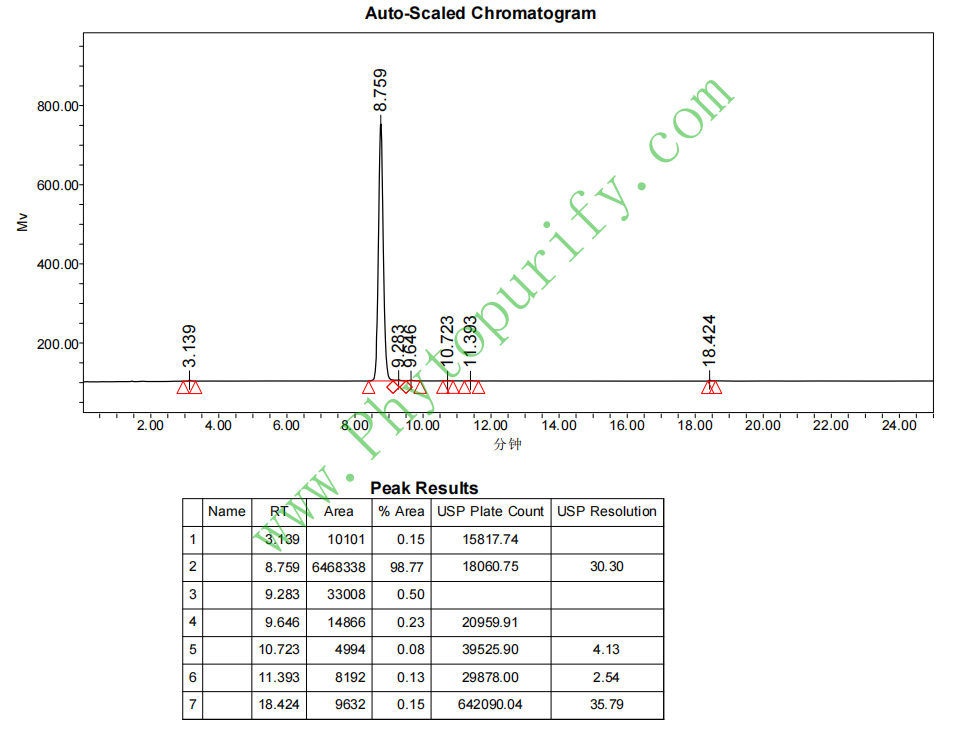
HPLC of Escin IA
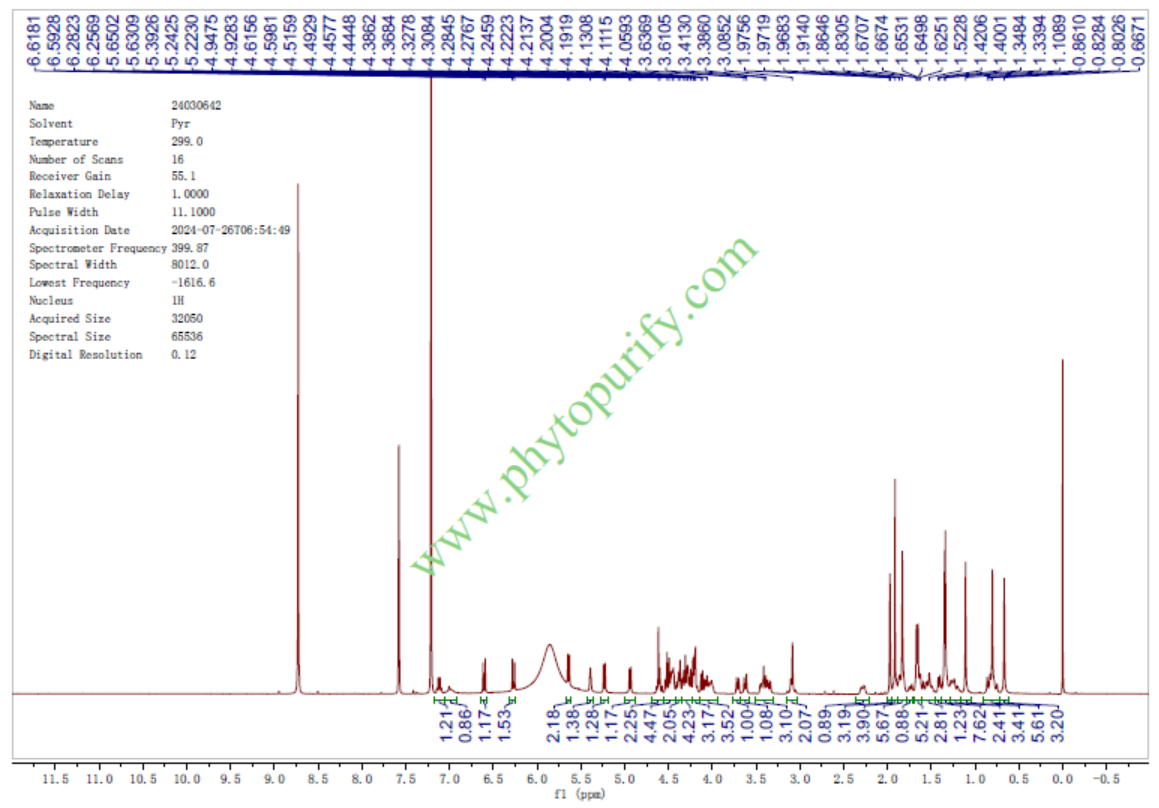
HNMR of Escin IA
Storage conditions:Short-term storage at 2~8℃, long-term storage at -20 ~ -80℃
388.0400
1.2339
-1.2841
.3700
.4702
.1872
Low
73.6520
6.9877
No
No
No
No
No
No
0.0
Yes
No
Yes
Yes
Triple negative breast cancer (TNBC) is not sensitive to conventional endocrine and targeted therapy because it lacks the expression of estrogen receptor, progesterone receptor and human epidermal growth factor receptor 2, is highly invasive and prone to early metastasis, which is a difficult problem to be solved in the field of breast cancer treatment. Therefore, exploring novel drug molecules that can effectively inhibit TNBC metastasis has important clinical significance. In recent years, natural products have become an important treasure trove for the development of anti-tumor drugs due to their structural diversity and rich biological activity. Seven Leaf Saponin A (Escin IA, CAS: 123748-68-5) as a Traditional Chinese Medicine for Seven Leaf Trees(Aesculus chinensis The main active saponin components in Bunge fruit have long been known for their significant anti-inflammatory, anti exudative, and vascular protective activities. However, the latest pharmacological studies have revealed that aescin A exhibits remarkable potential in anti-tumor effects, particularly in inhibiting TNBC invasion and metastasis. Its function has been confirmed to be closely related to the inhibition of lysyl oxidase like protein 2 (LOXL2) and epithelial mesenchymal transition (EMT) processes, providing a solid scientific basis for its transformation from traditional anti-inflammatory drugs to new anti-tumor metastasis candidate drugs. This article aims to provide a systematic review of the chemical properties, plant sources, pharmacological activities, molecular mechanisms of action, medicinal properties, and application prospects of seven leaf saponin A in diseases such as TNBC, in order to provide comprehensive references for the in-depth research and development of this compound.
Seven leaf saponin A is a structurally complex pentacyclic triterpenoid saponin compound with a molecular formula of C55H86O24 and a molecular weight of 1131.2690. Its basic skeleton is an oleanane type triterpenoid, with oligosaccharide chains connected by glycosidic bonds at positions C-3 and C-21, respectively. The sugar chain at position C-3 usually contains glucuronic acid, glucose, and xylose, while the sugar chain at position C-21 is connected to glucose and galactose. This disaccharide chain structure is an important characteristic that distinguishes it from other saponins and has a decisive impact on its biological activity and physicochemical properties.
In terms of physicochemical properties, the lipid water partition coefficient (LogP) of aescin A is 1.2339, indicating that it has a certain degree of lipophilicity, but overall it still belongs to an amphiphilic molecule. Its topological polar surface area (TPSA) is as high as 388.0400 Å ², which is mainly attributed to the abundant hydroxyl and sugar structures in the molecule, leading to its strong ability to form intramolecular and intermolecular hydrogen bonds. The water solubility parameter of this compound is 0.3700, belonging to the category of slightly soluble to poorly soluble in water, which is consistent with its larger molecular weight and complex sugar based structure. In the biopharmaceutical classification system, these compounds typically belong to Class IV (low solubility, low permeability), which poses a challenge for the development of their oral administration formulations. In addition, the predictive model shows low blood-brain barrier permeability, indicating a lower risk of central nervous system related side effects; HERG channel inhibition is negative, indicating a lower potential risk of arrhythmia; The Ames test result is 0.0, indicating that it has no direct genetic toxicity. These pharmacological parameters provide preliminary directions for subsequent formulation optimization and safety evaluation.
Seven leaf saponin A mainly comes from plants of the Seven Leaf Tree family and the Seven Leaf Tree genus. In China, its authentic source is Seven Leaf Tree(Aesculus chinensis Bunge's dried and mature seeds, also known as the traditional Chinese medicine "Borneo". This plant is widely distributed in the Yellow River Basin and eastern regions of China, and its seeds are rich in various saponin components, collectively known as seven leaf saponins. Among them, seven leaf saponin A is one of the main components that play a key pharmacological role.
The traditional extraction method is mainly based on solvent extraction. Usually, after crushing dried Borneo seeds, methanol, ethanol, or ethanol water solutions of different concentrations are used for heating reflux extraction or ultrasound assisted extraction. After vacuum concentration, the alcohol extract is defatted using petroleum ether or ethyl acetate, and the resulting aqueous layer is repeatedly extracted with n-butanol to enrich saponin components. The crude saponin mixture obtained has complex components and requires further separation and purification.
Modern separation and purification techniques have greatly improved the efficiency and purity of obtaining seven leaf saponin A. Macroporous adsorption resin chromatography (such as D101 and AB-8 resins) is a commonly used enrichment method that utilizes gradient elution with different concentrations of ethanol to effectively remove impurities such as sugars and pigments. Subsequently, techniques such as silica gel column chromatography, reverse phase silica gel column chromatography (such as ODS), high-performance liquid chromatography (HPLC), and preparative high-performance liquid chromatography (pre HPLC) were comprehensively used for fine separation. At present, a reverse phase chromatography system using acetonitrile water or methanol water (with a small amount of formic acid or acetic acid to adjust the pH) as the mobile phase is commonly used, combined with ultraviolet detectors or evaporative light scattering detectors for monitoring and preparation, ultimately obtaining high-purity monomers of aescin A for in-depth pharmacological and mechanistic research.
The pharmacological activity research of seven leaf saponin A has expanded from traditional anti-inflammatory and vascular protection fields to anti-tumor fields, demonstrating multiple biological effects.
1. Anti inflammatory and gastric mucosal protective activity:
The anti-inflammatory effect of seven leaf saponin A is its classic pharmacological activity. Research has shown that in various acute inflammation models, such as carrageenan induced rat foot swelling and acetic acid induced increased intra-abdominal capillary permeability in mice, saponins A can significantly inhibit inflammatory responses. In the ethanol induced rat model of gastric mucosal injury, saponins A exhibit good gastric protective effects by enhancing gastric mucosal barrier function, inhibiting the release of inflammatory mediators, and reducing oxidative stress. These effects are related to their regulation of multiple inflammatory signaling pathways.
2. Anti tumor metastasis activity (with a focus on TNBC):
This is the pharmacological activity of seven leaf saponin A that has received the most attention in recent years. Both in vitro and in vivo experiments have confirmed that saponins A can effectively inhibit the migration and invasion ability of highly invasive TNBC cells. In scratch healing and Transwell invasion experiments, treatment with aescin A exhibited concentration dependent inhibition of cell lateral migration and ability to penetrate matrix gel. More importantly, in TNBC in situ transplantation tumor or tail vein injection lung metastasis models, treatment with aescin A can significantly reduce the number and size of lung metastases without significantly affecting the growth of the primary tumor, highlighting its specific anti metastatic properties. Its anti metastatic effect is believed to be mainly attributed to the inhibition of LOXL2 and the reversal of EMT process.
3. Other activities:
In addition, the study suggests that saponin A may have effects on improving venous function, anti edema, antioxidant, etc., but the association and independent value of these activities with its anti-inflammatory and anti metastatic core effects still need further clarification.
The multiple pharmacological activities of seven leaf saponin A stem from its regulation of complex molecular networks, and its mechanism of action has been extensively studied at the molecular and pathway levels.
1. Core mechanism: LOXL2 inhibition and EMT reversal
LOXL2 is a key enzyme in extracellular matrix remodeling, which catalyzes the cross-linking of collagen and elastin to create physical channels for tumor cell invasion and metastasis, and can directly activate EMT related transcription factors. Seven leaf saponin A has been identified as an orally effective LOXL2 inhibitor. It can directly or indirectly inhibit the enzymatic activity or expression of LOXL2, thereby disrupting the hardening of the tumor microenvironment and reducing the rigidity of the extracellular matrix. At the same time, inhibition of LOXL2 leads to a decrease in the activity of downstream EMT key drivers (such as Snail, Slug, ZEB1), which in turn upregulates epithelial markers (such as E-cadherin) and downregulates stromal markers (such as N-cadherin, Vimentin), ultimately reversing the EMT process and causing the loss of tumor cell invasion and migration ability. This selective inhibition of the LOXL2-EMT axis is the core molecular basis for its resistance to TNBC transfer.
2. Molecular target network for anti-inflammatory effects:
The anti-inflammatory effect of seven leaf saponin A involves a broad network of targets. It can significantly inhibit the production of pro-inflammatory factors such as tumor necrosis factor - α (TNF - α), interleukin-6 (IL-6), and nitric oxide (NO) induced by stimuli such as lipopolysaccharides, which is closely related to its regulation of related signaling pathways:
* NF - κ B pathway: Seven leaf saponin A can inhibit the activity of I κ B kinase (IKK, encoded by IKBKB), prevent the phosphorylation and degradation of I κ B α, thereby inhibiting the nuclear translocation of nuclear factor kappa B (NF - κ B, RELA is its subunit) and the transcription of downstream inflammatory genes.
* STAT3 pathway: It can also inhibit the activation of the IL-6/JAK/STAT3 signaling pathway, reduce the phosphorylation and dimerization of STAT3, and block its pro-inflammatory and pro survival signals.
* Inflammatory bodies and cell pyroptosis: By inhibiting the activation of Caspase-1 (CASP1), saponin A may interfere with the assembly of NLRP3 inflammasomes, reduce the release of mature cytokines such as IL-1 β, and potentially inhibit cell pyroptosis.
* Enzymes and ion channels: Its inhibition of cyclooxygenase-1 (COX-1/PTGS1), inducible nitric oxide synthase (iNOS/NOS2), and regulation of transient receptor potential vanillic acid subtype 1 (TRPV1) and anchored protein subtype 1 (TRPA1) contribute to its anti-inflammatory, analgesic, and vascular regulatory effects.
3. Multi target synergistic effect:
It is worth noting that inflammation is closely related to tumor metastasis. The chronic inflammatory microenvironment is an important factor driving EMT and tumor metastasis. Seven leaf saponin A inhibits pathways such as NF - κ B and STAT3, not only directly anti-inflammatory, but also eliminates the activation of EMT transcription factors by these pathways. Therefore, there is an inherent cross-linking and synergy between its anti-inflammatory mechanism and anti metastatic mechanism, which together form the pharmacological basis for its resistance to multiple pathological processes such as TNBC.
Although the pharmacological activity of saponin A is clear, its pharmacological properties, especially pharmacokinetic properties, are the bottleneck for its clinical application.
Absorption, distribution, metabolism, and excretion (ADME):
As a large molecule polar saponin, the oral bioavailability of aescin A is generally low. Animal pharmacokinetic studies have shown that its oral absorption is slow and incomplete, which may be limited by poor intestinal permeability and hydrolysis of enzymes (such as β - glucosidase) in intestinal microbiota and intestinal mucosal epithelial cells. After absorption, it binds to proteins in the plasma and is widely distributed in tissues such as the liver, kidneys, and lungs, but it is difficult to cross the blood-brain barrier. The metabolic pathway of seven leaf saponin A in the body is complex, mainly undergoing hydrolysis (gradually removing glycosides to generate secondary glycosides), oxidation, binding and other reactions. Its prototype and metabolites are mainly excreted through bile and kidneys. Due to the significant first pass effect and pre system elimination, its absolute bioavailability needs to be accurately quantified through sensitive detection methods such as LC-MS/MS.
Formulation strategy and structural modification:
To improve its medicinal properties, current research strategies mainly focus on:
1. New drug delivery system: Develop nano formulations such as liposomes, polymer nanoparticles, micelles, etc. to improve their solubility, protect them from degradation, enhance intestinal absorption, and achieve targeted delivery.
2. Pre drug design: Chemical modification of the hydroxyl groups on its sugar or glycoside groups to prepare lipophilic prodrugs, improve membrane permeability, and convert them into active forms in vivo.
3. Simplification and optimization of structure: Based on its pharmacophores (such as glycoside core and key sugar groups), design and synthesize analogs with smaller molecular weight and better physicochemical properties to improve pharmacokinetic properties while retaining LOXL2 inhibitory activity.
Preliminary safety evaluation:
Traditional seven leaf saponin preparations have shown good tolerability when used clinically to treat chronic venous insufficiency, with the main adverse reactions being mild gastrointestinal discomfort. Seven leaf saponin A, as its main active ingredient, is still being studied for its specific toxicology. The existing computer predictions (hERG negative, Ames negative) and some preclinical studies provide preliminary safety signals, but comprehensive evaluations of acute toxicity, long-term toxicity, reproductive toxicity, etc. are crucial for its development as a new drug.
The unique dual mechanism of action of seven leaf saponin A (LOXL2 inhibition and EMT inhibition) has opened up new prospects for its treatment in refractory diseases, especially TNBC.
1. Anti tumor metastasis treatment:
The most promising application direction of aescin A is as an anti-tumor metastasis drug, especially for the adjuvant treatment of TNBC patients with high risk of metastasis. Its function does not depend on hormone receptors or HER2 status, and has broad-spectrum potential. In the future, we can explore its combination therapy with chemotherapy (such as paclitaxel, platinum) or immune checkpoint inhibitors (such as PD-1/PD-L1 inhibitors). LOXL2 inhibition may soften the tumor matrix, improve drug perfusion, and enhance immune cell infiltration, thereby producing a synergistic effect. In addition, the inhibitory effect on metastasis of other LOXL2 and EMT dependent malignancies, such as liver cancer, pancreatic cancer, and colorectal cancer, is also worth studying.
2. Treatment of inflammation related diseases:
Based on its clear anti-inflammatory mechanism network, aescin A can be used to treat acute inflammatory diseases, chronic inflammatory pain, and gastric mucosal damage caused by ethanol or nonsteroidal anti-inflammatory drugs. Its multi-target characteristics may have better efficacy and lower resistance risk than single target anti-inflammatory drugs.
3. Challenges and future research directions:
* Optimization of drug properties: As mentioned earlier, improving oral bioavailability is the primary challenge for transformation. New formulation technologies and structure based drug design are breakthrough directions.
* Deep exploration of mechanisms: Further clarification is needed on its direct interaction site with LOXL2 protein and analysis of its eutectic structure. Meanwhile, explore its role in regulating the tumor immune microenvironment.
* Exploration of Precision Therapy: Search for biomarkers that predict the efficacy of seven leaf saponin A, such as tumor subtypes with high LOXL2 expression and obvious EMT characteristics, to achieve precise medication.
* Clinical research advancement: After completing the preclinical pharmacology and safety evaluation of the system, it is urgent to initiate standardized clinical trials to verify its safety, pharmacokinetic characteristics, and preliminary efficacy in humans.
Seven leaf saponin A is a natural active molecule isolated from the traditional Chinese medicine Seven Leaf Tree, and its research process is a classic example from anti-inflammatory to anti-tumor. Modern pharmacological research has not only confirmed its significant effect in inhibiting TNBC invasion and metastasis, but also revealed its novel and critical mechanism of action by inhibiting LOXL2 and reversing EMT. At the same time, its ability to counteract multiple inflammatory pathways such as NF - κ B and STAT3 forms the molecular basis for its pleiotropic pharmacological effects. Despite the challenges of low oral bioavailability and drug development, with advances in formulation, medicinal chemistry, and molecular biology technologies, through structural optimization, dosage form improvement, and exploration of combination therapy strategies, aescin A is expected to be developed as a novel anti-tumor transfer drug and anti-inflammatory drug. It is not only a bridge connecting traditional medical wisdom with modern scientific discoveries, but also provides valuable candidate molecules and new treatment ideas for tackling clinical challenges such as TNBC. Future research should focus on overcoming its pharmaceutical shortcomings, deepening understanding of its mechanisms, and accelerating clinical translation, in order to revitalize this ancient plant component and benefit human health.
