


Product name: Desapioplatycodin D
Synonym name: Deapioplatycodin D
Catalogue No.: BP0486
Cas No.: 78763-58-3
Formula: C52H84O24
Mol Weight: 1093.22
Botanical Source: Platycodon、grandiflorum(Jacq.)A.DC.
Physical Description:
Type of Compound: Triterpenoids
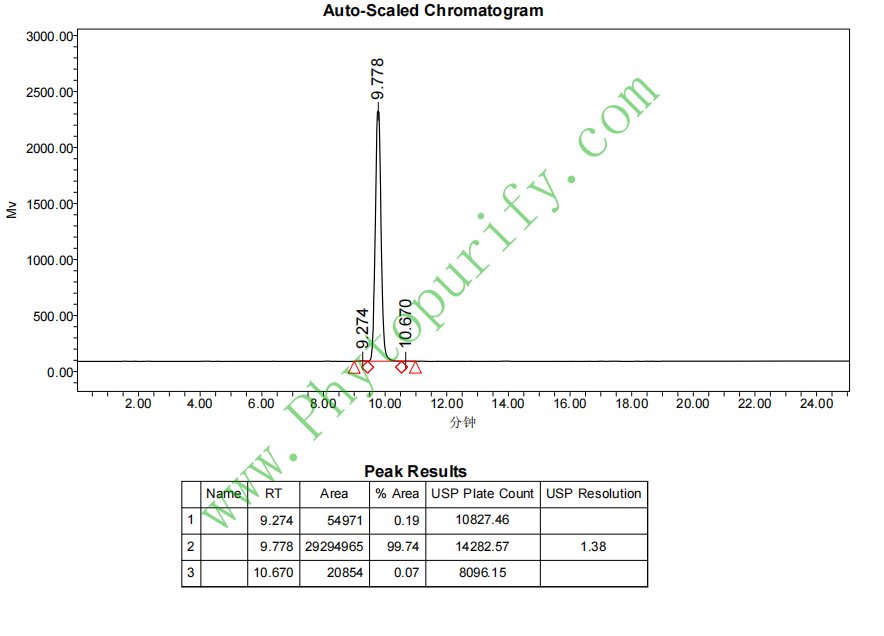
Purity: 95%~99%
Analysis Method: HPLC-DAD or/and HPLC-ELSD
Identification Method: Mass, NMR
Packing: Brown vial or HDPE plastic bottle
Storage: Store in a well closed container, protected from air and light. Put into refrigerate or freeze for long term storage.
Whenever possible, you should prepare and use solutions on the same day. However, if you need to make up stock solutions in advance, we recommend that you store the solution as aliquots in tightly sealed vials at -20℃. Generally, these will be useable for up to two weeks.
The product could be supplied from milligrams to grams
Inquire for bulk scale.
Chengdu Biopurify Phytochemicals Ltd. is a leading company in the research, development, manufacture and marketing of High Quality Phytochemicals and Extracts(especially Active Ingredients from Traditional Chinese Medicine,TCM), Natural Active Pharmaceutical Ingredients worldwide.
The main services:
A. Supply active ingredients and reference standards of TCM, from mgs to kgs scale
B. Custom extraction and purification, target Herb Active Ingredients
C. Custom synthesis and semi-synthesis for Natural Active Ingredients
D. CR(contract research), CM(contract manufacture) and PD(process development) services from lab scale, pilot scale to commercial scale(GMP is also available)
E. TCM compounds library for drug screen,more than 3000 compounds available, many of them are rare and unique.
HPLC of Desapioplatycodin D
Storage conditions:Short-term storage at 2~8℃, long-term storage at -20 ~ -80℃
394.3600
.8171
.8167
.7308
.5324
.2484
Low
59.7816
7.0087
Yes
No
No
No
No
No
0.0
Yes
No
Yes
Yes
Natural products, as an important treasure trove for drug discovery and development, play an irreplaceable role in the long history of human fight against diseases. Triterpenoid saponins have always been a hot topic in natural medicinal chemistry and pharmacology research due to their structural diversity and wide range of biological activities. Desapioplatycodin D (CAS number: 78763-58-3), a triterpenoid saponin isolated from traditional Chinese medicine Platycodon grandiflorum, has attracted much attention in recent years due to its significant anti-inflammatory activity. Inflammation is the basic defense response of the body to injury or infection, but uncontrolled chronic inflammation is the common pathological basis of many major diseases (such as rheumatoid arthritis, atherosclerosis, neurodegenerative diseases and cancer). Therefore, the search for efficient and low toxicity new anti-inflammatory drugs has important clinical significance. As a key metabolic derivative of Platycodon grandiflorum saponins D, its anti-inflammatory mechanism involves multi-target regulation of key components of the interleukin-6 (IL-6), signal transduction and transcription activator 3 (STAT3), nuclear factor kappa B (NF - κ B) pathway (such as RELA, IKBKB), and various inflammatory mediators (such as TNF - α, COX-2/iNOS), demonstrating broad development prospects. This article aims to provide a systematic review of the chemical structure, plant origin, pharmacological activity, molecular mechanism of action, pharmacological characteristics, and potential clinical applications of ginsenoside D from Platycodon grandiflorum, in order to provide comprehensive academic references for the in-depth research and development of this compound.
De Qin Sugar Platycodon Saponin D is an oleane type pentacyclic triterpenoid saponin. Its parent nucleus is oleanolic acid, with sugar chains connected at positions C-3 and C-28, respectively. Compared with its homolog Platycodin D, its core structural difference lies in the glycosylation part: the sugar free Platycodin D lacks one terminal apiose unit. The absence of this sugar group directly affects its polarity, spatial conformation, and interaction mode with biological targets, which may lead to significant changes in its pharmacological activity and metabolic properties.
Its molecular formula is C53H86O24 and its molecular weight is 1093.2200. The calculated lipid water partition coefficient (LogP) is 0.8171, indicating that the compound has a certain degree of lipophilicity, but overall it still leans towards hydrophilicity. Its topological polar surface area (TPSA) is as high as 394.3600 Å ², mainly attributed to the abundant hydroxyl and glycosidic bonds in the molecule, indicating that it has more hydrogen bond donor and acceptor sites. The water solubility value is 0.7308 (usually measured in mg/mL or log mol/L, indicating moderate to low water solubility), which is consistent with the properties of triterpenoid saponins with high molecular weight and polar surface area. In practical applications, it may be necessary to improve their solubility through formulation methods. Taking into account its physical and chemical parameters, the saponin D from Platycodon grandiflorum belongs to Class IV compounds in the Biopharmaceutical Classification System (BCS), which are typical of low permeability and low to moderate solubility.
De Qin Sugar Platycodon grandiflorum Saponin D mainly comes from the dried roots of Platycodon grandiflorum (Jacq.) A. DC., a plant in the Platycodon family. This medicinal herb is commonly used in traditional East Asian medicine to treat cough, phlegm, sore throat, and other symptoms. Its expectorant, antitussive, and anti-inflammatory effects are believed to be closely related to the saponin components it contains.
The extraction and separation of sugar free Platycodon grandiflorum saponins D from Platycodon grandiflorum roots usually follows the following process:
1. Extract Dry Platycodon grandiflorum root powder is subjected to reflux extraction or ultrasound assisted extraction using polar solvents such as methanol, ethanol, or aqueous ethanol. In recent years, green extraction techniques such as pressurized liquid extraction and microwave-assisted extraction have also been applied to improve extraction efficiency and reduce solvent consumption.
2. enrichment After the crude extract is concentrated under reduced pressure, macroporous adsorption resins (such as D101, AB-8) are often used for preliminary enrichment, followed by gradient elution with water and different concentrations of ethanol. Saponin components are usually concentrated in the 30% -70% ethanol elution site.
3. Separation and purification The enriched saponin fractions were further finely separated by normal phase or reverse phase silica gel column chromatography, reverse phase medium pressure or high pressure preparative liquid chromatography (RP-MPLC/HPLC). C18 bonded silica gel is commonly used as the stationary phase, and methanol water or acetonitrile water systems are used as the mobile phase for gradient elution. Due to its close polarity to structurally similar compounds such as Platycodon grandiflorum saponins D, separation and purification are difficult, and chromatographic conditions need to be optimized. High performance liquid chromatography-mass spectrometry (HPLC-MS) and nuclear magnetic resonance (NMR) techniques are key methods for identifying its chemical structure.
It is worth noting that the content of abscisic acid glycoside D in plants is usually lower than its main glycoside precursor, abscisic acid glycoside D. It may also be a metabolic or transformation product of abscisic acid glycoside D during in vivo or in vitro processing (such as fermentation, acid-base treatment).
A large number of in vitro and in vivo pharmacological studies have confirmed that the core biological activity of ginsenoside D from Platycodon grandiflorum is concentrated in its strong anti-inflammatory effect and extends to other pathological processes closely related to inflammation.
1. Anti inflammatory activity
This is the most prominent pharmacological effect of Du Qin Sugar Platycodon grandiflorum Saponin D. It has shown significant effects in various inflammatory models.
* in vitro model In the lipopolysaccharide (LPS) - induced macrophage (such as RAW264.7 cells) inflammation model, abscisic acid glycoside D can dose dependently inhibit the production of nitric oxide (NO) and prostaglandin E2 (PGE2), and downregulate the protein and mRNA expression of inducible nitric oxide synthase (iNOS/NOS2) and cyclooxygenase-2 (COX-2/PTGS2). Meanwhile, it can effectively inhibit the release of pro-inflammatory cytokines such as tumor necrosis factor - α (TNF - α), interleukin-6 (IL-6), and interleukin-1 β (IL-1 β).
* In vivo model In mouse ear xylene induced inflammation models, carrageenan induced paw swelling models, and chronic inflammation models such as Freund's complete adjuvant induced arthritis models, administration of abscisic acid glycoside D can significantly reduce tissue edema, inflammatory cell infiltration, and joint damage. Its effect is comparable to or more advantageous than positive anti-inflammatory drugs dexamethasone or indomethacin, and has shown better safety in some studies.
2. Analgesic activity
Inflammation and pain often occur together. The anti-inflammatory effect and analgesic effect of ginsenoside D from Platycodon grandiflorum complement each other. Research has shown that its analgesic mechanism not only relies on anti-inflammatory effects, but may also involve direct regulation of pain sensing neurons. It has been confirmed to be a regulator of transient receptor potential vanillic acid subtype 1 (TRPV1) and transient receptor potential anchor protein subtype 1 (TRPA1) channels, which play a central role in peripheral nociceptive and inflammatory pain. By regulating the activity of these channels, decolycoside D from Platycodon grandiflorum may directly inhibit the transmission of pain signals.
3. Other potential activities
Based on its anti-inflammatory properties and network regulatory properties, the research potential of Angelica sinensis saponins D has also been demonstrated in the following fields:
* neuroprotection By inhibiting the excessive activation of glial cells and related neuroinflammation, it may have an improving effect on neurodegenerative diseases such as Alzheimer's disease and Parkinson's disease.
* anti-fibrotic In liver fibrosis and pulmonary fibrosis models, inhibiting the inflammatory core pathway may slow down the activation of fibroblasts and excessive deposition of extracellular matrix.
* Antitumor adjuvant therapy Chronic inflammation is an important characteristic of the tumor microenvironment. By targeting STAT3, NF - κ B, and other signaling pathways that are both key inflammatory nodes and oncogenes, it is possible to inhibit the proliferation and invasion of tumor cells and enhance the sensitivity of chemotherapy drugs.
The anti-inflammatory effect of ginsenoside D from Platycodon grandiflorum is not achieved through a single target, but through the synergistic action of multiple targets and pathways, forming a complex regulatory network. Its core mechanism of action revolves around the following key targets and signaling pathways:
1. Inhibit the NF - κ B signaling pathway
Nuclear factor kappa B (NF - κ B) is a core transcription factor that regulates inflammatory responses. Removing celery sugar and Platycodon grandiflorum saponins D can effectively inhibit the activation of NF - κ B. Specifically manifested as:
*Inhibit the activation of I κ B kinase (IKK, composed of subunits such as IKBKB), and prevent the phosphorylation and degradation of I κ B α.
*Reduce the nuclear translocation of the key subunit p65 (RELA) of NF - κ B, thereby blocking its binding to DNA.
*Ultimately, it leads to the inhibition of gene transcription for a series of downstream pro-inflammatory mediators (TNF - α, IL-6, IL-1 β, iNOS, COX-2).
2. Regulating the JAK/STAT signaling pathway
Especially the STAT3 pathway is crucial in chronic inflammation and immune regulation. De celery sugar and Platycodon grandiflorum saponins D can inhibit cytokine induced JAK kinase activation such as IL-6, thereby reducing tyrosine phosphorylation, dimerization, and nuclear translocation of STAT3. Inhibiting STAT3 signaling not only downregulates inflammatory responses, but also affects cell proliferation and apoptosis, which is one of the mechanisms underlying its potential anti-tumor activity.
3. Regulating NLRP3 inflammasome activation
NLRP3 inflammasome is a multi protein complex that perceives danger signals within cells and mediates the mature secretion of IL-1 β and IL-18. Studies have shown that parsley free platycodon D may reduce the activation of caspase-1 (CASP1) by inhibiting the assembly or activation of NLRP3 inflammatory bodies, thus reducing the release of mature IL-1 β, which is of great significance in inflammatory diseases such as gout and type 2 diabetes.
4. Intervention in MAPK signaling pathway
The mitogen activated protein kinase (MAPK) pathway (including p38, JNK, ERK) is an important pathway for inflammatory signaling. It has been confirmed that the saponin D from Platycodon grandiflorum can inhibit LPS induced phosphorylation of p38 and JNK, thereby further suppressing the activity of transcription factors such as AP-1 and synergistically inhibiting the expression of inflammatory genes.
5. Directly acting on ion channels
As mentioned earlier, as a regulator of TRPV1 and TRPA1, abscisic acid glycoside D may intervene in the generation and transmission of inflammatory pain signals at the source by directly acting on these channels on sensory neurons, regulating calcium ion influx.
Summary Removing celery sugar and Platycodon grandiflorum saponins D through simultaneous targeting IL-6、STAT3、RELA(p65)、IKBKB(IKKβ)、TNF、CASP1、TRPV1/TRPA1、NOS2(iNOS)、PTGS1(COX-1, Multiple key molecules such as COX-2, which also affect its isoenzyme, systematically inhibit and regulate the inflammatory network at the transcriptional, post-translational modification, and membrane receptor/channel levels.
Based on the provided pharmacological parameters and existing research, the preliminary evaluation of the pharmacological properties of ginsenoside D from Angelica sinensis is as follows:
Advantage:
1. High potential for safety The Ames test result is 0.0, indicating no significant genetic toxicity risk. HERG inhibition is' no ', indicating a low likelihood of inducing QT interval prolongation in the heart (a serious risk of arrhythmia), which is an important positive indicator in drug cardiovascular safety assessment.
2. Clear mechanism of action and multi-target targeting Having a clear multi-target anti-inflammatory mechanism, it may have a synergistic therapeutic effect on complex diseases and reduce the risk of drug resistance caused by single target inhibition.
Challenge:
1. Pharmacokinetic properties may be poor:
* absorb The high molecular weight (>1000 Da) and extremely high TPSA (>300 Å ²) severely limit its ability to passively diffuse across intestinal epithelial cell membranes, indicating that its oral bioavailability may be extremely low.
* distribution The blood-brain barrier permeability is predicted to be "low", which is a barrier for the treatment of central nervous system diseases, but may be beneficial for reducing central nervous system side effects. Its distribution may be more limited to blood and extracellular fluid.
* Metabolism and excretion As saponin compounds, they are easily hydrolyzed by microbial communities in the gastrointestinal tract or undergo extensive phase II metabolism (such as glucuronidation and sulfation) in the liver. The prototype drug and its metabolites may be mainly excreted through bile and kidneys. The specific interactions between metabolic enzymes and transporters require further research.
2. Challenges posed by physical and chemical properties in formulations Moderate to low water solubility and high polarity may make it difficult to produce high drug loading conventional oral solid preparations or injections. Advanced drug delivery systems such as nanocrystals, liposomes, micelles, phospholipid complexes, or prodrug strategies need to be developed to improve their solubility, stability, and membrane permeability.
At present, there is a lack of publicly available data on the pharmacokinetics of the D system of saponins from Platycodon grandiflorum, which is a key gap that must be filled in order to advance towards drug development. In the future, it is necessary to establish sensitive and specific biological analysis methods (such as LC-MS/MS) for comprehensive ADME (absorption, distribution, metabolism, excretion) studies in animal models.
Based on its strong multi-target anti-inflammatory activity and good preliminary safety, the development prospects of Angelica sinensis saponins D in the following fields are clear:
1. Treatment of inflammatory diseases
* Rheumatoid immune diseases As a supplement or alternative to traditional DMARDs (anti rheumatic drugs) or biologics, such as rheumatoid arthritis and ankylosing spondylitis, it is particularly suitable for patients who are intolerant or unresponsive to existing drugs.
* Respiratory system diseases Chronic obstructive pulmonary disease (COPD), asthma, and pulmonary fibrosis, utilizing their anti-inflammatory and potential anti fibrotic effects.
* Inflammatory pain Such as osteoarthritis pain and neuropathic pain, their dual mechanisms of anti-inflammatory and pain channel regulation have unique advantages.
* Metabolic inflammation: Non alcoholic steatohepatitis (NASH) and atherosclerosis are the pathological core of low-grade chronic inflammation.
2. As a chemopreventive or adjuvant therapy agent
In tumor prevention and treatment, it may be used to prevent inflammation related cancer, or combined with chemotherapy/radiotherapy to reduce inflammatory side effects, improve tumor microenvironment, and enhance therapeutic efficacy.
3. Neurological disorders
Although BBB penetration is low, it may still have certain value through formulation technology modification or for peripheral inflammatory diseases affecting the central nervous system (such as Alzheimer's disease exacerbated by peripheral inflammation).
Outlook and Future Research Directions:
1. In depth mechanism research Using proteomics, transcriptomics, network pharmacology and other methods, comprehensively map its target network and elucidate the precise molecular details of its regulation of key signaling pathways (such as direct target validation).
2. Systematic pharmacokinetic study Conduct preclinical ADME research as soon as possible to clarify its absolute bioavailability, major metabolic pathways, tissue distribution, and excretion characteristics, providing a basis for dosage form design.
3. Innovative formulation development This is the key to translating its pharmacological activity into clinical efficacy. We should focus on exploring nanocarrier systems that can improve oral absorption or achieve targeted delivery.
4. Preclinical safety evaluation After completing preliminary pharmacological and pharmacokinetic studies, a systematic long-term toxicity, reproductive toxicity, and other safety evaluations should be conducted in accordance with regulations.
5. structural optimization Using it as the parent nucleus, carry out reasonable structural modifications (such as glycosylation modification and preparation of prodrugs) to optimize its pharmacokinetic properties while retaining its activity.
As an active triterpenoid saponin derived from traditional Chinese medicine Platycodon grandiflorum, the D glycoside from Eucommia ulmoides has become an important candidate molecule in the research of natural anti-inflammatory drugs due to its multi-target anti-inflammatory effects through multiple key pathways such as NF - κ B, STAT3, and NLRP3. Its clear molecular mechanism of action and good preliminary safety characteristics (no genetic toxicity, no hERG inhibition) have laid a solid scientific foundation for its drug development. However, the challenges posed by its high molecular weight and polarity, particularly the potential issue of low oral bioavailability, are the main obstacles on its path from being an "active compound" to a "candidate drug". Future research should focus on overcoming these bottlenecks through modern pharmaceutical techniques and medicinal chemistry, supplemented by systematic and in-depth pharmacokinetic and toxicological evaluations. With the advancement of these studies, the development of de celery sugar and platycodon saponins D is expected to become a new therapeutic drug for treating various chronic inflammatory diseases, which not only interprets the scientific connotation of modernization of traditional Chinese medicine, but also provides new possibilities for meeting the unmet medical needs in clinical practice.
