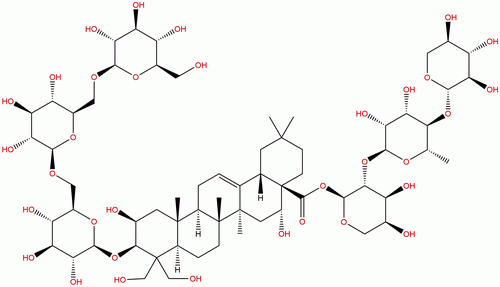


Product name: Platycoside G1
Synonym name: Deapi-platycoside E
Catalogue No.: BPF2355
Cas No.: 849758-42-5
Formula: C64H104O34
Mol Weight: 1417.5
Botanical Source:
Physical Description:
Type of Compound: Triterpenoids
Purity: 95%~99%
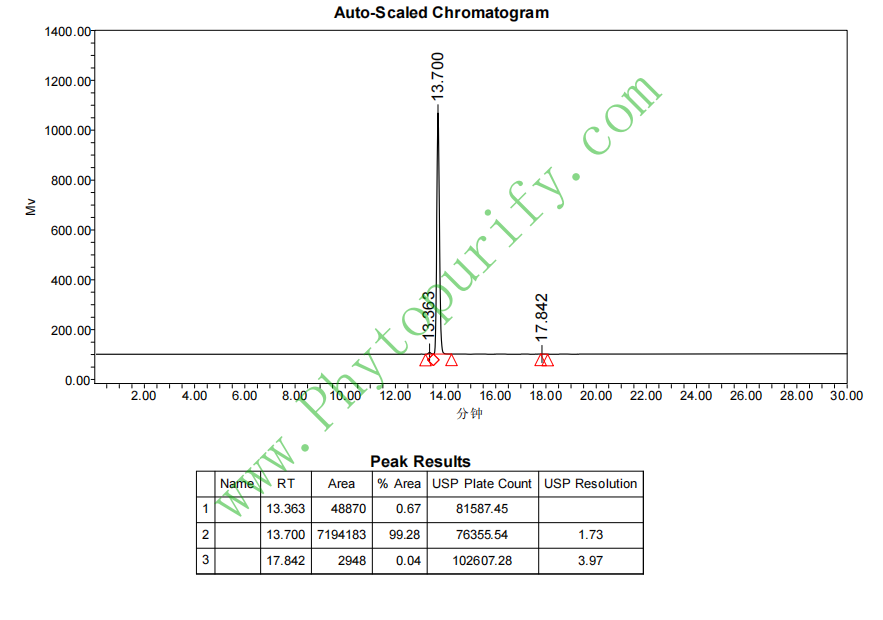
Analysis Method: HPLC-DAD or/and HPLC-ELSD
Identification Method: Mass, NMR
Packing: Brown vial or HDPE plastic bottle
The product could be supplied from milligrams to grams
Inquire for bulk scale.
For Reference Standard and R&D, Not for Human Use Directly.
HPLC of Platycoside G1
Storage conditions:Short-term storage at 2~8℃, long-term storage at -20 ~ -80℃
552.6600
.0186
.0186
2.3521
.4815
.1936
Low
56.2628
7.9595
Yes
No
No
No
No
No
0.0
Yes
No
Yes
Yes
Natural products, as an important source of drug discovery, play an irreplaceable role in human health maintenance and disease treatment. Among numerous natural compounds with biological activity, saponin compounds have attracted much attention due to their structural diversity and extensive pharmacological activities. Platycodon grandiflorus(Platycodon grandiflorus (Jacq.) A. DC.), As a classic Chinese medicine with the same origin of medicine and food, its medicinal history can be traced back thousands of years, traditionally used to treat cough, phlegm, sore throat, and lung abscess. Modern pharmacological research has confirmed that the main active ingredients of Platycodon grandiflorus are a series of oleanane type pentacyclic triterpenoid saponins, collectively known as Platycosides. These compounds exhibit various biological activities such as anti-inflammatory, antioxidant, anti-tumor, immune regulation, and liver protection.
In the vast family of platycodon saponins, Platycoside G1, as a relatively late isolated and identified member, has gradually entered the field of researchers in recent years. Its unique chemical structure, especially the composition and connection of sugar chains, endows it with unique physicochemical properties and biological activities that distinguish it from other saponins of Platycodon grandiflorum (such as Platycodon grandiflorum saponin D). Preliminary studies have shown that Platycodon grandiflorus saponin G1 has strong antioxidant activity, providing scientific evidence for its potential application in oxidative stress-related diseases such as inflammation, aging, cardiovascular disease, and neurodegenerative diseases. However, compared to star molecules such as Platycodon grandiflorum saponin D, systematic research on Platycodon grandiflorum saponin G1 is still insufficient, and its in-depth pharmacological mechanisms, pharmacokinetic properties, and potential for drug development still need to be fully revealed.
This article aims to provide a systematic review of the research status of Platycodon grandiflorum saponin G1, covering its chemical structure, physicochemical properties, plant sources and extraction processes, pharmacological activity, molecular mechanism of action, pharmacological evaluation, and clinical application prospects, in order to provide comprehensive reference and theoretical support for the in-depth research and future development of this natural product.
Platycodon grandiflorus saponin G1 belongs to the oleanane type pentacyclic triterpenoid saponin, and its chemical structure has typical triterpenoid saponin characteristics. Its glycoside (sapogenin) is Platycodigenic acid, which is an oleanane derivative with a carboxyl group at position C-28. Similar to many saponins from Platycodon grandiflorus, the sugar chain of Platycodon grandiflorus G1 is partially connected to the C-3 and C-28 positions of the aglycone, forming a double sugar chain structure. Specifically, its C-3 hydroxyl group is usually connected to an oligosaccharide chain composed of monosaccharides such as glucose, xylose, xylose, or celery sugar; The carboxyl group at position C-28 is connected to another sugar chain through an ester bond. The key distinguishing feature of Platycodon grandiflorum saponin G1 from other homologs is its sugar chain composition and connection sequence. According to existing literature, the C-3 sugar chain is typically composed of β - D-glucopyranosyl - (1 → 2) - β - D-glucopyranosyl - (1 → 4) - [β - D-glucopyranosyl - (1 → 3)] - β - D-glucopyranosylate, while the C-28 sugar chain is composed of β - D-glucopyranosyl - (1 → 6) - β - D-glucopyranosyl - (1 → 6) - β - D-glucopyranosyl. This complex sugar chain structure not only determines its molecular weight, but also profoundly affects its physicochemical properties.
From the perspective of physical and chemical properties, the molecular weight of Platycodon grandiflorum saponin G1 is as high as 1417.5020 Da, belonging to the category of macromolecular compounds. Its lipophilic water partition coefficient (LogP) is 0.0186, which is close to zero, indicating that the compound has extremely high hydrophilicity and is almost insoluble in non-polar solvents, but easily soluble in polar solvents such as water, methanol, and ethanol. This characteristic is closely related to the numerous hydroxyl and sugar units in its molecule. Its polar surface area (TPSA) is as high as 552.6600 Å ², far exceeding the recommended upper limit of 140 Å ² for oral medications, further confirming its strong polarity and water solubility. The predicted value of water solubility (LogS) is 2.3521, indicating good solubility in water. In addition, the predicted results showed that the ability of Platycodon grandiflorus saponin G1 to penetrate the blood-brain barrier (BBB) was extremely low, which is consistent with its high molecular weight, high polarity, and high TPSA value, indicating that it mainly acts on the peripheral system and may have a relatively small impact on the central nervous system. In terms of safety, preliminary computer simulation predictions show that the inhibitory risk of Platycodon grandiflorus saponin G1 on hERG potassium channels is low (No), and the Ames test result is negative (0.0), suggesting that it may not have significant genetic toxicity and cardiotoxicity risks. These physicochemical properties lay the foundation for its subsequent formulation development and in vivo behavior research.
The main plant source of Platycodon grandiflorus saponin G1 is Platycodon grandiflorus, a plant in the Platycodon family(Platycodon grandiflorus)The root. Platycodon grandiflorus is widely distributed in China, South Korea, Japan, and the Russian Far East. It is mainly produced in Anhui, Henan, Hubei, Liaoning, and other places in China. Its root is a traditional medicinal part and also the main raw material for modern extraction and separation. The content and composition of saponins in Platycodon grandiflorum are influenced by various factors, including variety, origin, growth period, harvest season, and processing methods. Usually, the saponin content of 2-3 year old Platycodon grandiflorus is higher, while the accumulation of effective components in the roots harvested in autumn is more abundant.
The extraction, separation, and purification process of Platycodon grandiflorum saponin G1 is a typical natural product chemistry research process aimed at efficiently and high-purity obtaining target compounds from complex plant matrices. The basic process usually includes the following key steps:
Raw material pretreatment and extraction Dried Platycodon grandiflorum roots are crushed to an appropriate particle size to improve extraction efficiency. Due to the high polarity and good water solubility of Platycodon grandiflorum saponins G1, traditional extraction methods often use polar solvents such as methanol, ethanol, or water. Common extraction techniques include:
Preliminary purification and enrichment The crude extract contains a large amount of impurities such as sugars, pigments, lipids, etc. Usually, liquid-liquid extraction is used for preliminary purification. After concentrating the crude extract, disperse it in water and extract it sequentially with solvents of different polarities such as petroleum ether, ethyl acetate, n-butanol, etc. Platycodon grandiflorum saponin G1 is mainly enriched in the water saturated n-butanol layer due to its strong polarity. After vacuum concentration, the n-butanol extract yields crude total saponins.
Chromatographic Separation and Purification After obtaining crude total saponins, various chromatographic techniques need to be used for fine separation to obtain high-purity platycodon saponin G1 monomer.
Finally, through the above series of steps, a standard product of Platycodon grandiflorum saponins G1 with a purity of over 95% can be obtained, and its structure can be confirmed by modern spectroscopic techniques such as nuclear magnetic resonance spectroscopy and mass spectrometry.
The pharmacological activity research of Platycodon grandiflorum saponin G1 is still in its infancy, but there is evidence to suggest that it has multiple biological activities, among which antioxidant and anti-inflammatory effects are the core of its research.
1. Antioxidant activity
This is one of the most clearly reported pharmacological activities of Platycodon grandiflorum saponin G1. Oxidative stress is a state of imbalance between the production of reactive oxygen species (ROS) and reactive nitrogen species (RNS) in the body and the antioxidant defense system, which is closely related to the occurrence and development of various diseases. Research has shown that Platycodon grandiflorum saponin G1 can effectively scavenge various free radicals, including 1,1-diphenyl-2-trinitrophenylhydrazine (DPPH) free radical, 2,2 '- diazo-bis-3-ethylbenzothiazoline-6-sulfonic acid (ABTS) free radical, and hydroxyl free radical (· OH). Its antioxidant capacity may come from multiple hydroxyl groups in its molecular structure, which can act as hydrogen donors, neutralize free radicals, and thus block free radical chain reactions. In addition, in cell models, it has been confirmed that Platycodon grandiflorus saponin G1 can reduce intracellular ROS levels induced by hydrogen peroxide (H ₂ O ₂) or lipopolysaccharide (LPS), and increase the activity of endogenous antioxidant enzymes such as superoxide dismutase (SOD), catalase (CAT), and glutathione peroxidase (GSH Px) in cells. This direct free radical scavenging ability and regulatory effect on the intracellular antioxidant defense system together form the basis of its antioxidant activity.
2. Anti inflammatory activity
Inflammation is a defense response of the body against harmful stimuli, but excessive or persistent inflammation can lead to tissue damage and chronic diseases. Platycodon grandiflorum saponin G1 exhibits significant anti-inflammatory potential. In the LPS stimulated macrophage (such as RAW264.7 cells) inflammation model, Platycodon grandiflorus saponin G1 can concentration dependently inhibit the production of pro-inflammatory mediators such as nitric oxide (NO) and prostaglandin E2 (PGE2). Its mechanism of action is related to the downregulation of protein expression levels of inducible nitric oxide synthase (iNOS, encoded by NOS2 gene) and cyclooxygenase-2 (COX-2, encoded by PTGS1/2 gene). At the same time, it can significantly inhibit the production and release of various key pro-inflammatory cytokines, such as tumor necrosis factor - α (TNF - α), interleukin-6 (IL-6), and interleukin-1 β (IL-1 β). These cytokines are the core drivers of the inflammatory cascade. In animal models, saponins G1 from Platycodon grandiflorus have also been reported to have a certain improvement effect on acute inflammation (such as carrageenan induced toe swelling in mice) and chronic inflammation models. These results indicate that Platycodon grandiflorum saponin G1 exerts anti-inflammatory effects through multiple targets and pathways.
3. Other potential activities
In addition to antioxidant and anti-inflammatory activities, given the widespread activity of saponins in Platycodon grandiflorus, Platycodon grandiflorus saponin G1 may also have other pharmacological effects, although there are few related research reports.
* Antitumor activity Some saponins from Platycodon grandiflorus (such as Platycodon grandiflorus saponin D) have been proven to have significant anti-tumor activity. Platycodon grandiflorum saponin G1 may exert anticancer effects by inducing apoptosis of tumor cells, blocking the cell cycle, or inhibiting angiogenesis, but further experimental verification is needed.
* Immune regulatory activity Saponin compounds often have immune adjuvant activity. Platycodon grandiflorum saponin G1 may affect the immune response of the body by regulating the function of T cells, B cells, or macrophages.
* Hepatoprotective activity The hepatoprotective effect of Platycodon grandiflorus has been recorded. Platycodon grandiflorum saponin G1 may alleviate liver cell damage in chemical liver injury or non-alcoholic fatty liver disease through its antioxidant and anti-inflammatory activities.
Overall, the pharmacological activity research of Platycodon grandiflorum saponin G1 is mainly focused on antioxidant and anti-inflammatory fields, and other aspects of activity still need to be further explored.
The pharmacological activity of Platycodon grandiflorum saponin G1, especially its anti-inflammatory and antioxidant effects, is achieved by interacting with multiple molecular targets and regulating multiple signaling pathways. Based on existing research and analysis of relevant targets, its mechanism of action can be summarized as follows:
1. Regulating the NF - κ B signaling pathway
Nuclear factor kappa B (NF - κ B) is the core transcription factor in inflammatory response, and its family members include RELA (p65) and others. In the resting state, NF - κ B binds to its inhibitory protein I κ B and exists in an inactive form in the cytoplasm. When cells are stimulated by pro-inflammatory factors such as LPS and TNF - α, I κ B kinase (IKK, encoded by genes such as IKBKB) is activated, leading to phosphorylation and degradation of I κ B, thereby releasing NF - κ B. The free NF - κ B immediately enters the nucleus and binds to the promoter of the target gene, initiating the transcription of a series of pro-inflammatory genes (such as TNF, IL6, NOS2, PTGS1/2). Research has shown that Platycodon grandiflorus saponin G1 can inhibit the activity of IKK, block the degradation of I κ B, thereby preventing nuclear translocation of NF - κ B (especially RELA subunit), and ultimately downregulate the expression of various pro-inflammatory factors. This is one of the core mechanisms by which it exerts anti-inflammatory effects.
2. Regulating the STAT3 signaling pathway
Signal transducer and activator of transcription factor 3 (STAT3) plays a crucial role in inflammation, immune response, and cell proliferation. When cytokines such as IL-6 bind to their receptors, they activate JAK kinase, which in turn phosphorylates STAT3. Phosphorylated STAT3 forms dimers and merges into the nucleus, regulating the expression of downstream target genes, including some pro-inflammatory and anti apoptotic genes. Platycodon grandiflorum saponin G1 may exert anti-inflammatory and potential anti-tumor effects by inhibiting the production of IL-6 or directly interfering with the JAK/STAT3 signaling pathway, reducing the phosphorylation level of STAT3, and thereby inhibiting its transcriptional activity.
3. Regulating NLRP3 inflammasome
Inflammatory bodies are large protein complexes within cells and are important components of the innate immune system. Among them, the NLRP3 inflammasome is activated upon sensing multiple pathogens and danger signals, recruiting and activating Caspase-1 (encoded by the CASP1 gene). Activated Caspase-1 cleaves inactive pro-IL-1 β and pro-IL-18 into mature IL-1 β and IL-18, which are secreted into the extracellular space and trigger a strong inflammatory response. Oxidative stress and mitochondrial dysfunction are key signals for activating NLRP3 inflammasome. The antioxidant activity of Platycodon grandiflorum saponin G1 may reduce the activation of Caspase-1 and the maturation and release of IL-1 β by clearing ROS, inhibiting the assembly and activation of NLRP3 inflammasomes. This may be another important mechanism of its anti-inflammatory effect.
4. Regulating transient receptor potential channels
Transient receptor potential (TRP) channels, such as TRPV1 and TRPA1, are non selective cation channels located on the cell membrane, highly expressed in sensory neurons, and involved in the transmission of pain, itching, and inflammatory signals. Multiple inflammatory mediators and oxidative stress products can directly or indirectly activate these channels, leading to calcium influx and triggering neurogenic inflammation and pain. Platycodon grandiflorus saponin G1 may exert a relieving effect in inflammatory pain and itching models by reducing oxidative substances that activate TRPV1/TRPA1 (such as H ₂ O ₂, 4-hydroxynonenal) through its antioxidant activity, or by directly interacting with channel proteins to inhibit their activity.
5. Direct antioxidant and enzyme activity regulation
As mentioned earlier, Platycodon grandiflorum saponin G1 can directly scavenge ROS and RNS, which is a direct manifestation of its antioxidant activity. In addition, it can enhance the endogenous antioxidant defense ability of cells by regulating the activity of transcription factors (such as Nrf2), upregulating the expression of a series of antioxidant enzymes (such as SOD, CAT, GSH Px). At the same time, it can directly inhibit the activity of pro-inflammatory enzymes such as iNOS (NOS2) and COX-2 (PTGS1/2), reducing the production of inflammatory mediators such as NO and PGE2.
In summary, the mechanism of action of Platycodon grandiflorum saponin G1 is multi-target and multi pathway. It forms a synergistic network by inhibiting the NF - κ B and STAT3 signaling pathways, regulating NLRP3 inflammasomes, affecting TRP channels, and directly exerting antioxidant effects, effectively suppressing inflammatory responses and oxidative stress damage. The discovery of these targets (IL-6, STAT3, CASP1, TRPV1, RELA, PTGS1, TNF, TRPA1, IKBKB, NOS2) provides a molecular level explanation for understanding their pharmacological effects.
Developing natural products into clinical drugs requires not only clear pharmacological activity, but also good drug affinity and acceptable pharmacokinetic (ADME) properties. The pharmacological evaluation of Platycodon grandiflorum saponin G1 is mainly based on its physicochemical properties and computer simulation prediction.
1. Evaluation of drug properties
According to the Lipinski Rule of Five, an orally active drug should typically meet the following criteria: molecular weight less than 500 Da, LogP less than 5, number of hydrogen bond donors less than 5, and number of hydrogen bond acceptors less than 10. The molecular weight of Platycodon grandiflorum saponin G1 (1417.5 Da) far exceeds 500 Da, and the number of hydrogen bond donors (from numerous hydroxyl groups) and acceptors also far exceeds the upper limit of the rule. Its LogP is 0.0186, which complies with the rules, but its extremely low lipid solubility also poses a challenge of poor membrane permeability. Therefore, Platycodon grandiflorum saponin G1 seriously violates the "Lipinski Five Rules", indicating that its pharmacological properties as a traditional oral small molecule drug are poor and its bioavailability may be low. Its extremely high TPSA value (552.66 Å ²) also confirms its difficulty in passive diffusion through the cell membrane. However, this does not mean that it has no development value at all. Many successful natural medicines, such as cyclosporine A and paclitaxel, also violate this rule. Platycodon grandiflorum saponin G1 may be absorbed through other means such as active transport or endocytosis, or its development direction should not be limited to oral administration.
2. Pharmacokinetic prediction
At present, there is a severe lack of experimental data on the pharmacokinetics of Platycodon grandiflorum saponin G1 in vivo, mainly relying on computer simulation prediction.
* absorb Due to its high molecular weight, high polarity, and low LogP, the oral absorption of Platycodon grandiflorum saponin G1 is expected to be extremely poor. It may mainly stay in the gastrointestinal tract or be metabolized by the gut microbiota. Although its high water solubility (2.3521) is beneficial for dissolution in the gastrointestinal tract, poor membrane permeability is its main bottleneck. Therefore, oral administration may not be the ideal route of administration. Intravenous injection, transdermal administration, or pulmonary inhalation (for respiratory diseases) may be more feasible options.
* distribution The prediction shows that its blood-brain barrier penetration ability is low, indicating that it is not easy to enter the central nervous system, which is beneficial for reducing central toxic side effects, but also limits its application in brain diseases. Its distribution volume may be small, mainly distributed in plasma and extracellular fluid.
* Metabolism As a saponin compound, Platycodon grandiflorus saponin G1 may undergo extensive metabolism in the body. After oral administration, its sugar chains may be gradually hydrolyzed by glycosidases produced by gut microbiota in the gastrointestinal tract, producing secondary glycosides or aglycones (such as coumarin acid), which may have different biological activities. In the liver, phase I and phase II metabolic reactions may also occur.
* excretion Due to its high polarity, Platycodon grandiflorus saponins G1 and its metabolites may be mainly excreted through bile and urine.
3. Formulation strategy and optimization
Given the pharmaceutical challenges of Platycodon grandiflorum saponin G1, future research needs to explore innovative formulation strategies to improve its bioavailability and targeting. Possible strategies include:
* Nano delivery system Using carriers such as liposomes, polymer nanoparticles, and solid lipid nanoparticles to encapsulate Platycodon grandiflorus saponin G1 can improve its stability, promote its transmembrane transport, and achieve targeted delivery.
* Prodrug design Chemical modification of hydroxyl or carboxyl groups in the G1 molecule of Platycodon grandiflorum saponins, such as introducing ester or phosphate groups, can temporarily alter their physicochemical properties, improve lipid solubility, and release the original drug after enzymatic hydrolysis in vivo.
* Combined use with other medications Combined with absorption enhancers (such as surfactants) or P-glycoprotein inhibitors, it may help improve oral absorption.
In summary, the pharmacological properties of Platycodon grandiflorum saponin G1 face significant challenges, particularly in terms of oral bioavailability. But its good water solubility and preliminary safety prediction (low hERG inhibition risk, no genetic toxicity) provide a basis for its development. Future research should focus on elucidating its in vivo ADME process and developing suitable drug delivery systems to overcome its poor membrane permeability.
Although the research on Platycodon grandiflorum saponin G1 is still in its early stages, its unique pharmacological activities, especially its strong antioxidant and anti-inflammatory effects, have depicted broad prospects for its potential applications in multiple disease fields.
1. Inflammatory diseases
Given that Platycodon grandiflorum saponin G1 exerts anti-inflammatory effects through multiple targets (NF - κ B, STAT3, NLRP3, TRP channels, etc.), it has the potential to treat various chronic inflammatory diseases. For example:
* Respiratory system diseases Platycodon grandiflorum is traditionally used to treat cough and lung inflammation. Platycodon grandiflorum saponin G1 may be used to treat asthma, chronic obstructive pulmonary disease (COPD), and acute lung injury by inhibiting airway inflammation, reducing mucus secretion, and alleviating airway hyperresponsiveness.
* Digestive system diseases Such as ulcerative colitis and Crohn's disease. Its antioxidant and anti-inflammatory activities may help alleviate oxidative damage and inflammatory response of intestinal mucosa.
* Skin inflammation Such as atopic dermatitis and contact dermatitis. Through local administration, Platycodon grandiflorus saponin G1 may inhibit the inflammatory response of skin keratinocytes and immune cells.
* arthritis Such as rheumatoid arthritis and osteoarthritis. By inhibiting inflammation and oxidative stress in synovial tissue, joint swelling and pain may be alleviated.
2. Oxidative stress-related diseases
Oxidative stress is a common pathological basis for many diseases. The strong antioxidant activity of Platycodon grandiflorum saponin G1 makes it potentially applicable in the following fields:
* cardiovascular disease It can protect vascular endothelial cells and prevent atherosclerosis by inhibiting the oxidation of low-density lipoprotein (LDL).
* Metabolic diseases Such as diabetes and its complications (diabetes nephropathy, retinopathy). By reducing oxidative stress damage caused by high blood sugar.
* Neurodegenerative diseases Although its BBB penetration is low, it may have indirect benefits for Alzheimer's disease, Parkinson's disease, etc. through peripheral antioxidant effects or the development of special delivery systems.
* liver disease Such as alcoholic liver disease and non-alcoholic steatohepatitis (NASH). By reducing oxidative stress and inflammatory response of liver cells, it exerts a hepatoprotective effect.
3. Pain and itching management
By regulating the TRPV1 and TRPA1 channels, Platycodon grandiflorum saponin G1 may become a novel analgesic and antipruritic drug for the treatment of chronic pain (such as neuropathic pain) and chronic itching (such as atopic dermatitis related itching).
Future research directions and challenges
In order to translate the potential of Platycodon grandiflorum saponin G1 into reality, future research needs to focus on the following aspects:
As an important triterpenoid saponin component in Platycodon grandiflorum, Platycodon grandiflorum saponin G1 has demonstrated unique research value in the field of natural product pharmacology due to its unique chemical structure and significant antioxidant and anti-inflammatory activities. This article systematically reviews its chemical structure, physicochemical properties, plant origin, extraction methods, pharmacological activities, molecular mechanisms, medicinal properties, and clinical application prospects. Despite facing significant challenges as a traditional oral medication, its multi-target and multi pathway mechanism of action, especially its potential in regulating NF - κ B, STAT3, NLRP3 inflammasomes, and TRP channels, makes it a candidate molecule for treating inflammation and oxidative stress-related diseases.
At present, the research on Platycodon grandiflorum saponin G1 is still in the early exploration stage, and there is still a long way to go from laboratory discovery to clinical application. Future research should focus on elucidating its pharmacokinetic behavior in vivo, developing innovative drug delivery systems, and conducting in-depth toxicological evaluations. With the continuous advancement of modern medicinal chemistry, pharmacology, and pharmaceutical technology, Platycodon grandiflorum saponin G1 is expected to overcome its own limitations and ultimately develop into a natural medicine or lead compound with unique therapeutic value, contributing to human health. The continuous exploration of G1 saponins in Platycodon grandiflorum not only helps to reveal the scientific connotation of this traditional Chinese medicine, but also provides valuable ideas and examples for discovering new drugs from natural products.
