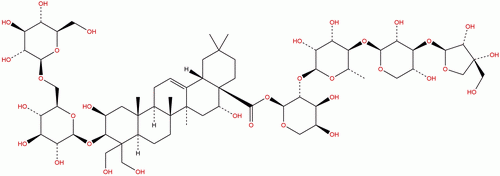


Product name: Platycodin D3
Synonym name:
Catalogue No.: BP3866
Cas No.: 67884-03-1
Formula: C63H102O33
Mol Weight: 1387.48
Botanical Source:
Physical Description:
Type of Compound:
Purity: 95%~99%
Analysis Method: HPLC-DAD or/and HPLC-ELSD
Identification Method: Mass, NMR
Packing: Brown vial or HDPE plastic bottle
The product could be supplied from milligrams to grams
Inquire for bulk scale.
For Reference Standard and R&D, Not for Human Use Directly.
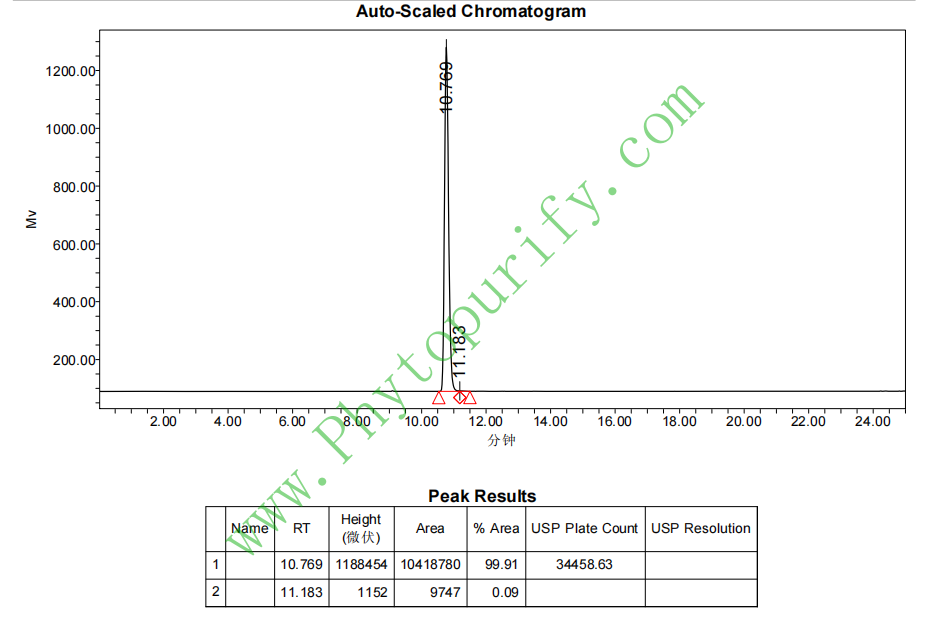
HPLC of Platycodin D3
Storage conditions:Short-term storage at 2~8℃, long-term storage at -20 ~ -80℃
532.4300
.1332
.1332
1.2311
.5041
.1960
Low
61.6943
7.9450
Yes
No
No
No
No
No
0.0
Yes
No
Yes
Yes
Natural products, as an important source of drug discovery, play an irreplaceable role in the long-term struggle between humans and diseases. Among numerous natural compounds with biological activity, triterpenoid saponins have attracted much attention due to their structural diversity and extensive pharmacological activities. Platycodin D3 (PD3) is used as a glycoside in Platycodon grandiflorum(Platycodon grandiflorus)One of the triterpenoid saponins with relatively abundant content, it has gradually become a hot topic in natural product pharmacology research in recent years.
Platycodon grandiflorus is a perennial herbaceous plant belonging to the Platycodon family. Its rhizome has been used as a traditional Chinese medicinal herb for thousands of years, and in traditional Chinese medicine theory, it has the effects of promoting lung function, clearing throat, eliminating phlegm, and expelling pus. Modern pharmacological research has confirmed that the extract of Platycodon grandiflorum and its active ingredients have various biological activities such as anti-inflammatory, antioxidant, anti-tumor, and immune regulation. Platycodon grandiflorum saponin D3, as one of the main active saponin components in Platycodon grandiflorum, has a molecular formula of C ₆∝ H ₁₀₂ O ∝₂ and belongs to the oleanane type pentacyclic triterpenoid saponin, with a complex sugar chain structure.
It is worth noting that Platycodon grandiflorus saponin D3 exhibits significant anti hepatitis C virus (HCV) activity, which provides important evidence for its application in the development of antiviral drugs. Meanwhile, the potential of this compound in anti-inflammatory treatment has also attracted widespread attention. Its regulatory effects on multiple inflammation related targets such as IL-6, STAT3, TNF, etc. suggest that it may become a novel candidate molecule for treating inflammation related diseases. This article will provide a systematic review of the research progress of Platycodon grandiflorum saponin D3 from multiple dimensions, including chemical structure, plant origin, pharmacological activity, mechanism of action, and medicinal evaluation, in order to provide reference for the in-depth research and development of this natural product.
Platycodin D3 belongs to the oleanane type pentacyclic triterpenoid saponins, and its glycoside is platydigenin, which is a compound with a typical pentacyclic triterpenoid skeleton. The complete chemical structure of this compound is composed of a triterpenoid glycoside core and multiple sugar chains connected by glycosidic bonds. Specifically, its sugar chain contains various monosaccharide units such as glucose, xylose, and xylose, forming a complex glycosylation pattern.
From the perspective of molecular structural characteristics, the molecular weight of Platycodon grandiflorum saponin D3 is 1387.4760 Da, which is mainly attributed to its complex sugar chain structure. Its LogP value is 0.1332, indicating that the compound has lower lipid solubility and is more likely to be distributed in aqueous environments. The topologically polar surface area (TPSA) is as high as 532.4300 Å ², which is much higher than the recommended upper limit of 140 Å ² for oral drugs, indicating that the compound may have poor membrane permeability. The water solubility parameter is 1.2311, indicating that its solubility in water is average, which may be related to the presence of a large number of polar groups such as hydroxyl groups in its molecules, but is also limited by its macromolecular skeleton.
In terms of physical and chemical properties, platycodon grandiflorum saponin D3, as a typical saponin compound, has the characteristics of surfactant, which can reduce the surface tension of aqueous solution and form a stable foam. This characteristic is closely related to the presence of both hydrophilic sugar chains and hydrophobic triterpenoid glycosides in its molecule. In addition, this compound may undergo hydrolysis reactions under acidic conditions, leading to sugar chain breakage and the formation of secondary glycosides or aglycones. This property requires special attention during extraction and storage.
From the spectroscopic characteristics, the UV absorption of Platycodon grandiflorum saponin D3 mainly comes from the double bond structure in its triterpenoid skeleton, usually with terminal absorption around 200-210 nm. Characteristic absorption peaks of hydroxyl (~3400 cm ⁻¹), carbonyl (~1700 cm ⁻¹), and glycosidic bonds (~1050 cm ⁻¹) can be observed in the infrared spectrum. Nuclear magnetic resonance spectroscopy (NMR) provides more detailed structural information, including the carbon hydrogen signals of the glycoside skeleton and the heteroatom carbon signals of each sugar unit. These data are of great significance for the structural identification and purity analysis of compounds.
The main source of Platycodon grandiflorus saponin D3 is Platycodon grandiflorus, a plant in the Platycodon family(Platycodon grandiflorus The root and stem parts of (Jacq.) A. DC. Kikyo is native to East Asia, including China, Japan, South Korea, and the Russian Far East. It is mainly distributed in Northeast, North, East, and Central China provinces in China. As a dual-use plant for medicine and food, Platycodon grandiflorum is not only widely used in the field of traditional Chinese medicine, but also used as a food ingredient and functional food ingredient in South Korea and Japan.
In terms of distribution within the plant body, Platycodon grandiflorus saponins D3 mainly accumulate in the cortex and phloem tissues of the rhizome. Its content is influenced by various factors, including plant variety, growth period, harvest season, and production environment. Research has shown that the saponin content in the roots of two-year-old or three-year-old Platycodon grandiflorus is higher, and the accumulation of saponin components in medicinal materials harvested in autumn is usually better than that harvested in spring. In addition, there are significant differences in the content of saponins D3 in Platycodon grandiflorum from different regions, which may be related to soil conditions, climatic factors, and cultivation management measures.
The extraction methods for Platycodon grandiflorum saponin D3 mainly include solvent extraction, ultrasound assisted extraction, microwave-assisted extraction, and enzyme assisted extraction. Traditional solvent extraction methods usually use methanol, ethanol, or water as extraction solvents, and extract by heating reflux or cold soaking. Among them, ethanol water mixed solvents (such as 70% ethanol) have become the most commonly used extraction system due to their good solubility in saponin compounds and relatively low cost. The extraction temperature is generally controlled at 60-80 ℃, the extraction time is 2-4 hours, and the solid-liquid ratio is usually 1:10 to 1:20 (w/v).
To improve extraction efficiency and selectivity, modern extraction techniques are widely used for the extraction of Platycodon grandiflorum saponin D3. Ultrasound assisted extraction utilizes the cavitation effect of ultrasound to destroy plant cell walls and promote the release of active ingredients, achieving efficient extraction in a short period of time. Typically, the extraction time can be shortened to 30-60 minutes. Microwave assisted extraction utilizes the penetrating and selective heating properties of microwaves to rapidly increase the internal temperature of plant cells, accelerating the dissolution of target components. The extraction efficiency of this method is usually higher than that of traditional hot reflux extraction. Enzyme assisted extraction method degrades cellulose and pectin components in plant cell walls by adding hydrolytic enzymes such as cellulase and pectinase, thereby promoting the release of saponin compounds. This method has mild conditions and is beneficial for maintaining the structural integrity of compounds.
The crude extract after extraction needs to undergo further separation and purification to obtain high-purity Platycodon grandiflorum saponin D3. Common separation and purification methods include macroporous adsorption resin column chromatography, silica gel column chromatography, high performance liquid chromatography (HPLC), and high-speed countercurrent chromatography (HSCCC). Macroporous adsorption resins (such as D101, AB-8, etc.) are widely used for the preliminary separation of saponin compounds due to their advantages of large adsorption capacity, good selectivity, and reusability. By gradient elution, the concentration of Platycodon grandiflorus saponin D3 can be effectively enriched. Subsequently, by combining silica gel column chromatography or preparative HPLC, the monomeric compound of Platycodon grandiflorus saponin D3 with a purity of over 98% can be obtained.
One of the most notable pharmacological activities of Platycodon grandiflorum saponin D3 is its anti hepatitis C virus (HCV) activity. Hepatitis C is a chronic liver disease caused by HCV infection, with approximately 71 million chronic infections worldwide. It is one of the leading causes of liver cirrhosis and hepatocellular carcinoma. Although significant progress has been made in the development of direct antiviral drugs (DAAs), issues such as drug resistance, treatment costs, and some patients' intolerance to existing treatments still exist. Therefore, the development of new anti HCV drugs has important clinical significance.
Research has shown that Platycodon grandiflorus saponin D3 can effectively inhibit the replication of HCV, and its mechanism of action may be related to interfering with specific stages of the virus lifecycle. In vitro experimental data shows that Platycodon grandiflorum saponin D3 can significantly reduce HCV RNA levels at sub micromolar concentrations, and has low toxicity to host cells, exhibiting good selectivity index. It is worth noting that the compound exhibits inhibitory activity against HCV of different genotypes, suggesting that it may act on conserved targets of the virus, providing potential advantages for overcoming viral drug resistance.
Inflammation is a defensive response of the body to harmful stimuli, but excessive or sustained inflammation can lead to tissue damage and the occurrence and development of various diseases. The anti-inflammatory activity of Platycodon grandiflorum saponin D3 has been confirmed by multiple studies. In the lipopolysaccharide (LPS) - induced macrophage inflammation model, Platycodon grandiflorus saponin D3 can significantly reduce the production levels of pro-inflammatory cytokines such as tumor necrosis factor - α (TNF - α), interleukin-6 (IL-6), and nitric oxide (NO). In addition, the compound can inhibit the expression of cyclooxygenase-2 (COX-2) and inducible nitric oxide synthase (iNOS), thereby reducing the synthesis of prostaglandin E ₂ (PGE ₂) and NO.
In animal models, Platycodon grandiflorus saponins D3 have shown protective effects against various inflammatory diseases. In the acute inflammation model induced by carrageenan, gavage administration of Platycodon grandiflorus saponin D3 significantly reduced the degree of toe swelling in mice; In a fully Freund's adjuvant induced arthritis model, this compound can alleviate joint swelling and inflammatory cell infiltration. These research results suggest that Platycodon grandiflorum saponins D3 may exert anti-inflammatory effects through multi-target and multi pathway regulatory mechanisms.
In addition to antiviral and anti-inflammatory activities, Platycodon grandiflorum saponin D3 also exhibits various other biological activities. In terms of anti-tumor, this compound has shown inhibitory effect on proliferation of many cancer cell lines, such as liver cancer cells, lung cancer cells and breast cancer cells, and its mechanism may involve in inducing cell cycle arrest and apoptosis. In terms of immune regulation, Platycodon grandiflorus saponins D3 can enhance the phagocytic function of macrophages, promote lymphocyte proliferation, and demonstrate immune enhancing activity. In addition, the compound also has certain antioxidant and hepatoprotective effects, which can alleviate oxidative stress-induced liver cell damage.
The pharmacological activity of Platycodon grandiflorum saponin D3 is closely related to its regulation of multiple signaling pathways and molecular targets. A deep understanding of its mechanism of action is of great significance for developing this compound into a therapeutic drug.
In terms of anti-inflammatory effects, Platycodon grandiflorum saponin D3 mainly exerts its anti-inflammatory effects by regulating the nuclear factor kappa B (NF - κ B) and signal transduction and transcription activation factor 3 (STAT3) signaling pathways. NF - κ B is the core transcription factor of inflammatory response, which exists in the cytoplasm by binding to the inhibitory protein I κ B in a resting state. When stimulated by inflammation, I κ B kinase (IKK) is activated, leading to the phosphorylation and degradation of I κ B, and the released NF - κ B (mainly composed of RELA/p65 subunits) is translocated into the nucleus, initiating the transcription of pro-inflammatory genes. Research has shown that Platycodon grandiflorus saponin D3 can inhibit the activity of IKK β (encoded by the IKBKB gene), thereby blocking the degradation of I κ B and nuclear translocation of NF - κ B, ultimately downregulating the expression of pro-inflammatory cytokines such as TNF - α and IL-6.
STAT3 is another important inflammatory signaling pathway that is overactivated in various inflammatory diseases. Platycodon grandiflorum saponin D3 can inhibit the phosphorylation of STAT3, block its formation of homodimers and translocation into the nucleus, thereby reducing the expression of downstream target genes. It is worth noting that there is a cross-talk between the NF - κ B and STAT3 signaling pathways, and Platycodon grandiflorum saponin D3 may exert anti-inflammatory effects by simultaneously regulating these two pathways.
In addition, Platycodon grandiflorum saponin D3 also has a regulatory effect on inflammasome related targets. The caspase-1 encoded by the CASP1 gene is a key effector molecule for inflammasome activation, involved in the maturation and secretion of IL-1 β and IL-18. Research has shown that Platycodon grandiflorus saponin D3 can inhibit the activation of caspase-1 and reduce the production of IL-1 β, which may be another important mechanism of its anti-inflammatory effect.
Regarding the mechanism of action of Platycodon grandiflorum saponin D3 against HCV, current research suggests that this compound may interfere with the virus's lifecycle through multiple pathways. Firstly, Platycodon grandiflorum saponin D3 may exert its effect by inhibiting the process of virus entry into host cells. HCV entry into liver cells requires the involvement of multiple host factors, including CD81, SR-BI, CLDN1, and OCLN. Platycodon grandiflorum saponin D3 may hinder virus adsorption and entry by altering cell membrane fluidity or interacting with these receptors.
Secondly, the compound may directly inhibit the replication of HCV. The replication of HCV relies on the synergistic action of virus encoded RNA dependent RNA polymerase (NS5B) and other non structural proteins. Molecular docking and enzyme activity experiments suggest that Platycodon grandiflorum saponin D3 may bind to the active site of NS5B, interfere with its polymerase activity, and thus inhibit the synthesis of viral RNA. In addition, the compound may indirectly inhibit viral replication by regulating the lipid metabolism of host cells, disrupting the membrane structure (i.e. membrane network) required for HCV replication.
Platycodon grandiflorum saponins D3 also exhibit regulatory effects on transient receptor potential channels (TRP channels). TRPV1 and TRPA1 are two important nociceptors involved in the transmission of pain and inflammatory signals. Research has shown that Platycodon grandiflorus saponin D3 can inhibit the activation of TRPV1 and TRPA1, which may be one of the molecular basis for its relief of inflammatory pain. In addition, the inhibitory effect of this compound on cyclooxygenase-1 (PTGS1 encoded) and inducible nitric oxide synthase (NOS2 encoded) further supports its multi-target anti-inflammatory mechanism.
Developing natural products into clinical drugs and evaluating their pharmacological properties is an essential and crucial step. The physicochemical properties and pharmacokinetic characteristics of Platycodon grandiflorum saponin D3 provide important reference for its drug development.
According to Lipinski's "Rule of Five", the ideal properties of oral medications typically include: molecular weight less than 500 Da, LogP less than 5, number of hydrogen bond donors less than 5, and number of hydrogen bond acceptors less than 10. The molecular weight of Platycodon grandiflorum saponin D3 is 1387.4760 Da, far exceeding the threshold of 500 Da; The number of hydrogen bond donors and acceptors is also significantly higher than the recommended value. These characteristics indicate that Platycodon grandiflorum saponin D3 does not meet the drug class standards of traditional oral medications, and its oral bioavailability may be low.
However, it should be pointed out that the "Five Rules" mainly target traditional small molecule oral drugs, and have certain limitations in their applicability to natural products, especially saponin compounds. Many natural products with complex structures, although not meeting the "Five Rules," can still exert therapeutic effects through non oral administration or by utilizing specific drug delivery systems. The TPSA of Platycodon grandiflorum saponin D3 is as high as 532.43 Å ², indicating poor membrane permeability, which is consistent with its low LogP value (0.1332), indicating that the compound is difficult to pass through the cell membrane through passive diffusion.
The pharmacokinetic study of Platycodon grandiflorum saponin D3 is still in its preliminary stage. Existing studies have shown that the compound has poor absorption in the gastrointestinal tract after oral administration, which may be related to its high molecular weight and low fat solubility. However, saponin compounds may be metabolized by gut microbiota in the intestine to produce secondary glycosides or aglycones, which may have better absorption characteristics. Therefore, the oral bioavailability of Platycodon grandiflorum saponin D3 may be significantly influenced by intestinal metabolism.
In terms of distribution, the blood-brain barrier penetration ability of Platycodon grandiflorus saponin D3 is relatively low, which may be disadvantageous for the treatment of central nervous system diseases, but may be advantageous for the treatment of liver diseases (such as HCV infection), as the compound is mainly distributed in peripheral tissues, reducing exposure and potential toxicity to the central nervous system. In addition, the high water solubility of the compound makes it mainly distributed in blood and extracellular fluid, and its binding rate with plasma proteins needs further research.
In terms of metabolism and excretion, Platycodon grandiflorum saponin D3 is mainly metabolized in the liver, and may generate various metabolites through hydrolysis, oxidation, and binding reactions. The prototype drug and metabolites are mainly excreted into the intestine through bile, and some may be excreted from the body through feces. Renal excretion may not be its main clearance pathway, which is related to its larger molecular weight and higher polarity.
Safety is an important consideration in drug development. Preliminary safety evaluation shows that the inhibitory activity of Platycodon grandiflorum saponins D3 on hERG potassium channels is negative, indicating a low risk of causing QT interval prolongation in the heart. The Ames test result was 0.0, indicating that the compound did not show mutagenicity in the bacterial recovery mutation test, which provides preliminary support for its safety. However, a comprehensive toxicological evaluation, including acute toxicity, chronic toxicity, reproductive toxicity, and carcinogenicity, still needs to be further carried out.
To address the shortcomings in the pharmacological properties of Platycodon grandiflorum saponins D3, the following optimization strategies can be considered: firstly, by structural modification, such as partial hydrolysis of sugar chains or introduction of specific functional groups, the molecular weight can be reduced and lipid solubility can be improved; Secondly, by utilizing drug delivery systems such as nanotechnology, liposomes, or phospholipid complexes, their oral bioavailability and targeting can be improved; Thirdly, develop non oral routes of administration, such as injections, transdermal patches, or inhaled formulations, to bypass absorption barriers; Finally, explore prodrug strategies by introducing cleavable functional groups to improve membrane permeability and release active ingredients in vivo.
Platycodon grandiflorum saponin D3, as a natural product with multiple pharmacological activities, has shown broad prospects in clinical applications, but also faces many challenges.
In terms of anti HCV treatment, the unique mechanism of action of Platycodon grandiflorum saponin D3 gives it the potential to be developed as a novel anti HCV drug. Unlike existing direct antiviral drugs, this compound may reduce the risk of virus resistance by acting on multiple stages of the virus lifecycle. In addition, the anti-inflammatory activity of Platycodon grandiflorum saponin D3 may have a synergistic therapeutic effect on liver inflammation caused by HCV infection, helping to alleviate liver damage and delay disease progression. However, its low oral bioavailability is the main obstacle to clinical application, and developing suitable administration routes and dosage forms is the key to promoting its clinical translation.
In the field of anti-inflammatory, the regulatory effect of Platycodon grandiflorum saponin D3 on various inflammation related targets may make it suitable for the treatment of chronic inflammatory diseases such as rheumatoid arthritis, inflammatory bowel disease, asthma, etc. Its multi-target action characteristics may bring better therapeutic effects and fewer side effects, but at the same time, it also increases the complexity of pharmacological research. More preclinical studies are needed in the future to clarify its efficacy and safety in specific inflammatory diseases, and to explore its synergistic effects with other anti-inflammatory drugs.
Given the multi-target action characteristics of Platycodon grandiflorum saponin D3, combination therapy strategies may become an important direction for its clinical application. For example, in anti HCV treatment, Platycodon grandiflorum saponin D3 can be used in combination with existing DAAs to synergistically inhibit virus replication through different mechanisms of action and reduce the development of drug resistance. In anti-inflammatory therapy, this compound can be used in combination with nonsteroidal anti-inflammatory drugs or biologics, potentially achieving dose reduction and reduced side effects.
The future research on Platycodon grandiflorum saponin D3 should focus on the following aspects: firstly, conducting in-depth pharmacokinetic studies to clarify its absorption, distribution, metabolism, and excretion characteristics, providing a basis for drug administration design; Secondly, using systems pharmacology and network pharmacology methods, comprehensively reveal its targets and signaling pathway network; Thirdly, by studying the structure-activity relationship, optimizing its chemical structure, improving its activity and drug properties; Fourthly, conduct a systematic toxicological evaluation to ensure the safety of its clinical use; Finally, explore its potential applications in other disease fields, such as metabolic diseases, neurodegenerative diseases, etc.
Platycodon grandiflorum saponin D3, as an important active triterpenoid saponin component in Platycodon grandiflorum, has attracted the attention of researchers due to its unique chemical structure and extensive pharmacological activities. This compound exhibits significant activity in anti HCV and anti-inflammatory effects, and its mechanism of action involves multiple signaling pathways and molecular targets such as NF - κ B, STAT3, inflammasomes, and TRP channels. However, its physicochemical characteristics such as high molecular weight, low fat solubility, and poor membrane permeability pose challenges in the development of traditional oral drugs.
However, the unique value of Platycodon grandiflorum saponin D3 as a natural product cannot be ignored. By rational structural modification, optimization of drug delivery systems, and innovation in drug delivery routes, it is expected to overcome the shortcomings in drug development. With the continuous deepening of research and the continuous advancement of technology, Platycodon grandiflorum saponins D3 and its derivatives are expected to play an important role in the fields of antiviral and anti-inflammatory therapy, and contribute to the cause of human health. Exploring natural products with clear pharmacological activity from traditional Chinese medicine, and optimizing and developing them through modern medicinal chemistry and pharmacology methods, this research paradigm will continue to promote the innovative development of natural product drugs.
