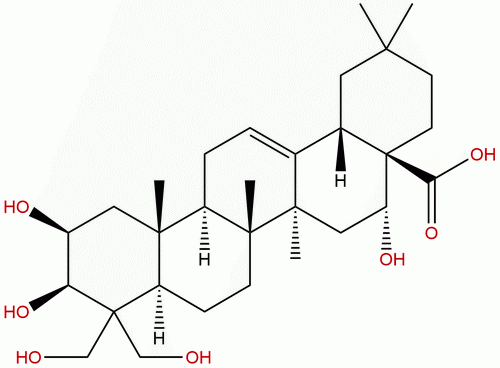


Product name: Platycodigenin
Synonym name: Platycodigenin
Catalogue No.: BPF2207
Cas No.: 22327-82-8
Formula: C30H48O7
Mol Weight: 520.707
Botanical Source:
Physical Description:
Type of Compound: Triterpenoids
Purity: 95%~99%
Analysis Method: HPLC-DAD or/and HPLC-ELSD
Identification Method: Mass, NMR
Packing: Brown vial or HDPE plastic bottle
The product could be supplied from milligrams to grams
Inquire for bulk scale.
For Reference Standard and R&D, Not for Human Use Directly.
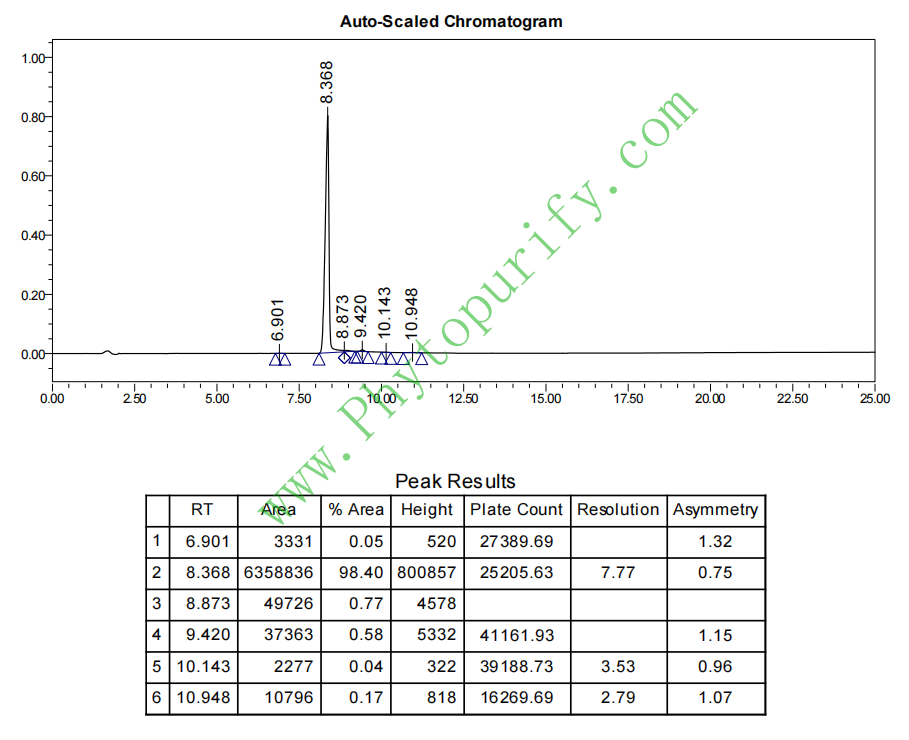
HPLC of Platycodigenin
Storage conditions:Short-term storage at 2~8℃, long-term storage at -20 ~ -80℃
138.4500
2.8053
.9352
.0921
1.5055
2.0315
Low
83.1471
5.2117
No
No
No
No
No
No
0.0
Yes
No
Yes
No
Natural products, as an important source of drug discovery, play an irreplaceable role in human health. Among numerous natural compounds with biological activity, triterpenoid saponins derived from Campanulaceae plants have attracted much attention due to their diverse pharmacological activities. Platycodigenin, as a component of Platycodon grandiflorum(Platycodon grandiflorus The core aglycone of compounds such as Platycodin D, which is the main active saponin in the roots of (Jacq.) A.DC., has a unique chemical structure and a wide range of pharmacological activities, especially showing significant potential in the field of anti-inflammatory. With the advancement of modern pharmacology and molecular biology techniques, research on Platycodon grandiflorus saponins has progressed from early observation of crude extract activity to precise analysis of molecular targets and signaling pathways. This article aims to systematically review the chemical properties, plant sources, pharmacological activities, mechanisms of action, pharmacological evaluation, and clinical application prospects of Platycodon grandiflorus saponins, in order to provide comprehensive and professional references for the in-depth development and transformation research of this natural product.
Platycodon grandiflorus saponins belong to the Oleanane type derivatives of pentacyclic triterpenoids, which have multiple hydroxyl and carboxyl groups attached to their parent nucleus structure, endowing them with unique physicochemical properties and biological activities. In traditional medicine, Platycodon grandiflorus is commonly used for promoting lung function, throat function, phlegm removal, and pus discharge. Modern research has revealed its various effects such as anti-inflammatory, antioxidant, anti-tumor, and immune regulation. As a glycoside component with high content and clear activity in Platycodon grandiflorum, Platycodon grandiflorum sapogenin is considered as one of the key material foundations for explaining the traditional and modern pharmacological effects of Platycodon grandiflorum. In recent years, breakthroughs have been made in the study of the role of Platycodon grandiflorus saponins in acute and chronic inflammation models and their regulatory mechanisms on key inflammatory signaling pathways such as NF - κ B, STAT3, NLRP3 inflammasome, making it a candidate molecule for the development of novel anti-inflammatory drugs or lead compounds.
The chemical name of Platycodigenin is 2 β, 3 β, 16 α, 23,24-pentahydroxyolean-12-en-28-oic acid (2 β, 3 β, 16 α, 23,24-pentahydroxyolean-12-en-28-oic acid), with a molecular formula of C ③₀ H ₄₈ O ₈ and a molecular weight of 520.7070 g/mol. Its core skeleton is an oleane type pentacyclic triterpene, with typical Δ ¹ ² double bonds (C12-C13 positions) and carboxyl groups at C28 positions. Compared to many other oleanane triterpenoids such as oleanolic acid, the structural feature of Platycodon grandiflorus saponins is the highly dense hydroxyl substitution on its A and D rings, including β - OH at C2, β - OH at C3, α - OH at C16, and two primary alcohol hydroxyl groups at C23 and C24. The structural characteristics of this polyhydroxylation are the basis of its high polarity and good water solubility.
From the perspective of physical and chemical properties, the calculated water solubility (LogS) of Platycodon grandiflorus saponins is 0.0921 mg/mL, indicating limited solubility in water. However, compared to its parent saponins (such as Platycodon grandiflorus saponins D), which have better water solubility due to the connection of sugar chains, the hydrophilicity of the glycoside itself is mainly contributed by five hydroxyl groups. Its lipid water partition coefficient (LogP) is 2.8053, which is in a relatively balanced range. It has a certain lipophilicity to penetrate biological membranes while retaining a certain hydrophilicity, which has an important impact on its binding to target proteins and in vivo distribution. The topological polar surface area (TPSA) is as high as 138.45 Å ², far exceeding the recommended upper limit of 140 Å ² for oral medications. This suggests that its oral absorption may be limited, but it also means that it is not easily able to penetrate the blood-brain barrier (predicted to be low), which may reduce central nervous system related side effects. In addition, the predictive model showed that the inhibitory risk of Platycodon grandiflorus saponins on hERG potassium channels was low, and the Ames test result was negative (0.0), indicating a low risk of genetic toxicity. This provides preliminary positive evidence for its safety as a candidate drug. These physicochemical parameters together form the basis for evaluating the pharmacological properties of Platycodon grandiflorum saponins.
The main source of Platycodon grandiflorus saponins is Platycodon grandiflorus, a plant in the Platycodon family(Platycodon grandiflorus)Dry roots. As a medicinal and edible plant, Platycodon grandiflorus has a long history of cultivation and utilization in East Asia (China, South Korea, Japan). In addition, plants of the same genus or close relatives, such as the sand ginseng genus(Adenophora)The genus Windbell Grass(Campanula)Some species may also contain small amounts of Platycodon grandiflorus saponins or their analogues, but Platycodon grandiflorus roots are currently recognized as the most important and abundant source. In the roots of Platycodon grandiflorus, Platycodon grandiflorus saponins mainly exist in the form of saponins, the most common of which are disaccharide chain or trisaccharide chain saponins formed by combining with different sugar chains (such as glucose, xylose, celery sugar, etc.), such as Platycodon grandiflorus saponins D, D2, D3, etc. These saponins can be glycosylated in vitro and in vivo or under specific conditions (such as acid hydrolysis, enzymatic hydrolysis), releasing free platycodon saponins.
The method of extracting platycodon saponins usually follows the classic route of "extraction hydrolysis purification". Firstly, polar solvents such as methanol, ethanol, or aqueous ethanol are used for reflux extraction or ultrasound assisted extraction of Platycodon grandiflorus powder to obtain a crude extract rich in total saponins. In order to improve the yield of target products, green and efficient technologies such as microwave-assisted extraction and enzyme assisted extraction have also been developed in recent years. Subsequently, the crude extract of total saponins was subjected to hydrolysis treatment to cleave glycosidic bonds and release aglycones. Traditional methods often use acid hydrolysis, such as using alcohol solutions of hydrochloric acid or sulfuric acid under heating conditions. However, strong acid conditions may lead to side reactions such as dehydration and cyclization of the glycoside structure. Therefore, milder enzymatic hydrolysis methods (such as using cellulases, β - glucosidase, etc.) or Smith degradation (periodate oxidation sodium borohydride reduction dilute acid hydrolysis) have been developed to improve the purity and structural integrity of the product. The mixture obtained after hydrolysis needs to undergo a series of separation and purification steps, including liquid-liquid extraction (such as extracting aglycones with ethyl acetate or n-butanol), silica gel column chromatography, preparative high-performance liquid chromatography (Prep HPLC), etc., to ultimately obtain high-purity monomers of Platycodon grandiflorum saponins. Modern separation techniques, such as high-speed countercurrent chromatography (HSCCC) and molecular imprinting technology, have also shown potential for rapid and efficient separation of platycodon saponins.
The pharmacological activity research of Platycodon grandiflorus saponins mainly focuses on their anti-inflammatory effects, while also showing potential in the fields of anti-tumor, antioxidant, hepatoprotective, and anti fibrotic effects.
1. Anti inflammatory activity: This is the core pharmacological activity of Platycodon grandiflorum saponins. A large number of in vitro and in vivo experiments have confirmed its powerful anti-inflammatory effect. In the lipopolysaccharide (LPS) - stimulated macrophage model (such as RAW264.7 cells), Platycodon grandiflorus saponins can significantly inhibit the production of pro-inflammatory factors such as tumor necrosis factor - α (TNF - α), interleukin-6 (IL-6), and nitric oxide (NO). In animal models, Platycodon grandiflorus saponins exhibit inhibitory effects on various acute inflammation models (such as carrageenan induced toe swelling and xylene induced ear swelling) and chronic inflammation models (such as collagen induced arthritis). Its anti-inflammatory effect is believed to be achieved through the synergy of multiple targets and pathways.
2. Antitumor activity: Studies have shown that Platycodon grandiflorum saponin has cytotoxicity to a variety of cancer cell lines, including lung cancer (A549), breast cancer (MCF-7), liver cancer (HepG2), gastric cancer (SGC-7901) and colon cancer (HT-29). Its mechanism of action involves inducing cell cycle arrest (such as G0/G1 phase or G2/M phase arrest) and apoptosis (through the mitochondrial pathway or death receptor pathway). In addition, it can also inhibit the migration and invasion ability of tumor cells, and may exert indirect anti-tumor effects by regulating immune responses in the tumor microenvironment.
3. Antioxidant activity: The multiple phenolic hydroxyl groups (actually alcohol hydroxyl groups, but with similar reducing properties) in the molecular structure of Platycodon grandiflorum saponins endow them with certain free radical scavenging ability. In vitro chemical experiments, it can effectively scavenge DPPH free radicals, ABTS cationic free radicals, and superoxide anions. In cell models, it can reduce the increase in reactive oxygen species (ROS) levels caused by oxidative stress inducers such as H ₂ O ₂, and upregulate the activity of antioxidant enzymes such as superoxide dismutase (SOD) and catalase (CAT), thereby protecting cells from oxidative damage.
4. Other activities: Preliminary studies also suggest that Platycodon grandiflorus saponins have hepatoprotective effects and can alleviate chemical liver damage by inhibiting inflammation and oxidative stress; Has anti pulmonary fibrosis effects, possibly achieved by inhibiting the TGF - β 1/Smad signaling pathway; And potential immune regulatory activity that can affect the proliferation and function of T cells and B cells.
The pharmacological activity of Platycodon grandiflorum saponins, especially their anti-inflammatory effects, relies on precise regulation of multiple key signaling pathways and molecular targets. Based on the target information you provided, we can identify its core functional network.
1. Regulation of NF - κ B signaling pathway: Nuclear factor kappa B (NF - κ B) is the core transcription factor in inflammatory response. In the resting state, NF - κ B (usually a p50/RELA heterodimer) binds to the inhibitory protein I κ B and remains in the cytoplasm. Inflammatory stimuli (such as TNF - α, LPS) activate the I κ B kinase (IKBKB, i.e. IKK β), phosphorylate and degrade I κ B, thereby releasing NF - κ B into the nucleus and initiating the transcription of pro-inflammatory genes (such as TNF, IL-6, NOS2, PTGS1). Research has shown that Platycodon grandiflorus saponins can inhibit the activity of IKBKB, reduce the phosphorylation degradation of I κ B, thereby blocking the nuclear translocation of NF - κ B, ultimately downregulating RELA (p65) - mediated transcriptional activity, and reducing the expression of inflammatory mediators such as TNF - α, IL-6, inducible nitric oxide synthase (NOS2), and cyclooxygenase-1 (PTGS1).
2. Regulation of STAT3 signaling pathway: Signal transducer and activator of transcription factor 3 (STAT3) is a key node connecting inflammation and tumors. Multiple cytokines (such as IL-6) and growth factors can activate JAK kinase, phosphorylate STAT3, promote its dimerization and incorporation into the nucleus, and regulate genes related to cell proliferation, survival, inflammation, and angiogenesis. Platycodon grandiflorus saponins have been shown to inhibit IL-6-induced STAT3 phosphorylation, thereby blocking the STAT3 signaling pathway, which may be one of the common mechanisms of its anti-inflammatory and anti-tumor activities.
3. Regulation of inflammasomes: Cysteine containing aspartic acid proteolysis enzyme 1 (CASP1, also known as Caspase-1) is an effector protein of NLRP3 inflammasome. After NLRP3 inflammasome activation, pro-Caspase-1 is cleaved into active Caspase-1, which further cleaves pro-IL-1 β and pro-IL-18 into mature pro-inflammatory cytokines. Platycodon grandiflorus saponins have been found to inhibit the assembly and activation of NLRP3 inflammasomes, thereby reducing the activation of Caspase-1 and the secretion of IL-1 β. This provides a theoretical basis for their application in NLRP3 related diseases such as gout and Alzheimer's disease.
4. Regulation of transient receptor potential (TRP) channels: TRPV1 and TRPA1 are non selective cation channels expressed on sensory neurons and are important molecules for sensing pain, heat, and chemical stimuli. They can cause pain and neurogenic inflammation when activated by inflammatory mediators (such as prostaglandins, bradykinin) or exogenous stimuli (such as capsaicin, mustard oil). Platycodon grandiflorus saponins have been reported to inhibit the activity of TRPV1 and TRPA1, which may be a new mechanism for their analgesic and anti-inflammatory effects, especially with potential therapeutic value for inflammatory pain.
In summary, Platycodon grandiflorum saponins form a multi-target and multi-level anti-inflammatory network by simultaneously acting on multiple key nodes such as IKBKB/NF - κ B, JAK/STAT3, NLRP3/CASP1, and TRPV1/TRPA1. This "multi-target" mode of action may make it superior to single target drugs in the treatment of complex inflammatory diseases.
The development of Platycodon grandiflorum saponins from natural products into clinical drugs requires a systematic evaluation of their pharmacological properties, with pharmacokinetic (ADME) properties being a key step.
1. Analysis of pharmacological parameters: Based on the predicted pharmacological parameters, Platycodon grandiflorum saponins exhibit some favorable characteristics, such as low hERG inhibition risk and low genetic toxicity (Ames test negative). However, its high molecular weight (520.7 Da) and extremely high polar surface area (138.45 Å ²) exceed the traditional "Lipinski Five Rules" limit of molecular weight<500 and TPS<140 Å ², suggesting that it may have poor oral bioavailability. The LogP value (2.8) is moderate, but its water solubility (0.0921 mg/mL) is poor, which further limits its oral absorption.
2. Current status of pharmacokinetic research: At present, direct studies on the pharmacokinetics of Platycodon grandiflorus saponins in vivo are relatively limited, but research on their parent saponins (such as Platycodon grandiflorus saponin D) provides important references. After oral administration of Platycodon grandiflorum saponin D, its sugar chain is gradually hydrolyzed under the action of intestinal microbiota, and eventually, Platycodon grandiflorum saponin elements may be released and absorbed. This indicates that Platycodon grandiflorus saponins may be one of the main active metabolites of Platycodon grandiflorus saponins after oral administration. However, the oral absorption of free platycodon saponins themselves may be poor due to their high polarity and low water solubility, making it difficult to penetrate the lipid bilayer of intestinal epithelial cell membranes. In addition, its high TPSA also indicates that it is not easy to penetrate the blood-brain barrier, which avoids central side effects but also limits its application in brain diseases. Intravenous administration may be a more effective route of administration, but its poor water solubility needs to be addressed.
3. Strategies for improving drug properties: Given the potential poor oral bioavailability of Platycodon grandiflorum saponins, future drug development strategies need to focus on the following points:
- Pre drug design: Chemical modification of its C28 carboxyl group or C2, C3, C16, C23, C24 hydroxyl group, such as preparation of ester prodrugs, to improve lipid solubility and intestinal permeability. For example, esterifying carboxyl groups can significantly increase LogP values.
- New formulation technology: Utilizing modern formulation technologies such as liposomes, nanoparticles, phospholipid complexes, and cyclodextrin inclusion complexes to enhance their solubility and bioavailability. For example, encapsulating it in lipid nanoparticles can promote lymphatic absorption and bypass the first pass effect in the liver.
- Structural optimization: A systematic structure-activity relationship (SAR) study was conducted using platycodon saponins as lead compounds to search for derivatives with stronger activity and better pharmacokinetic properties. For example, reducing the number of hydroxyl groups or changing their positions appropriately may improve their physicochemical properties while maintaining their activity.
Platycodon grandiflorum saponins, with its unique anti-inflammatory mechanism and preliminary evidence of good safety, have shown broad clinical application prospects in the treatment of various diseases.
1. Inflammatory diseases: Given its multi-target inhibitory effects on NF - κ B, STAT3, NLRP3 inflammasomes, and TRP channels, Platycodon grandiflorus saponins have great potential in the treatment of chronic inflammatory diseases, such as:
- Rheumatoid arthritis (RA): By inhibiting joint synovitis and bone destruction.
- Inflammatory bowel disease (IBD): Like Crohn's disease and ulcerative colitis, they regulate intestinal immunity and barrier function.
- Neuroinflammatory related diseases: Diseases such as Alzheimer's and Parkinson's, although having low blood-brain barrier penetration, can be overcome by designing prodrugs or utilizing nano delivery systems.
- Acute lung injury/acute respiratory distress syndrome (ALI/ARDS): By inhibiting excessive inflammatory response in the lungs.
2. Tumor adjuvant therapy: The anti-tumor activity of Platycodon grandiflorus saponins, especially its potential to inhibit tumor growth, metastasis, and reverse drug resistance by suppressing the STAT3 and NF - κ B pathways, makes it a promising adjuvant drug for chemotherapy or targeted therapy. Combined with existing chemotherapy drugs, it may have the effect of reducing toxicity and increasing efficacy.
3. Metabolic disorders: Chronic low-grade inflammation is the common pathological basis of obesity, type 2 diabetes and non-alcoholic fatty liver disease (NAFLD). The anti-inflammatory activity of Platycodon grandiflorus saponins may help improve insulin resistance and liver steatosis.
Future research directions:
As a key active ingredient derived from traditional Chinese medicine Platycodon grandiflorum, the saponins of Platycodon grandiflorum have a unique chemical structure and clear pharmacological activity, especially in the field of anti-inflammatory, showing significant advantages in multi-target and multi pathway synergistic effects. By regulating key inflammatory targets such as IL-6/STAT3, IKBKB/NF - κ B, CASP1/NLRP3, and TRPV1/TRPA1, it has shown therapeutic potential in various disease models such as rheumatoid arthritis, inflammatory bowel disease, and tumors. Although its drug development faces challenges such as low oral bioavailability, these obstacles are expected to be overcome through strategies such as prodrug design, novel formulation technology, and structural optimization. In the future, with the in-depth analysis of its mechanism of action and the improvement of its pharmacokinetic properties, Platycodon grandiflorus saponins and their derivatives are highly likely to become a new class of anti-inflammatory drug lead compounds with independent intellectual property rights, providing a new option for the treatment of complex chronic inflammatory diseases. The transformation of Platycodon grandiflorus saponins from natural products to clinical drugs is challenging, but its bright prospects are worth looking forward to.
