Research progress on D3, a natural triterpenoid saponin with multiple pharmacological activities, extracted from Platycodon grandiflorum with celery sugar
Introduction/Overview
Natural products, as an important source of drug discovery, play an irreplaceable role in human health maintenance and disease treatment. Among numerous natural active molecules, triterpenoid saponins have attracted much attention due to their structural diversity and wide range of biological activities. Platycodon grandiflorus(Platycodon grandiflorus As a traditional medicinal plant, Jacq. A. DC. has a long history of application in East Asia. Its rhizome is commonly used to treat respiratory diseases such as cough, phlegm accumulation, sore throat, etc. Modern pharmacological research has shown that the main active ingredients of Platycodon grandiflorus are triterpenoid saponins, among which Platycodin D and its derivatives are the most extensively studied.
Deapi platycodin D3 (DPD3) is an important member of the Platycodon saponin family, and its chemical structure is a deacetylated derivative of Platycodon glycoside D3. This compound was first isolated and identified from the root of Platycodon grandiflorus in 1984, with CAS registration number 67884-05-3. In recent years, with the advancement of separation and purification technology and the improvement of biological activity screening methods, various pharmacological activities of DPD3 have been gradually revealed, especially in anti-inflammatory, immune regulation, anti-tumor and other aspects, which have attracted widespread attention.
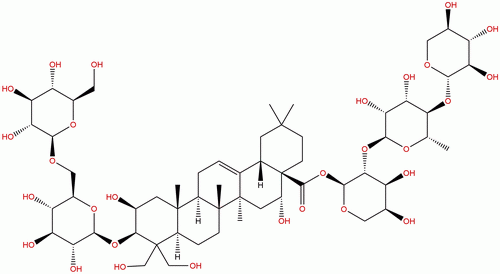
From a chemical structure perspective, DPD3 belongs to the oleanane type pentacyclic triterpenoid saponin. Its parent nucleus is oleanolic acid, and the sugar chain is composed of monosaccharides such as glucose and xylose. Compared with Platycodon grandiflorus saponin D3, DPD3 lacks a sugar group, which significantly affects its physicochemical properties and biological activity. The molecular weight is 1255.3610 Da and the LogP value is 0.3851, indicating that the compound has good hydrophilicity, which is consistent with the typical characteristics of triterpenoid saponins.
This article will provide a systematic review of the research progress on the compound D3 from Platycodon grandiflorum, including its chemical structure and physicochemical properties, plant sources and extraction methods, pharmacological activity research, mechanism of action and molecular targets, pharmacological evaluation and pharmacokinetics, clinical application prospects and prospects. The aim is to provide reference for the in-depth research and development of this natural product.
Chemical structure and physicochemical properties
Chemical structural characteristics
The D3 glycoside from Platycodon grandiflorum belongs to the oleanane type pentacyclic triterpenoid saponin, and its aglycone is oleanolic acid. The framework of oleanolic acid has a typical pentacyclic triterpenoid structure, including five rings A, B, C, D, and E. The A and B rings are hexagonal rings, the C and D rings are hexagonal rings, and the E ring is a pentagonal ring. Sugar chains are connected at positions C-3 and C-28, respectively, forming a double sugar chain saponin structure.
The sugar chain composition of DPD3 is specific: there is a disaccharide chain composed of β - D-glucose and α - L-rhamnose connected at the C-3 position; There is a monosaccharide chain composed of β - D-glucose connected at position C-28. Compared with Platycodon grandiflorus saponin D3, DPD3 lacks a β - D-apiose group at the end of the sugar chain at position C-28, which leads to significant differences in physicochemical properties and biological activity between the two.
From a stereochemical perspective, the glycosidic bonds of DPD3 are all in the β configuration, which has a significant impact on their interactions with biomolecules. The multiple hydroxyl and carboxyl groups in the molecule endow the compound with good water solubility and provide a structural basis for its hydrogen bonding with target proteins.
Physical and chemical property parameters
According to the results of computational chemistry and experimental measurements, the main physicochemical properties of DPD3 are as follows:
molecular weight:1255.3610 Da, It belongs to natural products with medium molecular weight. This molecular weight range poses certain absorption barriers for DPD3 during oral administration, but also provides unique characteristics for its distribution and metabolism in the body.
Lipid water partition coefficient (LogP)0.3851 indicates that the compound has good hydrophilicity. A lower LogP value means that DPD3 has a higher solubility in the aqueous phase and less distribution in the lipid environment. This property is consistent with its characteristics as a saponin compound and also explains its challenges in gastrointestinal absorption.
Polarized surface area (TPSA)473.5100 Å ², much higher than the 140 Å ² threshold typically required for oral medications. A high TPSA value indicates that DPD3 contains a large number of polar groups, which is beneficial for water solubility but not conducive to transmembrane transport and oral bioavailability.
Water solubility:1.3834 mg/mL, Belongs to moderately water-soluble compounds. This solubility is sufficient to support in vitro experiments and some in vivo studies, but may pose limitations for high-dose administration.
Blood-brain barrier penetrability: Low. The high molecular weight and high polarity surface area of DPD3 make it difficult to penetrate the blood-brain barrier, which limits its application in the treatment of central nervous system diseases, but also reduces the risk of central nervous system toxicity.
HERG inhibition: Negative. Inhibition of hERG potassium channels is an important indicator of drug cardiac toxicity, and DPD3 has no inhibitory effect on hERG channels, indicating its good cardiac safety.
Ames test 0.0 indicates that the compound has no mutagenicity and a low risk of genetic toxicity.
Overall, the physicochemical properties of DPD3 exhibit typical natural saponin characteristics: good water solubility, low lipid solubility, large polar surface area, and poor membrane permeability. These properties determine its low oral bioavailability, but intravenous or local administration may have good application prospects.
Plant sources and extraction methods
Plant-based
The main source of celery sugar and Campanulaceae saponin D3 is the Campanulaceae plant Campanulaceae(Platycodon grandiflorus The root of (Jacq.) A. DC. Platycodon grandiflorus is a perennial herbaceous plant widely distributed in East and Northeast Asia, including China, Japan, South Korea, and the Russian Far East. In China, Platycodon grandiflorus is mainly produced in the provinces of Northeast, North, East, and Central China, with larger yields in Inner Mongolia, Hebei, Shanxi, and other areas.
The content of triterpenoid saponins in Platycodon grandiflorum roots varies depending on factors such as variety, origin, harvesting time, and growth years. Research has shown that the saponin content in the roots of 2-3 year old Platycodon grandiflorus is higher, and the saponin content in roots harvested in autumn is usually higher than that harvested in spring. The content of DPD3 in Platycodon grandiflorum roots is relatively low, usually 1% -5% of total saponins, and belongs to trace components.
Apart from Platycodon grandiflorus, DPD3 is also distributed in small amounts in other plants of the Platycodon family, but its content is much lower than that of Platycodon grandiflorus roots. At present, the main source of DPD3 is still the extraction and separation of Platycodon grandiflorus roots.
extraction method
The extraction methods of DPD3 mainly include traditional solvent extraction, modern assisted extraction, and chromatographic separation.
Traditional solvent extraction method Using methanol or ethanol as extraction solvents, crude extracts are obtained through reflux extraction or cold soaking extraction. The specific operation process is as follows: after drying and crushing the roots of Platycodon grandiflorum, extract 2-3 times with 70% -80% ethanol under reflux conditions at 60-80 ℃ for 2-3 hours each time, combine the extracts, and concentrate under reduced pressure to obtain the extract. This method is easy to operate and cost-effective, but the extraction efficiency is low and there are many impurities.
Modern assisted extraction method Including ultrasound assisted extraction, microwave-assisted extraction, enzyme assisted extraction, etc. Ultrasound assisted extraction utilizes the cavitation effect of ultrasound to destroy cell walls and promote the dissolution of active ingredients. The extraction time can be shortened to 30-60 minutes, and the extraction rate is 20% -30% higher than traditional methods. Microwave assisted extraction utilizes the heating effect of microwaves to rapidly increase the internal temperature of cells, causing cell wall rupture and rapid release of active ingredients. Enzyme assisted extraction involves degrading cell wall components through cellulase, pectinase, etc., to increase the dissolution rate of saponins.
Chromatographic separation method The crude extract was initially purified using macroporous adsorption resins (such as D101, AB-8, etc.) to remove impurities such as sugars and pigments, resulting in a total saponin enrichment. Subsequently, methods such as silica gel column chromatography, ODS reverse phase column chromatography, and preparative high-performance liquid chromatography (HPLC) were used for separation and purification. The purification of DPD3 usually adopts gradient elution method, and the mobile phase is methanol water or acetonitrile water system. The final product purity can reach over 98%.
In recent years, high-speed countercurrent chromatography (HSCCC) and molecular imprinting technology have also been applied to the separation and purification of DPD3. These new technologies have the advantages of high separation efficiency, low solvent consumption, and high product purity, but the equipment cost is high and large-scale industrial production has not yet been achieved.
Pharmacological activity research
anti-inflammatory activity
The anti-inflammatory effect is one of the most prominent pharmacological activities of DPD3. Multiple in vitro and in vivo studies have confirmed that DPD3 can significantly inhibit inflammatory responses and reduce levels of inflammatory cytokines.
At the cellular level, DPD3 can inhibit macrophage inflammatory response induced by lipopolysaccharide (LPS). Research has shown that DPD3 treatment can significantly reduce the production of nitric oxide (NO) and prostaglandin E2 (PGE2) in RAW264.7 macrophages, while inhibiting the expression of inducible nitric oxide synthase (iNOS/NOS2) and cyclooxygenase-2 (COX-2/PTGS2). In addition, DPD3 can also reduce the secretion of pro-inflammatory cytokines such as tumor necrosis factor - α (TNF - α/TNF), interleukin-6 (IL-6), and interleukin-1 β (IL-1 β).
In animal models, DPD3 exhibits protective effects against various inflammatory models. In the carrageenan induced rat model of plantar swelling, oral administration of DPD3 (10-50 mg/kg) significantly inhibited plantar swelling, with an effect comparable to the positive control drug indomethacin. In the acetic acid-induced mouse model of increased peritoneal capillary permeability, DPD3 can reduce the content of Evans blue in peritoneal exudate, indicating that it can alleviate the early increase in vascular permeability during inflammation.
Antitumor activity
DPD3 exhibits proliferative inhibitory effects on various tumor cell lines. It was found that DPD3 could inhibit the proliferation of many tumor cells, such as human lung cancer cell A549, human liver cancer cell HepG2, human breast cancer cell MCF-7, human colon cancer cell HT-29, with the half inhibitory concentration (IC50) in the range of 10-50 μ M.
The anti-tumor mechanism of DPD3 involves multiple aspects: firstly, it can induce tumor cell apoptosis by activating caspase-3 and caspase-9, upregulating the Bax/Bcl-2 ratio, promoting cytochrome c release, and thus initiating the mitochondrial apoptosis pathway. Secondly, DPD3 can induce cell cycle arrest, causing tumor cells to stagnate in the G0/G1 or G2/M phase and inhibiting cell proliferation. In addition, DPD3 can inhibit tumor cell migration and invasion, reduce the expression and activity of matrix metalloproteinases (MMPs).
It is worth noting that DPD3 has low toxicity to normal cells and exhibits certain selective cytotoxicity, which provides a safety basis for its use as an anti-tumor candidate drug.
Immune regulatory activity
DPD3 has a bidirectional regulatory effect on the immune system. In a state of immune dysfunction, DPD3 can enhance immune response, promote T lymphocyte proliferation, increase natural killer cell (NK) activity, and increase antibody production. In the state of immune hyperfunction or autoimmune diseases, DPD3 exhibits immunosuppressive effects, which can inhibit overactivated immune cells and reduce levels of autoantibodies.
The immunomodulatory effect of DPD3 is closely related to its regulation of signaling pathways. Research has shown that DPD3 can regulate the nuclear factor kappa B (NF - κ B) and signal transduction and transcriptional activation factor 3 (STAT3) signaling pathways, thereby affecting the activation and function of immune cells.
Other pharmacological activities
In addition to the main activities mentioned above, DPD3 also exhibits various other pharmacological effects:
antioxidant activity DPD3 can eliminate free radicals, increase the activity of antioxidant enzymes such as superoxide dismutase (SOD) and glutathione peroxidase (GSH Px), reduce the content of malondialdehyde (MDA), and alleviate oxidative stress damage.
Anti fibrotic effect In liver fibrosis and pulmonary fibrosis models, DPD3 can inhibit fibroblast activation, reduce collagen deposition, and delay fibrosis progression.
Antitussive and expectorant effects As one of the main active ingredients of Platycodon grandiflorum, DPD3 inherits the traditional functions of Platycodon grandiflorum, which can promote the secretion of respiratory mucus, dilute sputum, and exert cough suppressant and expectorant effects.
Cardiovascular protective effect DPD3 can reduce blood lipids, inhibit platelet aggregation, improve vascular endothelial function, and potentially protect cardiovascular diseases such as atherosclerosis.
Mechanism of action and molecular targets
Anti inflammatory mechanism
The anti-inflammatory effect of DPD3 involves multiple signaling pathways and molecular targets, among which the most important are the NF - κ B and STAT3 signaling pathways.
NF - κ B signaling pathway NF - κ B is the core transcription factor of inflammatory response. In the resting state, NF - κ B binds to the inhibitory protein I κ B and exists in an inactive form in the cytoplasm. When stimulated by inflammation, I κ B kinase (IKK/IKBKB) is activated, phosphorylating I κ B, leading to its degradation, releasing NF - κ B into the nucleus, and initiating the transcription of inflammation related genes. Research has shown that DPD3 can inhibit the activity of IKK, reduce the phosphorylation of I κ B, thereby blocking the nuclear translocation of NF - κ B and reducing the expression of inflammatory factors such as TNF - α, IL-6, COX-2, iNOS, etc.
STAT3 signaling pathway STAT3 is a key member of the JAK/STAT signaling pathway, involved in inflammation and immune regulation. DPD3 can inhibit the phosphorylation of STAT3, prevent its dimerization and incorporation into the nucleus, thereby suppressing the expression of downstream inflammatory genes. In addition, DPD3 can upregulate the expression of cytokine signal transduction suppressor (SOCS) and negatively feedback regulate STAT3 signaling.
NLRP3 inflammasome NLRP3 inflammasome is an important component of the innate immune system, and its activation can lead to the activation of caspase-1 (CASP1), promoting the maturation and secretion of IL-1 β and IL-18. DPD3 can inhibit the assembly and activation of NLRP3 inflammasomes, reduce caspase-1 activity, and decrease IL-1 β production.
TRP channel Transient receptor potential (TRP) channels play an important role in inflammation and pain transmission. DPD3 can inhibit the activity of TRPV1 and TRPA1 channels, reduce calcium influx, decrease neuronal excitability, and thus exert analgesic and anti-inflammatory effects.
Mechanism of anti-tumor action
The anti-tumor mechanism of DPD3 involves multiple aspects such as cell apoptosis, cell cycle regulation, autophagy, etc.
Apoptotic pathway DPD3 induces tumor cell apoptosis through mitochondrial and endoplasmic reticulum stress pathways. In the mitochondrial pathway, DPD3 upregulates the pro apoptotic protein Bax and downregulates the anti apoptotic protein Bcl-2, leading to a decrease in mitochondrial membrane potential, release of cytochrome c, activation of caspase-9 and caspase-3, and ultimately causing cell apoptosis. In the endoplasmic reticulum stress pathway, DPD3 induces the expression of endoplasmic reticulum stress marker proteins GRP78 and CHOP, activates caspase-12, and initiates the apoptotic program.
cell cycle regulation DPD3 can affect the expression of cell cycle related proteins, leading to cell cycle arrest. Research has shown that DPD3 can upregulate the expression of cell cycle inhibitory proteins such as p21 and p27, downregulate the expression of cell cycle promoting proteins such as cyclin D1, cyclin E, CDK2, and CDK4, and arrest tumor cells in the G0/G1 phase.
Autophagy regulation Autophagy plays a dual role in the occurrence and development of tumors. DPD3 can induce protective autophagy in tumor cells, and inhibiting autophagy can enhance the cytotoxic effect of DPD3. Therefore, the combination of DPD3 and autophagy inhibitors may have a synergistic anti-tumor effect.
Molecular target network
Based on existing research, the molecular target network of DPD3 mainly includes:
- Inflammatory related targets:IL-6、STAT3、CASP1、TRPV1、RELA(p65)、PTGS1(COX-1)、TNF、TRPA1、IKBKB(IKKβ)、NOS2(iNOS)
- Apoptosis related targets:Bax、Bcl-2、caspase-3、caspase-9、caspase-12
- Cell cycle related targets:p21、p27、cyclin D1、CDK2、CDK4
- Signal pathway related targets:NF-κB、STAT3、MAPK、PI3K/Akt
These targets are interrelated and form a complex signal network. DPD3 exerts its broad pharmacological activity through a multi-target and multi pathway mode of action.
Evaluation of drug properties and pharmacokinetics
Drugability assessment
Based on physicochemical properties and preliminary pharmacological studies, the pharmacological evaluation of DPD3 is as follows:
Analysis of drug properties According to Lipinski's five rules, the molecular weight of DPD3 (1255.36 Da) far exceeds 500 Da, and the LogP value (0.3851) meets the requirements, but the number of hydrogen bond donors and acceptors exceeds the rule limit. Therefore, DPD3 does not comply with Lipinski's rule and belongs to non class drug molecules. However, many successful drugs in natural products do not fully comply with Lipinski's rules, so this rule is only for reference.
ADME properties DPD3 has good water solubility, but poor membrane permeability and low oral bioavailability. Its high TPSA value (473.51 Å ²) and molecular weight limit transmembrane transport. The low penetration of the blood-brain barrier is beneficial for reducing central nervous system toxicity, but it limits its application in brain diseases.
safety evaluation HERG inhibition is negative and Ames test is negative, indicating a low risk of cardiotoxicity and genotoxicity for DPD3. Preliminary toxicity studies have shown that DPD3 has low acute toxicity, with an LD50 greater than 1000 mg/kg when administered orally to mice. Long term toxicity studies are not yet sufficient and require further evaluation.
Pharmacokinetic characteristics
At present, research on the pharmacokinetics of DPD3 is relatively limited, but some studies have revealed its characteristics:
absorb DPD3 has poor oral absorption and an absolute bioavailability of less than 5%. This is mainly attributed to its high molecular weight, high polarity surface area, and low fat solubility. In addition, DPD3 may be metabolized by gut microbiota in the gastrointestinal tract, further reducing its oral bioavailability.
distribution After intravenous administration, DPD3 is widely distributed in the body, mainly in tissues such as the liver, kidneys, and lungs. Due to the low penetration of the blood-brain barrier, the drug concentration in brain tissue is relatively low.
Metabolism DPD3 is mainly metabolized by the liver, and the metabolic pathways include sugar chain hydrolysis, oxidation, reduction, etc. The gut microbiota also participates in the metabolism of DPD3, gradually hydrolyzing sugar chains to generate secondary glycosides or aglycones.
excretion DPD3 and its metabolites are mainly excreted through bile and excreted from the body through feces. The low excretion in urine indicates that renal excretion is not the main pathway.
Formulation optimization strategy
In response to the low oral bioavailability of DPD3, researchers have proposed various formulation optimization strategies:
nano-formulation Loading DPD3 onto nanocarriers such as liposomes, nanoparticles, and micelles can enhance its solubility and stability, improve membrane permeability, and prolong in vivo circulation time.
Phospholipid complex DPD3 forms a complex with phospholipids, which can enhance its lipid solubility, promote transmembrane transport, and improve oral bioavailability.
Prodrug design Chemical modification of the hydroxyl or carboxyl groups of DPD3 to prepare prodrugs can improve its physicochemical properties and enhance oral absorption.
Absorption enhancer Combined with surfactants, bile salts, and other absorption enhancers, it can increase the intestinal permeability of DPD3.
Clinical application prospects and prospects
Potential indications
Based on the pharmacological activity of DPD3, its potential indications mainly include:
Inflammatory diseases The anti-inflammatory activity of DPD3 makes it potential for the treatment of chronic inflammatory diseases such as rheumatoid arthritis, inflammatory bowel disease, and dermatitis. Its multi-target anti-inflammatory mechanism may be superior to single target anti-inflammatory drugs.
neoadjuvant therapy The anti-tumor activity and relatively low toxicity of DPD3 make it a suitable adjuvant therapy for tumors, which can be used in combination with chemotherapy drugs to enhance efficacy and reduce side effects.
Respiratory system diseases As a traditional application field of Platycodon grandiflorum, DPD3 has development value in the treatment of respiratory diseases such as chronic bronchitis and asthma.
Metabolic diseases The antioxidant and anti-inflammatory effects of DPD3 may be beneficial to metabolic diseases such as diabetes and non-alcoholic fatty liver.
Development Challenge
The clinical development of DPD3 faces the following challenges:
The issue of bioavailability Low oral bioavailability is the main obstacle to the development of DPD3. Effective delivery systems or prodrug strategies need to be developed to improve its pharmacokinetic properties.
The mechanism of action is unclear Although multiple targets of DPD3 have been identified, its exact mechanism of action and key targets still need further clarification.
Quality Control Standards As a natural product, DPD3 needs to establish quality control standards, including content determination methods, impurity control, stability research, etc.
mass production DPD3 has a low content in the roots of Platycodon grandiflorum, and the extraction and purification costs are high, requiring the development of efficient and economical production processes.
Future research directions
structural optimization Structural modification of DPD3 to search for derivatives with stronger activity and better pharmacokinetic properties.
Combination therapy research Explore the synergistic effect of DPD3 with existing drugs and develop combination therapy plans.
Development of new formulations Utilizing nanotechnology, targeted delivery systems, etc. to enhance the therapeutic efficacy of DPD3.
Preclinical toxicology research Systematically evaluate the long-term toxicity, reproductive toxicity, immunotoxicity, etc. of DPD3 to provide safety data for clinical trials.
Biomarker research Search for biomarkers for DPD3 efficacy prediction and toxicity monitoring to achieve personalized treatment.
Conclusion
As an important triterpenoid saponin in Platycodon grandiflorum, D3 has attracted the attention of researchers due to its unique chemical structure and extensive pharmacological activity. This article systematically reviews the research progress on the chemical structure and physicochemical properties, plant sources and extraction methods, pharmacological activity research, mechanism of action and molecular targets, pharmacological evaluation and pharmacokinetics of DPD3.
DPD3 exhibits significant pharmacological activities in anti-inflammatory, anti-tumor, and immune regulation, and its mechanism of action involves multiple signaling pathways and molecular targets such as NF - κ B, STAT3, NLRP3 inflammasome, TRP channel, etc. However, the low oral bioavailability, unclear mechanism of action, and lack of quality control standards of DPD3 have hindered its clinical development.
In the future, with breakthroughs in structural optimization, development of new formulations, and in-depth research on the mechanism of action, DPD3 is expected to become a natural product drug with clinical application value. Meanwhile, the research on DPD3 also provides reference and inspiration for the development of other natural triterpenoid saponins.
In summary, the D3 glycoside from Platycodon grandiflorum is a natural product with significant research value and development prospects, and deserves further in-depth study.