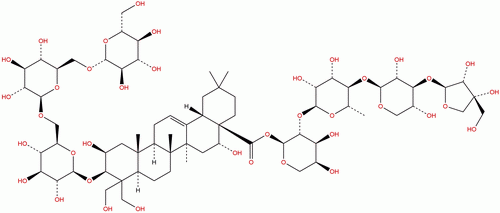


Product name: Platycoside E
Synonym name:
Catalogue No.: BP3867
Cas No.: 237068-41-6
Formula: C69H112O38
Mol Weight: 1549.62
Botanical Source:
Physical Description:
Type of Compound:
Purity: 95%~99%
Analysis Method: HPLC-DAD or/and HPLC-ELSD
Identification Method: Mass, NMR
Packing: Brown vial or HDPE plastic bottle
The product could be supplied from milligrams to grams
Inquire for bulk scale.
For Reference Standard and R&D, Not for Human Use Directly.
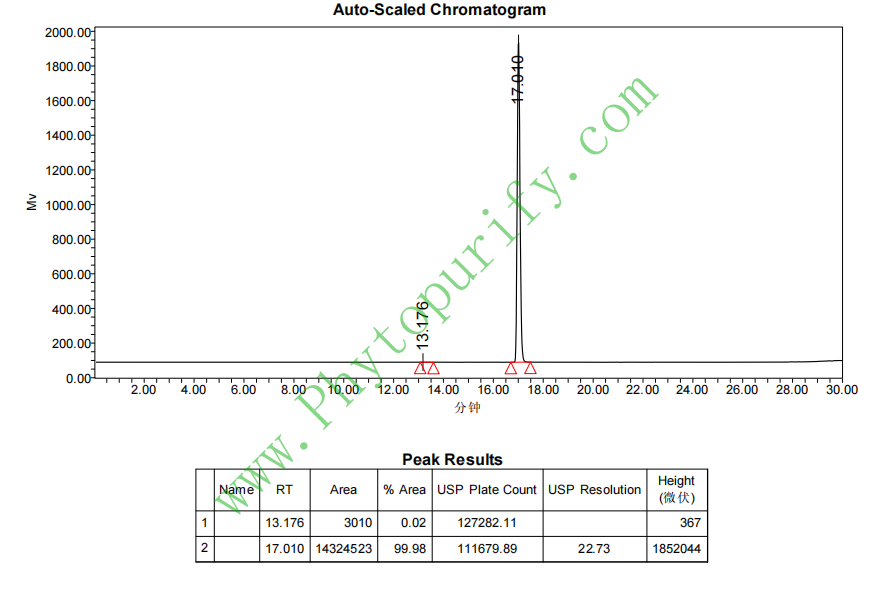
HPLC of Platycoside E
Storage conditions:Short-term storage at 2~8℃, long-term storage at -20 ~ -80℃
611.5800
-.1948
-.1949
1.9170
.4750
.1936
Low
59.7683
7.1330
Yes
No
No
No
No
No
0.0
Yes
No
Yes
Yes
Natural products, as an important source of drug discovery, play an irreplaceable role in maintaining human health and treating diseases. Saponins, as a class of secondary metabolites widely present in the plant kingdom, have attracted much attention due to their structural diversity and extensive biological activity. Platycodon grandiflorus(Platycodon grandiflorum Jacq. A. DC. is a perennial herbaceous plant in the Campanulaceae family, belonging to the Campanulaceae genus. Its roots, as a traditional Chinese medicinal herb, have been used for thousands of years in East Asia and are commonly used to treat respiratory diseases such as cough, phlegm, sore throat, etc. Modern pharmacological research has shown that the main active components of Platycodon grandiflorus are triterpenoid saponins, among which Platycodin D and its derivatives are the most extensively studied representative components.
Platycoside E (CAS number: 237068-41-6) is a new type of platycodon saponin isolated and identified from the roots of Platycodon grandiflorus in recent years, belonging to the oleanane type pentacyclic triterpenoid saponin. Compared with Platycodon grandiflorus saponin D, Platycodon grandiflorus saponin E has unique structural characteristics in sugar chain composition and connection mode, which endows it with a differentiated biological activity spectrum. It is worth noting that Platycodon grandiflorus saponin E not only exhibits the hemolytic activity typical of saponin compounds, but also shows unique potential in the field of immune regulation - it can significantly promote the production of specific IgG2a and IgG2b antibodies in serum of mice immunized with ovalbumin (OVA), suggesting that it may be a candidate molecule for a novel vaccine adjuvant. In addition, the anti-inflammatory and anti-tumor activities of Platycodon grandiflorum saponins E have gradually been revealed, involving multiple key signaling pathways such as STAT3, NF - κ B, NLRP3 inflammasome, etc.
This article will provide a systematic review of the research progress of Platycodon grandiflorum saponin E from the aspects of chemical structure, plant origin, pharmacological activity, mechanism of action, medicinal evaluation, and clinical application prospects, in order to provide reference for the in-depth development and utilization of this natural product.
Platycodigenin E belongs to the oleanane type pentacyclic triterpenoid saponins, and its glycoside is Platycodigenin. Its chemical name is 2 β, 3 β, 16 α, 23,24-pentahydroxyolean-12-en-28-oic acid. The difference from Platycodon grandiflorus saponin D is that the C-28 carboxyl group of Platycodon grandiflorus saponin E is connected to a more complex oligosaccharide chain through ester bonds, while the C-3 hydroxyl group is connected to another sugar chain, forming a disaccharide chain saponin structure. Specifically, the sugar chain composition of Platycodon grandiflorum saponins E includes monosaccharide units such as D-glucose, L-rhamnose, D-xylose, and D-galactose, which are connected by specific glycosidic bonds to form branching structures.
From the perspective of physical and chemical properties, the molecular formula of Platycodon grandiflorum saponin E is C ₆₈ H ₁₁₀ O ∝₈, with a molecular weight of up to 1549.6170 Da, belonging to high molecular weight natural products. The LogP of its lipid water partition coefficient is -0.1948, indicating that the compound has strong hydrophilicity, which is consistent with its structural characteristics of containing a large number of hydroxyl and sugar units in its molecule. The polar surface area (TPSA) is 611.5800 Å ², much higher than the recommended upper limit of 140 Å ² for oral medications, indicating poor membrane permeability. The water solubility parameter is 1.9170 mg/mL, indicating a moderate preference for water solubility, which provides a basis for its dispersion and transport in biological fluids.
In terms of stability, Platycodon grandiflorus saponin E, as a typical saponin compound, may undergo glycosidic bond hydrolysis under acidic conditions and ester bond cleavage under alkaline conditions. It is sensitive to heat and high-temperature treatment may lead to structural degradation. In addition, the compound has surfactant properties that can reduce the surface tension of aqueous solutions, which is closely related to its hemolytic activity. It is worth noting that the hemolytic activity of Platycodon grandiflorus saponins E is weaker than that of Platycodon grandiflorus saponins D, which may be related to the differences in sugar chain structure leading to different abilities to interact with cell membrane cholesterol.
The main source of Platycodon grandiflorus saponin E is Platycodon grandiflorus, a plant in the Platycodon family(Platycodon grandiflorum)Dry roots. Kikyo is native to East Asia, including China, South Korea, Japan, and the Russian Far East. It is mainly distributed in Northeast, North, East, and Central China provinces in China. As a medicinal and edible plant, Platycodon grandiflorum is not only used in traditional Chinese medicine formulas, but also commonly consumed as pickled vegetables or cold dishes. Research has shown that the content of Platycodon grandiflorus saponin E in Platycodon grandiflorus roots varies significantly depending on the place of origin, harvest season, growth period, and processing method. Generally speaking, the saponin content in the roots of two-year-old or three-year-old Platycodon grandiflorus is higher, and the accumulation of active ingredients in the roots harvested in autumn is more abundant.
Except for Platycodon grandiflorus, plants belonging to the same genus such as Platycodon grandiflorum var. album and Platycodon grandiflorum var. glaucum It may also contain Platycodon grandiflorum saponins E, but the content is usually low. In recent years, research on improving the production of Platycodon grandiflorum saponins E through tissue culture and hairy root culture techniques has also made certain progress, providing a new approach for sustainable production.
The extraction of saponins E from Platycodon grandiflorum usually adopts a strategy combining traditional solvent extraction with modern separation techniques. The classic extraction process is as follows: after drying and crushing the roots of Platycodon grandiflorum, 70% -80% ethanol or methanol is used as the solvent, and heating reflux extraction or ultrasound assisted extraction is used. The extraction temperature is controlled at 50-70 ℃, and the extraction time is 1-3 hours. The extraction is repeated 2-3 times. After vacuum concentration, the extract was subjected to liquid-liquid extraction using petroleum ether, ethyl acetate, and n-butanol in sequence. Platycodon grandiflorum saponin E was mainly enriched in the n-butanol extraction layer. The n-butanol extract can be preliminarily enriched in saponin components by column chromatography using macroporous adsorption resins (such as D101, HP-20) with ethanol water gradient elution.
Further purification requires the combination of multiple chromatographic techniques. Silica gel column chromatography often uses solvent systems such as chloroform methanol water (65:35:10, lower layer) or ethyl acetate methanol water for separation. Reverse phase ODS column chromatography using methanol water or acetonitrile water as mobile phases can effectively separate saponins with similar structures. High performance liquid chromatography (HPLC) preparation separation is a key step in obtaining high-purity Platycodon grandiflorum saponins E. It usually uses a C18 reverse phase column with acetonitrile water (containing 0.1% formic acid) as the mobile phase for isocratic or gradient elution. The final product can be structurally confirmed by mass spectrometry (MS), nuclear magnetic resonance (NMR, including ¹ H-NMR, ¹ ³ C-NMR, HSQC, HMBC, etc.) techniques.
It is worth noting that during the extraction process of Platycodon grandiflorum saponins E, deglycosylation reactions may occur, generating secondary glycosides or aglycones. Therefore, the extraction conditions need to be gently controlled to avoid prolonged high temperature or strong acid and alkali environments. In recent years, green extraction techniques such as supercritical fluid extraction, microwave-assisted extraction, and enzyme assisted extraction have also been attempted to be applied to the extraction of saponins from Platycodon grandiflorum, showing potential in improving extraction efficiency and selectivity.
The most notable pharmacological activity of Platycodon grandiflorum saponin E is its potential as a vaccine adjuvant. Research has shown that in a mouse model immunized with ovalbumin (OVA), saponins E from Platycodon grandiflorus can significantly enhance humoral immune response, manifested by a significant increase in serum OVA specific IgG2a and IgG2b antibody levels. This effect is dose-dependent, and compared to aluminum adjuvants, the antibody response induced by Platycodon grandiflorum saponin E is more biased towards Th1 type immune response. IgG2a and IgG2b are characteristic antibody subtypes of Th1 type immune response, playing a crucial role in antiviral and anti intracellular pathogen infections. Therefore, Platycodon grandiflorum saponins E may be particularly suitable for vaccine development that requires Th1 type immune protection, such as vaccines against intracellular pathogens such as Mycobacterium tuberculosis and Leishmania parasites.
Further mechanistic studies suggest that Platycodon grandiflorum saponins E may enhance antigen presentation function by activating dendritic cells (DCs). The expression of co stimulatory molecules (such as CD80, CD86, MHC-II) on the surface of DCs treated with Platycodon grandiflorus saponins E was upregulated, while the secretion of pro-inflammatory cytokines (IL-12, TNF - α) increased. In addition, Platycodon grandiflorum saponins E can promote B cell proliferation and antibody class switching, directly acting on B cells to enhance their immunoglobulin production ability. It is worth noting that there is a certain balance between the adjuvant activity of Platycodon grandiflorum saponins E and their hemolytic activity, and structural modifications may help reduce toxicity while retaining adjuvant effects.
Inflammation is the body's defense response to harmful stimuli, but excessive or sustained inflammation can lead to tissue damage and the occurrence of various diseases. Platycodon grandiflorum saponin E exhibits significant anti-inflammatory activity in various inflammatory models. In a macrophage model stimulated by lipopolysaccharide (LPS), saponins E from Platycodon grandiflorus can dose dependently inhibit the production of pro-inflammatory mediators such as nitric oxide (NO) and prostaglandin E ₂ (PGE ₂), while reducing the expression levels of inducible nitric oxide synthase (iNOS/NOS2) and cyclooxygenase-2 (COX-2/PTGS2).
In animal inflammation models, Platycodon grandiflorum saponins E exhibit inhibitory effects on carrageenan induced foot swelling, acetic acid-induced increased vascular permeability, and cotton ball granuloma formation. Its anti-inflammatory mechanism involves multiple signaling pathways, including inhibiting NF - κ B activation, blocking STAT3 phosphorylation, and regulating NLRP3 inflammasome assembly. Of particular note is that Platycodon grandiflorus saponin E can simultaneously act on TRPV1 and TRPA1 channels, which is closely related to its potential application in relieving inflammatory pain.
In addition to immunomodulatory and anti-inflammatory effects, Platycodon grandiflorum saponins E also exhibit various other biological activities. In terms of anti-tumor, Platycodon grandiflorum saponin E has a proliferation inhibitory effect on a variety of cancer cell lines (such as lung cancer A549, breast cancer MCF-7, liver cancer HepG2), and its mechanism involves inducing cell cycle arrest and apoptosis. In addition, Platycodon grandiflorus saponins E also have antioxidant activity, which can eliminate free radicals and enhance the activity of endogenous antioxidant enzymes in cells, such as superoxide dismutase (SOD) and glutathione peroxidase (GPx).
In terms of respiratory system protection, Platycodon grandiflorus saponins E can promote airway mucus secretion and enhance ciliary movement, which is consistent with its traditional clinical application in treating cough and phlegm. In addition, Platycodon grandiflorus saponins E also exhibit certain anti allergic activity, which can inhibit degranulation of mast cells and histamine release.
The pharmacological activity of Platycodon grandiflorum saponin E originates from its interactions with multiple molecular targets. Based on existing research, its mechanism of action can be summarized as follows:
The immune adjuvant activity of Platycodon grandiflorum saponins E is mainly mediated through the Toll like receptor (TLR) signaling pathway. Research has shown that Platycodon grandiflorus saponin E can bind to TLR4/MD2 complex, activate downstream MyD88 dependent and TRIF dependent signaling pathways, leading to the activation of NF - κ B and IRF3. Activated NF - κ B enters the nucleus and initiates gene transcription of pro-inflammatory cytokines (such as IL-6, TNF - α) and co stimulatory molecules. Meanwhile, the activation of IRF3 induces the production of type I interferon (IFN - α/β), promoting the polarization of Th1 immune response.
In addition, Platycodon grandiflorum saponin E can activate NLRP3 inflammasome, promote the maturation and secretion of IL-1 β and IL-18. This effect may be related to its induction of intracellular potassium ion efflux and reactive oxygen species (ROS) production. Moderate activation of NLRP3 helps to enhance immune response, but excessive activation may lead to inflammatory damage, so dosage control of Platycodon grandiflorum saponin E is crucial.
The anti-inflammatory effect of Platycodon grandiflorum saponin E involves the regulation of multiple key signaling pathways. Firstly, it can inhibit the activity of I κ B kinase (IKK β/IKBKB), prevent the phosphorylation and degradation of I κ B α, and thus suppress the nuclear translocation and transcriptional activity of NF - κ B (RELA/p65). NF - κ B is the core transcription factor of inflammatory response, regulating the expression of various pro-inflammatory genes including TNF - α, IL-6, COX-2, iNOS.
Secondly, Platycodon grandiflorum saponins E can inhibit the phosphorylation of STAT3. STAT3 is a key member of the JAK/STAT signaling pathway and plays an important role in inflammation and tumorigenesis. By blocking the phosphorylation of the Tyr705 site of STAT3, Platycodon grandiflorus saponin E can inhibit dimerization and nuclear translocation, thereby downregulating the expression of STAT3 target genes such as Bcl-2, Cyclin D1, and VEGF.
In addition, Platycodon grandiflorum saponin E can directly interact with CASP1 (caspase-1), inhibiting the assembly and activation of NLRP3 inflammasomes. CASP1 is an effector enzyme of inflammasomes, responsible for cleaving pro-IL-1 β and pro-IL-18 into mature forms. The inhibition of CASP1 by Platycodon grandiflorus saponins E may be achieved through direct binding or interference with its interaction with ASC.
The regulatory effect of Platycodon grandiflorum saponin E on TRPV1 and TRPA1 channels is an important mechanism for its relief of inflammatory pain. TRPV1 (transient receptor potential vanillic acid subtype 1) and TRPA1 (transient receptor potential anchor protein subtype 1) are non selective cation channels expressed on sensory neurons, playing a critical role in sensing thermal, chemical, and mechanical stimuli. Platycodon grandiflorum saponin E can inhibit the excessive activation of these channels, reduce calcium ion influx, and thus decrease neuronal excitability and pain signal transmission.
Overall, the mechanism of action of Platycodon grandiflorum saponins E exhibits multi-target and multi pathway characteristics. Its molecular target network includes: IL-6、STAT3、CASP1、TRPV1、RELA(NF-κB p65)、PTGS1(COX-1)、TNF、TRPA1、IKBKB(IKKβ)、NOS2(iNOS) Wait. These targets involve multiple biological processes such as inflammation, immunity, pain, cell proliferation, and apoptosis, explaining the extensive pharmacological activity of Platycodon grandiflorum saponins E. However, the interaction network between various targets and the dose-dependent relationship between different activities still need further clarification.
Based on Lipinski's Five Rules and Veber's Rules, the pharmacological properties of Platycodon grandiflorum saponins E face significant challenges. Its molecular weight (1549.6 Da) far exceeds the threshold of 500 Da, TPSA (611.6 Å ²) is much higher than 140 Å ², and LogP (-0.19), although within a reasonable range, is hydrophilic. These parameters suggest that its oral bioavailability may be low. However, there are many examples of natural products with molecular weights exceeding 500 Da but still having good oral activity, such as cyclosporine A (molecular weight 1202 Da), so its potential as a drug cannot be denied solely based on physicochemical parameters.
The hERG inhibition risk of Platycodon grandiflorum saponin E is negative, indicating a low risk of cardiac toxicity. The Ames test result is 0.0, indicating no mutagenicity and low risk of genetic toxicity. These security parameters provide favorable conditions for its further development.
At present, there is insufficient systematic research on the pharmacokinetics of Platycodon grandiflorum saponin E, but its pharmacokinetic characteristics can be inferred based on studies of similar saponin compounds. After oral administration, Platycodon grandiflorum saponins E may undergo acid hydrolysis and enzymatic hydrolysis in the gastrointestinal tract, partially converted into secondary glycosides or aglycones. Its absorption may mainly be through passive diffusion and/or endocytosis, but due to its large molecular weight and high polarity, the absorption rate is usually low. The plasma protein binding rate may be high and the distribution volume may be relatively small.
In terms of metabolism, Platycodon grandiflorus saponins E are mainly metabolized by the liver and may involve deglycosylation, oxidation, reduction, and binding reactions. The cytochrome P450 enzyme system (especially CYP3A4) may be involved in its metabolism. Metabolites may retain some biological activity or generate new activity. The main excretion pathway is bile excretion, with some being excreted through urine.
It is worth noting that the hemolytic activity of Platycodon grandiflorum saponin E is the main safety concern in its clinical application. The hemolytic activity is closely related to the sugar chain structure and concentration of saponins, and structural modifications such as shortening the sugar chain or introducing polar groups may reduce hemolytic toxicity without affecting the activity of immune adjuvants. In addition, novel delivery systems such as liposomes and nanoparticles may improve their pharmacokinetic properties and reduce toxicity.
The development prospect of Platycodon grandiflorum saponin E as a vaccine adjuvant is the most promising. At present, aluminum adjuvants commonly used in clinic mainly induce Th2 immune response, but have limited effect on vaccines that need Th1 immune protection (such as tuberculosis, AIDS, malaria). Platycodon grandiflorum saponins E can induce Th1 type antibody responses (IgG2a, IgG2b), compensating for the shortcomings of aluminum adjuvants and having important clinical translational value. Future research should focus on optimizing dosing and regimens to balance adjuvant effects and hemolytic toxicity; Develop appropriate formulations (such as liposomes, immune stimulatory complex ISCOM) to improve stability and reduce toxicity; Combined with other adjuvants such as TLR agonists to enhance immune response.
Based on its multi-target anti-inflammatory mechanism, platycodon E has potential applications in the treatment of chronic inflammatory diseases such as rheumatoid arthritis, inflammatory bowel disease, and asthma. Its simultaneous inhibition of NF - κ B, STAT3, and NLRP3 inflammasomes may provide therapeutic effects superior to single target drugs. However, to address the issue of low oral bioavailability, local administration (such as inhalation or topical use) or prodrug design may be feasible strategies.
The anti-tumor activity of Platycodon grandiflorum saponin E is closely related to its immune regulation and anti-inflammatory effects. As an immune adjuvant, it may enhance anti-tumor immune surveillance; As a STAT3 inhibitor, it may directly inhibit tumor cell proliferation and metastasis. Combination chemotherapy or immune checkpoint inhibitors (such as anti-PD-1/PD-L1 antibodies) may produce synergistic effects. The immune regulatory role in the tumor microenvironment deserves further exploration.
Although Platycodon grandiflorum saponin E exhibits various pharmacological activities, its clinical translation still faces many challenges. Firstly, the production from natural sources is limited, and the establishment of chemical synthesis or biosynthetic pathways is crucial for sustainable supply. Secondly, hemolytic activity is the main safety issue that requires systematic toxicological evaluation and structural optimization. Thirdly, the pharmacokinetic properties are poor and need to be improved through drug delivery systems or prodrug strategies. Fourthly, the network complexity of the mechanism of action increases the difficulty of precise regulation.
Future research directions should include: using computational chemistry and molecular docking techniques to predict the binding mode of Platycodon grandiflorum saponin E with target proteins, and guiding structural modifications; Develop a gene editing model based on CRISPR/Cas9 to validate key targets; Constructing a "compound target disease" network using systems pharmacology methods; Explore the synergistic effects of Platycodon grandiflorum saponins E with other natural products or synthetic drugs; Conduct preclinical toxicology and pharmacokinetic system research.
As a novel triterpenoid saponin isolated from traditional Chinese medicine Platycodon grandiflorum, Platycodon grandiflorum saponin E has attracted widespread attention from researchers due to its unique chemical structure and multifaceted pharmacological activities. Its immune adjuvant activity, especially its ability to induce Th1 antibody response, provides candidate molecules for the development of novel vaccine adjuvants. At the same time, by regulating multiple targets such as NF - κ B, STAT3, NLRP3 inflammasome, TRPV1/TRPA1, Platycodon grandiflorum saponin E exhibits multiple pharmacological effects including anti-inflammatory, analgesic, and anti-tumor effects, reflecting the multi-target and multi pathway characteristics of natural products.
However, there is still a huge gap between natural products and clinical drugs. The high molecular weight, strong hydrophilicity, and hemolytic activity of Platycodon grandiflorum saponin E are the main obstacles to its pharmacological development. Future research needs to overcome these obstacles and promote its clinical application through strategies such as structural modification, formulation optimization, and combination therapy, based on a deep understanding of its mechanism of action. With the development of systems pharmacology, chemical biology, and nanomedicine delivery technology, platycodon E is expected to achieve breakthroughs in the fields of vaccine adjuvants and anti-inflammatory drugs, contributing to human health.
The research process of Platycodon grandiflorum saponins E once again proves that traditional Chinese medicine is a treasure trove for discovering new lead compounds. Combining modern science and technology with traditional medication experience, and deeply exploring the pharmacological effects and molecular mechanisms of active ingredients in traditional Chinese medicine, not only helps to clarify the scientific connotation of traditional Chinese medicine, but also provides a continuous source of inspiration for innovative drug development. We look forward to the early completion of the transformation of Platycodon grandiflorus saponins E from laboratory to clinical use, benefiting more patients.
