Introduction/Overview
Natural products, as an important source of drug discovery, play an irreplaceable role in the long history of human fight against diseases. Among them, triterpenoids derived from traditional medicinal plants have always been a hot topic in medicinal chemistry and pharmacology research due to their structural diversity and wide range of biological activities. Platycodon grandiflorus(Platycodon grandiflorum (Jacq.) A. DC.), As a commonly used medicinal and edible plant in traditional medicine in East Asia (China, South Korea, Japan), its rhizome (Platycodon grandiflorus) has the effects of promoting lung function, clearing throat, eliminating phlegm, and expelling pus. Modern pharmacological research has confirmed that the main active ingredient of Platycodon grandiflorus is a class of oleanane type pentacyclic triterpenoid saponins, collectively known as Platycosides. These saponins and their aglycones exhibit various pharmacological activities such as anti-inflammatory, antioxidant, anti-tumor, and immune regulation, which have attracted widespread attention from scholars at home and abroad.
Among the numerous hydrolysis products of Platycodon grandiflorus saponins, 3-O - β - D-Glucopyranosylglucoside (3-O-GP) is a representative secondary glycoside. It is composed of the C-3 hydroxyl group of Platycodigenin and a molecule of β - D-glucopyranose linked by glycosidic bonds. Compared to polysaccharide chain saponins with more complex structures, 3-O-GP has a relatively simple structure, but retains the core skeleton of oleanane triterpenoids, making it an ideal model for studying the structure-activity relationship of Platycodon grandiflorus saponins and simplifying the design of active molecules. In recent years, studies have revealed that 3-O-GP not only has significant anti-inflammatory activity, but also exhibits anti proliferative effects on hepatic stellate cells (HSC-T6), suggesting its potential value in the treatment of liver fibrosis and other diseases. This article aims to systematically review the chemical structure, plant origin, pharmacological activity, mechanism of action, medicinal properties, and clinical application prospects of 3-O-GP, in order to provide scientific basis for the in-depth development and utilization of this natural product.
Chemical structure and physicochemical properties
Chemical structure analysis
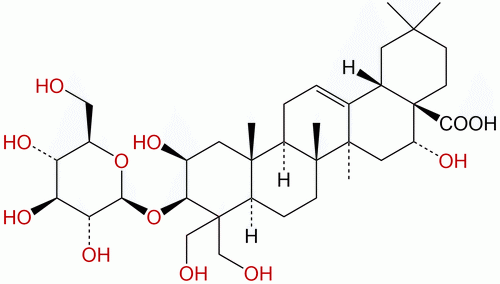
The chemical name of 3-O-GP is 3-O - β - D-glucopyranosyl platycodon saponin, and its chemical structure belongs to the Oleanane type pentacyclic triterpenoid. Platycodigenin, the parent nucleus of Platycodon grandiflorum, is a typical derivative of oleanolic acid, but with a unique substitution pattern. Specifically, the skeleton of Platycodon grandiflorus saponins is oleagine-12-ene, with characteristic functional groups including a β - OH at C-3, an α - OH at C-16, a - CH ₂ OH (hydroxymethyl) at C-23, a - CH ∝ at C-24, and a - COOH (carboxyl) at C-28. The presence of multiple hydroxyl and carboxyl groups endows the molecule with high polarity and good water solubility potential.
The structural feature of 3-O-GP is that its C-3 hydroxyl group is connected to a β - D-glucopyranosyl group through an O-glycosidic bond. The introduction of this sugar group not only increases the water solubility of the molecule, but also may affect its biological activity through hydrogen bonding or van der Waals interactions with the target protein. Its molecular formula is C ∝₆ H ₅₈ O ₁∝, and its molecular weight is 682.85 g/mol. This structure belongs to the monosaccharide chain saponins in pentacyclic triterpenoid saponins, and is one of the key metabolites produced by enzymatic or acid hydrolysis of Platycodon grandiflorus saponins in vitro and in vivo.
Physicochemical properties
According to computational chemistry and experimental data, 3-O-GP exhibits the following key physicochemical properties:
- Molecular weight and polarity The molecular weight is 682.85 Da, which belongs to a medium to large natural product. Its topological polar surface area (TPSA) is as high as 217.60 Å ², mainly attributed to the large number of hydroxyl (- OH) and carboxyl (- COOH) groups in the molecule, as well as oxygen atoms on the sugar group. A high TPSA value usually indicates good water solubility of the molecule, but it also suggests poor transmembrane permeability.
- Fat water partition coefficient The calculated value of the oil-water distribution coefficient LogP is 1.62. The LogP value ranges from 1 to 3, indicating that the molecule has a certain degree of lipophilicity, but overall tends to be hydrophilic. This amphiphilic characteristic is a typical manifestation of its role as a saponin compound, which facilitates its distribution at the interface between aqueous phase and biofilm.
- Water solubility The calculated water solubility (LogS) is 0.22 mg/mL, indicating that its solubility in water is limited and belongs to the slightly soluble level. This may affect the bioavailability of its formulation in practical applications.
- Blood-brain barrier permeability Predict its blood-brain barrier (BBB) permeability as' low '. The main limiting factors are high TPSA and molecular weight exceeding 500 Da (Lipinski rule). This suggests that 3-O-GP mainly acts on the peripheral system and has a relatively small impact on the central nervous system, which to some extent reduces its risk of neurotoxicity.
- HERG inhibition and Ames test The prediction results show that 3-O-GP has no inhibitory risk on hERG potassium ion channels (hERG inhibition: No), and the Ames test result is negative (0.0), indicating a low risk of genotoxicity. This provides preliminary safety assurance for it as a candidate drug.
Plant sources and extraction methods
Main plant sources
3-O-GP mainly comes from the Campanulaceae plant Campanulaceae(Platycodon grandiflorum)The root. Platycodon grandiflorus is widely distributed in China, the Korean Peninsula, Japan, and the Russian Far East. In China, as a traditional Chinese medicinal herb, Platycodon grandiflorum has a long history of application as its root is used in medicine. In addition, Platycodon grandiflorum is widely consumed as a common vegetable and functional food ingredient.
In the roots of Platycodon grandiflorum, 3-O-GP is not the most abundant native saponin. Native saponins mainly include Platycodin D, Platycodin A, and C, which contain multiple sugar groups such as glucose, xylose, and celery sugar. These polysaccharide chain saponins undergo enzymatic or acid hydrolysis in the plant body or during processing, storage, and metabolism, gradually removing the outer glycans and ultimately producing secondary glycosides or aglycones such as 3-O-GP. Therefore, the content of 3-O-GP is relatively low in fresh Platycodon grandiflorum roots, but its content significantly increases in Platycodon grandiflorum extracts that have been fermented, heated, or treated with specific enzymes. In addition, there are differences in the composition and content of saponins in Platycodon grandiflorum from different regions, harvesting seasons, and varieties.
Extraction and Separation Purification Methods
Given the characteristic content of 3-O-GP in plants, its extraction and purification usually require specific pretreatment steps.
- Raw material pretreatment After crushing the dried roots of Platycodon grandiflorus, reflux extraction or ultrasound assisted extraction is commonly performed using methanol or ethanol (70% -95%). To improve the yield of 3-O-GP, the raw materials can be subjected to enzymatic hydrolysis (such as using cellulase, pectinase, or internal enzymes of Platycodon grandiflorus) or mild acid hydrolysis (such as 0.1-0.5 M HCl, heated and refluxed for several hours) before extraction to promote the conversion of polysaccharide chain saponins to secondary glycosides.
- Rough extraction and enrichment After vacuum concentration of the alcohol extract, crude total saponin extract was obtained. The crude extract contains a large amount of impurities such as sugars and pigments. Usually, macroporous adsorption resin column chromatography (such as D101, AB-8 type) is used for preliminary purification. The 3-O-GP was mainly enriched in the 50% -70% ethanol elution fraction by gradient elution with water and different concentrations of ethanol (such as 30%, 50%, 70%, 95%).
- Separation and Purification The enriched components need to be further finely separated by normal or reverse phase column chromatography.
- silica gel column chromatography Using chloroform methanol water (such as 8:2:0.1) or dichloromethane methanol system for isocratic or gradient elution can preliminarily separate saponins of different polarities.
- Reverse phase column chromatography ODS (C18) reverse phase silica gel column is a commonly used method for separating triterpenoid saponins. The gradient elution using methanol water or acetonitrile water system can effectively separate saponins with similar structures.
- Preparation type high performance liquid chromatography (Prep HPLC)For high-purity (>98%) 3-O-GP, preparative HPLC is usually required for final purification. The commonly used C18 reverse phase column uses acetonitrile water or methanol water as the mobile phase, and achieves baseline separation of the target compound by optimizing the gradient program.
- Structural Identification The purified compound was structurally confirmed by spectroscopic methods, mainly including:
- Mass spectrometry (MS)High resolution mass spectrometry (HR-ESI-MS) provides precise molecular weight and formula.
- Nuclear Magnetic Resonance (NMR):¹H-NMR、¹³C-NMR、DEPT、HSQC、HMBC、¹H-¹H COSY Two dimensional spectroscopic techniques are used to determine the glycosidic backbone, glycosyl linkage positions (C-3), sugar configuration (β - D-glucopyranose), and chemical shift assignments of all hydrogen and carbon atoms.
Pharmacological activity research
Anti proliferative activity and liver fibrosis
One of the most notable pharmacological activities of 3-O-GP is its anti proliferative effect on hepatic stellate cells (HSCs). Hepatic stellate cells are the core cells involved in the occurrence and development of liver fibrosis. When the liver is damaged, quiescent HSCs are activated and transformed into myofibroblast like cells, which proliferate extensively and secrete extracellular matrix (ECM), leading to structural damage and loss of liver function. Therefore, inhibiting the activation and proliferation of HSCs is a key strategy for anti liver fibrosis treatment.
Research has shown that 3-O-GP can significantly inhibit the proliferation of rat hepatic stellate cell line HSC-T6. The half maximal inhibitory concentration (IC ₅₀) is 13.36 μ M. This activity suggests that 3-O-GP may exert its anti fibrotic potential by directly acting on HSCs, blocking their proliferation signaling pathway. Compared with some classic anti liver fibrosis drugs such as colchicine and interferon, 3-O-GP, as a natural product, may have lower potential toxicity and a more unique mechanism of action. This discovery provides important clues for the development of anti liver fibrosis lead compounds from Platycodon grandiflorum.
anti-inflammatory activity
Inflammation is the common pathological basis of many chronic diseases (such as liver fibrosis, atherosclerosis, arthritis, neurodegenerative diseases). The traditional applications of Platycodon grandiflorum and its saponins, such as treating sore throat, cough, etc., are often related to anti-inflammatory effects. 3-O-GP, as an important metabolite of Platycodon grandiflorum saponins, has also been preliminarily confirmed for its anti-inflammatory activity.
Research has shown that 3-O-GP can inhibit the production of nitric oxide (NO) and prostaglandin E ₂ (PGE ₂) in macrophages (such as RAW264.7 cells) stimulated by lipopolysaccharide (LPS). NO and PGE ₂ are key mediators in the inflammatory response, catalyzed by inducible nitric oxide synthase (iNOS, encoded by the NOS2 gene) and cyclooxygenase-2 (COX-2), respectively. In addition, 3-O-GP can downregulate the mRNA and protein levels of pro-inflammatory cytokines such as tumor necrosis factor - α (TNF - α) and interleukin-6 (IL-6). These results indicate that 3-O-GP exhibits broad-spectrum anti-inflammatory activity at the cellular level by inhibiting the production and release of key inflammatory mediators.
Mechanism of action and molecular targets
A deep understanding of the mechanism of action of 3-O-GP is key to its clinical application. Based on existing research and computer-aided prediction, its pharmacological activity is mainly related to regulating multiple inflammation and proliferation related signaling pathways.
Regulation of NF - κ B signaling pathway
Nuclear factor kappa B (NF - κ B) is the core transcription factor in inflammatory response. In the resting state, NF - κ B (usually a p50/p65 heterodimer encoded by the RELA gene) binds to its inhibitory protein I κ B α and exists in an inactive form in the cytoplasm. When stimulated by LPS, TNF - α, etc., I κ B kinase (IKK, encoded by the IKBKB gene) is activated, phosphorylating I κ B α, leading to its ubiquitination degradation. The released NF - κ B is immediately translocated into the nucleus, initiating the transcription of downstream pro-inflammatory genes such as TNF - α, IL-6, iNOS, COX-2.
Research has shown that saponins from Platycodon grandiflorus (including its aglycones) can inhibit the activity of IKK, prevent the phosphorylation and degradation of I κ B α, thereby blocking the nuclear translocation of NF - κ B and ultimately inhibiting the expression of inflammatory genes. 3-O-GP is likely to function through a similar mechanism. Its target may directly or indirectly act on IKK complexes or upstream signaling molecules, thereby negatively regulating the NF - κ B pathway. This explains why it inhibits the expression of TNF - α, IL-6, iNOS, and COX-2.
The impact on the STAT3 signaling pathway
Signal transducer and activator of transcription factor 3 (STAT3) is a key transcription factor that plays an important role in cell proliferation, survival, differentiation, and inflammation. The sustained activation of STAT3 is associated with various cancers and fibrotic diseases. After binding to cytokines such as IL-6 and their receptors, JAK kinase is activated, which phosphorylates the tyrosine 705 site of STAT3, causing it to form a dimer and translocate into the nucleus, regulating the transcription of target genes such as Cyclin D1, Bcl xL, VEGF.
3-O-GP may exert its anti proliferative and anti-inflammatory effects by inhibiting the phosphorylation of STAT3. Inhibition of STAT3 activation in HSC-T6 cells can reduce HSC proliferation and ECM synthesis. Meanwhile, there is an interaction between STAT3 and NF - κ B, which jointly regulate the inflammatory response. Therefore, 3-O-GP may produce synergistic anti-inflammatory and anti fibrotic effects by simultaneously inhibiting the NF - κ B and STAT3 pathways.
Regulation of NLRP3 inflammasome
The NLRP3 inflammasome is an important component of the innate immune system, and its activation leads to cleavage activation of caspase-1 (encoded by the CASP1 gene), which promotes the maturation and secretion of IL-1 β and IL-18, and induces cell pyroptosis. The abnormal activation of NLRP3 is associated with various inflammatory diseases. Some triterpenoids have been reported to inhibit the assembly and activation of NLRP3 inflammasomes. Whether 3-O-GP affects the NLRP3 pathway directly or indirectly remains to be further studied, but this is a potential mechanism worth exploring.
Regulation of transient receptor potential channels
Transient receptor potential (TRP) channels, such as TRPV1 and TRPA1, are non selective cation channels located on the cell membrane, highly expressed in sensory neurons, and involved in the transmission of pain, itching, and inflammatory signals. Many natural products exert analgesic or anti-inflammatory effects by stimulating or antagonizing these channels. Although there is currently no direct evidence to suggest a direct interaction between 3-O-GP and TRPV1 or TRPA1, relevant targets have been identified, suggesting that it may affect neurogenic inflammation by regulating these channels. This may be one of the potential mechanisms traditionally used to treat inflammatory pain such as sore throat.
The specific molecular mechanism of anti proliferative effect
The anti proliferative effect of 3-O-GP on HSC-T6 cells may involve the following mechanisms:
- Inducing cell cycle arrest By upregulating cell cycle inhibitory proteins such as p21 and p27, or downregulating Cyclin D1 and CDK4, cells are arrested in the G0/G1 phase.
- Inducing cell apoptosis Inducing HSC apoptosis by activating mitochondrial pathways (downregulating Bcl-2, upregulating Bax, releasing cytochrome c, activating caspase-9 and caspase-3) or death receptor pathways (upregulating Fas and FasL).
- Inhibit ECM synthesis By inhibiting the TGF - β 1/Smad signaling pathway, the expression of type I and III collagen and α - smooth muscle actin (α - SMA) is reduced.
In summary, the pharmacological mechanism of 3-O-GP is multi-target and multi pathway. Its core lies in inhibiting key inflammatory and proliferative signaling pathways such as NF - κ B and STAT3, downregulating the expression of pro-inflammatory and pro fibrotic factors, thereby exerting anti-inflammatory and anti liver fibrosis activities.
Evaluation of drug properties and pharmacokinetics
Drugability assessment
Based on the Lipinski Five Rules and Veber Rules, a preliminary evaluation of the pharmacological properties of 3-O-GP was conducted
- molecular weight:682.85 Da, Exceeding 500 Da violates Lipinski rules.
- LogP 1.62, within a reasonable range (<5).
- Hbond donor The molecule contains multiple hydroxyl and carboxyl groups, and the number of hydrogen bond donors (- OH, - COOH) is about 9, far exceeding 5, which seriously violates the Lipinski rule.
- Number of hydrogen bond acceptors The number of oxygen atoms (O) is 13, and the number of hydrogen bond acceptors exceeds 10, which violates the Lipinski rule.
- Number of rotatable keys Glycoside bonds and multiple hydroxyl groups result in a higher number of rotatable bonds, possibly exceeding 10, which violates the Veber rule (≤ 10).
- TPSA 217.60 Å ², much larger than 140 Å ², violates Veber rules.
Conclusion 3-O-GP significantly violates Lipinski and Veber rules, indicating its poor drug efficacy as an oral medication. Its high polarity, large molecular weight, and numerous hydrogen bonds provide receptors, resulting in limited water solubility (0.22 mg/mL), poor membrane permeability, and possibly extremely low oral bioavailability. However, this does not mean that it has no development value at all. For certain indications (such as liver fibrosis), their pharmacokinetic properties can be improved through non oral administration routes (such as intravenous injection, subcutaneous injection) or by using advanced drug delivery systems (such as liposomes, nanoparticles, phospholipid complexes). In addition, as a lead compound, it can be optimized for its drug like properties through structural modifications such as prodrug strategies, removal or replacement of sugar groups.
Pharmacokinetic characteristics (prediction and inference)
At present, there is limited experimental data on the pharmacokinetics of 3-O-GP in vivo, but based on its physicochemical properties and studies of similar compounds, the following inferences can be made:
- absorb Poor oral absorption. Its high polarity and high molecular weight make it difficult to passively diffuse through intestinal epithelial cells. It may be actively transported through glucose transporters in the intestine, such as SGLT1, but with limited efficiency. Most orally administered 3-O-GP may enter the large intestine directly and be metabolized by the gut microbiota.
- distribution Due to the high binding rate and high polarity of plasma proteins, their distribution volume may be small and mainly distributed in the extracellular fluid. BBB has low permeability, which limits its central distribution.
- Metabolism Mainly metabolized in the liver and intestines. Possible Phase II metabolic reactions may occur, including deglycosylation (hydrolysis of glucose groups to produce platycodon saponins), glucuronidation, and sulfation. The gut microbiota plays an important role in the metabolism of 3-O-GP, possibly converting it into more absorbable aglycones.
- excretion Mainly excreted in the form of metabolites through bile and urine. Due to its high molecular weight and polarity, bile excretion may be its main clearance pathway.
Clinical application prospects and prospects
Potential application areas
- Liver fibrosis/cirrhosis This is the most promising application direction for 3-O-GP. Its specific anti proliferative activity against HSC-T6 cells (IC ₅₀=13.36 μ M) has laid a solid foundation for its use in the development of anti liver fibrosis drugs. In the future, it is necessary to conduct in vivo animal model studies (such as CCl ₄ - induced and bile duct ligation induced liver fibrosis models) to verify their in vivo efficacy, safety, and optimal administration regimen.
- Chronic inflammatory diseases Based on its anti-inflammatory activity, 3-O-GP may have therapeutic potential for various chronic inflammatory diseases, such as inflammatory bowel disease (IBD), rheumatoid arthritis, chronic obstructive pulmonary disease (COPD), etc. Its mechanism of action (inhibition of NF - κ B, STAT3) is highly correlated with the pathological processes of these diseases.
- As a functional food or dietary supplement Given that Platycodon grandiflorum is a medicinal and edible plant, and 3-O-GP is one of its main active ingredients, it can be considered for development into a health food with anti-inflammatory and hepatoprotective functions. But strict dosage control and long-term safety evaluation are required.
Challenges faced and future research directions
- The issue of bioavailability This is the biggest challenge faced by 3-O-GP development. How to improve its oral bioavailability is of paramount importance in research. The strategy includes:
- Prodrug design Esterification or etherification modification of carboxyl or hydroxyl groups in molecules to improve lipid solubility.
- nano-formulation Using carriers such as liposomes, polymer nanoparticles, and solid lipid nanoparticles to encapsulate 3-O-GP and improve its solubility and permeability.
- Phospholipid complex Form complexes with phospholipids to improve their absorption in the gastrointestinal tract.
- In vivo efficacy verification At present, the activity data mainly comes from in vitro cell experiments. Systematic in vivo pharmacological studies must be conducted, including establishing various animal disease models, evaluating their therapeutic indices and toxic side effects.
- In depth elucidation of the mechanism of action Although it is known to affect the NF - κ B and STAT3 pathways, the specific direct target proteins are not yet clear. Chemical biology methods such as drug affinity reaction target stability DARTS, cell thermal transition analysis CETSA, phage display, etc. need to be used to find the target it directly binds to.
- Research on Structure Activity Relationship (SAR)Systematically study the effects of different substituents (such as C-16, C-23, C-28 positions) and the types, quantities, and connection positions of sugar groups on the activity of Platycodon grandiflorum saponins. This helps to design derivatives with higher activity and better drug properties.
- toxicological evaluation Conduct comprehensive studies on acute toxicity, long-term toxicity, reproductive toxicity, and genetic toxicity to evaluate their safety.
Conclusion
Platycodon grandiflorum sapogenin-3-O - β - D-glucopyranoside (3-O-GP), as an important oleane type triterpenoid saponin in Platycodon grandiflorum, has shown great potential in the treatment of liver fibrosis and chronic inflammatory diseases due to its anti proliferative activity and broad-spectrum anti-inflammatory effect on HSC-T6 hepatic stellate cells. Although it has significant pharmacological defects as an oral medication, such as high polarity and low permeability, this does not prevent it from becoming a valuable lead compound. Through in-depth structural modification, advanced drug delivery technology, and precise analysis of its mechanism of action, it is expected to overcome these obstacles and develop it into a highly efficient and low toxicity new therapeutic drug. In the future, combining modern multidisciplinary approaches such as medicinal chemistry, pharmacology, and pharmacy, systematic research on 3-O-GP will not only help clarify the traditional pharmacological substance basis of Platycodon grandiflorus, but also bring new treatment options for human health. The path of converting 3-O-GP from natural products to innovative drugs is full of challenges, but the prospects are bright.