


Product name: Ginkgolide C
Synonym name:
Catalogue No.: BP0648
Cas No.: 15291-76-6
Formula: C20H24O11
Mol Weight: 440.401
Botanical Source: Ginkgo biloba L.
Physical Description:
Type of Compound: Diterpenoids
Purity: 95%~99%
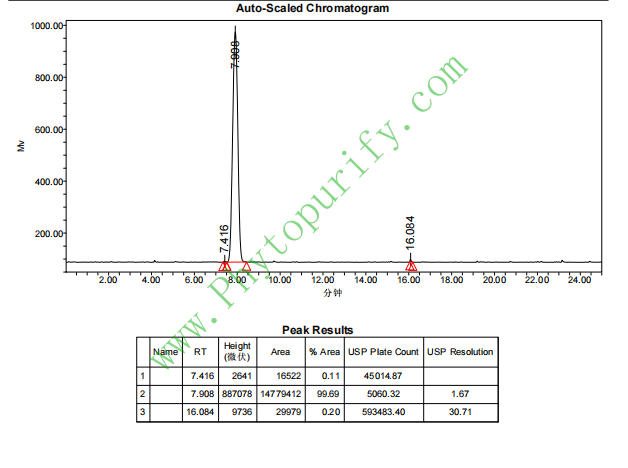
Analysis Method: HPLC-DAD or/and HPLC-ELSD
Identification Method: Mass, NMR
Packing: Brown vial or HDPE plastic bottle
Storage: Store in a well closed container, protected from air and light. Put into refrigerate or freeze for long term storage.
Whenever possible, you should prepare and use solutions on the same day. However, if you need to make up stock solutions in advance, we recommend that you store the solution as aliquots in tightly sealed vials at -20℃. Generally, these will be useable for up to two weeks.
The product could be supplied from milligrams to grams
Inquire for bulk scale.
Description:
Ginkgolide C is a potent inhibitor of collagen-stimulated platelet aggregation, it may increase intracellular cAMP and cGMP production and MMP-9 activity, inhibit intracellular Ca(2+) mobilization and TXA(2) production. Ginkgolide C has anti-adipogenic and ameliorating Alzheimer disease effects; it also can increase△LVP significantly,enhances the myocardial systolic and diastolic function of rats,but has no significant effect on HR while it shows inotropic activity.
References:
Evid Based Complement Alternat Med. 2015; 2015: 298635.
Ginkgolide C Suppresses Adipogenesis in 3T3-L1 Adipocytes via the AMPK Signaling Pathway
Ginkgolide C, isolated from Ginkgo biloba leaves, is a flavone reported to have multiple biological functions, from decreased platelet aggregation to ameliorating Alzheimer disease. The study aim was to evaluate the antiadipogenic effect of Ginkgolide C in 3T3-L1 adipocytes.
METHODS AND RESULTS:
Ginkgolide C was used to treat differentiated 3T3-L1 cells. Cell supernatant was collected to assay glycerol release, and cells were lysed to measure protein and gene expression related to adipogenesis and lipolysis by western blot and real-time PCR, respectively. Ginkgolide C significantly suppressed lipid accumulation in differentiated adipocytes. It also decreased adipogenesis-related transcription factor expression, including peroxisome proliferator-activated receptor and CCAAT/enhancer-binding protein. Furthermore, Ginkgolide C enhanced adipose triglyceride lipase and hormone-sensitive lipase production for lipolysis and increased phosphorylation of AMP-activated protein kinase (AMPK), resulting in decreased activity of acetyl-CoA carboxylase for fatty acid synthesis. In coculture with an AMPK inhibitor (compound C), Ginkgolide C also improved activation of sirtuin 1 and phosphorylation of AMPK in differentiated 3T3-L1 cells.
CONCLUSIONS:
The results suggest that Ginkgolide C is an effective flavone for increasing lipolysis and inhibiting adipogenesis in adipocytes through the activated AMPK pathway.
Proceeding of Clinical Medicine, 2013, 22(7):524-6.
Effect of Ginkgolide C in cardiac function of rats in the body.
To study the effect of Ginkgolide C(GC) in cardiac function of rats in the body.
METHODS AND RESULTS:
: Normal rats after anesthetized,inserted the intubate which connecting the pressure transducer into left ventricular from the right common carotid artery,then detected the cardiac function by the PowerLab biological signal acquisition system.Gave each of saline,1‰dimethyl sulfoxide(DMSO),100 μ mol / L GC,1 000 μ mol / L GC 1ml from the jugular vein,detected the cardiac function before and after administration by continuous recording the left ventricular systolic pressure(LVSP),left ventricular end diastolic pressure(LVEDP),the maximal rate of pressure increase in systole phase(+dp / dtmax),maximal rate of pressure decrease in diastole phase(-dp / dtmax) and heart rate(HR).Compared with normal conditions,when given 100 μ mol / L GC,there are no significant effect on cardiac function;when given 1 000 μ mol / L GC,it showed inotropic activity by increasing △LVP,+dp / dtmax,-dp / dtmax significantly,but had no significant effect on HR.
CONCLUSIONS:
Ginkgolide C can increase△LVP significantly,enhances the myocardial systolic and diastolic function of rats,but has no significant effect on HR while it shows inotropic activity.
HPLC of Ginkgolide C
Storage conditions:Short-term storage at 2~8℃, long-term storage at -20 ~ -80℃
Ginkgolide C (CAS number: 15291-76-6) is an important natural flavonoid product isolated from Ginkgo biloba leaves and belongs to the ginkgolide family. Ginkgo biloba, as an ancient gymnosperm, has received widespread attention in traditional medicine and modern drug development due to its rich bioactive components and diverse pharmacological effects in leaf extracts. Ginkgolide C, with its unique chemical structure and multi-target biological activity, has shown significant potential in neuroprotection, antiplatelet aggregation, and cognitive function improvement, making it a hot topic in natural product pharmacology research.
In recent years, with the continuous increase in the incidence of neurodegenerative diseases such as Alzheimer's disease (AD), the demand for the development of natural products for neuroprotective drugs is growing. Ginkgolide C exhibits the advantage of multi-target synergistic effects by regulating multiple neuroprotective signaling pathways, making it an important candidate molecule for exploring novel neuroprotective agents. This article will systematically review the chemical structure and physicochemical properties, plant sources and extraction methods, pharmacological activity and mechanism of action, pharmacological evaluation and pharmacokinetic characteristics of ginkgolide C, and comprehensively analyze the research progress and future development directions of this natural product in combination with its potential value in clinical applications.
The chemical formula of ginkgolide C is C20H24O9, with a molecular weight of 440.4010 Da. Its structural feature is a polycyclic lactone skeleton, containing multiple hydroxyl and ether rings, belonging to the flavonoid lactone compounds. The abundant oxygen functional groups in the molecule endow it with high polarity, reflected in its high topological polar surface area (TPSA) of 169.05 Å ², indicating that the molecule has good hydration ability.
In terms of physical and chemical properties, the LogP value of ginkgolide C is -0.2528, indicating its strong hydrophilicity and water solubility of 1.1149, supporting its good solubility in aqueous phase. Its blood-brain barrier (BBB) permeability is low, indicating limited ability to pass through the BBB, which poses a challenge for the design of neurological drugs but may also reduce central nervous system side effects. The hERG channel inhibition experiment result was negative, indicating that ginkgolide C has a lower risk of cardiac toxicity. The Ames mutagenicity test score is 0.9, indicating a low risk of genotoxicity and a good safety basis.
The chemical structure of ginkgolide C is complex, containing multiple chiral centers, which endows it with stereochemical diversity, which has important implications for its biological activity and binding specificity to targets. The lactone ring structure is a key structural group for its biological activity, and related studies have shown that this structure is crucial for its antiplatelet aggregation and neuroprotective effects.
Ginkgolide C is mainly extracted from Ginkgo biloba L. leaves. Ginkgo biloba leaves contain various active ingredients, and ginkgolides are one of their main secondary metabolites. The collection of ginkgo leaves is usually done during the autumn leaf maturity period to ensure the highest content of lactones.
The extraction process usually adopts organic solvent extraction combined with separation and purification technology. Traditional methods include ethanol or methanol extraction, followed by crude separation and purification through liquid-liquid partitioning and column chromatography (such as silica gel column, reverse phase C18 column). In recent years, green and efficient technologies such as ultrasound assisted extraction, microwave-assisted extraction, and supercritical CO2 extraction have been introduced to improve extraction efficiency and purity.
During the purification process, high performance liquid chromatography (HPLC) and preparative chromatography techniques were used to separate and identify ginkgolide C, and its structure was confirmed by mass spectrometry (MS), nuclear magnetic resonance (NMR), and other methods. The optimization of the extraction and purification process of ginkgolide C is of great significance for obtaining high-purity samples and subsequent pharmacological research.
Ginkgolide C exhibits various important pharmacological activities, mainly including antiplatelet aggregation, neuroprotective, anti-inflammatory, and antioxidant effects.
Ginkgolide C can effectively inhibit platelet aggregation and reduce the risk of thrombosis. The mechanism involves inhibiting the release of calcium ions in platelets and suppressing the signaling of platelet activating factors. This effect has potential value in preventing cardiovascular and cerebrovascular diseases such as cerebral infarction and myocardial infarction.
The research on ginkgolide C is particularly prominent in neurological diseases, especially in improving Alzheimer's disease. It slows down neuronal apoptosis, inhibits β - amyloid protein (A β) deposition, and improves cognitive dysfunction through multi-target regulation. Animal model studies have shown that ginkgolide C can alleviate neuroinflammation, inhibit oxidative stress, promote nerve regeneration, and significantly improve cognitive ability.
Ginkgolide C activates the nuclear factor erythroid associated factor 2 (NRF2) signaling pathway, enhances cellular antioxidant defense system, reduces reactive oxygen species (ROS) levels, and alleviates oxidative damage. At the same time, it inhibits the release of pro-inflammatory cytokines, reduces inflammatory reactions, and has potential therapeutic effects on various chronic inflammatory diseases.
The multi-target mechanism of action of ginkgolide C is the basis for its pharmacological activity. Its main targets involve key proteins and signaling pathways related to neuroprotection:
Ginkgolide C forms a comprehensive neuroprotective network by synergistically regulating multiple targets, demonstrating its therapeutic potential in complex neuropathological environments.
The pharmacological evaluation of ginkgolide C shows that it has certain development potential, but there are also challenges. The molecular weight of 440.4 Da is within the suitable range for drug molecules, but the high TPSA and negative LogP indicate strong hydrophilicity, which may limit oral absorption and cell membrane permeability. The low permeability of the blood-brain barrier limits its ability to directly act on the central nervous system, indicating the need to optimize drug delivery systems or modify structures to increase brain concentration.
In terms of safety, the hERG channel inhibition test was negative, reducing the risk of cardiac toxicity. The Ames test results also showed a lower risk of genotoxicity, providing safety assurance for clinical applications.
Pharmacokinetic studies have shown that ginkgolide C is metabolically stable in vivo, mainly metabolized through the liver enzyme system, and excreted primarily through the kidneys. Its bioavailability is limited, and further research is needed on dosage form improvement strategies, such as nanocarriers, liposome encapsulation, etc., to improve its pharmacokinetic properties.
Ginkgolide C has broad clinical application prospects in neurodegenerative diseases, cardiovascular and cerebrovascular diseases, and other fields due to its multi-target neuroprotective effects and antiplatelet aggregation activity. Especially in the adjuvant treatment of Alzheimer's disease, ginkgolide C can improve cognitive function, slow down disease progression, and demonstrate the unique advantages of natural product drugs.
Future research should focus on:
In summary, ginkgolide C, as a natural product with significant biological activity, is expected to become an important candidate drug for neuroprotection and treatment of cardiovascular and cerebrovascular diseases in the future.
Ginkgolide C, as an important flavonoid lactone compound in Ginkgo biloba leaves, has shown extensive potential in the fields of antiplatelet aggregation and neuroprotection due to its unique chemical structure and multi-target pharmacological activity. It exerts comprehensive neuroprotective and anti-inflammatory effects by regulating key targets such as BCL2, APP, BACE1, MAPT, SIRT1, MAPK1, ACHE, CASP3, SNCA, and NRF2, providing new ideas for the treatment of neurodegenerative diseases such as Alzheimer's disease.
Although there are certain limitations in the pharmacological properties of ginkgolide C, its low toxicity and good safety have laid the foundation for clinical development. In the future, through structural optimization and innovation in drug delivery technology, it is expected to overcome existing obstacles and promote the clinical application of ginkgolide C.
Overall, ginkgolide C, as a model of natural product pharmacology research, demonstrates the unique advantages and broad prospects of natural compounds in multi-target disease treatment, and is worthy of further exploration and development.
