Introduction/Overview
Autoimmune diseases and organ transplant rejection are major challenges faced by clinical medicine, and their core pathological mechanisms lie in abnormal activation of the immune system or excessive attacks on non self components. Traditional immunosuppressants, such as glucocorticoids and calcineurin inhibitors, have definite therapeutic effects, but long-term use often accompanies serious side effects such as increased risk of infection, metabolic disorders, liver and kidney toxicity, and increased incidence of malignant tumors. Therefore, the development of new, efficient, and more selective immunomodulators has always been a research hotspot in the fields of pharmacology and medicinal chemistry. Natural products have become an important source for discovering lead compounds due to their structural diversity and rich biological activity.
Jasminoside B (CAS number: 214125-04-9) is a natural glycoside compound with significant immunosuppressive activity isolated from traditional medicinal plants. Since its discovery, it has gradually attracted the attention of researchers due to its unique chemical structure and clear in vitro immunosuppressive effect. Preliminary studies have shown that jasmonic acid B can intervene in the activation and proliferation of immune cells in a manner different from classical drugs, demonstrating its potential as a candidate molecule for novel immunosuppressants. This article aims to systematically review the chemical properties, plant sources, pharmacological activities, potential mechanisms of action, pharmacological parameters, and clinical application prospects of jasmonic acid B, in order to provide comprehensive academic references for the in-depth research and development of this compound.
Chemical structure and physicochemical properties
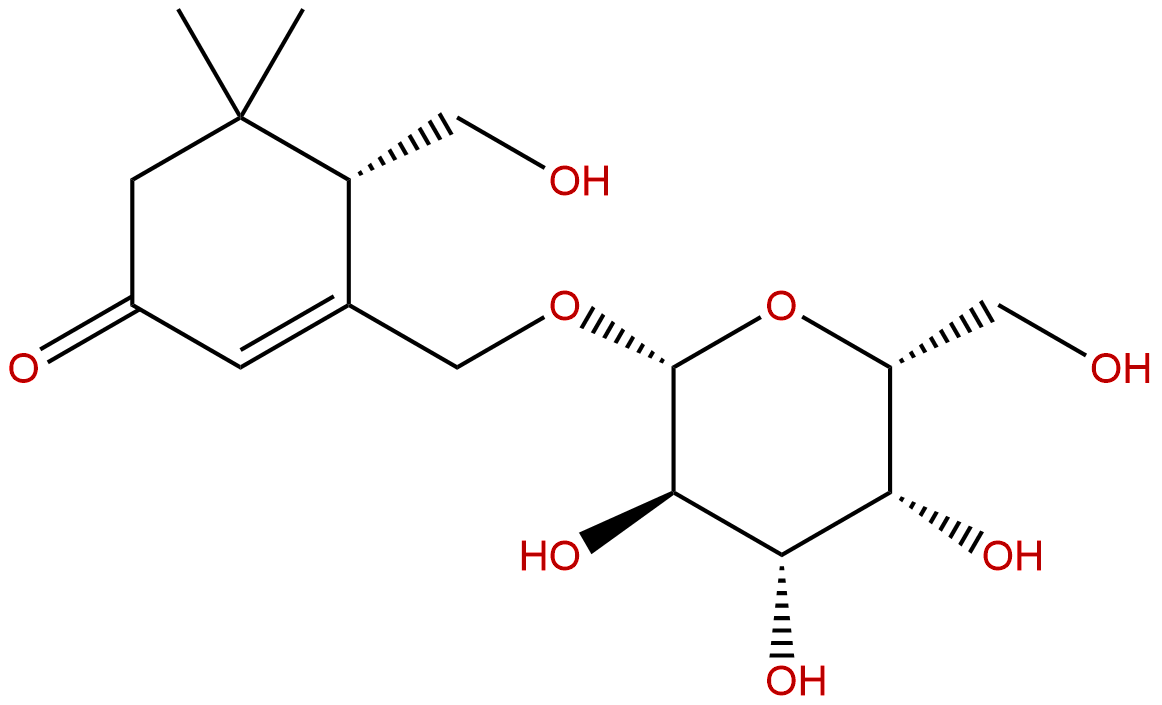
The chemical structure analysis of jasmonic acid B is the basis for its activity research. Its molecular formula is C ₁₅ H ₂₂ O ₉, and its molecular weight is 346.3760. Structurally, jasmonic acid B belongs to the class of iridoid glycosides. Its core skeleton is a iridoid glycoside element, which is connected to a molecule of glucose through glycosidic bonds. This glycosylation modification not only significantly affects the polarity, solubility, and bioavailability of compounds, but is also often a key determinant of their binding to specific biological targets.
Based on its chemical structure, a series of key physicochemical property parameters can be calculated, which directly affect its pharmacokinetic behavior and potential for drug development. The calculated lipid water partition coefficient (LogP) is -0.7033, indicating that the compound has hydrophilicity and tends to partition in the aqueous phase. This is consistent with the result of a total polar surface area (TPSA) of 136.6800 Å ², indicating the presence of multiple polar groups in the molecule (such as hydroxyl groups and oxygen atoms on sugar rings). The theoretically calculated water solubility value is 25.5388 mg/L, further confirming its good water solubility characteristics. Higher polarity and water solubility are usually beneficial for the dissolution of compounds and formulation development, but may also limit their transmembrane passive diffusion ability, especially through biological barriers composed of lipid bilayers.
Plant sources and extraction methods
Jasmonic acid B mainly comes from plants in the Jasminum genus of the Rhinoceros family, especially Jasmine (Jasminum sambac (L.) Aiton)Jasmine is not only a famous ornamental and spice plant, but also has a long history of application in multiple traditional medical systems such as traditional Chinese medicine and Ayurvedic medicine. It is commonly used to treat inflammation, fever, and skin diseases, and these traditional effects suggest that it contains active ingredients for immune regulation.
The separation and purification of jasmonic acid B from plant materials usually use classical natural product chemistry methods. Firstly, the dried whole plant or specific parts of jasmine flowers (such as flowers and leaves) are crushed and subjected to cold soaking or heating reflux extraction using polar solvents (such as methanol, ethanol, or ethanol water mixture) to fully extract the glycoside components. After vacuum concentration, the crude extract obtained was subjected to liquid-liquid distribution using organic solvents such as petroleum ether and ethyl acetate to remove chlorophyll, oil, and weakly polar impurities. Glycoside components were mostly enriched in the aqueous layer or n-butanol extraction layer.
Further purification relies on chromatographic techniques. Large pore adsorption resin column chromatography (such as D101, AB-8 type) is commonly used for initial enrichment, followed by fine separation using silica gel column chromatography, reverse phase silica gel column chromatography (such as ODS, C18 packing), and high performance liquid chromatography (HPLC). Through nuclear magnetic resonance (NMR, including ¹ H-NMR, ¹ ³ C-NMR, 2D-NMR), mass spectrometry (MS), and comparison with literature data, the pure compound obtained can be identified as jasmonic acid B. Optimizing the extraction and separation process and improving the yield are prerequisites for future large-scale preparation and in-depth research.
Pharmacological activity research
The most notable pharmacological activity of jasmonic acid B is its Immunosuppressive activity Current research mainly focuses on in vitro cell models, revealing their inhibitory effects on various immune cell functions.
-
Inhibition effect on T lymphocytes T lymphocytes are the core of adaptive immune response. Research has shown that jasmonic acid B can dose dependently inhibit T lymphocyte proliferation induced by plant hemagglutinin (PHA), concanavalin A (ConA), or anti-CD3/CD28 antibodies and other mitogens. This inhibitory effect is not caused by direct cytotoxicity, as at effective concentrations, cell viability assays (such as MTT assay) show that it has little effect on the viability of resting T cells, indicating that it is more inclined to inhibit activated T cells.
-
Inhibition of Mixed Lymphocyte Reaction (MLR)MLR simulates T cell activation induced by allogeneic antigens and is a classic model for evaluating the anti transplant rejection potential of compounds. Jasmine glycoside B can significantly inhibit the proliferation response of T cells in MLR, and its inhibitory effect is stronger than that induced by a single mitogen, suggesting that it may have stronger intervention ability in more complex immune activation pathways triggered by antigen-specific signals.
-
Regulation of inflammatory cytokine secretion Activated T cells and antigen-presenting cells (such as macrophages) secrete large amounts of pro-inflammatory cytokines, such as interleukin-2 (IL-2), interferon - γ (IFN - γ), tumor necrosis factor - α (TNF - α), etc. Jasmine glycoside B treatment can significantly downregulate the mRNA expression and protein secretion levels of these key pro-inflammatory factors. Especially the inhibition of IL-2 has important physiological significance, as IL-2 is a key signal for T cell autocrine growth and clonal expansion.
-
Potential impact on other immune cells Although there is limited existing data, studies based on its structural analogues or crude plant extracts suggest that jasmonic acid B may also have regulatory effects on B cell antibody production, macrophage phagocytic activity, and nitric oxide (NO) release, which requires further experimental confirmation.
Mechanism of action and molecular targets
The exact molecular targets and signaling pathways of jasmonic acid B are still in the exploratory stage, but based on its activity characteristics and structural analysis, some reasonable hypotheses and research directions can be proposed.
-
Interference with the Early T Cell Receptor (TCR) Signaling Pathway T cell activation begins with a phosphorylation cascade reaction following TCR recognition of antigens. Jasmonic acid B may block the transmission of activation signals by affecting the assembly of TCR signaling complexes, the activity of key kinases such as Lck and ZAP-70, or the recruitment of downstream adaptor proteins. This can explain why it has inhibitory effects on both MLR and mitogen induced proliferation.
-
Inhibition of calcium ion signaling and nuclear factor kappa B (NF - κ B) pathway TCR and co stimulatory signals can trigger an increase in intracellular calcium ion concentration ([Ca ² ⁺] i), which in turn activates calcineurin, which dephosphorylates activated T cell nuclear factor (NFAT) and incorporates it into nuclear initiating gene transcription. Meanwhile, the NF - κ B pathway is also a key regulator of inflammatory cytokine gene expression. Jasmonic acid B may inhibit the activation of NFAT and NF - κ B by intervening in calcium ion mobilization or IKK complex activity, thereby suppressing the expression of genes such as IL-2 at the transcriptional level.
-
Inhibition of cell cycle progression T cell proliferation requires entering the S phase from the G0/G1 phase. Jasmonic acid B may block cells in the G1 phase by downregulating the expression of cell cycle proteins (such as Cyclin D, Cyclin E) or upregulating the levels of cyclin dependent kinase inhibitors (such as p21, p27), thereby inhibiting their clonal expansion.
-
Potential target conjecture As glycoside compounds, their glycosyl portion may interact with certain lectin like receptors on the cell surface, such as selectins and galectins, affecting the adhesion and migration of immune cells. The glycoside part may enter the cell and directly bind to certain signaling proteins or transcription factors. The use of chemical biology methods, such as small molecule probe labeling and proteomic pulldown experiments, is a key strategy for identifying its direct target in the future.
Evaluation of drug properties and pharmacokinetics
Based on the provided calculated chemical parameters and preliminary predictions, a preliminary evaluation of the pharmacological properties of jasmonic acid B can be conducted
-
Absorption and permeability A lower LogP value (-0.7033) and high TPSA indicate that jasmonic acid B belongs to a highly polar, low-fat soluble molecule. This suggests that its oral bioavailability may be low, as it is difficult to penetrate the intestinal epithelial cell membrane through passive diffusion. It may rely on active transporters in the intestine, such as glucose transporter SGLT1, for absorption, but the efficiency remains to be verified. its Prediction of blood-brain barrier (BBB) permeability as' low 'This is usually a beneficial feature for systemic immunosuppressive drugs, which can reduce the risk of central nervous system side effects.
-
Distribution and Metabolism After entering the bloodstream, due to its hydrophilicity, it may mainly be distributed in plasma and extracellular fluid, with limited tissue permeability. As a glycoside compound, it is highly susceptible to becoming a substrate for hydrolytic enzymes such as β - glucosidase in the intestine and liver, undergoing deglycosylation reactions to generate aglycones. The physicochemical properties and activities of aglycones may be completely different from those of the prototype drug, which constitutes the complexity of their in vivo metabolism and pharmacodynamics. Therefore, studying its metabolites and activities in vivo is crucial.
-
Preliminary Safety Prediction:HERG inhibition predicted as' no 'This is a positive signal that suggests it may not pose a significant risk of cardiac toxicity, reducing the potential risk of developing acquired long QT syndrome and apical torsion ventricular tachycardia.The predicted value of Ames test is 0.0 It is usually interpreted as no mutagenicity warning under the predictive framework of computational models, but final confirmation is required through real in vitro and in vivo genotoxicity experiments.
-
excretion Hydrophilic glycosides and their metabolites are likely to be primarily excreted through the kidneys via urine.
In summary, the pharmaceutical challenge of jasmonic acid B mainly lies in its Oral absorption may be poor and Easily hydrolyzed and metabolized by enzymes Future structural optimization may focus on modifying glycosides (such as preparing prodrugs, replacing glycosides) or modifying aglycones to improve their metabolic stability and membrane permeability. At the same time, developing non oral routes of administration (such as injections, topical formulations) is also a feasible development strategy.
Clinical application prospects and prospects
Jasmine glycoside B, as a natural lead compound with clear in vitro immunosuppressive activity, has a promising clinical application prospect mainly focused on autoimmune diseases and organ transplantation, but the road ahead is long and full of challenges.
Potential application directions:
1. Organ transplantation for anti rejection As an adjuvant or alternative drug to traditional immunosuppressants, it is used to prevent and treat acute rejection reactions after solid organ transplantation such as kidney, liver, and heart. It may exert its effect by inhibiting the activation of allogeneic reactive T cells.
2. Autoimmune diseases Suitable for diseases mediated by excessive activation of T cells, such as rheumatoid arthritis, systemic lupus erythematosus, psoriasis, multiple sclerosis, inflammatory bowel disease (Crohn's disease, ulcerative colitis), etc. Local medication (such as topical psoriasis ointment) can be explored to reduce systemic side effects.
3. Inflammatory skin disease Develop topical formulations for treating skin inflammations such as atopic dermatitis and contact dermatitis based on the traditional use of its source plant, jasmine flower.
Challenges and future research directions:
1. In depth in vivo pharmacological validation The current research is mainly based on in vitro cell experiments. It is urgent to systematically evaluate the in vivo immunosuppressive effect, effective dose window, and therapeutic index of jasmonic acid B in suitable animal models, such as collagen induced arthritis mice, experimental autoimmune encephalomyelitis mice, skin transplant or heart transplant model mice.
2. Comprehensive pharmacokinetic studies Conduct research on ADME (absorption, distribution, metabolism, excretion) in animals to clarify their bioavailability, plasma protein binding rate, major metabolic pathways, major metabolites and their activities, tissue distribution characteristics, and elimination half-life.
3. Mechanism of action and target confirmation Using modern molecular biology and chemical biology techniques to elucidate precise molecular targets and signaling pathways is the foundation for rational structural optimization and also helps to discover potential biomarkers.
4. Structural modification and optimization Conduct a systematic structure-activity relationship study using jasmonic acid B as the lead compound. By synthesizing derivatives or analogues, improve their pharmacokinetic defects (such as metabolic instability and poor oral absorption), while maintaining or enhancing their immunosuppressive activity and reducing potential toxicity.
5. Security system evaluation After completing preliminary pharmacological and pharmacokinetic studies, a standardized preclinical safety evaluation must be conducted, including acute toxicity, long-term toxicity, reproductive toxicity, genetic toxicity, and immunotoxicity, to comprehensively assess its safety.
Conclusion
Jasmine glycoside B is a cyclic terpenoid glycoside isolated from the traditional medicinal plant jasmine flowers. Its unique chemical structure endows it with significant in vitro immunosuppressive activity, manifested by inhibiting T cell proliferation and regulating inflammatory cytokine secretion. Although its clear molecular targets remain to be revealed and existing pharmacological parameters suggest challenges in oral absorption and metabolic stability, these characteristics precisely point to breakthroughs in future research. As a naturally occurring lead molecule, jasmonic acid B provides a valuable chemical template for the development of novel immunomodulators. Through in-depth in vitro and in vivo pharmacological research, mechanism of action analysis, and rational drug chemical modification, it is expected to overcome its existing shortcomings and ultimately transform it from an active compound in the laboratory into a potential new drug for clinical treatment of autoimmune diseases and organ transplant rejection, achieving the transformation from traditional wisdom to modern medicine.