


Synonym name:
Catalogue No.: BP0631
Cas No.: 29307-60-6
Formula: C23H34O15
Mol Weight: 550.51
Botanical Source: the fruit of Gardenia jasminoides. Component of Shui Zhi and Zhi Zi
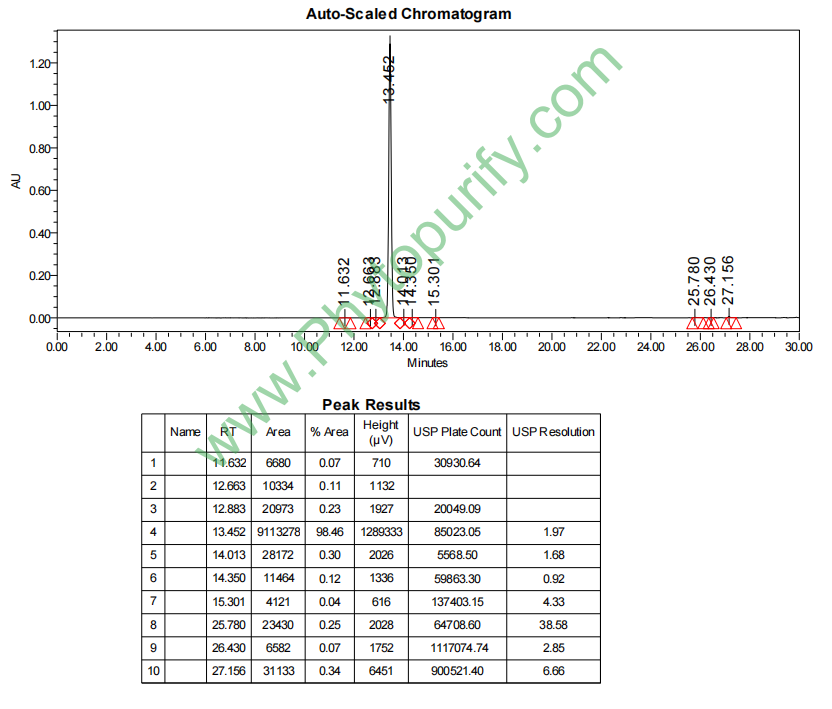
Purity: 95%~99%
Analysis Method: HPLC-DAD or/and HPLC-ELSD
Identification Method: Mass, NMR
Packing: Brown vial or HDPE plastic bottle
Can be supplied from milligrams to grams.
For Reference Standard and R&D, Not for Human Use Directly.
Inquire for bulk scale.
HPLC of Genipin 1-gentiobioside
Storage conditions:Short-term storage at 2~8℃, long-term storage at -20 ~ -80℃
234.2900
-1.9797
-1.9797
73.0774
.4977
.6186
Low
29.8850
5.1512
Yes
No
No
No
Yes
No
0.0
Yes
Yes
Yes
Yes
Genipin 1-gentiobinoside (CAS number 29307-60-6) is a natural product derived from the fruit of Gardenia jasminoides Ellis and is a derivative of gentian glycosides. As a natural crosslinking agent, genipin gentian glycoside has demonstrated significant biological activity in both traditional Chinese medicine and modern pharmacological research. In recent years, with the in-depth analysis of the pharmacological mechanism of natural products, genipin gentianoside has gradually become a hotspot in the research of liver cancer, type 2 diabetes, inflammation, neurodegenerative diseases and other diseases due to its multi target and multi mechanism regulatory characteristics.
This review aims to systematically summarize the chemical structure and physicochemical properties, plant sources and extraction methods, pharmacological activity and mechanism of action, pharmacological evaluation and pharmacokinetic characteristics of genipin gentian diglycoside. Combined with the current research progress in clinical applications, it explores its development prospects and challenges as a potential drug candidate molecule, providing theoretical basis and reference for future related research.
The chemical name of genipin gentiobiose is (+) - genipin 1-gentiobioside, which is a glycosidic bond between genipin and gentiobiose. Its molecular weight is 550.51 and its molecular formula is C23H30O13. This compound has high polarity and exhibits a low LogP value (-1.9797), indicating strong hydrophilicity. Its water solubility is 73.0774 mg/mL, indicating good solubility in aqueous media. Its topological polar surface area (TPSA) is 234.29 Å ², indicating that the molecule has many polar groups, such as hydroxyl and ether bonds, which have a significant impact on its ability to bind to biomolecules and penetrate cell membranes.
In the structure of genipin gentian glycoside, the genipin moiety contains an unsaturated pyran ring and a lactone ring, endowing it with chemical reactivity, especially exhibiting significant ability in cross-linking reactions. The glycosidic part is connected to genipin through glycosidic bonds, and the presence of glycosides not only increases the water solubility of the compound, but also affects its bioavailability and metabolic stability.
This compound does not possess hERG channel inhibitory activity, and the Ames mutagenicity test result is 0, indicating its high safety and low toxicological risk. In addition, the blood-brain barrier penetration ability of genipin gentiopicroside is low, which limits its direct application in central nervous system diseases. However, its protective effect on hippocampal neurons suggests that it may exert neuroprotective effects through indirect mechanisms.
Jingniping gentian glycoside mainly comes from the fruit of Gardenia jasminoides Ellis, a plant of the genus Gardenia in the family Rubiaceae, widely distributed in southern China and Southeast Asia. Gardenia fruit has always been used as a traditional Chinese medicine for the treatment of clearing heat, detoxification, diuresis, and reducing swelling. Modern research has found that its active ingredients include various gentiopicroside compounds, among which genipin gentiopicroside is an important glycosylated component.
The common methods for extracting genipin gentian glycoside include water extraction and alcohol precipitation, column chromatography separation, etc. Generally, dried gardenia fruit powder is used for reflux extraction with water or 70% ethanol. After concentration, the extract is separated and purified using a silica gel column, C18 reverse phase column, or ion exchange column. High performance liquid chromatography (HPLC) and mass spectrometry (MS) techniques are widely used for purity detection and structural confirmation. In recent years, the application of ultrasound assisted extraction and microwave-assisted extraction technologies has improved extraction efficiency and purity, reduced the use of organic solvents, and is in line with the concept of green chemistry.
In addition, biological enzymatic hydrolysis, catalyzed by specific glycosidases, has also been used to enrich genipin gentian glycosides from gardenia fruit, further improving the yield and quality of the product and providing technical support for large-scale preparation.
Jingniping gentian glycoside exhibits diverse pharmacological activities, covering multiple aspects such as anti-tumor, anti-inflammatory, immune regulation, anti thrombotic, and neuroprotective effects.
Jingniping gentian glycoside exhibits significant inhibitory effects in various tumor cells such as liver cancer. Its anti-tumor mechanism mainly involves regulating cell apoptosis, inhibiting cell proliferation and migration. Research has shown that this compound can downregulate the expression of anti apoptotic protein BCL2, activate tumor suppressor protein TP53, inhibit the STAT3 signaling pathway, block the PI3K/AKT pathway, thereby promoting tumor cell apoptosis and inhibiting tumor growth. In addition, genipin gentian glycoside can also inhibit the activity of matrix metalloproteinase MMP9, reducing the invasion and metastasis ability of tumor cells.
Jingniping Longdan Double Glycoside inhibits the expression of inflammatory mediator PTGS2 (COX-2), reduces prostaglandin production, and alleviates inflammatory response. Its regulatory effect on immune cells is manifested by inhibiting overactivated immune responses, reducing the release of inflammatory factors, and having potential immunosuppressive effects, which can help treat autoimmune diseases and chronic inflammation.
Although the blood-brain barrier penetration ability of genipin gentiopicroside is low, its protective effect on hippocampal neurons has been confirmed by multiple in vitro and animal model studies. The mechanism may be related to the inhibition of intracellular uncoupling protein 2 (UCP2), regulation of mitochondrial function, alleviation of oxidative stress and cell apoptosis, thereby protecting neurons from damage.
Genipin 1-gentiobioside has shown potential value in research on type 2 diabetes. By regulating mitochondrial function and inhibiting UCP2, it improves pancreatic β-cell function, enhances insulin secretion, and lowers blood glucose levels. In addition, its anti-inflammatory and antioxidant properties help alleviate diabetes-related chronic inflammation and complications.
Genipin 1-gentiobioside reduces the risk of thrombosis by inhibiting platelet activation and aggregation, suggesting potential applications in the prevention of cardiovascular and cerebrovascular diseases.
The multiple targets of genipin 1-gentiobioside underpin its diverse pharmacological activities. Its main targets include:
UCP2 (uncoupling protein 2): As a mitochondrial inner membrane protein, UCP2 regulates cellular energy metabolism and oxidative stress. By inhibiting UCP2 activity, genipin 1-gentiobioside regulates mitochondrial function, reduces ROS production, and protects cells from oxidative damage.
BCL2 and TP53: Key proteins that regulate apoptosis. Genipin 1-gentiobioside downregulates BCL2 to promote activation of apoptotic pathways, while activating TP53 to enhance cell cycle arrest and apoptotic signaling.
STAT3: STAT3 is an important signaling molecule in tumor cell proliferation and immune evasion. Inhibiting it helps suppress tumor growth and regulate immune responses.
PIK3CA/PI3K-AKT pathway: This pathway plays a key role in cell proliferation and survival. Genipin 1-gentiobioside blocks proliferative signaling in tumor cells by inhibiting this pathway.
MMP9: Involved in matrix degradation and metastasis by tumor cells. Genipin 1-gentiobioside inhibits MMP9 expression, reducing tumor invasiveness.
EGFR and MAPK1: Signaling pathways that regulate cell growth and differentiation. Genipin 1-gentiobioside influences the cell cycle and apoptosis by modulating these signals.
PTGS2(COX-2): A key enzyme in inflammatory responses. Inhibiting its expression contributes to anti-inflammatory effects and immune regulation.
The coordinated effects on these targets give genipin 1-gentiobioside promising therapeutic potential in various disease models.
Assessment of the drug-likeness of genipin 1-gentiobioside indicates a favorable safety profile and relatively high water solubility, facilitating formulation development and distribution in the body. Its low LogP and large TPSA suggest that oral absorption may be limited and that bioavailability requires further optimization. Poor blood-brain barrier penetration limits its direct application in central nervous system diseases, although this may be improved through structural modification or drug carrier systems.
Toxicological evaluation indicates that the compound does not inhibit hERG channels and is negative in the Ames mutagenicity test, suggesting low risks of cardiotoxicity and genotoxicity and a relatively favorable safety profile. Pharmacokinetic studies indicate that genipin 1-gentiobioside is relatively metabolically stable in vivo and is processed mainly by hepatic metabolic enzyme systems. Its metabolites and excretion routes require further investigation.
To address its poor oral absorption, the development of novel delivery systems, such as nanocarriers, liposomal encapsulation, and cocrystal technology, may improve its stability in vivo and bioavailability and facilitate clinical translation.
As a multifunctional natural product, genipin 1-gentiobioside has broad potential for clinical application. Its inhibitory effects on multiple targets in liver cancer treatment provide strong support for the development of new antitumor drugs. Together with its anti-inflammatory, immunomodulatory, and neuroprotective effects, these properties suggest that genipin 1-gentiobioside could become an adjunctive treatment for various chronic diseases.
In type 2 diabetes and metabolic syndrome, genipin 1-gentiobioside may improve pancreatic islet function and metabolic status by regulating mitochondrial function and through anti-inflammatory mechanisms, giving it potential for development into a new drug for metabolic diseases.
Future research should focus on:
In depth analysis of the mechanism of action: Use genomics, proteomics, and metabolomics to comprehensively elucidate the molecular interaction network of genipin 1-gentiobioside.
Optimize pharmacokinetic properties: Improve its oral absorption and distribution in the body through chemical modification and advanced drug delivery systems.
Preclinical and clinical research: Conduct systematic toxicological studies, safety evaluations, and clinical trials to verify its efficacy and safety.
Combination therapy strategy: Investigate synergistic effects between genipin 1-gentiobioside and existing drugs to improve therapeutic outcomes and reduce adverse effects.
Industrial production technologies: Develop efficient, environmentally friendly extraction and synthesis processes to ensure drug quality and supply.
In summary, as an important molecule among natural medicinal resources, genipin 1-gentiobioside has promising development prospects and warrants further in-depth research and development.
As an important natural product in gardenia fruit, genipin 1-gentiobioside exhibits broad pharmacological potential owing to its distinctive chemical structure and diverse biological activities. Its mechanisms involving multiple targets in antitumor activity, anti-inflammatory effects, immune regulation, neuroprotection, and metabolic diseases provide a valuable example for research into natural product pharmacology. Although its drug-likeness presents certain challenges, modern drug design and delivery technologies may help genipin 1-gentiobioside become an effective drug candidate for the clinical treatment of various diseases.
In the future, interdisciplinary research strategies will further elucidate the pharmacological mechanisms of genipin 1-gentiobioside and progressively reveal its value for clinical application, bringing new impetus to drug development from natural products.
