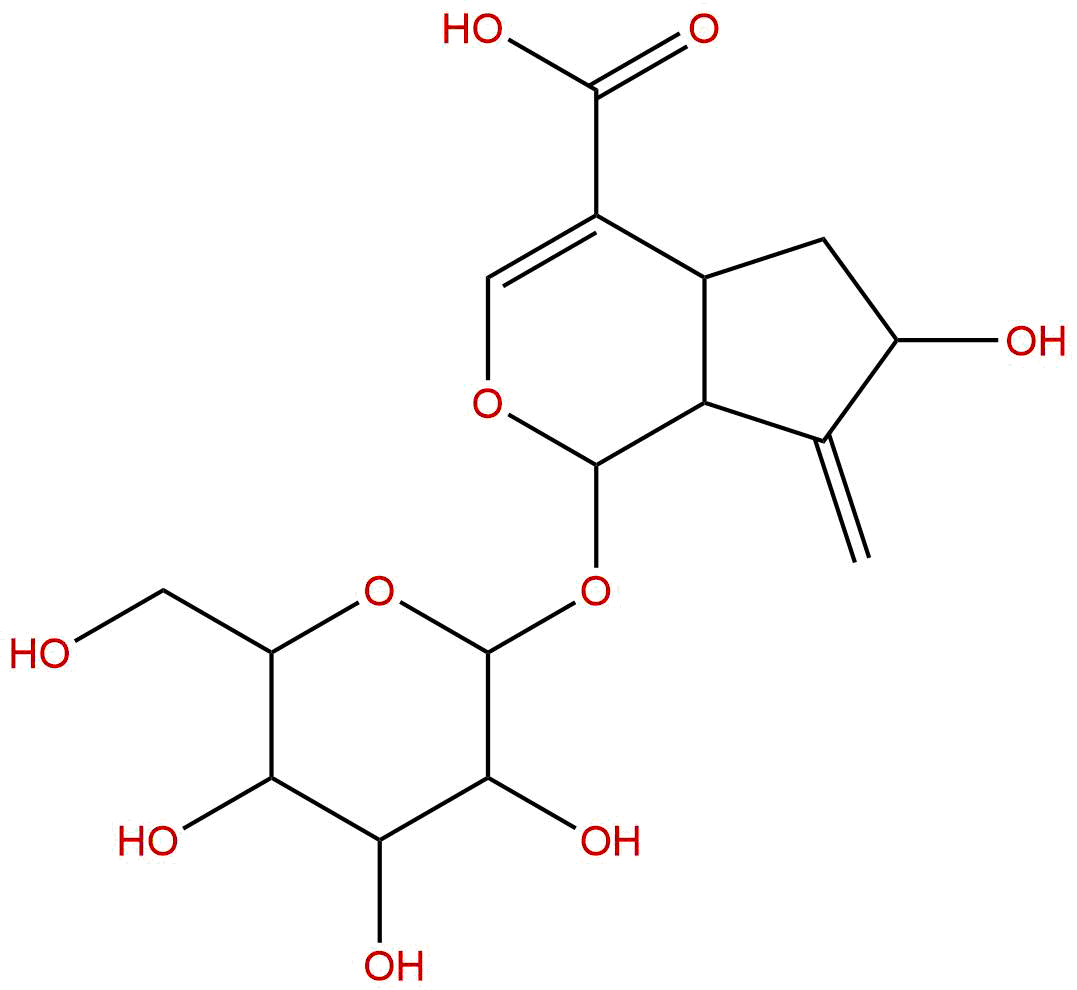
Storage conditions:Short-term storage at 2~8℃, long-term storage at -20 ~ -80℃
166.1400
-1.4305
-3.3113
44.9127
.3845
.4171
Low
40.6014
4.8266
No
No
No
No
Yes
No
0.0
Yes
Yes
Yes
Yes
Natural products, as an important source of drug discovery, play an irreplaceable role in the long history of human struggle against diseases. Cycloterpenoid glycosides, as a class of secondary metabolites widely present in the plant kingdom, have long been a hot topic in natural product chemistry and pharmacology research due to their structural diversity and significant biological activity. Gardoside, as a typical iridoid glycoside, is gradually attracting attention from the academic community due to its unique chemical skeleton and potential pharmacological value. The new glycoside of Gardenia jasminoides was originally derived from the plant Gardenia jasminoides in the Rubiaceae family(Gardenia jasminoides)After separation and identification, it was found to be widely present in various medicinal plants, especially in the family Lamiaceae plant White Flower Sweet Honey(Lippia alba)The roots are rich in content. Its chemical structure is composed of a cyclohexene ether terpene core connected to a glucose group through a glycosidic bond, endowing it with unique physicochemical properties and biological activity.
In recent years, with the continuous deepening of research on the pathological mechanism of cerebral ischemia-reperfusion injury (CIRI), the search for safe and effective neuroprotective agents has become an urgent need for drug development. CIRI is a common secondary injury during blood flow recovery after ischemic stroke, and its pathological process involves multiple complex links such as oxidative stress, inflammatory response, cell apoptosis, excitotoxicity, ultimately leading to irreversible damage to neurons. Although existing treatment methods such as thrombolysis and thrombectomy can restore blood flow, the damage caused by reperfusion itself severely limits clinical prognosis. Therefore, the development of drugs that can intervene in the pathological process of CIRI through multiple targets and pathways has important clinical significance. Due to its good water solubility, low toxicity, and anti-inflammatory, antioxidant, and anti apoptotic activities exhibited in various disease models, particularly its potential regulatory role on CIRI related targets such as BCL2, MMP2, NFE2L2, TNF, NOS2, etc., geniposide has become a highly promising candidate molecule for development. This article aims to systematically review the chemical structure, plant origin, pharmacological activity, mechanism of action, and pharmacological characteristics of geniposide, and explore its application prospects in the treatment of diseases such as CIRI, in order to provide reference for the in-depth research and development of this natural product.
Gardenia jasminoides belongs to the class of iridoid glycosides, and its chemical structure exhibits typical characteristics of this class of compounds. From a chemical classification perspective, iridoid glycosides are formed by the binding of iridoid glycosides with sugars (usually D-glucose) through β - glycosidic bonds. The glycoside skeleton of Gardenia jasminoides is a cyclopentanopyran ring system, which is the basic carbon framework of cyclohexene ether terpenes. The C-1 position is usually a hemiacetal hydroxyl group, which is connected to the sugar group to form a glycoside. The characteristic functional groups in its structure include one carboxyl group (- COOH) and multiple hydroxyl groups (- OH), and the presence of these polar groups has a decisive impact on its physicochemical properties and biological activity.
The molecular formula of geniposide is C ₁₆ H ₂₂ O ₁₁, with a molecular weight of 374.3420 g/mol. Its precise chemical structure has been confirmed by modern spectroscopic techniques such as nuclear magnetic resonance (NMR) and mass spectrometry (MS). In terms of physicochemical properties, geniposide exhibits significant hydrophilicity. The calculated LogP value is -1.4305, which is an extremely low value, indicating that the compound strongly tends towards the aqueous phase in the distribution of water and oil phases, with extremely poor lipid solubility. This characteristic is closely related to the abundance of polar groups such as hydroxyl and carboxyl groups in its molecular structure. Its total polar surface area (TPSA) is as high as 166.1400 Å ², further confirming its strong polarity characteristics. A high TPSA value usually indicates that the compound has good water solubility, but it also suggests poor transmembrane permeability. In fact, the calculated water solubility of geniposide is 44.9127 mg/mL, which belongs to highly water-soluble compounds. This high water solubility has a unique impact on its absorption, distribution, and excretion processes in the body. For example, it may be difficult to cross the cell membrane through passive diffusion, but it may be absorbed through specific transporters or cellular pathways.
In addition, for the development of central nervous system drugs, blood-brain barrier (BBB) permeability is a key parameter. The BBB permeability of geniposide was evaluated as' low ', which is consistent with its high polarity and low fat solubility characteristics. This means that geniposide mainly exists in ionic form under physiological pH conditions, making it difficult to cross the tightly connected BBB through passive diffusion. However, this characteristic is not an absolute disadvantage, as there are multiple transporters on the BBB, such as organic anion transporters (OATPs) and glucose transporters (GLUTs), and geniposide may be actively transported into the brain as a substrate for these transporters. In addition, under pathological conditions such as cerebral ischemia, the integrity of the BBB is disrupted and permeability increases, which provides the possibility for geniposide to enter the brain parenchyma. In terms of drug safety, computer prediction models show that geniposide has no inhibitory activity on hERG potassium channels (hERG inhibition: no), and the Ames test result is 0.0, indicating a low risk of cardiac and genetic toxicity. This provides preliminary assurance for its safety as a candidate drug.
The new glycoside of Gardenia jasminoides was originally derived from the plant Gardenia jasminoides in the Rubiaceae family(Gardenia jasminoides)Separated from the fruit. As a traditional Chinese medicine, Gardenia jasminoides has the effects of relieving fire and irritability, clearing heat and dampness, cooling blood and detoxifying. Its fruit is rich in various cyclohexene ether terpenoid glycosides, such as geniposide, geniposidic acid, and geniposide. With the deepening of plant chemistry research, it has been found that geniposide is not unique to gardenia, and its distribution range is quite wide, detected in plants of multiple families and genera. For example, in the family Lamiaceae, white flowers are sweet and juicy(Lippia alba)In the roots, geniposide has been reported as one of the main active ingredients. In addition, the presence of this compound has also been found in certain species of plants such as Scrophulariaceae, Gentianaceae, and Fabaceae. This widespread distribution suggests that geniposide may play a fundamental role in plant chemical defense or signal transduction.
The extraction method of geniposide mainly relies on classical natural product chemical separation techniques, usually including solvent extraction, liquid-liquid extraction, and multiple chromatographic separation steps. Due to the high polarity and good water solubility of geniposide, traditional organic solvents (such as ethanol and methanol) mixed with water are commonly used as extraction solvents. For example, for gardenia fruit, a certain concentration of methanol or ethanol aqueous solution is often used for reflux extraction or cold soaking extraction to fully extract various glycoside components, including geniposide. For the sweet roots of white flowers, a similar method may be used to extract their polarity characteristics.
After concentration, the extract usually needs to undergo preliminary purification. Due to the presence of carboxyl groups in geniposide, it exists in an ionic state under alkaline conditions and in a molecular state under acidic conditions. Therefore, this property can be utilized for pH zone refining counter current chromatography or simple acid-base extraction to remove some neutral or alkaline impurities. Further separation and purification are highly dependent on various chromatographic techniques. Macroporous adsorption resin (such as D101, HPD100, etc.) chromatography is a commonly used method for separating iridoid glycosides. By gradient elution with different concentrations of ethanol water system, geniposide can be separated from impurities such as sugars and pigments. Subsequently, high-purity geniposide monomers can be obtained using techniques such as silica gel column chromatography, ODS (octadecylsilane bonded silica gel) reverse phase column chromatography, and preparative HPLC. During the separation process, thin-layer chromatography (TLC) or HPLC is often used for monitoring, and the absorption of geniposide at a specific wavelength (such as around 240 nm, the characteristic UV absorption of iridoid glycosides) is used for detection. With the development of modern separation technology, efficient and mild separation techniques such as high-speed countercurrent chromatography (HSCCC) have also been applied to the preparation of geniposide, avoiding the irreversible adsorption and sample loss problems that may arise from traditional silica gel column chromatography.
The pharmacological activity research of geniposide is still in its infancy, but existing research results indicate that this compound has multiple potential biological activities, especially in anti-inflammatory, antioxidant, and neuroprotective aspects, showing remarkable potential, which is highly consistent with its regulatory effect on targets related to cerebral ischemia-reperfusion injury (CIRI).
1. Anti inflammatory activity
Inflammatory response is the core link in the pathological process of CIRI. After reperfusion, activated microglia and astrocytes release a large amount of pro-inflammatory factors, such as tumor necrosis factor - α (TNF - α), interleukin-1 β (IL-1 β), and interleukin-6 (IL-6), while inducing the expression of cyclooxygenase-2 (COX-2, encoded by the PTGS2 gene) and inducible nitric oxide synthase (iNOS, encoded by the NOS2 gene), exacerbating neuronal damage. Research has shown that geniposide can significantly inhibit the production of pro-inflammatory factors such as TNF - α, IL-1 β, and IL-6 in macrophages or microglia stimulated by lipopolysaccharide (LPS). The mechanism may be related to the inhibition of the activation of the nuclear factor kappa B (NF - κ B, encoded by the NFKB1 gene) signaling pathway. NF - κ B is a key transcription factor in inflammatory response, and geniposide inhibits the nuclear translocation of NF - κ B by blocking its phosphorylation and degradation, thereby downregulating the transcription of downstream target genes such as TNF, NOS2, and PTGS2. In addition, geniposide may also exert anti-inflammatory effects by affecting the mitogen activated protein kinase (MAPK) signaling pathway, such as MAPK1/ERK2.
2. Antioxidant activity
Oxidative stress is another key pathological mechanism of CIRI. The large amount of reactive oxygen species (ROS) and reactive nitrogen species (RNS) generated during ischemia-reperfusion directly damage cell membranes, proteins, and DNA, and trigger cell apoptosis. The molecular structure of geniposide contains multiple phenolic hydroxyl groups, which endow it with direct free radical scavenging ability. More importantly, it can enhance the cellular antioxidant defense system by activating the nuclear factor E2 related factor 2 (NFE2L2, also known as Nrf2) signaling pathway. Nrf2 is the main transcription factor that regulates the expression of antioxidant enzymes. Gardenia jasminoides can promote the dissociation of Nrf2 and Keap1, and translocate them into the nucleus to bind with antioxidant response elements (ARE), thereby upregulating the expression of a series of antioxidant enzymes, such as heme oxygenase-1 (HO-1), quinone oxidoreductase 1 (NQO1), superoxide dismutase (SOD), and glutathione peroxidase (GPx). By enhancing endogenous antioxidant capacity, geniposide can effectively alleviate oxidative damage in the CIRI model.
3. Anti apoptotic activity
Apoptosis is one of the ultimate common pathways through which CIRI leads to neuronal death. The B-cell lymphoma 2 (BCL2) family proteins play a central role in regulating the mitochondrial mediated endogenous apoptosis pathway. The balance between anti apoptotic protein BCL2 and pro apoptotic protein BAX determines the life and death of cells. Research has shown that geniposide can upregulate the expression of BCL2 and downregulate the expression of BAX, thereby maintaining mitochondrial membrane potential, inhibiting the release of cytochrome c, and ultimately inhibiting the activation of caspase-3, exerting anti apoptotic effects. In addition, excessive activation of matrix metalloproteinases (MMPs, such as MMP2 and MMP9) in CIRI can degrade the extracellular matrix, disrupt the blood-brain barrier, and participate in the transmission of apoptotic signals. Gardenia jasminoides glycoside has been found to inhibit the activity of MMP2 and MMP9, which may also be one of the mechanisms by which it exerts neuroprotective effects.
4. Protective effect on cerebral ischemia-reperfusion injury
Taking into account its anti-inflammatory, antioxidant, and anti apoptotic activities, geniposide has shown clear protective effects in CIRI animal models. In rat or mouse models of middle cerebral artery occlusion (MCAO), treatment with geniposide before or after reperfusion can significantly reduce cerebral infarction volume, improve neurological deficit scores, and alleviate brain edema. These protective effects are closely related to their regulation of multiple targets mentioned above. For example, enhancing antioxidant capacity by activating the Nrf2 pathway, reducing inflammatory response by inhibiting the NF - κ B pathway, inhibiting apoptosis by regulating the BCL2/Bax ratio, and protecting blood-brain barrier integrity by inhibiting MMPs. Of particular note is the potential effect of geniposide on the α 7-nicotinic acetylcholine receptor (CHRNA7). CHRNA7 is a key receptor in the cholinergic anti-inflammatory pathway, and its activation can inhibit NF - κ B activation and pro-inflammatory cytokine release. Although direct evidence is currently limited, geniposide may provide additional anti-inflammatory mechanisms for neuroprotection by regulating CHRNA7 signaling.
The pharmacological activity of geniposide is not the result of a single target action, but is achieved through multi-target and multi pathway network regulation, which reflects the characteristic of "multi-directional pharmacology" of natural products. Based on existing research, its core mechanism of action can be summarized as the regulation of the following key signaling pathways and molecular targets.
1. Nrf2/ARE antioxidant pathway
This is the core mechanism by which geniposide exerts antioxidant effects. Under normal physiological conditions, Nrf2 binds to the inhibitory protein Keap1 in the cytoplasm and is in an inactive state. Under the action of oxidative stress or electrophilic agents (such as geniposide, which may undergo changes in its α, β - unsaturated carbonyl structure), the conformation of Keap1 changes, leading to the release and stabilization of Nrf2. The released Nrf2 translocates into the nucleus, forms heterodimers with small Maf proteins, recognizes and binds to the ARE sequence of the target gene promoter region, and initiates the expression of a series of downstream antioxidant enzymes and phase II detoxifying enzymes, including HO-1, NQO1, glutathione S-transferase (GST), etc. By enhancing the overall antioxidant capacity of cells, geniposide can effectively eliminate excess ROS generated during CIRI process and alleviate oxidative damage. Therefore, NFE2L2 (Nrf2) is a key molecular target of geniposide.
2. NF - κ B-mediated inflammatory pathway
NF - κ B is the central regulator of inflammatory response. In resting cells, NF - κ B (usually a p50/p65 heterodimer) binds to the inhibitory protein I κ B α and remains in the cytoplasm. The inflammatory signals generated by CIRI (such as TNF - α, IL-1 β) or ROS can activate the I κ B kinase (IKK) complex, leading to phosphorylation and ubiquitination degradation of I κ B α. The released NF - κ B is immediately translocated into the nucleus and binds to the promoters of various pro-inflammatory genes (such as TNF, IL-1 β, IL-6, NOS2, PTGS2, MMP9), initiating their transcription. Gardenia jasminoides glycoside can inhibit the activity of IKK or directly interfere with the phosphorylation of I κ B α, block the activation of NF - κ B, and thus downregulate the expression of the above-mentioned pro-inflammatory factors. Therefore, NFKB1 (encoding NF - κ B p50 subunit) and its signaling pathway are key targets for the anti-inflammatory effects of geniposide.
3. MAPK signaling pathway
The MAPK family, including extracellular signal regulated kinases (ERK, such as MAPK1), c-Jun N-terminal kinase (JNK), and p38 MAPK, is involved in regulating cell proliferation, differentiation, inflammation, and apoptosis in CIRI. Research has shown that geniposide can regulate the phosphorylation level of the MAPK pathway. For example, it may alleviate inflammation and apoptosis by inhibiting excessive activation of p38 MAPK and JNK, while moderately activating the ERK pathway to promote cell survival. MAPK1 (ERK2), as a key node in this pathway, is one of the potential targets for the regulatory effects of geniposide.
4. Apoptosis related proteins and MMPs
Gardenia jasminoides inhibits mitochondrial apoptosis pathway by regulating the proportion of BCL2 family proteins (BCL2, BAX). It upregulates the expression of anti apoptotic protein BCL2 and downregulates the expression of pro apoptotic protein BAX, thereby stabilizing mitochondrial membrane potential and preventing the release of cytochrome c and activation of caspase cascade reaction. In addition, MMP2 and MMP9 are responsible for degrading basement membrane components, disrupting the blood-brain barrier, and participating in cell apoptosis in CIRI. Gardenia jasminoides can inhibit the activity or expression of MMP2 and MMP9, which helps maintain the integrity of the blood-brain barrier, alleviate brain edema and secondary damage.
5. Cholinergic anti-inflammatory pathway
The α 7-nicotinic acetylcholine receptor (CHRNA7) is a key receptor that mediates the cholinergic anti-inflammatory pathway. Activation of CHRNA7 can inhibit the activation of NF - κ B in macrophages and microglia, reducing the release of pro-inflammatory cytokines. Although there is currently no direct evidence to suggest that geniposide is an agonist of CHRNA7, its anti-inflammatory effects are highly consistent with those of CHRNA7 activation. Therefore, CHRNA7 may serve as a potential indirect target of geniposide, and its specific interaction mode needs further investigation.
In summary, geniposide forms a complex regulatory network by acting on multiple targets such as NFE2L2, NFKB1, MAPK1, BCL2, MMP2/9, TNF, NOS2, PTGS2, etc., synergistically exerting anti-inflammatory, antioxidant, and anti apoptotic effects, thereby exerting a protective effect on CIRI. This multi-target mode of action is its unique advantage over single target synthetic drugs.
The evaluation of drug properties is a crucial step in transitioning natural products from laboratory research to clinical applications. The physicochemical properties of geniposide determine its unique pharmacokinetic characteristics, which have both advantages and challenges.
1. Physical and chemical properties and drug like properties
As mentioned earlier, geniposide has high water solubility (44.9 mg/mL), low LogP (-1.43), and high TPSA (166.14 Å ²). According to the Lipinski Five Rules (molecular weight<500, LogP<5, hydrogen bond donor<5, hydrogen bond acceptor<10), the molecular weight (374) and LogP of geniposide meet the requirements, but the number of hydrogen bond donors (- OH and - COOH, usually exceeding 5) and hydrogen bond acceptors (O atoms exceeding 10) is likely to exceed the rule limits. This indicates that geniposide is a highly polar compound, and its oral bioavailability may be low. However, the rules are not absolute, and many successful natural medicines (such as some glycosides) have also overcome these limitations. High water solubility is beneficial for formulation development, but low fat solubility limits its ability to cross biofilms through passive diffusion.
2. Absorption, distribution, metabolism, and excretion (ADME)
- absorb The oral absorption of geniposide may be poor, mainly due to its high polarity and difficulty in penetrating the lipid bilayer of intestinal epithelial cells. It may be mainly absorbed through cellular pathways or through intestinal transporters such as monocarboxylic acid transporters MCTs or organic anion transporters OATPs. In addition, after oral administration, geniposide may be metabolized by gut microbiota, and its glycosidic bonds may be hydrolyzed to release aglycones, which may have different pharmacokinetic and pharmacological characteristics. Intravenous injection may be a more effective route of administration, especially for the treatment of acute CIRI.
- distribution Due to its high polarity and low BBB permeability, the distribution of geniposide in vivo may be mainly limited to extracellular fluid, making it difficult to enter cells. The distribution within the brain is particularly limited. But in the pathological state of CIRI, BBB permeability increases, providing a "window of opportunity" for geniposide to enter the brain parenchyma. In addition, it may be taken up into the brain through specific transporters on the BBB, such as OATP1A2.
- Metabolism The metabolism of geniposide may mainly occur in the liver and intestines. Its metabolic pathways may include: ① hydrolysis of glycosidic bonds to generate aglycones; ② The hydroxyl and carboxyl groups on the aglycone undergo glucuronidation or sulfation binding reactions; ③ The cyclohexene ether terpene skeleton may undergo oxidation or reduction reactions. The gut microbiota plays an important role in the metabolism of glycoside compounds, possibly converting geniposide into more easily absorbable or highly active metabolites.
- excretion Due to its high polarity, geniposide and its metabolites are likely to be mainly excreted from urine through the kidneys in their original form or as conjugates. Bile excretion may also be one of its clearance pathways.
3. Safety evaluation
Preliminary computer predictions (in silico) showed that geniposide has no hERG inhibitory activity and no Ames mutagenicity, indicating a low risk of cardiac and genetic toxicity. This provides a positive signal for its safety. However, a comprehensive safety evaluation still requires systematic in vitro and in vivo toxicological studies, including acute toxicity, long-term toxicity, reproductive toxicity, etc.
4. Challenges and strategies for drug development
The main challenges for the pharmacological development of geniposide are its low oral bioavailability and low BBB permeability. To address these challenges, the following strategies can be adopted:
- Prodrug design Esterify or etherifie the carboxyl or hydroxyl groups of geniposide to enhance its lipid solubility, promote absorption and BBB penetration. After entering the body, the prodrug is interpreted by enzymes to release active active active ingredients.
- Nanoformulation technology Using nanocarriers such as liposomes, nanoparticles, and polymer micelles to encapsulate geniposide can improve its stability, prolong circulation time, and increase its distribution in the brain through passive or active targeting (such as modifying transferrin receptor antibodies).
- Structural modification On the premise of retaining the core pharmacophore groups, structural modifications were made to the cyclohexene ether terpene skeleton to search for derivatives with better pharmacokinetic properties.
- Optimization of administration route For acute CIRI, developing intravenous injection formulations is a direct and effective strategy. Nasal administration is also a non-invasive route that bypasses the BBB and directly delivers drugs to the brain.
Although the research on geniposide is still in its early stages, its unique pharmacological activity and multi-target mechanism of action, especially its regulatory potential on CIRI related targets, depict broad prospects for its clinical application.
1. Treatment of cerebral ischemia-reperfusion injury
This is the most promising application direction of geniposide. Given its comprehensive effects in anti-inflammatory, antioxidant, and anti apoptotic aspects, geniposide is expected to be developed as a novel neuroprotective agent for adjuvant therapy in patients with acute ischemic stroke. After thrombolysis or thrombectomy, it may improve patient prognosis, reduce infarct size, and promote neurological function recovery by reducing reperfusion injury. Its low hERG inhibition and low genotoxicity risk also provide a safety basis for its use in the acute phase. Future research should focus on verifying its efficacy in animal models that are closer to clinical practice (such as models with hypertension and diabetes), and determining its optimal treatment time window and dose.
2. Other inflammatory and oxidative stress-related diseases
Based on its anti-inflammatory and antioxidant activities, the potential application of geniposide can be expanded to other disease fields. For example:
- Neurodegenerative diseases Diseases such as Alzheimer's and Parkinson's involve chronic neuroinflammation and oxidative stress in their pathological processes. Gardenia glycoside may be beneficial in delaying disease progression by activating Nrf2 and inhibiting NF - κ B.
- cardiovascular disease Atherosclerosis is essentially a chronic inflammatory disease. The anti-inflammatory and antioxidant effects of geniposide may help inhibit plaque formation and stabilize plaques.
- Non alcoholic fatty liver disease (NAFLD)Oxidative stress and inflammation are key factors in the progression of NAFLD. Gardenia jasminoides may exert a protective effect by improving liver oxidative stress and inflammation.
- Diabetes and its complications The complications such as diabetes nephropathy and retinopathy are also closely related to oxidative stress and inflammation.
3. Future research directions
In order to promote the clinical translation of geniposide, future research should focus on the following aspects:
- In depth pharmacokinetic research Conduct systematic pharmacokinetic studies in vivo to clarify its absorption, distribution, metabolism, and excretion characteristics under normal and pathological conditions, especially oral bioavailability and brain distribution. Identify its main metabolites and evaluate their activity.
- Fine analysis of the mechanism of action Using gene knockout or knockdown techniques (such as Nrf2-/-, NF - κ B -/- mice), identify the key targets and pathways necessary for geniposide to exert neuroprotective effects. By using techniques such as surface plasmon resonance (SPR) and drug affinity response target stability (DARTS), we aim to identify its direct protein targets.
- Pharmaceutical Chemistry and Structural Optimization Conduct a systematic structure-activity relationship (SAR) study by modifying geniposide molecules to search for derivatives with stronger activity and better pharmacokinetic properties. Explore prodrug strategies and nanoformulation technologies to overcome the bottleneck of drug development.
- Toxicological evaluation of the system According to the Good Laboratory Practice (GLP) requirements for non clinical drug research, complete comprehensive toxicology studies, including acute toxicity, long-term toxicity, reproductive toxicity, immunotoxicity, etc., to lay a safe foundation for its entry into clinical trials.
- Clinical Application Translational Research After completing sufficient preclinical research, design rigorous clinical trials to evaluate the safety, tolerability, and preliminary efficacy of geniposide in healthy volunteers and patients.
As a typical natural product of iridoid glycosides, geniposide has shown important research value in the field of natural product pharmacology due to its unique chemical structure, wide plant sources, and significant biological activity. This article systematically reviews its chemical and physicochemical properties, plant sources and extraction methods, pharmacological activities, mechanisms of action, and medicinal characteristics. Existing evidence suggests that geniposide exhibits strong anti-inflammatory, antioxidant, and anti apoptotic activities through multi-target and multi pathway mechanisms, particularly by regulating the Nrf2/ARE antioxidant pathway and NF - κ B inflammatory pathway. Therefore, it has potential therapeutic effects on diseases such as cerebral ischemia-reperfusion injury.
Although geniposide faces challenges such as low oral bioavailability and poor blood-brain barrier permeability in drug development, its high water solubility, low toxicity, and multi-target advantages provide a solid foundation for its development. These challenges are expected to be overcome through modern pharmaceutical chemistry and pharmacy strategies such as prodrug design, nanoformulation technology, or route optimization. In the future, with the in-depth analysis of its mechanism of action, comprehensive elucidation of pharmacokinetic characteristics, and advancement of structural optimization work, geniposide and its derivatives are expected to become new candidate drugs for the treatment of ischemic stroke and other inflammatory oxidative stress-related diseases. The road to the transformation of geniposide from natural products to clinical drugs is long, but its potential is enormous and worthy of our continuous investment and exploration.
Batch can search by a CAS number,one per line