
| Catalog No | Package | Original Price | Price | Inventory | Quantity | Operating |
|---|---|---|---|---|---|---|
| BP0632-20mg | 20mg | $30.00 | Sign in |
|


Product name: Geniposide
Synonym name: Genipin 1-glucoside; Jasminoidin
Catalogue No.: BP0632
Cas No.: 24512-63-8
Formula: C17H24O10
Mol Weight: 388.369
Botanical Source: Gardenia jasminoides and Garrya elliptica
Physical Description: Powder
Type of Compound: Iridoids
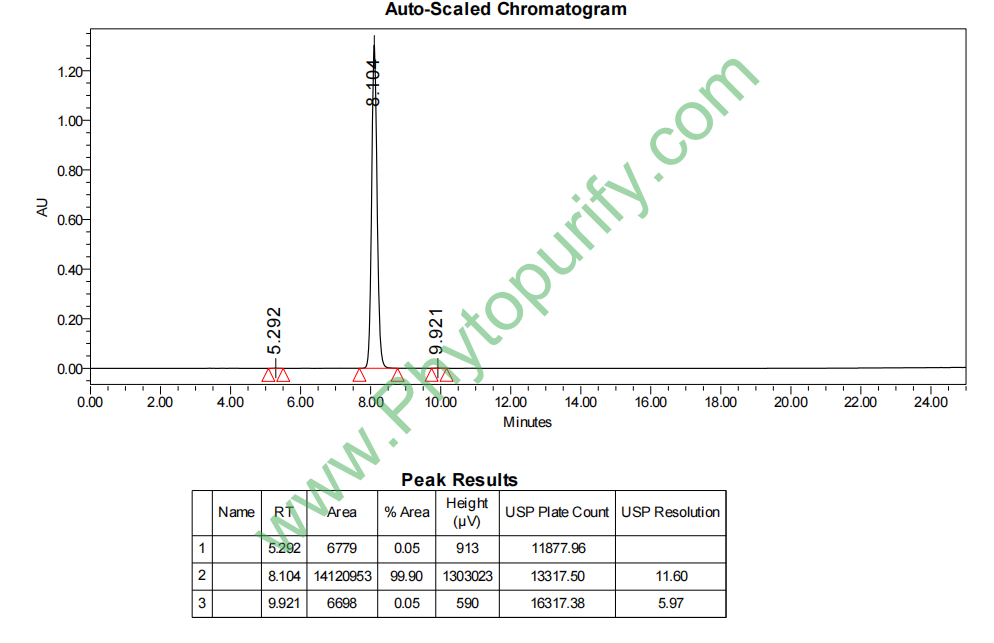
Purity: 95%~99%
Analysis Method: HPLC-DAD or/and HPLC-ELSD
Identification Method: Mass, NMR
Packing: Brown vial or HDPE plastic bottle
Storage: Store in a well closed container, protected from air and light. Put into refrigerate or freeze for long term storage.
Whenever possible, you should prepare and use solutions on the same day. However, if you need to make up stock solutions in advance, we recommend that you store the solution as aliquots in tightly sealed vials at -20℃. Generally, these will be useable for up to two weeks.
The product could be supplied from milligrams to grams, up to kilograms
Inquire for bulk scale.
Descriptions:
Geniposide, a major iridoid found in fruit, is widely used in Asian countries for its anti-inflammatory, and anti-apoptotic activities, the anti-apoptotic activities is due to its modulation of and -related factors (p53, Bax, Bcl-2 and Caspase-3) in LPS-induced mouse mastitis. [1]
Geniposide, an agonist for GLP-1 receptor, regulates expression of anti-oxidative proteins including HO-1 and Bcl-2 by activating the transcriptor of p90RSK via MAPK signaling pathway in PC12 cells.[2]
Geniposide is highly effective in inhibiting acute lung injury and may be a promising potential therapeutic reagent for acute lung injury treatment.[3]
Geniposide inhibits high glucose-induced cell adhesion through the NF-κB signaling pathway in human umbilical vein endothelial cells.[4]
Geniposide may attenuate memory deficits through the suppression of mitochondrial oxidative stress, thus, geniposide may be a potential therapeutic reagent for halting and preventing Alzheimer's disease progress.[5]
References:
[1] Song X, Guo M, Wang T, et al. Life Sci, 2014, 119(1–2):9-17.
[2] Liu J, Fei Y, Zheng X, et al. Neurochem Int, 2007, 51(6-7):361-9.
[3] Fu Y, Liu B, Liu J, et al. Int Immunopharmacol, 2012, 14(4):792-8.
[4] Wang G F, Wu S Y, Wei X, et al. Acta Pharmacol Sin, 2010, 31(8):953-62.
[5] Lv C, Liu X, Liu H, et al. Curr Alzheimer Res, 2014, 11(6):580-7.
[6] LIAO Yan-hua, HAN Feng, MA Li. Drugs & Clinic, 2013, 28(2):191-193.
HPLC of Geniposide
Storage conditions:Short-term storage at 2~8℃, long-term storage at -20 ~ -80℃
155.1400
-1.1494
-1.1489
62.8130
.4750
1.0604
Low
26.4461
4.6346
Yes
No
No
No
Yes
No
0.0
Yes
Yes
Yes
Yes
Natural products, as an important source of drug discovery and development, play an irreplaceable role in the history of human disease prevention and treatment. Among them, iridoid compounds have attracted much attention due to their structural diversity and wide range of biological activities. Geniposide (CAS number: 24512-63-8) is a plant in the madder family, Gardenia jasminoides(Gardenia jasminoides Ellis is one of the main active ingredients in dried and ripe fruits, belonging to the iridoid glucoside class. As a traditional Chinese medicine, Gardenia jasminoides has a bitter and cold nature, returning to the heart, lungs, and three jiao meridians. It has the effects of purging fire, eliminating irritability, clearing heat and dampness, cooling blood and detoxifying, and has a long history of clinical application. Modern pharmacological research has revealed that geniposide is one of the key material foundations that carries many medicinal effects of Gardenia jasminoides.
In recent years, with the deepening of the research on geniposide, its various biological activities have been gradually clarified, especially in the fields of anti diabetes, antioxidant, anti-inflammatory, anti-tumor (anti proliferation) and neuroprotective. Among them, neuroprotective effects have become a hot and cutting-edge research topic due to their outstanding performance in neurodegenerative diseases and injury models such as Alzheimer's disease, Parkinson's disease, and cerebral ischemia-reperfusion injury. Geniposide exerts its neuroprotective effect by regulating a complex cellular signaling network and acting on multiple key molecular targets. This article aims to systematically review the chemical properties and pharmacological activities of geniposide, especially to explore its multi-target mechanism of neuroprotective effect, and evaluate and prospect its pharmacological properties and clinical application prospects, in order to provide scientific reference for the deep development and transformation research of this natural product.
The chemical name of geniposide is (1S, 4aS, 7aS) -1- β - D-glucosoxy-7-hydroxymethyl-1,4-a, 5,7a - tetrahydrocyclopentano [c] pyran-4-carboxylic acid methyl ester, with a molecular formula of C17H24O10 and a molecular weight of 388.3690. The core of its structure is a cyclopentane pyran ring (cyclohexene ether terpene parent nucleus), which is connected to a β - D-glucosyl group through an oxygen glycosidic bond at position C-1, a methyl ester group at position C-4, and a hydroxymethyl group at position C-7. This iridoid glycoside structure is an important basis for its biological activity.
In terms of physical and chemical properties, geniposide is a white crystal or powder with a bitter taste. The calculated lipid water partition coefficient (LogP) is -1.1494, indicating its high hydrophilicity. The topologically polar surface area (TPSA) is as high as 155.1400 Å ², mainly attributed to the presence of multiple polar groups such as hydroxyl, ether, and ester bonds in the molecule. The high hydrophilicity is also reflected in its excellent water solubility, with a calculated value of about 62.8130 mg/L, making it easy to dissolve and prepare in aqueous media. However, this strong hydrophilicity also poses a challenge to its bioavailability, especially as its blood-brain barrier (BBB) permeability is predicted to be "low", which to some extent limits its potential for direct application as a central nervous system drug. In addition, preliminary pharmacological risk assessment showed that geniposide had no significant hERG potassium channel inhibitory activity at conventional test concentrations (low risk of arrhythmia), and the Ames test result was negative (0.0), indicating a low risk of genetic toxicity and a relatively good safety basis.
The main source of geniposide is the traditional Chinese medicine gardenia, also known as the madder plant gardenia(Gardenia jasminoides Ellis' dried and ripe fruit. Gardenia jasminoides is widely distributed in the southern regions of the Yangtze River Basin in China, and its fruit is rich in iridoid compounds. Among them, geniposide is the most abundant indicator component and can usually be used as a marker for quality control of Gardenia jasminoides medicinal materials and their preparations.
The conventional method for extracting geniposide from gardenia fruit includes solvent extraction. The most commonly used solvents are water or ethanol of different concentrations (such as 30% -70%) for heating reflux extraction or ultrasound assisted extraction. The water extraction method is low-cost and environmentally friendly, but the extract contains a lot of impurities; The alcohol extraction method (especially ethanol extraction) has good selectivity and can effectively extract geniposide while reducing the dissolution of large molecular impurities such as polysaccharides and proteins. It is currently a commonly used method in research and production. In recent years, some modern extraction techniques have also been applied to the extraction and purification of geniposide in order to improve efficiency and purity, such as:
1. Microwave assisted extraction Using microwave energy to quickly heat the interior of cells, disrupt cell structure, and accelerate the dissolution of geniposide has the advantages of short time, high efficiency, and low solvent dosage.
2. Supercritical CO ₂ extraction This method has mild conditions and no solvent residue, but usually requires the addition of entrainers (such as ethanol) to improve the extraction rate of polar components such as geniposide, resulting in higher equipment costs.
3. Purification technology of macroporous resin After obtaining the crude extract, macroporous adsorption resins (such as AB-8, D101, HPD series) are often used for enrichment and purification. By utilizing the difference in adsorption desorption behavior between geniposide and impurities on resin, the purity of geniposide can be significantly improved through water washing to remove impurities and ethanol elution.
The extracted geniposide can be further refined by methods such as silica gel column chromatography and preparative high-performance liquid chromatography (HPLC) to obtain high-purity monomeric compounds for in-depth pharmacological and mechanistic studies.
A large number of in vitro and in vivo studies have shown that geniposide has a wide range of pharmacological activities, and its effects go far beyond the traditional concept of clearing heat and purging fire.
The neuroprotective effect of geniposide is not achieved through a single target, but through a synergistic network of multiple targets and pathways. Existing research has revealed that it acts on a series of key molecules closely related to neurodegenerative diseases and brain injury:
Regulating the balance between apoptosis and survival:
Reduce oxidative stress damage:
Intervention in key pathological processes of Alzheimer's disease:
Regulating energy metabolism and cellular stress adaptation:
Integration of functional networks In summary, the neuroprotective mechanism of geniposide forms a three-dimensional network: it enhances cellular antioxidant and metabolic adaptability by activating SIRT1 and Nrf2; Directly intervene in the pathology of A β and Tau proteins in AD by inhibiting GSK3 β and BACE1; By regulating BCL2 family proteins and MAPK/ERK pathway, the balance between neuronal survival and apoptosis is maintained. These targets and pathways are not isolated, but have extensive cross-talk. For example, SIRT1 can activate Nrf2, which contributes to cell survival. Inhibition of GSK3 β is also associated with weakened apoptotic signaling. The synergistic effect of multiple targets may give geniposide an advantage over single target drugs in dealing with complex multifactorial diseases such as neurodegenerative diseases.
Although geniposide has shown great therapeutic potential in preclinical studies, its pharmacological properties, especially as an oral central nervous system drug, still face some challenges.
Pharmacokinetic characteristics After oral administration, geniposide is rapidly absorbed, but its absolute bioavailability is relatively low (about 10%), which is related to its high hydrophilicity, limited passive transmembrane diffusion ability, and possible intestinal first pass effect. After absorption, geniposide is widely distributed in the body, but as mentioned earlier, its blood-brain barrier permeability is low, which limits the effective concentration of the prototype drug in the brain. However, it is interesting to note that studies have found that geniposide can be hydrolyzed by the gut microbiota to remove the glucose group and convert it into its glycoside, Genipin. Jingniping has significantly higher lipid solubility than geniposide, and its blood-brain barrier permeability may be stronger. It also has significant biological activity, such as stronger cross-linking and neuroprotective effects. Therefore, the pharmacological effects of geniposide in vivo may be partially attributed to its metabolite genipin. Geniposide and its metabolites are mainly excreted through the kidneys.
Challenges and Strategies in Drug Development:
1. Low bioavailability and low BBB permeability This is the main obstacle facing the development of geniposide. To address this issue, researchers are exploring various strategies:
* Prodrug design Modify the polar groups (such as hydroxyl groups) of geniposide through esterification and other methods to prepare precursor drugs with higher lipid solubility, in order to improve their membrane permeability and BBB permeability, and then hydrolyze them into active forms in vivo.
* Nano drug delivery system Encapsulate or load geniposide into carriers such as liposomes, polymer nanoparticles, solid lipid nanoparticles, or nanoemulsions. These nanosystems can protect drugs, improve their solubility, and achieve active brain targeted delivery through surface modifications (such as linking brain targeting ligands Tf, Angiopep-2, etc.), significantly increasing drug concentrations in the brain.
* combination therapy Combined use with P-glycoprotein (P-gp) inhibitors may temporarily increase BBB permeability.
2. safety Current toxicology studies have shown that geniposide has lower toxicity at conventional doses. However, attention should be paid to its potential liver and kidney toxicity when used in large doses or for a long time. Its metabolite genipin can react with the amino groups of proteins and may produce cytotoxicity at high concentrations. Therefore, it is crucial to determine a safe and effective treatment window.
The clinical application prospects of geniposide are broad, but the road still needs to be explored solidly.
Current application and development direction:
1. As an effective ingredient in traditional Chinese medicine At present, geniposide is mainly used as a quality control indicator and pharmacological substance basis for gardenia and its compounds (such as Huanglian Jiedu Tang and Yinzhihuang preparation). Yinzhihuang preparation has been widely used in the clinical treatment of liver and gallbladder diseases, and its anti yellowing and hepatoprotective effects are related to the activity of geniposide.
2. Development of therapeutic drugs for neurological disorders Based on its clear multi-target neuroprotective mechanism, geniposide is a potential candidate drug for the development and treatment of diseases such as Alzheimer's disease, Parkinson's disease, stroke, and vascular dementia. The future research and development focus should be on: ① utilizing the above-mentioned nanotechnology and other strategies to develop new formulations of geniposide that can efficiently deliver into the brain; ② Conduct standardized preclinical safety assessments (GLP) and clinical trials to confirm their human efficacy and safety; ③ Explore its potential as a disease modifying therapy, rather than just symptomatic treatment.
3. Anti diabetes and its complications: Develop plant drugs or chemical drugs for type 2 diabetes and its neurological and nephrotic complications.
4. Anti inflammatory and immune regulation: It can be used to treat diseases related to oxidative stress and chronic inflammation, such as arthritis, atherosclerosis, etc.
Future research prospects:
1. In depth mechanism research Using proteomics, metabolomics, chemical proteomics and other technologies, the direct target proteins of geniposide were systematically discovered, and a more accurate "drug target pathway disease" network map was drawn.
2. Structural optimization and derivative development Using geniposide as the parent nucleus, a systematic structural modification and structure-activity relationship study was conducted to obtain derivatives with stronger activity, higher BBB permeability, and better pharmacokinetic properties.
3. Clinical translational research Strengthen industry university research cooperation and promote the translation of high-quality basic research results into clinical applications. Design rigorous clinical trial protocols to explore the efficacy of geniposide or its optimized formulations in patients with specific neurodegenerative diseases.
4. Multi component collaborative research As a monomer of traditional Chinese medicine, studying the synergistic effect of geniposide with other natural active ingredients (such as crocin and flavonoids in gardenia) may reveal the scientific connotation of compound Chinese medicine and develop more effective multi-component drugs.
As a natural iridoid glycoside derived from the traditional Chinese medicine Gardenia jasminoides, gardenoside has become a star molecule in natural product pharmacology research due to its multiple pharmacological activities such as anti diabetes, anti-oxidation, anti-inflammatory, anti proliferation and neuroprotection. Especially in the field of neuroprotection, it forms a complex network of synergistic interactions by acting on multiple key targets such as BCL2, CASP9, MAPK1, NFE2L2 (Nrf2), SIRT1, GSK3B, BACE1, APP, MAPT, etc., demonstrating unique advantages in dealing with multifactorial complex neurological diseases. Although it faces challenges in terms of low bioavailability and poor blood-brain barrier permeability in terms of drug efficacy, modern pharmacy and medicinal chemistry technologies (such as nano delivery and prodrug design) provide powerful tools to overcome these bottlenecks. In the future, through deepening mechanism exploration, strengthening structural optimization and promoting clinical transformation, gardenoside is expected to develop from a potential lead compound into an innovative drug for treating neurodegenerative diseases, diabetes and its complications, fully demonstrating the lasting vitality and value of natural products in modern drug research and development.
