


Product name: Geniposidic acid
Synonym name: Premnosidic acid
Catalogue No.: BP0633
Cas No.: 27741-01-1
Formula: C16H22O10
Mol Weight: 374.342
Botanical Source: Genipa americana (genipap), Garrya elliptica and Premna barbata
Physical Description: Powder
Type of Compound: Iridoids
Purity: 95%~99%
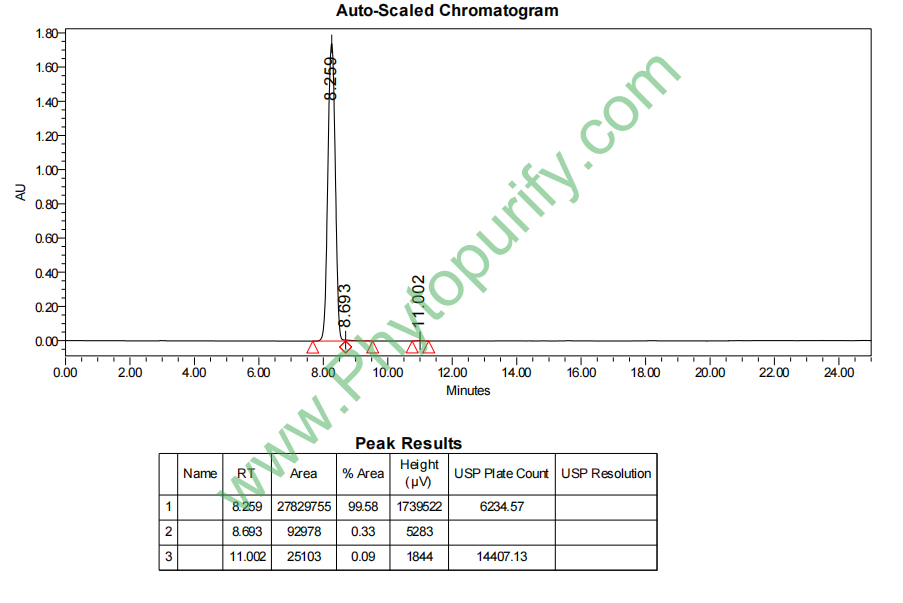
Analysis Method: HPLC-DAD or/and HPLC-ELSD
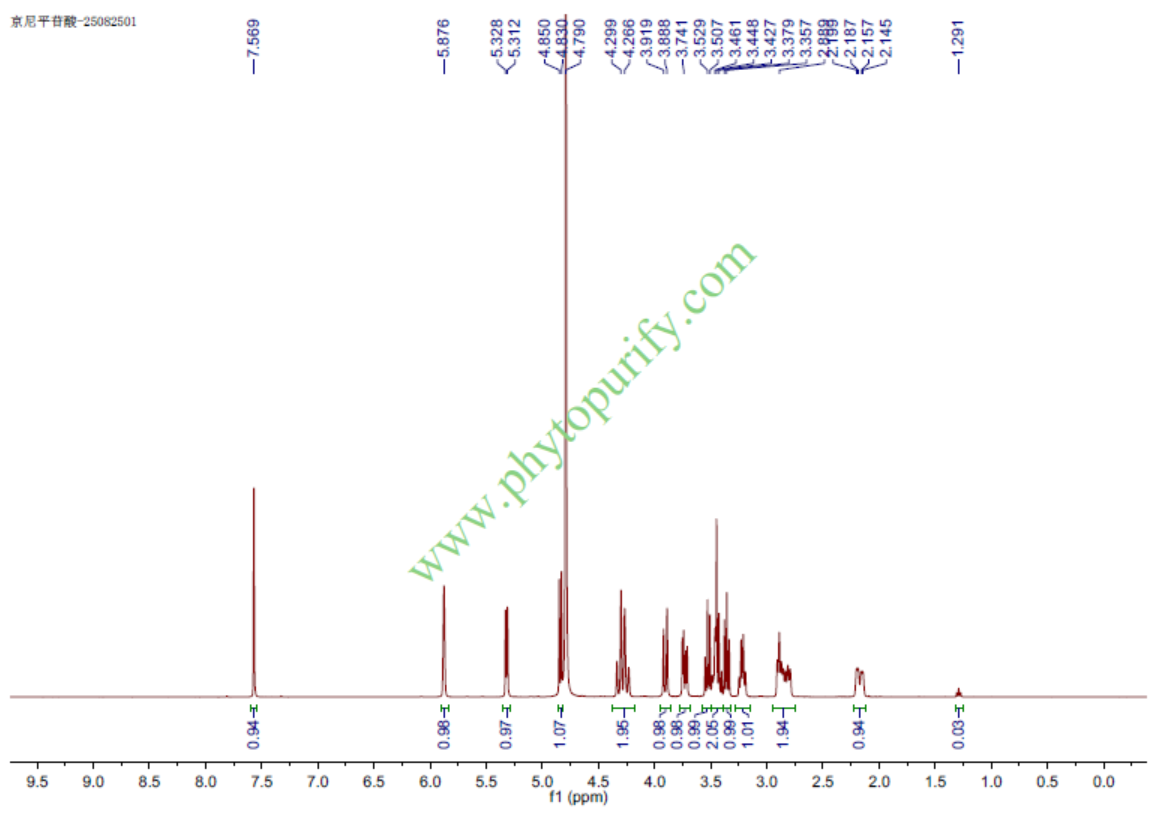
Identification Method: Mass, NMR
Packing: Brown vial or HDPE plastic bottle
Storage: Store in a well closed container, protected from air and light. Put into refrigerate or freeze for long term storage.
Whenever possible, you should prepare and use solutions on the same day. However, if you need to make up stock solutions in advance, we recommend that you store the solution as aliquots in tightly sealed vials at -20℃. Generally, these will be useable for up to two weeks.
The product could be supplied from milligrams to grams, up to kilograms
Inquire for bulk scale.
Descriptions:
Geniposidic acid, one of the main active ingredients in Gardenia jasminoides J. Ellis (Rubiaceae), has anti-atherosclerotic effects, can protect vascular endothelium and reverse plaque formation in an atherosclerotic model.[1]
Geniposidic acid and geniposide have antitumor effects , play a role in an effective anticancer product with the ability to decrease undesirable radiation damage to the hematologic tissue after high dose irradiation.[2]
Geniposidic acid can protect against D-galactosamine and lipopolysaccharide-induced hepatic failure in mice.[3]
Geniposidic acid protects against anti-induced hepatotoxity and acute intrahepatic cholestasis, due to Fxr-mediated regulation of Bsep and Mrp2.[4]
Geniposidic acid has effects on the expression of MRP2 and BSEP in BRL-3A cells after FXR gene silencing mediated by si RNA.[5]
References:
[1] Yu G, Zi-Yu C, Xue L, et al. Pharm Biol, 2014, 53(2):1-6.
[2] Hsu H Y, Yang J J, Lin S Y, et al. Cancer Lett, 1997, 113(1-2):31-7.
[3] Kim S J, Kim K M, Park J, et al. J Ethnopharmacol, 2013, 146(1):271-7.
[4] Chen H, Huang X, Min J, et al. J Ethnopharmacol 2015, 179:197-207.
[5] Chen H, Shi S, Min J B, et al.China Journal of Traditional Chinese Medicine & Pharmacy, 2016,5.
[6] Peng M J, Zhang M, Liu J L, et al. Chinese Journal of Hospital Pharmacy, 2005, 25(04):300-2.
HPLC of Geniposidic acid
HNMR of Geniposidic acid
Storage conditions:Short-term storage at 2~8℃, long-term storage at -20 ~ -80℃
166.1400
-1.2442
-3.2639
49.3436
.4136
.5090
Low
33.4304
4.6751
Yes
No
No
No
No
No
0.0
Yes
Yes
Yes
Yes
As an important treasure trove for drug discovery, natural products continue to provide modern medicine with lead compounds with novel structures and diverse activities. Geniposidic acid (GA), a cyclic terpenoid glycoside, has undergone a profound evolution in its biological activity research from traditional heat clearing and detoxification effects to modern molecular pharmacology mechanisms since its discovery. Early research focused on its role as a precursor of geniposide in traditional Chinese medicines such as Gardenia and Eucommia ulmoides, as well as its weak anti-inflammatory and antioxidant properties. However, with the deepening of molecular target screening techniques and disease model research, the pharmacological value of geniposide has been redefined. In recent years, studies have revealed that it serves as a regulator of Farnesoid X receptor (FXR) and an effective activator of Sirtuin 6 (SIRT6), exhibiting multi-target and multi pathway regulatory potential in metabolism, inflammation, and tumor related diseases. Especially in major disease areas such as metabolic dysfunction associated fatty liver disease (MAFLD), drug-induced liver injury (DILI), inflammatory bowel disease (IBD), and colon cancer, geniposide has shown clear improvement effects. This article aims to systematically review the chemical properties, plant sources, pharmacological activities, molecular mechanisms of action, medicinal properties, and clinical application prospects of geniposide, in order to provide comprehensive scientific references for the deep development and transformation research of this natural product.
The chemical name of geniposide (CAS number: 27741-01-1) is (1S, 4aS, 7S, 7aS) -1- (β - D-glucopyranosyl) -7-hydroxymethyl-1,4-a, 5,7a - tetrahydrocyclopentano [c] pyran-4-carboxylic acid, with a molecular formula of C16H22O10 and a molecular weight of 374.34 g/mol. Its structure belongs to the class of iridoid glycosides, with the core being a cyclopentane pyran ring system. The C-1 position is connected to a β - D-glucosyl group through a glycosidic bond, the C-4 position is a carboxyl group (- COOH), and the C-7 position is a hydroxymethyl group (- CH2OH). The main difference between this structural feature and the homologous compound Geniposide is that the C-4 position is a carboxyl group rather than a methyl ester, which significantly affects its physicochemical properties and biological activity.
From the analysis of parameters related to drug properties, geniposide exhibits typical polar molecular characteristics. Its calculated lipid water partition coefficient (LogP) is -1.24, indicating its high hydrophilicity. The topologically polar surface area (TPSA) is as high as 166.14 Å ², mainly attributed to the abundant hydroxyl, carboxyl, and ether oxygen atoms in the molecule. The high TPSA and negative LogP values together determine its excellent water solubility, with a calculated value of approximately 49.34 mg/mL, which is beneficial for its development in aqueous formulations. However, these polar features also limit its passive transmembrane diffusion ability, resulting in a predicted "low" blood-brain barrier (BBB) permeability, suggesting that its direct effect on central nervous system diseases may be limited. In terms of preliminary safety prediction, this compound did not show significant hERG potassium channel inhibition risk (hERG inhibition: No), and the Ames test prediction result was negative (0.0), indicating a low potential mutagenic risk and providing a favorable starting point for subsequent safety evaluation.
Jingniping acid is relatively widely distributed in nature, mainly found in various medicinal plants such as Rubiaceae and Eucommia ulmoides, and is one of the important material bases for these plants to exert their medicinal effects.
1. Main plant sources:
* Gardenia jasminoides Ellis Gardenia fruit is the most famous source of geniposide acid. In Gardenia jasminoides, geniposide acid often coexists with higher levels of geniposide, and is a key intermediate in the biosynthesis pathway of geniposide, as well as one of its hydrolysis products.
* Eucommia ulmoides Oliv Eucommia ulmoides leaves and bark are rich in geniposide, which is considered one of the main active ingredients in Eucommia ulmoides for lowering blood pressure, antioxidation, and regulating metabolism.
* Chicken poop vine (Paederia scandens (Lour.) Merr.) Jingniping acid can also be detected in plants of the Rubiaceae family.
2. Extraction and Separation Methods:
The extraction of geniposide acid is mainly based on its polarity and solubility. Conventional methods use water or ethanol of different concentrations (such as 30% -70%) for heating reflux or ultrasound assisted extraction. Due to its good water solubility, the water extraction yield is high, but there are many impurities in the extract. The alcohol extraction method (especially low concentration ethanol) can reduce the dissolution of large polar impurities such as polysaccharides and proteins while ensuring extraction efficiency.
Column chromatography is commonly used to isolate and purify geniposide from crude extracts. Macroporous adsorption resins (such as D101, AB-8) are commonly used for initial enrichment, utilizing their adsorption differences with impurities such as sugars and pigments for purification. Further fine separation often relies on silica gel column chromatography, reverse phase silica gel column chromatography (such as ODS-C18), and preparative high-performance liquid chromatography (HPLC). In recent years, liquid-liquid distribution chromatography techniques such as high-speed countercurrent chromatography (HSCCC) have also been applied to the efficient preparation and separation of geniposide due to their advantages of avoiding irreversible adsorption and high recovery rate.
3. Analysis and identification:
The qualitative and quantitative analysis of geniposide in extracts or products is mainly carried out using high-performance liquid chromatography ultraviolet detection (HPLC-UV) or high-performance liquid chromatography-mass spectrometry (HPLC-MS/MS). It has terminal absorption in the ultraviolet region, and the commonly used detection wavelength is around 238 nm. Mass spectrometry can provide its molecular ion peak [M-H] ⁻ m/z 373.1 and characteristic fragment ion information for confirming the structure.
Jingniping glycoside acid has a wide range of pharmacological activities, and its research has penetrated from the organ and tissue level to the cellular and molecular level, especially showing significant potential in the prevention and treatment of metabolic diseases, inflammatory diseases, and tumors.
The multiple pharmacological activities of geniposide stem from its precise regulation of multiple key molecular targets and signaling pathways, and its mechanism of action network is becoming increasingly clear.
As an FXR regulator, regulating bile acid and lipid metabolism:
The farnesol X receptor (FXR) is a member of the nuclear receptor superfamily and plays a central role in maintaining bile acid, lipid, and glucose homeostasis. Jingniping acid has been confirmed to be a regulator of FXR. Structural biology and molecular docking simulations show that it can directly bind to the Ser332 and His447 sites of the FXR ligand binding domain (LBD). This binding drives conformational changes in FXR, promoting its translocation from the cytoplasm to the nucleus. In the nucleus, activated FXR forms heterodimers with retinol X receptor (RXR), recruiting co activators (such as SRC-1) to bind to the FXR response element (FXRE) of the target gene promoter, thereby regulating gene transcription. The downstream effects include:
As an activator of SIRT6, it improves metabolism and inflammation:
Silencing Information Regulatory Factor 6 (SIRT6) is an NAD ⁺ - dependent deacetylase involved in regulating glucose metabolism, fat metabolism, inflammation, and genomic stability. Jingniping glycoside acid has been identified as a natural activator of SIRT6. Activating SIRT6 can bring multiple benefits:
Multi target action network in the treatment of colon cancer:
The mechanism of geniposide in the treatment of colon cancer presents multi-target and networked characteristics, involving multiple aspects such as proliferation, apoptosis, inflammation, and multidrug resistance
Integration of anti-inflammatory mechanisms:
In colitis and hepatitis models, the anti-inflammatory effect of geniposide is the combined result of its FXR activation, SIRT6 activation, and direct inhibition of NF - κ B and MAPK inflammatory pathways. The regulatory effect of gut microbiota further amplifies its systemic anti-inflammatory benefits by increasing SCFAs, reducing endotoxin entry into the bloodstream, and systematically inhibiting pathways such as TLR4/NF - κ B.
Although geniposide has shown good biological activity in preclinical studies, its pharmacological properties, especially pharmacokinetic properties, are a key step that must be faced in its drug conversion process.
The unique dual target (FXR/SIRT6) properties and multi effect pharmacological effects of geniposide acid provide broad prospects for its application in multiple disease fields, but also face many challenges.
Jingniping glycoside, as a natural iridoid glycoside derived from traditional Chinese medicine, has transformed from a common phytochemical component into a modern molecular probe and potential drug lead compound that acts on key targets of FXR and SIRT6. Its outstanding performance in improving metabolic liver disease, intestinal inflammation, and related tumors reflects the unique advantages of natural product multi-component and multi-target synergistic therapy for complex diseases. Despite facing challenges in drug formulation, especially in oral absorption, these challenges are expected to be gradually overcome through the empowerment of modern pharmaceutical chemistry, pharmacology, and pharmacology technologies. In the future, with deeper analysis of its molecular mechanism, systematic optimization of pharmacokinetic properties, and advancement of clinical research, geniposide is highly likely to be successfully transformed from an excellent research tool molecule into an innovative drug for the treatment of major chronic diseases such as MAFLD and IBD, achieving a magnificent transformation from traditional wisdom to modern medicine and contributing new strength to human health.
